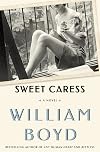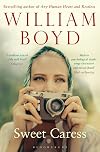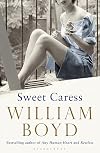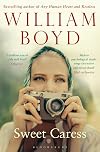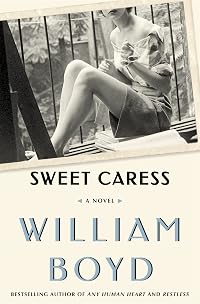
Sweet Caress
by William Boyd
On This Page
Description
Born into Edwardian England, Amory's first memory is of her father standing on his head. She has memories of him returning on leave during the First World War. But his absences, both actual and emotional, are what she chiefly remembers. It is her photographer uncle Greville who supplies the emotional bond she needs, who, when he gives her a camera and some rudimentary lessons in photography, unleashes a passion that will irrevocably shape her future. A spell at boarding school ends abruptly show more and Amory begins an apprenticeship with Greville in London, photographing socialites for the magazine Beau Monde. But Amory is hungry for more and her search for life, love, and artistic expression will take her to the demi monde of Berlin of the late '20s, to New York of the '30s, to the blackshirt riots in London, and to France in the Second World War where she becomes one of the first women war photographers. Her desire for experience will lead Amory to further wars, to lovers, husbands, and children as she continues to pursue her dreams and battle her demons.In this enthralling story of a life fully lived, illustrated with "found" period photographs, William Boyd has created a sweeping panorama of some of the most defining moments of modern history, told through the camera lens of one unforgettable woman, Amory Clay. It is his greatest achievement to date.
. show less
Tags
Recommendations


























Member Recommendations

Member Reviews
Wow. I don’t know any other author who could have pulled off this book so beautifully. Boyd does the fake autobiography so well that you can fool yourself into thinking his characters are real. Amory Clay felt authentic to me (except she was an awfully sloppy photographer) and her voice was honest and pulled no punches. She didn’t glamorize her past nor did she try to martyr herself on her poor decisions. In the end she admits that her life was interesting because of the many mistakes she made. Indeed, if she’d done the easy thing or just had better luck her life would have been pretty dull.
Because I read and loved Any Human Heart which is a similar novel in the sense that it’s a journal of one person’s life, I couldn’t help show more compare the two. Amory doesn’t have so many brushes with greatness as Logan had, but she had very personal experiences with monumental events; mostly wars, WWII and Vietnam. She’s relating her story in the present with journal entries that morph seamlessly into vignettes from her entire life, starting with early childhood and her difficult relationship with her mother and ending with her mostly solitary life on a Scottish island. Each slice of her life is delivered with polish and complete recall. As in all lives there are highs and lows, and at one point I had to stop the audiobook because I was too tense about her predicament and needed a break.
A lot of reviews talk about Boyd’s portrayal of Amory as a woman and are critical just as many were with Brazzaville Beach. I didn’t have an issue with BB, but I did with Restless where I felt the feminine qualities of both lead characters were superficial; that except for the occasional mention of lipstick, the story could have been of father and son rather than mother and daughter. Amory’s character feels more naturally female to me. She’s a human who happens to be female rather than just a caricature or a wish-fulfillment vehicle. She embraces her independence, but doesn’t make a cause out of it. She mourns her apparent infertility, but doesn’t let it consume her. She has an active sex life, but isn’t promiscuous. She is driven and ambitious, but accepts her defeats with grace. I liked her a lot and was especially appreciative of her circumspect attitude at the end. I would have been sad at her demise, but since it comes to all of us, it wasn’t a tragedy. show less
Because I read and loved Any Human Heart which is a similar novel in the sense that it’s a journal of one person’s life, I couldn’t help show more compare the two. Amory doesn’t have so many brushes with greatness as Logan had, but she had very personal experiences with monumental events; mostly wars, WWII and Vietnam. She’s relating her story in the present with journal entries that morph seamlessly into vignettes from her entire life, starting with early childhood and her difficult relationship with her mother and ending with her mostly solitary life on a Scottish island. Each slice of her life is delivered with polish and complete recall. As in all lives there are highs and lows, and at one point I had to stop the audiobook because I was too tense about her predicament and needed a break.
A lot of reviews talk about Boyd’s portrayal of Amory as a woman and are critical just as many were with Brazzaville Beach. I didn’t have an issue with BB, but I did with Restless where I felt the feminine qualities of both lead characters were superficial; that except for the occasional mention of lipstick, the story could have been of father and son rather than mother and daughter. Amory’s character feels more naturally female to me. She’s a human who happens to be female rather than just a caricature or a wish-fulfillment vehicle. She embraces her independence, but doesn’t make a cause out of it. She mourns her apparent infertility, but doesn’t let it consume her. She has an active sex life, but isn’t promiscuous. She is driven and ambitious, but accepts her defeats with grace. I liked her a lot and was especially appreciative of her circumspect attitude at the end. I would have been sad at her demise, but since it comes to all of us, it wasn’t a tragedy. show less
A fictional autobiography of a fictional photographer who wrote her story in 1977 at 69 years old while living on a Hebridean island. Her career covered many significant happenings of the 20th century that Boyd perfectly merges with Amory's personal story. His novel is a tempestuous, sprawling story ranging from the scintillating 1920s Weimar culture of Berlin (the resulting photos were seized by police at an exhibition in London), to a brutal attack during a demonstration by Oswald Mosley's fascists. After a time in New York she returned to England to become a war photographer for the D-Day landings, and later in Vietnam. Boyd created an intense, complex, yet ultimately shallow character in a novel that despite the adventurous era show more manages to be bland and a shade too long. show less
While a high school student I viewed history as the story of war, with interludes in between when nations recovered from the last war and prepared for the next. In his new novel, "Sweet Caress," William Boyd seems to view his main character and narrator Amory Clay from the same perspective. She is a 20th century woman, born in 1908 and dying in 1983, and her life is shaped by the century's wars virtually from beginning to end.
Her father is a writer before the Great War. He survives combat, but afterward he is a shell of the man he once was. At his lowest point, he picks up Amory from her school and deliberately drives the car into a lake, determined to die and take his favorite daughter with him. Both survive, but Amory is forever show more changed.
She becomes a photographer, gets beaten up by fascists while trying to get shots of a parade and, after the next war breaks out, has some harrowing experiences following the Allied army into Europe. Her brother dies in World War II, and the war veteran she marries is, like her father, ruined psychologically by his experiences.
In her 60s, Amory leaves her twin daughters behind in Scotland and becomes a war correspondent in Vietnam. She is wounded by the Vietcong, yet her greatest danger comes from the British. Returning home, she learns that Blythe, one of her daughters, has run away to the United States and, even at that distance, has had her own life shaped by the war.
This photographer's story comes complete with photographs throughout, raising a chicken-or-egg kind of question. Did Boyd find photos to illustrate his story or shape his story around the photos he found? I suspect it was a little of each. In any case the photographs greatly enhance the novel.
In case anyone needs reminding, "Sweet Caress" suggests the stupidity and futility of war, yet in the end the novel manages to be life-affirming. It is not just war that shapes our lives and our history. It is also those sweet caresses of peace in between. show less
Her father is a writer before the Great War. He survives combat, but afterward he is a shell of the man he once was. At his lowest point, he picks up Amory from her school and deliberately drives the car into a lake, determined to die and take his favorite daughter with him. Both survive, but Amory is forever show more changed.
She becomes a photographer, gets beaten up by fascists while trying to get shots of a parade and, after the next war breaks out, has some harrowing experiences following the Allied army into Europe. Her brother dies in World War II, and the war veteran she marries is, like her father, ruined psychologically by his experiences.
In her 60s, Amory leaves her twin daughters behind in Scotland and becomes a war correspondent in Vietnam. She is wounded by the Vietcong, yet her greatest danger comes from the British. Returning home, she learns that Blythe, one of her daughters, has run away to the United States and, even at that distance, has had her own life shaped by the war.
This photographer's story comes complete with photographs throughout, raising a chicken-or-egg kind of question. Did Boyd find photos to illustrate his story or shape his story around the photos he found? I suspect it was a little of each. In any case the photographs greatly enhance the novel.
In case anyone needs reminding, "Sweet Caress" suggests the stupidity and futility of war, yet in the end the novel manages to be life-affirming. It is not just war that shapes our lives and our history. It is also those sweet caresses of peace in between. show less
William Boyd is one of my favorite writers. For me, any new book by Boyd is a cause for celebration, a good reason to drop everything and schedule a few long days with nothing else to do but enjoy it. So, that’s exactly what I set out to do, but “Sweet Caress” took far longer for me to read than most of his books. This book wasn’t a complex character-driven literary mystery, nor was it a nail-biting suspense-filled thriller; this was a fictionalized literary memoir covering the greater part of a century. The main character, Amory Clay, an independent, attractive, professional photographer, led a complex and complicated life that brought her face-to-face with many of the key moments of 20th century history.
Amory’s life journey show more (from 1908 to 1983)—whether motivated by affairs of the heart or necessitated by a fascinating set of career challenges—takes her from London to Berlin, back to London, across the Atlantic to New York, back to London, on to Paris, then to the German WWII front lines, back to Paris, to the French countryside near Bordeaux, back to London, to the west coast of Scotland, many trips back and forth to London and Edinburgh, to Vietnam (during the war), back to Scotland, to Southern California and back to Scotland a few times, and finally back to Scotland to the small island of Barrendale (in reality a peninsula), off the far northeastern coast. I could tell you a bit about what motivates Amory to make these abrupt changes in location, but I don’t think it would help illuminate the literary merit of the book and it might lessen your enjoyment of the novel should you choose to read it. Perhaps it is enough to say that her life is complex and complicated…and like many women, much is motivated by her desire to live close to the men she loved.
With Amory, Boyd creates a fully authentic human being. I find it nearly impossible to believe any reviewer who says that she or he found this character unbelievable. Especially women reviewers who says they find Amory not appropriately female enough. Rubbish! There is much about Amory that reminds me of many women I know (including me), all of us highly intelligent and independent.
I’ll share one moment perhaps midway through the novel when Amory is visiting with her younger sister Dido, a concert pianist who travels the world and interacts with many famous musicians and conductors. Dido is also a devoted wife and mother of two children. The two sisters are in midlife when they have this conversation. They’re a little inebriated and the younger one brags to the older one that (so far) she’s made love to 53 different men. She asks Amory (who has a history of often risky behavior and an arrest record for obscene photography) how many men she’s slept with. Amory doesn’t tell her; she’s a bit ashamed at how few men fit this category in her life. But later that night she thinks about it and is amazed that her conservative younger sister has had more than 10 times the lovers she has had…and all the while, she’d thought she’d led the more risqué life!
Toward the end of the novel, Amory sums up her own life with these jumbled words: it was “rich and intensely sad, fascinating, droll, absurd and terrifying—sometimes—and difficult and painful and happy.” But at the same time, she remarks that most lives are equally as complicated as hers had been. “Any life of any reasonable length throws up all manner of complications, just as intricate.” If there is a theme to this novel, it must be this: we all lead amazingly complex and emotionally rich lives. But it takes a sublime writer like William Boyd to illuminate an everyday complicated life like Amory’s and make it into an emotionally satisfying and intriguing literary journey.
“Sweet Caress” is plainly and simply a sublime book! The title, no doubt, refers to the whole of a life, in this case, a sweet caress (despite it having been punctuated frequently by immense pain and suffering).
When I finished the story of Amory Clay, I felt a profound sense of loss: there would be no more to the story of this intriguing woman.
The book came wrapped in a marketing sleeve proclaiming: “The story of a woman / The story of a century / The novel of the year.” The first two are obviously correct; the last is pure hyperbole. This is certainly a masterful novel, but it will hardly be the “novel of the year.” I don’t even think it is one of Boyd’s best, but I am delighted that he wrote it and that I read it. I can imagine myself rereading this story sometime again in the distant future. I do that to all the outstanding books I savor. I envy you the experience you have before you to read it fresh for the first time. show less
Amory’s life journey show more (from 1908 to 1983)—whether motivated by affairs of the heart or necessitated by a fascinating set of career challenges—takes her from London to Berlin, back to London, across the Atlantic to New York, back to London, on to Paris, then to the German WWII front lines, back to Paris, to the French countryside near Bordeaux, back to London, to the west coast of Scotland, many trips back and forth to London and Edinburgh, to Vietnam (during the war), back to Scotland, to Southern California and back to Scotland a few times, and finally back to Scotland to the small island of Barrendale (in reality a peninsula), off the far northeastern coast. I could tell you a bit about what motivates Amory to make these abrupt changes in location, but I don’t think it would help illuminate the literary merit of the book and it might lessen your enjoyment of the novel should you choose to read it. Perhaps it is enough to say that her life is complex and complicated…and like many women, much is motivated by her desire to live close to the men she loved.
With Amory, Boyd creates a fully authentic human being. I find it nearly impossible to believe any reviewer who says that she or he found this character unbelievable. Especially women reviewers who says they find Amory not appropriately female enough. Rubbish! There is much about Amory that reminds me of many women I know (including me), all of us highly intelligent and independent.
I’ll share one moment perhaps midway through the novel when Amory is visiting with her younger sister Dido, a concert pianist who travels the world and interacts with many famous musicians and conductors. Dido is also a devoted wife and mother of two children. The two sisters are in midlife when they have this conversation. They’re a little inebriated and the younger one brags to the older one that (so far) she’s made love to 53 different men. She asks Amory (who has a history of often risky behavior and an arrest record for obscene photography) how many men she’s slept with. Amory doesn’t tell her; she’s a bit ashamed at how few men fit this category in her life. But later that night she thinks about it and is amazed that her conservative younger sister has had more than 10 times the lovers she has had…and all the while, she’d thought she’d led the more risqué life!
Toward the end of the novel, Amory sums up her own life with these jumbled words: it was “rich and intensely sad, fascinating, droll, absurd and terrifying—sometimes—and difficult and painful and happy.” But at the same time, she remarks that most lives are equally as complicated as hers had been. “Any life of any reasonable length throws up all manner of complications, just as intricate.” If there is a theme to this novel, it must be this: we all lead amazingly complex and emotionally rich lives. But it takes a sublime writer like William Boyd to illuminate an everyday complicated life like Amory’s and make it into an emotionally satisfying and intriguing literary journey.
“Sweet Caress” is plainly and simply a sublime book! The title, no doubt, refers to the whole of a life, in this case, a sweet caress (despite it having been punctuated frequently by immense pain and suffering).
When I finished the story of Amory Clay, I felt a profound sense of loss: there would be no more to the story of this intriguing woman.
The book came wrapped in a marketing sleeve proclaiming: “The story of a woman / The story of a century / The novel of the year.” The first two are obviously correct; the last is pure hyperbole. This is certainly a masterful novel, but it will hardly be the “novel of the year.” I don’t even think it is one of Boyd’s best, but I am delighted that he wrote it and that I read it. I can imagine myself rereading this story sometime again in the distant future. I do that to all the outstanding books I savor. I envy you the experience you have before you to read it fresh for the first time. show less
Born into a dysfunctional upper middle-class family, Amory Clay's early life revolves around her father. When he tries to commit suicide and has a breakdown, Amory relies on her uncle Greville. Rejecting university, Amory becomes a photographer and the story follows her life through a series of events and relationships. Amory visits Berlin in the early thirties, moves to New York, then Paris during and after the war picking up lovers and experiences. After working in Vietnam Amory retires to the Scottish countryside and reflects on her life.
I have long been a fan of William Boyd's writing. He is an accomplished writer whose work sits somewhere between high literature and popular fiction in that it is both enjoyable to read and not too show more demanding but also tackles difficult questions. Here the reader is asked to question their views about war (there are three wars that affect the narrative) and also about the ending of life through suicide (again there are three characters involved). However reading the book, one doesn't initially look at the big picture as one is just relishing a really good story that is well told. This is the best sort of fiction, it doesn't preach, it doesn't try to make life hard for the reader through the use of obscure or overly complicated language, but it does leave the reader asking questions of themselves afterwards. A master at the peak of his powers. show less
I have long been a fan of William Boyd's writing. He is an accomplished writer whose work sits somewhere between high literature and popular fiction in that it is both enjoyable to read and not too show more demanding but also tackles difficult questions. Here the reader is asked to question their views about war (there are three wars that affect the narrative) and also about the ending of life through suicide (again there are three characters involved). However reading the book, one doesn't initially look at the big picture as one is just relishing a really good story that is well told. This is the best sort of fiction, it doesn't preach, it doesn't try to make life hard for the reader through the use of obscure or overly complicated language, but it does leave the reader asking questions of themselves afterwards. A master at the peak of his powers. show less
Amory Clay was born in 1908, a decade before the Great War. Her father is damaged in this war and he nearly takes his daughter with him, on his downward spiral. Her uncle teaches, Amory, the art of photography, as a young woman and we get to follow her through the years, as she documents her life in photos and in later years, as journal entries.
As a working photographer, she finds herself, immersed, in many historical moments: she is beaten by fascist blackshirts, she witness’s atrocities in France, during WWII, she visits the steamy jungles of Vietnam and finds herself searching for her wayward daughter in a hippie commune in Northern California.
This is Any Human Heart, from a female perspective. The writing is not as strong as that show more fine novel but the prose is easy and swift and there are many points of interest, along the way. There are also “fake” photographs, highlighting the narrative, which I found, hit or miss. A good read. show less
As a working photographer, she finds herself, immersed, in many historical moments: she is beaten by fascist blackshirts, she witness’s atrocities in France, during WWII, she visits the steamy jungles of Vietnam and finds herself searching for her wayward daughter in a hippie commune in Northern California.
This is Any Human Heart, from a female perspective. The writing is not as strong as that show more fine novel but the prose is easy and swift and there are many points of interest, along the way. There are also “fake” photographs, highlighting the narrative, which I found, hit or miss. A good read. show less
Tiene una pequeña parte en el medio de la lectura que aburre un poco. Todo lo demás una maravilla de Boyd. Una historia ligera y rápida que deja entrever todos los acontecimientos importantes del Siglo XX, aunque no se pare en ellos, salvo un poco en la Guerra de Vietnam. Una historia entretenida de una vida bien vivida en la que hay de todo. Y un final precioso. Buscaré más cosas de William Boyd. Durante todo el libro me convenció de que estaba contándome una biografía real y no una ficción. Lo que se espera de la literatura, al menos yo, siempre.
Members
- Recently Added By
Lists

Books Read in 2023
5,638 works; 147 members

Books Read in 2017
4,249 works; 130 members

International Dublin Literary Award Longlist 2017
147 works; 3 members
Books Read in 2015
3,299 works; 129 members

Dublin Literary Award Longlist 2017
147 works; 2 members

Walter Scott Prize Winners and Shortlist
66 works; 6 members
Author Information

78+ Works 20,468 Members
William Boyd is a writer who was born in Ghana on March 7, 1952. He was educated at Gordonstoun school; and then the University of Nice, France, the University of Glasgow, and finally Jesus College, Oxford. Between 1980 and 1983 he was a lecturer in English at St Hilda's College, Oxford, and it was while he was there that his first novel, A Good show more Man in Africa (1981), was published. He was appointed Commander of the Order of the British Empire in 2005. Boyd was selected in 1983 as one of the 20 "Best of Young British Novelists" in a promotion run by Granta magazine and the Book Marketing Council. His novels include: A Good Man in Africa, for which he won the Whitbread Book award and Somerset Maugham Award in 1981; An Ice-Cream War, which won the John Llewellyn Rhys Prize and was nominated for the Booker Prize for Fiction in 1982; Brazzaville Beach, published in 1991, and Any Human Heart, which was long-listed for the Booker Prize in 2002. Restless, the tale of a young woman who discovers that her mother had been recruited as a spy during World War II, was published in 2006 and won the Novel Award in the 2006 Costa Book Awards. Boyd published Waiting for Sunrise: A Novel in early 2012. In 2015 his title, Sweet Caress: The Many Lives of Clay, Amory made the new Zealand Best Seller List. (Bowker Author Biography) show less
Some Editions
Awards and Honors
Series
Belongs to Publisher Series
Piper (31176)
Common Knowledge
- Canonical title
- Sweet Caress
- Original title
- Sweet Caress
- Original publication date
- 2015
- People/Characters
- Amory Clay; Lockwood; Greville Clay; Cleveland Finzi; Charbonneau; Sholto Farr (show all 10); John Oberkamp; Mosley; Frank Dunn; Dido Clay
- Important places
- Berlin, Germany; New York, New York, USA; Wesel, Deutschland; Saigon, South Vietnam
- Important events
- Vietnam War; World War II
- Epigraph
- Quelle que soit la durée de votre séjour sur cette petite planète, et quoi qu’il vous advienne, le plus important c’est que vous puissiez – de temps en temps – sentir la caresse exquise de la vie.
(However long ... (show all)your stay on this small planet lasts, and whatever happens during it, the most important thing is that – from time to time – you feel life’s sweet caress.)
Jean-Baptiste Charbonneau, Avis de passage (1957) - First words*
- PROLOGUE
What drew me down there, I wonder, to the edge of the garden?
There was a mistake made on the day I was born, when I come to think of it. - Last words*
- (Click to show. Warning: May contain spoilers.)Yes, I'll go down to the beach with Flam - now, in the middle of the moonless night and listen to the waves - and walk on the shore and look out at the darkness of the ocean, all senses dimmed except the auditory; stroll on my beach with the lights of my house burning yellow behind me in the enveloping blue-black sea-dark and contemplate this uncertain future that I've just bestowed on myself - me , Amory Clay, a certain type of ape on a small planet circling an insignificant star in a solar system that's part of an unimaginably vast expanding universe - and I will stand there in all humility and calm myself, with the ocean's endless, unchanging, consoling call for silence - shh, shh, shh...
- Disambiguation notice
- More than 1 author has a book with this title
*Some information comes from Common Knowledge in other languages. Click "Edit" for more information.
Classifications
Statistics
- Members
- 698
- Popularity
- 41,077
- Reviews
- 34
- Rating
- (3.87)
- Languages
- 8 — Dutch, English, Estonian, French, German, Italian, Portuguese, Spanish
- Media
- Paper, Audiobook, Ebook
- ISBNs
- 45
- ASINs
- 14