On This Page
Description
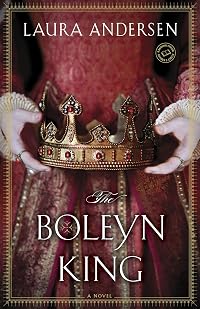
Just seventeen years old, Henry IX, known as William, is a king bound by the restraints of the regency yet anxious to prove himself. With the French threatening battle and the Catholics sowing the seeds of rebellion at home, William trusts only three people: his older sister Elizabeth; his best friend and loyal counselor, Dominic; and Minuette, a young orphan raised as a royal ward by William's mother, Anne Boleyn. Against a tide of secrets, betrayal, and murder, William finds himself show more fighting for the very soul of his kingdom. Then, when he and Dominic both fall in love with Minuette, romantic obsession looms over a new generation of Tudors. One among them will pay the price for a king's desire, as a shocking twist of fate changes England's fortunes forever. show lessTags
Recommendations


Member Reviews
Summary: What if Anne Boleyn's second child hadn't miscarried, but instead been born a healthy heir to Henry VIII's throne? In The Boleyn King, William Tudor, son of Henry, is now 17, ruling under a regency council headed by his uncle, George Boleyn, Lord Rochford. He is the product of both his parents, eager to prove himself as a king in his own right, and cognizant of the political schemes of all his advisors. But he does have those that he trusts - his older sister Elizabeth, his best friend Dominic Courtenay, and Minuette, born on the same day as William to one of Anne's ladies, and raised in her household. The four friends have been together their whole lives, although as they grow, that friendship has begun to shift. But they are show more all going to need each other when the are faced with a daunting political challenge: resentment against William's mother still festers, particularly among the English Catholics, and there is rumor that a sworn confession exists that labels William as a bastard - and thus not the true King - and that it may have fallen into the hands of Princess Mary, the focal point for a possible rebellion.
Review: For a while (kind of a long while, actually), I was kind of burnt out on the Tudor dynasty. I read several books on the subject in too close succession, before deciding that I just didn't care for Henry VIII. So I stayed away from any Tudor-court-based historical fiction for a long time (burning myself out on the War of the Roses in the process, but that's another matter.) But years passed, and I was feeling the need for costume drama, and the next season of Game of Thrones wasn't going to start for a while, so I dove into The Tudors on Netflix. And it turns out I was no longer quite as burnt out as I thought I was. So, the point of all of that was that I was able to approach The Boleyn King with interest, and with a recent refresher course on the actual history. (Or at least the broad strokes of the actual history, as interpolated between the TV show and my furious mid-viewing Wikipedia-ing to figure out what the TV show got wrong.)
And on the whole, I really enjoyed this book. Andersen does a lot of things right, specifically things that kept me interested and involved and not stepping on my I'm-fed-up-with-the-Tudors triggers. To start with, this is not historical fiction, it's alternate historical fiction, which gives Andersen more leeway to have a book set in the Tudor court and still tell a new and original story. Similarly, I think setting the story squarely amongst the next generation was a smart move, so that readers get some new characters, but there's still the draw of seeing how the shadows of the familiar personages (Henry and Anne in particular) color the lives and the court of their children. I also think that it was a good idea to split the narration, but to keep it primarily focused on the two very personable fictional characters, Minuette and Dominic, for the sake of storytelling. And the story that Andersen's telling is a good one, with a nice balance of political intrigue and interpersonal drama and a compelling (if somewhat predictable) will-they-won't-they romance. (Predictable because the answer is basically always "they will", but Andersen does throw in some interesting wrinkles.)
However, this book gets one major demerit from me, and that demerit is at least partially my responsibility, but: I didn't realize that this book was part of a series when I started it. In fact, I didn't realize that this book wasn't stand-alone until about ten pages from the end, where we got to the point where everything could have been wrapped up, and then it suddenly wasn't. To be fair, Andersen does do a good job at giving this book a complete story, and portions of the plot do wrap up satisfactorily - but not all of the plot does, and so I went with being very happy with the book to completely frustrated by it in a very short space. But again, that's mostly my fault. And the next book is coming out soon, so I suppose I shouldn't whine too much.
My other issues with this book are relatively minor, and similarly my own fault. Even with four seasons of the TV show under my belt, I still have a hard time keeping track of who's related to who, especially when half the time they are called by name and half the time by their title, so I could have definitely used a dramatis personae or a set of family trees. I'm also always fond of author's notes that explain which parts of their story are true and which are invention, and this book's note could have been substantially enlarged. Still, I enjoyed the story, loved the characters, thought the prose was smooth and easy, and will probably be reading the sequel (which I didn't know existed until the end. Hrmph.) 4 out of 5 stars.
Recommendation: Recommended for fans of historical fiction, particularly about the British royalty, who like asking some big "what if" questions about the course of history. show less
Review: For a while (kind of a long while, actually), I was kind of burnt out on the Tudor dynasty. I read several books on the subject in too close succession, before deciding that I just didn't care for Henry VIII. So I stayed away from any Tudor-court-based historical fiction for a long time (burning myself out on the War of the Roses in the process, but that's another matter.) But years passed, and I was feeling the need for costume drama, and the next season of Game of Thrones wasn't going to start for a while, so I dove into The Tudors on Netflix. And it turns out I was no longer quite as burnt out as I thought I was. So, the point of all of that was that I was able to approach The Boleyn King with interest, and with a recent refresher course on the actual history. (Or at least the broad strokes of the actual history, as interpolated between the TV show and my furious mid-viewing Wikipedia-ing to figure out what the TV show got wrong.)
And on the whole, I really enjoyed this book. Andersen does a lot of things right, specifically things that kept me interested and involved and not stepping on my I'm-fed-up-with-the-Tudors triggers. To start with, this is not historical fiction, it's alternate historical fiction, which gives Andersen more leeway to have a book set in the Tudor court and still tell a new and original story. Similarly, I think setting the story squarely amongst the next generation was a smart move, so that readers get some new characters, but there's still the draw of seeing how the shadows of the familiar personages (Henry and Anne in particular) color the lives and the court of their children. I also think that it was a good idea to split the narration, but to keep it primarily focused on the two very personable fictional characters, Minuette and Dominic, for the sake of storytelling. And the story that Andersen's telling is a good one, with a nice balance of political intrigue and interpersonal drama and a compelling (if somewhat predictable) will-they-won't-they romance. (Predictable because the answer is basically always "they will", but Andersen does throw in some interesting wrinkles.)
However, this book gets one major demerit from me, and that demerit is at least partially my responsibility, but: I didn't realize that this book was part of a series when I started it. In fact, I didn't realize that this book wasn't stand-alone until about ten pages from the end, where we got to the point where everything could have been wrapped up, and then it suddenly wasn't. To be fair, Andersen does do a good job at giving this book a complete story, and portions of the plot do wrap up satisfactorily - but not all of the plot does, and so I went with being very happy with the book to completely frustrated by it in a very short space. But again, that's mostly my fault. And the next book is coming out soon, so I suppose I shouldn't whine too much.
My other issues with this book are relatively minor, and similarly my own fault. Even with four seasons of the TV show under my belt, I still have a hard time keeping track of who's related to who, especially when half the time they are called by name and half the time by their title, so I could have definitely used a dramatis personae or a set of family trees. I'm also always fond of author's notes that explain which parts of their story are true and which are invention, and this book's note could have been substantially enlarged. Still, I enjoyed the story, loved the characters, thought the prose was smooth and easy, and will probably be reading the sequel (which I didn't know existed until the end. Hrmph.) 4 out of 5 stars.
Recommendation: Recommended for fans of historical fiction, particularly about the British royalty, who like asking some big "what if" questions about the course of history. show less
 This review was written for LibraryThing Early Reviewers.
I love England, I love British history & I love, love reading about the Tudors. I also love reading alternate history books, though I seldom actually get to read one.
Well this book fits the bill completely - it begins to answer the what if a lot of Tudor buffs wonder about - what if Anne Boleyn had a male child that lived to adulthood?
The book focuses on 4 young individuals - Will, Anne's son, his friend Dominic, Will's older sister Elizabeth (aka the future Queen Elizabeth), and their childhood friend and servant, Minuette (told primarily through her point of view). It is not meant to be historical fiction, but alternative history, with some mystery & romance thrown in for good measure.
The book does a great job with recreating a new show more reality for us, though I struggled greatly with Minuette being Will & Elizabeth's equal. Yes, it's entirely possible for Dominic to be a friend and adviser, but for Minuette to also be treated as an equal (a girl) leaves me a little flustered at the unlikeness of it all.
The other big reason why I only gave this book 4 stars, has to do with the extreme abrumpt ending. Reading the back cover of the book / the blurbs, leaves you with the feeling that there is going to be a decision made about the love triangle by the end of the book, which does not happen.
--
borrowed from library show less
Well this book fits the bill completely - it begins to answer the what if a lot of Tudor buffs wonder about - what if Anne Boleyn had a male child that lived to adulthood?
The book focuses on 4 young individuals - Will, Anne's son, his friend Dominic, Will's older sister Elizabeth (aka the future Queen Elizabeth), and their childhood friend and servant, Minuette (told primarily through her point of view). It is not meant to be historical fiction, but alternative history, with some mystery & romance thrown in for good measure.
The book does a great job with recreating a new show more reality for us, though I struggled greatly with Minuette being Will & Elizabeth's equal. Yes, it's entirely possible for Dominic to be a friend and adviser, but for Minuette to also be treated as an equal (a girl) leaves me a little flustered at the unlikeness of it all.
The other big reason why I only gave this book 4 stars, has to do with the extreme abrumpt ending. Reading the back cover of the book / the blurbs, leaves you with the feeling that there is going to be a decision made about the love triangle by the end of the book, which does not happen.
--
borrowed from library show less
This disappointing alternate-history tale takes an intriguing idea but bogs it down with glacial pacing and ends with a cliff-hanger – an instant disqualification in my book, for any author.
Andersen’s basic idea is full of potential – suppose Anne Boleyn had eventually given Henry the son for which he had delegitimized his firstborn daughter, set aside his lawful wife, and broken the hold of the Catholic church on the crowned heads of Europe? How would the course of history have been changed, or would the ebb and flow of royal intrigue and military adventure have followed the same general path without the indomitable Elizabeth I on the British throne?
The novel begins as Anne Boleyn’s son, William, approaches his eighteenth show more birthday, ready to leave behind the regency that had guided him after Henry’s death, and become king in his own right. Much of the story is told through the eyes of Minuette, a young woman who shares William’s birthdate and who has been groomed from childhood for a place in court. The other players include names well-known to readers familiar with the historical Tudor court and its intrigues. There are Seymours and Howards aplenty, Lady Jane Grey, the disinherited Mary and the endless Catholic plots surging around her, Elizabeth, Robert Dudley, the sabre-rattling of France and Spain, and even Mary, Queen of Scots in a distant but acknowledged orbit.
The problem is that Andersen sets everything in motion, and then bogs the action down with a couple hundred pages in which not much happens except that the powers behind the throne move their pawns around the chessboard and young William removes himself from pawnhood with military victories and intricate diplomatic maneuvers.
Things only get interesting again when William ceases to think of Minuette as a childhood playmate and realizes she is a desirable young woman. Unfortunately, this creates a romantic triangle that also involves William’s lifelong companion, Dominic. Things get exciting in the last quarter of the book as Minuette is drawn into a dangerous game involving the search for a possibly-forged document that could incite Mary’s followers to open rebellion and as William privately declares his intention to make Minutette his queen, never mind that he has just been betrothed to a French princess.
And just as things seem to be drawing to a head, Andersen drops in another plot complication and abruptly ends this first entry in the Boleyn Trilogy. Sorry, but that just knocked the rest of this series right off my TBR list. show less
Andersen’s basic idea is full of potential – suppose Anne Boleyn had eventually given Henry the son for which he had delegitimized his firstborn daughter, set aside his lawful wife, and broken the hold of the Catholic church on the crowned heads of Europe? How would the course of history have been changed, or would the ebb and flow of royal intrigue and military adventure have followed the same general path without the indomitable Elizabeth I on the British throne?
The novel begins as Anne Boleyn’s son, William, approaches his eighteenth show more birthday, ready to leave behind the regency that had guided him after Henry’s death, and become king in his own right. Much of the story is told through the eyes of Minuette, a young woman who shares William’s birthdate and who has been groomed from childhood for a place in court. The other players include names well-known to readers familiar with the historical Tudor court and its intrigues. There are Seymours and Howards aplenty, Lady Jane Grey, the disinherited Mary and the endless Catholic plots surging around her, Elizabeth, Robert Dudley, the sabre-rattling of France and Spain, and even Mary, Queen of Scots in a distant but acknowledged orbit.
The problem is that Andersen sets everything in motion, and then bogs the action down with a couple hundred pages in which not much happens except that the powers behind the throne move their pawns around the chessboard and young William removes himself from pawnhood with military victories and intricate diplomatic maneuvers.
Things only get interesting again when William ceases to think of Minuette as a childhood playmate and realizes she is a desirable young woman. Unfortunately, this creates a romantic triangle that also involves William’s lifelong companion, Dominic. Things get exciting in the last quarter of the book as Minuette is drawn into a dangerous game involving the search for a possibly-forged document that could incite Mary’s followers to open rebellion and as William privately declares his intention to make Minutette his queen, never mind that he has just been betrothed to a French princess.
And just as things seem to be drawing to a head, Andersen drops in another plot complication and abruptly ends this first entry in the Boleyn Trilogy. Sorry, but that just knocked the rest of this series right off my TBR list. show less
The book of alternative or speculative history offers an interesting way to approach a time and place many of us have already seen a few times, in fiction and nonfiction. The conceit is that Anne Boleyn is safely delivered of a son, saving her own life and changing the course of English history. William becomes Henry IX upon his father's death when he's a child -- but does not really assume his reign until he turns 18, which is the time of the book's action. He is close to his older sister, Elizabeth, and his mother, Anne. He is also close to two fictional characters, a ward of the queen known as Minuette and a friend and older brother-stand in named Dominic. When reading historical fiction, you generally know where the story is headed show more (Anne will get her head chopped off, Elizabeth will eventually assume the throne, etc.). It was fun to realize I had no idea where this story was going, since the ground rules had been changed. There were a few times the language sounded a bit too contemporary but I'm a forgiving sort with historical fiction, figuring the author was trying to convey the spirit of young adults coming of age in a potentially deadly milieu. show less
This review was written for LibraryThing Early Reviewers.In this alternate history, Anne Boleyn produced a healthy son a few years after Elizabeth, changing the lives of everyone close to the royal family. She herself gets to keep her head, and so does her brother, Lord Rochford, who rules England as Lord Protector while the boy king grows up. Mary is a middle-aged spinster, never allowed to marry lest she make Catholic babies to threaten the succession, and Elizabeth is a matrimonial prize enamored of married Robert Dudley. As the teenage king approaches majority, his close friends Minuette and Dominic uncover evidence of a plot to prove him illegitimate and put Mary on the throne. Meanwhile, he has taken his first mistress—before Minuette catches his eye.
Aside from being an entertaining show more read, this novel raises interesting questions about the nature of royalty and friendship. To what extent can a king have friends? Is it betrayal to keep secrets from a friend too self-centered to notice your feelings? Warning—I didn’t realize this is the first of a series and ends in a cliffhanger! show less
Aside from being an entertaining show more read, this novel raises interesting questions about the nature of royalty and friendship. To what extent can a king have friends? Is it betrayal to keep secrets from a friend too self-centered to notice your feelings? Warning—I didn’t realize this is the first of a series and ends in a cliffhanger! show less
In The Boleyn King, Laura Andersen asks us to set aside what we know of history & go on a journey into an England where Anne Boleyn successfully gave birth to a son, kept her marriage (and her head), and is living into a ripe old age. It’s a fantasy I have indulged in a time or two, being a big fan of Anne, so this story was right up my alley.
The very beginning of the story starts out while Anne is in her confinement, about to give birth to another child. Those who know Anne’s story are aware that towards the end of her life, she gave birth to a boy who was premature & did not live. In this story, he is born in fact born as William, and is quite healthy when we meet him in the second chapter, at the age of 17. William is king, known show more as Henry IX under The Lord Protector, his uncle George Boleyn aka Lord Rochford. We pick up this story not just with William, but with his sister Elizabeth, her good friend Minuette, and Dominic, William’s oldest and most trusted friend.
We spend the majority of our story seeing things from Minuette’s point of view, although it does switch a bit to both William and Dominic. I was curious to see that Elizabeth was in many of the scenes, but her perspective was not portrayed in the same way as the other characters. Things start out simply enough with our cast, but they soon discover a conspiracy that threatens the future of the kingdom by insinuating that William is not in fact the son of Henry VIII, but that Anne had an affair with her brother and William is the product of that. With the Catholics in the country all too eager to usurp the throne and put Mary in Williams place, it’s a pretty dangerous situation to sort through.
Since Edward VI never reached his majority, we didn’t ever really get the chance to learn what his reign would have ultimately brought to England. Andersen does a fantastic job of guessing at what a son of Henry’s would actually be like. William is not as impulsive as Henry seems to have been, but there are times throughout the story that you can see the Tudor in him coming out through the things he says or his reactions to specific scenarios. I also found it interesting that this story really picks up during what would have been Mary’s reign, because it supposes that the healthy William outlives the lifetime of the actual Edward VI. As a lover of the “what if” scenario, I am really curious about the other changes that Andersen will write about. Will Mary even come to the throne? Or we avoid her bloody reign?
There are a few things I wish we would have touched on in this book, most notably a bit of the time that Anne and Henry had after the birth of their son. I’m also curious about the fate of some other historical characters who were executed during Henry’s reign, like Thomas Cromwell and Katherine Howard. In theory, Cromwell should still have been alive, so I would have loved to see what happened to him in this timeline. And perhaps poor Kitty would have simply had a happy life as some lesser known member of the Howard family.
One of my favorite points about the book was that while these characters are in their late teens, this is not a YA book. I have nothing against YA, but despite their age, these characters are primarily treated as adults and that made me very happy. So many YA novels deal with situations that are rather adult in nature (I’m looking at you, Hunger Games) and I am a big proponent of the content as well as the age of the characters dictating the target audience.
Obviously you have to suspend your disbelief with a lot of the book. It was a little difficult for me to reconcile some of the book with actual history, I would find myself asking “what is so and so doing while all this is going on”, then realizing that because Henry’s reign went differently, those people quite possibly aren’t important in this timeline. Essentially, when you read this, it’s a little like watching the Star Trek reboot – you know these people are mostly real, but what they do is going to vary from our expectations. This book had a lot of elements I enjoy, and I’m excited to see what comes of the subsequent novels as well. show less
The very beginning of the story starts out while Anne is in her confinement, about to give birth to another child. Those who know Anne’s story are aware that towards the end of her life, she gave birth to a boy who was premature & did not live. In this story, he is born in fact born as William, and is quite healthy when we meet him in the second chapter, at the age of 17. William is king, known show more as Henry IX under The Lord Protector, his uncle George Boleyn aka Lord Rochford. We pick up this story not just with William, but with his sister Elizabeth, her good friend Minuette, and Dominic, William’s oldest and most trusted friend.
We spend the majority of our story seeing things from Minuette’s point of view, although it does switch a bit to both William and Dominic. I was curious to see that Elizabeth was in many of the scenes, but her perspective was not portrayed in the same way as the other characters. Things start out simply enough with our cast, but they soon discover a conspiracy that threatens the future of the kingdom by insinuating that William is not in fact the son of Henry VIII, but that Anne had an affair with her brother and William is the product of that. With the Catholics in the country all too eager to usurp the throne and put Mary in Williams place, it’s a pretty dangerous situation to sort through.
Since Edward VI never reached his majority, we didn’t ever really get the chance to learn what his reign would have ultimately brought to England. Andersen does a fantastic job of guessing at what a son of Henry’s would actually be like. William is not as impulsive as Henry seems to have been, but there are times throughout the story that you can see the Tudor in him coming out through the things he says or his reactions to specific scenarios. I also found it interesting that this story really picks up during what would have been Mary’s reign, because it supposes that the healthy William outlives the lifetime of the actual Edward VI. As a lover of the “what if” scenario, I am really curious about the other changes that Andersen will write about. Will Mary even come to the throne? Or we avoid her bloody reign?
There are a few things I wish we would have touched on in this book, most notably a bit of the time that Anne and Henry had after the birth of their son. I’m also curious about the fate of some other historical characters who were executed during Henry’s reign, like Thomas Cromwell and Katherine Howard. In theory, Cromwell should still have been alive, so I would have loved to see what happened to him in this timeline. And perhaps poor Kitty would have simply had a happy life as some lesser known member of the Howard family.
One of my favorite points about the book was that while these characters are in their late teens, this is not a YA book. I have nothing against YA, but despite their age, these characters are primarily treated as adults and that made me very happy. So many YA novels deal with situations that are rather adult in nature (I’m looking at you, Hunger Games) and I am a big proponent of the content as well as the age of the characters dictating the target audience.
Obviously you have to suspend your disbelief with a lot of the book. It was a little difficult for me to reconcile some of the book with actual history, I would find myself asking “what is so and so doing while all this is going on”, then realizing that because Henry’s reign went differently, those people quite possibly aren’t important in this timeline. Essentially, when you read this, it’s a little like watching the Star Trek reboot – you know these people are mostly real, but what they do is going to vary from our expectations. This book had a lot of elements I enjoy, and I’m excited to see what comes of the subsequent novels as well. show less
This review was written for LibraryThing Early Reviewers.First my sincere thanks to the author, publisher and LibraryThing because I received my copy of The Boleyn King from one of their Early Reviewers giveaways. I really enjoyed this book for a number of reasons, and not for the very least because I love historical novels or the fact it has "Boleyn" in the title. Within the genre, books involving European monarchies are usually among my favorites and it's always hard to resist any story involving the lives of Henry VIII and his wives, so you can imagine how my interest was immediately piqued.
Except with this book, there's a twist. Whether or not that's good or bad will depend on what kind of historical fiction reader you are. For myself, I typically don't mind reading historical novels that show more include a fantasy element or touch of something different, so in a way this was right up my alley. In the case of The Boleyn King, the thing to know is that it is an alternate history, a re-imagined account of what might have happened if certain events hadn't played out the way they had.
In fact, I thought the main idea behind the book was quite an interesting and very creative one. It basically asks: What if Anne Boleyn did not miscarry in 1536, but actually gave birth to a son, the male heir Henry VIII so desperately wanted? The boy grows up to be Henry IX, also known as William. Though he is young, all signs are pointing to William becoming a good and competent king, but his reign is put to the test when conspiracy invades his court and war with the French looms on the horizon. Despite being watched over by Anne and her brother the regent Lord Rochford, William only trusts three people in his life: his older sister Elizabeth, his best friend Dominic, and his mother's young ward Minuette.
This is not your typical historical novel. The setting as well as some of the characters are real, but that's pretty much where it ends. It's not so much a book depicting actual events or the perspectives of historical persons than it is one giant "What if?" scenario, so the author has a lot of freedom to do some very neat things with the story and characters without the usual constraints, and her re-imagined history and characterization of Henry VIII and Anne Boleyn's son is a very intriguing one.
It also made me realize the story has so much potential. The Boleyn King is only the first book of a trilogy, so I'm looking forward to seeing what else has been planned for the setting and characters, especially if Laura Andersen decides to give more involvement to actual historical persons and events. So far, much of the plot has been given to romance, but there's also the mystery, intrigue and politics that she established and I would very much love to see that those aspects get as much attention as the relationship details in future books. Since I think this is shaping up to be a historical romance series, I think the author struck a very good balance. Like I said, the idea has so much potential, and while I enjoy the romantic drama, I just wouldn't want to see it overshadow everything else she has set up here.
I think the untapped potential also exists for the characters. Right now, my feelings for them are somewhat mixed. The story is told through the perspectives of the "Four Stars": William, Elizabeth, Dominic, and Minuette. I like William, though I think his characterization could stand to go a bit further than just your teenage king full of youthful arrogance and bravado who longs to prove himself, but I have a feeling that will develop more as his character matures in future books. Dominic feels like the familiar romantic young adult hero, whose honor and pride prevents him from telling the woman he loves how he feels, which leads to a lot of brooding and pining on his part. I might have been more frustrated with the slew of relationship conflicts that arise from this, if I hadn't been so busy sympathizing with him the whole time.
Elizabeth is my favorite, but I noticed that in this book she is very similar to a lot of the other depictions of her in historical fiction -- serious, austere, and collected. Now, I can understand why the author would do that for a someone like, say, Anne Boleyn, who is often characterized as sharp and crafty because of her reputation, so it's just going with the grain by portraying her like that too. But in an alternate history where King Henry VIII gets his son by Anne, I figured that spending her life growing up alongside a boisterous little brother who is heir apparent might have had a greater effect on Elizabeth's personality.
Once again I'm just contemplating at the potential for something more, but it's really not that big a deal since I still really enjoyed Elizabeth's character overall. In contrast, I did not care for Minuette at all. She's a little too idealized for my tastes, a bit too perfect. It seems everyone loves her sweet, kind nature, no one at court is immune to her charms, the men in the book are tripping over themselves and each other for her affections, and all of them are like, "What would we ever do without our darling Minuette?" Her character was too much for me, too many pros, not enough cons, and I just would prefer it if she'd been a little more balanced.
The way things are going though, I think the characters will probably grow on me in the next book, because I already know I'll be picking it up when it comes out. This was a very creative idea for a historical novel and I'm really curious to see what it'll lead to and how far it will go. Alternate history stories are often filled with imagination and wishful thinking, but I find pondering "what could have been" can also be quite entertaining and a lot of fun. show less
Except with this book, there's a twist. Whether or not that's good or bad will depend on what kind of historical fiction reader you are. For myself, I typically don't mind reading historical novels that show more include a fantasy element or touch of something different, so in a way this was right up my alley. In the case of The Boleyn King, the thing to know is that it is an alternate history, a re-imagined account of what might have happened if certain events hadn't played out the way they had.
In fact, I thought the main idea behind the book was quite an interesting and very creative one. It basically asks: What if Anne Boleyn did not miscarry in 1536, but actually gave birth to a son, the male heir Henry VIII so desperately wanted? The boy grows up to be Henry IX, also known as William. Though he is young, all signs are pointing to William becoming a good and competent king, but his reign is put to the test when conspiracy invades his court and war with the French looms on the horizon. Despite being watched over by Anne and her brother the regent Lord Rochford, William only trusts three people in his life: his older sister Elizabeth, his best friend Dominic, and his mother's young ward Minuette.
This is not your typical historical novel. The setting as well as some of the characters are real, but that's pretty much where it ends. It's not so much a book depicting actual events or the perspectives of historical persons than it is one giant "What if?" scenario, so the author has a lot of freedom to do some very neat things with the story and characters without the usual constraints, and her re-imagined history and characterization of Henry VIII and Anne Boleyn's son is a very intriguing one.
It also made me realize the story has so much potential. The Boleyn King is only the first book of a trilogy, so I'm looking forward to seeing what else has been planned for the setting and characters, especially if Laura Andersen decides to give more involvement to actual historical persons and events. So far, much of the plot has been given to romance, but there's also the mystery, intrigue and politics that she established and I would very much love to see that those aspects get as much attention as the relationship details in future books. Since I think this is shaping up to be a historical romance series, I think the author struck a very good balance. Like I said, the idea has so much potential, and while I enjoy the romantic drama, I just wouldn't want to see it overshadow everything else she has set up here.
I think the untapped potential also exists for the characters. Right now, my feelings for them are somewhat mixed. The story is told through the perspectives of the "Four Stars": William, Elizabeth, Dominic, and Minuette. I like William, though I think his characterization could stand to go a bit further than just your teenage king full of youthful arrogance and bravado who longs to prove himself, but I have a feeling that will develop more as his character matures in future books. Dominic feels like the familiar romantic young adult hero, whose honor and pride prevents him from telling the woman he loves how he feels, which leads to a lot of brooding and pining on his part. I might have been more frustrated with the slew of relationship conflicts that arise from this, if I hadn't been so busy sympathizing with him the whole time.
Elizabeth is my favorite, but I noticed that in this book she is very similar to a lot of the other depictions of her in historical fiction -- serious, austere, and collected. Now, I can understand why the author would do that for a someone like, say, Anne Boleyn, who is often characterized as sharp and crafty because of her reputation, so it's just going with the grain by portraying her like that too. But in an alternate history where King Henry VIII gets his son by Anne, I figured that spending her life growing up alongside a boisterous little brother who is heir apparent might have had a greater effect on Elizabeth's personality.
Once again I'm just contemplating at the potential for something more, but it's really not that big a deal since I still really enjoyed Elizabeth's character overall. In contrast, I did not care for Minuette at all. She's a little too idealized for my tastes, a bit too perfect. It seems everyone loves her sweet, kind nature, no one at court is immune to her charms, the men in the book are tripping over themselves and each other for her affections, and all of them are like, "What would we ever do without our darling Minuette?" Her character was too much for me, too many pros, not enough cons, and I just would prefer it if she'd been a little more balanced.
The way things are going though, I think the characters will probably grow on me in the next book, because I already know I'll be picking it up when it comes out. This was a very creative idea for a historical novel and I'm really curious to see what it'll lead to and how far it will go. Alternate history stories are often filled with imagination and wishful thinking, but I find pondering "what could have been" can also be quite entertaining and a lot of fun. show less
This review was written for LibraryThing Early Reviewers.Members
- Recently Added By
Lists

Books Read in 2017
4,249 works; 130 members

KayStJ's to-read list
1,616 works; 11 members

Authors from the United States
245 works; 3 members

Books We Discovered On LibraryThing
530 works; 130 members
Author Information

10 Works 1,189 Members
Awards and Honors
Series

Common Knowledge
- Canonical title
- The Boleyn King
- Original publication date
- 2013-05-14
- People/Characters
- Henry IX, King of England aka William (Fictitious character); Elizabeth Tudor, Princess of England; Minuette Wyatt; Dominic Courtney; Robert Dudley, 1st Earl of Leicester; Anne Boleyn (show all 9); George Boleyn, Duke of Rochford; Mary Tudor, Princess of England; Giles Howard
- Important places
- England, UK
- Dedication
- To Angie, Katie, Lori, Marianne, and the Loco Lizard: Without your faith and your dare
I would never have jumped - First words
- For Anne Boleyn, the world had narrowed in the last twenty hours to this: candle flame and darkness, stifling heat aggravated by leaded window glass and heavy draperies, bed linens that could not be kept clean, and the famili... (show all)ar pain of a child wanting out of her body.
- Last words
- (Click to show. Warning: May contain spoilers.)Where there are kings, there are conspiracies. Trust me, Lord Robert, this is only the beginning.
Classifications
Statistics
- Members
- 426
- Popularity
- 72,582
- Reviews
- 55
- Rating
- (3.69)
- Languages
- English
- Media
- Paper, Audiobook, Ebook
- ISBNs
- 10
- ASINs
- 4