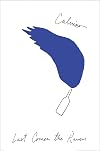
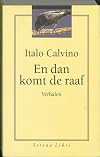
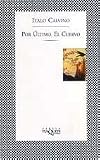
Last Comes the Raven
by Italo Calvino
On This Page
Description
"The first complete English-language edition of one of Calvino's important early short story collections"--Tags
Recommendations



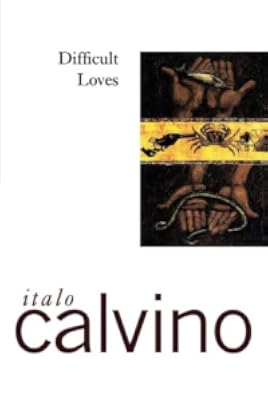


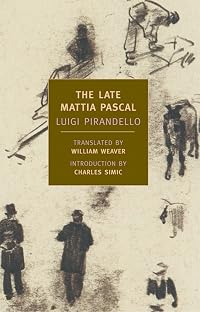
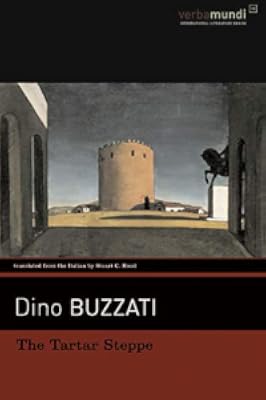

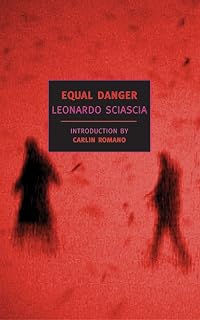










Member Recommendations

Member Reviews
Pucér kissrácok azúrkék tengerbe csobbannak. Szikár paraszt öszvér háta mögött baktat. Az erdőben mohos szikla, mögötte partizán némán fegyvert szegez. Calvino elbeszéléseiben a szép és a piszkos gyakran szinonim, ami tragikusnak ígérkezik, néha komikumba fordul, ami pedig komikus, tragédiát rejt. A képek plasztikusak, ordítanak a filmvászonért, De Sica vagy Visconti rendezze őket, ha kérhetem. Ez a neorealizmus, életszag, harsány színek, és még egyszer: életszag. Még nem a késői calvinói abszurd elhajlások - amiket imádok -, de azért nagyon ígéretes kezdet egy pazar életműhöz.
(Megjegyzés másnap: ebben a könyben láttam először úgy leírva a szót, hogy "homoszekszuális". Picit fájt.)
(Megjegyzés másnap: ebben a könyben láttam először úgy leírva a szót, hogy "homoszekszuális". Picit fájt.)
It was interesting to go back this far in Calvino's work, and it's an odd sort of collection. In the earlier stories I was struck by how relatively normal and straightforward they were, these war stories. It's not that they are bad, it's that I could believe they were by a number of other authors. Then again, it's interesting to see a style and perspective develop. Anyway then mid-book there's a run of stories that are mostly about men accosting women, how fun. Finally a few late war pieces that start to feel like Calvino. I may re-read in pieces the next time I revisit earlier works.
This collection of early stories by Italo Calvino presents an author developing his craft. The stories are short, focussed on one or two individuals, often taking place in a rural environment. At times the fabulous, or the allegorical, breaks through. A large number of the stories touch on the involuted allegiances of Italy in wartime. But all of the stories seem motivated by a strong sense of justice. Usually that is cashed out in terms of social justice and hence the divisions of class and region come to the fore. But rougher forms of justice are also to be found in the stories set during and after the war.
There are more than enough hints here of the wonderful writer that Calvino will develop into. And that makes this collection easy show more to recommend. show less
There are more than enough hints here of the wonderful writer that Calvino will develop into. And that makes this collection easy show more to recommend. show less
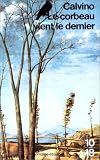
Deux enfants qui jouent à la guerre se trouvent brusquement confrontés à de vrais soldats. Un bœuf solitaire et mélancolique rêve d'un paradis perdu. Deux frères sèment la terreur dans leur village natal et d'autres encore invoquent avec force le 'droit à la paresse'. On aimera retrouver dans ces histoires et quelques autres la fantaisie, l'ironie amusée et l'invention toujours inattendue de l'auteur de Marcovaldo et du Baron perché. Ce furent ses premiers récits, il portaient déjà la marque d'un maître.
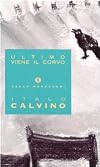
Trenta racconti in cui la prosa di Calvino si affina e in cui è possibile riconoscere in nuce tutti i temi più ampiamente trattati nelle opere successive.
May 25, 2014Italian
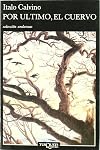
Reúne los primeros treinta cuentos escritos entre 1945 y 1949, inmediatamente después de la guerra, que él vivió desde la Resistencia. Son historias breves, algunas violentas, otras amargas, otras misteriosas y muchas grotescas
Sep 26, 2011 (Edited)Spanish
Members
- Recently Added By
Author Information

395+ Works 70,163 Members
Italo Calvino 1923-1984 Novelist and short story writer Italo Calvino was born in Cuba on October 15, 1923, and grew up in Italy, graduating from the University of Turin in 1947. He is remembered for his distinctive style of fables. Much of his first work was political, including Il Sentiero dei Nidi di Ragno (The Path of the Nest Spiders, 1947), show more considered one of the main novels of neorealism. In the 1950s, Calvino began to explore fantasy and myth as extensions of realism. Il Visconte Dimezzato (The Cloven Knight, 1952), concerns a knight split in two in combat who continues to live on as two separates, one good and one bad, deprived of the link which made them a moral whole. In Il Barone Rampante (Baron in the Trees, 1957), a boy takes to the trees to avoid eating snail soup and lives an entire, fulfilled life without ever coming back down. Calvino was awarded an honorary degree from Mount Holyoke College in 1984 and died in 1985, following a cerebral hemorrhage. At the time of his death, he was the most translated contemporary Italian writer and a contender for the Nobel Prize for Literature. (Bowker Author Biography) show less
Some Editions
Series
Belongs to Publisher Series
Work Relationships
Is contained in
Common Knowledge
- Canonical title
- Last Comes the Raven
- Original title
- Ultimo viene il corvo
- Original publication date
- 1949
- First words*
- El nuevo jardinero era un chico de pelo largo, sujeto con una cinta.
*Some information comes from Common Knowledge in other languages. Click "Edit" for more information.
Classifications
- Genres
- Fiction and Literature, General Fiction
- DDC/MDS
- 853.914 — Literature & rhetoric Italian, Romanian & related literatures Italian fiction 1900- 20th Century 1945-1999
- LCC
- PQ4809 .A45 .U4 — Language and Literature French, Italian, Spanish and Portuguese literatures Italian literature Individual authors, 1900-1960
- BISAC
Statistics
- Members
- 286
- Popularity
- 113,156
- Reviews
- 7
- Rating
- (3.67)
- Languages
- 10 — Dutch, English, French, German, Greek, Italian, Japanese, Farsi/Persian, Spanish, Turkish
- Media
- Paper, Ebook
- ISBNs
- 29
- ASINs
- 3