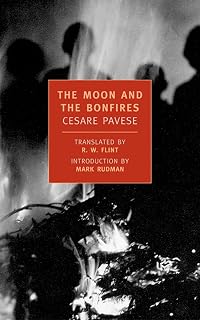
The Moon and the Bonfires
by Cesare Pavese
On This Page
Description
Winner of the 2003 PEN/Book-of-the-Month Club Translation Prize A NEW YORK REVIEW BOOKS ORIGINAL The nameless narrator of The Moon and the Bonfires, Cesare Pavese's last and greatest novel, returns to Italy from California after the Second World War. He has done well in America, but success hasn't taken the edge off his memories of childhood, when he was an orphan living at the mercy of a bitterly poor farmer. He wants to learn what happened in his native village over the long, terrible show more years of Fascism; perhaps, he even thinks, he will settle down. And yet as he uncovers a secret and savage history from the war--a tale of betrayal and reprisal, sex and death--he finds that the past still haunts the present. The Moon and the Bonfires is a novel of intense lyricism and tragic import, a masterpiece of twentieth-century literature that has been unavailable to American readers for close to fifty years. Here it appears in a vigorous new English version by R. W. Flint, whose earlier translations of Pavese's fiction were acclaimed by Leslie Fiedler as "absolutely lucid and completely incantatory." show lessTags
Recommendations

















Member Recommendations

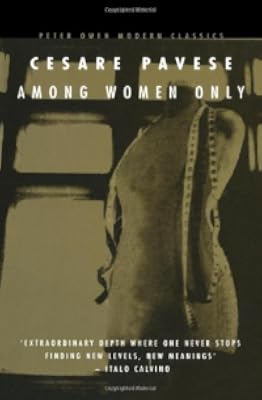
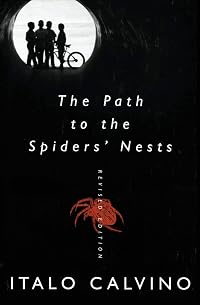
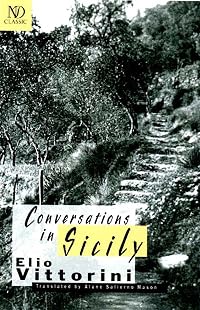
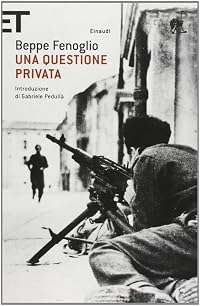
SCPeterson Although quite different, both provide a glimpse of wartime life in the Italian countryside, and both evoke a sense of melancholy and separation.


gcarl Interesting side-by-side. Protagonist "outsiders" privy to the affairs of local village affairs: internal and more broadly socio-cultural dynamics at odds with "globalization" and Post-war Italian politics
Member Reviews
I admit it: I have an irrational interest in post-war Italy. For some reason I find Itaalian confusion about the war much more interesting than German confusion about it, perhaps because it's pretty darn hard for anyone in Germany to pretend that the Nazis were, in any way, a benefit to the world, whereas there is an (entirely unpersuasive) argument for the Italian fascists. The German resistance existed, but not the way the Italian resistance did. German communists got to play out (a deeply mangled version of) their ideals after the war; Italian communists did not. So perhaps it's not as irrational as I thought. Perhaps I just prefer stories that aren't quite as morally obvious as "so, the Shoah... not good. Not good at all."
And show more that's what M&B is, really. Like Ferrante's justly popular novels, Pavese writes about a small community which has papered over the dislocations of the fascist years. Like her novels, he manages to combine very intelligent symbolism (the moon, basically, the other side of the fence where the grass etc but where there is also no there; the bonfires, the superstitions but also rootedness of the old world) and paradox with a straightforward style and garden-variety realism. So, if you like Ferrante, and haven't read this, give it a shot.
But a caveat: there are major flaws here. Our narrator, 'the eel,' has fled the fascists to the U.S.A., where he gets involved in (I think) bootleg liquor. It's all very vague, and this is no minor problem. The Eel's memories of the U.S., his relationships with people there, his description of the landscape etc., are all extremely dull (with one exception, a girlfriend, who is also fairly dull). The book can seem aimless, and I suspect it will be much better on a second read, since I now know where we're heading and why the eel's memories are being recounted.
All that said, spoiler alert here.
One interesting interpretive point: the introduction to the NYRB edition, and many reviewers here, really don't like Nuto. I think this is a mistake. Nuto is committed enough to others that he's a communist in a right-wing province (probably not the right geographical term); he's committed enough to have been a member of the resistance. Now, how do we weigh that against the fact that he let Santina be executed for espionage? The introduction here suggests more than a little that Santina was *not*, really, a spy at all, just put in the wrong circumstances and denied the guiding hand she needed--a hand that Nuto should have provided. I think this is making the interpretation far too easy. I prefer a grimmer understanding: that Santina had to be killed (resistance fighters, particularly, can't afford to have spies running around); that, ideally, she wouldn't have had to be killed; that Nuto is consumed with guilt at his role in this and tries to avoid it by lying about it; that the Eel is just as guilty for running away; that the Eel had no choice but to run away; and so on. The book presents us, I think, with a fairly clear and convincing tragic view, in which the good people (never mind the bad, they'll always be with us) are forced to do bad things. Nuto, because the resistance demanded it; the Eel, because he had to save his own life; Santina, because of the patriarchy. But Nuto stands out as someone who believes that the tragedy is human-made, rather than natural. Fascism was the sine qua non of Santina's death, Eel's exile, Nuto's crime. People did these things. They were not natural.
Which makes the book sound much more moralistic than it is. It's also an investigation of memory and so on, none of which I find very interesting. But if that's your thing, this is a better option than Sebald, for the reasons given above. show less
And show more that's what M&B is, really. Like Ferrante's justly popular novels, Pavese writes about a small community which has papered over the dislocations of the fascist years. Like her novels, he manages to combine very intelligent symbolism (the moon, basically, the other side of the fence where the grass etc but where there is also no there; the bonfires, the superstitions but also rootedness of the old world) and paradox with a straightforward style and garden-variety realism. So, if you like Ferrante, and haven't read this, give it a shot.
But a caveat: there are major flaws here. Our narrator, 'the eel,' has fled the fascists to the U.S.A., where he gets involved in (I think) bootleg liquor. It's all very vague, and this is no minor problem. The Eel's memories of the U.S., his relationships with people there, his description of the landscape etc., are all extremely dull (with one exception, a girlfriend, who is also fairly dull). The book can seem aimless, and I suspect it will be much better on a second read, since I now know where we're heading and why the eel's memories are being recounted.
All that said, spoiler alert here.
One interesting interpretive point: the introduction to the NYRB edition, and many reviewers here, really don't like Nuto. I think this is a mistake. Nuto is committed enough to others that he's a communist in a right-wing province (probably not the right geographical term); he's committed enough to have been a member of the resistance. Now, how do we weigh that against the fact that he let Santina be executed for espionage? The introduction here suggests more than a little that Santina was *not*, really, a spy at all, just put in the wrong circumstances and denied the guiding hand she needed--a hand that Nuto should have provided. I think this is making the interpretation far too easy. I prefer a grimmer understanding: that Santina had to be killed (resistance fighters, particularly, can't afford to have spies running around); that, ideally, she wouldn't have had to be killed; that Nuto is consumed with guilt at his role in this and tries to avoid it by lying about it; that the Eel is just as guilty for running away; that the Eel had no choice but to run away; and so on. The book presents us, I think, with a fairly clear and convincing tragic view, in which the good people (never mind the bad, they'll always be with us) are forced to do bad things. Nuto, because the resistance demanded it; the Eel, because he had to save his own life; Santina, because of the patriarchy. But Nuto stands out as someone who believes that the tragedy is human-made, rather than natural. Fascism was the sine qua non of Santina's death, Eel's exile, Nuto's crime. People did these things. They were not natural.
Which makes the book sound much more moralistic than it is. It's also an investigation of memory and so on, none of which I find very interesting. But if that's your thing, this is a better option than Sebald, for the reasons given above. show less
"Que significa este vale para uma família que venha do mar, que nada saiba da Lua e das fogueiras? É indispensável tê-lo sentido com os ossos do corpo, tê-lo nos ossos como o vinho e a polenta. Então é possível conhecê-lo sem ser preciso falar dele, e quando andou dentro de nós muitos anos sem sabermos, desperta agora ao chocalho de uma carroça, ao sacudir do rabo de um boi, ao sabor de uma sopa, a uma voz que se escuta na praça, à noite."
Really good indeed, 4+. Different from, but along the lines of Hemingway. Pavese has a crystal clear terse prose that brings the Italian hills and its farmers, and farmer's daughters, to life. As Eel explores and relives his past focus finally falls on the sisters that played such a central role in his formative years, and their fates, which reflect the times extraordinarily well.
A miserable book of gloom and despair. The narrator, Anguilla, tells the story on three levels 1) his village before WWII, 2) his stay of 20 years in America, 3) his return to his village. Anguilla finds almost nobody left that he knows and sees the villagers still struggling to cope with the devastation of WWII. I found nothing to like in this book; it almost seemed as if it were stream of consciousness, but because of the three very defined locales in the story, I can't really define it as such; although, I would say the book has a dreamlike quality. This was the last book the author wrote before he committed suicide and I think his troubled soul shows through in his writing.
O Italo Calvino disse que um clássico é um livro que você relê quando lê e que você lê quando relê. Antes de ler esse livro pela primeira vez, eu já tinha ouvido falar de vários aspectos desse livro, e até mesmo lido uma interpretação, a da fogueira final como outra fogueira propiciatória à colheita.
Nada disso impediu que, em minha leitura/releitura, eu ficasse atônita pela força e poesia do livro. Pavese conta uma história de desgraça, miséria e tragédia, mas com lirismo e melancolia, a ponto de que, após a leitura, a sensação mais forte é a da beleza das palavras de Pavese. Quando pensamos em Irene, Silvia, Santina, na queima da casa do menino pobre ou no exílio do protagonista, tudo isso está marcado pela show more poética do escritor. show less
Nada disso impediu que, em minha leitura/releitura, eu ficasse atônita pela força e poesia do livro. Pavese conta uma história de desgraça, miséria e tragédia, mas com lirismo e melancolia, a ponto de que, após a leitura, a sensação mais forte é a da beleza das palavras de Pavese. Quando pensamos em Irene, Silvia, Santina, na queima da casa do menino pobre ou no exílio do protagonista, tudo isso está marcado pela show more poética do escritor. show less
The Moon and the Bonfires is such an evocative title, and unlike many books with a good title, this one backs up that evocative title with layers of meaning. In the town where the unnamed narrator grew up, bonfires marked many of the most important occasions. They were the center of festivals, and when the war came they were created by burning farms, and other times they were used to burn the corpses of the departed. A bonfire is tangible, giving light and warmth, but also destructive (or purifying, if you want to look at it that way). In contrast the moon is also a source of light, but always out of grasp. It's a source of light that can't hurt you, but can't keep you warm either.
In this book the narrator has returned from a journey to show more the moon, in a way. The narrator moved to the United States, a world away from the poor farmhands or bastards of the Italian countryside, and further than most of his town could ever imagine going, but while he was there the narrator did not feel at home. Returning to the bonfires of rural Italy he still cannot feel at home, as he does not have the connection to the soil that the rest of his hometown has. As a bastard who never discovered his parentage, and who was continually moving from house to house for the earliest years of his life, the narrator did not have a chance to create those bonds that so many of us take for granted. Returning to the town after a lifetime away illustrates to the narrator the old adage "you can't go home again" is true even when you don't really have a home.
There are many parts of this book, and Pavese's writing, that I loved. The narrator is not returning to this town to complain about his childhood, nor is he world-weary really, he just has nowhere else to go and was drawn back to this Italian town. Pavese crafts a narrator that has learned from his travels, having him comment on the first page “I’ve traveled the world enough to know that all flesh is good and all of it worth the same.” Yup, that’s true, and there’s more actual insight on that first page than you’ll find in many full books.
I also appreciated the way that Pavese hints at things but leaves them in the background, or only touches them peripherally. It’s mentioned that the narrator was part of the communist resistance when he was serving in the fascist military, and it’s hinted that the way he has made his fortune was by selling moonshine, perhaps building up a criminal network to do it. Lesser authors would choose to focus on these juicy bits of the character, but Pavese isn’t using this book to entertain the reader, he’s using it to get the reader to reflect. I like an entertaining book too, but carving out a novel for introspection strikes me as a more valuable endeavor.
So why the three stars then? That’s because the wisdom and thoughts of the narrator during the early chapters quickly gives way to stories of the narrator growing up as a farm hand in the country, and the girls he liked, and the dreams he had of escape, and sometimes some stories are thrown in about Italy during the war. All of this has been done before, and while, as I mentioned, Pavese is a good writer, his prose isn’t strong enough to elevate this subject matter. I wish he had given us more of his insights and let the narrator ramble longer without being shackled to another rural bildungsroman, and maybe written a real conclusion, but Pavese chose another path. Oh well, at least we’ll still have that magnificent title to think about. show less
In this book the narrator has returned from a journey to show more the moon, in a way. The narrator moved to the United States, a world away from the poor farmhands or bastards of the Italian countryside, and further than most of his town could ever imagine going, but while he was there the narrator did not feel at home. Returning to the bonfires of rural Italy he still cannot feel at home, as he does not have the connection to the soil that the rest of his hometown has. As a bastard who never discovered his parentage, and who was continually moving from house to house for the earliest years of his life, the narrator did not have a chance to create those bonds that so many of us take for granted. Returning to the town after a lifetime away illustrates to the narrator the old adage "you can't go home again" is true even when you don't really have a home.
There are many parts of this book, and Pavese's writing, that I loved. The narrator is not returning to this town to complain about his childhood, nor is he world-weary really, he just has nowhere else to go and was drawn back to this Italian town. Pavese crafts a narrator that has learned from his travels, having him comment on the first page “I’ve traveled the world enough to know that all flesh is good and all of it worth the same.” Yup, that’s true, and there’s more actual insight on that first page than you’ll find in many full books.
I also appreciated the way that Pavese hints at things but leaves them in the background, or only touches them peripherally. It’s mentioned that the narrator was part of the communist resistance when he was serving in the fascist military, and it’s hinted that the way he has made his fortune was by selling moonshine, perhaps building up a criminal network to do it. Lesser authors would choose to focus on these juicy bits of the character, but Pavese isn’t using this book to entertain the reader, he’s using it to get the reader to reflect. I like an entertaining book too, but carving out a novel for introspection strikes me as a more valuable endeavor.
So why the three stars then? That’s because the wisdom and thoughts of the narrator during the early chapters quickly gives way to stories of the narrator growing up as a farm hand in the country, and the girls he liked, and the dreams he had of escape, and sometimes some stories are thrown in about Italy during the war. All of this has been done before, and while, as I mentioned, Pavese is a good writer, his prose isn’t strong enough to elevate this subject matter. I wish he had given us more of his insights and let the narrator ramble longer without being shackled to another rural bildungsroman, and maybe written a real conclusion, but Pavese chose another path. Oh well, at least we’ll still have that magnificent title to think about. show less
La luna e i falò tells the story of a man (known in his hometown as Anguilla, or Eel) who grew up in the Belbo valley of the Piedmont region of northeastern Italy. As he grew up he dreamed about leaving and seeing the world, which he eventually did, travelling through America and ending up in California. After an absence of nearly twenty years, he returns to his hometown. The story mixes present and past, with his present-day wanderings in the hills and valleys of his youth blended with stories from his childhood and adolescence, as well as a few anecdotes from his life in California. He talks with his friend and former mentor Nuto, who was a young musician when he left and who now has a family and land of his own. He meets Cinto, a show more young boy with a bum leg, and begins to talk to him about the world, encouraging the boy to hope for a better life in the future. Nuto doesn't think he should do this, for the boy's lameness will hinder the realization of any dreams that he may come to have; he would be better without Anguilla's encouragement. In Anguilla's absence, Nuto has seen the death and suffering brought by war, and has seen the people of their town grow older, living and dying with their dreams unfulfilled.
Anguilla was a bastard child, growing up with a family who took him in to receive a government stipend given for the care of such children. When Padrino, the head of this family, sells the family's small vineyard, he moves on to la Mora, a larger farm where he works and earns a monthly wage. The family that owns the farm has three daughters, Silvia, Irene and Santina. Anguilla was about the same age as Silvia and Irene, and he observed them as they grew up and young men began to enter into their lives, seeing how their hopes rose and fell as they grew older and their fantasies were tempered by the reality of their limited potential for social ascension in rural Italy. Their stories rise to the forefront in the second half of the book, which is mostly devoted to Anguilla's memories of his adolescence working at la Mora.
His conversations with Nuto are fascinating because they contrast two starkly different perspectives: Anguilla has left the community and traveled to the other side of the world, returning two decades later to visit his old home town. Nuto has stayed in Piedmont and sacrificed his love of music for the economic stability of farming. He has also survived the war, seeing his friends and neigbors become communists and fascists, soldiers and members of the resistence. As they talk about the town and the world, they share a rather dark and pessimistic outlook, but the paths they've traveled are very different. Anguilla's seen that life is pretty much the same the world over, that everywhere people struggle and life doesn't often live up to their hopes and dreams. Nuto's stayed in the same place and seen much the same thing happen to people he's known his whole life. I enjoyed seeing their community from this dual perspective, through the eyes of the man who departed and also the man who stayed behind. I thought it added a great deal of depth to Pavese's portrait of rural Italy.
I found this book to be an extremely compelling depiction of small town life. I lived in a small community when I was in the Peace Corps, and I spent a lot of time talking to people about the world that extended beyond the borders of their community, province and country. I wasn't born in Mongolia like Anguilla was in Piedmont, but I still related to his experience in his home town. His conversations with Cinto reminded me of dozens of conversations I had with students who were eager to learn about the places I'd been, and would tell me about their own dreams of one day traveling to South Korea or America. It was hard at times for me to reconcile their dreams with the reality of their lives in the countryside, although, unlike Anguilla in his relationship with Cinto, I shared my role as bearer of news of the greater outside world with the television, which brought news, American TV shows and South Korean soap operas into my students' lives on a daily basis. Still, almost every conversation that Anguilla has with the citizens of his home town made me think of my time in Mongolia. My neighbor and his wife had three daughters, and as I read the stories of Silvia, Irene and Santina, I thought about them and wondered how their lives would turn out, how their classmates and childhood friends would become their suitors, and whether adulthood would bring success and happiness or struggles and frustrations. I would like to have had this book with me when I was there, because it would have made me think a lot more about peoples' past, and how the children in my classroom would one day become the adults I saw at the store, in my home and in the countryside. Anguilla can compare the world he sees in Piedmont as an adult outsider to the one he inhabited as a child and adolescent, remembering people as they were twenty years ago while seeing what they have become. I wouldn't have been able to do that, but a book like this would have reminded me that my friends and neighbors possessed a shared past that contributed to their present lives as I saw them each day.
I've been devoting my two fifteen minute breaks at work to reading books in Italian, sitting at my desk and looking up words that I don't know so that I can make flash cards and study them at home. It took me five or six weeks to read this relatively short book, and as I read, I learned a lot of words related to rural Italy, its plants and animals, and farm and vineyard labor. I was excited to read a book with a countryside setting, because I enjoy learning words that relate to rural life. show less
Anguilla was a bastard child, growing up with a family who took him in to receive a government stipend given for the care of such children. When Padrino, the head of this family, sells the family's small vineyard, he moves on to la Mora, a larger farm where he works and earns a monthly wage. The family that owns the farm has three daughters, Silvia, Irene and Santina. Anguilla was about the same age as Silvia and Irene, and he observed them as they grew up and young men began to enter into their lives, seeing how their hopes rose and fell as they grew older and their fantasies were tempered by the reality of their limited potential for social ascension in rural Italy. Their stories rise to the forefront in the second half of the book, which is mostly devoted to Anguilla's memories of his adolescence working at la Mora.
His conversations with Nuto are fascinating because they contrast two starkly different perspectives: Anguilla has left the community and traveled to the other side of the world, returning two decades later to visit his old home town. Nuto has stayed in Piedmont and sacrificed his love of music for the economic stability of farming. He has also survived the war, seeing his friends and neigbors become communists and fascists, soldiers and members of the resistence. As they talk about the town and the world, they share a rather dark and pessimistic outlook, but the paths they've traveled are very different. Anguilla's seen that life is pretty much the same the world over, that everywhere people struggle and life doesn't often live up to their hopes and dreams. Nuto's stayed in the same place and seen much the same thing happen to people he's known his whole life. I enjoyed seeing their community from this dual perspective, through the eyes of the man who departed and also the man who stayed behind. I thought it added a great deal of depth to Pavese's portrait of rural Italy.
I found this book to be an extremely compelling depiction of small town life. I lived in a small community when I was in the Peace Corps, and I spent a lot of time talking to people about the world that extended beyond the borders of their community, province and country. I wasn't born in Mongolia like Anguilla was in Piedmont, but I still related to his experience in his home town. His conversations with Cinto reminded me of dozens of conversations I had with students who were eager to learn about the places I'd been, and would tell me about their own dreams of one day traveling to South Korea or America. It was hard at times for me to reconcile their dreams with the reality of their lives in the countryside, although, unlike Anguilla in his relationship with Cinto, I shared my role as bearer of news of the greater outside world with the television, which brought news, American TV shows and South Korean soap operas into my students' lives on a daily basis. Still, almost every conversation that Anguilla has with the citizens of his home town made me think of my time in Mongolia. My neighbor and his wife had three daughters, and as I read the stories of Silvia, Irene and Santina, I thought about them and wondered how their lives would turn out, how their classmates and childhood friends would become their suitors, and whether adulthood would bring success and happiness or struggles and frustrations. I would like to have had this book with me when I was there, because it would have made me think a lot more about peoples' past, and how the children in my classroom would one day become the adults I saw at the store, in my home and in the countryside. Anguilla can compare the world he sees in Piedmont as an adult outsider to the one he inhabited as a child and adolescent, remembering people as they were twenty years ago while seeing what they have become. I wouldn't have been able to do that, but a book like this would have reminded me that my friends and neighbors possessed a shared past that contributed to their present lives as I saw them each day.
I've been devoting my two fifteen minute breaks at work to reading books in Italian, sitting at my desk and looking up words that I don't know so that I can make flash cards and study them at home. It took me five or six weeks to read this relatively short book, and as I read, I learned a lot of words related to rural Italy, its plants and animals, and farm and vineyard labor. I was excited to read a book with a countryside setting, because I enjoy learning words that relate to rural life. show less
Members
- Recently Added By
Lists

The Guardian's 1000 Novels Everyone Must Read
1,005 works; 552 members

1001 Books You Must Read Before You Die
1,448 works; 1,137 members

Recommend the 20 best books you've read in the last five years
2,168 works; 609 members

Books Set in Italy
167 works; 19 members

Italian Literature
558 works; 43 members

1950s
340 works; 22 members

Canon de la narrativa universal del siglo XX
254 works; 6 members

1,001 BYMRBYD Concensus
723 works; 27 members

Best Italian Novels
25 works; 3 members

Literature in Translation
113 works; 5 members

Bibliografia essenziale
86 works; 2 members
Canon de la narrativa universal del s. XX (cicutadry)
499 works; 3 members
Lista dei 100 migliori libri italiani degli ultimi 200 anni
100 works; 1 member
Reading LIst
648 works; 1 member
Talk Discussions
Past Discussions
Group Read, January 2018: The Moon and the Bonfires in 1001 Books to read before you die (January 2018)
Author Information

316+ Works 8,111 Members
In Torino in his native Piedmont, Pavese studied English and American literature and wrote a dissertation on Walt Whitman. He read and translated Defoe, Dickens, Joyce , Dos Passos, Stein and Faulkner and his version of Melville's , Moby Dick is a classic. Except for his book of poems Lavorare stanca (Work Wearies) (1936), Pavese's chief works are show more the novels The Comrade (1948), La Casa in Collina (The House on the Hill) (1949), Prima che il gallo canti (Before the Cock Crows) (1949), La bella estate (The Beautiful Summer) (1949), and his last and best, The Moon and the Bonfire (1952). During World War II, he was head of the Rome office of the publishing house of Einaudi and, with Elio Vittorini, did much to encourage young writers. Although a member of the Communist Party, he had not joined the anti-Fascist resistance. Unhappy in love, unable to believe in Christ, and disappointed with things in postwar Italy, he finally made good on what he had often urged as the finest of "final solutions" for himself, committing suicide after winning the coveted Strega Prize, for La bella estate. (Bowker Author Biography) show less
Some Editions
Awards and Honors
Awards
Notable Lists
Series
Belongs to Publisher Series
Work Relationships
Is contained in
Has as a study
Common Knowledge
- Canonical title
- The Moon and the Bonfires
- Original title
- La luna e i falò
- Original publication date
- 1949 (original Italian) (original Italian)
- People/Characters
- Narrator (Eel); Nuto; Cinto; Silvia; Irene; Santina
- Important places
- Piedmont, Italy; California, USA
- Important events
- World War II
- Dedication*
- for C.
Ripeness is all - First words
- I had a reason for coming back to this town, here instead of to Canelli, Barbaresco or Alba.
- Quotations
- If I'd owned this piece of riverbank I might well have cleared it and planted grain; but now it affected me like those rooms you rent in the city and live in for a day or for years and then when you move they stay behind, emp... (show all)ty, dead, disposable shells.
Boys, women, the world are certainly no different. They don't carry parasols any longer, Sundays they go to the movies instead of the fair, they send their grain to the grain pool, the girls smoke - yet life is the same, and... (show all) they don't know that one day they will look around and for them, too, everything will have passed.
The first thing I said when I got off the boat at Genoa among houses smashed by the war was that every house, every courtyard, every terrace had meant something to someone, and that even more than the physical ruin and the de... (show all)ad, you hate to think of so many years of living, so many memories wiped out like that in one night without leaving a sign. Or maybe I'm wrong. Maybe it's better that way, better for everything to go up in a bonfire of dry grass and for people to begin again. - Last words
- (Click to show. Warning: May contain spoilers.)The mark was still there last year, like the bed of a bonfire."
- Original language
- Italian
*Some information comes from Common Knowledge in other languages. Click "Edit" for more information.
Classifications
- Genres
- General Fiction, Fiction and Literature
- DDC/MDS
- 853.912 — Literature & rhetoric Italian, Romanian & related literatures Italian fiction 1900- 20th Century 1900-1945
- LCC
- PQ4835 .A846 .L813 — Language and Literature French, Italian, Spanish and Portuguese literatures Italian literature Individual authors, 1900-1960
- BISAC
Statistics
- Members
- 1,655
- Popularity
- 13,629
- Reviews
- 32
- Rating
- (3.69)
- Languages
- 16 — Catalan, Danish, Dutch, English, Finnish, French, German, Italian, Japanese, Norwegian (Bokmål), Norwegian, Portuguese, Russian, Spanish, Swedish, Turkish
- Media
- Paper, Audiobook, Ebook
- ISBNs
- 55
- ASINs
- 37