On This Page
Description
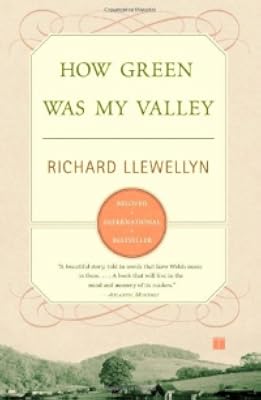
The international bestselling winner of the National Book Award and the basis for the Academy Award Best Picture film directed by John Ford. Huw Morgan remembers the days when his home valley was prosperous, verdant, and beautiful-before the mines came to town. The youngest son of a respectable mining family in South Wales, he is now the only one left in the valley, and his reminiscences tell the story of a family and a town both defined and ruined by the mines. Huw's story is both joyful show more and heartrending-a portrait of a place and a people existing now only in memory. Full of memorable characters, richly crafted language, and surprising humor, How Green Was My Valley is the first of four books chronicling Huw's life, including the sequels Up into the Singing Mountain, Down Where the Moon is Small, and Green, Green My Valley Now. show lessTags
Recommendations


















Member Recommendations
ecleirs24 Coming of Age


Member Reviews
“There is no fence or hedge round Time that has gone.
You can go back and have what you like if you remember it well enough.”
It's been a long time since I've cried that aching cry for fictional characters as I just did for the Morgans and their green Welsh valley.
The book is about change, often bitter changes, changes that cannot be prevented, and changes that could be prevented but each shortsighted generation has other things on their minds. The book is about natural changes, the natural change of a boy as he grows into a man, changes when we find love and change when love is lost, and the most unreconcilable change of all: when people we know as well as we know ourselves will die.
Reading it, I was keenly aware of other changes show more too, the many I've seen in my one lifetime. I recognized a lot of old ideas and old norms that were prevalent in this 1939 book, many of those those ideas and norms were there in my grandparents in 1969. Some for better, some for worse. I thought of the many changes now, decades later. Some are for the better, some that are disheartening to the spirit, and so many that remain desperately unrealized but needed.
The beauty and ache of the book is in the sensitivity of Llewellyn's writing. The story is timeless, in spite of the many changes it chronicles, because families and love, songs and good food, strivings to be good and to be just, and growing up and growing old, all are timeless.
There is a lovely book, it is, little one. show less
You can go back and have what you like if you remember it well enough.”
It's been a long time since I've cried that aching cry for fictional characters as I just did for the Morgans and their green Welsh valley.
The book is about change, often bitter changes, changes that cannot be prevented, and changes that could be prevented but each shortsighted generation has other things on their minds. The book is about natural changes, the natural change of a boy as he grows into a man, changes when we find love and change when love is lost, and the most unreconcilable change of all: when people we know as well as we know ourselves will die.
Reading it, I was keenly aware of other changes show more too, the many I've seen in my one lifetime. I recognized a lot of old ideas and old norms that were prevalent in this 1939 book, many of those those ideas and norms were there in my grandparents in 1969. Some for better, some for worse. I thought of the many changes now, decades later. Some are for the better, some that are disheartening to the spirit, and so many that remain desperately unrealized but needed.
The beauty and ache of the book is in the sensitivity of Llewellyn's writing. The story is timeless, in spite of the many changes it chronicles, because families and love, songs and good food, strivings to be good and to be just, and growing up and growing old, all are timeless.
There is a lovely book, it is, little one. show less
Wow. I really was disappointed by this book, and was surprised by my own reaction, which was very different from most of my GR friends.
There were many reasons why I wasn't moved, either emotionally or intellectually, by Llewellyn's novel. To begin with, I knew, of course, that he wasn't really Welsh; that he committed a fraud (and I don't think I'm being too harsh here) by insisting all his life that he was born in Wales, and was raised in Wales and only educated in England. Other readers, of course, can--and do--view the children of immigrants as having a special insight into the culture of the parents which can be a satisfactory substitute for direct knowledge. I don't myself; perhaps it is because I am the child and grandchild of show more immigrants, and I am acutely aware of how much I really don't grasp. I don't know if I would have been so acutely conscious of how second- hand most of the information that Llewelyn was passing on; I would like to think so. As it was, only the music and the food (the bits of culture that the immigrant can most easily pass on to the child) felt authentic to me. (Yes, I would like to sample some brandy broth!) That--and the descriptions, towards the end, of the house being slowly suffocated in slag. That felt real, too. But no, I am sorry, so much of the book seemed self-conscious and rather false to me; a Mrs Miniver tinged "A Million Little Pieces".
That sounds tough, I know, and I think another reason I'm being so critical is that I'm judging this book, naturally enough, by the books I've read just before this one. I've been doing an around the world book challenge, and I've been trying to read my books in geographic order. Well, most authors would suffer in comparison with Dylan Thomas (a true poet who makes Llewelyn's sing-songy efforts look rather flat); or Flaubert, whose cool and precise description of exactly what effects arsenic has on the body horrified me, (whereas Llewelyn's descriptions of the starving miners seem blurred and cliched, and left me completely unmoved.) Maybe it's unfair to compare this author to two of the masters of world literature, but I also read [b:The Book of Ebenezer le Page|750407|The Book of Ebenezer le Page|G.B. Edwards|http://d.gr-assets.com/books/1320461496s/750407.jpg|1091545] and [b:Venetia Kelly's Traveling Show: A Novel of Ireland|6704682|Venetia Kelly's Traveling Show A Novel of Ireland|Frank Delaney|http://d.gr-assets.com/books/1320421989s/6704682.jpg|6900439] during the same time period. When Edwards told me the type of tomatoes that would grow best on Guernsey, I knew I could trust him; when Frank Delaney would stop his tale and explain the mores of 1930's rural Ireland, I had faith that he was telling me the truth, as much as anyone can be trusted to resurrect the thought patterns of a vanished time.
Historical fiction, which I love, is a tricky thing. There's always a filter of the writer's time period, always, always, no matter how much the author tries to rid themselves of their own mind-set. With "How Green is My Valley", I was always conscious that there were two filters; my own, and Llewellyn's 1930 sensibilities. Again, if I thought this book really excellent, I could accept that, and I would find Llewellyn's world outlook, influenced by the imminent outbreak of WWII, interesting in its own right. But the figures are so trite, all stiff-yet-trembling-upper lip. The Mary-Sue sister-in- law that Huw, the protagonist, is in love with, with laughter always in her eyes. The fiery brother. The stalwart father. The mother who is so proud of her cooking. They are all figures out of a John Ford movie--which indeed he did film, as soon as possible--and which, weirdly, I could NOT get out of my head, even though I've never seen that particular Ford picture. Up and down the mountain the mountain they were going, singing always. I felt constantly manipulated; and yes, it is the author's job to manipulate the reader, but you've got to trust the author, you've got to feel that you are in good hands. And I didn't. Not for a moment.
One of the things that really bothered me was the emphasis on fighting. Yes, it was a tough time, and there was very little law, apparently, in that era and place; that wasn't the problem for me. It was quite obvious, too, that LLewellyn got a real thrill out of writing those scenes; there is a nasty boxing match is particular that is described in great detail, though it is completely extraneous to the course of the novel. What bugged me was that Huw's not-taking-anything-from-anybody's stance was never explored, but glorified. OK; that's fine, too, but let's be honest here: Huw's pugnacious attitude, which caused him to be thrown out of school right before he was to take entrance exams and had him arrested when he beat up someone who was making "remarks" about his sister and had him fired from every job he ever held circumscribed, if not actually blighted his life. You're kidding yourself if you think that ending up as a collier or a woodworker--and what was that BS about not accepting that bread-and-butter-work of making coffins? Please. was the best outcome for Huw, especially since in reality the effects of having a bone-shattering accident would have lingered throughout his life. It's easy to put the proudly self-sufficient working-by-the-sweat-of-his-brow honest laboring man on a pedestal, if you don't actually have to DO the work. Like Llewellyn.
I can't say that I was particularly thrilled by the audio book format. It wasn't bad, but I've listened to two audio books set in Wales this year; neither of the first-person narration was done by someone from the country. This would never be seen as acceptable for a book set in Scotland or Ireland nowadays. Why is it OK to fake a Welsh accent? It seems more than a bit of a slight to the culture.
I was wavering between two and three stars, until I came across the passage, describing Huw's first kiss:
"The softness of her mouth was a glory of surprise, and cool, not even warm, with an easiness of moisture, and the tip of her tongue making play in idle strolling, lazily, and yet full of life, and her weight lying heavily upon me, her hair falling about our faces, shutting out the light, and all other smells save that of her, that was the perfume of the broad, sweet lands of the living flesh, that rose from her, and covered her about and followed her as she walked."
Fraudulent author; all right. Cardboard characters; OK. A macho glorification of violence; go right ahead. But bad sex writing--well, there are some things that I just can't accept. show less
There were many reasons why I wasn't moved, either emotionally or intellectually, by Llewellyn's novel. To begin with, I knew, of course, that he wasn't really Welsh; that he committed a fraud (and I don't think I'm being too harsh here) by insisting all his life that he was born in Wales, and was raised in Wales and only educated in England. Other readers, of course, can--and do--view the children of immigrants as having a special insight into the culture of the parents which can be a satisfactory substitute for direct knowledge. I don't myself; perhaps it is because I am the child and grandchild of show more immigrants, and I am acutely aware of how much I really don't grasp. I don't know if I would have been so acutely conscious of how second- hand most of the information that Llewelyn was passing on; I would like to think so. As it was, only the music and the food (the bits of culture that the immigrant can most easily pass on to the child) felt authentic to me. (Yes, I would like to sample some brandy broth!) That--and the descriptions, towards the end, of the house being slowly suffocated in slag. That felt real, too. But no, I am sorry, so much of the book seemed self-conscious and rather false to me; a Mrs Miniver tinged "A Million Little Pieces".
That sounds tough, I know, and I think another reason I'm being so critical is that I'm judging this book, naturally enough, by the books I've read just before this one. I've been doing an around the world book challenge, and I've been trying to read my books in geographic order. Well, most authors would suffer in comparison with Dylan Thomas (a true poet who makes Llewelyn's sing-songy efforts look rather flat); or Flaubert, whose cool and precise description of exactly what effects arsenic has on the body horrified me, (whereas Llewelyn's descriptions of the starving miners seem blurred and cliched, and left me completely unmoved.) Maybe it's unfair to compare this author to two of the masters of world literature, but I also read [b:The Book of Ebenezer le Page|750407|The Book of Ebenezer le Page|G.B. Edwards|http://d.gr-assets.com/books/1320461496s/750407.jpg|1091545] and [b:Venetia Kelly's Traveling Show: A Novel of Ireland|6704682|Venetia Kelly's Traveling Show A Novel of Ireland|Frank Delaney|http://d.gr-assets.com/books/1320421989s/6704682.jpg|6900439] during the same time period. When Edwards told me the type of tomatoes that would grow best on Guernsey, I knew I could trust him; when Frank Delaney would stop his tale and explain the mores of 1930's rural Ireland, I had faith that he was telling me the truth, as much as anyone can be trusted to resurrect the thought patterns of a vanished time.
Historical fiction, which I love, is a tricky thing. There's always a filter of the writer's time period, always, always, no matter how much the author tries to rid themselves of their own mind-set. With "How Green is My Valley", I was always conscious that there were two filters; my own, and Llewellyn's 1930 sensibilities. Again, if I thought this book really excellent, I could accept that, and I would find Llewellyn's world outlook, influenced by the imminent outbreak of WWII, interesting in its own right. But the figures are so trite, all stiff-yet-trembling-upper lip. The Mary-Sue sister-in- law that Huw, the protagonist, is in love with, with laughter always in her eyes. The fiery brother. The stalwart father. The mother who is so proud of her cooking. They are all figures out of a John Ford movie--which indeed he did film, as soon as possible--and which, weirdly, I could NOT get out of my head, even though I've never seen that particular Ford picture. Up and down the mountain the mountain they were going, singing always. I felt constantly manipulated; and yes, it is the author's job to manipulate the reader, but you've got to trust the author, you've got to feel that you are in good hands. And I didn't. Not for a moment.
One of the things that really bothered me was the emphasis on fighting. Yes, it was a tough time, and there was very little law, apparently, in that era and place; that wasn't the problem for me. It was quite obvious, too, that LLewellyn got a real thrill out of writing those scenes; there is a nasty boxing match is particular that is described in great detail, though it is completely extraneous to the course of the novel. What bugged me was that Huw's not-taking-anything-from-anybody's stance was never explored, but glorified. OK; that's fine, too, but let's be honest here: Huw's pugnacious attitude, which caused him to
I can't say that I was particularly thrilled by the audio book format. It wasn't bad, but I've listened to two audio books set in Wales this year; neither of the first-person narration was done by someone from the country. This would never be seen as acceptable for a book set in Scotland or Ireland nowadays. Why is it OK to fake a Welsh accent? It seems more than a bit of a slight to the culture.
I was wavering between two and three stars, until I came across the passage, describing Huw's first kiss:
"The softness of her mouth was a glory of surprise, and cool, not even warm, with an easiness of moisture, and the tip of her tongue making play in idle strolling, lazily, and yet full of life, and her weight lying heavily upon me, her hair falling about our faces, shutting out the light, and all other smells save that of her, that was the perfume of the broad, sweet lands of the living flesh, that rose from her, and covered her about and followed her as she walked."
Fraudulent author; all right. Cardboard characters; OK. A macho glorification of violence; go right ahead. But bad sex writing--well, there are some things that I just can't accept. show less
This novel is a coming-of-age story set in the Welsh coal mining region that blends sentimental nostalgia with gritty reality. The narrator is Huw Morgan, the 8th of 9 children and the youngest son in a family of coal miners. An accident in Huw's childhood makes him unable to walk for several years and during that time he develops a passion for reading that leads to him going on to higher levels of education than the rest of his family.
Through the novel Huw observes the conflicts between the miners and the companies that own the mines that leads to union organizing and strikes. Huw's father Gwilym and some of his brothers are opposed to activism while other brother are labor organizers. Over time the declining fortunes in the valley show more lead to Huw's siblings leaving Wales to try their luck elsewhere. Huw also observes the environmental degradation to the valley by the mining operations. The novel also deals with gossip and scandals in the valley such as affairs and unplanned pregnancy. While Gwilym supports Huw's education, his mother Beth is firmly against it, especially when Huw's teacher only speaks in English and discriminates against the Welsh.
There are apparently a whole series of books about Huw Morgan, but I think I've had my fill of Huw. The style of writing is too old-fashioned for my taste although I can see why it's considered a classic novel. I once watched the film adaptation of How Green Was My Valley as a teenager (mainly because I had a crush on Maureen O'Hara) but I don't remember it at all. I will have to rewatch the movie and see how faithful it is to the book. show less
Through the novel Huw observes the conflicts between the miners and the companies that own the mines that leads to union organizing and strikes. Huw's father Gwilym and some of his brothers are opposed to activism while other brother are labor organizers. Over time the declining fortunes in the valley show more lead to Huw's siblings leaving Wales to try their luck elsewhere. Huw also observes the environmental degradation to the valley by the mining operations. The novel also deals with gossip and scandals in the valley such as affairs and unplanned pregnancy. While Gwilym supports Huw's education, his mother Beth is firmly against it, especially when Huw's teacher only speaks in English and discriminates against the Welsh.
There are apparently a whole series of books about Huw Morgan, but I think I've had my fill of Huw. The style of writing is too old-fashioned for my taste although I can see why it's considered a classic novel. I once watched the film adaptation of How Green Was My Valley as a teenager (mainly because I had a crush on Maureen O'Hara) but I don't remember it at all. I will have to rewatch the movie and see how faithful it is to the book. show less
This melancholic elegy for departed loved ones and the vanished way of life of a Welsh coal mining town is one of the most beautiful books ever written. The narrator, Huw Morgan, tells the story of the lives and loves of his extended family and their townfolk as their closeknit community disintegrates under the pressures of modern life and the decreasing profitability of the mine--from brothers who have to move to America to make a living or others who are killed in the coal pits, to the widowed sister-in-law who Huw loves for years but never tells, to Mr. Gruffudd the local minister who helps Huw through childhood paralysis & becomes his tutor, to Dai Bando who teaches him to box and most of all to the beloved parents who suffer long show more but love greatly. The language itself is lyrical and haunting, the story ineffably sad. But always, Huw reminds us that these remarkable people live on in him.
This is the second time I have read this book. The first time I don't think I fully appreciated it as I was 16 years old and was being "forced" to read it for a literature class. I am so glad I gave it another look after I had matured. It is indeed a true classic that is timeless. show less
This is the second time I have read this book. The first time I don't think I fully appreciated it as I was 16 years old and was being "forced" to read it for a literature class. I am so glad I gave it another look after I had matured. It is indeed a true classic that is timeless. show less
Richard Llewellyn has crafted a fine modern day classic with his expansive family saga set in the late 1800s in a South Wales coal mining town. Huw Morgan, now an old man, is ready to leave his home forever as a black slag heap threatens the village. But, before he goes, he looks back on his childhood and young adult life. His memories include work in the coal mines and the formation of unions with their strikes and violence; as well as more tender moments of a boy's first love.
Beginning when Huw is only six years old, How Green Was My Valley is lovingly told and builds to its inevitable ending with a grace and simplicity enhanced by Llewellyn's fine voice and lyrical Welsh dialect. The characters that inhabit the novel are tender, show more humorous, strong and real. One of my favorites is Mr. Gruffydd, the village pastor, who befriends Huw and his family.
Llewellyn writes as a musician composes a great symphony - exacting, beautifully wrought, with an ear for poetry and harmony. How Green Was My Valley is a novel about family unity, love, the pain of disappointment and the joy of shared dreams; it is about the strength of neighbors and the beauty of the Welsh countryside. Exquisitely rendered, it is a story the reader immerses herself in and never wants to end.
Highly recommended. show less
Beginning when Huw is only six years old, How Green Was My Valley is lovingly told and builds to its inevitable ending with a grace and simplicity enhanced by Llewellyn's fine voice and lyrical Welsh dialect. The characters that inhabit the novel are tender, show more humorous, strong and real. One of my favorites is Mr. Gruffydd, the village pastor, who befriends Huw and his family.
Llewellyn writes as a musician composes a great symphony - exacting, beautifully wrought, with an ear for poetry and harmony. How Green Was My Valley is a novel about family unity, love, the pain of disappointment and the joy of shared dreams; it is about the strength of neighbors and the beauty of the Welsh countryside. Exquisitely rendered, it is a story the reader immerses herself in and never wants to end.
Highly recommended. show less
A beautiful coming of age story in an early 20th century Welsh coal mining village. The story has all the hallmarks of a classic coming of age tale but it’s not the plot that makes this such a classic, it’s Llewelyn’s rich almost lyrical prose. Llewelyn pens more brilliant lines in one chapter than most authors do in their whole career. I really wish I had kept a notebook with me while reading to capture them. He has a talent for capturing indescribable innermost feelings and truths. Nostalgia leaps off the page and reminds the reader that the beauty of yesteryear is no less beautiful for being gone. Should’ve been called How good was my book.
How Green Was My Valley immerses us in the middle of life in a coalmining village of Wales. It does so very effectively by having the narrator reflect back on his life, as he is now leaving his beloved village. This is truly a classic, the writing is stunning in its beauty and lyrical quality.
We are introduced to the young Huw Morgan and his loving, close-knit family. Our emotions are in for some heart wrenching experiences quickly. Huw's father and brothers work in the mines, as do almost all of the men in the village. His brothers are starting to stir up unrest by speaking out for Unions. When Huw guides his mother to the location of one of their meetings at her request, they end up getting lost in a blizzard on the way home. The show more mother falls in the stream and Hugh manages to get under her saving her life, but nearly killing himself in the process, and badly breaking his leg. He is bedridden for several years. It is the local pastor who eventually gets him back up on his feet and slowly able to walk again. They develop a lifelong deep bond of friendship.
The depiction of family, home life, and life in the village is stunning in its warmth and detail. From the food to the clothing to the furniture and everything else you can think of, it is all to be found in this story. The descriptions of food and its preparation will have your mouth watering. I absolutely loved the quaint pattern of speech the villagers used.
Huw's older siblings are starting to marry and dramas of love and broken hearts, even to the point of madness, unfold for us now.
Always, we are aware that tragedy and hard times loom on the horizon for Huw, his family and the village. The coalmining situation is untenable and the slag heaps grow bigger by the day. It's inevitable that one day they will overrun the village, though that's a distant future no one is willing to think about.
I did not like the violence, in the form of fighting and boxing, that was a big part of Welsh men's lives as depicted in this book. I especially didn't like that Huw, otherwise a very intelligent, sensitive, warm and loving boy participated in, and was even instructed in, violent fighting; in fact severely injuring several men throughout the story. The rampant prejudice and injustice perpatrated on the Welsh by the English was also disheartening, as was the villagers' own hypocrisy and religious zealotry which led to outrages of abuse and violence against those whom they condemned on moral grounds.
It is nothing short of miraculous how the writing encompasses all of this, and all of these people's lives and dramas, in this book; how deftly it is crafted. And we always know we must prepare ourselves for the ending. While you won't know exactly how it will unfold; darkness, sadness and tragedy are foreshadowed from the very beginning of the book. This is one of those classic stories that you will never forget. show less
We are introduced to the young Huw Morgan and his loving, close-knit family. Our emotions are in for some heart wrenching experiences quickly. Huw's father and brothers work in the mines, as do almost all of the men in the village. His brothers are starting to stir up unrest by speaking out for Unions. When Huw guides his mother to the location of one of their meetings at her request, they end up getting lost in a blizzard on the way home. The show more mother falls in the stream and Hugh manages to get under her saving her life, but nearly killing himself in the process, and badly breaking his leg. He is bedridden for several years. It is the local pastor who eventually gets him back up on his feet and slowly able to walk again. They develop a lifelong deep bond of friendship.
The depiction of family, home life, and life in the village is stunning in its warmth and detail. From the food to the clothing to the furniture and everything else you can think of, it is all to be found in this story. The descriptions of food and its preparation will have your mouth watering. I absolutely loved the quaint pattern of speech the villagers used.
Huw's older siblings are starting to marry and dramas of love and broken hearts, even to the point of madness, unfold for us now.
Always, we are aware that tragedy and hard times loom on the horizon for Huw, his family and the village. The coalmining situation is untenable and the slag heaps grow bigger by the day. It's inevitable that one day they will overrun the village, though that's a distant future no one is willing to think about.
I did not like the violence, in the form of fighting and boxing, that was a big part of Welsh men's lives as depicted in this book. I especially didn't like that Huw, otherwise a very intelligent, sensitive, warm and loving boy participated in, and was even instructed in, violent fighting; in fact severely injuring several men throughout the story. The rampant prejudice and injustice perpatrated on the Welsh by the English was also disheartening, as was the villagers' own hypocrisy and religious zealotry which led to outrages of abuse and violence against those whom they condemned on moral grounds.
It is nothing short of miraculous how the writing encompasses all of this, and all of these people's lives and dramas, in this book; how deftly it is crafted. And we always know we must prepare ourselves for the ending. While you won't know exactly how it will unfold; darkness, sadness and tragedy are foreshadowed from the very beginning of the book. This is one of those classic stories that you will never forget. show less
Members
- Recently Added By
Lists

The Guardian's 1000 Novels Everyone Must Read
1,005 works; 548 members

Read the book and saw the movie
1,170 works; 192 members

Recommend the 20 best books you've read in the last five years
2,168 works; 607 members

Top Five Books of 2018
802 works; 265 members

Best family sagas
244 works; 34 members

Publisher's Weekly Bestsellers - Part II - 1940 - 1979
355 works; 6 members

Mensa for Kids Excellence in Reading Award Program (Grades 9-12)
116 works; 5 members

1930s
262 works; 5 members

A Rainbow of Books: Colors in the Title
570 works; 24 members

Books with Colourful Titles
171 works; 8 members

Blue Pyramid 1,276 Best Books of All Time
1,248 works; 32 members
Mensa for Kids Excellence in Reading Award Program (Grades 9-12)
116 works; 3 members

Stories set in The British Isles
51 works; 1 member

CCE 1000 Good Books List
1,033 works; 12 members

Books Referenced by Izetbegovic's Islam Between East and West
233 works; 2 members

Books We Want To Read Again For The First Time
384 works; 160 members
The Five Books That Represent Us
391 works; 149 members
Author Information

34+ Works 2,962 Members
Awards and Honors
Awards
Distinctions
Series

Belongs to Publisher Series
Work Relationships
Contains
Has the adaptation
Common Knowledge
- Canonical title
- How Green Was My Valley
- Original title
- How Green Was My Valley
- Original publication date
- 1939
- People/Characters
- Huw Morgan; Gwilym Morgan; Beth Morgan; Ivor Morgan; Ianto Morgan; Davy Morgan (show all 11); Owen Morgan; Angharad Morgan; Ceridwen Morgan; Bronwen Morgan; Mr. Gruffydd
- Important places
- Wales, UK
- Related movies
- How Green Was My Valley (1941 | IMDb); How Green Was My Valley (1975 | IMDb); Pleader (2017 | IMDb)
- Dedication
- To my father and the land of my fathers
- First words
- I am going to pack my two shirts with my other socks and my best suit in the little blue cloth my mother used to tie round her hair when she did the house, and I am going from the Valley.
- Quotations
- It is very strange to think back like this, although come to think of it, there is no fence or hedge round Time that has gone. You can go back and have what you like if you remember it well enough.
Singing was in my father as sight is in the eye.
Along the river it was, outside the village, and in that day a little paradise, with the river so clear and broadly green, and silver about the rocks, and willows bending to wash, and reeds in plenty for the frogs, and fish f... (show all)or the herons, and quiet for the ducks and little water-hens.
Dear little house that I have lived in, there is happiness you have seen, even before I was born. In you is my life, and all the people I have loved are a part of you, so to go out of you, and leave you, is to leave myself.
Beautiful were the days that are gone, and O, for them to be back. The mountain was green, and proud with a good covering of oak and ash, and washing his feet in a streaming river clear as the eyes of God. The winds came do... (show all)wn with the scents of the grass and wild flowers, putting a sweetness to our noses, and taking away so that nobody could tell what beauty had been stolen, only that the winds were old robbers who took something from each grass and flower and gave it back again, and gave a little to each of us, and took it away again.
O, there is lovely to feel a book, a good book, firm in the hand, for its fatness holds rich promise, and you are hot inside to think of good hours to come. - Last words
- (Click to show. Warning: May contain spoilers.)How green was my Valley, then, and the Valley of them that have gone.
- Original language
- English
Classifications
Statistics
- Members
- 2,523
- Popularity
- 7,644
- Reviews
- 62
- Rating
- (4.12)
- Languages
- 13 — Danish, Dutch, English, Finnish, French, German, Hungarian, Italian, Japanese, Norwegian (Bokmål), Spanish, Swedish, Turkish
- Media
- Paper, Audiobook, Ebook
- ISBNs
- 75
- UPCs
- 4
- ASINs
- 83