The Hired Man
by Aminatta Forna
On This Page
Description
Gost is surrounded by mountains and fields of wild flowers. The summer sun burns. The winter brings freezing winds. Beyond the boundaries of the town an old house which has lain empty for years is showing signs of life. One of the windows, glass darkened with dirt, today stands open, and the lively chatter of English voices carries across the fallow fields. Laura and her teenage children have arrived. A short distance away lies the hut of Duro Kolak who lives alone with his two hunting dogs. show more As he helps Laura with repairs to the old house, they uncover a mosaic beneath the ruined plaster and, in the rising heat of summer, painstakingly restore it. But Gost is not all it seems; conflicts long past still suppurate beneath the scars. show lessTags
Recommendations

















Member Recommendations
Member Reviews
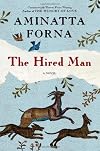
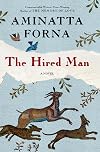
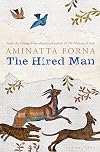
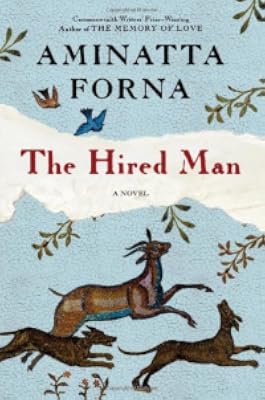
With a beautiful cover of a mosaic of prancing animals, a byline putting the spotlight on the author's previous book The Memory of Love, ultra-feminine -a ending names with a first name evoking a diminuitive, an open-to-interpretation title and a blurb describing a woman and her two children moving to an old house in an idyllic, picturesque small town helped by a bachelor neighbour, you might assume the novel is some frothy romance with inconsequential obstacles. And you would be completely wrong.
Set in small town in Croatia, the author intertwines the protagonist's past and present to explore competing and complementary themes which are magnified in a civil war. (Is this a spoiler? I was completely ignorant of Croatian history, but not show more knowing did not detract from my enjoyment of the story yet did unnecessarily compound the tension and mystery.) The breakdown of society and its subsequent resurrection, there are national changes, but what happens to the everyday people? Your neighbours, who betrayed other neighbours, who looted those abandoned homes, when it is all over, they are still there, they are still your neighbours, what do you do now that things are back to "normal"?, do you forgive?, or do you just live with the knowledge that they had and can turn against you anytime?
Nevertheless, time dulls, and years later, only a few remembers and the slow influx of outside influence/ignorance infiltrates and dilutes the collective memory. The new ones disregard the past - not intentionally, but they also do not try very hard to unearth the dark history of what they view as an untouched-by-mass-tourism haven - and mistake horrors for beauty, the most notable example the field of wildflowers, unaware of undetonated mines underneath.
The author expertly paints extends this dichotomy of surface appearances versus underlying truth, in renovating houses and building characters. Most are stock characters, serving the purpose of this being Duro's story, and probably also due to this being his story, with the end result of him being the most drawn out character. Duro's outward friendliness to the English family masks his secret punitive agendas, the final climax of his long-con was satisfying and the slow build of his subtle manipulations had me rereading some of his underhandedness in admiration. My other favourite character is Anka, who is almost too saintly but idealising your first love is probably inevitable and allows the novel to upend the usual first-love-is-the-be-all-end-all of all other potential relationships which pleased and saddened me simultaneously.
Despite all these heavy themes, the author manages to keep the story floating. Her almost casual tone, peppered with occasional jarring dark imagery, slowly builds in the reader's subconscious, until it is relentless and amplified and you end with a very different and dark book to the renovating diary you started with. Recommended for fifteen-years and up. show less
Set in small town in Croatia, the author intertwines the protagonist's past and present to explore competing and complementary themes which are magnified in a civil war. (Is this a spoiler? I was completely ignorant of Croatian history, but not show more knowing did not detract from my enjoyment of the story yet did unnecessarily compound the tension and mystery.) The breakdown of society and its subsequent resurrection, there are national changes, but what happens to the everyday people? Your neighbours, who betrayed other neighbours, who looted those abandoned homes, when it is all over, they are still there, they are still your neighbours, what do you do now that things are back to "normal"?, do you forgive?, or do you just live with the knowledge that they had and can turn against you anytime?
Nevertheless, time dulls, and years later, only a few remembers and the slow influx of outside influence/ignorance infiltrates and dilutes the collective memory. The new ones disregard the past - not intentionally, but they also do not try very hard to unearth the dark history of what they view as an untouched-by-mass-tourism haven - and mistake horrors for beauty, the most notable example the field of wildflowers, unaware of undetonated mines underneath.
The author expertly paints extends this dichotomy of surface appearances versus underlying truth, in renovating houses and building characters. Most are stock characters, serving the purpose of this being Duro's story, and probably also due to this being his story, with the end result of him being the most drawn out character. Duro's outward friendliness to the English family masks his secret punitive agendas, the final climax of his long-con was satisfying and the slow build of his subtle manipulations had me rereading some of his underhandedness in admiration. My other favourite character is Anka, who is almost too saintly but idealising your first love is probably inevitable and allows the novel to upend the usual first-love-is-the-be-all-end-all of all other potential relationships which pleased and saddened me simultaneously.
Despite all these heavy themes, the author manages to keep the story floating. Her almost casual tone, peppered with occasional jarring dark imagery, slowly builds in the reader's subconscious, until it is relentless and amplified and you end with a very different and dark book to the renovating diary you started with. Recommended for fifteen-years and up. show less
If I had to narrow my impressions of this book down to two words, they would be "atmospheric" and "disturbing." Set in a small town in the former Yugoslavia in 2007, The Hired Man focuses a local man, Duro, and ties his memories of the past to events in the present. Duro is a rather solitary man who spends most of his time with his dogs, either in the small home he converted from a pig house or out hunting--although he does drop in to the local bar on occasion. One day he is surprised to see a car and some activity at a place called simply "the blue house." He is surprised to learn that the house has been bought by an Englishwoman, Laura, who is moving in with her teenaged son and daughter. Duro offers his help in fixing up the place, show more and it soon becomes clear that this is a house with which he is quite familiar. For example, when Grace, Laura's daughter, cracks a chunk of whitewash off an outer wall and uncovers what turns out to be a beautiful mosaic bird, Duro's memories begin to flood back: his childhood, his friendships, his lost love, the war and all the pain, tragedy, betrayal, and inhumanity that came along with it.
Forna skillfully weaves the story of the past into that of the present, what can never be forgotten into what can never be spoken of. Laura and her children provide a contrast to the citizens of Gost. Confident and privileged, Laura feels she has settled into a pastoral fairyland; she seems oblivious as to how out of place she really is among these taciturn people who keep to themselves and resent--or perhaps fear?--the arrival of outsiders. While she assures Grace that Gost was untouched by the not-so-distant ethnic war, Duro's story gradually reveals that nothing could be further from the truth.
Back to my two words: "atmospheric" and "disturbing." It's hard to describe the effect of this novel; perhaps I should put those words together and say that it is permeated by a disturbing atmosphere. Forna made it easy to feel what it must have been like in Gost: feeling that you were constantly being watched, that you had to be careful of what you said and to whom, that there were secrets behind those closed doors and generally unsmiling faces, that nothing and no one could be counted on, that life was boringly predictable and yet suddenly and dangerously unpredictable. In short, while I read, I felt rather tightly wound--which is exactly how I imagine the citizens of Gost lived each moment. While there were a few places where the story bogged down a bit, or where the relation of past events was somewhat confusing, The Hired Man is a powerful novel that explores the lingering consequences of war--in particular, an ethnic war between neighbors. show less
Forna skillfully weaves the story of the past into that of the present, what can never be forgotten into what can never be spoken of. Laura and her children provide a contrast to the citizens of Gost. Confident and privileged, Laura feels she has settled into a pastoral fairyland; she seems oblivious as to how out of place she really is among these taciturn people who keep to themselves and resent--or perhaps fear?--the arrival of outsiders. While she assures Grace that Gost was untouched by the not-so-distant ethnic war, Duro's story gradually reveals that nothing could be further from the truth.
Back to my two words: "atmospheric" and "disturbing." It's hard to describe the effect of this novel; perhaps I should put those words together and say that it is permeated by a disturbing atmosphere. Forna made it easy to feel what it must have been like in Gost: feeling that you were constantly being watched, that you had to be careful of what you said and to whom, that there were secrets behind those closed doors and generally unsmiling faces, that nothing and no one could be counted on, that life was boringly predictable and yet suddenly and dangerously unpredictable. In short, while I read, I felt rather tightly wound--which is exactly how I imagine the citizens of Gost lived each moment. While there were a few places where the story bogged down a bit, or where the relation of past events was somewhat confusing, The Hired Man is a powerful novel that explores the lingering consequences of war--in particular, an ethnic war between neighbors. show less
How would you feel about buying a holiday home in a former war zone?
Duro lives in Gost, a small town in Croatia. He lives alone and sometimes struggles to make ends meet, so when Laura and her family come from England to stay in a house which has been empty for some years, he sees an opportunity for a few weeks of building work, a chance to earn some money. He chats to Laura as he helps to renovate her property, and he listens to her talk. However, it is soon obvious that Duro doesn't talk about everything. This beautiful town has some very dark secrets - in the present it is 2007, just 12 years after the end of the war between Croatia and Serbia.
Forna was born in Scotland but her father was from Sierra Leone, where her first two novels show more and a memoir are set. In a radio interview, she has expressed her shock that people who wouldn't consider Sierra Leone as a holiday destination are happy to snap up cheap properties in Croatia with no concern or curiosity about the war there in the 1990s.
The Hired Man is beautifully written and thought provoking - Duro's story about his past unfolds quite slowly, and in the meantime there is a portrait of life in a town which has not really come to terms with its troubled past.
Reviewed through the Amazon Vine programme, 15 May 2013 show less
Duro lives in Gost, a small town in Croatia. He lives alone and sometimes struggles to make ends meet, so when Laura and her family come from England to stay in a house which has been empty for some years, he sees an opportunity for a few weeks of building work, a chance to earn some money. He chats to Laura as he helps to renovate her property, and he listens to her talk. However, it is soon obvious that Duro doesn't talk about everything. This beautiful town has some very dark secrets - in the present it is 2007, just 12 years after the end of the war between Croatia and Serbia.
Forna was born in Scotland but her father was from Sierra Leone, where her first two novels show more and a memoir are set. In a radio interview, she has expressed her shock that people who wouldn't consider Sierra Leone as a holiday destination are happy to snap up cheap properties in Croatia with no concern or curiosity about the war there in the 1990s.
The Hired Man is beautifully written and thought provoking - Duro's story about his past unfolds quite slowly, and in the meantime there is a portrait of life in a town which has not really come to terms with its troubled past.
Reviewed through the Amazon Vine programme, 15 May 2013 show less
Gost is a small Croatian town in the year 2007, whose apparent peacefulness belies deep seated animosities between its citizens that resulted from the Croatian War for Independence and its aftermath. Its people generally prefer to remain in the town in which their ancestors have resided for hundreds of years than move elsewhere, so they have little choice but to co-exist with each other and keep their feelings hidden, in the manner of a simmering pot of stew that is kept from boiling over by its cover.
The newly liberated country, with its temperate climate, well built homes in quaint towns, and low cost of living, proves attractive to well to do western Europeans, who visit Croatia in increasing numbers to take vacations and purchase show more houses for summer resorts.
Duro Kolak is a middle aged resident of Gost, a handyman who lives alone with his two hunting dogs on the edge of town. As he sits on a hillside one morning he is surprised to see a foreign car pass on the road beneath him, which stops at a long abandoned but very familiar house. He watches closely as an attractive British woman emerges from the car, accompanied by her two teenage children. Intrigued, Duro introduces himself to the woman, named Laura, her taciturn son Matthew, and her shy but precocious daughter Grace. The "blue house" is sorely in need of repairs, and Duro offers his services to help Laura fix the house and to serve as a personal guide to Gost and the surrounding area. Laura's husband appears only briefly, so she comes to rely on Duro, as he becomes a friend to her and a father figure to Matthew and Grace.
The townspeople soon learn about their new visitors, who they view with a mixture of curiosity, disdain and hostility. Among those who are most critical of the newcomers are Duro's closest companions, Fabjan, a who runs a café in town, and Krešimir, who was Duro's closest childhood friend. Laura and Grace uncover and restore a glass mural, which corresponds to the opening of old wounds between the three men, as the reader learns about the past events that led to misunderstanding, animosity and tragedy. The past and present stories slowly unfold alongside each other, while merging into a rich tapestry and an increasingly compelling drama that kept this reader on edge until the final page.
The Hired Man is a brilliant tale about the effects of civil war on the psyches of its survivors, the ghosts that haunt them, and the difficulty they face in reestablishing a sense of normalcy towards each other and those who did not share their experience. The relationship between Duro and Laura and her children was equally well done, and these characters were lovingly portrayed by Forna. What is even more impressive is that Forna, whose mother is Scottish and father is from Sierra Leone, effectively and convincingly portrays a country that she has little familiarity with. The Hired Man is an excellent follow up to her outstanding novel Memory of Love, and it would be an excellent choice for this year's Booker Prize longlist. show less
The newly liberated country, with its temperate climate, well built homes in quaint towns, and low cost of living, proves attractive to well to do western Europeans, who visit Croatia in increasing numbers to take vacations and purchase show more houses for summer resorts.
Duro Kolak is a middle aged resident of Gost, a handyman who lives alone with his two hunting dogs on the edge of town. As he sits on a hillside one morning he is surprised to see a foreign car pass on the road beneath him, which stops at a long abandoned but very familiar house. He watches closely as an attractive British woman emerges from the car, accompanied by her two teenage children. Intrigued, Duro introduces himself to the woman, named Laura, her taciturn son Matthew, and her shy but precocious daughter Grace. The "blue house" is sorely in need of repairs, and Duro offers his services to help Laura fix the house and to serve as a personal guide to Gost and the surrounding area. Laura's husband appears only briefly, so she comes to rely on Duro, as he becomes a friend to her and a father figure to Matthew and Grace.
The townspeople soon learn about their new visitors, who they view with a mixture of curiosity, disdain and hostility. Among those who are most critical of the newcomers are Duro's closest companions, Fabjan, a who runs a café in town, and Krešimir, who was Duro's closest childhood friend. Laura and Grace uncover and restore a glass mural, which corresponds to the opening of old wounds between the three men, as the reader learns about the past events that led to misunderstanding, animosity and tragedy. The past and present stories slowly unfold alongside each other, while merging into a rich tapestry and an increasingly compelling drama that kept this reader on edge until the final page.
The Hired Man is a brilliant tale about the effects of civil war on the psyches of its survivors, the ghosts that haunt them, and the difficulty they face in reestablishing a sense of normalcy towards each other and those who did not share their experience. The relationship between Duro and Laura and her children was equally well done, and these characters were lovingly portrayed by Forna. What is even more impressive is that Forna, whose mother is Scottish and father is from Sierra Leone, effectively and convincingly portrays a country that she has little familiarity with. The Hired Man is an excellent follow up to her outstanding novel Memory of Love, and it would be an excellent choice for this year's Booker Prize longlist. show less
The book begins with deceptive simplicity. The narrator, Duro, encounters an English woman and her children in the disused cottage of a childhood friend. He offers his services as a builder to help her get the house habitable again. Duro's work on the house triggers memories of his childhood, and he begins to hint at the unspoken tragedies of the Balkan wars that broke up Yugoslavia. The English woman, Laura, is deliberately ignorant of the area's recent past, and Duro indulges her. The theme of the book is the way communities that have been fractured by war assimilate the atrocities in order to continue living. Duro has an air of nothing really mattering any more, having suffered tragedy and loss. The English family are tourists, show more property developers who don't want their personal myths about the region disturbed by truth. Laura's husband, Conor, is a comfortable man, satisfied with his life, ignorant of real suffering. He does business deals and, to him, this makes him a powerful man. He doesn't recognise that, during a shooting competition he has instigated, Duro uses his greater skill to make it seem Conor is his equal because Duro knows that winning is meaningless. Knowing who you are and how to survive is what matters. As Duro recollects his past and learns more about the English family, the tension surrounding the pseudo Year In Provence story being lived by his new neighbours starts to increase.
It's a quietly told tale, but it twisted my gut more than once, opening my eyes to the experience of people during and after a war that happened on the periphery of my existence, that I remember being horrified and perplexed by at the time, but that I had tidied away presuming everything was okay now, 25 years down the line. According to this book, it is only okay in the sense that the survivors don't talk about what happened, they simply get on with life in its current incarnation. show less
It's a quietly told tale, but it twisted my gut more than once, opening my eyes to the experience of people during and after a war that happened on the periphery of my existence, that I remember being horrified and perplexed by at the time, but that I had tidied away presuming everything was okay now, 25 years down the line. According to this book, it is only okay in the sense that the survivors don't talk about what happened, they simply get on with life in its current incarnation. show less
When an English family arrives in the Croatian village of Gost and moves into the blue house next door, Duro offers to help with minor repairs and maintenance. Laura and her children Matt and Grace plan to stay in Gost during the summer holidays; Laura's husband Conor is largely absent due to professional responsibilities. Duro approaches his work with special care, and subtly nudges the family to discover the house's unique qualities. He also helps Grace uncover and restore a mosaic wall and fountain.
It's clear Duro is very familiar with the blue house, and it holds a special place in his heart. Slowly, we learn more about Duro's past, especially his relationship with Anka, the brother of his school friend Kresimir. At one point Anka show more lived in the blue house, but she is no longer in Gost and Duro now considers Kresimir his enemy. The book alternates the present-day story of Laura's family with a narrative of Duro's past, and slowly the two come together. Aminatta Forna slowly spins out the plot, leaving tiny details like a trail of breadcrumbs, keeping the tension high and the reader wondering: what happened to Duro and Anka, and where is she now? Who is that lurking outside the blue house, and why? By the end I was heavily invested in the lives of these characters, and found the climax intense and moving. This is a book that will remain in my thoughts for some time. show less
It's clear Duro is very familiar with the blue house, and it holds a special place in his heart. Slowly, we learn more about Duro's past, especially his relationship with Anka, the brother of his school friend Kresimir. At one point Anka show more lived in the blue house, but she is no longer in Gost and Duro now considers Kresimir his enemy. The book alternates the present-day story of Laura's family with a narrative of Duro's past, and slowly the two come together. Aminatta Forna slowly spins out the plot, leaving tiny details like a trail of breadcrumbs, keeping the tension high and the reader wondering: what happened to Duro and Anka, and where is she now? Who is that lurking outside the blue house, and why? By the end I was heavily invested in the lives of these characters, and found the climax intense and moving. This is a book that will remain in my thoughts for some time. show less
Others have dubbed this one atmospheric and disturbing. I alternate between stunning and unsettling. Make no mistake, this beautifully written story of the civil war that took place in Croatia in 2007, contains brutal text, ugly scenes, gut-wrenching episodes of inhuman behavior. But it also provides the reader with a protagonist who is able to look objectively at his life and present us with an attitude of acceptance, sorrow, hope and revenge left unclaimed.
Duro Kolak, local handyman and hunter, agrees to help vacationing Englishwoman Laura and her two children, to repair and restore "the old Blue House". Duro does not divulge his memories about the house or the friends who once lived there. Many of the scenes are centered on show more hunting - a necessary means of providing food for the village, but a form of carnage that is not one I'm fond of. Forna goes back and forth from present to the past to show the devastation caused by the war. Her juxtaposition of the native villagers and their actions during the war with the fairy-tale vision Laura espouses of the beautiful mountain town provides a broad spectrum of emotions and reactions in the characters and the reader. Duro's attempts to mesh his memories of the past (arising from his work on the Blue House) with the delights of the restoration work keep the reader turning pages to the end. show less
Duro Kolak, local handyman and hunter, agrees to help vacationing Englishwoman Laura and her two children, to repair and restore "the old Blue House". Duro does not divulge his memories about the house or the friends who once lived there. Many of the scenes are centered on show more hunting - a necessary means of providing food for the village, but a form of carnage that is not one I'm fond of. Forna goes back and forth from present to the past to show the devastation caused by the war. Her juxtaposition of the native villagers and their actions during the war with the fairy-tale vision Laura espouses of the beautiful mountain town provides a broad spectrum of emotions and reactions in the characters and the reader. Duro's attempts to mesh his memories of the past (arising from his work on the Blue House) with the delights of the restoration work keep the reader turning pages to the end. show less
Members
- Recently Added By
Published Reviews
ThingScore 92
Aminatta Forna made her name with her memoir The Devil That Danced on the Water, which documents the circumstances surrounding the death of her father, a Sierra Leonean politician who was hanged on charges of treason in 1975. In The Hired Man she returns to her speciality theme of the psychology of civil conflict, but in a different setting – the small, aptly named, Croatian town of Gost, a show more place ravaged by the Yugoslav wars of the 1990s.
The book's narrator is Duro Kolak, an introspective handyman who grew up in the town. His memories of the immediate and the distant past are intertwined – a familiar device in contemporary fiction, but one that particularly suits the novel's subject matter. Laura, a naive middle-class Englishwoman, arrives in Gost with her two children to renovate a pretty house on the town's outskirts. Duro, who is intimately acquainted with the house, offers his services. The renovation functions as a slightly obvious metaphor for the resurrection of difficult and complicated memories.
We learn that, beneath the surface, life in Gost is anything but the simple pastoral idyll Laura had anticipated. Petty interactions between the town's inhabitants conceal a terrible history. With her beautifully precise style, Forna sensitively depicts members of a community resuming day-to-day life after violent civil conflict – each with the knowledge of the heinous crimes they committed against one another. The Hired Man is an ingenious examination of the kind of ghosts that those with no experience of civil war are unable to see. show less
The book's narrator is Duro Kolak, an introspective handyman who grew up in the town. His memories of the immediate and the distant past are intertwined – a familiar device in contemporary fiction, but one that particularly suits the novel's subject matter. Laura, a naive middle-class Englishwoman, arrives in Gost with her two children to renovate a pretty house on the town's outskirts. Duro, who is intimately acquainted with the house, offers his services. The renovation functions as a slightly obvious metaphor for the resurrection of difficult and complicated memories.
We learn that, beneath the surface, life in Gost is anything but the simple pastoral idyll Laura had anticipated. Petty interactions between the town's inhabitants conceal a terrible history. With her beautifully precise style, Forna sensitively depicts members of a community resuming day-to-day life after violent civil conflict – each with the knowledge of the heinous crimes they committed against one another. The Hired Man is an ingenious examination of the kind of ghosts that those with no experience of civil war are unable to see. show less
added by kidzdoc
The Hired Man is set in Croatia, in and around the fictional but entirely convincing little town of Gost (which apparently means “guest”). Its eponymous narrator is Duro Kolak, a childless bachelor of 46, who lives alone in a hut where his family used to keep pigs, in the wooded hills above the town. At the Zodijak, Gost’s principal café, Duro, Fabjan and Kresimir – a pair of show more quasi-gangsters he has known since boyhood – are the only three remaining of “the old crowd”.
Near Duro’s hut is “the blue house”, which has been bought by an English family, and where in the summer of 2007 Laura, the wife, arrives with her two teenage children – sulky, lazy Matthew, who is about to go to university, and earnest, podgy little Grace – while her husband, the children’s stepfather, works back in England. The house is neglected and decayed. Duro introduces himself, offers to do up the place, and befriends the family.
As he works on the house – assisted by Grace, who discovers a mosaic that has been whitewashed over, of a “red-bodied bird, golden plumed, dragging a golden tail” – hints of Gost’s past emerge, and the optimism of his account of careful restoration is skilfully and sickeningly undermined by a growing apprehension of evil, which is all the more frightening for being approached obliquely, and remaining largely mysterious. show less
Near Duro’s hut is “the blue house”, which has been bought by an English family, and where in the summer of 2007 Laura, the wife, arrives with her two teenage children – sulky, lazy Matthew, who is about to go to university, and earnest, podgy little Grace – while her husband, the children’s stepfather, works back in England. The house is neglected and decayed. Duro introduces himself, offers to do up the place, and befriends the family.
As he works on the house – assisted by Grace, who discovers a mosaic that has been whitewashed over, of a “red-bodied bird, golden plumed, dragging a golden tail” – hints of Gost’s past emerge, and the optimism of his account of careful restoration is skilfully and sickeningly undermined by a growing apprehension of evil, which is all the more frightening for being approached obliquely, and remaining largely mysterious. show less
added by kidzdoc
When Laura drives into a Croatian village with the sun glinting off her 4x4, our first glimpse of her is through the sights of a rifle. Holding the gun is Duro, who will be the eyes for this powerful new novel by Aminatta Forna.
He is the local handyman, as well as a hunter with a soft tread and a sharp eye, whose life has been spent in and out of the forest shooting deer, birds and, when show more necessary, people. Laura is a middle-class Englishwoman abroad, with two teenage children in tow, trilling into the village of Gost to show her appreciation of its pastoral simplicity by renovating an abandoned blue house. But this is no Year in Provence. As Duro notes drily, the English are always in love with the past, but for his countrymen, it is a place best avoided.
The pacing of this novel is stunning. After an edgy beginning, it blooms into joyousness halfway through when the mosaic is restored, and then the cruelty begins to flow.
But in the end, The Hired Man is not a simple story of revenge. It is subtler and harder; it is about the power of not exacting revenge. show less
He is the local handyman, as well as a hunter with a soft tread and a sharp eye, whose life has been spent in and out of the forest shooting deer, birds and, when show more necessary, people. Laura is a middle-class Englishwoman abroad, with two teenage children in tow, trilling into the village of Gost to show her appreciation of its pastoral simplicity by renovating an abandoned blue house. But this is no Year in Provence. As Duro notes drily, the English are always in love with the past, but for his countrymen, it is a place best avoided.
The pacing of this novel is stunning. After an edgy beginning, it blooms into joyousness halfway through when the mosaic is restored, and then the cruelty begins to flow.
But in the end, The Hired Man is not a simple story of revenge. It is subtler and harder; it is about the power of not exacting revenge. show less
added by kidzdoc
Lists

Top Five Books of 2013
1,562 works; 721 members
Author Information

11+ Works 2,255 Members
Awards and Honors
Common Knowledge
- Canonical title
- The Hired Man
- Original title
- The Hired Man
- Original publication date
- 2013
- Important places
- Croatia
- Dedication
- for Mo
- First words
- At the time of writing I am forty-six years old. My name is Duro Kolak.
- Last words
- (Click to show. Warning: May contain spoilers.)There are after all, and as Laura said, so many summers.
Classifications
Statistics
- Members
- 430
- Popularity
- 71,670
- Reviews
- 24
- Rating
- (4.05)
- Languages
- Danish, Dutch, English, Spanish
- Media
- Paper, Audiobook, Ebook
- ISBNs
- 21
- ASINs
- 5