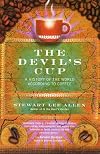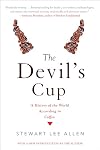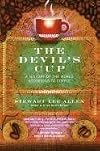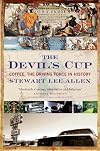
The Devil's Cup: A History of the World According to Coffee
by Stewart Lee Allen
On This Page
Description
In this captivating book, Stewart Lee Allen treks three-quarters of the way around the world on a caffeinated quest to answer these profound questions: Did the advent of coffee give birth to an enlightened western civilization? Is coffee, indeed, the substance that drives history? From the cliffhanging villages of Southern Yemen, where coffee beans were first cultivated eight hundred years ago, to a cavernous coffeehouse in Calcutta, the drinking spot for two of India's three Nobel Prize show more winners . . . from Parisian salons and caf#65533;s where the French Revolution was born, to the roadside diners and chain restaurants of the good ol' U.S.A., where something resembling brown water passes for coffee, Allen wittily proves that the world was wired long before the Internet. And those who deny the power of coffee (namely tea-drinkers) do so at their own peril. show lessTags
Recommendations
























Member Recommendations

libron Ott is a boisterous and meticulous writer; this is his paean to chocolate as a food of the gods. Allen's gonzo erudition is a riot to read; this is his manifesto cum history of coffee.
Member Reviews
Beginning in the Ethiopian city of Harrar, the author travels throughout Africa, into India, Turkey, Austria, France and South America, all to follow the path of the coffee plant and its many variations. He tracks down the descendant of the man who may have created the first coffee plantation, is present for a spiritual coffee ritual in Ethiopia, travels through Yemen and witnesses the widespread addiction to a plant called qat, and attends a rare performance by whirling dervishes in Konya. He also traces the roots of various coffee varieties and the people who were instrumental in making coffee a worldwide beverage.
Allen is an American adventurer, a man who is so besotted with the romance of adventure that he's fearless and pretty much show more rendered incapable of saying no, whether helping an art forger or in becoming a human smuggler (he dropped out only because the plan was too disorganized). The book was first published in 1999, and the world has changed enough in that short amount of time that his adventures would be so much more difficult, if not impossible, today. His travels are fascinating, both for the history and the people he meets. If you enjoy something like Around the World in 80 Days, you'd probably like this sort-of non-fiction version that is absolutely crammed with places you've never heard of before. show less
Allen is an American adventurer, a man who is so besotted with the romance of adventure that he's fearless and pretty much show more rendered incapable of saying no, whether helping an art forger or in becoming a human smuggler (he dropped out only because the plan was too disorganized). The book was first published in 1999, and the world has changed enough in that short amount of time that his adventures would be so much more difficult, if not impossible, today. His travels are fascinating, both for the history and the people he meets. If you enjoy something like Around the World in 80 Days, you'd probably like this sort-of non-fiction version that is absolutely crammed with places you've never heard of before. show less
The Devil's Cup is the best kind of quest story -- a man in pursuit of something he loves for no reason other than to satisfy his own curiosity. In a journey that parallels the coffee bean's chronological journey through time, Stewart Lee Allen travels from Ethiopia to al-Makkah (hence the term mocha) in Yemen, Calcutta to Istanbul, and finally Vienna to Paris. Then he hops a freighter to Brazil and concludes with a car trip across the U.S. in search of the perfect cup of coffee. Along the way he visits Rimbaud's house in Harar, crosses to Yemen with a boatload of Somali refugees, turns down numerous offers of qat, conspires with smugglers of forged Rajasthani miniatures, whirls with dervishes, and tracks down the descendants of the show more adventurer who first brought coffee to the new world. In Brazil he tours the torture chamber of a slaveholding coffee baron, ducks a doomsday cult and communes with an ancient Ethiopian coffee spirit through an Afro-Brazilian shaman. Back home he cajoles a friend into taking a java-fueled ride across route 66 and almost lands in jail. Ultimately he does find the most "American" cup of coffee somewhere between New York and LA.
The author did a wonderful job of weaving in more coffee trivia than I ever imagined possible without bogging down his fast-paced narrative. Particularly fascinating were the myriad of ways he saw coffee prepared, his explanation of the relationship between coffee and Islam and his history of cafés in European culture and commerce. When he began making plans to attend an Ethiopian ceremony to invoke the Zar coffee spirits to perform an exorcism, I was a little concerned about where the book was going. But after his respectful recounting I found his quest to understand coffee's anthropological context to be an added dimension of the story. Anyone who enjoys travel or adventure writing will find this a worthwhile few hours. For coffee lovers, with a great cup in hand, it’s even better. show less
The author did a wonderful job of weaving in more coffee trivia than I ever imagined possible without bogging down his fast-paced narrative. Particularly fascinating were the myriad of ways he saw coffee prepared, his explanation of the relationship between coffee and Islam and his history of cafés in European culture and commerce. When he began making plans to attend an Ethiopian ceremony to invoke the Zar coffee spirits to perform an exorcism, I was a little concerned about where the book was going. But after his respectful recounting I found his quest to understand coffee's anthropological context to be an added dimension of the story. Anyone who enjoys travel or adventure writing will find this a worthwhile few hours. For coffee lovers, with a great cup in hand, it’s even better. show less
This is partly a book about coffee, its history, and its effects on the world, and partly a slightly disjointed travelogue in which the author traipses around five different continents visiting coffee-related places and doing various more or less coffee-related things.
I liked one of these two things considerably better than the other. The facts about and musings on coffee and its place in history were interesting, entertainingly written, and generally pretty fun. But the account of the author's travels, which involved a lot of doing stupid and occasionally illegal things, often left me shaking my head a bit and thinking, "Who is this guy, and why am I reading about his dumb adventures, again?"
I liked one of these two things considerably better than the other. The facts about and musings on coffee and its place in history were interesting, entertainingly written, and generally pretty fun. But the account of the author's travels, which involved a lot of doing stupid and occasionally illegal things, often left me shaking my head a bit and thinking, "Who is this guy, and why am I reading about his dumb adventures, again?"
Entertaining history / travelogue of coffee. I'm entirely unsure whether to believe even half of it is true, and I'm deeply disappointed in the author's final conclusion - but then I'm a coffee snob, not a comfort drinker. Nonetheless - a very amusing read.
A fun enough romp. Ping-pongs between the history of coffee consumption and the wild adventures of the author. The wild adventures do give us some pictures of places connected with coffee somehow or other. Ethiopia and Yemen, that's easy. Calcutta and Oklahoma, less easy. OK, the ping-pong ball does jump around and test the boundaries! But we do hear along the way about some key events in the history of coffee. The siege of Vienna by the Ottomans, for example. And the various attitudes about coffee along the way. It's a fun way to learn some history.
The Devil's Cup is not only an ode to coffee, it is part rolicking travelogue, part sociological study that will interest coffee hounds and non-coffee drinkers alike. Author David Lee Allen traveled the route on which coffee spread across the globe, from its ancient beginings in Ethiopia to the grimy diners and glitzy Starbucks of the USA. Allen alternates between recounting his contemporary journey with its odd characters, wild adventures, and, of course, innumerable cups of joe, with the development and historical significance of coffee in each place. The historical development of coffee is surprisingly rich and Allen touches on all its aspects - religious, political, and intellectual.
The only negative aspects are that the beginning show more is a bit muddled, and the very origins and discovery of coffee are are not as clearly laid out as one might hope. Also, Allen displays a certain sarcasm and bias against religion in general that may leave you wondering if his facts have not been just a bit twisted.
All in all, however, The Devil's Cup is a delightful read, told in an easy style, that will leave the reader thirsting for more. show less
The only negative aspects are that the beginning show more is a bit muddled, and the very origins and discovery of coffee are are not as clearly laid out as one might hope. Also, Allen displays a certain sarcasm and bias against religion in general that may leave you wondering if his facts have not been just a bit twisted.
All in all, however, The Devil's Cup is a delightful read, told in an easy style, that will leave the reader thirsting for more. show less
Less a standard history than a light-hearted travel log peppered with trivia, this charming book will keep you sipping to the last drop. If you love coffee (and even if you don't) you will be fascinated by the effect this unlikely bean has had upon world culture and religion.
Some social scientists have even posited the notion that the rise of coffee within a society heralds economic growth, health, and a general decrease in warfare. Join the author as he traces the path of the bean from its native home as it moves from Africa, to the Middle East to Europe and eventually America.
Some social scientists have even posited the notion that the rise of coffee within a society heralds economic growth, health, and a general decrease in warfare. Join the author as he traces the path of the bean from its native home as it moves from Africa, to the Middle East to Europe and eventually America.
Members
- Recently Added By
Author Information

3+ Works 1,079 Members
Common Knowledge
- Original title
- The devil's cup
- Original publication date
- 1999
- Dedication
- Äidilleni
- Blurbers
- McKenna, Terence
Classifications
- Genres
- Nonfiction, General Nonfiction, Travel, History, Food & Cooking
- DDC/MDS
- 641.3373 — Applied science & technology Home economics & family management Food, Cooking & Recipes / Meals, Picnics Food Field and plantation crops Alkaloidal crops Coffee
- LCC
- TX415 .A45 — Technology Home economics Home economics Nutrition. Foods and food supply
- BISAC
Statistics
- Members
- 545
- Popularity
- 54,311
- Reviews
- 16
- Rating
- (3.59)
- Languages
- 10 — Dutch, English, Finnish, French, German, Greek, Italian, Latvian, Spanish, Turkish
- Media
- Paper, Ebook
- ISBNs
- 19
- ASINs
- 4