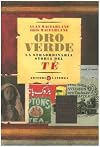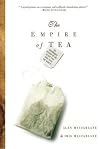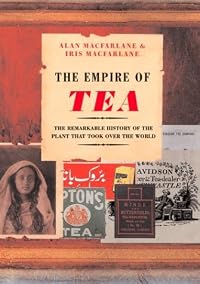
The Empire of Tea
by Alan Macfarlane, Iris Macfarlane
On This Page
Description
"[An] unfailingly informative history of tea... An absorbing read."-Kirkus.Tags
Recommendations







Member Recommendations
Member Reviews
Un saggio scritto molto bene ed enormemente interessante, a patto che, ovviamente, vi piaccia almeno un poco il tè! Esplora svariati aspetti della sua storia e delle sue caratteristiche, e mi ha permesso di capire perché si può, in effetti, parlare veramente di Oro Verde.
http://www.naufragio.it/iltempodileggere/17736
An essay very well written and enormously interesting, provided, of course, that you like tea, at least a bit! It explores various aspects of tea's history and characteristics, and allowed me to understand why they can, actually, really talk about Green Gold.
http://www.naufragio.it/iltempodileggere/17736
An essay very well written and enormously interesting, provided, of course, that you like tea, at least a bit! It explores various aspects of tea's history and characteristics, and allowed me to understand why they can, actually, really talk about Green Gold.
Iris MacFarlane wrote a touching story about her life on the tea garden in India. Then Alan MacFarlane proceeded to write the kind of history that lifts tea up to its rightful place above all other beverages. I like it better than other perspectives on history because its focus is that superiority of tea.
Of particular note was how tea was compared to wine and beer. It was explained how the alcoholic drinks could never conquer the world because they take too many resources of land and labor. They were always meant for the elites in moderation while tea could be enjoyed by the masses--the drink of everyman. This history was the most inspiring when it came time to write my own book.
Of particular note was how tea was compared to wine and beer. It was explained how the alcoholic drinks could never conquer the world because they take too many resources of land and labor. They were always meant for the elites in moderation while tea could be enjoyed by the masses--the drink of everyman. This history was the most inspiring when it came time to write my own book.
This is an interesting and readable introduction, but nothing more. Iris, the co-author's, memoirs of growing up in an Indian tea "garden" are more interesting than the rest of the book. I think of books like this as "history lite," interesting anecdotes, major figures, not much analysis of how it fits into larger historical context.
A strange and unsatisfactory work by two authors, this feels very much like two books packaged as one.
One of these books reads the like work of a health nut, an extended panegyric on the joys of tea, primarily the supposed health benefits. The second is a long rant about the evils of growing tea in Assam and the part the British had in this.
Neither of these books is especially inspiring.
The rant against the British would have been a much more worthwhile work if it had placed the supposed evils of the British in context, comparing what they created to what had gone before, and to India outside the tea plantation.
A chapter towards the end claims to make some attempt to provide a balanced viewpoint, but does nothing to actually place show more the situation in context; instead it simply treats us to a "he said, she said" view of history.
The book included two or three interesting points, for example:
* Introduction of tea in the west contributed to public health because it resulted in boiled water being drunk;
* Likewise it contributed to a substantial reduction in drunkenness because it could be drunk all day without side effects;
but it really wasn't worth the hassle of wading through the dreck to get to them. show less
One of these books reads the like work of a health nut, an extended panegyric on the joys of tea, primarily the supposed health benefits. The second is a long rant about the evils of growing tea in Assam and the part the British had in this.
Neither of these books is especially inspiring.
The rant against the British would have been a much more worthwhile work if it had placed the supposed evils of the British in context, comparing what they created to what had gone before, and to India outside the tea plantation.
A chapter towards the end claims to make some attempt to provide a balanced viewpoint, but does nothing to actually place show more the situation in context; instead it simply treats us to a "he said, she said" view of history.
The book included two or three interesting points, for example:
* Introduction of tea in the west contributed to public health because it resulted in boiled water being drunk;
* Likewise it contributed to a substantial reduction in drunkenness because it could be drunk all day without side effects;
but it really wasn't worth the hassle of wading through the dreck to get to them. show less
Another tea history book. It was okay. I couldn't understand what the writers were getting at. Obviously many have suffered hardships as a result of the tea industry, and it has affected history and health in many ways. That's what they were saying, but it was a bit scattered in making its point.
Barely a 3 ... maybe 2.5 for "ambivalent"? There are bits and pieces of interesting story here, but it is rather dull throughout. Edit this down to what is interesting and it would take 50 pages.
Overall: Dull and not worth much time.
Overall: Dull and not worth much time.
Ratings
Members
- Recently Added By
Author Information

55+ Works 1,040 Members
Alan Macfarlane is currently Professor of Social Anthropology at the University of Cambridge.
9 Works 284 Members
Some Editions
Common Knowledge
- Canonical title
- The Empire of Tea
- Original publication date
- 2004
- People/Characters
- Samuel Ball; Anima Bharali; Charles Bruce; Alick Carnegie; John Carnegie; Henry Cotton (show all 14); Smo Das; Major Jenkins; Edward Morse; Kakuzo Okakura; Mr. and Mrs. Singha; William H. Ukers; Nathaniel Wallich; S. Wells Williams
- Important places
- Assam, India; British Empire; Japan; China
- Dedication
- To all the people who will never read this book,
the tea laborers of Assam - First words
- This book is written by a tea farmer's widow, Iris, and son, Alan. (Introduction by Alan Macfarlane)
I was brought up with all the colonial claptrap of my kind: that 'Out There in India' there were dark people irremediably inferior, who were lucky to be ruled by Us. (Chapter 1, “Memoirs of a Memsahib,” by Iris Mafarlane) - Last words
- (Click to show. Warning: May contain spoilers.)De Quincey was right to describe tea as 'bewitched water'.
- Blurbers
- Freedman, Paul; Harrison, David; Sale, Jonathan
- Original language
- English
Classifications
- Genres
- Nonfiction, History, General Nonfiction, Food & Cooking, Biography & Memoir
- DDC/MDS
- 641.3372 — Applied Science & Technology Home economics & family management Food, Cooking & Recipes / Meals, Picnics Food Field and plantation crops Alkaloidal crops Tea
- LCC
- GT2905 .M33 — Geography, Anthropology and Recreation Manners and customs (General) Manners and customs (General) Customs relative to private life
- BISAC
Statistics
- Members
- 232
- Popularity
- 139,854
- Reviews
- 6
- Rating
- (3.44)
- Languages
- English, Italian, Spanish
- Media
- Paper, Ebook
- ISBNs
- 7
- ASINs
- 2