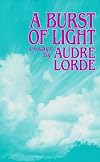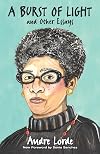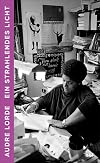
A Burst of Light
by Audre Lorde
On This Page
Description
""The self-described black feminist lesbian mother poet used a mixture of prose, theory, poetry, and experience to interrogate oppressions and uplift marginalized communities. She was one of the first black feminists to target heteronormativity, and to encourage black feminists to expand their understanding of erotic pleasure. She amplified anti-oppression, even as breast cancer ravaged her ailing body."--Evette Dionne, Bustle Magazine Winner of the 1988 Before Columbus Foundation National show more Book Award, this path-breaking collection of essays is a clarion call to build communities that nurture our spirit. Lorde announces the need for a radical politics of intersectionality while struggling to maintain her own faith as she wages a battle against liver cancer. From reflections on her struggle with the disease to thoughts on lesbian sexuality and African-American identity in a straight white man's world, Lorde's voice remains enduringly relevant in today's political landscape. Those who practice and encourage social justice activism frequently quote her exhortation, "Caring for myself is not self-indulgence, it is self-preservation, and that is an act of political warfare." In addition to the journal entries of "A Burst of Light: Living with Cancer," this edition includes an interview, "Sadomasochism: Not About Condemnation," and three essays, "I Am Your Sister: Black Women Organizing Across Sexualities," "Apartheid U.S.A.," and "Turning the Beat Around: Lesbian Parenting 1986," as well as a new Foreword by Sonia Sanchez. "When I don't know what to do, I turn to the Lorde."--Alexis Pauline Gumbs, Bitch Media"-- "Moving, incisive, and enduringly relevant writings by the African-American poet and feminist include her thoughts on the radical implications of self-love, living with cancer as well as essays on racism, lesbian culture, and political activism"-- show lessTags
Recommendations


















Member Reviews
Just an incredible collection, even if it's fairly small. I think the titular essay (which makes up the bulk of the essay) is obviously important and a great companion to The Cancer Journals while also being separate from them, and the other essays are as thoughtful and intense as her other work. The first essay about sadomasochism is a great resource I think for seeing clearly some antikink feminist work that is not as white as that debate tends to be portrayed. Just a small but powerful collection that I definitely recommend.
These aren't really "essays" per se but rather diary entries from Lorde's last years, when she was dying of cancer. They aren't even essayistic; rather than make arguments or explore ideas they convey the textures of Lorde's daily life in the valley of the shadow, and assert again and again what matters to her--the relationships, the interconnections, the communities we build and move in; and how not only to keep repeating and reinforcing those connections but also from within them, and within your body and history and constructed social roles, still fighting for what's right. And, both in pursuing connection and in making her voice heard, doing so with an urgency, of course. In that sense her textures are quite different from mine at show more present, but once I get over envying her those connections (oh, poor baby! I also don't have cancer. Behooves me to not be a whiner here) it also reminds me that those are the things that give life meaning, at least, they're where my soul resonates too, and to pursue them, to keep on doing so. Good reminders here. show less
Audre Lorde is one of the most quotable writers out there. Several of her quotes about self-care, love, and liberation, circulate, whether online or offline, and its not necessarily a bad thing, this coming from a person who loves quotes, including Lorde's, and is known to write down those he finds interesting and insightful on a regular basis. That said, quotes, as necessary as they are, can work against the work they represent when they're simply taken, decontextualized and used to serve whatever purpose the quoter wants (I recall several queerphobic individuals freely quoting Audre Lorde and James Baldwin a few years ago) and it is important to read the whole from which the quote is extracted from. This would be a good place for a show more reader who's reading Audre Lorde for the first time: an interview, speeches, and journal entries. show less
Ratings
Members
- Recently Added By
Author Information

68+ Works 10,448 Members
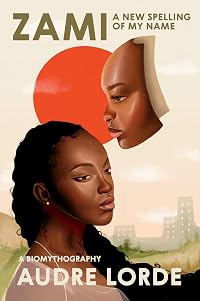
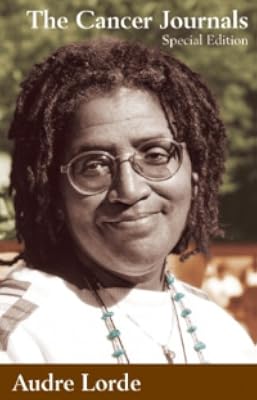
An African American lesbian feminist critic and writer, Lorde was born in Harlem and educated at National University of Mexico, Hunter College, and Columbia University. She married in 1962 and divorced in 1970, after having two children. Lorde first came to critical attention with her poetry. Her first poem was published in Seventeen magazine show more while she was in high school; it had been rejected by her high school newspaper because it was "too romantic" (Lorde considered her "mature" poetry, which focuses on her lesbian relationships, to be romantic also). Other early poems were published in many different journals, many of them under the pseudonym Rey Domini. Her first volume of poetry, "The First Cities," was published in 1968. Lorde then quit her job as head librarian at a school in New York City in order to devote her time to teaching and writing. She was a professor of English at Hunter College from 1980 until her untimely death from cancer in 1992. Although many of Lorde's poems are about love, many are about anger, particularly anger about racism, sexism, and homophobia in America. "The Brown Menace or Poem to the Survival of Roaches" likens African Americans to cockroaches---hated, feared, and poisoned by whites but survivors nevertheless. Other poems express a daughter's anger toward her mother; still others eschew anger for affirmation and inspiration, which are represented as coming from lesbian love and traditional African myths because, as Lorde has said, "the master's tools will not dismantle the master's house." Lorde is also well known for her prose. Her courageous account of her struggle with breast cancer and the mastectomy that she underwent is movingly chronicled in "The Cancer Journals" (1980), her first major prose publication. "Zami, a New Spelling of My Name" (1982) is, in Lorde's words, a "biomythography," combining history, biography, and myth. In "Zami," Lorde focuses on her developing lesbian identity and her response to racism in the white feminist and gay communities, and to sexism and homophobia in the African American community. Lorde's critical essays, collected in "Sister/Outsider" (1984) and "A Burst of Light "(1988), have been quite influential, particularly "Uses of the Erotic: The Erotic as Power," in which she discusses the relationship of poetry to politics and the erotic. Lorde was the recipient of several grants---from the National Endowment for the Arts in 1968 and 1981 and from the Creative Artists Public Service in 1972---as well as the Borough of Manhattan President's Award for Literary Excellence in 1987. She was also nominated for the National Book Award for poetry in 1974 for her third volume of verse, "From a Land Where Other People Live"(1973). (Bowker Author Biography) show less
Some Editions
Awards and Honors
Work Relationships
Common Knowledge
- Original publication date
- 1988
- Epigraph
- To that piece of each of us which refuses to be silent.
- First words
- Without a rigorous and consistent evaluation of what kind of future we wish to create, and a scrupulous examination of the expressions of power we choose to incorporate into all our relationships including our most private on... (show all)es, we are not progressing, but merely recasting our own characters in the same old weary drama....
- Last words
- (Click to show. Warning: May contain spoilers.)Not sureties, but a firm belief that whether or not living with them with joy prolongs my life, it certainly enables me to pursue the objectives of that life with a deeper and more effective clarity.
Classifications
Statistics
- Members
- 339
- Popularity
- 93,869
- Reviews
- 3
- Rating
- (4.25)
- Languages
- English, German
- Media
- Paper, Audiobook, Ebook
- ISBNs
- 10
- UPCs
- 1
- ASINs
- 5