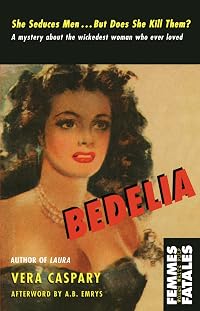
Bedelia
by Vera Caspary
On This Page
Description
A novel of breathtaking suspense, and a brilliant psychological portrait of a ""Black Widow"" serial killer.Tags
Recommendations




























Member Recommendations
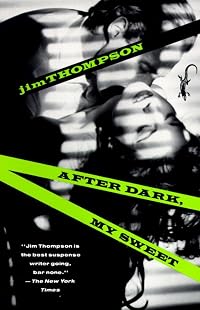
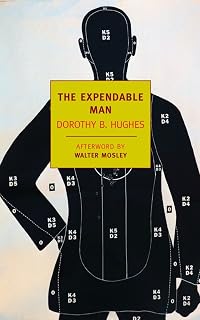
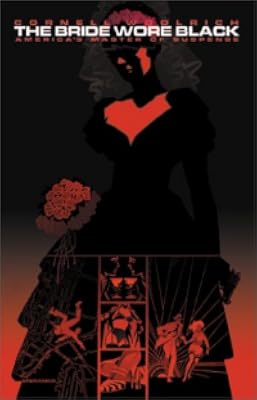
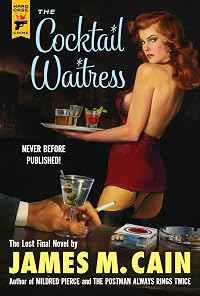
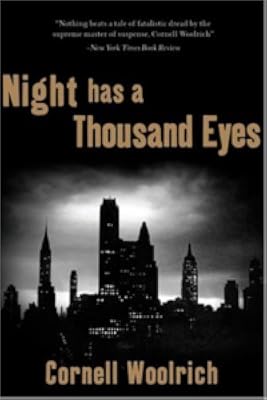
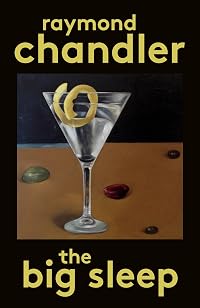
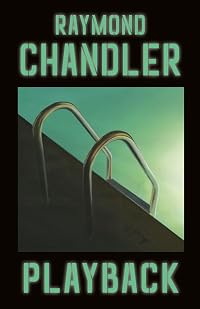
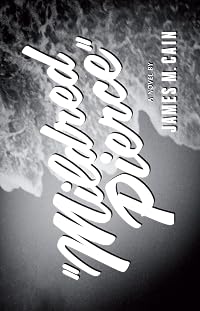
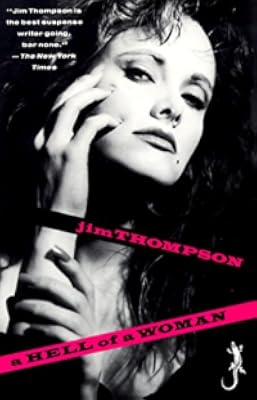
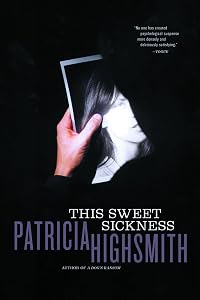
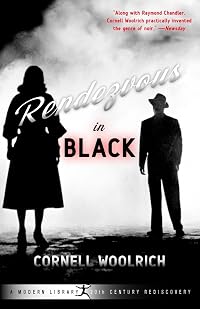
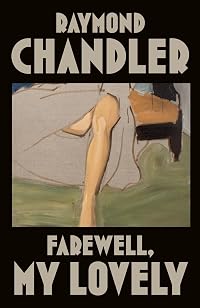
citygirl Terrific examples of pulp fiction in its day.
Member Reviews
Bedelia by Vera Caspary is a story that was written and published in the 1940s and although the story is set in 1913, it has that 1940s noir feel. Charles and Bedelia are newly weds who are celebrating their first Christmas together. They host a dinner party for their friends and on the surface all seems well. But as we read on and peel back the layers, we find Bedelia’s adoration towards her husband is, perhaps, a little overdone, and her concern over his indigestion is a little forced.
Charles, a conservative New Englander, cannot believe his good fortune in having married the stylish, affectionate, and charming Bedelia. He is willing to overlook a number of things about her that don’t seem to add up but the small lies are getting show more bigger and when a new neighbour confesses that he is actually a detective that has been tracking Bedelia and that she has been married and conveniently widowed a number of times he is forced to look at her with new eyes. The book then takes a dramatic turn when Charles and Bedelia are house bound by a blizzard, cut off from the rest of the world and left to confront each other.
I loved this story and found it very hard to put the book down. Caspary builds her story slowly and allows the tension to mount until the true character of Bedelia is revealed. And while Bedelia was definitely a very damaged character who was capable of great evil, it was hard to have a lot of sympathy for her insecure husband, Charles. Overall this book a masterpiece of psychological suspense that provided sinister yet fun entertainment. show less
Charles, a conservative New Englander, cannot believe his good fortune in having married the stylish, affectionate, and charming Bedelia. He is willing to overlook a number of things about her that don’t seem to add up but the small lies are getting show more bigger and when a new neighbour confesses that he is actually a detective that has been tracking Bedelia and that she has been married and conveniently widowed a number of times he is forced to look at her with new eyes. The book then takes a dramatic turn when Charles and Bedelia are house bound by a blizzard, cut off from the rest of the world and left to confront each other.
I loved this story and found it very hard to put the book down. Caspary builds her story slowly and allows the tension to mount until the true character of Bedelia is revealed. And while Bedelia was definitely a very damaged character who was capable of great evil, it was hard to have a lot of sympathy for her insecure husband, Charles. Overall this book a masterpiece of psychological suspense that provided sinister yet fun entertainment. show less
Charlie Horst couldn't be more pleased with his perfect bride Bedelia - that is, until a new neighbor shows up and starts spending a lot of time with Mrs. Horst and she begins acting rather oddly at times. Things come to a head when the Horsts are snowed in after a blizzard and Charlie must confront some awful truths about his new wife.
This was a really interesting read and not at all what I was expecting. After hearing this book touted as a pulp crime novel, I imagined a trashier version of a Raymond Chandler-style noir detective novel. Instead, this story is - while fascinating and riveting - very basic, with little true mystery to it, and it unfolds at a much slower pace than anticipated. While it's obvious from the outset who the show more killer is and why, that's not what makes the book so interesting. Rather it's the psychological suspense and tension that lurks within the everyday that makes the book compelling at every turn. Caspary excels at making a holiday dinner party or a fireside chat an event full of intrigue and/or layers of deception.
Caspary's prose style, while fairly simplistic, is not at all trashy or even the fast-paced thriller language I was expecting. Underneath the seemingly basic language, Caspary unpacks a number of important and complex themes about independence vs. codependence, the nature of marriage and relationships in general, gender roles in early 20th-century America, the natural versus the artificial, and the intersection between past trauma, poverty, mental illness, and criminal activity. The characters are perhaps not the most fleshed-out, but they are more than just one-dimensional caricatures; watching Bedelia slowly unravel and seeing all the half-truths and deceptions finally click in Charlie's mind are particularly noteworthy parts of this novel.
This new edition from the Feminist Press is helping to resurrect Vera Caspary's books from the graveyard of out-of-print authors. It includes a pseudo-academic foreword that ultimately says little. More importantly, it contains an afterword with a detailed look at Caspary's very interesting life and some commentary of her works, including Bedelia and the more famous Laura. Between the novel itself and the afterword, I'm definitely interested in checking out more of Caspary's works in the near future. show less
This was a really interesting read and not at all what I was expecting. After hearing this book touted as a pulp crime novel, I imagined a trashier version of a Raymond Chandler-style noir detective novel. Instead, this story is - while fascinating and riveting - very basic, with little true mystery to it, and it unfolds at a much slower pace than anticipated. While it's obvious from the outset who the show more killer is and why, that's not what makes the book so interesting. Rather it's the psychological suspense and tension that lurks within the everyday that makes the book compelling at every turn. Caspary excels at making a holiday dinner party or a fireside chat an event full of intrigue and/or layers of deception.
Caspary's prose style, while fairly simplistic, is not at all trashy or even the fast-paced thriller language I was expecting. Underneath the seemingly basic language, Caspary unpacks a number of important and complex themes about independence vs. codependence, the nature of marriage and relationships in general, gender roles in early 20th-century America, the natural versus the artificial, and the intersection between past trauma, poverty, mental illness, and criminal activity. The characters are perhaps not the most fleshed-out, but they are more than just one-dimensional caricatures; watching Bedelia slowly unravel and seeing all the half-truths and deceptions finally click in Charlie's mind are particularly noteworthy parts of this novel.
This new edition from the Feminist Press is helping to resurrect Vera Caspary's books from the graveyard of out-of-print authors. It includes a pseudo-academic foreword that ultimately says little. More importantly, it contains an afterword with a detailed look at Caspary's very interesting life and some commentary of her works, including Bedelia and the more famous Laura. Between the novel itself and the afterword, I'm definitely interested in checking out more of Caspary's works in the near future. show less
This is my second Vera Caspary book, and I am disappointed. I may not be reading anymore Vera Caspary.
The protagonist Charlie's wife, bedelia horst, one of her aliases, uses her good looks and flatters men with what they want to hear, to get them to marry her. Then she begins to poison them, and when they die, she gets the insurance money. In this way she has managed to amass $250,000.
But we don't know this until later on.
BeDelia and Charlie Horst live in the country outside of a Connecticut town. BeDelia is a "pretty little thing." She adores clothes, makeup, gew-gaws and jewelry. She is always making up to Charlie, telling him what a good strong husband he is, and how much she loves him, how well he takes care of her. It's enough to show more make you throw up.
From the poison bedelia is giving him, Charlie gets a terrible indigestion attack. He has to see a doctor, and has to stay in bed. The doctor has his suspicions about Bedelia, so he orders a nurse to live in and take care of Charlie until he is better. He also orders Bedelia to sleep in another room. I found it curious the way the author described the nurse:
"since she had arrived that afternoon, held a conference with Dr Meyers in the den, marched up the stairs and changed her dress for a blue- and white-striped uniform, this woman had ruled the household. Charlie and Bedelia had hated her on sight. Nevertheless, they let her intimidate them. She used her ugliness as other women use Beauty to give her authority. If a country fair had offered prizes for the most unattractive female on exhibit, Miss Gordon would have captured first honors. Below Dusty hair, tightly netted, bulged a forehead like a parentheses. Between this bulge and the crag of her chin, her face curved inward like a soup plate. Her nose was broad but so flat that it gave slight relief to the concavity. Her body was squat, her wrists red and her disposition sour."
There is a snow storm coming through the area, but before it gets there, their neighbor Ben comes by their house. He lets them know that his friend from St Paul Minnesota will be coming into town. This news greatly affects Bedelia:
" 'I had a wire from my friend in St paul,' Ben said. 'The blizzards are apparently over in the Middle West and he's coming here, after all. You'll meet Keene Barrett in a few days.'
the ornament slipped from Bedelia's hands. The Dresden lovers lay shattered on the floor. The Marquis's white wigged head rolled into the corner, the porcelain lace of his Mistress's skirt powdered the rug.
Bedelia's face had been drained of color. Her empty hands were circled before her as if she were still holding the ornament.
'biddy my sweet!' Charlie took her in his arms. 'Don't be upset. The thing has no value and, just between you and me, I'll confess that I always thought it hideous.'
She lowered her unsteady hands. Her rings sparkled in the lamplight. Her eyes had become blank, all expression was erased from her countenance, and it was clear that she had not heard what Charlie said. He led her to the couch, sat with his arm around her swelling waist. Soon he and Ben were talking casually again, about motors, comparing the merits of their machines and discussing the improvements which were being made by manufacturers. BeDelia sat beside her husband quietly, sunk in reverie, hardly aware of the men's voices. Presently Ben Rose and said that he must leave. Charlie asked him to stay for supper. Bedelia did not repeat the invitation."
As it turns out, Bedelia, in another alias, had been married to Keene Barrett's brother. When he died, she took the $1,000 of insurance money, and left town.
Charlie increasingly becomes aware of Bedelia's lies. In the beginning of the book, she had told Charlie that she had given away a black pearl ring, that was of great value, but she said it was fake. After Bedelia ran away in the snowstorm, wanting to run away to Europe, he had found her lying in a ditch, apparently overcome by the cold. In a bag flung to the side, among other things, he found the black pearl ring that she said she had given away.
" 'don't be horrid to me, charlie. I love you. I live only for you.'
Her fervor embarrassed him. He rose and walked away from the bed, and looked at his mother's portrait above the mantle. Harriet Philbrick had never colored her lips and cheeks with rouge. Only righteousness had adorned her countenance. She sat upright in the carved Victorian chair and faced the world with full assurance of her superiority. Emboldened by the look in his mother's eyes, Charlie whirled around and said in The voice she had used when she wished to show displeasure, 'why did you lie to me about the ring?'
'What ring, dear?'
'please don't lie, Bedelia. I know you didn't give away the black pearl. I saw it in your bag.'
'oh, that. Yes, of course, you found it in my bag. Since I thought I was leaving you, it didn't matter whether I wore it or not. You see, dear, you haven't improved my taste at all. I'm still fond of that imitation pearl.'
'But you said you'd given it away.'
'No, I didn't. I never gave that ring away.'
'You told me you had.'
'What a funny idea!'
'look here' - Charlie almost shouted it - 'you told me that on christmas. I wanted to give Abbie the ring and you said you've given it away.'
She shook her head.
'I distinctly remember,' Charlie said. 'On two occasions you said it. The night we dined at Ben's.'
'No!' She interrupted. 'No, I didn't say it at all. You said it. I remember now that you told Ben and Abbie I'd given the ring away. I didn't say anything then because I didn't want to contradict you in public, particularly after Abbie made that flattering remark about me and what an unusual wife I was. I wondered where you got the idea, and I meant to ask you about it when we were alone, but you had your attack that night, and I was so frightened I completely forgot.' "
So bedelia now starts gaslighting charlie, in the way that men usually gaslight women.
I don't even know why I've spent this much time reviewing this book, because I really didn't care for it. Charlie and bedelia, especially bedelia, are tiresome characters.
The ending is better, though, after we have to suffer through Bedelia's pouting and quaffing about. show less
The protagonist Charlie's wife, bedelia horst, one of her aliases, uses her good looks and flatters men with what they want to hear, to get them to marry her. Then she begins to poison them, and when they die, she gets the insurance money. In this way she has managed to amass $250,000.
But we don't know this until later on.
BeDelia and Charlie Horst live in the country outside of a Connecticut town. BeDelia is a "pretty little thing." She adores clothes, makeup, gew-gaws and jewelry. She is always making up to Charlie, telling him what a good strong husband he is, and how much she loves him, how well he takes care of her. It's enough to show more make you throw up.
From the poison bedelia is giving him, Charlie gets a terrible indigestion attack. He has to see a doctor, and has to stay in bed. The doctor has his suspicions about Bedelia, so he orders a nurse to live in and take care of Charlie until he is better. He also orders Bedelia to sleep in another room. I found it curious the way the author described the nurse:
"since she had arrived that afternoon, held a conference with Dr Meyers in the den, marched up the stairs and changed her dress for a blue- and white-striped uniform, this woman had ruled the household. Charlie and Bedelia had hated her on sight. Nevertheless, they let her intimidate them. She used her ugliness as other women use Beauty to give her authority. If a country fair had offered prizes for the most unattractive female on exhibit, Miss Gordon would have captured first honors. Below Dusty hair, tightly netted, bulged a forehead like a parentheses. Between this bulge and the crag of her chin, her face curved inward like a soup plate. Her nose was broad but so flat that it gave slight relief to the concavity. Her body was squat, her wrists red and her disposition sour."
There is a snow storm coming through the area, but before it gets there, their neighbor Ben comes by their house. He lets them know that his friend from St Paul Minnesota will be coming into town. This news greatly affects Bedelia:
" 'I had a wire from my friend in St paul,' Ben said. 'The blizzards are apparently over in the Middle West and he's coming here, after all. You'll meet Keene Barrett in a few days.'
the ornament slipped from Bedelia's hands. The Dresden lovers lay shattered on the floor. The Marquis's white wigged head rolled into the corner, the porcelain lace of his Mistress's skirt powdered the rug.
Bedelia's face had been drained of color. Her empty hands were circled before her as if she were still holding the ornament.
'biddy my sweet!' Charlie took her in his arms. 'Don't be upset. The thing has no value and, just between you and me, I'll confess that I always thought it hideous.'
She lowered her unsteady hands. Her rings sparkled in the lamplight. Her eyes had become blank, all expression was erased from her countenance, and it was clear that she had not heard what Charlie said. He led her to the couch, sat with his arm around her swelling waist. Soon he and Ben were talking casually again, about motors, comparing the merits of their machines and discussing the improvements which were being made by manufacturers. BeDelia sat beside her husband quietly, sunk in reverie, hardly aware of the men's voices. Presently Ben Rose and said that he must leave. Charlie asked him to stay for supper. Bedelia did not repeat the invitation."
As it turns out, Bedelia, in another alias, had been married to Keene Barrett's brother. When he died, she took the $1,000 of insurance money, and left town.
Charlie increasingly becomes aware of Bedelia's lies. In the beginning of the book, she had told Charlie that she had given away a black pearl ring, that was of great value, but she said it was fake. After Bedelia ran away in the snowstorm, wanting to run away to Europe, he had found her lying in a ditch, apparently overcome by the cold. In a bag flung to the side, among other things, he found the black pearl ring that she said she had given away.
" 'don't be horrid to me, charlie. I love you. I live only for you.'
Her fervor embarrassed him. He rose and walked away from the bed, and looked at his mother's portrait above the mantle. Harriet Philbrick had never colored her lips and cheeks with rouge. Only righteousness had adorned her countenance. She sat upright in the carved Victorian chair and faced the world with full assurance of her superiority. Emboldened by the look in his mother's eyes, Charlie whirled around and said in The voice she had used when she wished to show displeasure, 'why did you lie to me about the ring?'
'What ring, dear?'
'please don't lie, Bedelia. I know you didn't give away the black pearl. I saw it in your bag.'
'oh, that. Yes, of course, you found it in my bag. Since I thought I was leaving you, it didn't matter whether I wore it or not. You see, dear, you haven't improved my taste at all. I'm still fond of that imitation pearl.'
'But you said you'd given it away.'
'No, I didn't. I never gave that ring away.'
'You told me you had.'
'What a funny idea!'
'look here' - Charlie almost shouted it - 'you told me that on christmas. I wanted to give Abbie the ring and you said you've given it away.'
She shook her head.
'I distinctly remember,' Charlie said. 'On two occasions you said it. The night we dined at Ben's.'
'No!' She interrupted. 'No, I didn't say it at all. You said it. I remember now that you told Ben and Abbie I'd given the ring away. I didn't say anything then because I didn't want to contradict you in public, particularly after Abbie made that flattering remark about me and what an unusual wife I was. I wondered where you got the idea, and I meant to ask you about it when we were alone, but you had your attack that night, and I was so frightened I completely forgot.' "
So bedelia now starts gaslighting charlie, in the way that men usually gaslight women.
I don't even know why I've spent this much time reviewing this book, because I really didn't care for it. Charlie and bedelia, especially bedelia, are tiresome characters.
The ending is better, though, after we have to suffer through Bedelia's pouting and quaffing about. show less
Charlie and Bedelia, an American couple living in the early 1900s, have a seemingly perfect life. After a whirlwind romance and marriage they have settled down into Charlie's large family home. He works hard to provide his gorgeous new wife with all the comforts she needs. Bedelia plays her part by keeping a beautiful, tasteful home.
However it's not long before dark shadows start to inflitrate this idyll. Bedelia gets caught out in telling some white lies. Then Charlie is struck down with what appears to be food poisoning but could be something more sinister...
...as this is a thriller I won't give any more away. Caspary's writing is engaging and I had trouble putting the book down. She gives the story a bit of a twist by introducing the show more character of Ellen, a journalist who is in love with but was rejected by Charlie. Ellen enables Caspary to consider other ways of living for women beyond marriage and motherhood which I think takes Bedelia beyond other femme fatale thrillers.
Bedelia is the second book I've read from the Feminist Press's Femmes Fatales series of re-issued pulp fiction written by women. I'll definitely be buying more in the series. show less
However it's not long before dark shadows start to inflitrate this idyll. Bedelia gets caught out in telling some white lies. Then Charlie is struck down with what appears to be food poisoning but could be something more sinister...
...as this is a thriller I won't give any more away. Caspary's writing is engaging and I had trouble putting the book down. She gives the story a bit of a twist by introducing the show more character of Ellen, a journalist who is in love with but was rejected by Charlie. Ellen enables Caspary to consider other ways of living for women beyond marriage and motherhood which I think takes Bedelia beyond other femme fatale thrillers.
Bedelia is the second book I've read from the Feminist Press's Femmes Fatales series of re-issued pulp fiction written by women. I'll definitely be buying more in the series. show less
This novel starts off quite bland and slow. I felt like I was reading a staid novel from the 1800s for English class. It does, however, pick up after a fairly lengthy sluggish start.
A very intriguing novel of psychological suspense. The title character is a master of childish manipulation.
There is very little action in this novel until the very end. Most of the novel involves Bedelia's husband grappling with the revelation of her true nature and trying to come to terms with it.
I am hoping to seek out the film that was based upon this novel.
A very intriguing novel of psychological suspense. The title character is a master of childish manipulation.
There is very little action in this novel until the very end. Most of the novel involves Bedelia's husband grappling with the revelation of her true nature and trying to come to terms with it.
I am hoping to seek out the film that was based upon this novel.
This book, published in the forties by a popular author and screenwriter, epitomizes pulp fiction to me. Like Tarantino's movie, one of my favorites, it is hard for me to figure out just why I enjoyed it so much. The prose is simplistic, intentionally so; the characters lack depth; there were not deep insights into human nature, but I couldn't put it down. The characters, especially the title one, are vivid; and the suspense builds, so there are two reasons. Maybe it is also that it is set in 1913 and and I found the actions and words of the characters anachronous from that context, though surely Caspary would've known better than I, having grown up at that time. The parts don't add up to the sum, but what can I say: I liked it, a lot.
Newlyweds Charlie and Bedelia are very much in love. It is Christmas in the Connecticut home and they are having a party. Bedelia is a little extravagant with the presents for her guests, but she is the consummate hostess. Her neighbors are there, including the new neighbor and artist, Ben Chaney, Charlie's friends Ellen and Abbie and more.
But Charlie is starting to not feel well. Indigestion has been plaguing him. By New Years, it's getting worse and a doctor must be called. Charlie is laid up in bed and under strict ordes from the doctor to eat only what the hired nurse feeds him. Within a week, we's feeling better.
Thus begins the mystery of Charlie's illness. As what I've come to learn is Vera Caspary's style, the book is a canvas on show more which she paints the story, including the guests at the party, Charlie's thoughts and feelings, Bedelia's actions, even the thoughts of Abbe and Ellen. Bedelia, the book, is so much more than a mystery. Taking place in an unstated time in Connecticut, Caspary uses the winter as a strong device...the deep snow, the isolation of Charlie and Bedelia.
The book is also a commentary of the times (it could be anywhere around the early 1900s since automobiles are coming into vogue) of thoughts about independent women, marriage, etc.
As I've found out, Vera Caspary writes deeper books than mere mysteries. Her language is wonderful. She creates a sense of place and time and surroundings. She is worth reading. So, read Bedelia. show less
But Charlie is starting to not feel well. Indigestion has been plaguing him. By New Years, it's getting worse and a doctor must be called. Charlie is laid up in bed and under strict ordes from the doctor to eat only what the hired nurse feeds him. Within a week, we's feeling better.
Thus begins the mystery of Charlie's illness. As what I've come to learn is Vera Caspary's style, the book is a canvas on show more which she paints the story, including the guests at the party, Charlie's thoughts and feelings, Bedelia's actions, even the thoughts of Abbe and Ellen. Bedelia, the book, is so much more than a mystery. Taking place in an unstated time in Connecticut, Caspary uses the winter as a strong device...the deep snow, the isolation of Charlie and Bedelia.
The book is also a commentary of the times (it could be anywhere around the early 1900s since automobiles are coming into vogue) of thoughts about independent women, marriage, etc.
As I've found out, Vera Caspary writes deeper books than mere mysteries. Her language is wonderful. She creates a sense of place and time and surroundings. She is worth reading. So, read Bedelia. show less
Members
- Recently Added By
Lists

Books Read in 2019
4,052 works; 110 members

Noirvember: Potential Reads
23 works; 1 member
Author Information

30+ Works 1,019 Members
Some Editions
Series
Belongs to Publisher Series
Work Relationships
Is contained in
Common Knowledge
- Canonical title
- Bedelia
- Original title
- Bedelia
- Original publication date
- 1945
- People/Characters
- Bedelia Cochran Horst; Charlie Horst; Ben Chaney; Ellen Walker; Abbie Hoffman; Doctor Meyers (show all 10); Miss Gordon; Mary; Hannah; Keene Barrett
- Important places
- Connecticut, USA
- Dedication
- For I.G.
- First words
- His wife came into the room and Charlie turned to watch her. She wore a dark-blue velvet dress whose sheath skirt was slit to show her pretty ankles and high-heeled bronze pumps.
- Quotations
- If everyone whose childhood had been sordid were to become a murderer, at least eighty per cent of the population would be homicidal. Early deprivations, unhappiness, hunger, may lead to a grudge against society, bitterness, ... (show all)protest, or the healthy attempt to make a better world for the new generation, but no sane judge would accept such excuse for deliberate, cruel, plotted murder.
Why is one person incapable of crime, another able to kill in cold blood? Why, where, what is the cause of that delicate balance between good and evil? That is the mystery beyond all mysteries, the problem that neither detect... (show all)ive, physician, nor psychologist has yet solved.
On the palm of her right hand rested the three monkeys the Johnsons had given the Horsts for Christmas. To follow their advice, Charlie thought, to see no evil, hear no evil, speak no evil, was as weak as deliberately cultiva... (show all)ting evil. The careful avoidance of all that was unpleasant and unsavory was not only Charlie's greatest fault, but the fault of his people and his class. By turning their eyes and ears from evil, they nourished evil, gave it sunlight, fresh air, and the space in which to flourish. The civilized man was not the man who shut himself away from evil, but who saw it clearly, heard its faintest rustlings, exposed it, shouted about it from the housetops. - Last words
- (Click to show. Warning: May contain spoilers.)Ellen went to Charlie, crossing the room softly, stopping only on the rugs and avoiding the spaces between them. She did not speak nor touch him, but stood there with her head bent and her right hand in the fur-lined glove resting on the printed linen that Bedelia had chosen for the love-seat when she came from Colorado as Mrs. Charles Horst.
- Original language
- English
Classifications
Statistics
- Members
- 167
- Popularity
- 196,154
- Reviews
- 7
- Rating
- (3.46)
- Languages
- English, Russian, Spanish
- Media
- Paper, Audiobook, Ebook
- ISBNs
- 8
- ASINs
- 17