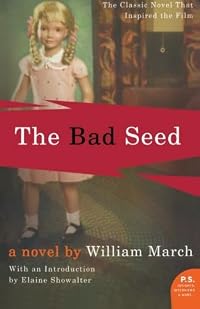
The Bad Seed
by William March
On This Page
Description
The bestselling novel that inspired Mervyn LeRoy's classic horror film about the little girl who can get away with anything-even murder. There's something special about eight-year-old Rhoda Penmark. With her carefully plaited hair and her sweet cotton dresses, she's the very picture of old-fashioned innocence. But when their neighborhood suffers a series of terrible accidents, her mother begins to wonder: Why do bad things seem to happen when little Rhoda is around? Originally published in show more 1954, William March's final novel was an instant bestseller and National Book Award finalist before it was adapted for the stage and made into a 1956 film. The Bad Seed is an indelible portrait of an evil that wears an innocent face, one which still resonates in popular culture today. show lessTags
Recommendations




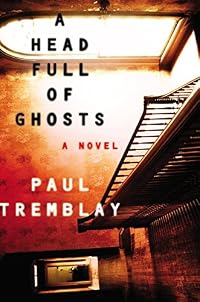
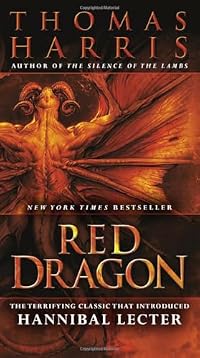
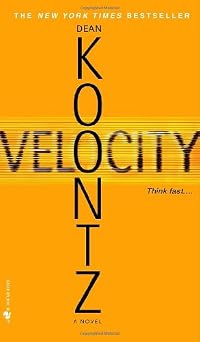
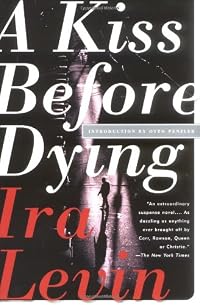






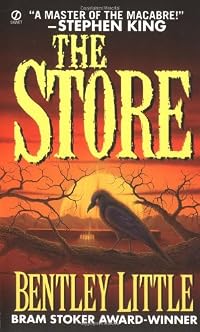
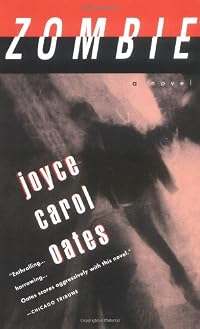

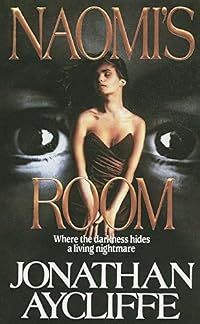
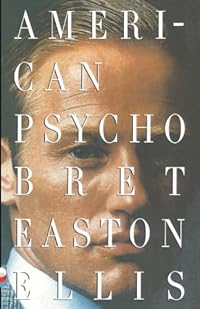
Member Recommendations

Member Reviews
“It seemed to her suddenly that violence was an inescapable factor of the heart, perhaps the most important factor of all - an ineradicable thing that lay, like a bad seed, behind kindness, behind compassion, behind the embrace of love itself. Sometimes it lay deeply hidden, sometimes it lay close to the surface; but always it was there, ready to appear, under the right conditions, in all its irrational dreadfulness.”
It's amazing to think this book is almost 60 years old - it was definitely a chilling and thought-provoking story for it's time, spawning at least two film adaptions. Rhoda Penmark is a charming, old-fashioned little girl with zero conscience and the mind and heart of a killer. Written in the 50's, the author dared to show more be bold and unapologetic about the possibility of a soulless child born due to bad genetics. Since I've seen both films more than once, I already knew the storyline well - they followed the book closely - but the well-done pen of March kept it alive and interesting.
While not high in suspense of quickly paced, it's more of a slow unraveling of a horrible discovery and its fallout. The book is primarily told through the point of view of the mother, Christine, who has her own morbid past that comes to light when she discovers how empty her daughter is. Some of the book is written through forms of letters to her husband who works off in the military and leaves her alone to have to deal with this horror on her own. The neighbors in the apartment of major characters - some there to admire little Rhoda, the janitor who keeps teasing her and discovers for himself how horrible the child really is, and convenient writers on serial killers and past crimes who help lead Christine conveniently on the right paths.
A slower pace isn't a crutch for the book since the psychological dread basically coats the pages. When a violent crime is discovered, it's soul-wrenching and beyond disturbing. The reader keeps seeing the mother of a dead child having frequent meltdowns, and the backstory with Rhoda and an elderly lady is unsettling. There is a murder that takes place on page, and it's definitely just as horrifying. The ending is an ironic twist on how sometimes creepiness lives on despite the good guy's best efforts.
It gets into your head, makes you think about things in a different light, and gives you the creeps. Psychologically disturbing and highly recommended to readers of any type of fiction. Nonfiction fans who like True Crime will likely enjoy it as well.
Note - Apparently Lifetime is remaking this movie - let's hope they avoid the melodrama they tend to produce. The foreword focusing on feminism implications may have been interesting in its way, but it also felt out of place. I think it was simply a case of the author choosing a small girl with skirts and pigtails as the more unassuming of the gender in comparison to the brawling and more hyper boys in the 50s. show less
It's amazing to think this book is almost 60 years old - it was definitely a chilling and thought-provoking story for it's time, spawning at least two film adaptions. Rhoda Penmark is a charming, old-fashioned little girl with zero conscience and the mind and heart of a killer. Written in the 50's, the author dared to show more be bold and unapologetic about the possibility of a soulless child born due to bad genetics. Since I've seen both films more than once, I already knew the storyline well - they followed the book closely - but the well-done pen of March kept it alive and interesting.
While not high in suspense of quickly paced, it's more of a slow unraveling of a horrible discovery and its fallout. The book is primarily told through the point of view of the mother, Christine, who has her own morbid past that comes to light when she discovers how empty her daughter is. Some of the book is written through forms of letters to her husband who works off in the military and leaves her alone to have to deal with this horror on her own. The neighbors in the apartment of major characters - some there to admire little Rhoda, the janitor who keeps teasing her and discovers for himself how horrible the child really is, and convenient writers on serial killers and past crimes who help lead Christine conveniently on the right paths.
A slower pace isn't a crutch for the book since the psychological dread basically coats the pages. When a violent crime is discovered, it's soul-wrenching and beyond disturbing. The reader keeps seeing the mother of a dead child having frequent meltdowns, and the backstory with Rhoda and an elderly lady is unsettling. There is a murder that takes place on page, and it's definitely just as horrifying. The ending is an ironic twist on how sometimes creepiness lives on despite the good guy's best efforts.
It gets into your head, makes you think about things in a different light, and gives you the creeps. Psychologically disturbing and highly recommended to readers of any type of fiction. Nonfiction fans who like True Crime will likely enjoy it as well.
Note - Apparently Lifetime is remaking this movie - let's hope they avoid the melodrama they tend to produce. The foreword focusing on feminism implications may have been interesting in its way, but it also felt out of place. I think it was simply a case of the author choosing a small girl with skirts and pigtails as the more unassuming of the gender in comparison to the brawling and more hyper boys in the 50s. show less
Rhoda is a very believable serial killer, even if she is only eight years old. March gives her a naive sort of scheme-y-ness--she hasn't yet matured as killers go. The novel is dated in the most marvelous ways, reflecting mid-century theories of mental illness and sociopathy. It even has a character who was psychoanalyzed by Freud himself. I loved the conversations. I loved the journey of Rhoda's mother Christine, from slight unease to absolute certainty that her daughter is a murderer. Read it.
I really enjoyed this book (despite how long it took me to finish it, i’ve been quite busy) the plot might be one that is over looked due to the large number of stories of this type but it is very original and one of the predecessors of its genre. while Rhoda is as murderous and emotionless as the next tyrant tot, her unapologetic cold calculativeness sets her apart from the rest, making her one of the most unsettling characters i’ve read.
Nice little chiller about a sociopathic child. March gets right inside the sociopathic mind of little Rhoda and the image is both accurate and frightening. Christine, her mother, is the only other really three dimensional character in the novel but that doesn’t detract from the story’s impact. The fact that we almost cheer when Leroy gets his is the other disturbing part.
The ending is telegraphed a little early but the suspense and horror that entails Christine’s almost unthinkable task as she goes from protective to repulsed by her own child is worth the early reveal.
The ending is telegraphed a little early but the suspense and horror that entails Christine’s almost unthinkable task as she goes from protective to repulsed by her own child is worth the early reveal.
This is a creepy little story about a psychotic child and the mother who is beside herself with the anxiety of what to do about her. The author March mistakenly created a character who inherited her grandmother's psychosis. William March had a talent for creating in-depth characters, such as the painfully frank Mrs Breedlove, the janitor Leroy, who is in love with the little girl Rhoda, the three eccentric sisters who run the private school, and, of course, Rhoda. Poor March had a sad childhood where he was deprived of familial love, causing the author himself to be emotionally warped. This probably helped his insight into warped and paranoid characters, but didn't help him any in living a happy life.
“What was to be their duty in future both to their child, and to the society in which they lived?”
― William March, The Bad Seed
For some reason, horror novels featuring creepy, evil little children really scare the heck out of me. I mean..everyone has their thing that scares them and that's mine. The Bad seed is one of those horror classics where you say to your self, "they just don't make em like that anymore".
This is without a doubt one of the best horror books ever written. And I used to read alot of horror though not so much anymore.
It was my mom, from whom I inherited my love of reading who made me aware of this little creeper of a book. And yes I loved it as much as she did. Thank you mamacita!
If you want to know what a show more sociopath is..read this book. Read about Rhoda. She is but a mere slip of a child and she is absolutely terrifying.
AND see the movie. In my opinion, this book is at the level of "The Other", another gem, and it is so freakin sick! I mean it wowed me.
A good well written, genuinely terrifying book. AND I recently read it again. It has lost none of its power to scare over the tears.
I should also say for those who maybe not familiar with this book at all..there is barely any gore or anything..they really knew how to make quality horror back then. The Bad Seed doesn't need gore or any plot device. It is pure horror from beginning to end. Read it horror fans.
PS: Just edited this review after I accidently wrote "Rhonda" instead of "Rhoda". I guess maybe I had the beach boys on my mind.. show less
― William March, The Bad Seed
For some reason, horror novels featuring creepy, evil little children really scare the heck out of me. I mean..everyone has their thing that scares them and that's mine. The Bad seed is one of those horror classics where you say to your self, "they just don't make em like that anymore".
This is without a doubt one of the best horror books ever written. And I used to read alot of horror though not so much anymore.
It was my mom, from whom I inherited my love of reading who made me aware of this little creeper of a book. And yes I loved it as much as she did. Thank you mamacita!
If you want to know what a show more sociopath is..read this book. Read about Rhoda. She is but a mere slip of a child and she is absolutely terrifying.
AND see the movie. In my opinion, this book is at the level of "The Other", another gem, and it is so freakin sick! I mean it wowed me.
A good well written, genuinely terrifying book. AND I recently read it again. It has lost none of its power to scare over the tears.
I should also say for those who maybe not familiar with this book at all..there is barely any gore or anything..they really knew how to make quality horror back then. The Bad Seed doesn't need gore or any plot device. It is pure horror from beginning to end. Read it horror fans.
PS: Just edited this review after I accidently wrote "Rhonda" instead of "Rhoda". I guess maybe I had the beach boys on my mind.. show less
I had, of course, seen the 1956 movie, but had never realized that it was an adaptation of a novel published two years earlier. It's not unusual for horror movies to have been adapted from some fairly bad books, but I couldn't resist picking this up despite my low expectations.
I suppose the idea of an evil sociopath hiding under the veneer of a polite, neat, well-mannered little girl might have been shockingly novel in 1954, but it's been worn so threadbare in 2019 that I found myself paying more attention to the characters around little Rhoda than the child herself.
Not that Rhoda is uninteresting - she's entirely self-aware and surprisingly upfront about her true nature. She wants what she wants and does not tolerate anyone standing show more in her way. Her imitations of normal childish behavior are so stilted that it's incredible that hardly anyone sees through her. At least, people who are exposed to her long enough eventually conclude that she's a bully and a liar, but none seem willing or able to take the next logical step in connection with the injuries and death that seem to trail in her wake.
The story features a number of characters, all of whom are flawed and unlikeable in some way. Even the most sympathetic character, Rhoda's mother, is weak, whining, and ineffectual,
even when she finally tries to do something about her daughter
I don't want to spoil the story beyond what would be impossible to not know about it for anyone who hasn't been living under a rock, so I'll say no more about the characters or plot. But the book is overall well written and interesting, if a bit dragging in places, and well worth the read.
Paperback version, with a short foreword by Anna Holmes, reflecting on the story from a modern feminist perspective. show less
I suppose the idea of an evil sociopath hiding under the veneer of a polite, neat, well-mannered little girl might have been shockingly novel in 1954, but it's been worn so threadbare in 2019 that I found myself paying more attention to the characters around little Rhoda than the child herself.
Not that Rhoda is uninteresting - she's entirely self-aware and surprisingly upfront about her true nature. She wants what she wants and does not tolerate anyone standing show more in her way. Her imitations of normal childish behavior are so stilted that it's incredible that hardly anyone sees through her. At least, people who are exposed to her long enough eventually conclude that she's a bully and a liar, but none seem willing or able to take the next logical step in connection with the injuries and death that seem to trail in her wake.
The story features a number of characters, all of whom are flawed and unlikeable in some way. Even the most sympathetic character, Rhoda's mother, is weak, whining, and ineffectual,
even when she finally tries to do something about her daughter
I don't want to spoil the story beyond what would be impossible to not know about it for anyone who hasn't been living under a rock, so I'll say no more about the characters or plot. But the book is overall well written and interesting, if a bit dragging in places, and well worth the read.
Paperback version, with a short foreword by Anna Holmes, reflecting on the story from a modern feminist perspective. show less
Members
- Recently Added By
Published Reviews
ThingScore 75
added by booksaplenty1949
added by booksaplenty1949
Lists

Reader's Digest 50 Best Horror Books to Read
50 works; 3 members

Cheesy pleasures and odd lots!
119 works; 7 members

Read This Twice's Best Horror Books
94 works; 2 members
Best Horror Mega-List
342 works; 6 members

Recommend the 20 best books you've read in the last five years
2,167 works; 601 members

National Book Award Finalists - Fiction
377 works; 11 members

Horror Reading: Creepy Kids
9 works; 3 members

Reedsydiscovery 100 Best Horror Books of All Time
100 works; 5 members

Books in Riverdale
123 works; 3 members
Author Information

15+ Works 1,404 Members
Some Editions
Awards and Honors
Awards
Distinctions
Series
Belongs to Publisher Series
Zwarte Beertjes (28)
Peacock Books (136)
Penguin Books (1210)
Work Relationships
Has the adaptation
Common Knowledge
- Canonical title*
- I semi del male
- Original title
- The Bad Seed
- Alternate titles*
- Schuldig bloed
- Original publication date
- 1954
- People/Characters
- Rhoda Penmark; Christine Penmark; Hortense Daigle; Monica Breedlove; Leroy Jessup
- Related movies
- The Bad Seed (1956 | IMDb); The Bad Seed (1985 | IMDb)
- First words
- Later that summer, when Mrs. Penmark looked back and remembered, when she was caught up in despair so deep that she knew there was no way out, no solution whatever for the circumstances that encompassed her, it seemed to her ... (show all)that June seventh, the day of the Fern Grammar School picnic, was the day of her last happiness, for never since then had she known contentment or felt peace.
Nell'estate inoltrata, quando la signora Penmark, in preda a una disperazione così profonda da non avere via d'uscita alle circostanze che la opprimevano, si guardò indietro nel tempo, le parve che il sette giugno, giorno d... (show all)el picnic della scuola Fern, fosse l'ultimo della sua felicità, perche da allora non aveva provato mai più contentezza o pace. - Quotations*
- 'Ik was de schuldige,' dacht ze weer. 'Ik droeg het zaad des verderfs.' (Utrecht/Antwerpen: A.W. Bruna & Zoon, p. 170)
- Last words*
- (Click to show. Warning: May contain spoilers.)"(...) Ha ancora di che essere grato, perche le e' rimasta la sua bambina".
- Original language*
- English
- Canonical DDC/MDS
- 813.52
- Canonical LCC
- PZ3.C155
- Disambiguation notice
- This record is for the novel "The Bad Seed." Do not combine with the film or the script of the same name.
*Some information comes from Common Knowledge in other languages. Click "Edit" for more information.
Classifications
Statistics
- Members
- 1,019
- Popularity
- 25,330
- Reviews
- 35
- Rating
- (3.82)
- Languages
- 9 — Chinese, Dutch, English, Finnish, French, German, Italian, Portuguese, Spanish
- Media
- Paper, Audiobook, Ebook
- ISBNs
- 26
- ASINs
- 28