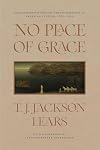
No Place of Grace: Antimodernism and the Transformation of American Culture, 1880-1920
by Jackson Lears
On This Page
Description
A new edition of a classic work of American history that eloquently examines the rise of antimodernism at the turn of the twentieth century. First published in 1981, T. J. Jackson Lears ?s No Place of Grace is a landmark book in American studies and American history, acclaimed for both its rigorous research and the deft fluidity of its prose. A study of responses to the emergent culture of corporate capitalism at the turn of the twentieth century, No Place of Grace charts the development of show more contemporary consumer society through the embrace of antimodernism ?the effort among middle- and upper-class Americans to recapture feelings of authentic experience. Rather than offer true resistance to the increasingly corporatized bureaucracy of the time, however, antimodernism helped accommodate Americans to the new order ?it was therapeutic rather than oppositional, a striking forerunner to today ?s self-help culture. And yet antimodernism contributed a new dynamic as well, ?an eloquent edge of protest, ? as Lears puts it, which is evident even today in anticonsumerism, sustainable living, and other practices. This new edition, with a lively and discerning foreword by Jennifer Ratner-Rosenhagen, celebrates the fortieth anniversary of this singular work of history. show lessTags
Recommendations












































Member Reviews
Acquired this book from a remainder house some decades ago; finally read as a follow-up to Peter Williams’ Religion, Art, and Money, which covers a similar period in American history and mentions Lears’ book. Basically a soft Freudian approach to understanding the apparent contradictions of the period: the nostalgia for Mediaeval art and culture combined with increasing individualism and the decline of religion as a source of meaning and purpose in society. The phrase “modern superego” appears on practically every page; the word “neurasthenia” is regularly used, apparently intended as a real diagnosis; and the quest for cultural authority is frequently described as “therapeutic.” The last two chapters put a number of show more representative figures on the couch, notably Henry Adams, and carry out a more systematic analysis of their Oedipal issues in a fashion that seems parodic at this date. I was interested to note that while Williams identifies some of the relevant figures as homosexual, with the implication that this is/was widely known, the subject does not arise even once in Lears’ book, although the conflict between the “masculine” and the “feminine” sides of many of those who contributed to the Antimodernist movement is discussed at length.
I assume the fact that the book remains in print despite its reliance on largely-abandoned Freudian explanations for social phenomena reflects the interest which the period continues to hold for readers and scholars, and the wide-ranging research Lears presents on the subject. Extensive notes and bibliography. show less
I assume the fact that the book remains in print despite its reliance on largely-abandoned Freudian explanations for social phenomena reflects the interest which the period continues to hold for readers and scholars, and the wide-ranging research Lears presents on the subject. Extensive notes and bibliography. show less
Ratings
Members
- Recently Added By
Lists

r/AskHistorians' Recommended Books
1,068 works; 17 members
Author Information

27+ Works 1,170 Members
Jackson Lears is Board of Governors Professor of History at Rutgers University and the editor of Raritan: A Quarterly Review. The author of Fables of Abundance (winner of the Los Angeles Times Book Prize for history), Something for Nothing, and No Place of Grace, Lears writes for The New York Times, The Washington Post, and The New Republic. He show more lives in western New Jersey. show less
Awards and Honors
Awards
Common Knowledge
- Canonical title
- No Place of Grace: Antimodernism and the Transformation of American Culture, 1880-1920
- Epigraph
- Endowed with means that had been reserved for Divine Providence in former times, they changed the pattern of the rains, accelerated the cycle of harvest, and moved the river from where it had always been and put it with its w... (show all)hite stones and icy currents on the other side of the town, behind the cemetery.
... For the foreigners who arrived without love they converted the street of the loving matrons from France into a more extensive village than it had been, and on one glorious Wednesday they brought in a trainload of strange whores, Babylonish women skilled in age-old methods and in possession of all manner of unguents and devices to stimulate the unaroused, to give courage to the timid, to satiate the voracious, to exalt the modest man, to teach a lesson to repeaters, and to correct solitary people...
"Look at the mess we've got ourselves into," Colonel Aureliano Buendía said at that time, "just because we invited a gringo to eat some bananas."
Gabriel García Márquez
One Hundred Years of Solitude (1967)
For of the last stage of this cultural development, it might well be truly said: "Specialists without spirit, sensualists without heart; this nullity imagines that it has attained a level of civilization never before achieved."
Max Weber
The Protestant Ethic and the Spirit of Capitalism (1904) - Dedication
- For Karen Parker Lears;
surrealist, seer, co-conspirator
Classifications
Statistics
- Members
- 289
- Popularity
- 111,462
- Reviews
- 1
- Rating
- (4.32)
- Languages
- English
- Media
- Paper, Ebook
- ISBNs
- 5
- ASINs
- 1