Nine Inches: Stories
by Tom Perrotta
On This Page
Description
A collection of stories focuses on suburban nuclear families, including "Senior Season," "Nine Inches" and "The Smile on Happy Chang's Face."Tags
Recommendations





Member Reviews
First thing's first: I got this book as an Advance Readers' Copy through Goodreads First Reads. I always feel like I've accomplished something when I win a First Reads book, even though all I've really done to get it was enter the giveaway. Well, and opened the mailbox.
Now, the review...
So, this book really hit the spot for me. I didn't realize how much I was craving short stories until I started reading these.
There's a lot of divorce, a lot of infidelity, a lot of kids who don't call, but what really got me was the way Perrotta plays with self-identity.
Since I was in high school, sometimes when it's very quiet in a public place, like in a library or when I'm taking a test (something that happened a lot more in high school than it does show more in my late 30's), I think, "What would happen if I just screamed right now?"
That's kind of what Perrotta's characters do, except that they actually scream (or the equivalent of a scream in their situation). They're just chugging along, stuck in a situation of their own making but from which they can't seem to extricate themselves. Then suddenly they're faced with a challenge and respond by doing something completely out of character. They give into an impulse and in the fallout of that exercise of free-will, they have to figure out who they are now that they're someone who will do that out-of-character thing.
Another thing I really enjoyed about these stories is that I keep wondering about the characters. So often when I read short stories, they don't really stick with me, especially when I read them as quickly as I did these. But since I finished the book last night, I've been thinking about the characters as though their stories have continued on outside of the pages of the story, and I could just dip back in and learn more about what's going on with them. I kind of miss these characters, and usually I only get that sense with novels.
The one downside to these stories is that I think they might have heightened my dislike of suburbia, which I've been really disliking lately anyway. I keep thinking, I could just move...somewhere. Anywhere. Maybe Canada. Or Iceland.
If I were a Tom Perrotta character, though, I wouldn't do anything so outwardly dramatic. Instead I'd do something comparatively small which would completely derail the life I've built myself into, changing how others see me and how I see myself.
Funny how moving to Reykjavik seems much less scary than that other kind of change. I'll have to mull that one over.
And maybe I'll have to read through Perrotta's stories again. What a satisfying read that was. show less
Now, the review...
So, this book really hit the spot for me. I didn't realize how much I was craving short stories until I started reading these.
There's a lot of divorce, a lot of infidelity, a lot of kids who don't call, but what really got me was the way Perrotta plays with self-identity.
Since I was in high school, sometimes when it's very quiet in a public place, like in a library or when I'm taking a test (something that happened a lot more in high school than it does show more in my late 30's), I think, "What would happen if I just screamed right now?"
That's kind of what Perrotta's characters do, except that they actually scream (or the equivalent of a scream in their situation). They're just chugging along, stuck in a situation of their own making but from which they can't seem to extricate themselves. Then suddenly they're faced with a challenge and respond by doing something completely out of character. They give into an impulse and in the fallout of that exercise of free-will, they have to figure out who they are now that they're someone who will do that out-of-character thing.
Another thing I really enjoyed about these stories is that I keep wondering about the characters. So often when I read short stories, they don't really stick with me, especially when I read them as quickly as I did these. But since I finished the book last night, I've been thinking about the characters as though their stories have continued on outside of the pages of the story, and I could just dip back in and learn more about what's going on with them. I kind of miss these characters, and usually I only get that sense with novels.
The one downside to these stories is that I think they might have heightened my dislike of suburbia, which I've been really disliking lately anyway. I keep thinking, I could just move...somewhere. Anywhere. Maybe Canada. Or Iceland.
If I were a Tom Perrotta character, though, I wouldn't do anything so outwardly dramatic. Instead I'd do something comparatively small which would completely derail the life I've built myself into, changing how others see me and how I see myself.
Funny how moving to Reykjavik seems much less scary than that other kind of change. I'll have to mull that one over.
And maybe I'll have to read through Perrotta's stories again. What a satisfying read that was. show less
It's a truism that good fiction -- fiction of depth and artistry -- doesn't have to be about heroic or "likable" characters. Only a philistine would complain that a story is about losers and pathetic people. Just look at all those wonderful Chekhov stories about pathetic, ineffectual people. And Nikolai Gogol's classic "The Overcoat," and Updike's "Rabbit" novels, and so on.
And yet, I'm going to complain that the stories in this collection are all about unlikable, pathetic, self-destructive losers. Part of the problem is in the very nature of a collection of short stories by a single author. Sometimes a single-author collection can show that author at his or her best. If the author is capable of a range of styles, plot material, and show more moods, there's nothing like a collection to show off that diversity. And strengths that are hinted at in any single story can become more obvious and impressive as you read several stories. But then on the other hand there are times where a collection of stories can lessen your opinion of a writer. A story that you might respect and enjoy if you read it in isolation can feel tiresome and repetitive when it's grouped with a dozen or so others that are too similar, that revisit the same themes too often. And when those "same themes" boil down to unlikable, weak, and self-destructive characters... Well, it's enough to make me violate that truism noted above.
So that, in a nutshell, is my problem with this collection. In "Back Rub" a high-schooler's self-destructive arrogance gets him rejected from all the colleges he's applied to. In "The Smile on Happy Chang's Face" the protagonist has ruined his marriage through narrow-mindedness and violence. In "One-Four-Five" it's just rank stupidity and immaturity that have ruined a marriage. In "Nine Inches" a man realizes he's married the wrong woman thanks to his own weakness and ineffectuality. In "The Chosen Girl" a widowed mother of a grown son is going batty from loneliness because she's too much of a doormat to make any demands on her neglectful son. "Kiddie Pool" features a protagonist whose marriage has become a hollow shell thanks to both literal and figurative impotence. And the last story, "The All-Night Party," begins with this line: "Liz got suckered into taking the graveyard shift at the All-Night Party the same way she'd gotten suckered into every other thankless task in her long parental career..." Of course she did; she was cursed to be a Tom Perrotta character, the poor thing.
It's the repetitive annoyance-factor of all these similarly ineffectual and self-destructive characters that, for me, builds from one story to the next and makes the collection a pretty unpleasant experience. Yes, being ineffectual and self-destructive is a part of the human condition, and thus a valid subject for fine fiction. But a whole book-full of stories tightly bound to that topic comes to feel not only tedious, but artistically hollow.
Still, there were a few stories that I enjoyed, at least somewhat. "Kiddie Pool" is a genuinely moving story of an aging man looking back on his life and in particular on a friendship that went sour. "Nine Inches" is a tender, sad, sweet story, in spite of the weak and self-destructive protagonist (see above). And likewise with "The Chosen Girl"; despite the annoying helplessness of the protagonist, there's no denying the melancholy effect of the story.
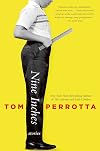
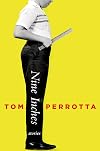
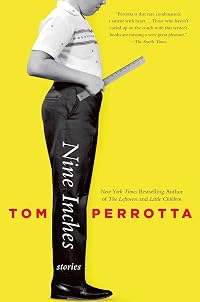
Finally, a word about the cover of the hardcover edition of this book (mercifully changed for the paperback): It's ugly, unfunny, ugly, vulgar, ugly, childish, ugly, crude, and ugly. Also it's ugly. About the best one can say about it is that at least it isn't despoiling an otherwise good book. show less
And yet, I'm going to complain that the stories in this collection are all about unlikable, pathetic, self-destructive losers. Part of the problem is in the very nature of a collection of short stories by a single author. Sometimes a single-author collection can show that author at his or her best. If the author is capable of a range of styles, plot material, and show more moods, there's nothing like a collection to show off that diversity. And strengths that are hinted at in any single story can become more obvious and impressive as you read several stories. But then on the other hand there are times where a collection of stories can lessen your opinion of a writer. A story that you might respect and enjoy if you read it in isolation can feel tiresome and repetitive when it's grouped with a dozen or so others that are too similar, that revisit the same themes too often. And when those "same themes" boil down to unlikable, weak, and self-destructive characters... Well, it's enough to make me violate that truism noted above.
So that, in a nutshell, is my problem with this collection. In "Back Rub" a high-schooler's self-destructive arrogance gets him rejected from all the colleges he's applied to. In "The Smile on Happy Chang's Face" the protagonist has ruined his marriage through narrow-mindedness and violence. In "One-Four-Five" it's just rank stupidity and immaturity that have ruined a marriage. In "Nine Inches" a man realizes he's married the wrong woman thanks to his own weakness and ineffectuality. In "The Chosen Girl" a widowed mother of a grown son is going batty from loneliness because she's too much of a doormat to make any demands on her neglectful son. "Kiddie Pool" features a protagonist whose marriage has become a hollow shell thanks to both literal and figurative impotence. And the last story, "The All-Night Party," begins with this line: "Liz got suckered into taking the graveyard shift at the All-Night Party the same way she'd gotten suckered into every other thankless task in her long parental career..." Of course she did; she was cursed to be a Tom Perrotta character, the poor thing.
It's the repetitive annoyance-factor of all these similarly ineffectual and self-destructive characters that, for me, builds from one story to the next and makes the collection a pretty unpleasant experience. Yes, being ineffectual and self-destructive is a part of the human condition, and thus a valid subject for fine fiction. But a whole book-full of stories tightly bound to that topic comes to feel not only tedious, but artistically hollow.
Still, there were a few stories that I enjoyed, at least somewhat. "Kiddie Pool" is a genuinely moving story of an aging man looking back on his life and in particular on a friendship that went sour. "Nine Inches" is a tender, sad, sweet story, in spite of the weak and self-destructive protagonist (see above). And likewise with "The Chosen Girl"; despite the annoying helplessness of the protagonist, there's no denying the melancholy effect of the story.
Finally, a word about the cover of the hardcover edition of this book (mercifully changed for the paperback): It's ugly, unfunny, ugly, vulgar, ugly, childish, ugly, crude, and ugly. Also it's ugly. About the best one can say about it is that at least it isn't despoiling an otherwise good book. show less
Nobody does suburban regret & melancholia like Tom Perrotta.
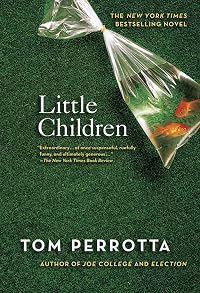
This is the Tom Perrotta of "Little Children," a wry, intelligent, pitch-perfect suburban observer. I enjoyed every story in this collection (with the possible exception of "Happy Chang," a tedious tale of baseball). He writes equally well from a male or female point of view, and particularly shines when he writes about adolescence. These stories were funny, bittersweet and true.
A flawlessly produced audiobook. The actors are all well matched the material. The stories themselves are told well. The subjects and themes seem canned. The themes seem stolen from Degrassi Junior High and John Hughes. Not clear why Mr. Perrotta is so obsessed with high school.
Loved most of these stories. "The Smile on Happy Chang's Face" was selected in 2012 as a Boston Reads and it wasn't even my favorite. I liked the title story the best, with many runners-up. Tom Perrotta "gets" suburbia like no one else. He finds the charm amongst the silliness. He holds up the deepest mirror to and for us humans, men and women, and especially kids. Looking forward to seeing "The Leftovers" as an HBO series soon!
"Nine Inches" is a very fine collection of ten short stories by novelist Tom Perrotta in which the author displays his talent for getting inside the heads of characters of all ages, be they little girls playing little league baseball or middle-aged men who, much too late, regret cheating on their wives. No matter what the story is about, the reader will find it easy to get immersed in each new world for the twenty or thirty minutes it takes to read each of them.
My favorites are "The Smile on Happy Chang's Face" (the Little League story, previously referenced), "Kiddie Pool" (in which a man discovers a well hidden secret in his dead neighbor's garage), and ""The Test-Taker" (in which a high school boy who is paid to take SAT tests for show more other students gets the ultimate revenge on a romantic rival).
Even readers who do not consider themselves to be fans of short fiction are likely to enjoy this collection. The stories are deceivingly simple, but they pack a punch that will leave the reader thinking about them for some time to come. They are character-driven tales and, best of all, they are packed with unique and memorable characters. Do give this one a look. show less
My favorites are "The Smile on Happy Chang's Face" (the Little League story, previously referenced), "Kiddie Pool" (in which a man discovers a well hidden secret in his dead neighbor's garage), and ""The Test-Taker" (in which a high school boy who is paid to take SAT tests for show more other students gets the ultimate revenge on a romantic rival).
Even readers who do not consider themselves to be fans of short fiction are likely to enjoy this collection. The stories are deceivingly simple, but they pack a punch that will leave the reader thinking about them for some time to come. They are character-driven tales and, best of all, they are packed with unique and memorable characters. Do give this one a look. show less
Members
- Recently Added By
Author Information

21+ Works 13,493 Members
Tom Perrotta is a novelist and screenwriter best known for his novels Election (1998) and Little Children (2004), both of which were made into critically acclaimed, Academy Award-nominated films. His fiction book, The Leftovers, made it to the New York Times bestseller list in 2014. (Bowker Author Biography)
Some Editions
Awards and Honors
Awards
Common Knowledge
- Canonical title
- Nine Inches: Stories
Classifications
Statistics
- Members
- 334
- Popularity
- 95,377
- Reviews
- 14
- Rating
- (3.89)
- Languages
- English
- Media
- Paper, Audiobook, Ebook
- ISBNs
- 10
- ASINs
- 2