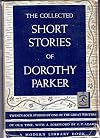
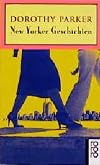
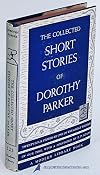
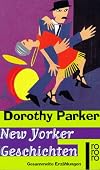
The Collected Short Stories of Dorothy Parker
by Dorothy Parker
On This Page
Tags
Recommendations













Member Reviews
Seeing that no one had yet reviewed Dorothy Parker's short stories, I figured I better jump in. Parker's writing style is literate but lean, no tortured sentences or ponderous metaphor. She skewers the self-important in the society of her day with verve and legendary wit. Hypocrites, egotists, and philistines must have shuddered in her wake -- if they weren't too self-absorbed to recognize themselves in her pages. Her stories are delicious little bonbons, short and quickly read, a treat.
In the spirit of the other review of these short stories, I felt that Dorothy deserved at least two comments. The first time I read these, many years ago, I thought that they were slashingly funny, and masterpieces of the short story form. Now, I am a bit less convinced. They are funny, true, but they are also cruel, and one wonders if underneath the ultimate target isn't the writer herself -- a view that probably reads too much in from her bio. Still, now that I am older if not wiser, I definitely prefer Ms. Parker's poetry to her stories.
Ratings
Members
- Recently Added By
Lists

Books We Love to Reread
688 works; 297 members
Author Information

147+ Works 10,284 Members
Poet and short story writer Dorothy Parker was born in New Jersey on August 22, 1893. When she was 5, her mother died and her father, a clothes salesman, remarried. Parker had a great antipathy toward her stepmother and refused to speak to her. She attended parochial school and Miss Dana's school in Morristown, New Jersey, for a brief time before show more dropping out at age 14. A voracious reader, she decided to pursue a career in literature. She began her career by writing verse as well as captions for a fashion magazine. During the years of her greatest fame, Dorothy Parker was known primarily as a writer of light verse, an essential member of the Algonquin Round Table, and a caustic and witty critic of literature and society. She is remembered now as an almost legendary figure of the 1920s and 1930s. Her reviews and staff contributions to three of the most sophisticated magazines of this century, Vanity Fair, the New Yorker, and Esquire, were notable for their put-downs. For all her highbrow wit, however, Dorothy Parker was liberal, even radical, in her political views, and the hard veneer of brittle toughness that she showed to the world was often a shield for frustrated idealism and soft sensibilities. The best of her fiction is marked by a balance of ironic detachment and sympathetic compassion, as in "Big Blonde," which won the O. Henry Award for 1929 and is still her best-remembered and most frequently anthologized story. The best of Dorothy Parker is readily and compactly accessible in The Portable Dorothy Parker. Her own selection of stories and verse for the original edition of that compilation, published in 1944, remains intact in the revised edition, but included also are additional stories, reviews, and articles. Parker died of a heart attack at the age of 73 in 1967. In her will, she bequeathed her estate to the Dr. Martin Luther King, Jr. foundation. Following King's death, her estate was passed on to the NAACP. (Bowker Author Biography) show less
Some Editions
Common Knowledge
- Canonical title*
- New Yorker Geschichten
- Original publication date
- 1942 (selection) (selection)
*Some information comes from Common Knowledge in other languages. Click "Edit" for more information.
Classifications
Statistics
- Members
- 216
- Popularity
- 151,512
- Reviews
- 2
- Rating
- (3.83)
- Languages
- English, French, German
- Media
- Paper, Audiobook
- ISBNs
- 11
- ASINs
- 14