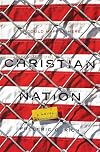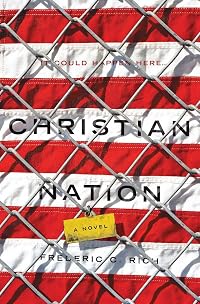
Christian Nation
by Frederic C. Rich
On This Page
Description
"They said what they would do, and we did not listen. Then they did what they said they would do." So ends the first chapter of this brilliantly readable counterfactual novel, reminding us that America's Christian fundamentalists have been consistently clear about their vision for a "Christian Nation" and dead serious about acquiring the political power to achieve it. When President McCain dies and Sarah Palin becomes president, the reader, along with the nation, stumbles down a terrifyingly show more credible path toward theocracy, realizing too late that the Christian right meant precisely what it said. In the spirit of Philip Roth's The Plot Against America, one of America's foremost lawyers lays out in chilling detail what such a future might look like: constitutional protections dismantled; all aspects of life dominated by an authoritarian law called "The Blessing", enforced by a totally integrated digital world known as the "Purity Web". Readers will find themselves haunted by the questions the narrator struggles to answer in this fictional memoir: "What happened, why did it happen, how could it have happened?"-- Publisher's description. show lessTags
Recommendations





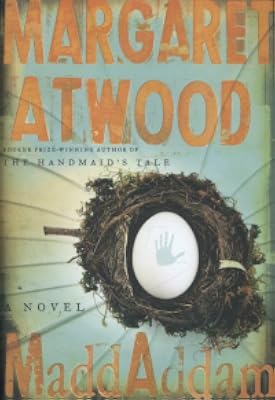

Member Recommendations
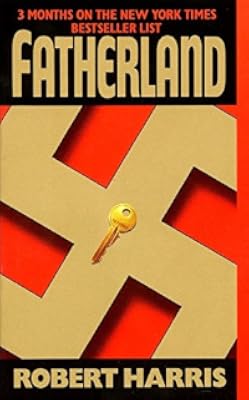
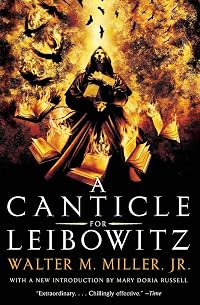
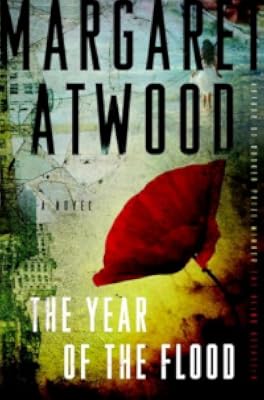
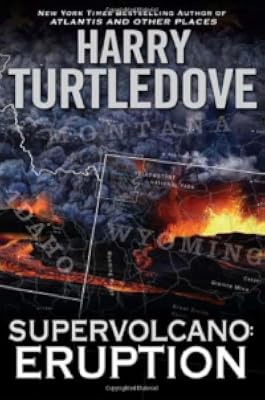
4leschats Similar theme of a post-evangelical government takeover and its ramifications on civil liberties
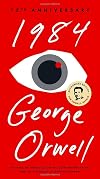
AvengingExile The quintessential dystopian novel.
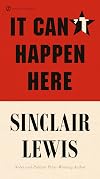
sturlington Very similar, which I think is intentional.
Member Reviews
I have long been a fan of alternate history. I have never, however, read a book (written in 2013) where speculation so unrelentingly and terrifyingly unfolds itself in reality mere years from its publication. "They said what they would do, and we did not listen. Then they did what they said they would do." In fact, they are inexorably doing it as I write. The author thoroughly destroys the rabbit's-foot that it can't happen here.
Rating: 4.5 appalled, terrified stars of five
The Publisher Says: “They said what they would do, and we did not listen. Then they did what they said they would do.”
So ends the first chapter of this brilliantly readable counterfactual novel, reminding us that America’s Christian fundamentalists have been consistently clear about their vision for a “Christian Nation” and dead serious about acquiring the political power to achieve it. When President McCain dies and Sarah Palin becomes president, the reader, along with the nation, stumbles down a terrifyingly credible path toward theocracy, realizing too late that the Christian right meant precisely what it said.
In the spirit of Philip Roth’s The Plot Against America, one of show more America’s foremost lawyers lays out in chilling detail what such a future might look like: constitutional protections dismantled; all aspects of life dominated by an authoritarian law called “The Blessing,” enforced by a reconfigured Internet known as the “Purity Web.” Those who defy this system, among them the narrator, live on the edges of society, sustained by the belief that democracy will rise to triumph over such tyrannical oppression.
My Review: It's Banned Books Week, so we are well advised to think about what the ability to ban a book really means. In Rich's novel, banning a book is no longer a concern. The apparatus of theocracy has taken over the libraries. Nothing so trivial as banning A book is necessary, slate entire areas of human knowledge for destruction. Pulp those books that don't tell the story you want told. Knowledge dies, after all. We saw that after the fall of the Roman Empire. The only libraries were in monasteries, and the only works supposed to be preserved were dogmatic, didactic christian texts. Fortunately, some subversives hid works by Lucretius, Epicurus, Juvenal, Suetonius, in their stacks. As theocracy self-destructed, as all -ocracies (including dem-) inevitably do, sharp-eyed secularists found these works and brought them out into the public gaze for the first time in as much as a millennium. (For more about this, see my review of The Swerve.)
Think about that. For a millennium, a thousand years, knowledge that might have led the world out of pervasive hunger, away from destructive hatred and war over trivia, was hidden away so it would at least survive as words on paper. It couldn't be discussed, because it couldn't be read. It was banned. Very effectively and efficiently banned. When the ban was lifted, the world's best brains went into overdrive and they've never slowed down since.
Yet we still, after this excellent example of the benefits of freedom of thought, freedom of expression, freedom from the fear that censorship breeds, we still have to fight the well-meaning, well-intentioned, and always wrong "moral protectors" and "nicey-nice police." It doesn't have to start big, and in fact, that is author Rich's point in this novel. His story, of a subversive in the Christian Nation, a convert to the Church of God in America from the losing side in the Seige of Manhattan, starts with the run-up to the 2008 election. In Rich's horrifying nightmare, McCain and Palin won, and then they did what they said they would do: They "restored American to a Christian Nation." They used your smartphone with its eternal connection to communication satellites to track you. It's the law that you must have it on you. It's the law that every device you use must be connected to the Purity Web (which we call universal wi-fi connectivity, and long for!) that your every utterance or interface with another person be monitorable.
Imagine how many gigaflops of information this state collects. And sifts. And uses against its citizens, but only in the kindest of spirits and in the expectation of their draconian rules and totalitarian controls bringing all souls to the Rapture as pure as is possible.
This kind of nightmare is all too possible. Look at the Taliban in Afghanistan. Look at the rhetoric coming out of the Tea Party. No, no, says the complacent and lazy citizen, who can't be bothered to vote for school board members or participate in electioneering, no way can that happen here.
“The biggest mistake that we can make is that we don’t believe that they believe what they say. And for many of them, they do mean exactly what they say," says author Rich in his Politico.com interview from this past July. Look at the Texas school textbook adoption wars over presenting creationism as a scientific theory. All of those folks are elected...by the few who bother to show up, and those are usually the wingnuts from the religious right with an agenda to impose.
This novel is set in a world that didn't happen, where the battle against censorship costs lives. Those lives are lost because, in that world like this one we live in, so very many of us can't be bothered, don't want to, are too tired or bored or stressed or lazy to, stand up and say NO MORE when censorship is proposed or imposed. And Rich, a high-powered financial industry lawyer, works with the kind of people whose money-making and self-interest are tightly bound up with the trends in thought and speech around the world. In short, if he doesn't know from the inside whereof he speaks when he speaks about the consequences voicelessness, of stifled freedom to speak and think as one desires, no one alive does.
Start where you are. Do what you can, what you're capable of doing. Fight the small battles and, win or lose, the war's course will change. Maybe you'll even live long enough to be glad that you did. I only hope you won't live long enough to regret that you didn't.
This work is licensed under a Creative Commons Attribution-NonCommercial-ShareAlike 3.0 Unported License. show less
The Publisher Says: “They said what they would do, and we did not listen. Then they did what they said they would do.”
So ends the first chapter of this brilliantly readable counterfactual novel, reminding us that America’s Christian fundamentalists have been consistently clear about their vision for a “Christian Nation” and dead serious about acquiring the political power to achieve it. When President McCain dies and Sarah Palin becomes president, the reader, along with the nation, stumbles down a terrifyingly credible path toward theocracy, realizing too late that the Christian right meant precisely what it said.
In the spirit of Philip Roth’s The Plot Against America, one of show more America’s foremost lawyers lays out in chilling detail what such a future might look like: constitutional protections dismantled; all aspects of life dominated by an authoritarian law called “The Blessing,” enforced by a reconfigured Internet known as the “Purity Web.” Those who defy this system, among them the narrator, live on the edges of society, sustained by the belief that democracy will rise to triumph over such tyrannical oppression.
My Review: It's Banned Books Week, so we are well advised to think about what the ability to ban a book really means. In Rich's novel, banning a book is no longer a concern. The apparatus of theocracy has taken over the libraries. Nothing so trivial as banning A book is necessary, slate entire areas of human knowledge for destruction. Pulp those books that don't tell the story you want told. Knowledge dies, after all. We saw that after the fall of the Roman Empire. The only libraries were in monasteries, and the only works supposed to be preserved were dogmatic, didactic christian texts. Fortunately, some subversives hid works by Lucretius, Epicurus, Juvenal, Suetonius, in their stacks. As theocracy self-destructed, as all -ocracies (including dem-) inevitably do, sharp-eyed secularists found these works and brought them out into the public gaze for the first time in as much as a millennium. (For more about this, see my review of The Swerve.)
Think about that. For a millennium, a thousand years, knowledge that might have led the world out of pervasive hunger, away from destructive hatred and war over trivia, was hidden away so it would at least survive as words on paper. It couldn't be discussed, because it couldn't be read. It was banned. Very effectively and efficiently banned. When the ban was lifted, the world's best brains went into overdrive and they've never slowed down since.
Yet we still, after this excellent example of the benefits of freedom of thought, freedom of expression, freedom from the fear that censorship breeds, we still have to fight the well-meaning, well-intentioned, and always wrong "moral protectors" and "nicey-nice police." It doesn't have to start big, and in fact, that is author Rich's point in this novel. His story, of a subversive in the Christian Nation, a convert to the Church of God in America from the losing side in the Seige of Manhattan, starts with the run-up to the 2008 election. In Rich's horrifying nightmare, McCain and Palin won, and then they did what they said they would do: They "restored American to a Christian Nation." They used your smartphone with its eternal connection to communication satellites to track you. It's the law that you must have it on you. It's the law that every device you use must be connected to the Purity Web (which we call universal wi-fi connectivity, and long for!) that your every utterance or interface with another person be monitorable.
Imagine how many gigaflops of information this state collects. And sifts. And uses against its citizens, but only in the kindest of spirits and in the expectation of their draconian rules and totalitarian controls bringing all souls to the Rapture as pure as is possible.
This kind of nightmare is all too possible. Look at the Taliban in Afghanistan. Look at the rhetoric coming out of the Tea Party. No, no, says the complacent and lazy citizen, who can't be bothered to vote for school board members or participate in electioneering, no way can that happen here.
“The biggest mistake that we can make is that we don’t believe that they believe what they say. And for many of them, they do mean exactly what they say," says author Rich in his Politico.com interview from this past July. Look at the Texas school textbook adoption wars over presenting creationism as a scientific theory. All of those folks are elected...by the few who bother to show up, and those are usually the wingnuts from the religious right with an agenda to impose.
This novel is set in a world that didn't happen, where the battle against censorship costs lives. Those lives are lost because, in that world like this one we live in, so very many of us can't be bothered, don't want to, are too tired or bored or stressed or lazy to, stand up and say NO MORE when censorship is proposed or imposed. And Rich, a high-powered financial industry lawyer, works with the kind of people whose money-making and self-interest are tightly bound up with the trends in thought and speech around the world. In short, if he doesn't know from the inside whereof he speaks when he speaks about the consequences voicelessness, of stifled freedom to speak and think as one desires, no one alive does.
Start where you are. Do what you can, what you're capable of doing. Fight the small battles and, win or lose, the war's course will change. Maybe you'll even live long enough to be glad that you did. I only hope you won't live long enough to regret that you didn't.
This work is licensed under a Creative Commons Attribution-NonCommercial-ShareAlike 3.0 Unported License. show less
I've never been a fan of futuristic dystopian novels. But this one is not just about the future -- much of it is happening now. Last week, Louisiana advanced a bill that would grant constitutional rights to a person “from the moment of fertilization.” The bill would criminalize abortion as murder. And, since a fertilized egg would be a "person" with full rights, it would criminalize any birth control method that prevents a fertilized egg from implanting.
Also, 10-to-20% of pregnancies end in miscarriage. So I wonder how the government would determine if the woman had a self-induced abortion or a miscarriage. Would women who miscarry be charged with murder and have to prove their innocence in court? Would they need witnesses? show more Lawyers?
They're gonna have to build a lot more prisons.
We live in interesting times and this is an interesting novel. Very timely and recommended. show less
Also, 10-to-20% of pregnancies end in miscarriage. So I wonder how the government would determine if the woman had a self-induced abortion or a miscarriage. Would women who miscarry be charged with murder and have to prove their innocence in court? Would they need witnesses? show more Lawyers?
They're gonna have to build a lot more prisons.
We live in interesting times and this is an interesting novel. Very timely and recommended. show less
Christian Nation, by Frederic C. Rich, poses an alternate history in which McCain/Palin won the 2008 Presidential Election. However, shortly afterwards, McCain passes away, leaving Palin at the helm of our nation. It is through her that enterprising people slowly use and abuse the powers of government to create a totalitarian government, governed only by a fundamentalist interpretation of the Bible.
Being a Christian, I can see how there is a desire for our elected officials to act with integrity and ethics, but when it comes to issues of morality, I find that I disagree with enough other Christians on certain issues that I'm hard pressed to find a moral set of laws that would appeal to every Christian, or every theist, or even show more everybody. Also, it is important to look into the problems that arise from religious nations. In the book of Daniel, we are shown where a lack of religious freedoms can get people: thrown into furnaces and lions' dens. In the Middle East, we also see how a law based on issues of morality can leave women uneducated and with fewer rights than their male counterparts. Though I may have certain feelings on what is right and wrong, these feelings are strictly "what is right and wrong for ME," and I generally keep them to myself unless somebody actually wants to know my opinion on matters. Because of this, however, I feel that just like no political part truly fits anybody fully, no set of moral laws can truly fit everybody wholly. This is why, in today's day and age, Christians seem to ignore the more inconvenient laws found in Leviticus (how many of your clothes mix cotton and linen?), and focus instead on the things that are less spoken about in the Bible, but more spoken about in the pulpits and senate floors. I'm generally against passing legislation whose justification is "because God says so," especially as that excuse is rife for abuse. Twist any words enough and you can get them to say anything.
It is chilling to read Christian Nation, to watch the gradual dissolution of our civil rights for the sake of some feeling of comfort from some person who says they know better than us about what's best for us. It's especially chilling when likened to other steps towards totalitarianism, regardless of the religious affiliation: the gradual dissolution of privacy that comes from an unchecked NSA surveillance program, or the gradual dissolution of free speech that comes from so-called "intellectual property" laws. Sinclair Lewis said "It Can't Happen Here," and yet it still did. While the current crusader against our civil liberties may not be wearing a big red cross, the lesson is still the same: take back your rights before you forget you ever had them.
If you're a Christian like me, I encourage you to read this book. Yes, it takes digs at Christianity, and it holds a very secular slant, but ultimately, it paints an accurate picture of an America much worse than one legislated as a secular state. As long as we have our freedoms, we, the people, have the right to worship whatever god, goddess, gods, spaghetti monsters, or invisible pink unicorns we so desire. If you take away someone's choice, consider how you would feel if they took away yours. show less
Being a Christian, I can see how there is a desire for our elected officials to act with integrity and ethics, but when it comes to issues of morality, I find that I disagree with enough other Christians on certain issues that I'm hard pressed to find a moral set of laws that would appeal to every Christian, or every theist, or even show more everybody. Also, it is important to look into the problems that arise from religious nations. In the book of Daniel, we are shown where a lack of religious freedoms can get people: thrown into furnaces and lions' dens. In the Middle East, we also see how a law based on issues of morality can leave women uneducated and with fewer rights than their male counterparts. Though I may have certain feelings on what is right and wrong, these feelings are strictly "what is right and wrong for ME," and I generally keep them to myself unless somebody actually wants to know my opinion on matters. Because of this, however, I feel that just like no political part truly fits anybody fully, no set of moral laws can truly fit everybody wholly. This is why, in today's day and age, Christians seem to ignore the more inconvenient laws found in Leviticus (how many of your clothes mix cotton and linen?), and focus instead on the things that are less spoken about in the Bible, but more spoken about in the pulpits and senate floors. I'm generally against passing legislation whose justification is "because God says so," especially as that excuse is rife for abuse. Twist any words enough and you can get them to say anything.
It is chilling to read Christian Nation, to watch the gradual dissolution of our civil rights for the sake of some feeling of comfort from some person who says they know better than us about what's best for us. It's especially chilling when likened to other steps towards totalitarianism, regardless of the religious affiliation: the gradual dissolution of privacy that comes from an unchecked NSA surveillance program, or the gradual dissolution of free speech that comes from so-called "intellectual property" laws. Sinclair Lewis said "It Can't Happen Here," and yet it still did. While the current crusader against our civil liberties may not be wearing a big red cross, the lesson is still the same: take back your rights before you forget you ever had them.
If you're a Christian like me, I encourage you to read this book. Yes, it takes digs at Christianity, and it holds a very secular slant, but ultimately, it paints an accurate picture of an America much worse than one legislated as a secular state. As long as we have our freedoms, we, the people, have the right to worship whatever god, goddess, gods, spaghetti monsters, or invisible pink unicorns we so desire. If you take away someone's choice, consider how you would feel if they took away yours. show less
 This review was written for LibraryThing Early Reviewers.
CHRISTIAN NATION is, the author says, intended as a warning, not as a prediction. But I can't help but remember the report on August 7, 2013, of a judge in Knoxville, TN, who required parents who appeared before her in a case over child support payments to change the first name of that child, Messiah, "because it is a title which belongs to only one person in human history, Jesus Christ."
Frederic Rich also recalls for us the observation, "They told us what they were going to do. And then they did what they said they were going to do." The observation was about the Nazis, but CHRISTIAN NATION is about Christian dominionism, the political theory that Christians should have complete political control over every aspect of life before the show more return of Jesus.
CHRISTIAN NATION is about one man caught up in a dominionist United States who is writing a memoir about his experience of how it came to be. At first I was skeptical--most alternate histories are not as current as this one, in that the point where history splits is back farther in the past; this book is set in 2029, and the split has happened very recently indeed--McCain and Palin won the 2004 and 2008 elections, and McCain died in office, leaving Palin to succeed him. Then I thought, "Well, this might backfire, because the reader can tell himself, 'See, it didn't happen, so this alternate history just isn't possible.'"
Perhaps it isn't possible quite as outlined in this book, but we ought to pay attention to the signs and portents nonetheless. Many of those (NON-fiction!) signs and portents are quoted in the book.
What would happen if the Christian version of Sharia law took over this country? If a judge in real life (I'm thinking of YOU, Child Support Magistrate Lu Ann Ballew of Knoxville, TN) can require parents to change the name of a child because it doesn't happen to accord with that judge's personal religious beliefs? If a state political party can declare that the country represents one--and only one--religious belief? If one religion gets to dictate where and how and why and if an entire country chooses to worship?
We'd like to be able to say, It Can't Happen Here. But it can. We've seen it happen within the past hundred years in Germany and in Russia. We've seen members of our own government dismiss the fundamental tenets upon which that government is founded, and twist the Bill of Rights out of all recognition, in order to promote their own agendas. And I tell you frankly, it scares hell out of me--particularly when I realize that this is precisely what the religious right is accusing the rest of us of doing.
Inoculate yourself. Be aware. Read CHRISTIAN NATION, and fight back. show less
Frederic Rich also recalls for us the observation, "They told us what they were going to do. And then they did what they said they were going to do." The observation was about the Nazis, but CHRISTIAN NATION is about Christian dominionism, the political theory that Christians should have complete political control over every aspect of life before the show more return of Jesus.
CHRISTIAN NATION is about one man caught up in a dominionist United States who is writing a memoir about his experience of how it came to be. At first I was skeptical--most alternate histories are not as current as this one, in that the point where history splits is back farther in the past; this book is set in 2029, and the split has happened very recently indeed--McCain and Palin won the 2004 and 2008 elections, and McCain died in office, leaving Palin to succeed him. Then I thought, "Well, this might backfire, because the reader can tell himself, 'See, it didn't happen, so this alternate history just isn't possible.'"
Perhaps it isn't possible quite as outlined in this book, but we ought to pay attention to the signs and portents nonetheless. Many of those (NON-fiction!) signs and portents are quoted in the book.
What would happen if the Christian version of Sharia law took over this country? If a judge in real life (I'm thinking of YOU, Child Support Magistrate Lu Ann Ballew of Knoxville, TN) can require parents to change the name of a child because it doesn't happen to accord with that judge's personal religious beliefs? If a state political party can declare that the country represents one--and only one--religious belief? If one religion gets to dictate where and how and why and if an entire country chooses to worship?
We'd like to be able to say, It Can't Happen Here. But it can. We've seen it happen within the past hundred years in Germany and in Russia. We've seen members of our own government dismiss the fundamental tenets upon which that government is founded, and twist the Bill of Rights out of all recognition, in order to promote their own agendas. And I tell you frankly, it scares hell out of me--particularly when I realize that this is precisely what the religious right is accusing the rest of us of doing.
Inoculate yourself. Be aware. Read CHRISTIAN NATION, and fight back. show less
This review was written for LibraryThing Early Reviewers.I was intensely curious about Christian Nation from the moment it was first brought to my attention. I do like a enjoy a good alternate "what if?" history novel, but I was far more interested in this as a book of ideas. As a reader who is apparently destined to be persecuted on multiple fronts in Rich's theocratic state, I was interested to see how he would develop his ideas and justify his conclusions.
Oh my gosh. I mean no offense to my friends south of the border, but this is a quintessentially American novel - full of arrogance, self-importance, and return to thoughts of manifest destiny. The political and religious leaders of Rich's novel not only believe that the establishment of America as a pure Christian Nation is required for show more the second-coming, but that they were granted the land by God for that sole purpose. There is some lip service provided to the idea of supporting a Jewish state in Israel but, for the most part, the new rulers of America don't give a damn about anybody outside their borders. The Bible may not have been written by them but, by God, it sure as sin was written for them.
Along the same lines, the new rulers are not content to merely accept the will of God and rule their country according to the literal dictates of the Bible. The 10 commandments are a great inspiration, but in America you go big or you go home, and it takes 50 new commandments , in the form of The Blessing, to get things done. I really don't know whether Rich was being satirical in so wholeheartedly embracing the worst stereotypes outsiders have of America, but he plays just about every card in the deck. The Blessing has to be the ickiest part of the novel, several pages of racist, sexist, homophobic that just makes you queasy to think of anybody buying into.
It's not just American stereotypes at work here, however, but misogynistic religious ones as well. In the new Christian Nation, it's homosexual men who are the enemy, and sodomy that is the world's greatest sin. Islamic terrorists loading rocket launchers around airports are bad, but Rich's theocratic leaders would run right past them to stop two young men from loading something far smaller, and far less lethal, into one another. His is a world where single men over a certain age are legally assumed to be homosexual, and where gay sex is grounds for execution. Lesbians, however, merely have to be watched (I guess some things never change), and women merely have to be pleasant and obey their husbands - who can, of course, demand any sort of kinkiness they desire. I do have to give Rich credit for making a lovely, charismatic gay man one of his protagonists, though, even if he never gets kissed, much less sodomized, anywhere on the page.
Whew. Could it really happen the way Rich suggests? Could a theocracy take root in America, rise to absolute power, and then gleefully abuse that power until everything that made the country America is gone? I sure as hell hope not but, then again, he makes it clear the world felt the same way about Nazi Germany once upon a time. As a cautionary tale and a philosophical exploration of what happens when the lines between church and state are erased, this is a fascinating read. It's very dry, and full of long passages that I'm sure even lawyers and university professors will be tempted to skim, but it is interesting to see how easily we can be convinced to give our freedoms away. show less
Oh my gosh. I mean no offense to my friends south of the border, but this is a quintessentially American novel - full of arrogance, self-importance, and return to thoughts of manifest destiny. The political and religious leaders of Rich's novel not only believe that the establishment of America as a pure Christian Nation is required for show more the second-coming, but that they were granted the land by God for that sole purpose. There is some lip service provided to the idea of supporting a Jewish state in Israel but, for the most part, the new rulers of America don't give a damn about anybody outside their borders. The Bible may not have been written by them but, by God, it sure as sin was written for them.
Along the same lines, the new rulers are not content to merely accept the will of God and rule their country according to the literal dictates of the Bible. The 10 commandments are a great inspiration, but in America you go big or you go home, and it takes 50 new commandments , in the form of The Blessing, to get things done. I really don't know whether Rich was being satirical in so wholeheartedly embracing the worst stereotypes outsiders have of America, but he plays just about every card in the deck. The Blessing has to be the ickiest part of the novel, several pages of racist, sexist, homophobic that just makes you queasy to think of anybody buying into.
It's not just American stereotypes at work here, however, but misogynistic religious ones as well. In the new Christian Nation, it's homosexual men who are the enemy, and sodomy that is the world's greatest sin. Islamic terrorists loading rocket launchers around airports are bad, but Rich's theocratic leaders would run right past them to stop two young men from loading something far smaller, and far less lethal, into one another. His is a world where single men over a certain age are legally assumed to be homosexual, and where gay sex is grounds for execution. Lesbians, however, merely have to be watched (I guess some things never change), and women merely have to be pleasant and obey their husbands - who can, of course, demand any sort of kinkiness they desire. I do have to give Rich credit for making a lovely, charismatic gay man one of his protagonists, though, even if he never gets kissed, much less sodomized, anywhere on the page.
Whew. Could it really happen the way Rich suggests? Could a theocracy take root in America, rise to absolute power, and then gleefully abuse that power until everything that made the country America is gone? I sure as hell hope not but, then again, he makes it clear the world felt the same way about Nazi Germany once upon a time. As a cautionary tale and a philosophical exploration of what happens when the lines between church and state are erased, this is a fascinating read. It's very dry, and full of long passages that I'm sure even lawyers and university professors will be tempted to skim, but it is interesting to see how easily we can be convinced to give our freedoms away. show less
This book reminded me a lot of Sinclair Lewis's It Can't Happen Here, and I don't mean the comparison to be complimentary. Both are polemics against possible political futures for the United States, and as such, they both make poor reading for entertainment value, even if you are a person who enjoys the dystopia sub-genre. Lewis's novel, of course, warns against the possibility of fascists taking over American government; Christian Nation foresees a near future in which the far Christian Right have taken over.
In Christian Nation, Rich imagines that John McCain was elected president, died in office and was succeeded by Sarah Palin. This leads to the wholesale takeover of the US government by Christian fundamentalists who enact a show more totalitarian regime based on authoritarian Christian law and constant electronic surveillance. While the reader might be able to accept this premise, the use of current living people as figures in the novel underscores that it is primarily a political screed masquerading as a novel. There isn't much story or character development to win the reader's attention, but there is a lot of hand-wringing and haranguing. Even if they are already sympathetic to the author's point of view, readers are bound to find this tiresome.
As with Lewis's novel, I didn't bother to finish Christian Nation. I didn't need to finish it to understand what this book was and that it wasn't worth my time. I suggest Rich go back and reread The Handmaid's Tale or 1984 for examples of warnings against possible political futures that also make riveting stories. show less
In Christian Nation, Rich imagines that John McCain was elected president, died in office and was succeeded by Sarah Palin. This leads to the wholesale takeover of the US government by Christian fundamentalists who enact a show more totalitarian regime based on authoritarian Christian law and constant electronic surveillance. While the reader might be able to accept this premise, the use of current living people as figures in the novel underscores that it is primarily a political screed masquerading as a novel. There isn't much story or character development to win the reader's attention, but there is a lot of hand-wringing and haranguing. Even if they are already sympathetic to the author's point of view, readers are bound to find this tiresome.
As with Lewis's novel, I didn't bother to finish Christian Nation. I didn't need to finish it to understand what this book was and that it wasn't worth my time. I suggest Rich go back and reread The Handmaid's Tale or 1984 for examples of warnings against possible political futures that also make riveting stories. show less
This review was written for LibraryThing Early Reviewers.Members
- Recently Added By
Author Information

4 Works 197 Members
Common Knowledge
- Canonical title
- Christian Nation
- Important places
- New York, USA
- Important events
- United States presidential election (2008)
- Epigraph
- Religion begins by offering magical aid to harassed and bewildered men; it culminates by giving to a people that unity of morals and belief which seems so favorable to statesmanship and art; it ends by fighting suicidally in ... (show all)the lost cause of the past. For as knowledge grows or alters continually, it clashes with mythology and theology, which change with geological leisureliness.
Will and Ariel Durant--The Story of Civilization - First words
- This novel is a work of speculative fiction. The speculation is about one possible course of American history had the McCain/Palin campaign won the 2008 election. -Author's Note
Adam told me to start by writing about what I feel now. -Chapter One, What They Said They Would Do, 2029 - Last words
- (Click to show. Warning: May contain spoilers.)"No," I said. "I didn't know that. But I do now."
- Blurbers
- Strossen, Nadine; Kowalski, James; Potter, Trevor; Hill, Robert Allan; Lynn, Barry
- Canonical DDC/MDS
- 813.6
Classifications
Statistics
- Members
- 162
- Popularity
- 202,627
- Reviews
- 28
- Rating
- (3.49)
- Languages
- English
- Media
- Paper, Audiobook, Ebook
- ISBNs
- 2
- ASINs
- 2