On This Page
Description
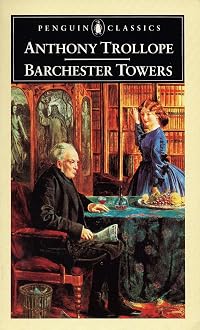
Barchester Towers is the second book in Trollope's well-loved "Barsetshire Trilogy," which follows the trials and tribulations of the inhabitants of an imagined cathedral town, Barchester. The controversial and unexpected appointment of the new bishop creates rivalries and intrigue..
Tags
Recommendations













Member Recommendations

Eat_Read_Knit More scheming, gossip and social justice in the Cathedral Close.
11

nessreader Oliphant's carlingford chronicles are an equivalent series to the barchester books; victorian sagas of social manouevering and parish politics. If you enjoy barsetshire, they are well worth trying. Perpetual is about high anglicanism vs lower church and like trollope spreads sympathy across opposed characters.
Member Reviews
After The Warden, another excellent visit to Barsetshire, and another book I had a difficult time putting down. Trollope improves here on his gentle wittiness, absolutely delightful small-scale ecclesiastical Machiavellian scheming, and complicated human dynamics.
I'm quite enjoying the way Trollope interacts with the reader in these books, too: it almost always made me smile. And he continues to create some extremely memorable characters, from the delightfully odd Miss Thorne to the sneaky creature Mr. Slope and the not-to-be-messed-with Mrs. Proudie.
Looking forward to heading back to Barsetshire before too long ...
I'm quite enjoying the way Trollope interacts with the reader in these books, too: it almost always made me smile. And he continues to create some extremely memorable characters, from the delightfully odd Miss Thorne to the sneaky creature Mr. Slope and the not-to-be-messed-with Mrs. Proudie.
Looking forward to heading back to Barsetshire before too long ...
Having read The Warden last year and thoroughly enjoyed it, I had determined to read the next book in the Chronicles of Barsetshire this year. I did not know what to expect, but was delighted to find Mr. Harding and his daughter, Eleanor, waiting for the next phase of their story, along with some new characters and story lines.
The book is worth reading if for nothing more than the names of it’s characters, which leave no doubt in the mind as to occupation or moral qualities. Dr. Fillgrave must surely make the most somber smile, and who would have difficulty determining the greatest failing of Mrs. Proudie? In fact, his humor is scattered throughout the novel in equal portions with his wisdom.
Oh, husbands, oh, my marital friends, show more what great comfort is there to be derived from a wife well obeyed.
Can’t find any fault with the humor or the wisdom there, can you? But, beyond the playfulness, there are some serious issues at work, including the struggle for power that takes place between the two factions in the church. Trollope understood the political nature of the Church in his time, and the shenanigans were as bad as some we see in the political arena of our own. I certainly felt that neither side was as interested in serving the higher good or the people of the parish so much as their own interests and advancements.
There are representatives of the high church in the Grantly faction, Tory by political leaning, and the newly established Proudie faction, Whigs, unfortunately, represented by not only the spineless Bishop Proudie and his oppressive wife, but also by our most obvious villain, Obadiah Slope (his name makes you cringe, does it not?). Trollope is a master of description and I had no difficulty in reading Mr. Slope’s character in his demeanor.
His hair is lank and of a dull pale reddish hue. It is always formed into three straight, lumpy masses, each brushed with admirable precision and cemented with much grease; two of them adhere closely to the sides of his face, and the other lies at right angles above them. His face is nearly of the same color as his hair, though perhaps a little redder; it is not unlike beef--beef, however, one would say, of a bad quality. His forehead is capacious and high, but square and heavy and unpleasantly shiny.
He goes on to describe his mouth and his nose (which is “spongy and porous”). I dare say, we walk away with a complete picture of Slope and we cannot mistake him, even on this first meeting, for a man we would ever wish to invite to preach us a sermon or take tea with us. That Eleanor attempts to give Slope the benefit of the doubt is a testament to the fairness of her character.
To my delight, Trollope has also created Mr. Harding, a truly good man who attempts to always take the high road, and while perhaps a little naive, garners all our admiration and hope. On the female side, we have the independent thinking Eleanor Bold and the lascivious Signora Neroni.
I can promise that Trollope has taken what might have been a very dry subject in the politics of the church, and woven a complete and never boring tale of the people affected by it. This is only my second Trollope, but I found it both interesting and easy to read. It has a bit more character development and length than The Warden and would stand alone as a story, but I find that having read The Warden added a depth to the novel that I believe would have been missing otherwise. I am planning to continue the series next year with Dr. Thorne, and I am happy to have come to Trollope. Late to the table, but the feast is still fine. show less
The book is worth reading if for nothing more than the names of it’s characters, which leave no doubt in the mind as to occupation or moral qualities. Dr. Fillgrave must surely make the most somber smile, and who would have difficulty determining the greatest failing of Mrs. Proudie? In fact, his humor is scattered throughout the novel in equal portions with his wisdom.
Oh, husbands, oh, my marital friends, show more what great comfort is there to be derived from a wife well obeyed.
Can’t find any fault with the humor or the wisdom there, can you? But, beyond the playfulness, there are some serious issues at work, including the struggle for power that takes place between the two factions in the church. Trollope understood the political nature of the Church in his time, and the shenanigans were as bad as some we see in the political arena of our own. I certainly felt that neither side was as interested in serving the higher good or the people of the parish so much as their own interests and advancements.
There are representatives of the high church in the Grantly faction, Tory by political leaning, and the newly established Proudie faction, Whigs, unfortunately, represented by not only the spineless Bishop Proudie and his oppressive wife, but also by our most obvious villain, Obadiah Slope (his name makes you cringe, does it not?). Trollope is a master of description and I had no difficulty in reading Mr. Slope’s character in his demeanor.
His hair is lank and of a dull pale reddish hue. It is always formed into three straight, lumpy masses, each brushed with admirable precision and cemented with much grease; two of them adhere closely to the sides of his face, and the other lies at right angles above them. His face is nearly of the same color as his hair, though perhaps a little redder; it is not unlike beef--beef, however, one would say, of a bad quality. His forehead is capacious and high, but square and heavy and unpleasantly shiny.
He goes on to describe his mouth and his nose (which is “spongy and porous”). I dare say, we walk away with a complete picture of Slope and we cannot mistake him, even on this first meeting, for a man we would ever wish to invite to preach us a sermon or take tea with us. That Eleanor attempts to give Slope the benefit of the doubt is a testament to the fairness of her character.
To my delight, Trollope has also created Mr. Harding, a truly good man who attempts to always take the high road, and while perhaps a little naive, garners all our admiration and hope. On the female side, we have the independent thinking Eleanor Bold and the lascivious Signora Neroni.
I can promise that Trollope has taken what might have been a very dry subject in the politics of the church, and woven a complete and never boring tale of the people affected by it. This is only my second Trollope, but I found it both interesting and easy to read. It has a bit more character development and length than The Warden and would stand alone as a story, but I find that having read The Warden added a depth to the novel that I believe would have been missing otherwise. I am planning to continue the series next year with Dr. Thorne, and I am happy to have come to Trollope. Late to the table, but the feast is still fine. show less
Where I got the book: audiobook on Audible. I swear Audible is keeping me going these days!
I bought this book because it’s reputed to be Trollope at his finest. Not having read that cynical old Victorian for some twenty-five years and having only read some of his purely political London-based novels, it felt a little different to be suddenly immersed in the far more restrained politics of clergymen in a small cathedral town. So it was a little while before I found my feet—and then suddenly I remembered why I’d liked Trollope in the first place.
There is a new Bishop of Barchester, and he is what Trollope calls Petticoated—but he’s not one hundred percent under the thumb of his wife. There’s an important matter of preferment show more to be decided—a job bringing with it a nice house and the then enormous sum of £1,200 a year—and the other prize in play is the lovely, widowed Eleanor Bond who also, oddly enough, brings £1,200 a year with her. The circling vultures with their beady eyes on these rich pickings are the odious chaplain Mr. Slope and the good-natured, heartless, scheming Stanhope siblings. There’s also a whole subtext about evangelical versus traditional Anglican church practices which will, alas, be lost on most modern readers, but since the main thrust of the novel lies in the scheming and the wooing of Eleanor, it’s easy enough to concentrate on that and not worry about the clerical details, which are not heavily emphasized.
I found Eleanor as wet as most Victorian heroines—quite literally since she bursts into tears a lot—and, alas, Mr. Arabin is way too noble and reserved to be really fascinating. My absolute favorites, by a long chalk, were Bertie Stanhope and Madeline Vesey-Neroni who were ADORABLE in their cynical worldliness and really, at the end of the day, quite likeable as human beings. Mr. Slope is the perfect slimy Victorian Pharisee whom everyone sees through in about three seconds flat, and the power struggle between Bishop and Mrs. Proudie is as entertaining as such things usually are.
I actually found myself wishing in the end that the novel was twice as long. We seemed to get to the resolution of the story much too quickly - that’s the beauty of taking your Victorians in the form of audiobooks! There were whole chapters where I grinned and/or laughed out loud throughout. Narrator David Timson was so utterly perfect that I’m very disappointed to find I can’t get the whole series with him as narrator on Audible. Nonetheless, I’m diving in and stepping backward to listen to the first book in the Barsetshire Chronicles, and then the rest. I’ve been away from Trollope for far too long.
UPDATE: I was horrified, on going back and checking, to discover that I'd listened to an abridged version. No wonder it seemed too short! That won't do at all. I'll be listening to the unabridged version as soon as I can get my hands on it. Still, for those who want to cut out the Victorian waffle and get to the interesting bits, I'd heartily recommend this version. show less
I bought this book because it’s reputed to be Trollope at his finest. Not having read that cynical old Victorian for some twenty-five years and having only read some of his purely political London-based novels, it felt a little different to be suddenly immersed in the far more restrained politics of clergymen in a small cathedral town. So it was a little while before I found my feet—and then suddenly I remembered why I’d liked Trollope in the first place.
There is a new Bishop of Barchester, and he is what Trollope calls Petticoated—but he’s not one hundred percent under the thumb of his wife. There’s an important matter of preferment show more to be decided—a job bringing with it a nice house and the then enormous sum of £1,200 a year—and the other prize in play is the lovely, widowed Eleanor Bond who also, oddly enough, brings £1,200 a year with her. The circling vultures with their beady eyes on these rich pickings are the odious chaplain Mr. Slope and the good-natured, heartless, scheming Stanhope siblings. There’s also a whole subtext about evangelical versus traditional Anglican church practices which will, alas, be lost on most modern readers, but since the main thrust of the novel lies in the scheming and the wooing of Eleanor, it’s easy enough to concentrate on that and not worry about the clerical details, which are not heavily emphasized.
I found Eleanor as wet as most Victorian heroines—quite literally since she bursts into tears a lot—and, alas, Mr. Arabin is way too noble and reserved to be really fascinating. My absolute favorites, by a long chalk, were Bertie Stanhope and Madeline Vesey-Neroni who were ADORABLE in their cynical worldliness and really, at the end of the day, quite likeable as human beings. Mr. Slope is the perfect slimy Victorian Pharisee whom everyone sees through in about three seconds flat, and the power struggle between Bishop and Mrs. Proudie is as entertaining as such things usually are.
I actually found myself wishing in the end that the novel was twice as long. We seemed to get to the resolution of the story much too quickly - that’s the beauty of taking your Victorians in the form of audiobooks! There were whole chapters where I grinned and/or laughed out loud throughout. Narrator David Timson was so utterly perfect that I’m very disappointed to find I can’t get the whole series with him as narrator on Audible. Nonetheless, I’m diving in and stepping backward to listen to the first book in the Barsetshire Chronicles, and then the rest. I’ve been away from Trollope for far too long.
UPDATE: I was horrified, on going back and checking, to discover that I'd listened to an abridged version. No wonder it seemed too short! That won't do at all. I'll be listening to the unabridged version as soon as I can get my hands on it. Still, for those who want to cut out the Victorian waffle and get to the interesting bits, I'd heartily recommend this version. show less
Trollope is a giant among writers. This is one of his best efforts - although the story progresses without strain or apparent effort. The novel is often funny. The characters are thoroughly drawn. We sense their motivations and prejudices, mainly through the wonderful language with which Victorians were so adept and precise, and which Trollope magically captured.
The awful are painfully rendered such as Obadiah Slope; the humane and the good shine like Mrs. Eleanor Bold and Mr. Harding. The star of the show is the great support role of Madeleine Stanhope (aka the lame and beautiful Madame Neroni).
We should never forget that Trollope got up before sunrise every morning to write his fabulous novels, and after the allotted time set aside show more for this work, began his other job of running the British Post Office. In today's authoritarian and overbearing world of work, one imagines that he would be reprimanded for exercising his great talents beyond the scope of the civil service. show less
The awful are painfully rendered such as Obadiah Slope; the humane and the good shine like Mrs. Eleanor Bold and Mr. Harding. The star of the show is the great support role of Madeleine Stanhope (aka the lame and beautiful Madame Neroni).
We should never forget that Trollope got up before sunrise every morning to write his fabulous novels, and after the allotted time set aside show more for this work, began his other job of running the British Post Office. In today's authoritarian and overbearing world of work, one imagines that he would be reprimanded for exercising his great talents beyond the scope of the civil service. show less
A delightful and funny novel which made me wonder how much one can put Trollope's social observations into a current state of affairs if it comes to schemes to gain power and influence. I love his insight into the human psyche, both of men and women. Parts reminded me of Woody Allen and how he depicts speechlessness and confusion in otherwise very articulate persons and how one’s own perception so much differs from that of others.
Reading in an illustrated, carefully edited small full cloth book with gilded edges and ribbon page marker was an extra delight.
Reading in an illustrated, carefully edited small full cloth book with gilded edges and ribbon page marker was an extra delight.
How I have enjoyed living in the world of Barchester for the last few days. Trollope has a genius for names: Sir Omicron Pie, the famous physician with his name made up of Greek letters; Dr. Fillgrave, another physician (whose skills one just might not trust); Farmer Greenacre; and my favourite, Reverend and Mrs. Quiverful with their 14 hungry mouths to feed. His quiver was full indeed!
The political jostlings and jugglings of a group of clergymen is as nothing to the power of one Bishop's wife. Mrs. Proudie is a force to be reckoned with as she goes toe to toe with Obadiah Slope, her Bishop's chaplain. And there's another name: Slope is indeed on a slippery slope with his sloping around Barchester, trying to make preemptive strikes in show more his power struggle with Mrs. Proudie.
In the midst of it all is the beautiful widow, Eleanor Bold, with her very comfortable income, a prize sought after by those seeking power or a way out of their financial impecuniousness. She gets buffeted between the thunderous blustering of her brother in law, the Archdeacon Grantly, and the strangely seductive and odd Stanhope family, who hope to fob off Bertie Stanhope on her. Will she find true love? Will her reputation and virtue remain intact? But she's no milquetoast or shrinking violet. Eleanor Bold can haul off and hit an offending swain a good one as well as defending herself verbally when pushed too far. Beautiful, sweet, and gentle she may be but she's no pushover.
The best discovery in reading Trollope for the first time was to learn how wonderfully funny he is. He has such a good comedic eye, whether he is having a farmer's son trip his own horse while attempting to stab a sack of flour, or playing with the disparity between the classes with all their attendant snobberies. He plays Hob with the Church of England, poking fun at high church affectations while defrocking plain church piety. Although he wrote in the 1800s, his awareness of human foibles is fresh and pertinent. I greatly look forward to the rest of this series. show less
The political jostlings and jugglings of a group of clergymen is as nothing to the power of one Bishop's wife. Mrs. Proudie is a force to be reckoned with as she goes toe to toe with Obadiah Slope, her Bishop's chaplain. And there's another name: Slope is indeed on a slippery slope with his sloping around Barchester, trying to make preemptive strikes in show more his power struggle with Mrs. Proudie.
In the midst of it all is the beautiful widow, Eleanor Bold, with her very comfortable income, a prize sought after by those seeking power or a way out of their financial impecuniousness. She gets buffeted between the thunderous blustering of her brother in law, the Archdeacon Grantly, and the strangely seductive and odd Stanhope family, who hope to fob off Bertie Stanhope on her. Will she find true love? Will her reputation and virtue remain intact? But she's no milquetoast or shrinking violet. Eleanor Bold can haul off and hit an offending swain a good one as well as defending herself verbally when pushed too far. Beautiful, sweet, and gentle she may be but she's no pushover.
The best discovery in reading Trollope for the first time was to learn how wonderfully funny he is. He has such a good comedic eye, whether he is having a farmer's son trip his own horse while attempting to stab a sack of flour, or playing with the disparity between the classes with all their attendant snobberies. He plays Hob with the Church of England, poking fun at high church affectations while defrocking plain church piety. Although he wrote in the 1800s, his awareness of human foibles is fresh and pertinent. I greatly look forward to the rest of this series. show less
This will surely rank among my favorite reads of the year. Who knew that the manoeuvrings, machinations, and intricacies of 19th century church politics could be so utterly compelling? But that's really only a small part of the story: Mr. Trollope's true gifts to his readers are the characters so fully realized, and the insights into them and into the human condition that the author shares directly with the reader. And as so many others have written, the story is performed to perfection by the incomparable Simon Vance.
The novel opens as the Bishop of Barchester lays dying. His son, Archdeacon Grantly, hopes to be appointed to the position, but it is awarded instead to Dr. Proudie, who arrives in Barchester with his formidable wife and show more her protege, Mr. Slope. This new contingent's top-down, low church declarations and insinuations rankle the established high church clergy, and lead the outspoken Dr. Grantly to wage a war of sorts with the Bishop's set. Meanwhile, the Bishop himself has been effectively neutered by his wife, who looks forward to reigning as de-facto Bishop, and by his chaplain Mr. Slope, who has the same ambitions. Initially, Mrs. Proudie and Mr. Slope are of the same mind, however eventually, Barchester Close proves not to be big enough for the both of them, and they wage their own bitter war for the Bishop's obedience. The plot, however, revolves mainly around gentle Mr. Harding (the father-in-law of Archdeacon Grantly), who may or may not be restored to the post of Warden of Hiram's Hospital he relinquished in The Warden, and his daughter Eleanor, recently widowed and in possession of such a fortune as to make her a highly desirable prospective wife. Among Eleanor's suitors are the odious Mr. Slope, and the hapless Ethelbert Stanhope, whose father Dr. Stanhope is recalled to Barchester by the new regime from his 12 year-long convalescence from a sore throat in Italy. The entire Stanhope family returns to Barchester, including Mrs. Stanhope, who rarely appears before dinnertime, daughter Charlotte, who keeps the family running, the idle son Ethelbert, and daughter Madeline, the self-titled La Signora Madeline Vesey Neroni, who following a marriage and crippling accident now reclines on a sofa full-time and ensnares men like a funnel spider. Eleanor's connections with Mr. Slope, which in her mind are slight, enrage the Grantly faction, and the perpetuated and perhaps willful misunderstanding provides much of the book's conflict.
The book was just a delight from start to finish, with the author and the reader sharing the great comedy the ridiculous characters provide, and their small and large sufferings, which the author draws with great compassion. Along with the story are pearls of wisdom from which the reader can learn about marital harmony (obedience to and compliance with the wife in all things), and the fate of the characters in the hands of the novelist as anticipated by the reader ("And here, perhaps, it may be allowed to the novelist to explain his views on a very important point in the art of telling tales. He ventures to reprobate that system which goes so far to violate all proper confidence between the author and his readers, by maintaining nearly to the end of the third volume a mystery as to the fate of their favorite personage."). This last is used to assure the reader early on that Eleanor Bold will not make herself a fool by marrying either of her two dubious suitors, though the wooing and its attendant gossip occupy much of the narrative.
I think LTers will appreciate my favorite moment from listening to this book: yesterday I was in the car with my 11 year-old, who was thoroughly engrossed in her own book. She is one of those readers who, when so occupied is completely deaf to the world, so I asked her if it would be okay if I listened to my book. She said it would, but not two minutes later she exclaimed, "Mom, that's Simon Vance!!!" Our very first foray into audiobooks was years and years ago when I bought a couple of the Green Knowe books. I had not remembered that they were narrated by Mr. Vance, but my daughter recognized him instantly, and proceeded to tell me what a wonderful performer he was! That was the cherry on top, as it were, of the delightful treat that was Barchester Towers. show less
The novel opens as the Bishop of Barchester lays dying. His son, Archdeacon Grantly, hopes to be appointed to the position, but it is awarded instead to Dr. Proudie, who arrives in Barchester with his formidable wife and show more her protege, Mr. Slope. This new contingent's top-down, low church declarations and insinuations rankle the established high church clergy, and lead the outspoken Dr. Grantly to wage a war of sorts with the Bishop's set. Meanwhile, the Bishop himself has been effectively neutered by his wife, who looks forward to reigning as de-facto Bishop, and by his chaplain Mr. Slope, who has the same ambitions. Initially, Mrs. Proudie and Mr. Slope are of the same mind, however eventually, Barchester Close proves not to be big enough for the both of them, and they wage their own bitter war for the Bishop's obedience. The plot, however, revolves mainly around gentle Mr. Harding (the father-in-law of Archdeacon Grantly), who may or may not be restored to the post of Warden of Hiram's Hospital he relinquished in The Warden, and his daughter Eleanor, recently widowed and in possession of such a fortune as to make her a highly desirable prospective wife. Among Eleanor's suitors are the odious Mr. Slope, and the hapless Ethelbert Stanhope, whose father Dr. Stanhope is recalled to Barchester by the new regime from his 12 year-long convalescence from a sore throat in Italy. The entire Stanhope family returns to Barchester, including Mrs. Stanhope, who rarely appears before dinnertime, daughter Charlotte, who keeps the family running, the idle son Ethelbert, and daughter Madeline, the self-titled La Signora Madeline Vesey Neroni, who following a marriage and crippling accident now reclines on a sofa full-time and ensnares men like a funnel spider. Eleanor's connections with Mr. Slope, which in her mind are slight, enrage the Grantly faction, and the perpetuated and perhaps willful misunderstanding provides much of the book's conflict.
The book was just a delight from start to finish, with the author and the reader sharing the great comedy the ridiculous characters provide, and their small and large sufferings, which the author draws with great compassion. Along with the story are pearls of wisdom from which the reader can learn about marital harmony (obedience to and compliance with the wife in all things), and the fate of the characters in the hands of the novelist as anticipated by the reader ("And here, perhaps, it may be allowed to the novelist to explain his views on a very important point in the art of telling tales. He ventures to reprobate that system which goes so far to violate all proper confidence between the author and his readers, by maintaining nearly to the end of the third volume a mystery as to the fate of their favorite personage."). This last is used to assure the reader early on that Eleanor Bold will not make herself a fool by marrying either of her two dubious suitors, though the wooing and its attendant gossip occupy much of the narrative.
I think LTers will appreciate my favorite moment from listening to this book: yesterday I was in the car with my 11 year-old, who was thoroughly engrossed in her own book. She is one of those readers who, when so occupied is completely deaf to the world, so I asked her if it would be okay if I listened to my book. She said it would, but not two minutes later she exclaimed, "Mom, that's Simon Vance!!!" Our very first foray into audiobooks was years and years ago when I bought a couple of the Green Knowe books. I had not remembered that they were narrated by Mr. Vance, but my daughter recognized him instantly, and proceeded to tell me what a wonderful performer he was! That was the cherry on top, as it were, of the delightful treat that was Barchester Towers. show less
Members
- Recently Added By
Lists

The Guardian's 1000 Novels Everyone Must Read
1,005 works; 547 members

1898 C.K. Shorter List of Best 100 Novels
100 works; 34 members

501 Must-Read Books
508 works; 72 members

Favourite 19th century fiction
257 works; 60 members
Best of British Literature
226 works; 41 members

Recommend the 20 best books you've read in the last five years
2,168 works; 601 members

Folio Society
831 works; 53 members
The Telegraph's 110 Best Books: The Perfect Library
101 works; 18 members

Read the book and saw the movie
1,170 works; 192 members

Books Set in Great Britain
191 works; 13 members
Favourite Books
1,817 works; 316 members

Western World's Greatest Books - Project Gutenberg
295 works; 15 members

19th Century
190 works; 16 members
Out of Copyright
244 works; 14 members

Top Five Books of 2014
1,064 works; 397 members

Classic British Humor
41 works; 8 members
Readable Classics
110 works; 15 members
Mensa for Kids Excellence in Reading Award Program (Grades 9-12)
116 works; 5 members

Newark Public Library's 1904 List of a Thousand of the Best Novels
95 works; 5 members

Best books read in 2011
200 works; 50 members

Books Read in 2014
2,343 works; 89 members

One Book, Many Authors
441 works; 40 members
Mensa for Kids Excellence in Reading Award Program (Grades 9-12)
116 works; 3 members

Funny Classics
20 works; 2 members
Victorian Period
113 works; 10 members

1850s
17 works; 2 members
Five star books
1,755 works; 107 members

CCE 1000 Good Books List
1,033 works; 12 members
Books Set in Small Towns and Villages
278 works; 16 members

What are your favourite books?
121 works; 11 members
Trinity College Booklist (1951): Class Ten, English Literature
358 works; 5 members

W. S. Maugham's Reading Suggestions for Spiritual Enrichment: British
24 works; 3 members

Tagged 19th Century
104 works; 7 members

Ambleside Books
459 works; 18 members

Books Read in 2021
5,361 works; 114 members

thinking of reading in 2016
99 works; 1 member

I Could Live There
185 works; 12 members

Books Read in 2011
684 works; 19 members

Recommended Reading : 600 Classics Reviewed, Editors of Salem Press, 2015
634 works; 6 members

DigitalDreamDoor top 300
300 works; 4 members
Talk Discussions
Past Discussions
Barchester Towers by Anthony Trollope - lyzard tutoring souloftherose in 75 Books Challenge for 2012 (April 2017)
1815: Anthony Trollope - Chronicles of Barsetshire II: Barchester Towers in Literary Centennials (February 2016)
Chronicles of Barsetshire in Trollope lovers unite or fight (July 2009)
Church politics in Trollope lovers unite or fight (November 2008)
Barchester Towers - NO SPOILERS, PLEASE in Trollope lovers unite or fight (October 2008)
Author Information

Anthony Trollope was born in London, England on April 24, 1815. In 1834, he became a junior clerk in the General Post Office, London. In 1841, he became a deputy postal surveyor in Banagher, Ireland. He was sent on many postal missions ending up as a surveyor general in the post office outside of London. His first novel, The Macdermots of show more Ballycloran, was published in 1847. His other works included Castle Richmond, The Last Chronicle of Barset, Lady Anna, The Two Heroines of Plumplington, and The Noble Jilt. He died after suffering from a paralytic stroke on December 6, 1882. (Bowker Author Biography) show less
Some Editions
Awards and Honors
Notable Lists
Series

Belongs to Publisher Series
Penguin English Library, 2012 series (2012-05)
Everyman's Library (30)
Dean's Classics (47)
Limited Editions Club (S:27.01)
Doubleday Dolphin (C57)
La memoria [Sellerio] (608)
The World's Classics (268)
Work Relationships
Is contained in
Contains
Is retold in
Has the adaptation
Is abridged in
Inspired
Has as a study
Has as a commentary on the text
Has as a student's study guide
Has as a teacher's guide
Common Knowledge
- Canonical title
- Barchester Towers
- Original title
- Barchester Towers
- Original publication date
- 1857; 1945
- People/Characters
- Eleanor Bold (né | e Harding); Dr Grantly (Archdeacon); Dr Thomas Proudie (Bishop); Dr Vesey Stanhope (father); Mrs Quiverful; Ethelbert 'Bertie' Stanhope (son) (show all 24); Obadiah Slope; Mr Arabin; Septimus Harding (Precenter); Dr Thorne; Madeline Neroni (né | e Stanhope | younger daughter); Mrs Proudie; Susan Grantly (né | e Harding); Charlotte Stanhope (older daughter); Mr Quiverful; Miss Thorne; Dr Gwynne; Mary Bold; Sir Lamda Mewnew (physician); Sir Omicron Pie (physician); Rev Josiah Crawley; Dr Fillgrave; Dr Rerechild; Griselda Grantly
- Important places
- Barchester, Barsetshire, England, UK
- Important events
- Oxford Movement
- Related movies
- The Barchester Chronicles (1982 | IMDb)
- First words
- In the latter days of July in the year 185–, a most important question was for ten days hourly asked in the cathedral city of Barchester, and answered every hour in various ways – Who was to be the new Bishop?
- Quotations
- The outer world, though it constantly reviles us for our human infirmities and throws in our teeth the fact that being clergymen we are still no more than men, demands of us that we should do our work with godlike perfection.... (show all) There is nothing god-like about us: we differ from each other with the acerbity common to man; we triumph over each other with human frailty; we allow differences on subjects of divine origin to produce among us antipathies and enmities which are anything but divine. This is all true. But what would you have in place of it? There is no infallible head for a church on earth.
It was dreadful to be thus dissevered from his dryad, and sent howling back to a Barchester pandemonium just as the nectar and ambrosia were about to descend on the fields of asphodel.
Considering how much we are all given to discuss the characters of others, and discuss them often not in the strictest spirit of charity, it is singular how little we are inclined to think that others can speak ill-naturedly ... (show all)of us, and how angry and hurt we are when proof reaches us that they have done so. It is hardly too much to say that we all of us occasionally speak of our dearest friends in a manner in which those dearest friends would very little like to hear themselves mentioned, and that we nevertheless expect that our dearest friends shall invariably speak of us as though they were blind to all our faults, but keenly alive to every shade of our virtues. - Last words
- (Click to show. Warning: May contain spoilers.)The Author now leaves him in the hands of his readers; not as a hero, not as a man to be admired and talked of, not as a man who should be toasted at public dinners and spoken of with conventional absurdity as a perfect divine, but as a good man without guile, believing humbly in the religion which he has striven to teach, and guided by the precepts which he has striven to learn.
- Blurbers*
- Steinz, Pieter; 't Hart, Maarten
- Original language
- English
*Some information comes from Common Knowledge in other languages. Click "Edit" for more information.
Classifications
Statistics
- Members
- 5,459
- Popularity
- 2,445
- Reviews
- 111
- Rating
- (4.17)
- Languages
- 10 — Czech, Dutch, English, French, German, Greek, Italian, Norwegian (Bokmål), Spanish, Portuguese (Portugal)
- Media
- Paper, Audiobook, Ebook
- ISBNs
- 238
- UPCs
- 2
- ASINs
- 224