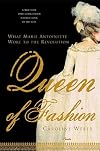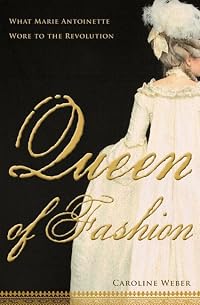
Queen of Fashion: What Marie Antoinette Wore to the Revolution
by Caroline Weber
On This Page
Description
Marie Antoinette has always stood as an icon of supreme style, but surprisingly none of her biographers have paid sustained attention to her clothes. Here, 18th-century specialist Weber shows how Marie Antoinette developed her reputation for fashionable excess, and explains through lively, illuminating new research the political controversies that her clothing provoked. Weber surveys Marie Antoinette's "Revolution in Dress," covering each phase of her tumultuous life, beginning with the show more young girl struggling to survive Versailles's rigid traditions of royal glamour. As queen, Marie Antoinette used stunning, often extreme costumes to project an image of power. Gradually, however, she began to lose her hold on the French when she started to adopt provocative, "unqueenly" outfits that, ironically, would be adopted by the revolutionaries who executed her. The paradox of her tragic story, according to Weber, is that fashion--the vehicle she used to secure her triumphs--was also her undoing.--From publisher description. show lessTags
Recommendations





















Member Reviews
Ah, Marie Antoinette - damned if you do, damned if you don't. She was lambasted for her 'sartorial rebellion' of not wearing stays and preferring pantalons to ride horses astride instead of side saddle, and also for spending millions on new creations by Rose Bertin (although Josephine Bonaparte's shopping addiction was far worse, and she should have known better!) Then, when the Queen started wearing lighter, simpler dresses made out of gauze, she was once again public enemy number one for single-handedly ruining the domestic silk trade and not looking 'regal' enough! She spent too much, she didn't spend enough. She offended the rich, she insulted the poor. Too much frippery, not enough finery. Let's face it - the French hated her for show more not being French.
This is basically another biography of M-A, with research cribbed from other biographers like Antonia Fraser and Evelyn Lever, but with the focus on what the Queen wore, from being stripped of her Austrian heritage (and newly purchased French clothes!) in the middle of a forest as a young girl to the forced simplicity of her final white gown in 1793: 'White is the colour of a ghost too beautiful, or at least too wilful, to die. White the colour of the pages on which her story has been - and will be - written. Again and again and again.' I learned so much more about Marie Antoinette, despite having read various other biographies, and developed a deeper respect for her 'frank and independent' nature. Was she perfect? No. She used fashion and fortune to fill the gap until she became a mother and a queen. Did she try to change when she realised that her subjects hated her? Yes, but too little too late. Was she the only woman in history defined by what she wore and how much she spent? Hell, no! Marie Antoinette is fascinating, and will continue to captivate historians, writers and directors for many years to come, and I will buy, read and watch everything about her. show less
This is basically another biography of M-A, with research cribbed from other biographers like Antonia Fraser and Evelyn Lever, but with the focus on what the Queen wore, from being stripped of her Austrian heritage (and newly purchased French clothes!) in the middle of a forest as a young girl to the forced simplicity of her final white gown in 1793: 'White is the colour of a ghost too beautiful, or at least too wilful, to die. White the colour of the pages on which her story has been - and will be - written. Again and again and again.' I learned so much more about Marie Antoinette, despite having read various other biographies, and developed a deeper respect for her 'frank and independent' nature. Was she perfect? No. She used fashion and fortune to fill the gap until she became a mother and a queen. Did she try to change when she realised that her subjects hated her? Yes, but too little too late. Was she the only woman in history defined by what she wore and how much she spent? Hell, no! Marie Antoinette is fascinating, and will continue to captivate historians, writers and directors for many years to come, and I will buy, read and watch everything about her. show less
To think that the gorgeous gaulles worn by the Queen precipitated the French Revolution would be a bit of a stretch. Caroline Weber, in her book "Queen of Fashion: What Marie Antoinette Wore to the Revolution" notes that the kingdowm showed signs of terminal illness well before Marie Antoinette left Vienna to marry Louis Auguste. Symptoms including, but not limited to; a depleted financial state and national ego brought about, in part, by The Seven Years' War, the backing of the colonists in the American Revolution, poor harvests that set the stage for the Flour Wars, the over taxation of the Third Estate made even worse by the King's lits de justice and autocratic manner, the usual malcontents at Versailles and in the Palais Royal, as show more well as the ostentatious and sumptuous behavior of the ancien regime in general. Though Marie Antoinette, by her very nature and breeding, may have been understandable out of touch with her subjects, by being so became an icon for the corrupt and incompetent monarchy, still she cannot be held responsible for the Revolution. And, I believe, no one really thinks she was.
In fact she gave up (those may not be the right words) quite a lot as the Dauphine and later Queen. Yet, what she removed from her royal body; paniers, her grand corps, the satorial robe a la francaise, the grand habit de cour, she replaced with less formal but equally as expensive gaulles, chemises, chapeaus a la mode and, of course, the pouf. So in the end not only did she do nothing to releave the working-class and lower-class of their justifiable perception of a world in decline, but she also challenged their tratitional ideas of how the monarchy should appear, both literally and figuratively.
Caroline Weber presents a Marie Antoinette more comfortable in English muslin, linen and ribbons then in French silk, velvet and jewels. Though a woman of fine taste, a true trend-setter with a good fashion sense and eye, she was moving stylistically in a direction few could fallow. Yet, Caroline Weber makes the ironic point that by dressing in a manner keeping with a certain Rousseauian ethos she was, through fashion, consciously or not, bridging a gap between the people and the royalty they despised. One wonders, would they even if they could, accept a new fashion aesthetic? Style, with a capital "S," was not yet in the minds of the working and lower classes and given the hard times, could hardly be other wise. Another interesting parallel is between her, as a woman with no real power at court(at least at the start) and the Third Estate's lack of polictical power.
In the end what the Queen wore to the Revolution would make no difference. Again, I don't think Caroline Weber is saying it would. She is only and delightfully describing one woman's (admittedly the Queen of France) experience with haute couture and its regrettable political and social consequences. Something was rotten in Paris and Marie Antoinette would have been damned and decapitated regardless.
I truly loved this book and took it everywhere I went for the last week. Caroline Weber has drawn upon a wealth of sources from the 18th to the 21st century and the notes are fabulous. "Queen of Fashion" is one of those few books that are equal parts scholarship and a joy to read. show less
In fact she gave up (those may not be the right words) quite a lot as the Dauphine and later Queen. Yet, what she removed from her royal body; paniers, her grand corps, the satorial robe a la francaise, the grand habit de cour, she replaced with less formal but equally as expensive gaulles, chemises, chapeaus a la mode and, of course, the pouf. So in the end not only did she do nothing to releave the working-class and lower-class of their justifiable perception of a world in decline, but she also challenged their tratitional ideas of how the monarchy should appear, both literally and figuratively.
Caroline Weber presents a Marie Antoinette more comfortable in English muslin, linen and ribbons then in French silk, velvet and jewels. Though a woman of fine taste, a true trend-setter with a good fashion sense and eye, she was moving stylistically in a direction few could fallow. Yet, Caroline Weber makes the ironic point that by dressing in a manner keeping with a certain Rousseauian ethos she was, through fashion, consciously or not, bridging a gap between the people and the royalty they despised. One wonders, would they even if they could, accept a new fashion aesthetic? Style, with a capital "S," was not yet in the minds of the working and lower classes and given the hard times, could hardly be other wise. Another interesting parallel is between her, as a woman with no real power at court(at least at the start) and the Third Estate's lack of polictical power.
In the end what the Queen wore to the Revolution would make no difference. Again, I don't think Caroline Weber is saying it would. She is only and delightfully describing one woman's (admittedly the Queen of France) experience with haute couture and its regrettable political and social consequences. Something was rotten in Paris and Marie Antoinette would have been damned and decapitated regardless.
I truly loved this book and took it everywhere I went for the last week. Caroline Weber has drawn upon a wealth of sources from the 18th to the 21st century and the notes are fabulous. "Queen of Fashion" is one of those few books that are equal parts scholarship and a joy to read. show less
Amazing. Initially I thought that this would be a history of fashion and style during Marie Antoinette's reign, but Weber provides so much more than that. Weber begins with the story of Marie Antoinette arriving in the French court and her struggle to find a place and with incredible reseach ties it back to her choirce of clothing and even how she later chose to ride a horse at court.
Her decision to be a non-corset wearing Dauphine, could on the surface could be perceived as merely an issue of comfort but ultimately was a play on perception, power and control. Tidbits about the conditions at Versailes were equally fascinating. Dress was completely about how much influence and status each person did or seemed to have. Manipulation by the show more Queen's sisters in law and the competition with DuBarry reads like any modern soap opera with all the necessary twists and turns.
The vast sums of money spent by the Queen to not only influence fashion but also to sway opinions around her ability to drive the King's decisions would ultimately backfire and lead to her and her family's demise. If you want lots of really neat and juicy detail, then this book is for you. Even to the end Marie Antoinette drove how she would appear in public and what she stood for through her choice of dress both in color and style.
I would imagine that not until Imelda Marcos has there ever been a woman so reviled for her expenditures on "frivolous" clothing and accessories all while their countrymen suffer from extreme poverty.
This book is rich and there is so much to enjoy, over 150 pages of footnotes which enhance the experience for us nerds who always want more! show less
Her decision to be a non-corset wearing Dauphine, could on the surface could be perceived as merely an issue of comfort but ultimately was a play on perception, power and control. Tidbits about the conditions at Versailes were equally fascinating. Dress was completely about how much influence and status each person did or seemed to have. Manipulation by the show more Queen's sisters in law and the competition with DuBarry reads like any modern soap opera with all the necessary twists and turns.
The vast sums of money spent by the Queen to not only influence fashion but also to sway opinions around her ability to drive the King's decisions would ultimately backfire and lead to her and her family's demise. If you want lots of really neat and juicy detail, then this book is for you. Even to the end Marie Antoinette drove how she would appear in public and what she stood for through her choice of dress both in color and style.
I would imagine that not until Imelda Marcos has there ever been a woman so reviled for her expenditures on "frivolous" clothing and accessories all while their countrymen suffer from extreme poverty.
This book is rich and there is so much to enjoy, over 150 pages of footnotes which enhance the experience for us nerds who always want more! show less
This biography of Marie Antoinette has a unique twist: it tells the story of her life, from her marriage to Louis Auguste of France to her execution, through her fashion choices. Weber’s thesis is that Marie Antoinette used her clothing to make political statements and to assert her own power as a ruler of France. Unfortunately, Marie Antoinette wasn’t particularly adept at winning over the public with her fashion choices: she angered the French people, first by dressing too informally for a queen, and then by dressing too extravagantly while the nation as a whole suffered extreme poverty. Weber thus spends a lot of time describing the public’s reaction to Marie Antoinette’s sartorial innovations, in addition to the fashions show more themselves.
On the whole, I found this book quite interesting. It’s definitely a good read for anyone who’s interested in the history of fashion, Marie Antoinette, or the French Revolution in general. Weber is a formidable scholar, and the book appears to be very well researched. Sometimes I felt that she overstated her thesis a bit, but it’s definitely an intriguing one. My only other complaint is that there weren’t enough pictures. Although there were 25 full-color plates, as well as a few other black-and-white pictures throughout the text, I would have liked to see even more visual examples of Marie Antoinette’s clothing choices. Other than that, though, I’d recommend this book for anyone interested in the subject matter. show less
On the whole, I found this book quite interesting. It’s definitely a good read for anyone who’s interested in the history of fashion, Marie Antoinette, or the French Revolution in general. Weber is a formidable scholar, and the book appears to be very well researched. Sometimes I felt that she overstated her thesis a bit, but it’s definitely an intriguing one. My only other complaint is that there weren’t enough pictures. Although there were 25 full-color plates, as well as a few other black-and-white pictures throughout the text, I would have liked to see even more visual examples of Marie Antoinette’s clothing choices. Other than that, though, I’d recommend this book for anyone interested in the subject matter. show less
Rarely does a biography focus on the wardrobe of a historical figure, but Caroline Weber delivers all the details on the doomed queen's "fashion revolution." Ironically, the extravagant diamonds, sumptuous gowns, and innovative hairstyles that made la Austrienne famous ultimately contributed to her downfall. A substantial account of her life is interwoven with politics and fashion, so you'll come out decently briefed on the upheaval of the French monarchy. All the same, I challenge any girl to read this without immediately going shopping afterwards.
While I know shouldn't admire a woman whose lavish spending habits plunged France into bankruptcy, there's something irresistible about the decadence of her life. I can't imagine there are show more any men who would like this book, but women interested in fashion history or Marie Antoinette's life will enjoy it. show less
While I know shouldn't admire a woman whose lavish spending habits plunged France into bankruptcy, there's something irresistible about the decadence of her life. I can't imagine there are show more any men who would like this book, but women interested in fashion history or Marie Antoinette's life will enjoy it. show less
Upon completion of the text, I was torn between being impressed at the intense detail paid to the descriptions of clothing and the manner in which they expressed political opinion, and being unimpressed with the way in which the author equated physical attractiveness and grace with the value which an individual possesses.
The author goes to great lengths to clearly illustrate her idea that fashion was a tool by which many woman found a venue to express their hopes, ideals and beliefs. I found the text clear, and do not think it would pose much of a burden to those unfamiliar with the events surrounding the last days of the Bourbon Monarchy and the advent of the French Revolution.
Despite her dedication to faithfully illustrating the show more wardrobe of Marie Antoinette. I felt at times that Weber delved into what may be termed whimsical fancies. The notion that Marie Antoinette's hair turned complete white overnight seems based more in urban legend rather than in scientific or historical fact.
To touch upon the first point regarding physical attractiveness as a means to measure the worth of an individual once more, I most express my incredulousness and disappointment in the manner in she which Marie Antoinette's husband, Louis XVI. Time and time again the reader is presented with the delicate image of a young Marie Antoinette, pure, innocent and astonishingly grace. The author contrasts it sharply with the image of a plump and awkward young Louis XVI. Instead of leaving the description there, and abandoning it for what it is (merely a judge on physical attractiveness, not on moral or intellectual character), Weber brought it up numerous times over the course of the book. It was, what I felt to be, a completely irrelevant point as the physical attractiveness of an individual plays little in determining what sort of person they are. I'm also uncertain as to what argument she attempted to bolster with this repetition-- is it that which attempts to justify Marie Antoinette's frivolity and carelessness with money by depicting her as a poor beautiful young woman chained to a much less attractive and awkward husband?
All in all, I found the book quite a pleasure to read, and enjoyed both the copious descriptions of silks, lace and ribbons and the descriptions of how they related to the unfolding demise of the Ancien Regime. show less
The author goes to great lengths to clearly illustrate her idea that fashion was a tool by which many woman found a venue to express their hopes, ideals and beliefs. I found the text clear, and do not think it would pose much of a burden to those unfamiliar with the events surrounding the last days of the Bourbon Monarchy and the advent of the French Revolution.
Despite her dedication to faithfully illustrating the show more wardrobe of Marie Antoinette. I felt at times that Weber delved into what may be termed whimsical fancies. The notion that Marie Antoinette's hair turned complete white overnight seems based more in urban legend rather than in scientific or historical fact.
To touch upon the first point regarding physical attractiveness as a means to measure the worth of an individual once more, I most express my incredulousness and disappointment in the manner in she which Marie Antoinette's husband, Louis XVI. Time and time again the reader is presented with the delicate image of a young Marie Antoinette, pure, innocent and astonishingly grace. The author contrasts it sharply with the image of a plump and awkward young Louis XVI. Instead of leaving the description there, and abandoning it for what it is (merely a judge on physical attractiveness, not on moral or intellectual character), Weber brought it up numerous times over the course of the book. It was, what I felt to be, a completely irrelevant point as the physical attractiveness of an individual plays little in determining what sort of person they are. I'm also uncertain as to what argument she attempted to bolster with this repetition-- is it that which attempts to justify Marie Antoinette's frivolity and carelessness with money by depicting her as a poor beautiful young woman chained to a much less attractive and awkward husband?
All in all, I found the book quite a pleasure to read, and enjoyed both the copious descriptions of silks, lace and ribbons and the descriptions of how they related to the unfolding demise of the Ancien Regime. show less
I loved the research this author did into costume and women of the period - Marie Anionette most notably as the focus of the book - used fashion and costume to express themselves when other methods were not have been available to them. The cheeky title I hope will draw others into reading this book and learning much more than the title would suggest!
Members
- Recently Added By
Published Reviews
ThingScore 63
Between them, they repositioned the queen as a flashier brand, in light short skirts and high, heavy hair: the pouf do - a plinth for plumes, puffed caps and preposterous set-pieces. The extreme exaggeration of that mode was then collapsed into the simplicity of the gaulle, Bertin's adaptation of Caribbean and Louisiana colonial dress - a voluminous chemise and not a lot else - in harmony with show more Rousseau-esque sentiment. Just the garb for A-list rusticity at the Petit Trianon, where mirror shutters were cranked over windows so that its façade was as arrogantly blank as Victoria Beckham in outsize RayBans. Whatever happened personally or politically, Bertin could be relied upon: for coronation robes; diamonds under pale fur with a wheat-starch powdered coiffure during a famine winter; a revival of elitist whalebone once the queen's bust expanded to 44 inches after she delivered a dauphin and two more babes. show less
added by wandering_star
As the new wife of the crown prince, her one legitimate function was to produce offspring, but the young heir seemed unable to do his part at the beginning. She had her first child only after eight and a half fruitless years; and after four of them, the new queen began to focus her creative energy on clothes. She didn't invent fashions. She promoted radical new ones through her public persona, show more in the modern, celebrity-culture way—and that's why we like her today, instead of automatically despising her as the last century did. show less
added by wandering_star
Lists

A High School Trip to France
57 works; 5 members

In Our Time books
4,934 works; 2 members
Author Information

3+ Works 793 Members
Caroline Weber is assistant professor of Romance languages at the University of Pennsylvania.
Awards and Honors
Distinctions
Notable Lists
Common Knowledge
- Canonical title
- Queen of Fashion: What Marie Antoinette Wore to the Revolution
- Original publication date
- 2006 (copyright) (copyright)
- People/Characters
- Marie Antoinette; Louis XVI, King of France; Marie-Thérèse of France, Duchess of Angoulême
- Important places
- France; Versailles, Île-de-France, France; Paris, France
- Important events
- French Revolution
- Dedication
- For Tom, as always
- First words
- April 21, 1770. Fifty-seven richly appointed carriages, laden with more than twice as many dignitaries and drawn by more than six times as many horses, had filled the Hofburg's majestic central courtyard since dawn.
Classifications
- Genres
- History, Nonfiction, General Nonfiction, Biography & Memoir, Art & Design
- DDC/MDS
- 391.00944 — Society, Government, and Culture Customs, etiquette & folklore Costume and personal appearance Standard subdivisions History, geographic treatment, biography Europe France & Monaco
- LCC
- GT865 .W37 — Geography, Anthropology and Recreation Manners and customs (General) Manners and customs (General) Costume. Dress. Fashion
- BISAC
Statistics
- Members
- 646
- Popularity
- 44,638
- Reviews
- 16
- Rating
- (3.90)
- Languages
- English, Portuguese
- Media
- Paper, Ebook
- ISBNs
- 7
- ASINs
- 4