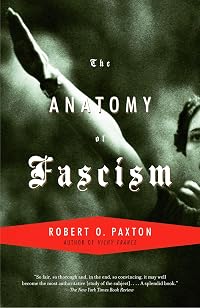
The Anatomy of Fascism
by Robert O. Paxton
On This Page
Description
What is fascism? By focusing on the concrete: what the fascists did rather than what they said, the esteemed historian Robert O. Paxton answers this question for the first time. From the first violent uniformed bands beating up "enemies of the state," through Mussolini's rise to power, to Germany's fascist radicalization in World War II, Paxton shows clearly why fascists came to power in some countries and not others, and he explores whether fascism could exist outside the show more early-twentieth-century European setting in which it emerged. The Anatomy of Fascism will have a lasting impact on our understanding of modern European history, just as Paxton's classic Vichy France redefined our vision of World War II. Based on a lifetime of research, this compelling and important book transforms our knowledge of fascism-"the major political innovation of the twentieth century, and the source of much of its pain.". show lessTags
Recommendations
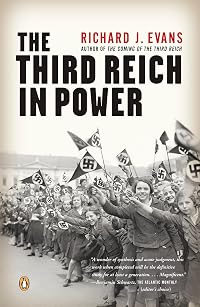
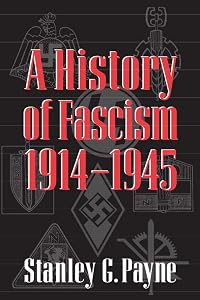
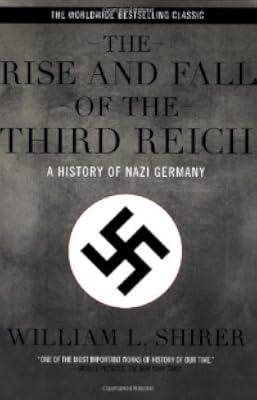
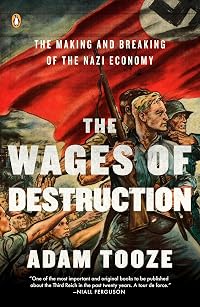










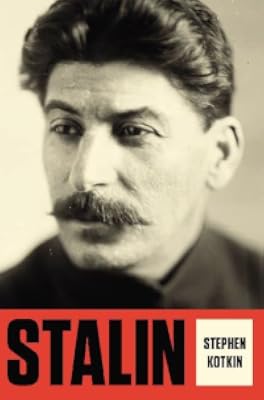




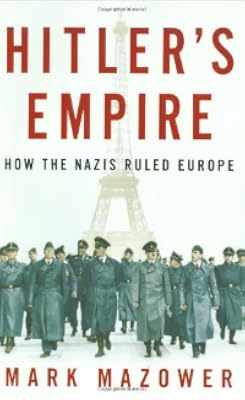

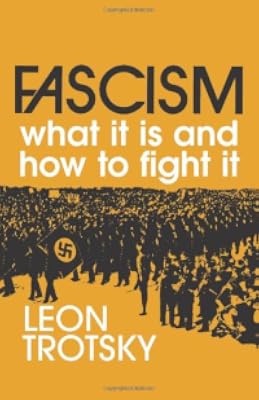
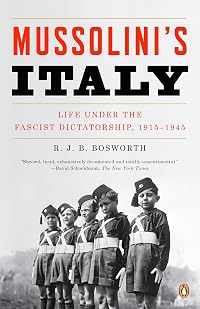











Member Recommendations

Member Reviews
This is a topic of long-standing interest and I feel this is one of the best books I have ever read on the subject. In depth without being too repetitive, it looks at the subject from many angles and differentiates between, fascist, authoritarian and fascist-adjacent (who's participants, in a sense, are in engaged in "cosplay" or take certain aspects of fascism while discarding others) usually, missing one or more important facets which puts it outside the classical definition. Another sobering aspect, was how those in power (or wanting to keep it) appeased and compromised with wanna-be fascists, allowing them to ascend as the path of least resistance. This is a topic that is always current and relevant although Paxton tends to define show more it as a chiefly 20th century phenomenon. show less
One of the best books on fascism I've read. It's general enough to be an introduction, but goes beyond the common surface tropes and actually tries to analyse the essence of the disparate fascisms that briefly existed. The book takes pains to recognize the overuse of the word as an ideological sledgehammer and tries to tease out more than the intentionalist view that makes a monolith of what was really a not very coherent group of ideological extremists. After an overview of the concept of fascism, the book gives overviews of the main lines of fascism - Italy and Germany, but also the lesser buds that died on the vine, and a crop of those that have been called fascist but share very little in common with the rest.
Despite the deeper show more analysis the common threads of thought do appear throughout. show less
Despite the deeper show more analysis the common threads of thought do appear throughout. show less
Fascism. It's one of those words that you understand viscerally. Hearing it calls up certain images: mass rallies of group affirmation, armed thugs in colored shirts violently assaulting ethnic minorities, gaunt, skeletal faces behind barbed wire fences, NFL games. But examples aren't definitions. And it turns out that it's easier to give examples of fascism than to define it. It's so hard to define, in fact, that Robert O. Paxton, a man who, at least based on the detailed bibliographical essay at the end of this book, is probably the most learned person on earth on this particular topic, only offers his final definition of the concept on page 218 of 220. He does so after a lengthy study of fascist movements as they actually occurred, show more focusing mostly on Italy and Germany.
For Paxton, what fascist regimes did is more important than what they said, because political movements are fundamentally about gaining and exercising power. In addition, Paxton constantly urges us to remember that environmental factors are just as important as the qualities of a particular movement; fascism can only arise under specific historical circumstances. He even goes so far as to question whether fascism was a phenomenon specific to Europe in the early 20th century, despite the existence of many regimes since in other places that display fascist characteristics or utilize fascist imagery. He doesn't conclude that it is, but even the hypothetical made me wonder if his definition was too narrow. He goes to great lengths to demonstrate that various near-fascist regimes--Imperial Japan, Peron's Argentina, Milosevic's Serbia--weren't the genuine article for this or that reason (never downplaying any regime's murderousness in the process to be sure).
Certain themes recurred over and over in his historical accounts of fascist regimes. One of them is that fascism gains power when traditional conservatives ally with the fascist movement as a way to harness populist energy without ceding any power to the Left. Neither Hitler nor Mussolini won an election to become head of state; they were each invited into power by an entrenched figure--President Hindenburg and King Victor Immanuel III respectively, when their political legitimacy was under threat. It's one of the dangers of a parliamentary system that an extreme right-wing minority party (maybe a fascist one) can grab the reins of power by earning the good graces of traditional conservatives the moment they feel heat from the Left. He also shows that it is characteristic of a fascist movement to build legitimacy and simultaneously delegitimize the state-in-crisis by building parallel institutions to gain the trust of the people. I have a hard time imagining a situation politically fluid enough for this to take place in the United States in 2019, where, after years of political and economic globalization, and as the center of a globally hegemonic empire, political institutions are incredibly calcified. As we have seen, right wing populism in the U.S. in 2019 doesn't need parallel institutions to thrive.
I was interested to see how Paxton would characterize the Holocaust. He links its development to the improvisational quality of fascist regimes. Hitler's underlings, often in competition with one another to please the Fuhrer, offered more and more extreme plans for the murder of undesirables. This view somewhat contradicts the popular notion of the Nazi genocide as a carefully planned operation. In Paxton's telling, it is actually the somewhat more haphazard result of the "demonic energy" unleashed by fascist movements. And fascism, in the end, is about sustaining mass popular energy, if possible at frothing-at-the-mouth, ready-to-die-for-my-nation's-historical-destiny levels. This must be maintained even after the movement has gained power. Hence the need for infinite imperial expansion (the stoppage of which spelled the end for Mussolini) and an infinity of death. It is politics as sheer magnitude.
You may have noticed that I have not said what Fascism is. Well, I'm not going to. You have to read the book. Get it from one of our few working public institutions, the library. I did. show less
For Paxton, what fascist regimes did is more important than what they said, because political movements are fundamentally about gaining and exercising power. In addition, Paxton constantly urges us to remember that environmental factors are just as important as the qualities of a particular movement; fascism can only arise under specific historical circumstances. He even goes so far as to question whether fascism was a phenomenon specific to Europe in the early 20th century, despite the existence of many regimes since in other places that display fascist characteristics or utilize fascist imagery. He doesn't conclude that it is, but even the hypothetical made me wonder if his definition was too narrow. He goes to great lengths to demonstrate that various near-fascist regimes--Imperial Japan, Peron's Argentina, Milosevic's Serbia--weren't the genuine article for this or that reason (never downplaying any regime's murderousness in the process to be sure).
Certain themes recurred over and over in his historical accounts of fascist regimes. One of them is that fascism gains power when traditional conservatives ally with the fascist movement as a way to harness populist energy without ceding any power to the Left. Neither Hitler nor Mussolini won an election to become head of state; they were each invited into power by an entrenched figure--President Hindenburg and King Victor Immanuel III respectively, when their political legitimacy was under threat. It's one of the dangers of a parliamentary system that an extreme right-wing minority party (maybe a fascist one) can grab the reins of power by earning the good graces of traditional conservatives the moment they feel heat from the Left. He also shows that it is characteristic of a fascist movement to build legitimacy and simultaneously delegitimize the state-in-crisis by building parallel institutions to gain the trust of the people. I have a hard time imagining a situation politically fluid enough for this to take place in the United States in 2019, where, after years of political and economic globalization, and as the center of a globally hegemonic empire, political institutions are incredibly calcified. As we have seen, right wing populism in the U.S. in 2019 doesn't need parallel institutions to thrive.
I was interested to see how Paxton would characterize the Holocaust. He links its development to the improvisational quality of fascist regimes. Hitler's underlings, often in competition with one another to please the Fuhrer, offered more and more extreme plans for the murder of undesirables. This view somewhat contradicts the popular notion of the Nazi genocide as a carefully planned operation. In Paxton's telling, it is actually the somewhat more haphazard result of the "demonic energy" unleashed by fascist movements. And fascism, in the end, is about sustaining mass popular energy, if possible at frothing-at-the-mouth, ready-to-die-for-my-nation's-historical-destiny levels. This must be maintained even after the movement has gained power. Hence the need for infinite imperial expansion (the stoppage of which spelled the end for Mussolini) and an infinity of death. It is politics as sheer magnitude.
You may have noticed that I have not said what Fascism is. Well, I'm not going to. You have to read the book. Get it from one of our few working public institutions, the library. I did. show less
Over the past few years, the word "fascist" has been deployed increasingly to describe modern-day political movements in the United States, Hungary, Greece, and Italy, to name a few places. The word brings with it some of the most odious associations from the 20th century, namely Nazi Germany and the most devastating war in human history. Yet to what degree is the label appropriate and to what extent is it more melodramatic epithet than an appropriate description?
It was in part to answer that question that I picked up a copy of Robert O. Paxton's book. As a longtime historian of 20th century France and author of a seminal work on the Vichy regime, he brings a perspective to the question that is not predominantly Italian or German. This show more shows in the narrative, as his work uses fascist movements in nearly every European country to draw out commonalities that explain the fascist phenomenon. As he demonstrates, fascism can be traced as far back as the 1880s, with elements of it proposed by authors and politicians across Europe in order to mobilize the growing population of voters (thanks to new measures of enfranchisement) to causes other than communism. Until then, it was assumed by nearly everyone that such voters would be automatic supporters for socialist movements. Fascism proposed a different appeal, one based around nationalist elements which socialism ostensibly rejected.
Despite this, fascism remained undeveloped until it emerged in Italy in the aftermath of the First World War. This gave Benito Mussolini and his comrades a flexibility in crafting an appeal that won over the established elites in Italian politics and society. From this emerged a pattern that Paxton identifies in the emergence of fascism in both Italy and later in Germany, which was their acceptance by existing leaders as a precondition for power. Contrary to the myth of Mussolini's "March on Rome," nowhere did fascism take over by seizing power; instead they were offered it by conservative politicians as a solution to political turmoil and the threatened emergence of a radical left-wing alternative. It was the absence of an alternative on the right which led to the acceptance of fascism; where such alternatives (of a more traditional right-authoritarian variety) existed, fascism remained on the fringes. The nature of their ascent into power also defined the regimes that emerged, which were characterized by tension between fascists and more traditional conservatives, and often proved to be far less revolutionary in practice than their rhetoric promised.
Paxton's analysis is buttressed by a sure command of his subject. He ranges widely over the era, comparing and contrasting national groups in a way that allows him to come up an overarching analysis of it as a movement. All of this leads him to this final definition:
"Fascism may be defined as a form of political behavior marked by obsessive preoccupation with community decline, humiliation, or victimhood and by compensatory cults of unity, energy, and purity, in which a mass-based party of committed nationalist militants, working in uneasy but effective collaboration with traditional elites, abandons democratic liberties and pursues with redemptive violence and without ethical or legal restraints goals of internal cleansing and external expansion." (p. 218)
While elements of this are certainly present today, they are hardly unique to fascism and exist in various forms across the political spectrum. Just as important, as Paxton demonstrates, is the context: one in which existing institutions are so distrusted or discredited that the broader population is willing to sit by and watch as they are compromised, bypassed, or dismantled in the name of achieving fascism's goals. Paxton's arguments here, made a decade before Donald Trump first embarked on his candidacy, are as true now as they were then. Reading them helped me to appreciate better the challenge of fascism, both in interwar Europe and in our world today. Everyone seeking to understand it would do well to start with this perceptive and well-argued book. show less
It was in part to answer that question that I picked up a copy of Robert O. Paxton's book. As a longtime historian of 20th century France and author of a seminal work on the Vichy regime, he brings a perspective to the question that is not predominantly Italian or German. This show more shows in the narrative, as his work uses fascist movements in nearly every European country to draw out commonalities that explain the fascist phenomenon. As he demonstrates, fascism can be traced as far back as the 1880s, with elements of it proposed by authors and politicians across Europe in order to mobilize the growing population of voters (thanks to new measures of enfranchisement) to causes other than communism. Until then, it was assumed by nearly everyone that such voters would be automatic supporters for socialist movements. Fascism proposed a different appeal, one based around nationalist elements which socialism ostensibly rejected.
Despite this, fascism remained undeveloped until it emerged in Italy in the aftermath of the First World War. This gave Benito Mussolini and his comrades a flexibility in crafting an appeal that won over the established elites in Italian politics and society. From this emerged a pattern that Paxton identifies in the emergence of fascism in both Italy and later in Germany, which was their acceptance by existing leaders as a precondition for power. Contrary to the myth of Mussolini's "March on Rome," nowhere did fascism take over by seizing power; instead they were offered it by conservative politicians as a solution to political turmoil and the threatened emergence of a radical left-wing alternative. It was the absence of an alternative on the right which led to the acceptance of fascism; where such alternatives (of a more traditional right-authoritarian variety) existed, fascism remained on the fringes. The nature of their ascent into power also defined the regimes that emerged, which were characterized by tension between fascists and more traditional conservatives, and often proved to be far less revolutionary in practice than their rhetoric promised.
Paxton's analysis is buttressed by a sure command of his subject. He ranges widely over the era, comparing and contrasting national groups in a way that allows him to come up an overarching analysis of it as a movement. All of this leads him to this final definition:
"Fascism may be defined as a form of political behavior marked by obsessive preoccupation with community decline, humiliation, or victimhood and by compensatory cults of unity, energy, and purity, in which a mass-based party of committed nationalist militants, working in uneasy but effective collaboration with traditional elites, abandons democratic liberties and pursues with redemptive violence and without ethical or legal restraints goals of internal cleansing and external expansion." (p. 218)
While elements of this are certainly present today, they are hardly unique to fascism and exist in various forms across the political spectrum. Just as important, as Paxton demonstrates, is the context: one in which existing institutions are so distrusted or discredited that the broader population is willing to sit by and watch as they are compromised, bypassed, or dismantled in the name of achieving fascism's goals. Paxton's arguments here, made a decade before Donald Trump first embarked on his candidacy, are as true now as they were then. Reading them helped me to appreciate better the challenge of fascism, both in interwar Europe and in our world today. Everyone seeking to understand it would do well to start with this perceptive and well-argued book. show less
A solid introduction to what is probably the most bewildering of political movements. Instead of striving to find an exact definition of fascism, what Paxton refers to as a "fascist minimum," "The Anatomy of Fascism" goes wide-angle, considering fascism as a phenomenon that occurred all over the globe and tended to undergo radical changes as it went from being a barely organized movement to a governing power. Paxton pays particular attention to the compromises that fascists and ruling parties tend to make in order to bring fascism to power and the parallel developments of democracy and fascism as relatively populist systems of governance. Since fascism can be studied from any number of angles and intellectual starting points, this book show more is unlikely to satisfy everyone, and I'm sure that there are lots of professional and semi-professional students of history out there leaving two-star reviews of this one all over the internet. Even so, the author devoted much of his intellectual life to researching the historical and intellectual questions that surround fascism, and "The Anatomy of Fascism" represents an admirably concise and thoughtful distillation of its most salient features. Recommended. show less
In "Il Gattopardo," Guiseppe di Lampedusa said of the Sicilian nobility that, "if we want things to stay as they are, things will have to change." Robert Paxton asserts that the same can be said for the scholarship of fascism in "The Anatomy of Fascism," his insightful analysis of the rise, entrenchment, and political development of this body of political movements in twentieth century Europe. Instead of arguing that fascism is "of the left" or "of the right," Paxton both escapes those narrow confines while at the same time detailing why these categories are woefully inadequate. The book considers fascism's development chronologically: first, the prerequisites for fascism, then how it "takes root," how it gains power, and finally how it show more exercises that power. It should be noted here that the only two regimes Paxton considers in detail are those of Hitler and Mussolini. Others are mentioned in passing, but the deepest, most important lessons are drawn from these two cases.
Throughout most of the nineteenth century, politics was the business of the educated elite; the common man was often disenfranchised from the most important parts of the political process. It wasn't until "the masses, full of beer and nonsense" (as Carlyle once acerbically noted) were fully integrated that fascism was possible.
Fascism is often associated with often any ideological stances, from anti-capitalism to anti-socialism to (perhaps most commonly) anti-Semitism. Paxton attempts to show that no one fascist regime espoused all of these ideas at the same time. For example, while fascists often did attack bourgeois capitalists for their flabby materialism, once they gained power, they often joined powers with them later in order to build political alliances. In fact, fascist hardliners usually fancied themselves as apolitical, and refused to engage in decadent liberal parliamentarianism. Of course, as history continually tells us, purity is no way to gain political power or legitimacy. It's simply not enough to don a colored shirt and start beating up foreigners and minorities. Paxton describes how fully realized fascist mobilization took "a comparable crisis, a comparable opening of political space, a comparable skill at alliance building, and comparable cooperation from existing elites."
Paxton states that, in the long term, all fascists regimes eventually devolve through a period of entropy in which they slough off their purist elements and become something much more resembling authoritarians than fascists. He refers to this as their period of "entropy," whereby they undergo a kind of political and cultural normalization along the lines of political elites. He claims that the one regime that did not undergo this phase was Hitler's Germany. The next-to-last chapter considers fascisms (or fascist-like regimes) in other parts of the world, especially Peron's Argentina.
All of this is meant as a series of lessons which should enable us to, in the end, limn some of the fascism's defining characteristics. His final analysis concludes that most successful fascisms have several common characteristics. Some of them include a "sense of overwhelming crisis," "the primacy of the group ... and the subordination of the individual to it," "dread of the group's decline under the corrosive effects of individualism liberalism," "the superiority of the leader's instincts over abstract and universal reason," and "beauty of violence and the efficacy of the will." While these aspects might not provide us with the fullest picture of fascism, it seems to provide a good baseline for scholarship, both past and future.
For a while, I have been reading "around fascism," especially William Johnston's "The Austrian Mind: An Intellectual and Social History, 1848-1938." I found Paxton's book really valuable in providing the material to connect some really important dots as far as setting the political tone for the possibility of fascism. Also, one of the most wonderful resources in the book is the thirty-page, topically organized bibliographical essay. There is enough material in there to keep anyone interested in the subject reading for quite a while. show less
Throughout most of the nineteenth century, politics was the business of the educated elite; the common man was often disenfranchised from the most important parts of the political process. It wasn't until "the masses, full of beer and nonsense" (as Carlyle once acerbically noted) were fully integrated that fascism was possible.
Fascism is often associated with often any ideological stances, from anti-capitalism to anti-socialism to (perhaps most commonly) anti-Semitism. Paxton attempts to show that no one fascist regime espoused all of these ideas at the same time. For example, while fascists often did attack bourgeois capitalists for their flabby materialism, once they gained power, they often joined powers with them later in order to build political alliances. In fact, fascist hardliners usually fancied themselves as apolitical, and refused to engage in decadent liberal parliamentarianism. Of course, as history continually tells us, purity is no way to gain political power or legitimacy. It's simply not enough to don a colored shirt and start beating up foreigners and minorities. Paxton describes how fully realized fascist mobilization took "a comparable crisis, a comparable opening of political space, a comparable skill at alliance building, and comparable cooperation from existing elites."
Paxton states that, in the long term, all fascists regimes eventually devolve through a period of entropy in which they slough off their purist elements and become something much more resembling authoritarians than fascists. He refers to this as their period of "entropy," whereby they undergo a kind of political and cultural normalization along the lines of political elites. He claims that the one regime that did not undergo this phase was Hitler's Germany. The next-to-last chapter considers fascisms (or fascist-like regimes) in other parts of the world, especially Peron's Argentina.
All of this is meant as a series of lessons which should enable us to, in the end, limn some of the fascism's defining characteristics. His final analysis concludes that most successful fascisms have several common characteristics. Some of them include a "sense of overwhelming crisis," "the primacy of the group ... and the subordination of the individual to it," "dread of the group's decline under the corrosive effects of individualism liberalism," "the superiority of the leader's instincts over abstract and universal reason," and "beauty of violence and the efficacy of the will." While these aspects might not provide us with the fullest picture of fascism, it seems to provide a good baseline for scholarship, both past and future.
For a while, I have been reading "around fascism," especially William Johnston's "The Austrian Mind: An Intellectual and Social History, 1848-1938." I found Paxton's book really valuable in providing the material to connect some really important dots as far as setting the political tone for the possibility of fascism. Also, one of the most wonderful resources in the book is the thirty-page, topically organized bibliographical essay. There is enough material in there to keep anyone interested in the subject reading for quite a while. show less
Fascinating analysis of the growth of fascism mid 20th C, with an -obvious - focus on Nazi Germany and Italy, but also looking at why elsewhere facism did, or just did not, get a foothold. And frightening, given that this book was written in 2006, and I was comparing it to present day (2025) developments in the US.
Members
- Recently Added By
Lists

Top Five Books of 2013
1,562 works; 721 members

Refuse, Resist, Rebel
38 works; 3 members

Exposing the Man Behind the Curtain
28 works; 3 members

Totalitarianism and Democratic Erosion: Essential Readings
45 works; 1 member
Author Information

Some Editions
Awards and Honors
Distinctions
Series
Belongs to Publisher Series
Work Relationships
Common Knowledge
- Canonical title
- The Anatomy of Fascism
- Original title
- The Anatomy of Fascism
- Original publication date
- 2004
- Original language*
- Anglais (Etats-Unis) (Etats-Unis)
*Some information comes from Common Knowledge in other languages. Click "Edit" for more information.
Classifications
- Genres
- History, Nonfiction, General Nonfiction, Philosophy, Politics and Government
- DDC/MDS
- 321.533 — Society, government, & culture Political science Systems of governments and states Elitist systems; Aristocracy, oiigarchy, plutocracy, theocracy
- LCC
- JC481 .P373 — Political Science Political theory Political theory. The state. Theories of the state Forms of the state
- BISAC
Statistics
- Members
- 1,205
- Popularity
- 20,623
- Reviews
- 25
- Rating
- (4.14)
- Languages
- 10 — Czech, Dutch, English, French, German, Greek, Italian, Portuguese, Spanish, Turkish
- Media
- Paper, Audiobook, Ebook
- ISBNs
- 28
- ASINs
- 8