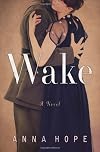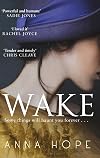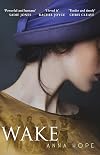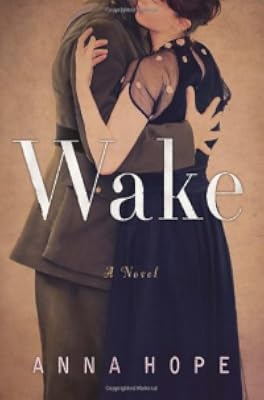
Wake
by Anna Hope
On This Page
Description
Anna Hope’s brilliant debut unfolds over the course of five days, as three women must deal with the aftershocks of World War I and its impact on the men in their lives.Wake: 1) Emerge or cause to emerge from sleep. 2) Ritual for the dead. 3) Consequence or aftermath.
London, 1920. The city prepares to observe the two-year anniversary of Armistice Day with the burial of the unknown soldier. Many are still haunted by the war: Hettie, a dance instructress, lives at home with her mother show more and her brother, who is mute after his return from combat. One night Hettie meets a wealthy, educated man and finds herself smitten with him. But there is something distracted about him, something she cannot reach. . . . Evelyn works at the Pensions Exchange, through which thousands of men have claimed benefits from wounds or debilitating distress. Embittered by her own loss, she looks for solace in her adored brother, who has not been the same since he returned from the front. . . . Ada is beset by visions of her son on every street, convinced he is still alive. Helpless, her loving husband has withdrawn from her. Then one day a young man appears at her door, seemingly with notions to peddle, like hundreds of out-of-work veterans. But when he utters the name of her son, Ada is jolted to the core.
The lives of these three women are braided together, their stories gathering tremendous power as the ties that bind them become clear, and the body of the unknown soldier moves closer and closer to its final resting place.
Advance praise for Wake
“Hope’s unblinking prose is reminiscent of Vera Brittain’s classic memoir Testament of Youth in its depiction of the social and emotional fallout, particularly on women, of the Great War. . . . Hope reaches beyond the higher echelons of society to women of different social classes, all linked by their reluctance to bid goodbye to the world the conflict has shattered.”—The New York Times Book Review
“Wake is a tender and timely novel, full of compassion and quiet insight. The author gives us a moving and original glimpse into the haunted peace after the Great War, her characters drawn by the gravity of the unmarked, the unknown, and perhaps, finally, the unhoped for.”—Chris Cleave, author of Little Bee
“Wake is a compelling and emotionally charged debut about the painful aftermath of war and the ways—small, brave, or commonplace—in which we keep ourselves going. It touches feelings we know, and settings—dance halls, war fronts, queues outside the grocer’s—that we don’t. I loved it.”—Rachel Joyce, author of The Unlikely Pilgrimage of Harold Fry
“Wake is powerful and humane, a novel that charms and beguiles. Anna Hope’s characters are so real, flawed, and searching, and her prose so natural, one almost forgets how very great a story she is telling.”—Sadie Jones, author of The Uninvited Guests
“Using telling detail, Hope creates a vibrant physical and emotional landscape in which her leading characters, and a sea of others, move irresistibly into the future, some having found resolution, others still in search. Fresh, confident, yet understated, Hope’s first work movingly revisits immense tragedy while also confirming her own highly promising ability.”—Kirkus Reviews. show less
Tags
Recommendations




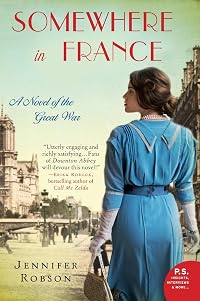
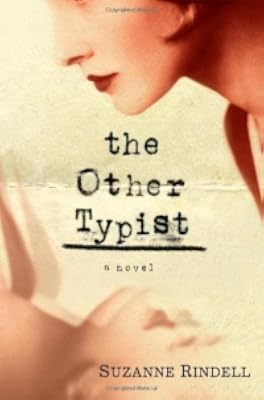
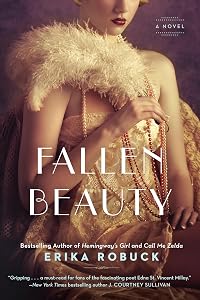
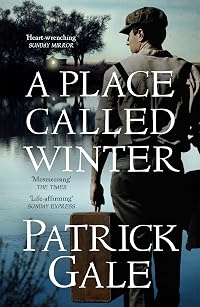





Member Recommendations
Member Reviews
I originally gave this book 3.5 stars, but since I finished it a few days ago, I find myself thinking about it more than I expected, so I upped the rating. This is not a groundbreaking work. It is an oft-told story (the effects of war on those left behind) told in very good, though not striking, prose. I think what Hope has done best, and what makes it resonate with me still, is introduced characters that are both distinct and familiar - the mother who's lost her only child, the grieving lover, the former soldier barely holding it together.... Hope made me care about these people and while I read their stories, I felt like I was inhabiting their world. She does a good job bringing post-WWI London to life and the inner and outer lives show more she gives her characters ring true. This book was an unexpected pleasure. show less
 This review was written for LibraryThing Early Reviewers.
World War I tends to get short shrift in fiction. It was not the war to end all wars. Its’ battles did not span the globe, and it did not involve worldwide alliances and partnerships. The battles themselves involved a one-war-only battle strategy that everyone agrees was an unmitigated failure that caused more harm than good. Finally, nothing was truly accomplished at the end of the war. All of these reasons make it the war that tends to be ignored.
While Wake does not occur during the war itself, it does a brilliant job of highlighting the lasting damage it did to the soldiers’ mental states and a country’s collective psyche. Evelyn’s job within the Pensions Exchange emphasizes the trauma these soldiers suffered and how show more unprepared the British government and economy was to help them readjust into society. Hettie’s job as a dance instructor is a symbol for a country trying to recover some of its former innocence and/or forget the horrors of war regardless of where one spent those war years. Meanwhile, Ada stands in for all mothers and sweethearts who lost loved ones. As their stories blend and merge, it becomes a fascinating look at how small the world really is and how one tiny action can have such a large impact on others. Connections are everywhere, and as the three women prove, one is never alone in one’s pain and suffering.
Readers who dislike ambiguous endings should steer clear, as Wake ends abruptly – very abruptly, as in the middle of a sentence. On the one hand, it is a brilliant fade to allow readers to provide their own endings to the various strands of the story. On the other hand, it is so sudden an ending that one may question whether it is poor editing or a publishing error. Readers who can overcome the lack of closure will appreciate the placement of power within the readers’ hands. Those who cannot do so would do well to avoid the book altogether.
Wake fills a gap in historical fiction by exposing the collective grief and trauma of a country recovering from a war. The fact that it occurs a few years after the war’s end is particularly telling because it shows just how difficult it was for everyone to adjust to peacetime and how long the adjustment period really was. The number of soldiers out of work or completely unable to work due to shell shock or injury is astounding. The three women are the perfect allegory for the British people and British economy, struggling to make ends meet and adjust to life after seeing first-hand the worst thing people can ever experience.
Wake is an emotional experience as well as an educational one. The mood is appropriately somber with a hint of desperation that strikes at a reader’s emotional core. The individual stories of the three women are intimate without making a reader feel unhealthily voyeuristic, while the characters themselves are wonderfully three-dimensional and fully developed. Historical fiction fans would be remiss to bypass Wake with its wonderful prose and strong emotions. show less
While Wake does not occur during the war itself, it does a brilliant job of highlighting the lasting damage it did to the soldiers’ mental states and a country’s collective psyche. Evelyn’s job within the Pensions Exchange emphasizes the trauma these soldiers suffered and how show more unprepared the British government and economy was to help them readjust into society. Hettie’s job as a dance instructor is a symbol for a country trying to recover some of its former innocence and/or forget the horrors of war regardless of where one spent those war years. Meanwhile, Ada stands in for all mothers and sweethearts who lost loved ones. As their stories blend and merge, it becomes a fascinating look at how small the world really is and how one tiny action can have such a large impact on others. Connections are everywhere, and as the three women prove, one is never alone in one’s pain and suffering.
Readers who dislike ambiguous endings should steer clear, as Wake ends abruptly – very abruptly, as in the middle of a sentence. On the one hand, it is a brilliant fade to allow readers to provide their own endings to the various strands of the story. On the other hand, it is so sudden an ending that one may question whether it is poor editing or a publishing error. Readers who can overcome the lack of closure will appreciate the placement of power within the readers’ hands. Those who cannot do so would do well to avoid the book altogether.
Wake fills a gap in historical fiction by exposing the collective grief and trauma of a country recovering from a war. The fact that it occurs a few years after the war’s end is particularly telling because it shows just how difficult it was for everyone to adjust to peacetime and how long the adjustment period really was. The number of soldiers out of work or completely unable to work due to shell shock or injury is astounding. The three women are the perfect allegory for the British people and British economy, struggling to make ends meet and adjust to life after seeing first-hand the worst thing people can ever experience.
Wake is an emotional experience as well as an educational one. The mood is appropriately somber with a hint of desperation that strikes at a reader’s emotional core. The individual stories of the three women are intimate without making a reader feel unhealthily voyeuristic, while the characters themselves are wonderfully three-dimensional and fully developed. Historical fiction fans would be remiss to bypass Wake with its wonderful prose and strong emotions. show less
To someone who frequently reads books of fiction centering on the first world war, it is often difficult to keep the stories separate in one’s mind after the third or fourth book. Characters in this time period’s genre (which really is a genre in itself - the WWI fiction genre) fall into a very few categories - soldier at the front, soldier coming home, wife waiting for soldier, youth ignorant of war’s reality, etc. - and Wake is no different in this respect. Of course, after roughly 100 years and numerable works of fiction on this exact subject, it makes sense that the themes have been established and there are few remaining changeable factors.
But there is a special haunting quality that Hope has achieved here that is rare and show more thrilling to find when, for myself, I had given up hope of distinguishing one WWI novel from another. There is an unnamable element of current-ness that she lends to the history of a well-known, oft-read, oft-written about period. She manages to make it contemporary, as if this could be happening anytime and just happens to be during WWI. This magic makes Wake memorable. show less
But there is a special haunting quality that Hope has achieved here that is rare and show more thrilling to find when, for myself, I had given up hope of distinguishing one WWI novel from another. There is an unnamable element of current-ness that she lends to the history of a well-known, oft-read, oft-written about period. She manages to make it contemporary, as if this could be happening anytime and just happens to be during WWI. This magic makes Wake memorable. show less
This review was written for LibraryThing Early Reviewers.Wake is set in London, right after the end of WW I and still suffering from the aftermath. The soldiers have returned, damaged physically and mentally. But the women who stayed at home were also damaged and this is what the author looks at. She traces the lives of three women, Evelyn, who has lost her fiance, Ada, who has lost her son, and Hetty, whose brother is unable to leave the house due to post-traumatic stress. Their three stories touch each other briefly and culminate in the ceremony for the Unknown Soldier. One ex-soldier says that England has not won the war. War has won and always does. This is a very well-written and very moving story.
This review was written for LibraryThing Early Reviewers.Amongst the profusion of novels about the Great War, ‘Wake’ one stood out for me from the rest because it is about the aftermath rather than the fighting. The spine of the narrative is the journey of the body to be entombed in Westminster Abbey as the ‘Unknown Soldier’. I have visited the tomb but had not considered its selection, the post-war politics and social consequences of choosing one soldier’s remains rather than another. Anna Hope handles a delicate topic - isn’t everything to do with war emotionally-delicate? – with confidence. Wake is a powerful novel by a debut author.
There is something unsettling about the first scenes where un-named soldiers drive out into what was no-man’s-land, not knowing where they are show more going or why. They are directed to dig up the remains of a soldier: unidentified soldiers dig up the remains of an unidentified victim. Four bodies are laid out, not so much bodies as heaps of remains. A Brigadier-General closes his eyes and rests his hand on one of the stretchers, this body is put into a thin wooden coffin. The three not chosen are put into a shell hole at the side of the road, a chaplain says a short prayer, and then re-buried. The chosen one is taken to London.
Three storylines run parallel to this central spine. Hettie and Di are dancers at the Hammersmith Palais. Charging 6d for a dance, Hettie is skilled at spotting the injured soldiers who are disguising the lack of a limb, she is skilled at matching the rhythm of her dancing to theirs. Dancing is the bright spot in her life; her home is under the shadow of her father’s death and her brother’s shell shock.
Evelyn works in a Government department, her job is grey, her surroundings are grey. She is no longer close to her brother who returned from the war seemingly uninjured but is emotionally removed from life. Every day she deals with former soldiers, struggling to make a new life, and each soldier she sees reminds her of her lover who died in the war. She wants to move on from the war but feels that she, like everyone else, is trapped in a cycle of grief, disability, guilt and memory.
Ada is still grieving for her son, a grief which puts distance between her and her husband. Her solace is her neighbour Ivy, also grieving. Then one day an ex-soldier knocks on the door, wanting to sell her dishcloths, and something happens which sends her to a medium.
All are drawn to the streets of London on November 11th, 1920, looking for catharsis.
Read more of my book reviews at my blog http://www.sandradanby.com/book-reviews-a-z/ show less
There is something unsettling about the first scenes where un-named soldiers drive out into what was no-man’s-land, not knowing where they are show more going or why. They are directed to dig up the remains of a soldier: unidentified soldiers dig up the remains of an unidentified victim. Four bodies are laid out, not so much bodies as heaps of remains. A Brigadier-General closes his eyes and rests his hand on one of the stretchers, this body is put into a thin wooden coffin. The three not chosen are put into a shell hole at the side of the road, a chaplain says a short prayer, and then re-buried. The chosen one is taken to London.
Three storylines run parallel to this central spine. Hettie and Di are dancers at the Hammersmith Palais. Charging 6d for a dance, Hettie is skilled at spotting the injured soldiers who are disguising the lack of a limb, she is skilled at matching the rhythm of her dancing to theirs. Dancing is the bright spot in her life; her home is under the shadow of her father’s death and her brother’s shell shock.
Evelyn works in a Government department, her job is grey, her surroundings are grey. She is no longer close to her brother who returned from the war seemingly uninjured but is emotionally removed from life. Every day she deals with former soldiers, struggling to make a new life, and each soldier she sees reminds her of her lover who died in the war. She wants to move on from the war but feels that she, like everyone else, is trapped in a cycle of grief, disability, guilt and memory.
Ada is still grieving for her son, a grief which puts distance between her and her husband. Her solace is her neighbour Ivy, also grieving. Then one day an ex-soldier knocks on the door, wanting to sell her dishcloths, and something happens which sends her to a medium.
All are drawn to the streets of London on November 11th, 1920, looking for catharsis.
Read more of my book reviews at my blog http://www.sandradanby.com/book-reviews-a-z/ show less
Wake
Since the beginning of the year I have seen so much about this novel on Twitter and book blogs that eventually I had to just give in and buy it for myself. No one seemed to have anything but praise for it, and so I was eagerly anticipating it as I sat down with it after a hard afternoon of gardening on Saturday. Wake is such a brilliantly compelling, engaging novel that a little over twenty four hours later I finished it. I love the title, beautifully apt – the word wake with its associations of awakenings, endings and aftermaths. So there I was about four o’clock Saturday afternoon, sitting in the garden a cup of tea at my side, contemplating the word wake, and the beautifully simple cover of this debut novel. I live in a show more rather unlovely industrial area of Birmingham, and yet it is often surprisingly peaceful in my little garden. As I began to read of the soldiers who in 1920 were tasked with the retrieval of the remains of the Unknown Soldier, the birds were in good voice, as if singing a little eulogy of their own.
“I'll remember you, he thinks, and as the gun carriage, with its coffin and its dented helmet pass him by, he closes his eyes.
Nothing will bring them back. Not the words of comfortable men. Not the words of politicians. Or the platitudes of paid poets.”
Set over five days in November 1920, Wake is a novel that concerns the aftermath of war, once the guns have fallen silent, and the world begun to move slowly and haltingly forward. There are so many areas of grey that a war on the scale of the Great War, leaves no one undamaged, landscapes are changed, those left behind often as hurt as those who bear more obvious scars. Leading up to the ceremonial interment of the remains of the Unknown Soldier – Wake depicts the fractured lives of three very different women, all of who have been hurt by the war: Ada, a middle aged woman, married for twenty-five years mourns her son Michael, who she sometimes sees in the street, and of whom she is unable to speak to her husband. Evelyn, approaching thirty lost her lover in the war, now she works in the war pensions office, meeting damaged, embittered men, unaware of the changes the war has had on her brother. Hettie is just nineteen, living at home with her cross mother and her shell shocked brother, she works as a dancer at the Hammersmith Palais loves jazz and envies her friend’s gorgeous new dress.
“Outside, the rain lands quietly, the slurry of dead leaves breaking its fall. Ada lies awake, thinking about her son. About wherever he lies in France and whether it is raining there.”
One day a man comes to the door of Ada’s house selling dishcloths, Ada is soon aware that this man knew her son, but before she can ask him anything he has disappeared. The story of this war damaged man, draw the stories of these women and their men together, gradually unravelling a tragic and haunting story. On the day when thousands of people line the streets of London to watch the procession of the coffin of the Unknown Soldier, the stories of these women come together brilliantly. I am very conscious of spoilers here – so I am not going to say too much about the stories of these women. There is though a heart-breaking authenticity to their stories though that makes the characters feel very real.
And whatever anyone thinks or says, England didn't win this war. And Germany wouldn't have won it, either."
"What do you mean?"
"War wins." He says. "And it keeps winning, over and over again.”
Anna Hope’s writing is really very good indeed; there is a deceptive simplicity to it that belies the depth and poignancy of the stories that this novel tells. Anna Hope has given a powerful voice to these forgotten women, to the ordinary unremarkable men who came back to an uncertain future.
“Clothes hangers clatter as he takes his jacket out, He gets dressed every morning and goes out even though he hasn’t anywhere to go. Hasn’t got a job. Not since coming home from France, two years ago in December, just after their father died. For weeks after his demob, he didn’t leave the house, just sat there in their father’s armchair in the parlour. She would come back from work at Woolworths and he would still be in the same position as when she had left. Often, the dim light and something about the way he sat made her think it was her dad, come back from the dead. It gave her the creeps. But Fred just stayed there, hour after hour, as if that old armchair might tell him where to get a job.”
Thousands upon thousands of women must have had similar tales to tell in the aftermath of this dreadful conflict. When we think about war it becomes easy to think in terms of allies and enemies, in a sense, black hat s and white hats – yet Anna Hope shows us that things are never so simple, how could they be? show less
Since the beginning of the year I have seen so much about this novel on Twitter and book blogs that eventually I had to just give in and buy it for myself. No one seemed to have anything but praise for it, and so I was eagerly anticipating it as I sat down with it after a hard afternoon of gardening on Saturday. Wake is such a brilliantly compelling, engaging novel that a little over twenty four hours later I finished it. I love the title, beautifully apt – the word wake with its associations of awakenings, endings and aftermaths. So there I was about four o’clock Saturday afternoon, sitting in the garden a cup of tea at my side, contemplating the word wake, and the beautifully simple cover of this debut novel. I live in a show more rather unlovely industrial area of Birmingham, and yet it is often surprisingly peaceful in my little garden. As I began to read of the soldiers who in 1920 were tasked with the retrieval of the remains of the Unknown Soldier, the birds were in good voice, as if singing a little eulogy of their own.
“I'll remember you, he thinks, and as the gun carriage, with its coffin and its dented helmet pass him by, he closes his eyes.
Nothing will bring them back. Not the words of comfortable men. Not the words of politicians. Or the platitudes of paid poets.”
Set over five days in November 1920, Wake is a novel that concerns the aftermath of war, once the guns have fallen silent, and the world begun to move slowly and haltingly forward. There are so many areas of grey that a war on the scale of the Great War, leaves no one undamaged, landscapes are changed, those left behind often as hurt as those who bear more obvious scars. Leading up to the ceremonial interment of the remains of the Unknown Soldier – Wake depicts the fractured lives of three very different women, all of who have been hurt by the war: Ada, a middle aged woman, married for twenty-five years mourns her son Michael, who she sometimes sees in the street, and of whom she is unable to speak to her husband. Evelyn, approaching thirty lost her lover in the war, now she works in the war pensions office, meeting damaged, embittered men, unaware of the changes the war has had on her brother. Hettie is just nineteen, living at home with her cross mother and her shell shocked brother, she works as a dancer at the Hammersmith Palais loves jazz and envies her friend’s gorgeous new dress.
“Outside, the rain lands quietly, the slurry of dead leaves breaking its fall. Ada lies awake, thinking about her son. About wherever he lies in France and whether it is raining there.”
One day a man comes to the door of Ada’s house selling dishcloths, Ada is soon aware that this man knew her son, but before she can ask him anything he has disappeared. The story of this war damaged man, draw the stories of these women and their men together, gradually unravelling a tragic and haunting story. On the day when thousands of people line the streets of London to watch the procession of the coffin of the Unknown Soldier, the stories of these women come together brilliantly. I am very conscious of spoilers here – so I am not going to say too much about the stories of these women. There is though a heart-breaking authenticity to their stories though that makes the characters feel very real.
And whatever anyone thinks or says, England didn't win this war. And Germany wouldn't have won it, either."
"What do you mean?"
"War wins." He says. "And it keeps winning, over and over again.”
Anna Hope’s writing is really very good indeed; there is a deceptive simplicity to it that belies the depth and poignancy of the stories that this novel tells. Anna Hope has given a powerful voice to these forgotten women, to the ordinary unremarkable men who came back to an uncertain future.
“Clothes hangers clatter as he takes his jacket out, He gets dressed every morning and goes out even though he hasn’t anywhere to go. Hasn’t got a job. Not since coming home from France, two years ago in December, just after their father died. For weeks after his demob, he didn’t leave the house, just sat there in their father’s armchair in the parlour. She would come back from work at Woolworths and he would still be in the same position as when she had left. Often, the dim light and something about the way he sat made her think it was her dad, come back from the dead. It gave her the creeps. But Fred just stayed there, hour after hour, as if that old armchair might tell him where to get a job.”
Thousands upon thousands of women must have had similar tales to tell in the aftermath of this dreadful conflict. When we think about war it becomes easy to think in terms of allies and enemies, in a sense, black hat s and white hats – yet Anna Hope shows us that things are never so simple, how could they be? show less
Wake review:
I was initially interested in reading this book (and requested it from LibraryThing Early Reviewers) because of its WWI setting. With 2014 being the centenary of the start of the "Great War", I'm fascinated by that cataclysm which seemed to spark all the other cataclysms of the 20th century.
In its description of life and sentiment and outlook, "Wake" did not disappoint. The author did a great job of including quotidian details that made the book a rich account of a life that is very different from ours now!
What a pleasant surprise, though, to find that it was also a powerful lesson in the need to tell one's story and the redemptive power of having been heard and acknowledged! As a social worker who makes a living by show more listening to peoples' stories, this need to talk and the value of simple acknowledgement was especially meaningful. As an example, the scene between Mrs Kempton and Ada, the grieving mother, is brilliant.
Each of these lessons - what life was like post-WWI and the need to talk about one's experiences - is contained within a compelling narrative plot that drove me to read the book almost in one setting.
Highly recommended! show less
I was initially interested in reading this book (and requested it from LibraryThing Early Reviewers) because of its WWI setting. With 2014 being the centenary of the start of the "Great War", I'm fascinated by that cataclysm which seemed to spark all the other cataclysms of the 20th century.
In its description of life and sentiment and outlook, "Wake" did not disappoint. The author did a great job of including quotidian details that made the book a rich account of a life that is very different from ours now!
What a pleasant surprise, though, to find that it was also a powerful lesson in the need to tell one's story and the redemptive power of having been heard and acknowledged! As a social worker who makes a living by show more listening to peoples' stories, this need to talk and the value of simple acknowledgement was especially meaningful. As an example, the scene between Mrs Kempton and Ada, the grieving mother, is brilliant.
Each of these lessons - what life was like post-WWI and the need to talk about one's experiences - is contained within a compelling narrative plot that drove me to read the book almost in one setting.
Highly recommended! show less
This review was written for LibraryThing Early Reviewers.Members
- Recently Added By
Lists

World War I Fiction
94 works; 15 members
Author Information

7+ Works 1,065 Members
Some Editions
Awards and Honors
Series
Belongs to Publisher Series
Common Knowledge
- Canonical title
- Wake
- Original publication date
- 2014-12-11 (1e édition originale anglaise, Doubleday) (1e édition originale anglaise, Doubleday); 2016-01-25 (1e traduction et édition française Du monde entier, Gallimard) (1e traduction et édition française Du monde entier, Gallimard); 2017-08-17 (Réédition française, Folio, Gallimard) (Réédition française, Folio, Gallimard)
- People/Characters
- Hettie; Di; Evelyn Montford; Edward Montford; Ada Hart; Ivy Whyte (show all 8); Fred, Hettie's brother,; Rowan Hind
- Important places
- London, England, UK
- Important events
- World War I (1914 | 1918); Burial of the Unknown Soldier
- Dedication
- For my Parents, Tony and Pamela Hope
- First words
- THREE SOLDIERS EMERGE from their barracks in Arras, northern France.
- Last words
- (Click to show. Warning: May contain spoilers.)The woman turns -
- Original language*
- Anglais (Royaume-Uni) (Royaume-Uni)
*Some information comes from Common Knowledge in other languages. Click "Edit" for more information.
Classifications
Statistics
- Members
- 426
- Popularity
- 72,690
- Reviews
- 71
- Rating
- (3.79)
- Languages
- 7 — Danish, Dutch, English, French, German, Italian, Swedish
- Media
- Paper, Audiobook, Ebook
- ISBNs
- 35
- ASINs
- 7