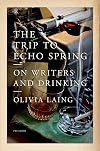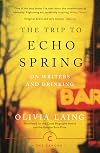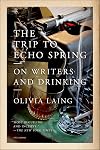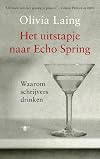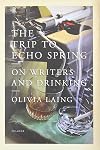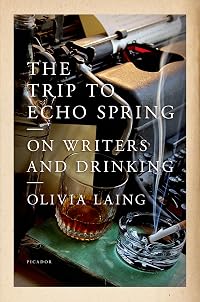
The Trip to Echo Spring: On Writers and Drinking
by Olivia Laing
On This Page
Description
"In The Trip to Echo Spring, Olivia Laing examines the link between creativity and alcohol through the work and lives of six of America's finest writers: F. Scott Fitzgerald, Ernest Hemingway, Tennessee Williams, John Berryman, John Cheever, and Raymond Carver. All six of these men were alcoholics, and the subject of drinking surfaces in some of their finest work, from Cat on a Hot Tin Roof to A Moveable Feast. Often, they did their drinking together: Hemingway and Fitzgerald ricocheting show more through the cafes of Paris in the 1920s; Carver and Cheever speeding to the liquor store in Iowa in the icy winter of 1973. Olivia Laing grew up in an alcoholic family herself. One spring, wanting to make sense of this ferocious, entangling disease, she took a journey across America that plunged her into the heart of these overlapping lives. As she travels from Cheever's New York to Williams's New Orleans, and from Hemingway's Key West to Carver's Port Angeles, she pieces together a topographical map of alcoholism, from the horrors of addiction to the miraculous possibilities of recovery. Beautiful, captivating, and original, The Trip to Echo Spring strips away the myth of the alcoholic writer to reveal the terrible price creativity can exert. - For readers of Amanda Vaill's When Everyone Was So Young, Elif Batuman's The Possessed, and Kingsley Amis's Everyday Drinking"-- show lessTags
Recommendations





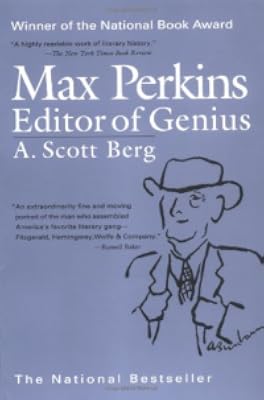
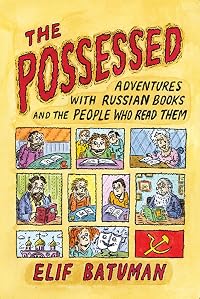

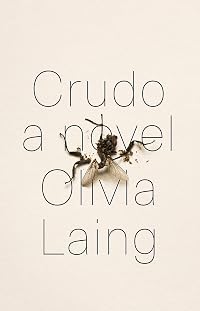
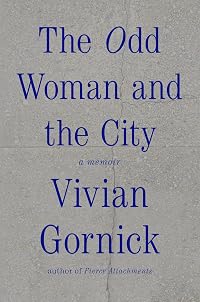
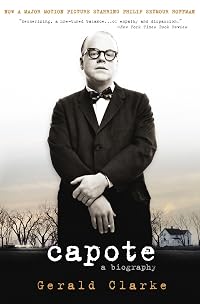


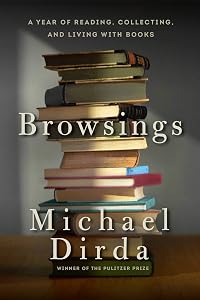
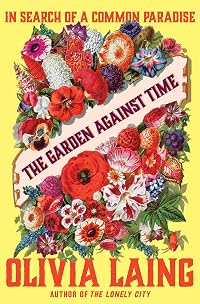

Member Recommendations



Member Reviews
Featuring Hemingway, Fitzgerald, Carver, Cheever, Tennessee Williams, and John Berryman, Olivia Laing follows the literary path and the bottles left in the wake. It's a sad book, on balance, as the extreme talent of these men is offset by their severe mental strain and the herculean self-medicating in which they indulged to dull the pain. The book offers a nice counterbalance to [Max Perkins: Editor of Genius], which sometimes looked at Hemingway and Fitzgerald with rose-colored glasses. Lang demolishes any rosiness, exposing the bourbon-tinged truth. Cheever gets a lions' share of the page time, which is a refreshing change given the other company usually attracts the spotlight. And Cheever actually managed to pull himself out of the show more bottle. It was also nice to learn about John Berryman, who is not a common figure of attention, and was the only poet here. Laing necessarily examines some of the underlying mental difficulties these men faced, and some of the precipitating factors that led them to the booze. And she also examines their published writings for how some of their personal feelings about booze and its effects on them leaked into the fiction. Most interesting, there are several deep dives into journaling and other writings done by the men while in rehabilitation facilities - terribly interesting to see their shifting perceptions as they go through rehab multiple times and come out slightly changed each time.
5 bones!!!!!
Highly recommended. show less
5 bones!!!!!
Highly recommended. show less
This is one of those "think I'll read a few pages of this" books that pulled me in and captivated me from start to finish. There's no easy way to categorize this book, as it includes literary criticism, biography, memoir, reflections on addiction and recovery...and much more that I'm not thinking of right now. Laing expertly weaves all this together, looking at the role of addiction in the lives and works of six writers (F. Scott Fitzgerald, Ernest Hemingway, Tennessee Williams, John Berryman, John Cheever, Raymond Carver), She never talks down to the reader, nor does she trivialize her subjects; she doesn't oversimplify, but neither does she needlessly complicate matters when a direct approach is needed. She is willing to call out show more cowardice in these writers' lives and she is also generous in pointing out courage. The book is not only about recovery; it is as if she has internalized the twelve steps within the writing itself, seeking what is true as best she can, behind all of our posturing and all of our justifications and all of our excuses (speaking as an addict in recovery myself). Nicely done. show less
Eloquent study of alcoholism as analyzed, rationalized, denied and variously owned by six brilliant alcoholic writers: F. Scott Fitzgerald, Ernest Hemingway, Tennessee Williams, John Cheever, Raymond Carver and John Berryman. Less an overarching study of why so many writers abuse alcohol than an intimate examination of why these particular men did and how they articulated their struggles. But that's here, too: "Hunger, liquor, need, pieces, wrote. A sense was building in me that there was a hidden relationship between the two strategies of writing and drinking and that both had to do with a feeling that something precious had gone to pieces, and a desire at once to mend it--to give it fitness and shape, in Cheever's phrase--and to deny show more that it was so. Hence those obsessive retellings: hence Nagasakit, Nick Adams, Henry Pussycat, Dick Diver, Estabrook and Coverley." Would've preferred a bit less autobiography, but as odyssey, the road trip works--and is beautifully written. show less
A sad, beautiful, and important book. Many critics and biographers have speculated, pontificated or poked fun at the symbiosis between writers and the bottle, but Olivia Laing delves into their psyches in a quest to truly understand.
Focusing on six well-known writer-alcoholics—Hemingway (of course!), Scott Fitzgerald (of course!), Tennessee Williams, John Cheever, John Berryman and Raymond Carver—Laing, a British author and critic with a background in science, set out on a trip around the USA to visit the places these men inhabited, read through mountains of letters and journals, and speak to surviving relatives, while poring through their published works, trawling for clues, aching for answers. Two committed suicide; two knowingly show more drank themselves to death. Laing strips the romance and the condemnation from their life stories and paints a picture of six troubled, not particularly likeable, artists.
The book, then, is mostly biography, part journalism about the physiology and psychology of alcoholism, part literary criticism, tied together with interludes of travelogue and memoir, the latter to reveal her deep personal motivations behind the project. The strongest writing is in her descriptions of place, in which the language soars, and Laing discovers meaning in the way the writer’s own setting affected his soul, as well as her own.
It’s almost an involuntary reaction to question the author for focusing on six American white men of Christian background. I’m not sure if it was her intention, but it seems to me that narrowing her enquiry to writers with certain similarities of background was necessary in this first foray toward finding a common answer to the question of the subtitle—Why Writers Drink. Does she find the answer? Maybe not, but she does find many surprising things in common in their own private probing in their journals, which she shares with the reader. Most of all, she achieves a certain intimacy with each writer, by distilling their excuses and behaviors into literary liquor which is both absorbing and disturbing to read.
There is a certain danger in plumbing the souls of erudite alcoholics—a deep, liquid sadness permeates every page, which lingers for days after finishing. I have to say that my admiration for these writers was knocked off its pedestal, but I’m left with a gut-wrenching empathy for each of them.
If you are a writer, or know one, or care about writers, I strongly, wholeheartedly urge you to read this outstanding book. show less
Focusing on six well-known writer-alcoholics—Hemingway (of course!), Scott Fitzgerald (of course!), Tennessee Williams, John Cheever, John Berryman and Raymond Carver—Laing, a British author and critic with a background in science, set out on a trip around the USA to visit the places these men inhabited, read through mountains of letters and journals, and speak to surviving relatives, while poring through their published works, trawling for clues, aching for answers. Two committed suicide; two knowingly show more drank themselves to death. Laing strips the romance and the condemnation from their life stories and paints a picture of six troubled, not particularly likeable, artists.
The book, then, is mostly biography, part journalism about the physiology and psychology of alcoholism, part literary criticism, tied together with interludes of travelogue and memoir, the latter to reveal her deep personal motivations behind the project. The strongest writing is in her descriptions of place, in which the language soars, and Laing discovers meaning in the way the writer’s own setting affected his soul, as well as her own.
It’s almost an involuntary reaction to question the author for focusing on six American white men of Christian background. I’m not sure if it was her intention, but it seems to me that narrowing her enquiry to writers with certain similarities of background was necessary in this first foray toward finding a common answer to the question of the subtitle—Why Writers Drink. Does she find the answer? Maybe not, but she does find many surprising things in common in their own private probing in their journals, which she shares with the reader. Most of all, she achieves a certain intimacy with each writer, by distilling their excuses and behaviors into literary liquor which is both absorbing and disturbing to read.
There is a certain danger in plumbing the souls of erudite alcoholics—a deep, liquid sadness permeates every page, which lingers for days after finishing. I have to say that my admiration for these writers was knocked off its pedestal, but I’m left with a gut-wrenching empathy for each of them.
If you are a writer, or know one, or care about writers, I strongly, wholeheartedly urge you to read this outstanding book. show less
I thought I would love The Trip to Echo Spring. It was billed as an examination of the dark secrets and self-destructive tendencies of six major 20th century authors (F.S. Fitzgerald, E. Hemingway, T. Williams, J. Berryman, J. Cheever and R. Carver), with an eye toward answering the eternal question: why are so many great writers also alcoholics? In keeping with the current trend towards genre-blending, the narrative also included the author's memoirs of her dysfunctional childhood, scientific information on the neurobiology of alcoholism, and even travel writing, as the author described her visits to locations associated with the six authors she profiled. It sounded like this book would be right up my alley.
The reality was show more disappointing. I found The Trip to Echo Spring difficult to stay with and filled with self-consciously lyrical writing that failed to move me. The narrative was annoyingly diffuse; perhaps its lack of focus was the result of trying to cover so much literary ground, summarize so many plots, and encompass so many genres.
The stories of all six men have been better told elsewhere. show less
The reality was show more disappointing. I found The Trip to Echo Spring difficult to stay with and filled with self-consciously lyrical writing that failed to move me. The narrative was annoyingly diffuse; perhaps its lack of focus was the result of trying to cover so much literary ground, summarize so many plots, and encompass so many genres.
The stories of all six men have been better told elsewhere. show less
Olivia Laing recounts her travels around the United States, visiting places associated with six American authors (she apologises that they are all dead white males: Scott Fitzgerald; Ernest Hemingway; Tennessee Williams; John Cheever; John Berryman; Raymond Carver) who all had problems with alcohol.
This is not biography or literary criticism, although it contains some of both. This is an enjoyable literary travelogue about alcoholism and American authors, with some reflections on Laing’s own life. Laing’s style has an easy familiarity, even when quoting technical medical jargon about alcoholism, and although the potted biographies, literary criticism and travelogue don’t seamlessly blend together, there is plenty to enjoy.
I had show more not read any Tennessee Williams prior to this book, although aware of the plays, and only had name awareness of Berryman, but this didn’t particularly reduce my interest in the book. However it was a shame that Laing didn’t write about Carson McCullers. show less
This is not biography or literary criticism, although it contains some of both. This is an enjoyable literary travelogue about alcoholism and American authors, with some reflections on Laing’s own life. Laing’s style has an easy familiarity, even when quoting technical medical jargon about alcoholism, and although the potted biographies, literary criticism and travelogue don’t seamlessly blend together, there is plenty to enjoy.
I had show more not read any Tennessee Williams prior to this book, although aware of the plays, and only had name awareness of Berryman, but this didn’t particularly reduce my interest in the book. However it was a shame that Laing didn’t write about Carson McCullers. show less
I'm of two minds about this book. On the one hand, author Olivia Lang is an excellent writer and literary critic. On the other, if one is going to write a biography about alcoholic writers and how their alcoholism affected their work, I would hope that the author could refrain from writing long, meandering pages about her own experiences with the disease. Lang explores the links between creativity and alcohol by exploring the work and lives of six writers: John Chever, Tennesee Williams, Ernest Hemingway, F. Scott Fitzgerald, John Berryman and Raymond Carver. Lang grew up in an alcoholic family and, trying to make sense out of her own life, took a journey (by amtrak no less) across America visiting the haunts of these writers while show more examining their lives and their works. She seems to be most enamored with Williams and Cheever. Her description at the beginning of the book of Cheever and Carver, racing to what appears to be an early morning pre-appointment with a liquor store owner to stock up on their daily supply of scotch gave me an image that won't quickly be erased from my brain. Likewise her critique of Cheever's story, "The Swimmer" made me want to go back and read the story again.
Williams is handled with the most sympathy. While she shows all the others in the depths of alcoholic degradation, she cuts him the most slack, painting the most sympathetic portrait in the book. She ls likewise fairly sympathetic to Fitzgerald, as opposed to Hemingway, although the story of the two of them careening back to Paris in an open car and drinking bottles of wine under trees during a rain storm is vivid, indeed. Berryman and Carver get less attention (perhaps because they are less known?), but the descriptions of Berryman's alcoholic excesses are probably the most disturbing in the book.
All of this is wonderful, but then Lang inserts herself in the narrative with pages and pages on her own unhappy childhood and her mother's alcoholic lesbian partner, along with rather pedantic discourses covering the clinical theories on the disease and ponderous paragraphs about Alcoholics Anonymous, none of which add to the book. Note to biographical writers: stick to your subject & save your personal traumas for another book. show less
Williams is handled with the most sympathy. While she shows all the others in the depths of alcoholic degradation, she cuts him the most slack, painting the most sympathetic portrait in the book. She ls likewise fairly sympathetic to Fitzgerald, as opposed to Hemingway, although the story of the two of them careening back to Paris in an open car and drinking bottles of wine under trees during a rain storm is vivid, indeed. Berryman and Carver get less attention (perhaps because they are less known?), but the descriptions of Berryman's alcoholic excesses are probably the most disturbing in the book.
All of this is wonderful, but then Lang inserts herself in the narrative with pages and pages on her own unhappy childhood and her mother's alcoholic lesbian partner, along with rather pedantic discourses covering the clinical theories on the disease and ponderous paragraphs about Alcoholics Anonymous, none of which add to the book. Note to biographical writers: stick to your subject & save your personal traumas for another book. show less
Members
- Recently Added By
Published Reviews
ThingScore 75
The form Laing has invented mixes literary criticism and poetic reverie, travel reportage and confessional autobiography, and the fit is sometimes awkward. Casual conversations with fellow travellers pass the time but often have dubious relevance; her itinerary can seem – as she says of Scott Fitzgerald's jerky essay about his alcoholic crack-up – "circuitous and rambling". The subtitle show more promises a general answer to a question that the book avoids directly asking. Doesn't the creative imagination always require external help – from a deity or a muse as classical poets believed, or from the animating breeze exhaled by nature, on which romantic poets relied? Coleridge needed opium, and Aldous Huxley recommended a hallucinogenic cactus. Is writing itself addictive, a disease not a cure?
Despite its haphazard structure, The Trip to Echo Spring is original, brave and very moving. Laing's way of looking at a natural world that is free from human faults repeatedly prompts something like the "spiritual awakening" AA attendees hope for. Her insights shine with beauty yet are shaded by sympathy and compassion, as when she notices in passing a herd of deer with "faces soft and unguarded as sleepwalkers". Her recommended therapy, for drunks and for everyone else who suffers, is "the capacity of literature to somehow salve a sense of soreness, to make one feel less flinchingly alone". The self-destructive subjects in her clinic testify to that; so does her own writing. show less
Despite its haphazard structure, The Trip to Echo Spring is original, brave and very moving. Laing's way of looking at a natural world that is free from human faults repeatedly prompts something like the "spiritual awakening" AA attendees hope for. Her insights shine with beauty yet are shaded by sympathy and compassion, as when she notices in passing a herd of deer with "faces soft and unguarded as sleepwalkers". Her recommended therapy, for drunks and for everyone else who suffers, is "the capacity of literature to somehow salve a sense of soreness, to make one feel less flinchingly alone". The self-destructive subjects in her clinic testify to that; so does her own writing. show less
added by SnootyBaronet
Lists

Books featuring alcoholics
103 works; 18 members

Books Read in 2021
5,361 works; 114 members

Books Read in 2015
3,299 works; 126 members
Author Information

13+ Works 3,789 Members
Olivia Laing was awarded the 2018 Windham-Campbell Prize for nonfiction and the 2019 James Tait Black Prize for her debut novel Crudo. She writes for the Guardian, frieze, and New York Times among many other publications. She lives in Suffolk, UK.
Awards and Honors
Awards
Distinctions
Notable Lists
Common Knowledge
- Canonical title*
- Het uitstapje naar Echo Spring
- Original title
- The Trip to Echo Spring: On Writers and Drinking
- People/Characters
- Tennessee Williams; F. Scott Fitzgerald; Ernest Hemingway; John Cheever; John Berryman; Raymond Carver
- Epigraph
- When alcoholics do drink, most eventually become intoxicated, and it is this recurrent intoxication that eventually brings their lives down in ruins. Friends are lost, health deteriorates, marriages are broken, children are a... (show all)bused, and jobs terminated. Yet despite these consequences the alcoholic continues to drink. Many undergo a ‘change in personality’. Previously upstanding individuals may find themselves lying, cheating, stealing, and engaging in all manner of deceit to protect or cover up their drinking. Shame and remorse the morning after may be intense; many alcoholics progressively isolate themselves to drink undisturbed. An alcoholic may hole up in a motel for days or a week, drinking continuously. Most alcoholics become more irritable; they have a heightened sensitivity to anything vaguelycritical. Many alcoholics appear quite grandiose, yet on closer inspection one sees that their self-esteem has slipped away from them.
Handbook of Medical Psychiatry, ed. David P. Moore and James W. Jefferson
Easy, easy, Mr. Bones. I is on your side
‘Dream Song 36’, John Berryman - Dedication
- For my mother, Denise Laing, with all my love
- First words
- HERE’S A THING. IOWA CITY, 1973.
- Quotations
- At some point, you have to set down the past. At some point, you have to accept that everyone was doing their best. At some point, you have to gather yourself up, and go onward into your life.
People don't like to talk about alcohol. They don't like to think about it, except in the most superficial of ways. They don't like to examine the damage it does and I don't blame them. I don't like it either. I know that des... (show all)ire for denial with every bone in my body: clavicle, sternum, femur and phalanx. - Last words
- (Click to show. Warning: May contain spoilers.)That’s when the second life – the good one – starts.
- Canonical DDC/MDS
- 810.9353
- Canonical LCC
- PS129
*Some information comes from Common Knowledge in other languages. Click "Edit" for more information.
Classifications
- Genres
- Literature Studies and Criticism, Nonfiction, Biography & Memoir
- DDC/MDS
- 810.9353 — Literature & rhetoric American literature in English American literature in English History and criticism of American literature Themes and subjects Humanity Behaviour and activities
- LCC
- PS129 — Language and Literature American literature American literature Biography, memoirs, letters, etc.
- BISAC
Statistics
- Members
- 459
- Popularity
- 66,737
- Reviews
- 17
- Rating
- (3.60)
- Languages
- 5 — Dutch, English, Italian, Portuguese, Spanish
- Media
- Paper, Audiobook, Ebook
- ISBNs
- 17
- ASINs
- 7