American Bloomsbury
by Susan Cheever
On This Page
Description
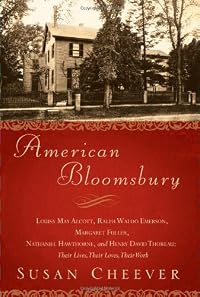
A brilliant, controversial, and fascinating biography of those who were, in the mid-nineteenth century, the center of American thought and literature.Concord, Massachusetts, 1849. At various times, three houses on the same road were home to Ralph Waldo Emerson, Henry and John Thoreau, Bronson Alcott and his daughter Louisa May, Nathanial Hawthorne, and Margaret Fuller. Among their friends and neighbors: Henry James, Emily Dickinson, Walt Whitman, Edgar Allen Poe, and others. These men and show more women are at the heart of American idealism.We may think of them as static daguerreotypes, but in fact, these men and women fell desperately in and out of love with each other, edited each other's work, discussed and debated ideas and theories all night long, and walked arm in arm under Concord's great elms-all of which creates a thrilling story.American Bloomsbury explores how, exactly, Concord developed into the first American community devoted to literature and original ideas-ideas that, to this day, define our beliefs about environmentalism and conservation, and about the glorious importance of the individual self. show lessTags
Recommendations














Member Reviews
Ralph Waldo Emerson, Henry David Thoreau and Nathaniel Hawthorne are enshrined in America's literary canon while Louisa May Alcott was the author of one of the most beloved novel for girls ever written. Susan Cheever's eminently readable book about the menage of famous authors and thinkers living in Concord, Massachusetts in the mid-19th Century strips away the reverence surrounding these people and gives us a "warts and all" picture of their lives, their writing and their political acts
The person who caused this group to all come together in this little town west of Boston was Emerson, who, by the fortunate early death of his wife, became a wealthy man, enabling him to finance the Hawthornes, the Alcotts and Thoreau who without him show more would surely have starved. The personal dynamics of this group makes for fascinating reading. There was the love triangle of Margaret Fuller (an early free-thinking feminist) and Emerson and Hawthorne. There was Bronson Alcott, an uneducated pontificator of dubious education and dietary philosophies and there was Thoreau living in his cabin (conveniently paid for by Emerson) expounding on living without money and with nature.
For a short period of time their stars all shown brightly in the American literary firmament. Then it was over. Thoreau and Hawthorne had early deaths, Emerson sank into Alzheimer's disease, Hawthorne died with his career in serious decline and poor Louisa MAy Alcott - much like her doppelganger Jo March - supported her family with her writing.
Their writing, rediscovered by a generation of young people in the 1960's lives on today. Ms. Cheever has given us a wonderful picture of the real people underneath the legends. show less
The person who caused this group to all come together in this little town west of Boston was Emerson, who, by the fortunate early death of his wife, became a wealthy man, enabling him to finance the Hawthornes, the Alcotts and Thoreau who without him show more would surely have starved. The personal dynamics of this group makes for fascinating reading. There was the love triangle of Margaret Fuller (an early free-thinking feminist) and Emerson and Hawthorne. There was Bronson Alcott, an uneducated pontificator of dubious education and dietary philosophies and there was Thoreau living in his cabin (conveniently paid for by Emerson) expounding on living without money and with nature.
For a short period of time their stars all shown brightly in the American literary firmament. Then it was over. Thoreau and Hawthorne had early deaths, Emerson sank into Alzheimer's disease, Hawthorne died with his career in serious decline and poor Louisa MAy Alcott - much like her doppelganger Jo March - supported her family with her writing.
Their writing, rediscovered by a generation of young people in the 1960's lives on today. Ms. Cheever has given us a wonderful picture of the real people underneath the legends. show less
Novelist and memoirist Susan Cheever's new American Bloomsbury: Louisa May Alcott, Ralph Waldo Emerson, Margaret Fuller, Nathaniel Hawthorne, and Henry David Thoreau: Their Lives, Their Loves, Their Work is a glimpse into one of America's most influential literary communities, that which flourished in and around Concord, Massacusetts from the late 1830s into the early 1860s. Cheever's title characters form the core relationships, but other greats of American literature make cameo appearances: Longfellow, Melville, Oliver Wendell Holmes are among them.
This is not a particularly serious book; it is full of glib colloquialisms (Emerson as the "sugar daddy" of the group, Fuller as "bitchy" just for example), odd throwaway paragraphs, show more unwarranted speculations, and long passages of description which may or may not be entirely fabricated (it's hard to say, since none of them are cited in the sparse citations which, typically for Simon & Schuster, go unmarked in the text). Cheever's habit of occasionally jumping into the narrative with a short personal interjection is both unwelcome and unnecessary, and I found her wistful, whiny final chapter on Concord today entirely ridiculous. Also, a line on p. 150 regarding the presidential election of 1852 is off somehow - Van Buren was decidedly not the incumbent in that election.
The most troubling aspect of Cheever's writing was a narrative style in which she jumps about relentlessly, resulting in what she herself (p. xiii) calls "a series of overlapping scenes in which some incidents are repeated, sometimes more than once." Keeping a sense of chronology is nearly impossible, and at several points (chapters 30 and 31, also p. 178) the sequence of things is quite unclear. Including a few more referential dates here and there would have been very helpful in this regard, but a less schizophrenic structure would have improved the book in a more significant way.
Cheever's subjects are fascinating people, and their interactions with each other form an amazing story. I only wish that this author had worked harder at telling it well.
http://philobiblos.blogspot.com/2007/01/book-review-american-bloomsbury.html show less
This is not a particularly serious book; it is full of glib colloquialisms (Emerson as the "sugar daddy" of the group, Fuller as "bitchy" just for example), odd throwaway paragraphs, show more unwarranted speculations, and long passages of description which may or may not be entirely fabricated (it's hard to say, since none of them are cited in the sparse citations which, typically for Simon & Schuster, go unmarked in the text). Cheever's habit of occasionally jumping into the narrative with a short personal interjection is both unwelcome and unnecessary, and I found her wistful, whiny final chapter on Concord today entirely ridiculous. Also, a line on p. 150 regarding the presidential election of 1852 is off somehow - Van Buren was decidedly not the incumbent in that election.
The most troubling aspect of Cheever's writing was a narrative style in which she jumps about relentlessly, resulting in what she herself (p. xiii) calls "a series of overlapping scenes in which some incidents are repeated, sometimes more than once." Keeping a sense of chronology is nearly impossible, and at several points (chapters 30 and 31, also p. 178) the sequence of things is quite unclear. Including a few more referential dates here and there would have been very helpful in this regard, but a less schizophrenic structure would have improved the book in a more significant way.
Cheever's subjects are fascinating people, and their interactions with each other form an amazing story. I only wish that this author had worked harder at telling it well.
http://philobiblos.blogspot.com/2007/01/book-review-american-bloomsbury.html show less
Fascinating multiple bio of the Concord crowd and their intermingled lives (and loves.) Well placed in their historical context, with glimpses of John Brown, Franklin Pierce, Herman Melville and other mid-nineteenth century heavyweights. Full of intriguing and hitherto unknown (to me, anyway) bits of information. Cheever is a little careless with her pronouns and antecedents, but otherwise quite readable.
This is an entertaining introduction to the Transcendentalists, the group of American writers and thinkers that gathered around Concord, Massachusetts in the nineteenth century. Cheever does this by alternating thematic biographical sketches to which she adds her critical comments. The time line of these sketches see-saws back and forth as she concentrates on one person and a theme and then goes back to pick up another’s story. She begins with the architect of the group, Ralph Waldo Emerson, a man who grew up in less than genteel circumstances, married well, was bereaved early, and then determinedly used the wealth inherited from his first wife to draw together a Lyceum in rural Massachusetts, connected to but physically removed from show more the bustle of literary life in Boston and New York. As Cheever puts it, “Emerson wrote some wonderful lines, and some true biographical portraits, but it is as the sugar daddy of American literature that he really takes his place in the pantheon of Concord writers.” (page 38)
The naturalist and Emerson’s sometime handyman Henry David Thoreau was already a resident of Concord. But Emerson made the necessary connections and put up the money to draw there the radical educators Margaret Fuller and Bronson Alcott and Alcott’s family. He charmed the aloof author Nathaniel Hawthorne away from Salem. He also arranged for members of his circle to meet New York authors like Walt Whitman and Herman Melville. It was quite an intellectual hot house, and Cheever spends the time to concentrate on the interactions and relationships between her central characters; it makes very lively reading. show less
The naturalist and Emerson’s sometime handyman Henry David Thoreau was already a resident of Concord. But Emerson made the necessary connections and put up the money to draw there the radical educators Margaret Fuller and Bronson Alcott and Alcott’s family. He charmed the aloof author Nathaniel Hawthorne away from Salem. He also arranged for members of his circle to meet New York authors like Walt Whitman and Herman Melville. It was quite an intellectual hot house, and Cheever spends the time to concentrate on the interactions and relationships between her central characters; it makes very lively reading. show less
Cheever's narrative style is fairly direct and clear, neither hagiographic nor skeptical.
The book suffers from the defects of the multi-person-biography sub-genre, in that the threads of the story get tangled with jumping around from person to person and year to year, sometimes going backwards.
The stories themselves were a fascinating view of the intermingled private lives of so many famous writers and others in a condensed time and place.
In addition to the main characters, there are also appearances by Melville, Longfellow, Whitman, and the Brownings, as well as passing references to many other celebrities of the period, American and European.
The most interesting incident to me was that Louisa May Alcott was pressured into writing show more "Little Women" by her publisher, and did not relish the assignment at all.
I confess to having no knowledge of Margaret Fuller at all; her insinuation into the family relationships of the others is not featured in high school English classes.
A good companion to "A Summer of Hummingbirds" by Christopher Benfrey, about the other major group of American celebrities of the 19th-century (Beechers, Dickinsons, and others). show less
The book suffers from the defects of the multi-person-biography sub-genre, in that the threads of the story get tangled with jumping around from person to person and year to year, sometimes going backwards.
The stories themselves were a fascinating view of the intermingled private lives of so many famous writers and others in a condensed time and place.
In addition to the main characters, there are also appearances by Melville, Longfellow, Whitman, and the Brownings, as well as passing references to many other celebrities of the period, American and European.
The most interesting incident to me was that Louisa May Alcott was pressured into writing show more "Little Women" by her publisher, and did not relish the assignment at all.
I confess to having no knowledge of Margaret Fuller at all; her insinuation into the family relationships of the others is not featured in high school English classes.
A good companion to "A Summer of Hummingbirds" by Christopher Benfrey, about the other major group of American celebrities of the 19th-century (Beechers, Dickinsons, and others). show less
We know them all from high school English: The founding fathers (and mothers) of American literature. But Susan Cheever takes our knowledge a step further: Louisa May Alcott lived next door to Emerson and had a crush on Thoreau; Nathaniel Hawthorne was a ladies' man who married the sister of one of his girlfriends; Hawthorne and Emerson, both married with families, seemed to be vying for the attentions of Margaret Fuller. The tragic story of Fuller, who appears to have been the brightest of the group, helps explain why she has become the forgotten heroine of 19th century literature. In all, it's like a special issue of People magazine for lit majors and geeks.
Very enjoyable read but not the scholarly treatment I was hoping for. It reads more like a series of expanded magazine articles than a full-fledged book. The stories of the lives and interactions of the authors were interesting and certainly knew nothing about either the Hawthorne or Margaret Fuller connections to Concord and the Transcendentalists. However, I ran into a few factual errors that made me doubt other parts of the stories (Plymouth is not on Cape Cod). The author also seems very naive and sheltered, unable to come to grips with modern suburban Concord that isn't the 1850s village. Her glowing praise of Little Women as a book to change American literature also seems odd, esp. as Alcott herself was fairly negative on it. It show more did make me curious to read Alcott's 'serious' novel, Moods. Hello, Project Gutenberg. show less
Members
- Recently Added By
Lists

Books Read in 2014
2,341 works; 89 members

Summer Reads 2014
207 works; 70 members

Dishonourable Mentions of 2014
80 works; 23 members

Books Read in 2019
4,052 works; 108 members
Author Information

Susan Cheever, the daughter of the great American writer John Cheever, is the author of nine previous books, including Home Before Dark, a best-selling memoir about her father, & the novel Looking for Work. She has written award-winning articles on parenting for New York Newsday & is a contributing writer to Architectural Digest. She teaches show more writing at Bennington College & Yale University & lives in New York. (Bowker Author Biography) show less
All Editions
Common Knowledge
- Canonical title
- American Bloomsbury
- Original publication date
- 2006
- People/Characters
- Louisa May Alcott; Ralph Waldo Emerson; Henry David Thoreau; Margaret Fuller; Nathaniel Hawthorne; Herman Melville (show all 9); John Brown, abolitionist; Franklin Pierce; Sophia Peabody Hawthorne
- Important places
- Concord, Massachusetts, USA; Massachusetts, USA
- Epigraph
- excerpts from the Journals of Ralph Waldo Emerson and Henry David Thoreau
- Dedication
- For my children, who shared in this great adventure
- First words
- The crossroads where the swampy meadows below the Cambridge Turnpike rise steeply to the orchards on the other side of the Lexington Road looks like any New England corner; shaded by maples, it is bordered by lush grass in th... (show all)e summer and piles of plowed snow in the winter.
- Last words
- (Click to show. Warning: May contain spoilers.)It is my hope that this story will serve as an introduction to that landscape and that the reader will come to love it as I have.
Classifications
- Genres
- Literature Studies and Criticism, Nonfiction, Biography & Memoir, History
- DDC/MDS
- 810.997444 — Literature & rhetoric American literature in English American literature in English History and criticism of American literature For and by kinds of persons Living in North America
- LCC
- PS255 .C6 .C48 — Language and Literature American literature American literature Special regions, states, etc. North
- BISAC
Statistics
- Members
- 686
- Popularity
- 41,552
- Reviews
- 33
- Rating
- (3.45)
- Languages
- English, German
- Media
- Paper, Audiobook, Ebook
- ISBNs
- 11
- ASINs
- 7