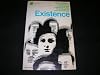
Existence: A New Dimension in Psychiatry and Psychology
by Rollo May (Editor), Ernest Angel (Editor), Henri F. Ellenberger (Editor)
162 Members (3.50)
On This Page
Description
"This book represents the fruition of four years labor--most of it, fortunately, a labor of love. The idea of translating these papers, originating with Ernest Angel, was welcomed by Basic Books because of their enthusiasm for bringing out significant new material in the sciences of man. I was glad to accept their invitation to participate as one of the editors since I, too, had long been convinced of the importance of making these works available in English, particularly at this crucial show more moment in the development of modern psychiatry and psychology. We asked Dr. Ellenberger to join us as the third editor because of his extensive knowledge of the literature of phenomenological and existential psychiatry and his clinical experience in using these methods in Switzerland. He and Mr. Angel are chiefly responsible for the selection of the particular papers translated. In our introductory chapters, Dr. Ellenberger and I have undertaken the task of making a bridge between these contributions and American psychiatry and psychology, while Mr. Angel has borne the major weight of the translations themselves"--Preface. show lessTags
Recommendations
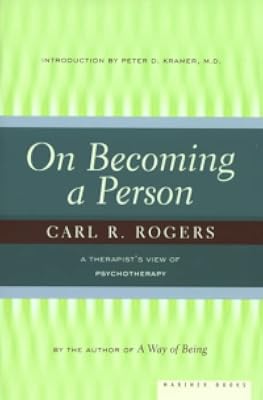
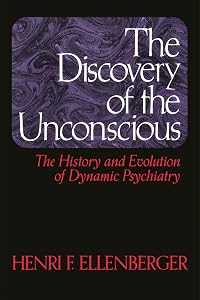

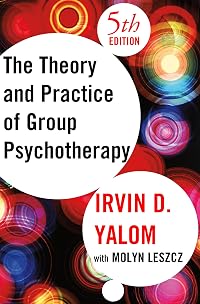

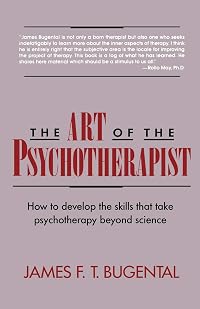
















Member Reviews
Members
- Recently Added By
Lists

Jordan B. Peterson's Recommended Books
104 works; 5 members

Tom's Bookstore
346 works; 2 members
Author Information

"The development of an existential psychology in America is in good part the work of Rollo May. He helped bring existentialism to psychology some fifteen years ago, and since then his impact has increased each year. As he says here, he isn't an existentialist in a cultist sense. In American psychology, the existential approach is part of a wider show more trend which includes many views" (Eugene T. Gendlin, Psychology Today). May's psychology is sometimes referred to as humanistic. He is one of the affirmative, "third force" American psychologists who are also critical of the society in which we live. Gendlin writes further: "In. . . Psychology and the Human Dilemma [1966], May offers a wealth of valid and stimulating ideas in a totally engaging and readable fashion. [The human dilemma is that] man is always both an active subject and a passive object ". . . May [says]: "Only in knowing ourselves as the determined ones are we free. This last sentence and his many similar discussions seem to mean that we can't help what happens, but only what attitude we take toward what happens. In fact, he means more than this---in taking an attitude toward what happens we change what happens." In late 1968, May was the subject of an article in the New York Times in which he was said to feel that "one sign that the modern age is dying is that its myths are dying." We are at present in a "limbo" between myths---the situation in which people become disoriented and "alienated." "In the new myths," he said, "I would think that racial variation will be seen as a positive value, that emphasis on one world will replace fragmented nationalism, and that things will be valued more for their intrinsic worth rather than in use---what they can be banked for." As a young man, May taught for a period at the American College in Saloniki, Greece. An ordained Congregational minister, May received his Ph.D. at Columbia University in 1949. He worked as supervisory and training analyst at the William Alanson White Institute in New York City and adjunct professor of clinical psychology at the New York University Graduate School of Arts and Sciences for many years. May was instrumental in establishing the Rollo May Center for Humanistic Studies at Saybrook Institute in San Francisco. (Bowker Author Biography) show less
Some Editions
Common Knowledge
- Original publication date
- 1958
Classifications
- Genres
- Nonfiction, General Nonfiction, Philosophy
- DDC/MDS
- 616.89 — Applied science & technology Medicine & health Diseases, Allergies, Skin Conditions Nervous Disorders: Autism, Anorexia, OCD Mental disorders: bi-polar/schizophrenia
- LCC
- RC455 .M3 — Medicine Internal medicine Internal medicine Neurosciences. Biological psychiatry. Neuropsychiatry Psychiatry
- BISAC
Statistics
- Members
- 162
- Popularity
- 200,166
- Rating
- (3.50)
- Languages
- English, Spanish
- Media
- Paper, Ebook
- ISBNs
- 4
- ASINs
- 7