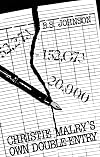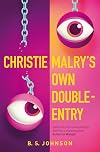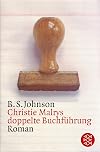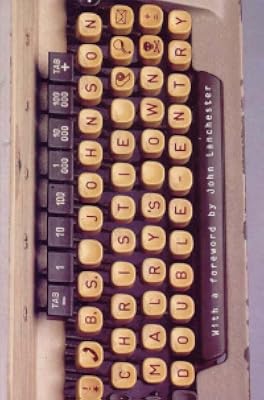
Christie Malry's Own Double-Entry
by B. S. Johnson
On This Page
Description
Christie Malry is a simple person. Born into a family without money, he realised early along in the game that the best way to come by money was to place himself next to it. So he took a job as a very junior bank clerk in a very stuffy bank. It was at the bank that Christie discovered the principles of double-entry book keeping, from which he evolved his Great Idea. For every offence Christy henceforth received at the hands of a society with which he was clearly out of step, a debit mustbe show more noted; after which, society would have to be paid back appropriately, so that the paper credit would accrue to Christy's account. Now made into a film starring Nick Moran ofLock, Stock and Two Smoking Barrels fame. Acerbic yet funny, this is a novel which, even as it provokes laughter, will alarm and disturb as well. show lessTags
Recommendations








Member Recommendations

by anonymous user
Member Reviews
In what would be his last book to be published in his lifetime, Johnson deliberately goes back to the early days of English fiction, with jokey chapter summaries — "Chapter XX: Not the Longest Chapter in this Novel" turns out to be only three lines long — and both the narrator and the characters repeatedly remind us that we are in a work of fiction. When asked by his supervisor why he had arranged his mother's funeral so soon after her death, Christie replies "There wasn't any more time. This is a very short novel." At times, the characters stop off to argue with the author — 'you shouldn't be bloody writing novels about it, you should be out there bloody doing something about it' — and at other times the narrator insists to us show more that there is no independent reality they exist in. If it were only a few hundred pages longer and set in Yorkshire, it would be Tristram Shandy.
But the central structural device of the book goes even further back than that: office-worker Christie Malry reviews his success or failure in life by means of a balance-sheet, just as Robinson Crusoe did. But he takes it a few notches further: where Crusoe used the balance-sheet to demonstrate to himself, against all reason and common-sense, that he was relatively fortunate and should be content with what Fate had delivered, Christie's balance-sheet consistently shows that his account with "Them" is in debit. He tries to resolve this by contriving acts of revenge — against his employers, the state, the world, the universe — that gradually escalate from minor acts of office sabotage (an order for "5 cartons of carbon paper" modified to read "5 tons...") to large-scale acts of terrorism. The latter probably aren't quite as funny now as they were in 1973, when bomb-scares were still something of an amusing novelty for most of us, but it's pretty clear that this isn't a novel that's meant to be read realistically.
As usual, there's a lot of subtle and not-so-subtle wit, a good deal of entertaining sex, and some learned references (lots of citations from Brecht and from Luca Pacioli, the "father of book-keeping", but also an epigraph from Széll Zsuzsa, a literary critic so impressively obscure that he still only has Wikipedia pages in Hungarian and Esperanto!). Great fun! show less
But the central structural device of the book goes even further back than that: office-worker Christie Malry reviews his success or failure in life by means of a balance-sheet, just as Robinson Crusoe did. But he takes it a few notches further: where Crusoe used the balance-sheet to demonstrate to himself, against all reason and common-sense, that he was relatively fortunate and should be content with what Fate had delivered, Christie's balance-sheet consistently shows that his account with "Them" is in debit. He tries to resolve this by contriving acts of revenge — against his employers, the state, the world, the universe — that gradually escalate from minor acts of office sabotage (an order for "5 cartons of carbon paper" modified to read "5 tons...") to large-scale acts of terrorism. The latter probably aren't quite as funny now as they were in 1973, when bomb-scares were still something of an amusing novelty for most of us, but it's pretty clear that this isn't a novel that's meant to be read realistically.
As usual, there's a lot of subtle and not-so-subtle wit, a good deal of entertaining sex, and some learned references (lots of citations from Brecht and from Luca Pacioli, the "father of book-keeping", but also an epigraph from Széll Zsuzsa, a literary critic so impressively obscure that he still only has Wikipedia pages in Hungarian and Esperanto!). Great fun! show less
The novelist B. S. Johnson was deeply distrustful of the imagination, taking the Platonic view that ‘telling stories is telling lies’. And Johnson thought that telling lies was morally wrong. All very well for philosophers, but a position bound to make life a bit tricky for a novelist, you would have thought. He was part of a loose group of experimental 1960s British writers which also included Ann Quinn, Eva Figes, Christine Brooke-Rose and Alan Burns. Except that Johnson was emphatic his novels were not experimental, explaining that although he made experiments, his published books were fully achieved work (well, many people do seem to regard the term ‘experimental novel’ as a euphemism for failure). Although passionate about show more the form and its possibilities, he didn’t have much time for most contemporary novels and his literary heroes were idiosyncratic ones: Sterne, Joyce, Beckett and Flann O’Brien. Despite his ethical distaste for stories he had a rare gift for telling them, as this brutally funny shaggy dog story demonstrates.
Christy Malry is a young working class man who works in a confectionery factory as an accounts clerk and decides to take night classes to train as an accountant. He learns double-entry bookkeeping with its golden rule-: ‘Every debit must have its credit’. Highly impressed, Christie decides to base his life on this principle and devises his own system of moral double-entry bookkeeping: whenever society commits an offence against him he will take proportionate action to balance the books. Initially, this involves little more than a bit of petty pilfering and harmless insubordination to right wrongs perpetrated against him by managers in the factory. As he becomes more aware of the sheer injustice of society, however, his attempts to balance the books lead him inexorably towards much more serious, darker and deadly actions.
Christie Malry, like most of Johnson’s novels, draws on his own experience. He worked as an accounts clerk in a bakery in the fifties and, like Christie, was from a working class background in Hammersmith. It’s also evocative of Britain in the early seventies - a time of political and industrial conflict and terrorist bombs - with Christie as a one-man Angry Brigade. Rather like Candide, it combines a bleak vision with an insouciant and high-spirited narrative tone. Johnson paints with broad comic brushstrokes and is very, very funny. He subverts his own narrative, throwing formalistic spanners into the works with gleeful abandon. He addresses the reader directly and indulges in undisguised political polemic. The characters are fully aware that they are fictional and, at one point, Christie and Johnson have a conversation about the novel Christie is in and The Novel in general. He reproduces some pages from Christie’s account books which convey his steadily increasing fury (debit column: ‘Socialism not given a chance, 40,734’).
Johnson litters his text with ridiculous and ridiculously abstruse words: exeleutherostomise, incunabula, trituration, ventripotent, sufflamination, vermifuge. Anthony Burgess, who admired Johnson’s novels, used to do much the same thing. With Burgess it always seemed like a deadly earnest and vaguely unpleasant attempt to overwhelm the reader with his erudition, but with Johnson, perhaps because his approach is more extreme and he uses even longer long words than Burgess did, the effect is of a wilfully perverse joke that he is playing with (not on) the reader.
Johnson’s theories about the novel were dogmatic and simplistic. His practice, however, was more complex. In this novel he does indeed tell a story and creates vivid characters. His constant exposure of the fictive nature of his own creation somehow has the paradoxical effect of making it seem more real and thrillingly alive than most naturalistic fiction. It crackles with energy and is compulsively readable and entertaining. Behind its playful surface this book is powered by strong emotions of anger and despair and, in addition to being hilarious, it’s also strangely moving. At about 20,000 words Christie Malry has more ideas and invention in it than many novels twice its length: black comedy, social satire, an unconventional thriller, formal innovation and erotic romance (how could I have forgotten to mention Christie’s girlfriend, the Shrike?).
All this and a highly unusual use of shaving foam. show less
Christy Malry is a young working class man who works in a confectionery factory as an accounts clerk and decides to take night classes to train as an accountant. He learns double-entry bookkeeping with its golden rule-: ‘Every debit must have its credit’. Highly impressed, Christie decides to base his life on this principle and devises his own system of moral double-entry bookkeeping: whenever society commits an offence against him he will take proportionate action to balance the books. Initially, this involves little more than a bit of petty pilfering and harmless insubordination to right wrongs perpetrated against him by managers in the factory. As he becomes more aware of the sheer injustice of society, however, his attempts to balance the books lead him inexorably towards much more serious, darker and deadly actions.
Christie Malry, like most of Johnson’s novels, draws on his own experience. He worked as an accounts clerk in a bakery in the fifties and, like Christie, was from a working class background in Hammersmith. It’s also evocative of Britain in the early seventies - a time of political and industrial conflict and terrorist bombs - with Christie as a one-man Angry Brigade. Rather like Candide, it combines a bleak vision with an insouciant and high-spirited narrative tone. Johnson paints with broad comic brushstrokes and is very, very funny. He subverts his own narrative, throwing formalistic spanners into the works with gleeful abandon. He addresses the reader directly and indulges in undisguised political polemic. The characters are fully aware that they are fictional and, at one point, Christie and Johnson have a conversation about the novel Christie is in and The Novel in general. He reproduces some pages from Christie’s account books which convey his steadily increasing fury (debit column: ‘Socialism not given a chance, 40,734’).
Johnson litters his text with ridiculous and ridiculously abstruse words: exeleutherostomise, incunabula, trituration, ventripotent, sufflamination, vermifuge. Anthony Burgess, who admired Johnson’s novels, used to do much the same thing. With Burgess it always seemed like a deadly earnest and vaguely unpleasant attempt to overwhelm the reader with his erudition, but with Johnson, perhaps because his approach is more extreme and he uses even longer long words than Burgess did, the effect is of a wilfully perverse joke that he is playing with (not on) the reader.
Johnson’s theories about the novel were dogmatic and simplistic. His practice, however, was more complex. In this novel he does indeed tell a story and creates vivid characters. His constant exposure of the fictive nature of his own creation somehow has the paradoxical effect of making it seem more real and thrillingly alive than most naturalistic fiction. It crackles with energy and is compulsively readable and entertaining. Behind its playful surface this book is powered by strong emotions of anger and despair and, in addition to being hilarious, it’s also strangely moving. At about 20,000 words Christie Malry has more ideas and invention in it than many novels twice its length: black comedy, social satire, an unconventional thriller, formal innovation and erotic romance (how could I have forgotten to mention Christie’s girlfriend, the Shrike?).
All this and a highly unusual use of shaving foam. show less
Bryan Stanley Johnson himself disliked the term ‘experimental’ which is often used to describe his novels, but how else do you describe them? One is printed with holes in a couple of its pages, through which readers catch glimpses—like premonitions—of what’s about to happen next. Another is written in twenty-seven sections, twenty-five of which can be shuffled and read in any order, allowing you to reread a different book each time. Christie Malry’s Own Double-Entry, the last to be published during Johnson’s lifetime, is among the least experimental though.
It draws on his own experiences as a young man not long out of school, in Hammersmith, west London, during the 1950s. Christie, eighteen years old and working as a show more junior invoice clerk for a company making sweets and cakes, discovers something which will transform his life: double-entry bookkeeping. A lightbulb goes on over his head: every Debit must have its Credit, not just in accounting but in life itself—a balancing and setting straight of things, a righting of wrongs. Wrongs done to Christie by the world that is. Justice, in other words. And revenge. His balancing of life’s books starts off with some relatively trivial entries: annoying junkmail on the doormat at home (Debit) is balanced by posting the wretched stuff back (Credit); the overbearing rudeness of his work supervisor (Debit) is balanced by sabotaging the firm’s incoming mail (Credit). Every so often he draws up a proper balance sheet, and five of these are included in the book. Things quickly escalate though—and the first time Christie kills people, his justification is that he’s Crediting himself for the way society treats people like him: ‘If they fight dirty (and they do), so shall I; if they are so callous about human life, then so shall I be (though I could not possibly kill as many as they do).’ The question, of course, is how will it all end—will there be a final settling up of Christie’s account?
Several things about the author himself became plain—how much he liked women for instance. I don’t mean sex, he clearly just found women particularly likeable as people: Christie’s mother is beautifully described; and most striking of all is his girlfriend, nicknamed The Shrike (she’s a bird who works in a butcher’s). There’s anger in this book too and, although I liked it a lot, at times did find myself wondering about the author’s state of mind while writing it. Often depressed by the lack of recognition for his work, he committed suicide (his career as an author cut short at the age of just forty) only months after Double-Entry was published. show less
It draws on his own experiences as a young man not long out of school, in Hammersmith, west London, during the 1950s. Christie, eighteen years old and working as a show more junior invoice clerk for a company making sweets and cakes, discovers something which will transform his life: double-entry bookkeeping. A lightbulb goes on over his head: every Debit must have its Credit, not just in accounting but in life itself—a balancing and setting straight of things, a righting of wrongs. Wrongs done to Christie by the world that is. Justice, in other words. And revenge. His balancing of life’s books starts off with some relatively trivial entries: annoying junkmail on the doormat at home (Debit) is balanced by posting the wretched stuff back (Credit); the overbearing rudeness of his work supervisor (Debit) is balanced by sabotaging the firm’s incoming mail (Credit). Every so often he draws up a proper balance sheet, and five of these are included in the book. Things quickly escalate though—and the first time Christie kills people, his justification is that he’s Crediting himself for the way society treats people like him: ‘If they fight dirty (and they do), so shall I; if they are so callous about human life, then so shall I be (though I could not possibly kill as many as they do).’ The question, of course, is how will it all end—will there be a final settling up of Christie’s account?
Several things about the author himself became plain—how much he liked women for instance. I don’t mean sex, he clearly just found women particularly likeable as people: Christie’s mother is beautifully described; and most striking of all is his girlfriend, nicknamed The Shrike (she’s a bird who works in a butcher’s). There’s anger in this book too and, although I liked it a lot, at times did find myself wondering about the author’s state of mind while writing it. Often depressed by the lack of recognition for his work, he committed suicide (his career as an author cut short at the age of just forty) only months after Double-Entry was published. show less
Very funny. Very dark. “As if American Psycho were written by Noël Coward,” per one of the discussants on the Backlisted Podcast episode no. 5.
It’s experimental, but a breeze to read. A moderately sedentary person can read it in a single sitting. I LOLed at parts. The end was punishingly grim.
One of its many good postmodern jokes is that it is salted with hilariously abstruse words, apparently used correctly, and obviously intended to send you to the dictionary. There are maybe ten or twelve of them in the book. One of them, it turns out, was invented by the author and is meaningless (the only Google result is “used in B.S. Johnson’s Christie Malry’s Own Double Entry”); the rest appear to be perfectly cromulent.
Also, show more several characters appear to be self-aware as inhabitants of a novel. For example, when Christie meets his girlfriend’s Old Mum, she says, “Aaaaer, it was worth it, all those years of sacrifice, just to get my daughter placed in a respectable novel like this, you know.” One chapter is a dialogue between the author and the protagonist, in which they discuss how the novel is going so far.
Johnson killed himself at 40 after the publication of this novel, his sixth. So no points for guessing what he does to Christie Malry. show less
It’s experimental, but a breeze to read. A moderately sedentary person can read it in a single sitting. I LOLed at parts. The end was punishingly grim.
One of its many good postmodern jokes is that it is salted with hilariously abstruse words, apparently used correctly, and obviously intended to send you to the dictionary. There are maybe ten or twelve of them in the book. One of them, it turns out, was invented by the author and is meaningless (the only Google result is “used in B.S. Johnson’s Christie Malry’s Own Double Entry”); the rest appear to be perfectly cromulent.
Also, show more several characters appear to be self-aware as inhabitants of a novel. For example, when Christie meets his girlfriend’s Old Mum, she says, “Aaaaer, it was worth it, all those years of sacrifice, just to get my daughter placed in a respectable novel like this, you know.” One chapter is a dialogue between the author and the protagonist, in which they discuss how the novel is going so far.
Johnson killed himself at 40 after the publication of this novel, his sixth. So no points for guessing what he does to Christie Malry. show less
This is a hard novel to assess, for two unrelated reasons.
First, it may be the best of the 1970s style postmodern narratives in which the author continuously reminds the reader that it’s only a narrative, not anything real. If it is the best, it’s because of Johnson’s light touch. The first hint of metanarrative is on the first page. The book begins with a one-sentence paragraph:
“Christie Malry was a simple person.”
There then follows a paragraph describing a stupid decision he makes. The third paragraph is again one sentence:
“I did tell you Christie was a simple person.”
The little nag here doesn’t lead to more of the same; instead the novel is punctuated by first-person asides, novelist to reader, in which Johnson tells show more us he doesn’t need to continue on such-and-such a point, or doesn’t think we want him to, or can’t be bothered. I did not laugh out lout after the first four pages, but these passages are handled very carefully and they are never tedious, as in so many other first-generation postmodern novels. The author’s interruptions are never longer than this:
“I am told one has to put incidents like that in; for the suspense, you know” (p. 107)
In the opening pages Johnson also plays with ridiculously rare words: “exeleutherostomise” (“to speak out freely, especially in an inappropriate moment”), “trituration,” “cryptorchid” (“failure of one or both testes to descend into the scrotum”), “eirenicon” (p. 42).
Toward the end of the book there’s a brief chapter in which Johnson sits down with his main character, Christie, and they talk over the book’s progress. Johnson keeps varying the formula of self-awareness:
“‘I’ll see what I can do,’ said the goodhearted Shrike [Christie’s girlfriend], ‘but how can we be said to be perfectly happy a few lines back, and now be complaining about the monotony of the diet?’
‘Easily,’ smiled Christie.” (p. 139)
“And he had contrived a way of throwing these switches by remote control, so to speak, in an unusual way which I am not going to bother to invent on this occasion.” (p. 101)
The reason all this makes the book hard to review is that it strikes many readers as perfect. At the moment (April 2013) the nearly 500 reviews on Goodreads average 4.5 stars, and there are many five-star reviews on LibraryThing and Amazon. But it’s an odd kind of perfection that appears so closed, so neat, so finished. The humor is pitch-perfect but safe. The many little jokes, together with the brief chapters, the many half-title pages, and the white spaces between some sentences, depressurize an already low-pressure narrative, keeping it perfectly deflated beginning to end.
The second reason this book is hard to assess is that its theme is terrorism. Christie figures that society owes him, so he keeps double-entry books on what he is owed and gives himself credit when he causes mayhem or kills people. There is also an unusual act of cruelty in the book: Johnson gives Christie cancer, and kills him off, apparently with no ill-will from Christie.
I can’t think of a reason why terrorism or cancer should not be treated in a flippant, insouciant manner, but here that carelessness is very hard to understand. It isn’t as if Johnson thinks that serious things need to be deflated: it’s as if he feels they are already deflated: they don’t have much purchase on his imagination one way or the other. This is where it becomes impossible to forget that he committed suicide the same year this book appeared. The book has a particular lack of affect that seems more disconnected than cynical, more neutral than critical. An online reviewer who calls this a “spiteful slip of a novel” may be half right, but I don’t sense the spite, only a memory of what spite once felt like. In that respect this book is entirely different from other novels of disaffected, lower middle class people in the UK in the 1970s, such as Alisdair Gray’s “1982, Janine.”
PS. Among the five hundred or more online reviews I found this one on Goodreads, by someone with the username knig, posted January 17, 2012. It is one of those geeky reviews that takes the author to task for something technical, but this one is a kind of miniature masterpiece in its own right. There are five photocopied sheets of double-entry bookkeeping in the book, showing Christie’s balance sheet from his point of view. (He gets credits for killing people and being a troublemaker, and debits for insults received.) Knig contributes a real accountant’s review of double entry bookkeeping. It’s interesting that his (or her) review is drier than Johnson’s book, and has more affect; for me that shows this book’s lightness and lack of affect. I quote from Knig’s review:
"…what I’ve retained from Accountancy 101 makes me cringe at this blatant misuse of credit and debit. (Done deliberately I believe, as Johnson worked in accounts for six years. He must have had SOME inkling.) Debit does not mean take away from, reduce, diminish or anything remotely like that. It simply means a sum is entered on the left hand side of the equation. Nothing more. Similarly credit. It’s not an increase, just a right hand sum. Not to mention, if your boss shouts and you decide to debit, you can’t credit by shouting back. That’s not double entry, because its the same variable in two different events in the space time continuum. It would have to work a little like this:
"Boss shouts
"Dr Assets (you now have a shout, which you didn’t before you were shouted at).
"Cr Liabilities. Name it anything, like “I’m gonna get you sucka.” (You owe the boss a shout back.)
"Now, when you’re ready to shout back (or kill 300 people or whatever):
"Cr Assets (you’ve just shouted back and depleted your stored shout).
"Dr Liabilities (or the sucka account). (You no longer owe a shout. Accounts are square.)" show less
First, it may be the best of the 1970s style postmodern narratives in which the author continuously reminds the reader that it’s only a narrative, not anything real. If it is the best, it’s because of Johnson’s light touch. The first hint of metanarrative is on the first page. The book begins with a one-sentence paragraph:
“Christie Malry was a simple person.”
There then follows a paragraph describing a stupid decision he makes. The third paragraph is again one sentence:
“I did tell you Christie was a simple person.”
The little nag here doesn’t lead to more of the same; instead the novel is punctuated by first-person asides, novelist to reader, in which Johnson tells show more us he doesn’t need to continue on such-and-such a point, or doesn’t think we want him to, or can’t be bothered. I did not laugh out lout after the first four pages, but these passages are handled very carefully and they are never tedious, as in so many other first-generation postmodern novels. The author’s interruptions are never longer than this:
“I am told one has to put incidents like that in; for the suspense, you know” (p. 107)
In the opening pages Johnson also plays with ridiculously rare words: “exeleutherostomise” (“to speak out freely, especially in an inappropriate moment”), “trituration,” “cryptorchid” (“failure of one or both testes to descend into the scrotum”), “eirenicon” (p. 42).
Toward the end of the book there’s a brief chapter in which Johnson sits down with his main character, Christie, and they talk over the book’s progress. Johnson keeps varying the formula of self-awareness:
“‘I’ll see what I can do,’ said the goodhearted Shrike [Christie’s girlfriend], ‘but how can we be said to be perfectly happy a few lines back, and now be complaining about the monotony of the diet?’
‘Easily,’ smiled Christie.” (p. 139)
“And he had contrived a way of throwing these switches by remote control, so to speak, in an unusual way which I am not going to bother to invent on this occasion.” (p. 101)
The reason all this makes the book hard to review is that it strikes many readers as perfect. At the moment (April 2013) the nearly 500 reviews on Goodreads average 4.5 stars, and there are many five-star reviews on LibraryThing and Amazon. But it’s an odd kind of perfection that appears so closed, so neat, so finished. The humor is pitch-perfect but safe. The many little jokes, together with the brief chapters, the many half-title pages, and the white spaces between some sentences, depressurize an already low-pressure narrative, keeping it perfectly deflated beginning to end.
The second reason this book is hard to assess is that its theme is terrorism. Christie figures that society owes him, so he keeps double-entry books on what he is owed and gives himself credit when he causes mayhem or kills people. There is also an unusual act of cruelty in the book: Johnson gives Christie cancer, and kills him off, apparently with no ill-will from Christie.
I can’t think of a reason why terrorism or cancer should not be treated in a flippant, insouciant manner, but here that carelessness is very hard to understand. It isn’t as if Johnson thinks that serious things need to be deflated: it’s as if he feels they are already deflated: they don’t have much purchase on his imagination one way or the other. This is where it becomes impossible to forget that he committed suicide the same year this book appeared. The book has a particular lack of affect that seems more disconnected than cynical, more neutral than critical. An online reviewer who calls this a “spiteful slip of a novel” may be half right, but I don’t sense the spite, only a memory of what spite once felt like. In that respect this book is entirely different from other novels of disaffected, lower middle class people in the UK in the 1970s, such as Alisdair Gray’s “1982, Janine.”
PS. Among the five hundred or more online reviews I found this one on Goodreads, by someone with the username knig, posted January 17, 2012. It is one of those geeky reviews that takes the author to task for something technical, but this one is a kind of miniature masterpiece in its own right. There are five photocopied sheets of double-entry bookkeeping in the book, showing Christie’s balance sheet from his point of view. (He gets credits for killing people and being a troublemaker, and debits for insults received.) Knig contributes a real accountant’s review of double entry bookkeeping. It’s interesting that his (or her) review is drier than Johnson’s book, and has more affect; for me that shows this book’s lightness and lack of affect. I quote from Knig’s review:
"…what I’ve retained from Accountancy 101 makes me cringe at this blatant misuse of credit and debit. (Done deliberately I believe, as Johnson worked in accounts for six years. He must have had SOME inkling.) Debit does not mean take away from, reduce, diminish or anything remotely like that. It simply means a sum is entered on the left hand side of the equation. Nothing more. Similarly credit. It’s not an increase, just a right hand sum. Not to mention, if your boss shouts and you decide to debit, you can’t credit by shouting back. That’s not double entry, because its the same variable in two different events in the space time continuum. It would have to work a little like this:
"Boss shouts
"Dr Assets (you now have a shout, which you didn’t before you were shouted at).
"Cr Liabilities. Name it anything, like “I’m gonna get you sucka.” (You owe the boss a shout back.)
"Now, when you’re ready to shout back (or kill 300 people or whatever):
"Cr Assets (you’ve just shouted back and depleted your stored shout).
"Dr Liabilities (or the sucka account). (You no longer owe a shout. Accounts are square.)" show less
This spiteful slip of a novel is full of sharp writing, clever ideas, and literary tricks, but it is hard to read without considering Johnson's own reckoning, soon after it was written. In that shadow, Johnson is a bitter wizard working dis-illusions.
I am joining my voice to the chorus of friends who love this book. I read it yesterday, when I was not in the best of moods. Johnson's writing helped to lift that haze. (Many thanks to Mark for recommending and lending the book to me. I have now ordered my own copy - you're correct that I want it for my collection.)
As mentioned in other reviews, this is an experimental novel that combines wicked doses of dark humor with many different, and hilarious, nods to the fact that this is a novel. The narrator interjects himself regularly into the text, commenting on the conventions of novel writing as he implements, or bends, those rules. The characters talk to each other on occasion about their being in a novel - there's a wonderful sense of a show more grown-up version of
[b:The Monster at the End of this Book|44186|The Monster at the End of this Book (Sesame Street)|Jon Stone|http://photo.goodreads.com/books/1320493760s/44186.jpg|640276], as I kept imagining the characters talking to each other, making plans to meet in a later chapter, and generally carrying on their existence within the confines of the novel's pages. And, in a memorable instance, the narrator and the protagonist, Christie Malry, talk to each other about the novel's progression and upcoming conclusion.
The premise of the novel is simple - Christie, a young accountant who is dissatisfied with his life, but wants to work in proximity to money, takes a series of jobs for which he learns double-entry accounting. He soon strikes upon the novel idea of developing his own double-entry system, in which he engages in increasingly grandiose acts of revenge to gain credits against the debits that society owes to him, from small disappointments to large-scale frustration over the workings of society and politics in 20th-century England. Johnson's execution of this premise is hilarious and inventively done. Strongly recommended, especially if you are having a bad day - just make sure you don't adopt Christie's brilliant idea yourself. It could have disastrous results. show less
As mentioned in other reviews, this is an experimental novel that combines wicked doses of dark humor with many different, and hilarious, nods to the fact that this is a novel. The narrator interjects himself regularly into the text, commenting on the conventions of novel writing as he implements, or bends, those rules. The characters talk to each other on occasion about their being in a novel - there's a wonderful sense of a show more grown-up version of
[b:The Monster at the End of this Book|44186|The Monster at the End of this Book (Sesame Street)|Jon Stone|http://photo.goodreads.com/books/1320493760s/44186.jpg|640276], as I kept imagining the characters talking to each other, making plans to meet in a later chapter, and generally carrying on their existence within the confines of the novel's pages. And, in a memorable instance, the narrator and the protagonist, Christie Malry, talk to each other about the novel's progression and upcoming conclusion.
The premise of the novel is simple - Christie, a young accountant who is dissatisfied with his life, but wants to work in proximity to money, takes a series of jobs for which he learns double-entry accounting. He soon strikes upon the novel idea of developing his own double-entry system, in which he engages in increasingly grandiose acts of revenge to gain credits against the debits that society owes to him, from small disappointments to large-scale frustration over the workings of society and politics in 20th-century England. Johnson's execution of this premise is hilarious and inventively done. Strongly recommended, especially if you are having a bad day - just make sure you don't adopt Christie's brilliant idea yourself. It could have disastrous results. show less
Members
- Recently Added By
Lists

Recommend the 20 best books you've read in the last five years
2,168 works; 606 members

Backlisted
109 works; 9 members

Best Workplace Fiction
47 works; 18 members

stories at work
43 works; 7 members

E's Reader
30 works; 1 member

A Novel Cure
742 works; 23 members
Backlisted Podcast
65 works; 3 members

Books Read in 2018
4,360 works; 110 members

Michael Dirda's 100 Best Comic Novels
100 works; 1 member
Talk Discussions
Past Discussions
5. Christie Malry's Own Double Entry by B.S. Johnson in Backlisted Book Club (March 2022)
Author Information

31+ Works 1,935 Members
Some Editions
Series
Belongs to Publisher Series
Common Knowledge
- Canonical title*
- De dubbele boekhouding van Christie Marly
- Original title
- Christie Marly's Own Double-Entry
- Original publication date
- 1973
- People/Characters
- Christie Malry; the Shrike; Headlam; Christie's mother
- Important places
- London, England, UK; Hammersmith, London, England, UK
- Related movies*
- Christie Malry's Own Double-Entry (2000 | IMDb)
- First words
- Christie Malry was a simple person.
- Last words
- (Click to show. Warning: May contain spoilers.)ACCOUNT CLOSED
*Some information comes from Common Knowledge in other languages. Click "Edit" for more information.
Classifications
Statistics
- Members
- 549
- Popularity
- 54,114
- Reviews
- 13
- Rating
- (3.85)
- Languages
- 6 — Dutch, English, French, German, Slovak, Spanish
- Media
- Paper, Ebook
- ISBNs
- 15
- ASINs
- 1