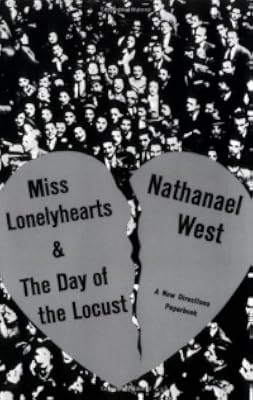
Miss Lonelyhearts & The Day of the Locust
by Nathanael West
On This Page
Description
In the first story, Miss Lonelyhearts is a newspaper reporter assigned to write the advice column, and becomes caught up in the suffering. In the second story, Ted Hackett goes to Hollywood in search of a career, but finds the way hard.Tags
Recommendations


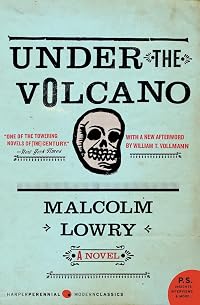
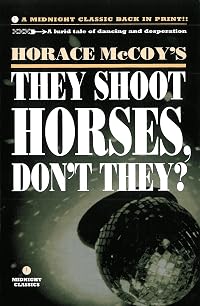
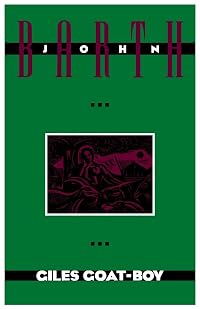
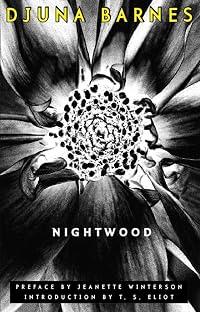













Member Recommendations

by ateolf

Member Reviews
(Miss Lonelyhearts review) A re-read, according to my records, for one of my f2f reading groups.
This is a dark, dark classic. A young man, having accepted a job as a agony columnist with a title 'Miss Lonelyheats', finds himself driven to despair by the letters he receives, and the lack of help he can provide. By turns angry, cynical, depressed, helpless, drunk, he searches for some sort of meaning, while being teased and scorned by his fellow journalists, who are misogynistic and cynical in the extreme, venting their anger on whoever they perceive as weaker and more downtrodden than they are. Through the story, he is only referred to by his title, teased, emasculated and virtually erased. By turns he gets involved with one of the show more letter-writers, a predatory woman married to a man she scorns; tries to find solace with a woman he has proposed to recently but cannot really connect with; is haunted by an obsession with belief and unbelief and ferocious nightmares.
This whole novella felt like a nightmare to me, almost underground, set in 1932, in dark speakeasies and bare apartments. In one episode, he and his fiancee attempt to go back to the land, try to recreate in a weekend the Eden out of which all people have been cast, but it doesn't help. At the very end, having found what might have been an epiphany, he encounters violence, making him in some ways a Christ figure but not guaranteeing any redemption. show less
This is a dark, dark classic. A young man, having accepted a job as a agony columnist with a title 'Miss Lonelyheats', finds himself driven to despair by the letters he receives, and the lack of help he can provide. By turns angry, cynical, depressed, helpless, drunk, he searches for some sort of meaning, while being teased and scorned by his fellow journalists, who are misogynistic and cynical in the extreme, venting their anger on whoever they perceive as weaker and more downtrodden than they are. Through the story, he is only referred to by his title, teased, emasculated and virtually erased. By turns he gets involved with one of the show more letter-writers, a predatory woman married to a man she scorns; tries to find solace with a woman he has proposed to recently but cannot really connect with; is haunted by an obsession with belief and unbelief and ferocious nightmares.
This whole novella felt like a nightmare to me, almost underground, set in 1932, in dark speakeasies and bare apartments. In one episode, he and his fiancee attempt to go back to the land, try to recreate in a weekend the Eden out of which all people have been cast, but it doesn't help. At the very end, having found what might have been an epiphany, he encounters violence, making him in some ways a Christ figure but not guaranteeing any redemption. show less
Although The Day of the Locust is the longer and more famous of the two works this volume comprises, I preferred Miss Lonelyhearts.
Miss Lonelyhearts is an odd and haunting story: the eponymous protatgonist is actually a young man who's fallen into the job of writing an agony aunt column for a newspaper. We see him displayed in a number of set pieces, reacting to the ubiquity of evil and misery in the world. He's also Christ-haunted, in a very Flannery O'Connor-esque way, with some similarly bizarre behavioral results. This novella is sharply-written and memorably disturbing.
The Day of Locust is one of the foundational Hollywood novels, featuring a young studio artist's experiences as he sketches, both literally and figuratively, the show more brutal outlines of the real characters that inhabit Lala Land. Some of these lost souls are unforgettable, and as the story reaches a feverish climax, we are left wondering if there's any hope at all for the great mass of us.
Recommended, for the power of West's writing, and for these works' hard-edged portrayal of the 1930s, and of the unchanging depths of human nature itself. show less
Miss Lonelyhearts is an odd and haunting story: the eponymous protatgonist is actually a young man who's fallen into the job of writing an agony aunt column for a newspaper. We see him displayed in a number of set pieces, reacting to the ubiquity of evil and misery in the world. He's also Christ-haunted, in a very Flannery O'Connor-esque way, with some similarly bizarre behavioral results. This novella is sharply-written and memorably disturbing.
The Day of Locust is one of the foundational Hollywood novels, featuring a young studio artist's experiences as he sketches, both literally and figuratively, the show more brutal outlines of the real characters that inhabit Lala Land. Some of these lost souls are unforgettable, and as the story reaches a feverish climax, we are left wondering if there's any hope at all for the great mass of us.
Recommended, for the power of West's writing, and for these works' hard-edged portrayal of the 1930s, and of the unchanging depths of human nature itself. show less
Lean, vicious, brilliant, and oddly familiar, these two novellas weren't quite what I expected. Even though it's very short and its prose is ruthlessly economical, I had a lot of trouble getting my head around "Miss Lonelyhearts," which, despite all the cynicism (provided in bulk by Shrike, the editor) and black humor on display, plays out like an extended dream sequence, occasionally interrupted by bursts of clear-eyed exposition. The setting's gritty and there's a lot of sleaze and Prohibition-era boozing, but its characters seem less like people and more like tragic archetypes. Jonathan Lethem, who wrote the preface, has it right when he says that, to paraphrase, it's a ruthlessly unsentimental novel about sentimentality. Even in show more this context, Miss Lonelyhearts makes for something of an unlikely protagonist: you could argue that he's is fighting to maintain his humanity in a world that's set on destroying it, but he can also be about as drunk and mendacious as anybody else in the story. Maybe West was talking about the ability of literature to produce empathy: his genuine feelings for the poor souls that write him letters is perhaps the only thing that differentiates him from the rest of the novel's characters.
I found "The Day of the Locust" easier to deal with, and, although its not as well known as "Miss Lonelyhearts," think it might be the more successful work of these two. Books that describe Los Angeles as a gaudy, obviously faux playground of the imagination aren't exactly rare, but it's strange to see one written when the film industry was in its comparative infancy. The diet fads, weird cults, general hedonism and postmodern architectural mishmash that give LA a bad reputation seem to have been with us for quite a while. His deadpan descriptions of actors and extras wandering around the town in full costume are reminiscent of the dreamlike elements of "Miss Lonelyhearts," but the book, as a whole, seems more grounded. West creates some indelible characters here, including Faye Greener, sort of a malevolent, West-Coast proto-Holly Golightly who is lovely and enchanting while obviating any questions we might have about her sincerity or authenticity. There's also a truculent, tough-taking dwarf and a guy called Homer Simpson involved. And also, curiously, an Ivy League-educated artist. West, who apparently had a real interest in fine art, does a very good job of drawing comparisons between modern Los Angeles and some of the Old Masters, some of whom I'm going to have to look up, and, as the book draws to a close, conflates visual and plot in a way that's amazingly deft and completely effortless. Recommended to anyone who enjoys modern American writing: West beat dozens of later authors to the punch. It's a genuine tragedy for American literature that he died so young. show less
I found "The Day of the Locust" easier to deal with, and, although its not as well known as "Miss Lonelyhearts," think it might be the more successful work of these two. Books that describe Los Angeles as a gaudy, obviously faux playground of the imagination aren't exactly rare, but it's strange to see one written when the film industry was in its comparative infancy. The diet fads, weird cults, general hedonism and postmodern architectural mishmash that give LA a bad reputation seem to have been with us for quite a while. His deadpan descriptions of actors and extras wandering around the town in full costume are reminiscent of the dreamlike elements of "Miss Lonelyhearts," but the book, as a whole, seems more grounded. West creates some indelible characters here, including Faye Greener, sort of a malevolent, West-Coast proto-Holly Golightly who is lovely and enchanting while obviating any questions we might have about her sincerity or authenticity. There's also a truculent, tough-taking dwarf and a guy called Homer Simpson involved. And also, curiously, an Ivy League-educated artist. West, who apparently had a real interest in fine art, does a very good job of drawing comparisons between modern Los Angeles and some of the Old Masters, some of whom I'm going to have to look up, and, as the book draws to a close, conflates visual and plot in a way that's amazingly deft and completely effortless. Recommended to anyone who enjoys modern American writing: West beat dozens of later authors to the punch. It's a genuine tragedy for American literature that he died so young. show less
# First "review" #
Finally getting around to this little nail-bomb of a book that I've had shoved in my face almost every time I've read a book that has anything to do with American literature. I knew it was considered to be a searing work but I don't think I was quite ready for this caliber of laceration. West manages to parade the whole spectrum of human emotion and questioning on the edge of a cold, glinting razor. The unnamed character behind the Miss Lonelyhearts persona represents the Christian who struggles under the weight of the missives of suffering that bear down on his life. Playing counterpoint to Miss Lonelyhearts is his boss, Mr. Shrike, who symbolizes the hedonism of the pagan Renaissance humanist: "'Forget the show more crucifixion, remember the Renaissance'" he tell his underling (5). In roughly fifty-eight pages, we follow Miss Lonelyhearts as he plunges into despair and, as the final subheading tells us, has a religious experience (surely one of the most poetically shattering of endings). West certainly goes for viscera in this one, though he isn't above a little Pynchonian slapstick comedy (forgive the anachronism). "Men have always fought their misery with dreams. Although dreams were once powerful, they have been made puerile by the movies, radio and newspapers" (39). On this stance, we get a story ripped free of the puerility of dreams.
# Second "review" #
I think I may need to start making MISS LONELYHEARTS mandatory quarterly reading. There were so many new things that I missed on my first read. I cannot believe how much West packed into 57 pages. This is a masterclass on short story writing that is both artistic and meaningful--it excels at aesthetics and content. I think I'll make a video talking about it soon. show less
Finally getting around to this little nail-bomb of a book that I've had shoved in my face almost every time I've read a book that has anything to do with American literature. I knew it was considered to be a searing work but I don't think I was quite ready for this caliber of laceration. West manages to parade the whole spectrum of human emotion and questioning on the edge of a cold, glinting razor. The unnamed character behind the Miss Lonelyhearts persona represents the Christian who struggles under the weight of the missives of suffering that bear down on his life. Playing counterpoint to Miss Lonelyhearts is his boss, Mr. Shrike, who symbolizes the hedonism of the pagan Renaissance humanist: "'Forget the show more crucifixion, remember the Renaissance'" he tell his underling (5). In roughly fifty-eight pages, we follow Miss Lonelyhearts as he plunges into despair and, as the final subheading tells us, has a religious experience (surely one of the most poetically shattering of endings). West certainly goes for viscera in this one, though he isn't above a little Pynchonian slapstick comedy (forgive the anachronism). "Men have always fought their misery with dreams. Although dreams were once powerful, they have been made puerile by the movies, radio and newspapers" (39). On this stance, we get a story ripped free of the puerility of dreams.
# Second "review" #
I think I may need to start making MISS LONELYHEARTS mandatory quarterly reading. There were so many new things that I missed on my first read. I cannot believe how much West packed into 57 pages. This is a masterclass on short story writing that is both artistic and meaningful--it excels at aesthetics and content. I think I'll make a video talking about it soon. show less
This is a book about horrible people being horrible to each other.
These two novels (more like novellas by modern standards) are considered classics. Miss Lonelyhearts was made into multiple movies and even an opera; Day of the Locust was made into a movie and was later dubbed one of the best books of the 20th century. That's a sad statement about the century. In any case, the movie versions must have radically changed elements from the books, as they both feature bleak tones and existential dilemmas and persistent sex, along with cruel characters who can't keep their pants on.
Miss Lonelyhearts follows the titular Miss Lonelyhearts, a man who writes answers for an advice column. He mocks the people who come to him for help, while he's an show more even sadder sap who hangs out with men who discuss why women should be gang raped.
The Day of the Locust takes place in 1930s Hollywood, and I was able to get some research notes out of that--thank goodness, this thing wasn't a total waste of time! Tod is a painter for a studio, but very little of the story is on actual Hollywood. Instead, Tod obsesses over a neighbor women, Faye, and repeatedly daydreams about raping her. I am not exaggerating. To quote page 107: "Nothing less than violent rape would do." Tod even gets drunk and shows up at the funeral for Faye's father, where he then tries to rape her. (Note: don't be Tod.) And yet he keeps getting turned down by her, and calls her a slut a few times, too.
Really, these two novels remind of when I read slush for a magazine, and how so many stories were of men taking revenge on shrewish women. I rejected those stories. I reject these two novels/novellas, too. I enjoy a good anti-hero. I don't mind dark stories. But these are pretentious and obnoxious. There are female main characters in both, but all of them are regarded as sexual objects to be pinched, humped, or raped. They serve no other purpose.
I will not subject myself to any more of West's works. show less
These two novels (more like novellas by modern standards) are considered classics. Miss Lonelyhearts was made into multiple movies and even an opera; Day of the Locust was made into a movie and was later dubbed one of the best books of the 20th century. That's a sad statement about the century. In any case, the movie versions must have radically changed elements from the books, as they both feature bleak tones and existential dilemmas and persistent sex, along with cruel characters who can't keep their pants on.
Miss Lonelyhearts follows the titular Miss Lonelyhearts, a man who writes answers for an advice column. He mocks the people who come to him for help, while he's an show more even sadder sap who hangs out with men who discuss why women should be gang raped.
The Day of the Locust takes place in 1930s Hollywood, and I was able to get some research notes out of that--thank goodness, this thing wasn't a total waste of time! Tod is a painter for a studio, but very little of the story is on actual Hollywood. Instead, Tod obsesses over a neighbor women, Faye, and repeatedly daydreams about raping her. I am not exaggerating. To quote page 107: "Nothing less than violent rape would do." Tod even gets drunk and shows up at the funeral for Faye's father, where he then tries to rape her. (Note: don't be Tod.) And yet he keeps getting turned down by her, and calls her a slut a few times, too.
Really, these two novels remind of when I read slush for a magazine, and how so many stories were of men taking revenge on shrewish women. I rejected those stories. I reject these two novels/novellas, too. I enjoy a good anti-hero. I don't mind dark stories. But these are pretentious and obnoxious. There are female main characters in both, but all of them are regarded as sexual objects to be pinched, humped, or raped. They serve no other purpose.
I will not subject myself to any more of West's works. show less
I rebelled and struggled against reading these two stories, and had to force myself to press on nearly all the way through. In the end I found some redemption/value, but very little of the experience was anything I'd call enjoyable.
These stories are populated, by bitter, disenfranchised men who fantasize about rape as an appropriate corrective to "uppity" women. They are certainly not the source of their own ugliness -- all are struggling in a Depression-era world -- but still, the first scene in which a group of men in a bar approvingly discuss a gang rape I wanted to throw this book across the room. This simmering hostility against women is a line that is played with throughout both stories.
Somehow, it gets even more repulsive, but show more then, Oh! The mob scene at the end of The Day of the Locust! It's just as brutal as the rest of it, but such an effective metaphor for everything that's gone before that it shines. Pretty much the only thing that kept me from a one or two star rating. But would I recommend this book to get to that scene? Doubtful. It would have to be a highly specific set of circumstances. I mean, is it an accurate depiction of a slice of humanity in human history? It certainly feels true. Still not fun to read. show less
These stories are populated, by bitter, disenfranchised men who fantasize about rape as an appropriate corrective to "uppity" women. They are certainly not the source of their own ugliness -- all are struggling in a Depression-era world -- but still, the first scene in which a group of men in a bar approvingly discuss a gang rape I wanted to throw this book across the room. This simmering hostility against women is a line that is played with throughout both stories.
Somehow, it gets even more repulsive, but show more then, Oh! The mob scene at the end of The Day of the Locust! It's just as brutal as the rest of it, but such an effective metaphor for everything that's gone before that it shines. Pretty much the only thing that kept me from a one or two star rating. But would I recommend this book to get to that scene? Doubtful. It would have to be a highly specific set of circumstances. I mean, is it an accurate depiction of a slice of humanity in human history? It certainly feels true. Still not fun to read. show less
The protagonist of this short novel (or long story) is a young man playing the part of Miss Lonelyhearts for the agony column of a NYC-based newspaper during the great depression. He is in the midst of an existential crisis that is aggravated by the banal but real pain expressed in the letters of the people he presumes to assist, by the circumstances of the time, and by his youth (which involves a level of naiveté and religiosity.) Despite his relative physical and material advantages, he is foundering spiritually.
Living is like swimming – if you think too much about how deep the water is; or what creatures the water may conceal; or, even, why should the water continue to hold you up – you are likely getting into big trouble. Miss show more L., already foundering, senses his responses are meaningless, or worse, and is tempted to intervene in the lives of the losers writing in to his column. Unfortunately, the intense need and despair of some people is like a vortex and it can drag you in. Why don’t we stop the next time we see a homeless guy; skip work, and take the guy home for a hot shower, clean clothes, a meal and a place to sleep? Even if you work or volunteer at a shelter, you don’t do that. There is a line. If you cross it, you are swimming in deep water. Miss L. attempts to save a drowning man and is, in turn, drowned himself.
West's language is direct, but literary. The hybrid of West’s hard-boiled style and a tale that is not hard-boiled (at least not in the usual sense) really works. The structure of the novel also works well; a series of vignettes with acerbic titles like “Miss Lonelyhearts and the Dead Pan” that are reminiscent of the titles in a children’s story book. Finally, this early existential novel is unique in that it is so thoroughly American in its sensibility, settings and pre-occupations. Miss Lonelyhearts is one of the best short novels I've ever encountered. show less
Living is like swimming – if you think too much about how deep the water is; or what creatures the water may conceal; or, even, why should the water continue to hold you up – you are likely getting into big trouble. Miss show more L., already foundering, senses his responses are meaningless, or worse, and is tempted to intervene in the lives of the losers writing in to his column. Unfortunately, the intense need and despair of some people is like a vortex and it can drag you in. Why don’t we stop the next time we see a homeless guy; skip work, and take the guy home for a hot shower, clean clothes, a meal and a place to sleep? Even if you work or volunteer at a shelter, you don’t do that. There is a line. If you cross it, you are swimming in deep water. Miss L. attempts to save a drowning man and is, in turn, drowned himself.
West's language is direct, but literary. The hybrid of West’s hard-boiled style and a tale that is not hard-boiled (at least not in the usual sense) really works. The structure of the novel also works well; a series of vignettes with acerbic titles like “Miss Lonelyhearts and the Dead Pan” that are reminiscent of the titles in a children’s story book. Finally, this early existential novel is unique in that it is so thoroughly American in its sensibility, settings and pre-occupations. Miss Lonelyhearts is one of the best short novels I've ever encountered. show less
Members
- Recently Added By
Lists

1001 Books You Must Read Before You Die
1,448 works; 1,134 members

20th Century Literature
1,161 works; 55 members

Five star books
1,767 works; 110 members

1930s
262 works; 5 members

E's Reader
30 works; 1 member

American Lit for Eng 11 Research Project
368 works; 6 members
Author Information

20+ Works 6,800 Members
American novelist Nathanael West was born in New York City, the son of a prosperous building contractor. He began his college education at Tufts University but transferred to Brown University, from which he graduated in 1924. After graduation, West went to Europe and lived in Paris for a few years, where he wrote the short novel The Dream Life of show more Balso Snell (1931), an avant--garde work that reflected his concern with the emptiness of contemporary life. West's modest legacy of completed works reached its peak of recognition during the period when later Jewish American writers were discovering black humor. Among novels that chronicle the wasteland despair and grotesque comedy of the time between the wars, West's Miss Lonelyhearts (1933) and The Day of the Locust (1939) stand out as remarkable examples. The first is about a young man conducting a column of advice to the lovelorn who finds it increasingly impossible not to share the problems of his readers. The Day of the Locust story about a riot that ends with the burning of Los Angeles. If Franz Kafka (see Vol. 2) had lived to come to the United States and become a screenwriter, he might have written a book like The Day of the Locust, which Malcolm Cowley called the best novel ever written about Hollywood. West's other short novel, A Cool Million (1934), is, like The Dream Life of Balso Snell, an experimental work that offers variations on the theme of reality and illusion; both works look toward a literature of the absurd and deserve their place in literary history as influences on a school of American writers that came into prominence during the 1960s. West's own life had aspects of tragic absurdity. He was married to Eileen McKenney, the original of the central figure in My Sister Eileen, while his own sister became the wife of humorist S. J. Perelman. After writing Miss Lonelyhearts, West and his wife went to Hollywood and remained there until they were both killed in a car accident in 1940. (Bowker Author Biography) show less
Some Editions
Series
Belongs to Publisher Series
Work Relationships
Common Knowledge
- Canonical title
- Miss Lonelyhearts & The Day of the Locust
- Original publication date
- 1933 (Miss Lonelyhearts) (Miss Lonelyhearts); 1939 (The Day of the Locust) (The Day of the Locust)
- Important places
- Los Angeles, California, USA
- Related movies
- Advice to the Lovelorn (1933 | IMDb); I'll Tell the World (1945 | IMDb); Lonelyhearts (1958 | IMDb); Miss Lonelyhearts (1983 | IMDb); The Day of the Locust (1975 | IMDb)
- First words
- The Miss Lonelyhearts of the New York Post-Dispatch (Are you in trouble?--Do-you-need-advice?--Write-to-Miss-Lonelyhearts-and-she-will-help-you) say at his desk and stared at a piece of white cardboard.
Around quitting time, Tod Hackett heard a great din on the road outside his office. - Quotations
- “Perhaps I can make you understand. Let’s start from the beginning. A man is hired to give advice to the readers of a newspaper. The job is a circulation stunt and the whole staff considers it a joke. He welcomes the job,... (show all) for it might lead to a gossip column, and anyway he’s tired of being a leg man. He too considers the job a joke, but after several months at it, the joke begins to escape him. He sees that the majority of the letters are profoundly humble pleas for moral and spiritual advice, and they are inarticulate expressions of genuine suffering. He also discovers that his correspondents take him seriously. For the first time in his life, he is forced to examine the values by which he lives. This examination shows him that he is the victim of the joke and not its perpetrator.”
(Nathanael West, Miss Lonelyhearts) - Last words
- (Click to show. Warning: May contain spoilers.)They both rolled part of the way down the stairs.
(Click to show. Warning: May contain spoilers.)For some reason this made him laugh and he began to imitate the siren as loud a he could. - Disambiguation notice
- This work contains both Miss Lonelyhearts and The Day of the Locust. Do not combine with entries for either work alone.
Classifications
Statistics
- Members
- 2,445
- Popularity
- 7,973
- Reviews
- 41
- Rating
- (3.91)
- Languages
- 5 — Czech, Dutch, English, Polish, Spanish
- Media
- Paper, Ebook
- ISBNs
- 8
- ASINs
- 28