Silence Once Begun
by Jesse Ball
On This Page
Description
The disappearances of eight people from the same Japanese town baffles authorities until a signed confession appears on the police's doorstep implicating a salesman who refuses to speak, compelling a journalist to interview the subsequently condemned man's friends, family and jailors before his scheduled execution.Tags
Recommendations
























Member Reviews
I picked up this book because I was in the mood for something different. It definitely fit the description for something different...and I enjoyed it!
Silence Once Begun is a story narrated by Jesse Ball, who writes as an interviewer who is investigating a crime that happened in Japan in the 1970s. A man named Oda Sotatsu signed a confession, admitting to being responsible for a crime he did not commit, the disappearances of eight people known as the "Narito Disapperances." Once arrested, Sotatsu refuses to say a word to anyone in his own defense. So the interviewer takes it upon himself to interview those who knew Sotatsu to find out the truth.
This novel is structured like a series of interviews, and it reads more like a piece of show more journalism than a novel. Before each interview, Jesse Ball, the interviewer, writes a note which often gives warning that the person being interviewed is not to be fully trusted for various reasons. And I was often left wondering if I could even trust the interviewer, as he didn't seem to have an objective voice either! There are unreliable narrators all over the place here. Each person who shares their point of view has their own skewed version of the truth. (in this sense, it reminded me a bit of Cartwheel by Jennifer Dubois). I found it incredibly fascinating to read between the lines of what each person was saying in order to attempt to figure out what really happened. However, the one person who might be able to shed light on what happened, remains silent throughout the entire novel.
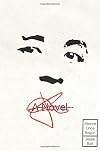
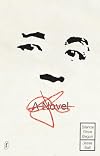
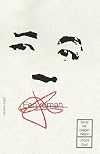
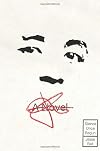
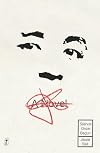
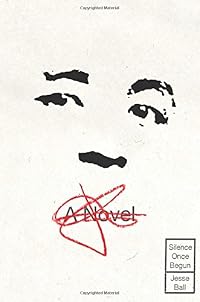
The first page states "the following work of fiction is partially based on fact." The cover also alludes to this idea, with the words "A Novel" being scribbled out. The style of writing is meant to persuade you that this is in fact a story based on truth. However, after wading through all the lies and misconceptions throughout this book, in the end, I wonder if there was any fact in this story at all. The interviewer says he has changed names and dates and locations. How are we to know what is true and what is fiction? That seems to be a central question through this whole story. The themes of truth, silence and justice were thought-provoking and made for an intriguing read.
My guess is that this style of writing is not for everyone, as I have read that others found it gimmicky. It's a bleak and tragic story, so again, it may not be for everyone. I think I picked this up at just the right time, because it was exactly what I was in the mood to read. Something unique, something a little dark and something that made me think. It is a short little book and the interview style makes for quick reading. show less
Silence Once Begun is a story narrated by Jesse Ball, who writes as an interviewer who is investigating a crime that happened in Japan in the 1970s. A man named Oda Sotatsu signed a confession, admitting to being responsible for a crime he did not commit, the disappearances of eight people known as the "Narito Disapperances." Once arrested, Sotatsu refuses to say a word to anyone in his own defense. So the interviewer takes it upon himself to interview those who knew Sotatsu to find out the truth.
This novel is structured like a series of interviews, and it reads more like a piece of show more journalism than a novel. Before each interview, Jesse Ball, the interviewer, writes a note which often gives warning that the person being interviewed is not to be fully trusted for various reasons. And I was often left wondering if I could even trust the interviewer, as he didn't seem to have an objective voice either! There are unreliable narrators all over the place here. Each person who shares their point of view has their own skewed version of the truth. (in this sense, it reminded me a bit of Cartwheel by Jennifer Dubois). I found it incredibly fascinating to read between the lines of what each person was saying in order to attempt to figure out what really happened. However, the one person who might be able to shed light on what happened, remains silent throughout the entire novel.
The first page states "the following work of fiction is partially based on fact." The cover also alludes to this idea, with the words "A Novel" being scribbled out. The style of writing is meant to persuade you that this is in fact a story based on truth. However, after wading through all the lies and misconceptions throughout this book, in the end, I wonder if there was any fact in this story at all. The interviewer says he has changed names and dates and locations. How are we to know what is true and what is fiction? That seems to be a central question through this whole story. The themes of truth, silence and justice were thought-provoking and made for an intriguing read.
My guess is that this style of writing is not for everyone, as I have read that others found it gimmicky. It's a bleak and tragic story, so again, it may not be for everyone. I think I picked this up at just the right time, because it was exactly what I was in the mood to read. Something unique, something a little dark and something that made me think. It is a short little book and the interview style makes for quick reading. show less
I was moved by this writing. Each character has the chance to shape their narrative of the past in a way that is both meaningful and beautiful. The subject of this story isn't really the primary mystery of Sotatsu's silence, and it's not the Narito Disappearances, either; instead, this novel makes use of a framework of investigative journalism/police procedural as a way to explore what makes for a meaningful life.
As each character is given the opportunity to share his or her view of reality, what makes for "a meaningful life" is distilled in their testimony into the briefest of time periods. Life's meaning doesn't come from long years but rather from intensity and purposefulness and attention, of a kind that can be sustained only for a show more very brief time, after which each character lives for the memory of that time. Sotatsu's mother derives her meaning from very vivid and loving memories of her sons as young children. Jito Joo experiences or creates the memory of a perfect, fleeting love. Kakuzo creates what is for him the perfect expression of political protest--whatever else he does with his life is not important to him.
At the center of all these stories is Satsuo, whose silence and sacrifice also seem to give his life a sense of vivid perfection, of moments passing that are deeply significant, moment by moment. His death isn't meaningless so much as it is a rescue from a meaningless life. This idea of a meaningful death, or of death as a praiseworthy sacrifice, isn't uniquely Japanese (e.g. Achilles) but it feels very much a part of the mythology and of traditional Japanese values, and in this way I feel Jesse Ball was respectful of the culture where he chose to place his novel. show less
As each character is given the opportunity to share his or her view of reality, what makes for "a meaningful life" is distilled in their testimony into the briefest of time periods. Life's meaning doesn't come from long years but rather from intensity and purposefulness and attention, of a kind that can be sustained only for a show more very brief time, after which each character lives for the memory of that time. Sotatsu's mother derives her meaning from very vivid and loving memories of her sons as young children. Jito Joo experiences or creates the memory of a perfect, fleeting love. Kakuzo creates what is for him the perfect expression of political protest--whatever else he does with his life is not important to him.
At the center of all these stories is Satsuo, whose silence and sacrifice also seem to give his life a sense of vivid perfection, of moments passing that are deeply significant, moment by moment. His death isn't meaningless so much as it is a rescue from a meaningless life. This idea of a meaningful death, or of death as a praiseworthy sacrifice, isn't uniquely Japanese (e.g. Achilles) but it feels very much a part of the mythology and of traditional Japanese values, and in this way I feel Jesse Ball was respectful of the culture where he chose to place his novel. show less
I was moved by this writing. Each character has the chance to shape their narrative of the past in a way that is both meaningful and beautiful. The subject of this story isn't really the primary mystery of Sotatsu's silence, and it's not the Narito Disappearances, either; instead, this novel makes use of a framework of investigative journalism/police procedural as a way to explore what makes for a meaningful life.
As each character is given the opportunity to share his or her view of reality, what makes for "a meaningful life" is distilled in their testimony into the briefest of time periods. Life's meaning doesn't come from long years but rather from intensity and purposefulness and attention, of a kind that can be sustained only for a show more very brief time, after which each character lives for the memory of that time. Sotatsu's mother derives her meaning from very vivid and loving memories of her sons as young children. Jito Joo experiences or creates the memory of a perfect, fleeting love. Kakuzo creates what is for him the perfect expression of political protest--whatever else he does with his life is not important to him.
At the center of all these stories is Satsuo, whose silence and sacrifice also seem to give his life a sense of vivid perfection, of moments passing that are deeply significant, moment by moment. His death isn't meaningless so much as it is a rescue from a meaningless life. This idea of a meaningful death, or of death as a praiseworthy sacrifice, isn't uniquely Japanese (e.g. Achilles) but it feels very much a part of the mythology and of traditional Japanese values, and in this way I feel Jesse Ball was respectful of the culture where he chose to place his novel. show less
As each character is given the opportunity to share his or her view of reality, what makes for "a meaningful life" is distilled in their testimony into the briefest of time periods. Life's meaning doesn't come from long years but rather from intensity and purposefulness and attention, of a kind that can be sustained only for a show more very brief time, after which each character lives for the memory of that time. Sotatsu's mother derives her meaning from very vivid and loving memories of her sons as young children. Jito Joo experiences or creates the memory of a perfect, fleeting love. Kakuzo creates what is for him the perfect expression of political protest--whatever else he does with his life is not important to him.
At the center of all these stories is Satsuo, whose silence and sacrifice also seem to give his life a sense of vivid perfection, of moments passing that are deeply significant, moment by moment. His death isn't meaningless so much as it is a rescue from a meaningless life. This idea of a meaningful death, or of death as a praiseworthy sacrifice, isn't uniquely Japanese (e.g. Achilles) but it feels very much a part of the mythology and of traditional Japanese values, and in this way I feel Jesse Ball was respectful of the culture where he chose to place his novel. show less
This is one of those books you don't want to end. You want to savor it for as long as possible. The book gives the Western reader great insight into the Japanese justice system, which is far different from our own. As with other books I've read on the Japanese, there is much that is mystical and symbolic in the way the Japanese live their lives and the ways they communicate. The anomaly to this is how the criminal and self-righteous people seem to act in a universal way. Great book!!
I liked this one but didn't love it. The prose by and large was workmanlike and not terribly inspiring. Some reviews suggest that it's poetic, but other than Jito Joo's letter, the prose wasn't all that poetic to my ear, and I thought her letter was overwrought and nonsensical (perhaps by design) so that it didn't really do much for me.
This is a study in unreliable narrators delving at times many layers deep as we receive the story from our author via a fictionalized version of himself via translated transcripts of copies of recordings of memories long distant and often contradictory with other accounts. Even our confessor is unreliable, and for that matter, so is, I believe, a later confessor in the book. Given that the book seems to show more take on the legitimacy of confession, using this old convention seems fitting enough, but does it go maybe too far?
I haven't read Kafka's The Trial, which this is reportedly a bit of a rework of. Perhaps it's better with that story as context.
The book did for the most part keep me interested, and I thought it was neat as an exercise, but I'm still sort of so-so about it having finished it.
I'm not sure Ball cashes in on the promise of the prefatory section with its significant silence and the silence of Oda Sotatsu, though maybe I've just missed some nuance.
I think my favorite part may have been the parable of the stonecutter. show less
This is a study in unreliable narrators delving at times many layers deep as we receive the story from our author via a fictionalized version of himself via translated transcripts of copies of recordings of memories long distant and often contradictory with other accounts. Even our confessor is unreliable, and for that matter, so is, I believe, a later confessor in the book. Given that the book seems to show more take on the legitimacy of confession, using this old convention seems fitting enough, but does it go maybe too far?
I haven't read Kafka's The Trial, which this is reportedly a bit of a rework of. Perhaps it's better with that story as context.
The book did for the most part keep me interested, and I thought it was neat as an exercise, but I'm still sort of so-so about it having finished it.
I'm not sure Ball cashes in on the promise of the prefatory section with its significant silence and the silence of Oda Sotatsu, though maybe I've just missed some nuance.
I think my favorite part may have been the parable of the stonecutter. show less
An odd choice for the Tournament of Books last year. Maybe they chose it as the weirdie book of the year - the not-so-typical narrative style in the form of interviews written from recordings, with the interviewer having the same name as the author. In 1970s Japan a man is accused of the Narito Disappearances by signing a confession with details from the disappearances that were unknown to anyone else. But it is clear right away that this man is not guilty, yet he does not proclaim his innocence and remains in prison. The reasons are unraveled in the end. I don't want to ruin the reasons by revealing them. I think since the confession was so crucial to the narrative, it should have been included. There wasn't much included of the trial show more either. I would have also like to figure out the reasons for the the silence of the wife of the interviewer that inspired the interviewer to write the book about the story of the Narito Disappearances. Though I haven't read any of Jesse Ball's other books, they all seem to be little weirdies. But weirdies I will look forward to. show less
It clearly states that this is a work of fiction at the beginning, but I quickly and genuinely forgot and thought that this was a real occurrence. It is so realistic and Ball himself is the interviewer. The book is broken into sections of the arrest with interviews from the accused's family and acquaintances. the ending is unexpected and if you also forget that it is fiction you will be terrified. You should read it.
Members
- Recently Added By
Lists

2015 Tournament of Books
16 works; 19 members

Top Five Books of 2014
1,064 works; 397 members
Author Information

23+ Works 2,404 Members
Jesse Ball was born in Port Jefferson, New York on June 7, 1978. He received a bachelor's degree from Vassar College and an MFA from Columbia University. His novels include Samedi the Deafness, Silence Once Begun, A Cure for Suicide, and How to Set a Fire and Why. His poem, Speech in a Chamber, was chosen for the anthology The Best American Poetry show more 2006. He won the 2008 Paris Review Plimpton Prize for The Early Deaths of Lubeck, Brennan, Harp, and Carr. (Bowker Author Biography) show less
Awards and Honors
Common Knowledge
- Canonical title
- Silence Once Begun
- Original title
- Silence Once Begun
- Original publication date
- 2014
- People/Characters
- Jesse Ball; Oda Sotatsu; Jito Joo
- Important places
- Japan
- Dedication
- For K. Abe and S. Endo
Classifications
Statistics
- Members
- 266
- Popularity
- 121,182
- Reviews
- 15
- Rating
- (3.66)
- Languages
- Chinese, Dutch, English, Italian
- Media
- Paper, Ebook
- ISBNs
- 7
- ASINs
- 3