On This Page
Description
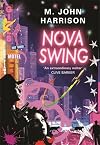
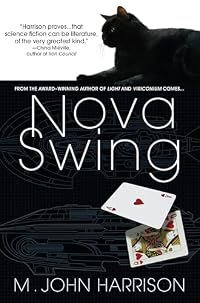
It is some time after Ed Chianese's trip into the Kefahuchi Tract. A major industry of the Halo is now tourism. The Tract has begun to expand and change, but, more problematically, parts of it have also begun to fall to earth, piecemeal, on the Beach planets. We are in a city, perhaps on New Venusport or Motel Splendido: next to the city is the event site, the zone, from out of which pour new, inexplicable artefacts, organisms and escapes of living algorithm - the wrong physics loose in the show more universe. They can cause plague and change. An entire department of the local police, Site Crime, exists to stop them being imported into the city by adventurers, entradistas, and the men known as 'travel agents', profiteers who can manage - or think they can manage -the bad physics, skewed geographies and psychic onslaughts of the event site. But now a new class of semi-biological artefact is finding its way out of the site, and this may be more than anyone can handle. show lessTags
Recommendations







Member Reviews
Found this a bit if a slog, to be honest. Not sure why. I quite like Harrison, and he seems a good fit after a Mieville. This is the science fiction novel as mood piece, a piece of improvised jazz noir - I think it says that somewhere on the cover. The space-port setting is amazingly atmospheric, the surreal but ultimately meaningless labyrinth like something out of Borges provides a sort of abstract null attractor at the book's centre, a void of meaning that replicates the moral void at the heart of noir. The writing is cool and clipped, shiny and sharp as diamonds, like something uttered laconically from the corner of the mouth of a PI poet staking out a street corner or holding up a bar nursing his drinks and his scars. Kinda show more brilliant really, even if it took me a while to get in the mood. show less
Harrison's strategy for dealing with the perennial "second volume in the trilogy" challenge doesn't come clear until very near the end, but fortunately, the build up to that moment when we say "Oh, riiiight, now I see where we've been going -- and, maybe, where we're going from here" is never less than entertaining, if at times a little confusing.[return][return]I'd like to reread this, one day soon -- having also reread Light, the first novel in the Kefahuchi Tract Trilogy. I told myself, as I started on this, that it wasn't necessary to remember the fine points of Light, as this is set some time in the future (why do I think it's as much as 400 years? Am I making that up?) from the first novel, and the only references to the show more characters and events of that novel are unreliable memories and sidelong glances. But by the end, I began to realize that I might have been wrong, and I might get a better, more satisfying handle on the events of this novel if I'm clearer on how (to mis-quote Gladiator, which I am always happy to do) what we do in one life will echo in the next.[return][return]With all that in mind, a few random observations:[return][return]I LOVE Saudade. Harrison's world-building is never less than clever and convincing, in a weird, over the top sort of way. If you have to live in a city that has been blighted by being on the edge of the incursion of a spooky, reality-bending alien site, you want it to be Saudade.[return][return]I love Harrison's causal knowledgeableness of classic SF and fantasy. I probably missed 90% of his off-hand references, but the 10% of those I caught made life worth living .... Just one (page 142 of my edition): The night's weather pursued him from bar to bar, The World of Today to The Breakaway Station, lacquering his hair across his reddened face ...[return][return]Two pages later, he mentions a tour ship heading off to "The Planet of the Alphane Moons." I love you, M. John Harrison. [return][return]I don't love that my friend M. John can be a little, hmmm, withholding, plot point-wise. Obviously, what's going on between small-time crook Vic Serotonin, Detective Lens Aschemann, and crime kingpin Paulie DeRaad (Do you love the names? If you don't, you are dead to me ...) is the McGuffin of all McGuffins (until it's not ...), but I have to confess that I was a bit startled when I realized that the crime Aschemann is investigating is actually a serial killer, with a very distinctive MO. Might have been told that a bit earlier, I think ... [return][return]I adore the references and allusions to The Strugatsky Brothers' Roadside Picnic. Even if it wasn't anything more than a wonderful tribute to one of my favorite novels (and it is, it is ...), it brilliantly takes the ideas developed by the Strugatskys from 1970s Soviet Union to the world of today. show less
’Nova Swing’ puede considerarse como una extraña secuela de ‘Luz’, ambas ambientadas en el universo del Canal Kefahuchi. La novela transcurre en Saudade, zona en la que cayó parte de dicho canal, y que ha dado lugar a una singularidad espacio-temporal donde las leyes de la física se han visto alteradas, y en cuyo interior pueden encontrarse artefactos, tecnologías y organismos de origen extraterrestre (aunque esto se supone). Es aquí donde entra en juego Vic Serotonina, una especie de recuperador, que trabaja como guía y traficante de estos elementos. Pero nunca se sabe qué se va a encontrar uno cuando se adentra en el Solar, en esta zona prohibida. Puede ser desde algo maravilloso, hasta algo de pesadilla. Aquí es donde show more interviene Delitos del Solar, digamos que la policía que se encarga de que nadie se adentre y pueda extraer cualquier objeto contaminante.
La novela de M. John Harrison es una historia coral ambientada en un futuro lejano, que propone un escenario totalmente fascinante. A lo largo de la narración, iremos conociendo a una serie de personajes y las relaciones que se establecen entre ellos, siendo lo más interesante su apreciable evolución. Como es habitual en la prosa de Harrison, esta es excelente, quedando la historia supeditada a los personajes y no tanto al trasfondo de la misma. Como si de un puzzle se tratase, el lector debe ir encajando las piezas, quedando ciertas partes de la narración a merced de su imaginación. Esto hace que la lectura de la novela no sea precisamente fácil, aunque sí existe un hilo conductor más patente que en ‘Luz’, que le da un aire de novela negra más que interesante.
Lo que más me ha gustado de ’Nova Swing’ es la atmósfera evocadora que logra transmitir, hasta cierto punto decadente y opresiva, que me ha recordado a las novelas de Viriconium. Es una lectura exigente, que gustará a los que ya conozcan a M. John Harrison, aunque no la recomendaría a todo el mundo. show less
La novela de M. John Harrison es una historia coral ambientada en un futuro lejano, que propone un escenario totalmente fascinante. A lo largo de la narración, iremos conociendo a una serie de personajes y las relaciones que se establecen entre ellos, siendo lo más interesante su apreciable evolución. Como es habitual en la prosa de Harrison, esta es excelente, quedando la historia supeditada a los personajes y no tanto al trasfondo de la misma. Como si de un puzzle se tratase, el lector debe ir encajando las piezas, quedando ciertas partes de la narración a merced de su imaginación. Esto hace que la lectura de la novela no sea precisamente fácil, aunque sí existe un hilo conductor más patente que en ‘Luz’, que le da un aire de novela negra más que interesante.
Lo que más me ha gustado de ’Nova Swing’ es la atmósfera evocadora que logra transmitir, hasta cierto punto decadente y opresiva, que me ha recordado a las novelas de Viriconium. Es una lectura exigente, que gustará a los que ya conozcan a M. John Harrison, aunque no la recomendaría a todo el mundo. show less
If I wasn't already gratefully familiar with the style of M. John Harrison, and you gave me this book to read without attribution, my guess at the author would be R.A. Lafferty (which is high praise from me) -- with perhaps a dash of William S. Burroughs. Nova Swing is a sequel to Harrison's Light, but there's little connection of plot or character: they share a 25th-century setting in the interstellar space of the "Beach" near the Kefahuchi Tract, an anomalous zone of cosmic and alien enigmas. Still, Harrison is not one for superfluous exposition, and his highly allusive approach makes the prior orientation of the first book useful for reading the second.
The noir elements in Light are more central in Nova Swing, and the overall gist show more is less epochal (which is not to underrate the intimacy of the first book). A central conceit is the idea of "site crime," because an unexplained event of alien life/technology/reality in the city of Saudade has created a site which is terrifyingly transformative of human perception and being. It seems to be to the 25th century what recreational drugs were to the 20th century. People come to it for thrills, danger, enlightenment, and self-annihilation. Naturally, the civil authorities organize to repress and contain it. Inevitably, they have little success.
As with its predecessor, this is not a book that can brag about its accessibility. There were definitely stretches of the novel where I wondered if it was really going to tell a story, or if it was just pushing characters around and making aesthetic impressions. The whole thing really came together in the last few chapters, though. show less
The noir elements in Light are more central in Nova Swing, and the overall gist show more is less epochal (which is not to underrate the intimacy of the first book). A central conceit is the idea of "site crime," because an unexplained event of alien life/technology/reality in the city of Saudade has created a site which is terrifyingly transformative of human perception and being. It seems to be to the 25th century what recreational drugs were to the 20th century. People come to it for thrills, danger, enlightenment, and self-annihilation. Naturally, the civil authorities organize to repress and contain it. Inevitably, they have little success.
As with its predecessor, this is not a book that can brag about its accessibility. There were definitely stretches of the novel where I wondered if it was really going to tell a story, or if it was just pushing characters around and making aesthetic impressions. The whole thing really came together in the last few chapters, though. show less
I had slightly higher expectations for this novel simply because I was blown away by all the awesome ideas that he managed to stuff into [b:Light|17735|Light (Empty Space Trilogy #1)|M. John Harrison|https://d.gr-assets.com/books/1389700041s/17735.jpg|295250], and don't get me wrong, he continues the trend beautifully and a lot more cohesively from Vic's PoV, a travel agent that sometimes takes chumps to the Kefahuchi Tract, or at least to what has become of it after it descended to, and transformed, huge portions of Earth.
To be clear, this means that the laws of what should or should not be possible have been temporarily suspended in this area, and it also means that this novel has firmly slotted itself into the category of the New show more Weird.
A lot happens, just as many ideas are paraded about in awesome strangeness, including K-Ship tech on the surface of the planet in the hands of shop owners, of semi-intelligent tattoos, the need for rickshaws, and some of the funniest juxtapositions of gene-splicing technology for the marks that I've read, including transforming yourself to have the beauty of an old Einstein, because peeps in the 25th century just don't understand certain things... they should be going after his BRAINS... Not his LOOKS... lol
And this is also a mystery. The murders are still going on and it harkens straight back to the first novel and the odd end we got.
But most of all, with all the sex and the dreams and all the sheer naked desire for something more being displayed on everyone's scenes, it's also good commentary. About them. Not us. We certainly look nothing like that, do we?
Still, as much as I love so much of what's going on here, I wasn't quite as invested in these characters as I should have been, and that's despite the great line, "After all, no one has ever given a fuck about a fat man named Anton." I mean, truly, in a line-by line exploration of the novel, it's rich, rich, rich and literary. It makes me think and wonder and glory in the use of the language. It's truly a step up from normal SF. The mystery is a sight more accomplished and interesting that most, and that's merely because the setting was so damn well fleshed out. :)
Still, I have to wonder if the incidentals and the world-building might have been just a tad too strong in its flavors and it drowned out the taste of Vic's story. I mean, not to spoil anything here, he stops being a travel agent, and that's probably a good thing since everybody and their fat dog either wants to betray him or just went ahead and did it, and it's really not safe back at home, anyway. When it comes to themes, it's fine, it's good, and it's right, but I wonder if the plot might have been served better by something a bit more SATISFYING and MEATY, you know?
I complain. But I really ought to point out that the sheer weight of idea awesomeness in this series, so far, far outweighs six out of seven SF novels on the market. I complain about characters, while everything else happens to be freakily awesome. :) I just feel like it missed an opportunity. Or perhaps the intent wasn't quite that satisfying for me so it never would have won with me. *sigh* show less
To be clear, this means that the laws of what should or should not be possible have been temporarily suspended in this area, and it also means that this novel has firmly slotted itself into the category of the New show more Weird.
A lot happens, just as many ideas are paraded about in awesome strangeness, including K-Ship tech on the surface of the planet in the hands of shop owners, of semi-intelligent tattoos, the need for rickshaws, and some of the funniest juxtapositions of gene-splicing technology for the marks that I've read, including transforming yourself to have the beauty of an old Einstein, because peeps in the 25th century just don't understand certain things... they should be going after his BRAINS... Not his LOOKS... lol
And this is also a mystery. The murders are still going on and it harkens straight back to the first novel and the odd end we got.
But most of all, with all the sex and the dreams and all the sheer naked desire for something more being displayed on everyone's scenes, it's also good commentary. About them. Not us. We certainly look nothing like that, do we?
Still, as much as I love so much of what's going on here, I wasn't quite as invested in these characters as I should have been, and that's despite the great line, "After all, no one has ever given a fuck about a fat man named Anton." I mean, truly, in a line-by line exploration of the novel, it's rich, rich, rich and literary. It makes me think and wonder and glory in the use of the language. It's truly a step up from normal SF. The mystery is a sight more accomplished and interesting that most, and that's merely because the setting was so damn well fleshed out. :)
Still, I have to wonder if the incidentals and the world-building might have been just a tad too strong in its flavors and it drowned out the taste of Vic's story. I mean, not to spoil anything here, he stops being a travel agent, and that's probably a good thing since everybody and their fat dog either wants to betray him or just went ahead and did it, and it's really not safe back at home, anyway. When it comes to themes, it's fine, it's good, and it's right, but I wonder if the plot might have been served better by something a bit more SATISFYING and MEATY, you know?
I complain. But I really ought to point out that the sheer weight of idea awesomeness in this series, so far, far outweighs six out of seven SF novels on the market. I complain about characters, while everything else happens to be freakily awesome. :) I just feel like it missed an opportunity. Or perhaps the intent wasn't quite that satisfying for me so it never would have won with me. *sigh* show less
In preparation for reading Nova Swing, I re-read Light, since this book takes place in the same "universe." And I'd completely forgotten what Light was about. Light made more sense the second time around, though there are some things that seem to be deliberately left unexplained, which I find annoying. For example, many times the book references the "Tate-Kearney equations", and we see Tate and Kearney in the present-day section, but Harrison never shows us the moment they make their momentous discovery. Their equation apparently enables FTL travel, so it seems like rather a big deal. But all we are shown is the bizarre relationship between Tate and Kearney dissolving. And then Tate himself dissolves...weird. Did the equations do that show more to him? It's not clear. Clarity is replaced by implication, suggestion, and atmosphere in Harrison's work. So if you just read along and just keep driving when you hit those logical speed bumps, you'll be fine. Another example I have to mention is the Shadow Operators. What are they? They're amusing, but we have absolutely NO IDEA what they are, and yet here are again Nova Swing, and Harrison still refuses to give us even a clause's worth of explanation. Just a few words would do.
Anyway, this is turning out to be a review of both Light and Nova Swing, but mostly Light, since I read it twice and only got halfway through NS before returning it to the library unfinished. Though these books are in the same universe, they really have little to do with each other. On top of that, they are each different sub-genres of SF. Light is an attempt to mix mainstream realism with SF, sort of like if Iain Banks had taken writing lessons from Raymond Carver. For his next outing, Harrison apparently thought he'd mix up SF with Noir. The result was not nearly as successful, reading more like Guy Noir, Private Eye than Hammett. When Harrison uses (apparently without irony) the line "he was all over it like a cheap suit," I closed the book. This is a cartoon, not a novel. If the author isn't going to take his work seriously, why should I? He's just playing around.
One final note: people seem to throw up at the drop of a hat in this guy's books. What's up with that? I mean, like every other page, someone is losing their lunch, and usually you have no idea why. show less
Anyway, this is turning out to be a review of both Light and Nova Swing, but mostly Light, since I read it twice and only got halfway through NS before returning it to the library unfinished. Though these books are in the same universe, they really have little to do with each other. On top of that, they are each different sub-genres of SF. Light is an attempt to mix mainstream realism with SF, sort of like if Iain Banks had taken writing lessons from Raymond Carver. For his next outing, Harrison apparently thought he'd mix up SF with Noir. The result was not nearly as successful, reading more like Guy Noir, Private Eye than Hammett. When Harrison uses (apparently without irony) the line "he was all over it like a cheap suit," I closed the book. This is a cartoon, not a novel. If the author isn't going to take his work seriously, why should I? He's just playing around.
One final note: people seem to throw up at the drop of a hat in this guy's books. What's up with that? I mean, like every other page, someone is losing their lunch, and usually you have no idea why. show less
Harrison is an author who more often than not makes you work to figure out what’s happening, rather than simply telling you what’s happening. This typically makes for slow and engaged reading, with a payoff which has just about always worth the effort. In his books it often feels like, just as you’re getting a handle on the strange world he’s created, important things mutate in surprising ways.
Having said that, Nova Swing is the easiest to follow of the several of his books that I have read to date. It is more conventional in construction and offers a reasonably straightforward plot. Which is not to deny that it’s a story about bizarre characters in a bizarre setting doing bizarre things. As with everything I’ve read from show more this author, what plot there is takes a back seat to imagery and atmosphere and characterization. Vic Serotonin and Lens Aschemann are the two most interesting of a varied and sympathetic cast of characters.
This book owes an obvious debt to the Brothers Strugatsky’s memorable novel Roadside Picnic. show less
Having said that, Nova Swing is the easiest to follow of the several of his books that I have read to date. It is more conventional in construction and offers a reasonably straightforward plot. Which is not to deny that it’s a story about bizarre characters in a bizarre setting doing bizarre things. As with everything I’ve read from show more this author, what plot there is takes a back seat to imagery and atmosphere and characterization. Vic Serotonin and Lens Aschemann are the two most interesting of a varied and sympathetic cast of characters.
This book owes an obvious debt to the Brothers Strugatsky’s memorable novel Roadside Picnic. show less
Members
- Recently Added By
Lists

Noirvember: The Best Noir
113 works; 56 members

New Weird Fiction
69 works; 12 members

Arthur C. Clarke Award Winners and Shortlisted Books
219 works; 14 members
Author Information

85+ Works 9,723 Members
Some Editions
Awards and Honors
Awards
Series

Work Relationships
Is contained in
Common Knowledge
- Canonical title
- Nova Swing
- Original publication date
- 2006-11
- People/Characters
- Vic Serotonin
- Epigraph
- 'The further into the Zone the nearer to Heaven.'
Boris & Arkady Strugatsky, Roadside Picnic
'Nostelgia and science fiction are spookily close.'
A.A. Gill, Sunday Times
'Our lives are more like fragmentary dreams than the enactment of conscious selves.'
John Gray, Straw Dogs - Dedication
- To Lara, Julian and Dan
- First words
- Vic Serotonin sat in a bar on Straint Street, just outside the aureole of the Saudade event, in conversation with a fat man from another planet called Antoyne.
- Blurbers
- Barker, Clive; Banks, Iain M.
Classifications
Statistics
- Members
- 750
- Popularity
- 37,208
- Reviews
- 31
- Rating
- (3.49)
- Languages
- 8 — English, Finnish, French, German, Italian, Polish, Romanian, Spanish
- Media
- Paper, Audiobook, Ebook
- ISBNs
- 17
- ASINs
- 8