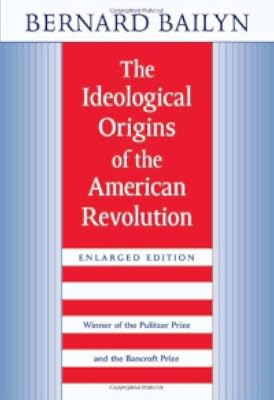
The Ideological Origins of the American Revolution
by Bernard Bailyn
On This Page
Description
The Ideological Origins of the American Revolution is a classic of American historical literature--required reading for understanding the Founders' ideas and their struggles to implement them. In the preface to this 50th anniversary edition, Bernard Bailyn isolates the Founders' profound concern with the uses and misuses of power.--Tags
Recommendations






Member Reviews
Summary: A study of the ideas conveyed through pamphlets that led to the revolution of the colonies against England.
The original edition of this work, published in 1967, won both Pulitzer and Bancroft Prizes for Harvard historian Bernard Bailyn. What Bailyn does is to study the literature that preceded the revolution, much of it in pamphlets ranging from the more religiously based ones of Jonathan Mayhew to the more radical Thomas Paine. He identifies key themes that led to conflict and the Declaration of Independence.
Much of this was rooted in British pamphleteers including John Trenchard and Thomas Gordon, who protested what they saw as corruption in which royal ministers usurped the power of parliament. It was framed as a conflict of show more power versus liberty. The colonists began to seem themselves caught up in this conspiracy of power versus liberty, exemplified when the British quartered troops in Boston. Indeed, this conspiracy thinking, mirrored by the British acquired a kind of inevitability that led ineluctably to conflict. In one of his most sobering passages for our present moment, Bailyn writes:
“But the eighteenth century was an age of ideology; the beliefs and fears expressed on one side of the Revolutionary controversy were as sincere as those expressed on the other. The result, anticipated by Burke as early as 1769, was an ‘escalation’ of distrust toward a disastrous deadlock: ‘The Americans,’ Burke said, ‘have made a discovery, or think they have made one, that we mean to oppress them: we have made a discovery, or think we have made one, that they intend to rise in rebellion against us. . . we know not how to advance; they know not how to retreat. . . Some party must give way.’ “
The colonists took this basic opposition of liberty to power and transformed it to fit their context. Their cry of “taxation without representation” was a protest against the purported virtual representation they received in Parliament, in which measures could be decided in which they had no voice. Likewise, they challenged the abstract constitution of sovereign and Parliament, contending for a written constitution that clearly set the boundaries of government. Finally, in a colonial situation far removed from Parliament, they challenged its absolute authority, especially in matters of “internal” versus “external” taxes.
Bailyn then concludes with showing how this “contagion of liberty” spread to concerns about slavery, religious liberty, and the shape of their government, the idea of a democratic republic–one with no sovereign. Bailyn discusses the early deliberations including the fears that democracy could easily degenerate into anarchy, the developments of the ideas of bicameral legislatures, an executive, and of independent courts–designed to protect against both autocrats and anarchy.
Bailyn helps us understand not only the ideas that led to revolution but that led to how we constituted the United States, and the concern to uphold liberty against both absolute power and absolute disorder. It seems to me that what the early thinkers failed to anticipate was the partisan abyss that has developed that exacerbates the inefficiencies of a democratic republic resulting in a descent into disorder matched by the appeal of an authoritarian government that works. Ben Franklin, at the conclusion of the Constitutional Convention was asked, “What kind of government have you given us?” Franklin replied, “A democracy, if you can keep it.” The question of our day seems to be “will we keep it?” Bailyn’s book can’t answer that for us, but it does trace the ideological heritage that led to the inception of our democratic republic. show less
The original edition of this work, published in 1967, won both Pulitzer and Bancroft Prizes for Harvard historian Bernard Bailyn. What Bailyn does is to study the literature that preceded the revolution, much of it in pamphlets ranging from the more religiously based ones of Jonathan Mayhew to the more radical Thomas Paine. He identifies key themes that led to conflict and the Declaration of Independence.
Much of this was rooted in British pamphleteers including John Trenchard and Thomas Gordon, who protested what they saw as corruption in which royal ministers usurped the power of parliament. It was framed as a conflict of show more power versus liberty. The colonists began to seem themselves caught up in this conspiracy of power versus liberty, exemplified when the British quartered troops in Boston. Indeed, this conspiracy thinking, mirrored by the British acquired a kind of inevitability that led ineluctably to conflict. In one of his most sobering passages for our present moment, Bailyn writes:
“But the eighteenth century was an age of ideology; the beliefs and fears expressed on one side of the Revolutionary controversy were as sincere as those expressed on the other. The result, anticipated by Burke as early as 1769, was an ‘escalation’ of distrust toward a disastrous deadlock: ‘The Americans,’ Burke said, ‘have made a discovery, or think they have made one, that we mean to oppress them: we have made a discovery, or think we have made one, that they intend to rise in rebellion against us. . . we know not how to advance; they know not how to retreat. . . Some party must give way.’ “
The colonists took this basic opposition of liberty to power and transformed it to fit their context. Their cry of “taxation without representation” was a protest against the purported virtual representation they received in Parliament, in which measures could be decided in which they had no voice. Likewise, they challenged the abstract constitution of sovereign and Parliament, contending for a written constitution that clearly set the boundaries of government. Finally, in a colonial situation far removed from Parliament, they challenged its absolute authority, especially in matters of “internal” versus “external” taxes.
Bailyn then concludes with showing how this “contagion of liberty” spread to concerns about slavery, religious liberty, and the shape of their government, the idea of a democratic republic–one with no sovereign. Bailyn discusses the early deliberations including the fears that democracy could easily degenerate into anarchy, the developments of the ideas of bicameral legislatures, an executive, and of independent courts–designed to protect against both autocrats and anarchy.
Bailyn helps us understand not only the ideas that led to revolution but that led to how we constituted the United States, and the concern to uphold liberty against both absolute power and absolute disorder. It seems to me that what the early thinkers failed to anticipate was the partisan abyss that has developed that exacerbates the inefficiencies of a democratic republic resulting in a descent into disorder matched by the appeal of an authoritarian government that works. Ben Franklin, at the conclusion of the Constitutional Convention was asked, “What kind of government have you given us?” Franklin replied, “A democracy, if you can keep it.” The question of our day seems to be “will we keep it?” Bailyn’s book can’t answer that for us, but it does trace the ideological heritage that led to the inception of our democratic republic. show less
The road to the writing of this Pulitzer Prize winning book began when Bailyn was asked to prepare a collection of pamphlets of the American Revolutionary War era. In doing so he began to see connections, common sources, and particularly how the American colonial experience transformed a strand of British libertarian opposition thought into a uniquely American ideology that caused an intellectual revolution as to the basis for sovereignty, rights and representation and consent that led not only to the colonies declaring independence but shaped our constitution and led to the undermining of slavery, the disestablishment of religion and an entirely new and radical social relationship.
I have my doubts that a general readership would find show more this book interesting: although I sure did. But for someone who has enough interest in American political thought this is illuminating. I have to concur with the New York Times reviewer who said that one "cannot claim to understand the American Revolution without reading this book." Or at least, it would be much harder: you'd have to undertake the same study Bailyn did and read thousands of 18th century pamphlets--which would be formidable enough.
The book is logically organized and lucidly written and I found that even for someone like myself who thought I knew a lot about the founding, who has read Thomas Paine's Common Sense and Thomas Jefferson's Declaration of Independence and Hamilton, Madison and Jay's Federalist Papers there are some surprises. I took for granted the influence of Enlightenment thinkers such as Locke, it's not really surprising to learn that a tradition of covenant theology was one strand of thinking nor classical Latin works of or about the Roman republic such as by Cicero, Livy and Tacitus. It was a bit surprising to learn the British common law tradition had a large part in this political thinking--but particularly surprising was learning the role of relatively obscure opposition Whig writers. And Bailyn also examines how the practical experience of colonial government, from charters to town halls to provincial legislatures shaped the way the founders saw and used this legacy to create a new kind of government. If you want to go deeper into the foundation of American political thought, I'd say this book is invaluable. show less
I have my doubts that a general readership would find show more this book interesting: although I sure did. But for someone who has enough interest in American political thought this is illuminating. I have to concur with the New York Times reviewer who said that one "cannot claim to understand the American Revolution without reading this book." Or at least, it would be much harder: you'd have to undertake the same study Bailyn did and read thousands of 18th century pamphlets--which would be formidable enough.
The book is logically organized and lucidly written and I found that even for someone like myself who thought I knew a lot about the founding, who has read Thomas Paine's Common Sense and Thomas Jefferson's Declaration of Independence and Hamilton, Madison and Jay's Federalist Papers there are some surprises. I took for granted the influence of Enlightenment thinkers such as Locke, it's not really surprising to learn that a tradition of covenant theology was one strand of thinking nor classical Latin works of or about the Roman republic such as by Cicero, Livy and Tacitus. It was a bit surprising to learn the British common law tradition had a large part in this political thinking--but particularly surprising was learning the role of relatively obscure opposition Whig writers. And Bailyn also examines how the practical experience of colonial government, from charters to town halls to provincial legislatures shaped the way the founders saw and used this legacy to create a new kind of government. If you want to go deeper into the foundation of American political thought, I'd say this book is invaluable. show less
Historian Bernard Bailyn’s Pulitzer-winning history of the ideology behind the American Revolution was the culmination of extensive work on a different project. Bailyn had accepted a request to compile a selection of pamphlets of the Revolutionary era for publication. In the process of collecting, selecting, and organizing the pamphlets, Bailyn absorbed their contents. A systematic study of the pamphlet literature would produce a different understanding of the political ideology of the American colonists than a piecemeal study of the same literature. Although the pamphlets and their authors are two and a half centuries old, the themes are still relevant to contemporary politics.
Contrasts other histories of the American Revolution (from Charles Beard onwards) which posit that the AR was solely an economic struggle of the landed gentry against taxes.
Textual analysis of pamphlets, which were popular during the pre-revolutionary era. These were not as well-written as their English contemporaries Swift or Addison or Defoe, but they were popular and influential among colonial citizens, and that's what counted.
First, Bailyn begins with ideological and historical analysis. These pamphlets have a large number of references to classical authors (Livy, Polybius, Plutarch, Cicero) on an ideal Republic, but also to the thought of the Enlightenment (Locke, Rousseau).
The main body of the argument is the struggle of Power show more vs. Liberty in early thought, and external vs. internal rule, more clearly defined powers and roles of government, and later the idea of popular sovereignty. Too much power lead to a tyrannical system, and too much liberty leads to anarchy, so the proper balance is between them both.
He also expands upon the early colonial belief in 'conspiracies' of corrupt ministers and the extractive colonial bureaucracy as a pretext for freedom. Once the revolution was accomplished, however, the catchy phrases of 'liberty' and 'personal freedom' expanded into new spheres, and shortly after, there were already heated discussions on abolition.
A contrarian view, but an interesting and well thought-out one. show less
Textual analysis of pamphlets, which were popular during the pre-revolutionary era. These were not as well-written as their English contemporaries Swift or Addison or Defoe, but they were popular and influential among colonial citizens, and that's what counted.
First, Bailyn begins with ideological and historical analysis. These pamphlets have a large number of references to classical authors (Livy, Polybius, Plutarch, Cicero) on an ideal Republic, but also to the thought of the Enlightenment (Locke, Rousseau).
The main body of the argument is the struggle of Power show more vs. Liberty in early thought, and external vs. internal rule, more clearly defined powers and roles of government, and later the idea of popular sovereignty. Too much power lead to a tyrannical system, and too much liberty leads to anarchy, so the proper balance is between them both.
He also expands upon the early colonial belief in 'conspiracies' of corrupt ministers and the extractive colonial bureaucracy as a pretext for freedom. Once the revolution was accomplished, however, the catchy phrases of 'liberty' and 'personal freedom' expanded into new spheres, and shortly after, there were already heated discussions on abolition.
A contrarian view, but an interesting and well thought-out one. show less
Through pamphlets and other written documents, Bailyn explores the ideas percolating in the American colonies—about the legitimate basis of authority, the nature of representation (whether it was local or general in nature, and thus whether an elected representative was supposed to work for the general good), and the appropriate division between king and legislature. Bailyn emphasizes that a lot of the men who ultimately became revolutionaries didn’t have a particularly well-worked out theory, but that they pushed theory in the direction of their concrete thinking about disobedience.
A thoughtful and insightful review of pre- and post-revolution literature to discern the ideologies underlying the revolution. The book started with a cataloging of pamphlets, broadsides and newspapers of the era. This major effort is a very well documented explanation of the arguments pro and con of an almost exhaustible list of topics. Much of the book is from quotations of the sources examined and the footnotes are voluminous and detailed. He examines the theories of governance, religion, economics, trade, and topics like slavery, royalty and the duty of man to God (as it relates to living in a commonly governed community). For anyone who has studied American history there is not much new here in terms of the substantive arguments; show more however, the close and tight analysis of the extant literature was a phenomenal effort, deserving of respect, admiration and utmost credibility of its intellectual (and actual) honesty.
This book is still very relevant as it touches on topics of governance which will always be pertinent. Many of the ideas and topics deserve more study and discussion now. Ideas such as term limits, responsiveness to the common good, preference to those with great wealth, and the privileges of the "nobility" are all relevant today as they were in the 1700's and indeed in ancient times.
Many references to early writers on government are mostly lost on us except for the pure academics of today. A reminder that we need to hear from upper level professors and heed them more than have in recent generations (IMHO). show less
This book is still very relevant as it touches on topics of governance which will always be pertinent. Many of the ideas and topics deserve more study and discussion now. Ideas such as term limits, responsiveness to the common good, preference to those with great wealth, and the privileges of the "nobility" are all relevant today as they were in the 1700's and indeed in ancient times.
Many references to early writers on government are mostly lost on us except for the pure academics of today. A reminder that we need to hear from upper level professors and heed them more than have in recent generations (IMHO). show less
_Ideological Origins of the American Revolution_ examines the transformation of political theory in Revolutionary America (gathered from publications, speeches, and pamphlets)into the writing of the Constitution. Bailyn uses Whig Histories and colonial writings to argue his point that the revolutionary history far proceeded the outbreak of actual war. He looks at the spread of common law and Enlightenment thought from post-Civil War England to the Colonies prior to 1760.
The book is not an easy read for those unfamiliar with the basic concepts of English common law or the pre-revolutionary writings of the American colonists. It is, however, a very thorough look at the political leanings and expectations of "Englishmen" in the colonies show more who felt their version of the "English law" differed significantly from that experienced in the mother country. A good read for scholars of the American Revolution, Constitutional law, or examination of the foundations of the country. show less
The book is not an easy read for those unfamiliar with the basic concepts of English common law or the pre-revolutionary writings of the American colonists. It is, however, a very thorough look at the political leanings and expectations of "Englishmen" in the colonies show more who felt their version of the "English law" differed significantly from that experienced in the mother country. A good read for scholars of the American Revolution, Constitutional law, or examination of the foundations of the country. show less
Members
- Recently Added By
Lists

Best U.S. History Books (1754-1828)
363 works; 18 members

r/AskHistorians' Recommended Books
1,068 works; 19 members

Bibliography of New World Utopias by Paul Kagan
53 works; 2 members

Mustich's 1000 Books to Read Before You Die: A Life Changing List
1,001 works; 20 members

Bibliography of How the Old World Ended by Jonathan Scott
308 works; 1 member
Author Information

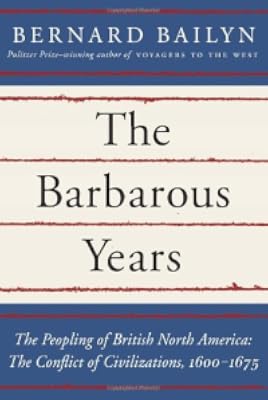
Bernard Bailyn was born in Hartford, Connecticut, in 1922, and did his undergraduate work at Williams College. He began his teaching career at Harvard University immediately after the university granted him a Ph.D. in 1953, and he remained there until he retired in 1991. During his tenure at Harvard, he was Winthrop Professor, Adams University show more Professor, and James Duncan Phillips Professor of Early American History. For years Bailyn was editor in chief of the Harvard Library and director of the Charles Warren Center for Studies in American History. An innovative and influential historian of early America, Bernard Bailyn has written quantitative studies of the colonial New England economy, probing examinations of the ideological origins of the American Revolution, and penetrating studies of the social and cultural foundations of American education. Bailyn is particularly adept at interweaving social, intellectual, economic, and political factors into coherent narrative history. A pioneer in adapting the new tools of social science to the writing of history, he is also a fine literary stylist. Bailyn has been Pitt Professor at Cambridge University and president of the American Historical Association. He holds membership in the American Academy of Arts and Sciences and in the British Academy. His writings have earned him the Bancroft Prize and the National Book Award. Bailyn received two Pulitzers-one in 1968 for The Ideological Origins of the American Revolution (1967), which challenges traditional interpretations of the causes of the American Revolution, and the other in 1987 for Voyagers to the West (1986), which explores reasons for migration to America just prior to the Revolution. His other work includes The Barbarous Years (2013) and Illuminating History: A Retrospective of Seven Decades (2020). Bernard Bailyn, author of over 20 books, died on August 7, 2020 at the age of 97. (Bowker Author Biography) show less
Some Editions
Awards and Honors
Awards
Notable Lists
Series
Belongs to Publisher Series
Common Knowledge
- Canonical title*
- Les origines idéologiques de la Révolution américaine
- Original title
- The ideological origins of the American revolution
- Original publication date
- 1967
- People/Characters
- John Adams; Richard Bland; John Dickinson; Thomas Hutchinson; Thomas Jefferson; Jonathan Mayhew (show all 8); James Otis; John Trenchard
- Important places
- USA
- Important events
- American Revolution (1775 | 1783)
- Epigraph
- What do we mean by the Revolution? The war? That was no part of the Revolution; it was only an effect and consequence of it. The Revolution was in the minds of the people, and this was effected, from 1760 to 1775, in the cour... (show all)se of fifteen years before a drop of blood was shed at Lexington. The records of thirteen legislatures, the pamphlets, newspapers in all the colonies, ought to be consulted during that period to ascertain the steps by which the public opinion was enlightened and informed concerning the authority of Parliament over the colonies. - John Adams to Jefferson, 1815
- First words
- Whatever deficiencies the leaders of the American Revolution may have had, reticence, fortunately, was not one of them.
- Last words
- (Click to show. Warning: May contain spoilers.)It was only where there was this defiance, this refusal to truckle, this distrust of all authority, political or social, that institutions would express human aspirations, not crush them.
- Original language
- English
*Some information comes from Common Knowledge in other languages. Click "Edit" for more information.
Classifications
- Genres
- History, Nonfiction, General Nonfiction, Politics and Government, Philosophy
- DDC/MDS
- 320.50973 — Society, government, & culture Political science Types of Government Political ideologies Political ideologies Biography And History North America United States
- LCC
- JA84 .U5 .B3 — Political Science Political science (General) Political science (General) History
- BISAC
Statistics
- Members
- 1,443
- Popularity
- 16,375
- Reviews
- 18
- Rating
- (4.21)
- Languages
- 5 — English, French, Spanish, Portuguese (Portugal), Portuguese (Brazil)
- Media
- Paper, Audiobook, Ebook
- ISBNs
- 14
- ASINs
- 19