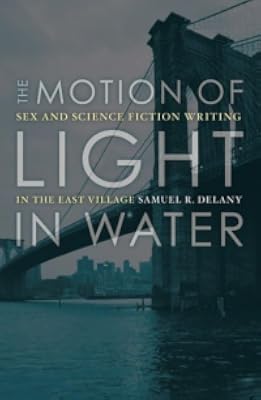
The Motion of Light in Water: Sex and Science Fiction Writing in the East Village {revised}
by Samuel R. Delany
On This Page
Description
Born in New York City's black ghetto Harlem at the start of World War II, Samuel R. Delany married white poet Marilyn Hacker right out of high school. The interracial couple moved into the city's new bohemian quarter, the Lower East Side, in summer 1961. Through the decade's opening years, new art, new sexual practices, new music, and new political awareness burgeoned among the crowded streets and cheap railroad apartments. Beautifully, vividly, insightfully, Delany calls up this era of show more exploration and adventure as he details his development as a black gay writer in an open marriage, with tertiary walk-ons by Bob Dylan, Stokely Carmichael, W. H. Auden, and James Baldwin, and a panoply of brilliantly drawn secondary characters. Winner of the 1989 Hugo Award for Non-fiction show lessTags
Recommendations



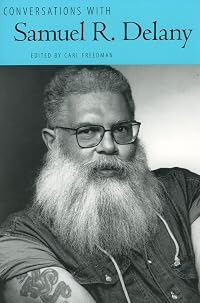



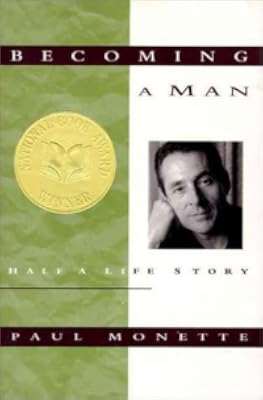











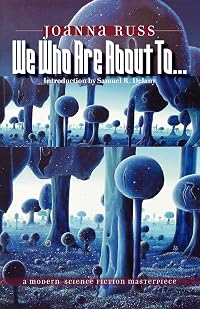

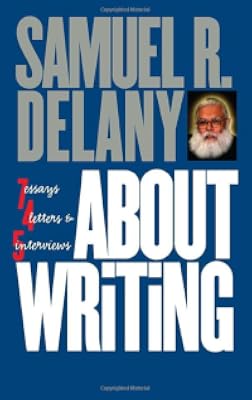



Member Recommendations
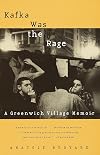
wifilibrarian This book reminded me of this, three people finding happiness.
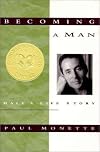
aulsmith Monette was just a little older than Delany, but the marked difference in their coming out and their growth as writers says much about the times they lived in.
Member Reviews
A fascinating memoir of Delany's early years, focussing on the period from 1961-1966 when he was living in a poor district of New York City, married to his schoolfriend and writing partner the poet Marilyn Hacker, singing folk-music in coffee houses, getting started as a published science-fiction writer, and making the most of the many opportunities that the city offered for casual gay sex (the Trucks, the Baths, the Rambles, ...). In between times, we also hear quite a lot about his middle-class black childhood in Harlem. He came from a distinguished family, with a grandfather who became the first black Episcopalian bishop in the US, and aunts and uncles who were practically all civil rights pioneers.
Delany mocks the tendency of show more memoirists to drop names, but he still manages to slip quite a few in himself, even if most of them are ironically elusive contacts: Einstein helps the child Delany with his toy sailing boat in Central Park; Bob Dylan was meant to appear as his supporting act in a folk venue but pulls out; someone offers to introduce him to Andy Warhol but it never happens; one of his aunts slips him James Baldwin's phone number just as he's leaving for Europe. And so on.
But the real fascination of the book is mostly in Delany's description of his sexual adventures, which he describes with what feels like simple nostalgic pleasure. Even though he's writing in the midst of the AIDS crisis, he doesn't turn his recollections into the kind of elegy or outburst of political rage you find in most gay writers of that time, nor does he apply any kind of retrospective moral judgment. They were having fun, and it was good fun, and he sees no reason to apologise for that. All kinds of bad things could have happened to him, but they didn't (he compares the risk of being picked up by a serial killer to the risk of being involved in an air crash).
There is obviously also Hacker's story going on here, told mostly in excerpts from her own poetry: Delany doesn't presume to speak for her, but it does become fairly clear that she must have been getting rather less pleasure and more worry out of the sexual freedom of the sixties than Delany did, apart from the short happy time when they were living in a ménage-à-trois with the Melville-reading ex-convict Bob. And even then Delany manages to go off on a road-trip to Texas with Bob, leaving Hacker sitting at home waiting for the phone to ring.
Lively and enjoyable, a marvellous snapshot of what must have been a fascinating and exciting time to live through. show less
Delany mocks the tendency of show more memoirists to drop names, but he still manages to slip quite a few in himself, even if most of them are ironically elusive contacts: Einstein helps the child Delany with his toy sailing boat in Central Park; Bob Dylan was meant to appear as his supporting act in a folk venue but pulls out; someone offers to introduce him to Andy Warhol but it never happens; one of his aunts slips him James Baldwin's phone number just as he's leaving for Europe. And so on.
But the real fascination of the book is mostly in Delany's description of his sexual adventures, which he describes with what feels like simple nostalgic pleasure. Even though he's writing in the midst of the AIDS crisis, he doesn't turn his recollections into the kind of elegy or outburst of political rage you find in most gay writers of that time, nor does he apply any kind of retrospective moral judgment. They were having fun, and it was good fun, and he sees no reason to apologise for that. All kinds of bad things could have happened to him, but they didn't (he compares the risk of being picked up by a serial killer to the risk of being involved in an air crash).
There is obviously also Hacker's story going on here, told mostly in excerpts from her own poetry: Delany doesn't presume to speak for her, but it does become fairly clear that she must have been getting rather less pleasure and more worry out of the sexual freedom of the sixties than Delany did, apart from the short happy time when they were living in a ménage-à-trois with the Melville-reading ex-convict Bob. And even then Delany manages to go off on a road-trip to Texas with Bob, leaving Hacker sitting at home waiting for the phone to ring.
Lively and enjoyable, a marvellous snapshot of what must have been a fascinating and exciting time to live through. show less
Well this was a wonderful introduction to a writer. Some days have passed since I finished reading this and I think now is the perfect time to write some words on the book. First, such a beautiful title, I know it might be unimportant to some, but I appreciated the name of this book especially the first part, the second part peaked my interest as well I'll admit.
Samuel R Delany is considered one of the best science fiction writers, has been published and writing since the 1950s so that's seven decades, a quite impressive feat and of course has won lots of awards and acclaim for his work. Introducing yourself to a writer via a memoir can be a risk I think, what happens if I hate the person or find them annoying and never read the books? show more It can also be cautionary and good if the person turns out to be a self-professed bigot/racist/sexist/transphobe/homophobe. This book however, was a great meeting point.
From New York city, Delany narrates of the city and his childhood. An intelligent, dyslexic (a condition that what wasn't commonly known then and the writer would only find out later in his adulthood), gifted and sociable child. Delany recounts his inventive worlds and people and the wonders of a rich imagination, his relations with his family and friends, school and later youth and Black and queer life in the fifties and early sixties.
One of the things I've learnt from this book is that very very few things are really new, and true to its promise in the title there's quite a number of passages filled with sex. So a warning for those that do not like reading explicitly sexual material.
It's always fascinating to me when I read books set in western countries prior Stonewall and during a time when there were few to none legal frameworks to protect queer individuals in these countries against violence and abuse driven by intolerance and hatred. I recognize the familiarity in the risk, uncertainty, vulnerability and exposure and it was incredible reading Delany tell of this world that existed prior to the great sweeping revolutionary change that was Stonewall and the setbacks they would encounter later. That isn't to say no violence or abuse exists today, but it was great reading that place and time very well written and described, as well as the way such a state shapes not only queer people but a society in general.
"Whether male, female, working or middle class, the first direct sense of political power comes from apprehension of massed bodies. That I'd felt it and was frightened by it means that others had felt it too. The myth said we, as isolated perverts, were only beings of desire, manifestations of the subject (yes, gone awry, turned from it's true object, but for all that, even more purely subjective)"
This book definitely informed, and put in words half formed thoughts in a voice that was intimate, almost fraternal, not condescending or attempting to be instructive that gave the reading experience a feeling of communion. Of course Delany also writes of his writing and the process and I was awed by his talent and the work he put, and this book covers a whole range of subjects and cannot be condensed, but what a wonderful gift it was. show less
Samuel R Delany is considered one of the best science fiction writers, has been published and writing since the 1950s so that's seven decades, a quite impressive feat and of course has won lots of awards and acclaim for his work. Introducing yourself to a writer via a memoir can be a risk I think, what happens if I hate the person or find them annoying and never read the books? show more It can also be cautionary and good if the person turns out to be a self-professed bigot/racist/sexist/transphobe/homophobe. This book however, was a great meeting point.
From New York city, Delany narrates of the city and his childhood. An intelligent, dyslexic (a condition that what wasn't commonly known then and the writer would only find out later in his adulthood), gifted and sociable child. Delany recounts his inventive worlds and people and the wonders of a rich imagination, his relations with his family and friends, school and later youth and Black and queer life in the fifties and early sixties.
One of the things I've learnt from this book is that very very few things are really new, and true to its promise in the title there's quite a number of passages filled with sex. So a warning for those that do not like reading explicitly sexual material.
It's always fascinating to me when I read books set in western countries prior Stonewall and during a time when there were few to none legal frameworks to protect queer individuals in these countries against violence and abuse driven by intolerance and hatred. I recognize the familiarity in the risk, uncertainty, vulnerability and exposure and it was incredible reading Delany tell of this world that existed prior to the great sweeping revolutionary change that was Stonewall and the setbacks they would encounter later. That isn't to say no violence or abuse exists today, but it was great reading that place and time very well written and described, as well as the way such a state shapes not only queer people but a society in general.
"Whether male, female, working or middle class, the first direct sense of political power comes from apprehension of massed bodies. That I'd felt it and was frightened by it means that others had felt it too. The myth said we, as isolated perverts, were only beings of desire, manifestations of the subject (yes, gone awry, turned from it's true object, but for all that, even more purely subjective)"
This book definitely informed, and put in words half formed thoughts in a voice that was intimate, almost fraternal, not condescending or attempting to be instructive that gave the reading experience a feeling of communion. Of course Delany also writes of his writing and the process and I was awed by his talent and the work he put, and this book covers a whole range of subjects and cannot be condensed, but what a wonderful gift it was. show less
Provides insight not only into Delany's life, but also the times he lived in and how they influenced his writing. His candor is refeshing (and surprising).
Beautifully written. And very vivid.
Mr. Toad's Wild Ride, and some welcome insight into the life of a writer.
Reviewed here.
Members
- Recently Added By
Lists

Best Autobiographies and Memoirs
370 works; 66 members

Science Fiction and Fantasy Autobiographies
38 works; 3 members

Good Nonfiction about New York City
62 works; 10 members

The Best LGBTQ Nonfiction
222 works; 73 members
Author Information

Samuel R. Delany Jr. was born in Harlem, New York on April 1, 1942. He is a science fiction and short story writer. His first novel, The Jewels of Aptor, was published in 1962. He has written more than 20 novels and collections of short stories, memoirs, and critical essays. He has received numerous awards including the Nebula Award for best novel show more for Babel-17 in 1966 and The Einstein Intersection in 1967, the Nebula Award for best short story for Aye, and Gomorrah and Time Considered as a Helix of Semi-Precious Stones, the Hugo Award for best short story for Time Considered as a Helix of Semi-Precious Stones in 1970 and for his non-fiction book, The Motion of Light in Water, and the Bill Whitehead Award for Lifetime Achievement in Gay Literature in 1993. He is as a professor in the department of English at the University at Buffalo, Buffalo, New York. (Bowker Author Biography) Samuel R. Delany is a professor of English & Creative Writing at Temple University in Philadelphia. (Publisher Provided) show less
Awards and Honors
Work Relationships
Common Knowledge
- Canonical title
- The Motion of Light in Water: Sex and Science Fiction Writing in the East Village {revised}
- Original publication date
- 1990 (revised edition) (revised edition)
- People/Characters
- Auden, W. H.; Dylan, Bob; Hacker, Marilyn; Kallman, Chester
- Important places
- New York, New York, USA
- Last words
- (Click to show. Warning: May contain spoilers.)Or perhaps, as it is only a clause whose syntactic place has been questioned by my own unscholarly researches, I merely want to fix it before it vanishes like water, like light, like the play between them we only suggest, but never master, with the word motion.
- Blurbers
- Gibson, William; Carby, Hazel
- Disambiguation notice
- Please distinguish this revised and expanded edition of Delany’s The Motion of Light in Water (1993 and following) from the British edition including “The Column at the Market’s Edge” (Paladin; 1990) and from t... (show all)he edition (1988).
Classifications
Statistics
- Members
- 585
- Popularity
- 50,493
- Reviews
- 7
- Rating
- (4.34)
- Languages
- English, German
- Media
- Paper, Audiobook, Ebook
- ISBNs
- 12
- ASINs
- 6