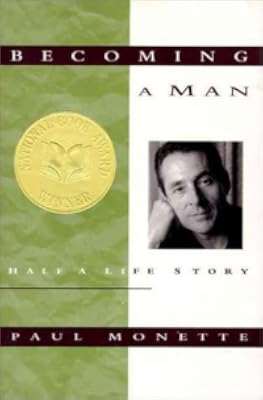
Becoming a Man: Half a Life Story
by Paul Monette
On This Page
Description
Paul Monette grew up all-American, Catholic, overachieving... and closeted. As a child of the 1950s, a time when a kid suspected of being a "homo" would routinely be beaten up, Monette kept his secret throughout his adolescence. He wrestled with his sexuality for the first thirty years of his life, priding himself on his ability to "pass" for straight. The story of his journey to adulthood and to self-acceptance with grace and honesty, this intimate portrait of a young man's struggle with show more his own desires is witty, humorous, and deeply felt. Before his death of complications from AIDS in 1995, Monette was an outspoken activist crusading for gay rights. Becoming a Man shows his courageous path to stand up for his own right to love and be loved. This ebook features an illustrated biography of Paul Monette including rare images and never-before-seen documents from the Paul Monette papers of the UCLA Library Special Collections. show lessTags
Recommendations

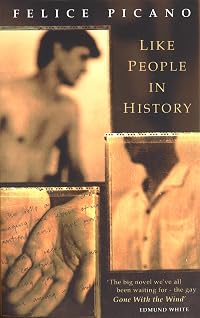
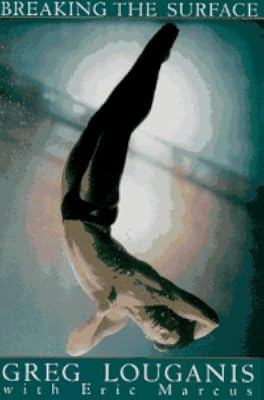
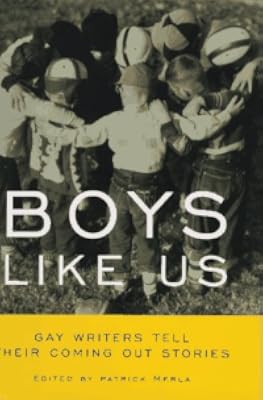
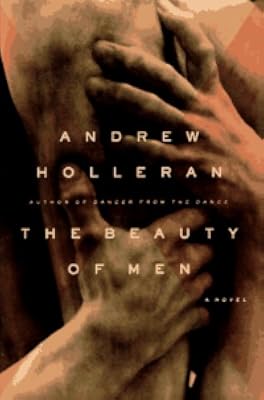






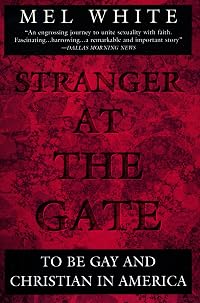

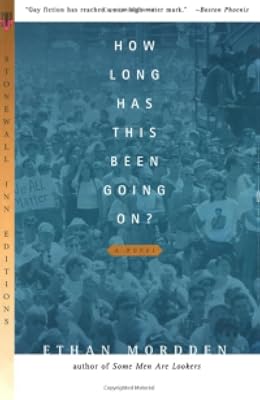


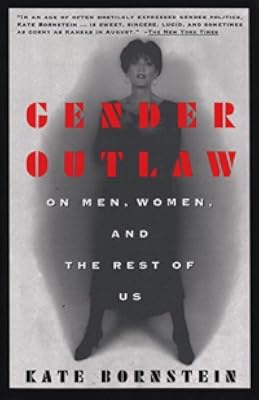
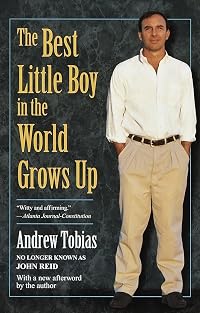



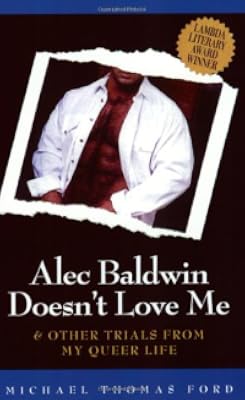

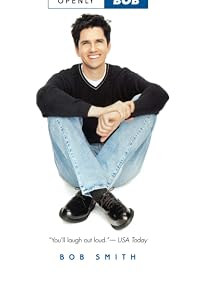
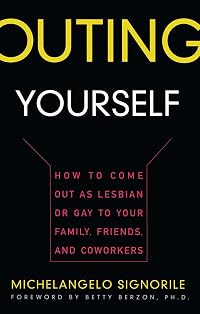
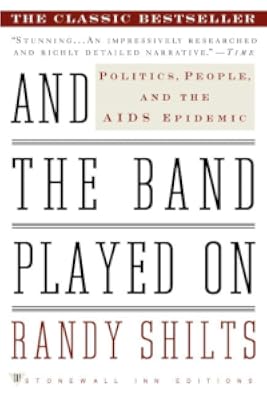

Member Recommendations
The Motion of Light in Water: Sex and Science Fiction Writing in the East Village {revised} by Samuel R. Delany
aulsmith Monette was just a little older than Delany, but the marked difference in their coming out and their growth as writers says much about the times they lived in.
Member Reviews
Coming of age in the fifties, Paul Monette lived a life that, in a sense, paralleled my own, as I too am a child of the fifties. And I also share with him the theme of discovery, the inward thoughtfulness that, if it does not lead every boy to write his own autobiography, it leads him to a life focused on imagination and a love of literature and the arts. Paul Monette shares more than his coming of age in the fifties, for his is a story of the outsider, the gay man in the boy whose life leads to the age of AIDS and the loss that has been brought with it. From small town through the Ivy League school to the life of a writer, Monette brings a truth to his story that only a truly personal memoir can hold. This is a book to cherish for its show more spirit and story, for it is a story that is universal and humane. Seldom has a book so richly deserved the awards and accolades it has received. show less
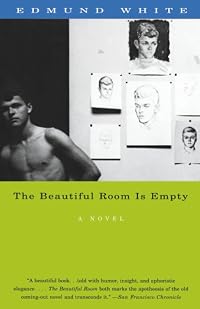
Paul Monette’s early life is marked by both the astounding conformity and pent-up rage that one might expect to find in the Bildungsroman of a young gay man growing up in mid-century America. His ability to “pass” for straight comes at a cost – to wit, the inability of ever having to admit to anyone that he’s not. From the time that he’s a small child, Paul seems tragically torn, more so than even many other figures in well-known gay-memoirs who came of age at about the same time in American history (I’m thinking of Edmund White’s “The Beautiful Room is Empty” and others). Whereas White’s memoirs explore sexual openness and the life of the mind, Monette can only begin to feel comfortable with the latter, and never show more seems to approach the former until he is well into adulthood. He was already one to get “straight A’s,” but whose courage balked when it came to admitting his sexuality to a close friend or family member.
Beneath that Yale- and Andover-educated genteel exterior is the heart of an enraged activist who, if he had a problem with admitting his homosexuality, certainly had fewer problems with hyperbole. He blithely claims within the first few pages of “Becoming a Man” that “genocide is still the national sport of straight men.” He goes on to clarify that Stephen Kolzak, one of his former lovers, “died of homophobia, murdered by barbaric priests and petty bureaucrats.” I would never be the first to suggest that the national response to the HIV/AIDS epidemic in its initial years was rapid or proportionate to need, but Monette’s moralizing is certainly a momentous task in blame-shifting. One review, whose overall impression of the book was much less favorable than mine, nevertheless mentioned something very striking about the man who wrote it: he seems to consist of two different personalities, neither of which have reconciled themselves to one another.
Nor does he self-consciously explore his balkanized personality; he seems supremely unhappy in being unable to be open about his sexuality to most people, but does nothing to change this. And this repressed self sits right there, silently, next to the one that rails against America with clenched fist about committing “genocide” against those with HIV/AIDS. It’s a perplexing picture, but strikingly human one, a poignant one.
I’ve noted before in my reviews of memoirs that I don’t read many of them, and that I somehow have to be struck by the life of the author before I’ll pick one up. Monette was gay; Edmund White’s homosexuality and love of ideas were two big invitations for me as a much younger reader when I stumbled across “The Beautiful Room is Empty.” I found this book, my first experience reading Monette, honest and forthright in Monette’s “trying to give a true account of one’s self” – perhaps the hardest thing you can ever ask someone to do. Perhaps I’m grateful for his rage and his furor, discombobulated as it was. It allowed, decades on, for people like me to not have to re-wage the battles that he already fought. show less
Beneath that Yale- and Andover-educated genteel exterior is the heart of an enraged activist who, if he had a problem with admitting his homosexuality, certainly had fewer problems with hyperbole. He blithely claims within the first few pages of “Becoming a Man” that “genocide is still the national sport of straight men.” He goes on to clarify that Stephen Kolzak, one of his former lovers, “died of homophobia, murdered by barbaric priests and petty bureaucrats.” I would never be the first to suggest that the national response to the HIV/AIDS epidemic in its initial years was rapid or proportionate to need, but Monette’s moralizing is certainly a momentous task in blame-shifting. One review, whose overall impression of the book was much less favorable than mine, nevertheless mentioned something very striking about the man who wrote it: he seems to consist of two different personalities, neither of which have reconciled themselves to one another.
Nor does he self-consciously explore his balkanized personality; he seems supremely unhappy in being unable to be open about his sexuality to most people, but does nothing to change this. And this repressed self sits right there, silently, next to the one that rails against America with clenched fist about committing “genocide” against those with HIV/AIDS. It’s a perplexing picture, but strikingly human one, a poignant one.
I’ve noted before in my reviews of memoirs that I don’t read many of them, and that I somehow have to be struck by the life of the author before I’ll pick one up. Monette was gay; Edmund White’s homosexuality and love of ideas were two big invitations for me as a much younger reader when I stumbled across “The Beautiful Room is Empty.” I found this book, my first experience reading Monette, honest and forthright in Monette’s “trying to give a true account of one’s self” – perhaps the hardest thing you can ever ask someone to do. Perhaps I’m grateful for his rage and his furor, discombobulated as it was. It allowed, decades on, for people like me to not have to re-wage the battles that he already fought. show less
In this touching, insightful memoir, Paul Monette recalls growing up gay in the 60s and 70s and shares his battle with internalized hatred as he struggles to accept himself and seek acceptance from others. Monette does not shy away from the gritty details. His accounts of some of his sexual experiences are as raw and painful as he recalls the actual events to have been, and he does not sugarcoat anything. Monette explores his life in the context of American society and the then-emerging gay rights movement and considers the consequences of America's initial reluctance to address the AIDS epidemic, as he finds that he is only able to write half a life story. This is a very moving, eye opening book that serves to remind us that behind show more every statistic about AIDS or homosexuality is a person struggling to make peace with himself. show less
Monette's searing anger at his oppressors, which include his younger self, make this book, in my opinion, just as relevant today as it was when it was written. It's not like there aren't millions of people on the planet trying to stuff queer folk back into their closets. I highly recommend this book to anyone who's struggling with being different.
A very moving story and a remarkable man! After reading this I wanted to know more about Monette. Written while he was struggling with AIDS, which made his story that much more powerful.
Gorgeously written, thoughtful and provocative, Monette's memoir is a deeply moving and sensitive examination of one man's identity. This exceptional book has changed lives.
Somewhat out of date as it seems that society has moved in a direction to make the sort of suffering our main character has largely a thing of the past
Members
- Recently Added By
Published Reviews
Lists

Best Autobiographies and Memoirs
370 works; 67 members

Favorite Memoirs
64 works; 13 members

I am sick, I must die . . . .
24 works; 5 members

The Best LGBTQ Nonfiction
210 works; 70 members
Author Information

28+ Works 4,474 Members
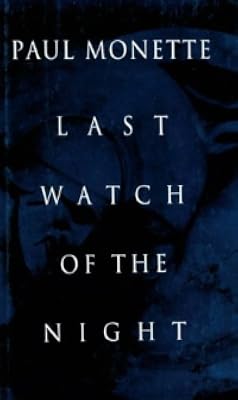
Paul Monette was born on October 16, 1945 in Lawrence, Mass., and has published numerous poetry collections, novels, novelizations, memoirs, and nonfiction works. A distinguished author of both poetry and prose, Monette's writings often explored issues relating to homosexuality and AIDS. After receiving critical acclaim in 1975 for a poetry show more collection The Carpenter at the Asylum, he veered away from his mainstay theme and produced an unlikely pair of books that demonstrated his poet's way with words. The books were No Witnesses, a collection of poems featuring imaginary adventures of famous figures, written in 1981, and The Long Shot, a mystery in which an avid shopper and a forger team to solve a murder. However, his following mystery, Lightfall, written in 1982, was not well-received by the critics. Monette next wrote Becoming a Man: Half a Life Story, which won the National Book Award for nonfiction in 1992. His last work, Last Watch of the Night: Essays Too Personal and Otherwise, was a collection of 10 moving and uncompromising essays dealing with topics such as his beloved dog Puck and the 1993 Gay and Lesbian March on Washington, D.C. Paul Monette died as a result of complications from AIDS on February 18, 1995. (Bowker Author Biography) show less
Awards and Honors
Awards
Distinctions
Work Relationships
Is contained in
Common Knowledge
- Original publication date
- 1994
- People/Characters
- Paul Monette
- Important places
- Andover, Massachusetts, USA
Classifications
- Genres
- LGBTQ+, Biography & Memoir, Sexuality and Gender Studies, Nonfiction
- DDC/MDS
- 306.766092 — Society, government, & culture Social sciences, sociology & anthropology Social Behavior - Dating, Marriage, Divorce Sexual relations Sexual orientation, transgender identity, intersexuality Homosexuality Biography And History Biography
- LCC
- HQ75.8 .M64 .A3 — Social sciences The family. Marriage, Women and Sexuality The Family. Marriage. Women Sexual life Homosexuality. Lesbianism
- BISAC
Statistics
- Members
- 1,119
- Popularity
- 22,661
- Reviews
- 11
- Rating
- (4.18)
- Languages
- English, German
- Media
- Paper, Ebook
- ISBNs
- 8
- ASINs
- 10