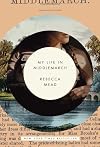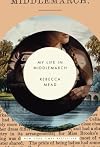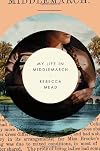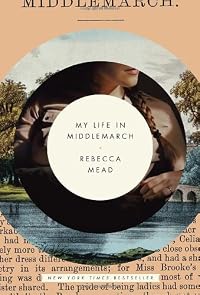
My Life in Middlemarch
by Rebecca Mead
On This Page
Description
A New Yorker writer revisits the seminal book of her youth--Middlemarch-- and fashions a singular, involving story of how a passionate attachment to a great work of literature can shape our lives and help us to read our own histories.Rebecca Mead was a young woman in an English coastal town when she first read George Eliot's Middlemarch, regarded by many as the greatest English novel. After gaining admission to Oxford, and moving to the United States to become a journalist, through several show more love affairs, then marriage and family, Mead read and reread Middlemarch. The novel, which Virginia Woolf famously described as "one of the few English novels written for grown-up people," offered Mead something that modern life and literature did not.
In this wise and revealing work of biography, reporting, and memoir, Rebecca Mead leads us into the life that the book made for her, as well as the many lives the novel has led since it was written. Employing a structure that deftly mirrors that of the novel, My Life in Middlemarch takes the themes of Eliot's masterpiece--the complexity of love, the meaning of marriage, the foundations of morality, and the drama of aspiration and failure--and brings them into our world. Offering both a fascinating reading of Eliot's biography and an exploration of the way aspects of Mead's life uncannily echo that of Eliot herself, My Life in Middlemarch is for every ardent lover of literature who cares about why we read books, and how they read us.
From the Hardcover edition.
. show less
Tags
Recommendations



Member Reviews
You don’t have to have read Middlemarch to enjoy this book length reflection on and study of it, but My Life in Middlemarch may make you want to get your hands on a copy of George Eliot's classic novel. Layered and deeply considered, My Life in Middlemarch is a fairly brief (278 pages of text) and accessible book fully worthy of its insightfully rich subject. The writing manages to transition gracefully between the book’s three roles: memoir of the author’s experiences reading Middlemarch, brief biography of that novel’s boundary breaking Victorian era author George Eliot--pen name of Mary Anne Evans--and literary discussion of Middlemarch and its impact.
Rebecca Mead first read Middlemarch as a teenager, strongly identifying at show more that time with the intellectual and spiritual yearnings of Dorothea, an earnest young woman whose unfortunate marriage to a much older pedant begins the novel. Mead has continued to reread the book every few years into later adulthood, and though Middlemarch remains a favorite, her appreciation of it continues to evolve. It’s a book Mead feels helped shape her, each reading offering new perspectives on love, marriage, ambition, and personal growth as she moved through her own life.
Reading My Life in Middlemarch was like having a conversation with a well informed, thoughtful friend--though my side of the discussion was obviously in my head. I greatly enjoyed all three aspects of the book--memoir, biography and literary consideration--and it’s deepened and enriched the already significant pleasure I am having as I read Middlemarch for the first time. show less
Rebecca Mead first read Middlemarch as a teenager, strongly identifying at show more that time with the intellectual and spiritual yearnings of Dorothea, an earnest young woman whose unfortunate marriage to a much older pedant begins the novel. Mead has continued to reread the book every few years into later adulthood, and though Middlemarch remains a favorite, her appreciation of it continues to evolve. It’s a book Mead feels helped shape her, each reading offering new perspectives on love, marriage, ambition, and personal growth as she moved through her own life.
Reading My Life in Middlemarch was like having a conversation with a well informed, thoughtful friend--though my side of the discussion was obviously in my head. I greatly enjoyed all three aspects of the book--memoir, biography and literary consideration--and it’s deepened and enriched the already significant pleasure I am having as I read Middlemarch for the first time. show less
Our group at Folio: The Seattle Athenaeum did a slow read together of George Eliot's Middlemarch this past year. I thoroughly enjoyed the experience as we made our way through and discussed Dorothea, Lydgate, Causaubon, Mary, Rosamunde, and their lives. We touched on so many themes--marriage, money, progress, religion, etc. Find a group read like this and I guarantee the book will stay with you.
What a delight, then, to pick up My Life in Middlemarch by Rebecca Mead. Mead weaves Eliot's biography, and her correspondence along with major themes in Middlemarch and other works. Mead travels to the locations important to Eliot and then draws in a number of the same themes we discussed. This book was made all the richer having done the slow show more read. How for instance Eliot turned the standard novel on its head by starting the novel with a marriage instead of ending it ala Austen. She addresses Woolf's famous assessment that it is "one of the few English novels written for grown-up people."
I especially enjoyed the glimpses into Eliot's domestic relationship with George Lewes and his children and how the people around her may have served as inspiration for various characters. Mead also touches on Eliot's writing process and obstacles (migraines, toothaches, and family illnesses). But also how Lewes and Eliot had what looks like a modern happy working relationship. Like Eliot, I found a true partner late in life and I certainly could relate to Mead's line, "To find a partner as accepting and generous as Lewes is a great and unexpected gift."
On the whole, I found this book enriched my Middlemarch experience, and as I am now working my way back through all of Eliot's works. show less
What a delight, then, to pick up My Life in Middlemarch by Rebecca Mead. Mead weaves Eliot's biography, and her correspondence along with major themes in Middlemarch and other works. Mead travels to the locations important to Eliot and then draws in a number of the same themes we discussed. This book was made all the richer having done the slow show more read. How for instance Eliot turned the standard novel on its head by starting the novel with a marriage instead of ending it ala Austen. She addresses Woolf's famous assessment that it is "one of the few English novels written for grown-up people."
I especially enjoyed the glimpses into Eliot's domestic relationship with George Lewes and his children and how the people around her may have served as inspiration for various characters. Mead also touches on Eliot's writing process and obstacles (migraines, toothaches, and family illnesses). But also how Lewes and Eliot had what looks like a modern happy working relationship. Like Eliot, I found a true partner late in life and I certainly could relate to Mead's line, "To find a partner as accepting and generous as Lewes is a great and unexpected gift."
On the whole, I found this book enriched my Middlemarch experience, and as I am now working my way back through all of Eliot's works. show less
It’s been over 25 years since I read Middlemarch for Victorian Lit in college, and I vaguely remember enjoying it (way more than Heart of Darkness which we also read, and I loathed) but not really any details; I much more remember where I read most of it which was in Charlotte while visiting my grandparents.
Mead’s love for the novel has me wanting to return to it, and I think I’ll be checking out the audiobook soon and prepping myself for thirty plus hours of listening. I loved learning more about George Eliot and her fairly untraditional but happy life; the mix of sources here was fascinating, and the author did a wonderful job with the tidbits she shared. My vivid memory of Victorian Lit was learning and truly understanding the show more word “earnest”, and it sounds as though Eliot was the epitome of earnestness.
As usual I love these reads which mingle memoir and biography, and having this also be a book about books (as she referred to other Eliot writings as well) truly made it perfect for me. show less
Mead’s love for the novel has me wanting to return to it, and I think I’ll be checking out the audiobook soon and prepping myself for thirty plus hours of listening. I loved learning more about George Eliot and her fairly untraditional but happy life; the mix of sources here was fascinating, and the author did a wonderful job with the tidbits she shared. My vivid memory of Victorian Lit was learning and truly understanding the show more word “earnest”, and it sounds as though Eliot was the epitome of earnestness.
As usual I love these reads which mingle memoir and biography, and having this also be a book about books (as she referred to other Eliot writings as well) truly made it perfect for me. show less
I'm still not sure exactly what this books was - memoir, literary analysis, biography of George Eliot? - but in the end it really didn't matter. This book was like having a conversation with a good friend about a book you both love. Rebecca Mead analyzes her favorite book, Middlemarch, through several techniques: using traditional literary analysis, exploring the work by discovering George Eliot's life and influences, and connecting the book to Mead's own life experiences.
This was a really interesting mix of analysis and the tone hit the perfect mix of scholarly and conversational. It could easily have gotten a pretentious feel, but luckily didn't. I loved revisiting Middlemarch (one of my favorites) through Rebecca Mead's eyes.
This was a really interesting mix of analysis and the tone hit the perfect mix of scholarly and conversational. It could easily have gotten a pretentious feel, but luckily didn't. I loved revisiting Middlemarch (one of my favorites) through Rebecca Mead's eyes.
There are certain books that become part of who we are. For Mead, one of those books is Middlemarch. This is a nonfiction account of her love of the book and experience with it. It is part memoir, part literary analysis and part biography of Eliot. This result is a lovely view of the importance of books in the lives of a reader.
Mead explores the context in which Middlemarch was written as she discusses its literary importance. She also talks about different commentaries and literary criticisms that have been written regarding the novel. She explores Eliot’s relationship with her stepsons and with the man who she spent her life with. Their unconventional relationship influenced the way she was perceived throughout the literary world. show more Eliot’s relationship later in life with a younger man actually reminded me quite a bit of her famous character Dorthea’s situation.
One important thing Mead touches on is the way books change for us depending on when we read them. I’ve had similar experiences with this in my own reading and it never fails to surprise me. I can read a book as a freshman in high school and be enamored with the rebellious teenager and their lust for life. I’ll re-read the same book five years later and identify with the older sister who is worried for her sibling. Then I’ll re-read it again after a few years have passed and be blown away by how the parents in the novel are handling the situation. I notice different parts of the story each time, I relate to different characters and experiences depending on what I’ve gone through. It thrills me to think of what I’ll find in my favorite books as I continue to re-read them throughout my life.
BOTTOM LINE: I loved Mead’s observations about both the book and Eliot. It made me think of the books that have become part of who I am. It’s also made me want to read all the rest of Eliot’s work and The Mill on the Floss is at the top of my list! show less
Mead explores the context in which Middlemarch was written as she discusses its literary importance. She also talks about different commentaries and literary criticisms that have been written regarding the novel. She explores Eliot’s relationship with her stepsons and with the man who she spent her life with. Their unconventional relationship influenced the way she was perceived throughout the literary world. show more Eliot’s relationship later in life with a younger man actually reminded me quite a bit of her famous character Dorthea’s situation.
One important thing Mead touches on is the way books change for us depending on when we read them. I’ve had similar experiences with this in my own reading and it never fails to surprise me. I can read a book as a freshman in high school and be enamored with the rebellious teenager and their lust for life. I’ll re-read the same book five years later and identify with the older sister who is worried for her sibling. Then I’ll re-read it again after a few years have passed and be blown away by how the parents in the novel are handling the situation. I notice different parts of the story each time, I relate to different characters and experiences depending on what I’ve gone through. It thrills me to think of what I’ll find in my favorite books as I continue to re-read them throughout my life.
BOTTOM LINE: I loved Mead’s observations about both the book and Eliot. It made me think of the books that have become part of who I am. It’s also made me want to read all the rest of Eliot’s work and The Mill on the Floss is at the top of my list! show less
This review is brought to you by THIS BOOK IS OVERDUE AT THE LIBRARY! SOMEBODY HAS A HOLD ON IT! FINES ARE RACKING UP AS WE SPEAK! HURRY UP AND WRITE YOUR DANGED REPORT, ALREADY!
Okay. So.
This book is a biography of a book. Specifically, it’s the biography of one woman and how she and a life-changing novel matured together.
For the record, I was not one of those kids who was reading James Joyce and Herman Melville when she was nine. I was reading novels with deathless titles like The Cat Ate My Gymsuit.
But I did manage to fit in some of the good stuff now and then when I hit my teens and twenties, so I do know the pleasure of rereading a classic decades later and thinking fondly, “I am such an idiot.”
There are books that it’s show more no use reading before a certain stage, because you have nowhere to put what they have to offer. This isn’t an insult to the young, because it’s not necessarily about youth. I know plenty of people in their teens and early twenties who have a better understanding of some great books than I do; and I know others who may be in their forties chronologically, but they don’t have a clue about certain books because they just don’t have the right set of mental shelves for them.
I was young and clueless when I first read Middlemarch. I only grasped two things: there’s a reason more people have heard of Jane Austen than of George Eliot, and I could relate more directly to Dorothea Brooke than I’ve ever been able to empathize with any of Austen’s heroines. This contradiction baffled me. It’s also the reason I’ve read Middlemarch several times even though it’s almost 800 pages long.
Okay, I also reread it because after my first time through, someone gave me a gorgeous hardcover copy and I’m a sucker for a pretty face. Fine. I’m shallow. Sue me.
But at least I’m not irredeemably shallow. That second time through, I managed to notice more than just the story. I caught killer lines like “Destiny stands by sarcastic with our dramatis personae folded in her hand.” I didn’t know what that meant, exactly, but I knew there was something going on there.
Because of the range of characters and the multiple storylines, Middlemarch is a book that is different not just for different readers, but for the same reader at different ages. Or, as Rebecca Mead puts it in this loving memoir, “There are books that grow with the reader as the reader grows, like a graft to a tree.”
My Life is a story of how a great novel changed Rebecca Mead’s life, and how it grew as she did. If you’ve ever had a similar relationship with a book, you’ll enjoy this book even if you haven’t read Middlemarch -- though you’ll probably want to long before you finish.
You’ll also enjoy Mead's book if you’ve always been curious about George Eliot’s life but don’t necessarily want to commit to a whole biography. (I admit to living in that camp, though I feel myself being coaxed out of it now.)
The reason you might be curious about George Eliot is because it’s hard not to be curious about a woman whose novels are known for their strong moral messages, and who left her Christian faith behind early in life and had the nerve to live with a man in the mid-nineteenth century. Yes, that kind of “live with.” Starting in 1854. Yes, that 1854. Victorian England. The man, George Lewes, was married but living apart from his wife, who was happily bearing children by another man. Divorce was nearly impossible back then, so when George Eliot and George Lewes fell in love, they decided to shack up. And you thought the Victorians were boring.
Eliot remained in this monogamous relationship for 24 years, until Lewes’ death. Eliot was inconsolable until she decided maybe she wasn’t inconsolable after all, which just happened to be around the time a man 20 years her junior proposed to her. She accepted. She was sixty at the time. (And you thought the Victorians were boring.)
This book has plenty of wonderful biographical details like that. Also some sad ones, like the fact that her younger twin brothers died on the same day only a week and a half after their birth. These are woven around details from Mead’s life, though she goes easy on the personal outpourings. She knows she can’t compete with her subject matter, and doesn’t try – though her writing holds up well even next to Eliot’s.
I would write more about this lovely book, but I can’t afford to. I can hear the library snarling at me even from a mile away to return its property. So I’ll close with my favorite quote from Middlemarch. It isn’t very profound, but it’s a description of a character I relate to even more than Dorothea Brooke: Mary Garth, who feels “a strong current of gratitude toward those who, instead of telling her that she ought to be contented, did something to make her so.”
Think of that the next time you’re tempted to urge someone to cheer up. And then try to give them a reason to be cheerful. A copy of My Life in Middlemarch would be a good start. show less
Okay. So.
This book is a biography of a book. Specifically, it’s the biography of one woman and how she and a life-changing novel matured together.
For the record, I was not one of those kids who was reading James Joyce and Herman Melville when she was nine. I was reading novels with deathless titles like The Cat Ate My Gymsuit.
But I did manage to fit in some of the good stuff now and then when I hit my teens and twenties, so I do know the pleasure of rereading a classic decades later and thinking fondly, “I am such an idiot.”
There are books that it’s show more no use reading before a certain stage, because you have nowhere to put what they have to offer. This isn’t an insult to the young, because it’s not necessarily about youth. I know plenty of people in their teens and early twenties who have a better understanding of some great books than I do; and I know others who may be in their forties chronologically, but they don’t have a clue about certain books because they just don’t have the right set of mental shelves for them.
I was young and clueless when I first read Middlemarch. I only grasped two things: there’s a reason more people have heard of Jane Austen than of George Eliot, and I could relate more directly to Dorothea Brooke than I’ve ever been able to empathize with any of Austen’s heroines. This contradiction baffled me. It’s also the reason I’ve read Middlemarch several times even though it’s almost 800 pages long.
Okay, I also reread it because after my first time through, someone gave me a gorgeous hardcover copy and I’m a sucker for a pretty face. Fine. I’m shallow. Sue me.
But at least I’m not irredeemably shallow. That second time through, I managed to notice more than just the story. I caught killer lines like “Destiny stands by sarcastic with our dramatis personae folded in her hand.” I didn’t know what that meant, exactly, but I knew there was something going on there.
Because of the range of characters and the multiple storylines, Middlemarch is a book that is different not just for different readers, but for the same reader at different ages. Or, as Rebecca Mead puts it in this loving memoir, “There are books that grow with the reader as the reader grows, like a graft to a tree.”
My Life is a story of how a great novel changed Rebecca Mead’s life, and how it grew as she did. If you’ve ever had a similar relationship with a book, you’ll enjoy this book even if you haven’t read Middlemarch -- though you’ll probably want to long before you finish.
You’ll also enjoy Mead's book if you’ve always been curious about George Eliot’s life but don’t necessarily want to commit to a whole biography. (I admit to living in that camp, though I feel myself being coaxed out of it now.)
The reason you might be curious about George Eliot is because it’s hard not to be curious about a woman whose novels are known for their strong moral messages, and who left her Christian faith behind early in life and had the nerve to live with a man in the mid-nineteenth century. Yes, that kind of “live with.” Starting in 1854. Yes, that 1854. Victorian England. The man, George Lewes, was married but living apart from his wife, who was happily bearing children by another man. Divorce was nearly impossible back then, so when George Eliot and George Lewes fell in love, they decided to shack up. And you thought the Victorians were boring.
Eliot remained in this monogamous relationship for 24 years, until Lewes’ death. Eliot was inconsolable until she decided maybe she wasn’t inconsolable after all, which just happened to be around the time a man 20 years her junior proposed to her. She accepted. She was sixty at the time. (And you thought the Victorians were boring.)
This book has plenty of wonderful biographical details like that. Also some sad ones, like the fact that her younger twin brothers died on the same day only a week and a half after their birth. These are woven around details from Mead’s life, though she goes easy on the personal outpourings. She knows she can’t compete with her subject matter, and doesn’t try – though her writing holds up well even next to Eliot’s.
I would write more about this lovely book, but I can’t afford to. I can hear the library snarling at me even from a mile away to return its property. So I’ll close with my favorite quote from Middlemarch. It isn’t very profound, but it’s a description of a character I relate to even more than Dorothea Brooke: Mary Garth, who feels “a strong current of gratitude toward those who, instead of telling her that she ought to be contented, did something to make her so.”
Think of that the next time you’re tempted to urge someone to cheer up. And then try to give them a reason to be cheerful. A copy of My Life in Middlemarch would be a good start. show less
I’ve never actually read Middlemarch, despite Virginia Woolf’s infamous ringing endorsement of it. Blame encountering The Mill On The Floss at precisely the wrong time – it’s clearly a finely written book with a heartbreaking ending but such things merit little consideration to mid-teenage boys. The devisors of the GCSE WJEC curriculum certainly weren’t choosing their books to engage boys with literature.
So, if my memories of George Eliot are so bad I’ve deliberately avoided her ever since, why did I pick this up? Prosaically it was a cheap Kindle daily deal. On a literary ponce level… well I might be strange but I like finding out what others see in works of art that I might miss. What engaged them when I was left cold. show more If I can find what drives their passion and enthusiasm I might find something I missed. And if they prove to me that what looks like a few shards of dirty broken glass is in fact a hidden diamond, it’s win-win all round. It’s one of the reasons art exists; to help us understand the experiences of others.
What I got was a cross between a memoir and an extended book review. Mead take uses Middlemarch as the shape of the book and uses it in a Proustian way, reminiscing about all those people she used to be from teenager through the anxieties of youth and into a more content middle age. It’s halfway between autobiography and literary essay – Mead is a good enough writer to maintain interest all the way through, even though her own life is perhaps no more or less fascinating than anyone else’s. It’s more interesting to see how much more a book can reveal as we gain experience, what we understand when older that we couldn’t understand when we were young and how our sympathies alter with time. I suppose the measure of success here is that I did want to read Middlemarch afterwards, though I couldn’t shake the suspicion that I wouldn’t have taken a great deal from it when younger. Worth a read to gain an appreciation of one of the canonised greats of English literature, and even for the human element. show less
So, if my memories of George Eliot are so bad I’ve deliberately avoided her ever since, why did I pick this up? Prosaically it was a cheap Kindle daily deal. On a literary ponce level… well I might be strange but I like finding out what others see in works of art that I might miss. What engaged them when I was left cold. show more If I can find what drives their passion and enthusiasm I might find something I missed. And if they prove to me that what looks like a few shards of dirty broken glass is in fact a hidden diamond, it’s win-win all round. It’s one of the reasons art exists; to help us understand the experiences of others.
What I got was a cross between a memoir and an extended book review. Mead take uses Middlemarch as the shape of the book and uses it in a Proustian way, reminiscing about all those people she used to be from teenager through the anxieties of youth and into a more content middle age. It’s halfway between autobiography and literary essay – Mead is a good enough writer to maintain interest all the way through, even though her own life is perhaps no more or less fascinating than anyone else’s. It’s more interesting to see how much more a book can reveal as we gain experience, what we understand when older that we couldn’t understand when we were young and how our sympathies alter with time. I suppose the measure of success here is that I did want to read Middlemarch afterwards, though I couldn’t shake the suspicion that I wouldn’t have taken a great deal from it when younger. Worth a read to gain an appreciation of one of the canonised greats of English literature, and even for the human element. show less
Members
- Recently Added By
Published Reviews
ThingScore 75
"My Life in Middlemarch" [is in the genre of] the bibliomemoir — a subspecies of literature combining criticism and biography with the intimate, confessional tone of autobiography. ...
Rebecca Mead’s “My Life in Middlemarch” is a beguilingly straightforward, resolutely orthodox and unshowy account of the writer’s lifelong admiration for George Eliot and for “Middlemarch: A Study of show more Provincial Life”
“My Life in Middlemarch” is an exemplary introduction to the work of George Eliot and a helpful and informed companion guide to “Middlemarch.” show less
Rebecca Mead’s “My Life in Middlemarch” is a beguilingly straightforward, resolutely orthodox and unshowy account of the writer’s lifelong admiration for George Eliot and for “Middlemarch: A Study of show more Provincial Life”
“My Life in Middlemarch” is an exemplary introduction to the work of George Eliot and a helpful and informed companion guide to “Middlemarch.” show less
added by davidcla
Lists

Books Read in 2020
4,379 works; 124 members

Club Read's Recommended Nonfiction Written by Women
618 works; 30 members

In Our Time books
4,934 works; 2 members
Author Information

8+ Works 1,026 Members
Rebecca J. Mead is Assistant Professor of History at Northern Michigan University
Some Editions
Awards and Honors
Work Relationships
Is a study of
Common Knowledge
- Alternate titles
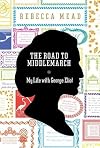
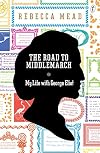
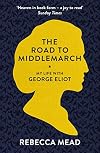
- The Road to Middlemarch: My Life with George Eliot
- Original publication date
- 2014
- People/Characters
- George Eliot
- Dedication
- For my mother, and in memory of my father
- First words
- When I was seventeen years old and still living in the seaside town where I spent my childhood, I would go for a few hours every Sunday morning to the home of a retired teacher of English literature to talk about books.
- Quotations
- p 269 Finale. The final sentence of Middlemarch is one of the most admired in literature, and with good reason -- it is "quietly thrilling," ...The book ends, as it began, with Dorothea, and it discovers what may be redeemed... (show all) from disappointment. ... It reads., "But the effect of her being on those around her was incalculably diffusive: for the growing good of the world is partly dependent on unhistoric acts; and that things are not so ill with you and me as they might have been, is half owing to the number who lived faithfully a hidden life, and rest in unvisited tombs."
- Last words
- (Click to show. Warning: May contain spoilers.)But through that window was a larger vista: a landscape changed by books, reshaped by reading, transfigured by the slow green growth.
- Blurbers
- Gilbert, Elizabeth; Bloom, Harold; Livesey, Margot; Gorra, Michael; Waldman, Adelle; Oates, Joyce Carol
- Original language*
- English
*Some information comes from Common Knowledge in other languages. Click "Edit" for more information.
Classifications
Statistics
- Members
- 682
- Popularity
- 41,706
- Reviews
- 33
- Rating
- (3.88)
- Languages
- English
- Media
- Paper, Audiobook, Ebook
- ISBNs
- 16
- ASINs
- 9