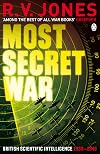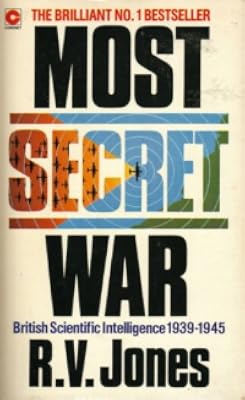
Most Secret War
by R. V. Jones
On This Page
Description
"Reginald Jones was nothing less than a genius. And his appointment to the Intelligence Section of Britain's Air Ministry in 1939 led to some of the most astonishing scientific and technological breakthroughs of the Second World War. In Most Secret War he details how Britain stealthily stole the war from under the Germans' noses by outsmarting their intelligence at every turn. He tells of the 'battle of the beams'; detecting and defeating flying bombs; using chaff to confuse radar; and many show more other ingenious ideas and devices. Jones was the man with the plan to save Britain and his story makes for riveting reading."-- Amazon. show lessTags
Recommendations








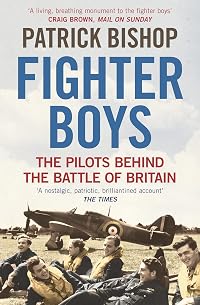
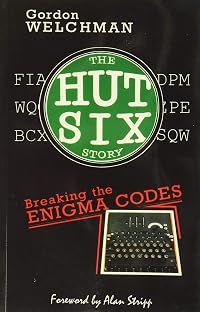

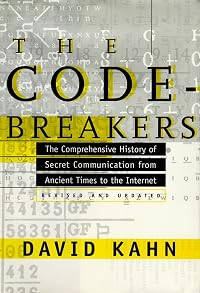


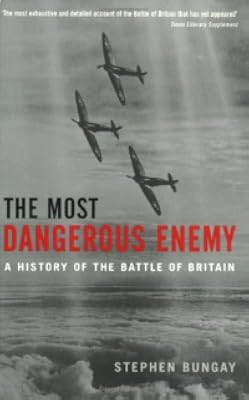











Member Recommendations
Member Reviews
Most Secret War is an account of British scientific intelligence in the Second World War, by it's foremost practitioner R.V. Jones, and is all around stunning. Jones was vital in a series of major turning points, and he's an engaging raconteur with deep insight into the messy busy of technical intelligence and bureaucratic infighting.
Only 28 years old, R.V. Jones was coming off a lackluster career in experimental physics, focusing on infrared detection of aircraft, when the outbreak of war in Europe catapulted him into a key role. A little thinking would show that in industrial total war, technology and applied science could be decisive, and while the British had a system for using their own scientists to advantage, most notably show more demonstrated in the Chain Home radar system, there was no central branch in charge of figuring out what the Nazis were up to, and how to foil it. Jones was it, with a skeleton staff and little formal authority.
Fortunately, he had the right background, with a wide knowledge of science, especially radio physics, and the tricky soul of an inveterate practical joker. Jones' first break was the discovery of a system of radio navigation beams aimed at England, which would allow the Luftwaffe to bomb accurately at night. While the Spitfire and Hurricanes could hold on by day, there were no effective night fighters in British service at the time. In a tense meeting with Churchill and the war cabinet, Jones conclusive demonstrated the existence of the 'beams', and a plan to bend them by generating false signals, showing up older and more senior scientific advisors Lindemann and Tizard.
While Jones made mistakes, including a careless oversight on guidance tones that he believes lead to the destruction of Coventry, his efforts blunted Luftwaffe night attacks. The next step was to figure out how to carry the war to Germany. Bomber command believed that traditional navigation techniques of dead reckoning and stellar fixes were sufficient to hit a city, but evidence piled up showing bombers were missing targets by miles, and losses were unsustainable. Jones developed techniques to foil the radar systems of the Kammhuber Line and direct Pathfinder crews to their targets. Even so, Bomber command had terrible radio discipline, and crews were lost unnecessarily. A particular pernicious pilot's tale was that the British IFF system acted as a jammer, when in fact the Nazis had figured out how to use it as a beacon, unerringly directing their defenses onto hapless bombers.
The final major battle was with the V-1 and V-2 missiles. Jones had been tracking the development of these weapons at Peenemunde, and had guessed their capabilities and effects with astounding accuracy. In one particular feat of guesswork, he figured that the V-1 would be used operationally on D-Day +7, with the first missiles hitting on June 13th, one week after the landings. Again, the more senior scientific establishment disagreed with Jones's claim, with effective countermeasures bounding up in useless committee meetings, and overseen by the incompetent Duncan Sandys, Chruchill's son-in-law. The V-1 could be intercepted and shot down, but there was no counter against the ballistic V-2 except conquering all launching sites.
Postwar, Jones was forced out of intelligence in bureaucratic turf fight, his job taken over by ineffective committees. He wound up with a chair at the University of Aberdeen and a host of decorations, which is solid for someone who had thought he had burnt his bridges with the academy years before, though less than he deserved. He returned to public service irregularly, continuing his friendship with Churchill, who saw him as a straight shooter who delivered the goods when others were wrong.
This is a long book, but it's full of delightful details and easy-to-grasp explanations of technical matters. The insights into bureaucracy, the difficulties of figuring out what is actually going on, and the importance of horizontal networks among the people who actually get things, are eternal. While Jones wields a hatchet against his seniors, he is unstinting in his praise of the people who made his work possible, the Resistance spies, photo-recon pilots, and signals analysts who gathered the raw intelligence. This is a top tier memoir and history in its detail, analysis, and quality of writing.
And one historiographic note. Jones cites David Irving in several places. At the time this book was written, Irving was known as a solid historian and expert on the Luftwaffe, who's pro-German bias didn't impact the validity of his data. Irving's discrediting as a holocaust denier didn't occur until several years after Most Secret War was published. show less
Only 28 years old, R.V. Jones was coming off a lackluster career in experimental physics, focusing on infrared detection of aircraft, when the outbreak of war in Europe catapulted him into a key role. A little thinking would show that in industrial total war, technology and applied science could be decisive, and while the British had a system for using their own scientists to advantage, most notably show more demonstrated in the Chain Home radar system, there was no central branch in charge of figuring out what the Nazis were up to, and how to foil it. Jones was it, with a skeleton staff and little formal authority.
Fortunately, he had the right background, with a wide knowledge of science, especially radio physics, and the tricky soul of an inveterate practical joker. Jones' first break was the discovery of a system of radio navigation beams aimed at England, which would allow the Luftwaffe to bomb accurately at night. While the Spitfire and Hurricanes could hold on by day, there were no effective night fighters in British service at the time. In a tense meeting with Churchill and the war cabinet, Jones conclusive demonstrated the existence of the 'beams', and a plan to bend them by generating false signals, showing up older and more senior scientific advisors Lindemann and Tizard.
While Jones made mistakes, including a careless oversight on guidance tones that he believes lead to the destruction of Coventry, his efforts blunted Luftwaffe night attacks. The next step was to figure out how to carry the war to Germany. Bomber command believed that traditional navigation techniques of dead reckoning and stellar fixes were sufficient to hit a city, but evidence piled up showing bombers were missing targets by miles, and losses were unsustainable. Jones developed techniques to foil the radar systems of the Kammhuber Line and direct Pathfinder crews to their targets. Even so, Bomber command had terrible radio discipline, and crews were lost unnecessarily. A particular pernicious pilot's tale was that the British IFF system acted as a jammer, when in fact the Nazis had figured out how to use it as a beacon, unerringly directing their defenses onto hapless bombers.
The final major battle was with the V-1 and V-2 missiles. Jones had been tracking the development of these weapons at Peenemunde, and had guessed their capabilities and effects with astounding accuracy. In one particular feat of guesswork, he figured that the V-1 would be used operationally on D-Day +7, with the first missiles hitting on June 13th, one week after the landings. Again, the more senior scientific establishment disagreed with Jones's claim, with effective countermeasures bounding up in useless committee meetings, and overseen by the incompetent Duncan Sandys, Chruchill's son-in-law. The V-1 could be intercepted and shot down, but there was no counter against the ballistic V-2 except conquering all launching sites.
Postwar, Jones was forced out of intelligence in bureaucratic turf fight, his job taken over by ineffective committees. He wound up with a chair at the University of Aberdeen and a host of decorations, which is solid for someone who had thought he had burnt his bridges with the academy years before, though less than he deserved. He returned to public service irregularly, continuing his friendship with Churchill, who saw him as a straight shooter who delivered the goods when others were wrong.
This is a long book, but it's full of delightful details and easy-to-grasp explanations of technical matters. The insights into bureaucracy, the difficulties of figuring out what is actually going on, and the importance of horizontal networks among the people who actually get things, are eternal. While Jones wields a hatchet against his seniors, he is unstinting in his praise of the people who made his work possible, the Resistance spies, photo-recon pilots, and signals analysts who gathered the raw intelligence. This is a top tier memoir and history in its detail, analysis, and quality of writing.
And one historiographic note. Jones cites David Irving in several places. At the time this book was written, Irving was known as a solid historian and expert on the Luftwaffe, who's pro-German bias didn't impact the validity of his data. Irving's discrediting as a holocaust denier didn't occur until several years after Most Secret War was published. show less
I started reading this book with no other expectations than to be a little wiser and entertained at the same time. But ended up with a feeling of having read one of the best and most vivid accounts of WWII I have ever read.
The subject – scientific intelligence – may seem a bit ‘dry’, but in this book it is not. Deductions becomes an art, compiling, filtering and picking the right intelligence a virtue and – in this case – to be a survivor in ‘bloodless tribal wars’ (Walt Rostow) among scientists a must. If I was in any doubt that the ‘tech war’ of WWII in Europe was on the edge all the time, I am not anymore.
I can only recommend this book fully as a solid foundation for anyone who read about the WWII air battles show more over Great Britain and Germany as well as the V1 and V2 weapons. show less
The subject – scientific intelligence – may seem a bit ‘dry’, but in this book it is not. Deductions becomes an art, compiling, filtering and picking the right intelligence a virtue and – in this case – to be a survivor in ‘bloodless tribal wars’ (Walt Rostow) among scientists a must. If I was in any doubt that the ‘tech war’ of WWII in Europe was on the edge all the time, I am not anymore.
I can only recommend this book fully as a solid foundation for anyone who read about the WWII air battles show more over Great Britain and Germany as well as the V1 and V2 weapons. show less
A fascinating insight into the inner workings of British scientific intelligence during the second world war. Jones is somewhat defensive for the first half of the book, excusing himself for not having taken part in direct action; in the latter half, his series of achievements makes it quite clear that he achieved more than most individuals ever will (no matter how heroic). The methodical approach to intelligence gathering, virtues of having a single mind surveying the scene and the importance of "soft skills" are all vividly and informatively recounted. The whole work is shot through with brilliant digressions, anecdotes and fragments of true history - the contrasts and parallels with Churchill's own war diaries are illuminating.
The depth and breadth of this book is incredible. RV Jones was in the middle of some of the key technical decisions made by the British during World War II, and in this book he does an amazing job of laying out those developments both technically and historically. The book is also colored by his personality and personal beliefs, but in a straight-forward manner that highlights his decision making as opposed to obscuring it. Highly recommended read.
Dr. R. V. Jones was a British physicist who worked in Scientific Intelligence during WW II. He was at the forefront of the battle against German radar, tracking beams for German bombers, V 1 flying bombs & V 2 rockets. He is credited with the idea of dropping "window" to confuse German radar.
Far from being a boring technical manual, Jones wrote a volume full of gossip, humour and adventure. He was a close confidant of Churchill and other leaders of the period and tells much about what went on behind the scenes. I found it a real page turner.
Far from being a boring technical manual, Jones wrote a volume full of gossip, humour and adventure. He was a close confidant of Churchill and other leaders of the period and tells much about what went on behind the scenes. I found it a real page turner.
If your at all interested in Britain during WWII and the Royal Air Forces scientific intelligence then this is an excellent book. Written by Professor R.V. Jones who was the head of scientific intelligence within the RAF it is written from his prospective during the war years. It starts with his early life and goes onto his education and the beginnings of his scientific career and while it was written in the 1970's it ends in the early 1950's.
The battle of the beams, the fight against German radar and navigation systems and the V-weapons are all covered. What I really liked was that Professor Jones was a Patriot and it shows, like all good patriots he also admires those of other nationalities who are also Patriots. He gives credit not show more just to himself and his team in scientific intelligence but also to those in other areas of Britain's defence, particularly in aerial reconnaissance over nazi controlled Europe. He also is quick to give credit to those in the resistance across Europe who provided intelligence to the Allies on often very technical subjects. He also gives credit to the Germans for their abilities and successes, always remembering that his task was to defeat them.
His relationship with Winston Churchill is of interest as is the interactions he had with other leading British figures of the period. My only complaints were that the book is big, nearly 700 pages and in parts it is very technical. To be honest I sometimes couldn't follow everything and I took off 1/2 a star because it is not a light read. Having said that I do think it is an important read, so if your interested in Britain during WWII do read this book! show less
The battle of the beams, the fight against German radar and navigation systems and the V-weapons are all covered. What I really liked was that Professor Jones was a Patriot and it shows, like all good patriots he also admires those of other nationalities who are also Patriots. He gives credit not show more just to himself and his team in scientific intelligence but also to those in other areas of Britain's defence, particularly in aerial reconnaissance over nazi controlled Europe. He also is quick to give credit to those in the resistance across Europe who provided intelligence to the Allies on often very technical subjects. He also gives credit to the Germans for their abilities and successes, always remembering that his task was to defeat them.
His relationship with Winston Churchill is of interest as is the interactions he had with other leading British figures of the period. My only complaints were that the book is big, nearly 700 pages and in parts it is very technical. To be honest I sometimes couldn't follow everything and I took off 1/2 a star because it is not a light read. Having said that I do think it is an important read, so if your interested in Britain during WWII do read this book! show less
Good look at the war as fought through scientific research and combat via technologies.
Members
- Recently Added By
Lists

Favourite Books
1,819 works; 316 members

Books Read in 2024
4,623 works; 126 members
Author Information

5+ Works 562 Members
Some Editions
Series
Belongs to Publisher Series
Common Knowledge
- Canonical title
- Most Secret War
- Alternate titles
- The Wizard War
- Original publication date
- 1978
- People/Characters
- Winston Churchill (Churchill, Winston Leonard Spencer); Henry Tizard; F. W. Winterbotham; 'Amniarix' - Jeannie Rousseau, Vicomtesse de Clarens; Frederick Lindemann, 1st Viscount Cherwell; Robert Watson-Watt (show all 15); R. V. Jones; Johannes Plendl; Charles Frank; Douglas Kendall; Geoffrey Tuttle; John Frost; Yves Rocard; Claude Wavell; Eric Ackermann
- Important places
- 54, The Broadway, London, England, UK; Bletchley Park, Bletchley, Buckinghamshire, England, UK; Oxford, Oxfordshire, England, UK; Peenemünde, Mecklenburg-Vorpommern, Germany; Saint-Jouin-Bruneval, Normandy, France
- Important events
- World War II (1939 | 1945); Operation Biting (1942-02-27 | 1942-02-28); Battle of the Beams
- Related movies
- The Secret War: Episode 1 The Battle of the Beams (BBC & IWM, 1977)
- Dedication
- To all those in Nazi-occupied Europe who in lone obscurity and of their own will risked torture and death for scientific intelligence, like 'Amniarix' (Jeannie Rousseau, Vicomtesse de Clarens), Leif Tronstad, Thomas Sneum, Ha... (show all)sager Christiansen, A. A. Michels, Jean Closquet, Henri Roth, Yves Rocard, Jerzy Chmielewski, and the author of the Oslo Report (*): to reconnaissance pilots like Tony Hill: To radio observers like Eric Ackermann and Harold Jordan: and to the men of the Bruneval Raid. For 'courage is the quality that guarantees all others.'
(*) Hans Ferdinand Mayer - First words
- This book tells of the rise of Scientific Intelligence in warfare as I saw it in World War II. It is thus a personal memoir in which I hope that general readers may find some entertainment, intelligence officers some working ... (show all)examples of their trade, historians some matters of interest, and scientists some instruction in the value of sticking to basic principles.
- Quotations
- ... our community of radio amateurs in Britain was to prove an invaluable reserve, both in Signals Intelligence and in Signals proper, as well as furnishing many of the staff for our rapidly increasing number of radar station... (show all)s. (pp. 128)
"KNICKEBEIN, KLEVE, IST AUF PUNKT 53 GRAD 24 MINUTEN NORD UND EIN GRAD WEST EINGERICHTET"... I quickly recognized that it was a decoded message, because I knew that during the preceding two months Bletchley had begun to be su... (show all)ccessful in decoding some of the Enigma messages. (pp. 135)
If our good fortunes hold, we may yet pull the Crooked Leg. (pp. 150)
'He's not much good - he bases his theory on experiment!' (T. L. Eckersley for Dr. Johannes Plendl, pp. 232)
He [General Martini, Head of German Air Signals and Radar] had no skilled reserve to draw upon among radio amateurs, as we had, because Hitler had banned amateur radio before the war since it might provide communication links... (show all) for disaffected organizations. (pp. 316) - Last words
- (Click to show. Warning: May contain spoilers.)This lesson, so clear in war, has to be relearnt in peace, where the succeful functioning of a civilized state depends on the efforts of many professions and agencies, each one of which cn truly argue that its contribution is vital. But by threatening to withhold this contribution any one section holds the rest to ransom in order to gain for itself a larger slice of the national cake it will start a movement that - if followed by others - will lead to the nation overpaying itself beyond its true income, and thus to ruin. Until we learn that lesson, we shall have lost the battle that we in the war fought so hard to win.
Classifications
- Genres
- History, Nonfiction, General Nonfiction, Science & Nature, Biography & Memoir, Technology
- DDC/MDS
- 940.54 — History & geography History of Europe History of Europe 1918- Military history of World War II
- LCC
- D810 .S7 — History of Europe, Asia, Africa and Oceania History (General) World War II (1939-1945)
- BISAC
Statistics
- Members
- 521
- Popularity
- 57,478
- Reviews
- 14
- Rating
- (4.27)
- Languages
- English, French
- Media
- Paper, Ebook
- ISBNs
- 10
- ASINs
- 6