On This Page
Description
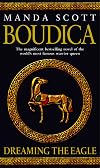
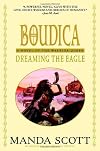
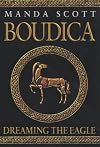
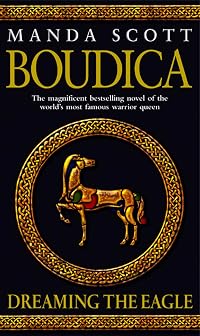
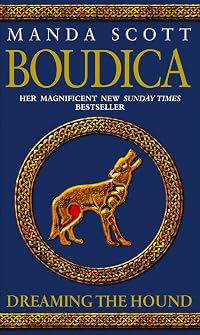
In AD 60, Boudica, war leader of the Eceni, led her people in a final bloody revolt against the occupying armies of Rome. It was the culmination of nearly twenty years of resistance against an occupying force that sought to crush a vibrant, complex civilization and replace it with the laws, taxes and slavery of the Roman Empire. Gloriously imagined, Boudica: Dreaming the Eagle recreates the beginnings of a story so powerful its impact has survived through the ages, recounting the coming of show more age of Breaca, who at twelve kills her first warrior. This is the unforgettable world of tribal Britain in the years before the Romans came: a twilight world of Dreamers and the magic of the gods; a world where warriors fight for honour as much as victory. It is a world of passion and courage and spectacular, heart-felt heroism pitched against overwhelming odds. show lessTags
Recommendations






Member Recommendations
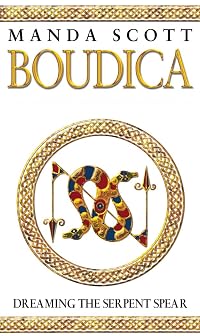
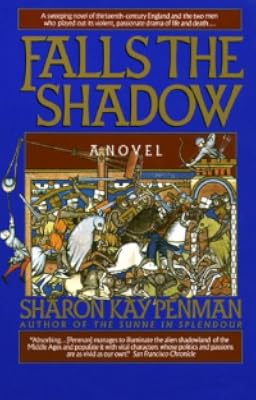
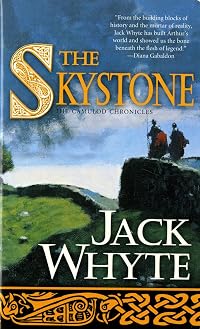
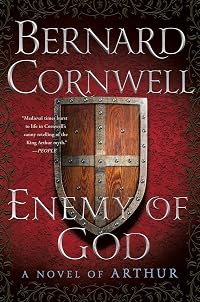
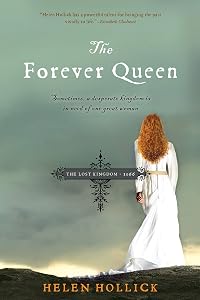
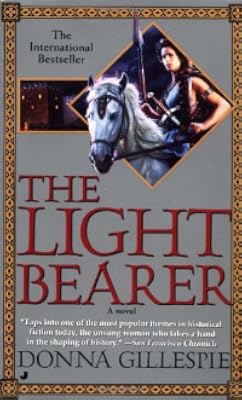
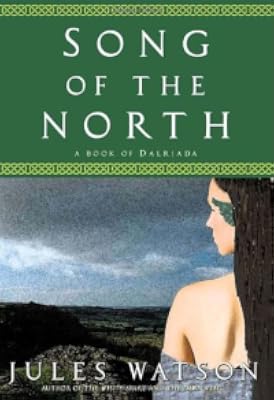
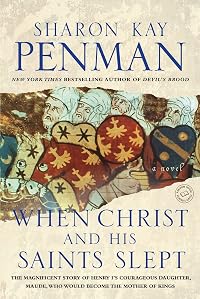
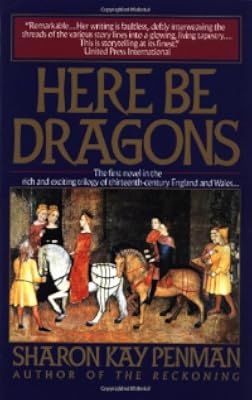
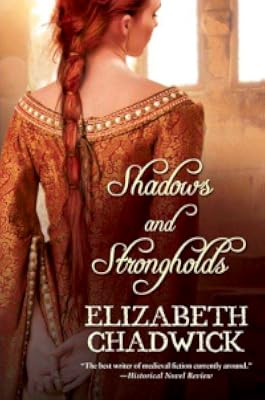
Jakujin I'd certainly associate Boudica with this one. Not a few of the auto-recs like Iggulden and Scarrow. Not much in common there. Light Bearer, also a tribal fight against Rome, a woman fighter, and my mind at least shelves them next to each other.
kraaivrouw Same story, very different takes.
Member Reviews
Breaca wants more than anything to be a 'dreamer', one of the revered mystics who interpret true dreams and who call upon nature's powers in battle. But from her first kill at age 11 or 12, it is clear that Breaca is destined to be a warrior. The opposite is true of her younger brother Ban, who despite his desire to fight, is marked out as a dreamer by his powerful visions. Dreaming the Eagle follows both of the siblings as they prepare for the inevitable Roman invasion.
Some readers will find this first book in the quartet slow - after all the invasion comes only at the very end. But I found Scott's reconstruction of life in Celtic Britain fascinating. I enjoyed reading about Breaca's quest for a true dream (which reminded me a great show more deal of a Native American vision quest) and the time she spends on Mona. I also enjoyed reading about Ban - I liked him more than I did Breaca despite his foolhardiness, so I preferred the sections about him despite some of the hardships he faced.
One issue that I did have with Dreaming the Eagle were the number of ambiguous relationships and ambiguous dialogue. At times, the characters (particularly Breaca and Caradoc) would have a conversation that clearly had a hidden significance, and I wasn't always sure what was going on. I don't mind having to work a bit for subtext, but I don't particularly like a section of dialogue to be one big riddle. It's frustrating, and there were at least a few times where I felt like I was missing the significance of some gesture or action that was never really explained.
Despite these frustrations, I was thoroughly engrossed in the world of the Iceni and of the Romans. There were enough battle or other action scenes to keep my blood pounding. And if the climactic battle didn't go at all how I expected it would (character-wise, not history-wise), it only made me more eager to read Dreaming the Bull - I need to find out what happens to Breaca and the others!
More at A Hoyden's Look at Literature. show less
Some readers will find this first book in the quartet slow - after all the invasion comes only at the very end. But I found Scott's reconstruction of life in Celtic Britain fascinating. I enjoyed reading about Breaca's quest for a true dream (which reminded me a great show more deal of a Native American vision quest) and the time she spends on Mona. I also enjoyed reading about Ban - I liked him more than I did Breaca despite his foolhardiness, so I preferred the sections about him despite some of the hardships he faced.
One issue that I did have with Dreaming the Eagle were the number of ambiguous relationships and ambiguous dialogue. At times, the characters (particularly Breaca and Caradoc) would have a conversation that clearly had a hidden significance, and I wasn't always sure what was going on. I don't mind having to work a bit for subtext, but I don't particularly like a section of dialogue to be one big riddle. It's frustrating, and there were at least a few times where I felt like I was missing the significance of some gesture or action that was never really explained.
Despite these frustrations, I was thoroughly engrossed in the world of the Iceni and of the Romans. There were enough battle or other action scenes to keep my blood pounding. And if the climactic battle didn't go at all how I expected it would (character-wise, not history-wise), it only made me more eager to read Dreaming the Bull - I need to find out what happens to Breaca and the others!
More at A Hoyden's Look at Literature. show less
Pulpy around the edges so that I feel indulgent, but few books lose me in themselves like this, why not five stars? I have been gobbled up by this book. Not the other way around.
Too much action-oriented hf bores me to tears and a Manda Scott is rare, who involves me, who even describes a fight with true excitement, not those tedious literal battles. The likes of Bernard Cornwell never made my heart race but Manda Scott knows how to.
The first thing that jumps out is that there is a world behind these people. When she puts such care into the behaviour of a chicken that’s settled outside the forge (I don’t think it was a chicken. It was a bird. And Manda Scott knows more about the behaviour of these birds than me; it did its own thing show more and that’s why it’s stuck in my head.) The writing is rich and visual. There wasn’t a word too much for me or a word too slow as she paints us a world.
And no, I didn’t find that world New Agey, though I did fear to from what’s said. I was happy to believe it Ancient Britainy. Shaman-type animal and spirit contact saturates the culture, but I found that real. What’s more I was genuinely interested in the results of Breaca’s vision-quest: I think that’s an achievement of story. There’s an intimacy with animal life without which this style of society wouldn’t be authentic. It’ll help if you’re fond of horses, or dogs.
Maybe Breaca is too splendid, but then heroes are. I can lose Caradoc I’m afraid. I think I am most struck by the side-figures and the general cast, because they can be unusual. The elder grandmother. Airmid, though she remains a mystery. Braint, who doesn’t say much but a girl who I can wish to be. We are in a woman-focused or woman-led society and sexuality is fluid. For me, this helps her get away from convention. You can see this as idealised, or then again you might underestimate the effects of the Judeo-Christian tradition. I don’t always like goddessy or mother-earthy stuff, I go near with caution, but this one laid my suspicions and I simply liked the world.
I thought pulp reared its head when we had a captive in Roman territory: a victimization that tried too hard to tug on the heart. On the other hand I’m not into Rome, I’m into the tribal societies on the frontiers of Rome, and I love a story of a freedom fight. I did enjoy, for instance, the description of a Roman villa with its atrocious ideas of home decor, a mermaid with gilt tits or similar.
I’ve settled in for the series and have the next in the mail. show less
Too much action-oriented hf bores me to tears and a Manda Scott is rare, who involves me, who even describes a fight with true excitement, not those tedious literal battles. The likes of Bernard Cornwell never made my heart race but Manda Scott knows how to.
The first thing that jumps out is that there is a world behind these people. When she puts such care into the behaviour of a chicken that’s settled outside the forge (I don’t think it was a chicken. It was a bird. And Manda Scott knows more about the behaviour of these birds than me; it did its own thing show more and that’s why it’s stuck in my head.) The writing is rich and visual. There wasn’t a word too much for me or a word too slow as she paints us a world.
And no, I didn’t find that world New Agey, though I did fear to from what’s said. I was happy to believe it Ancient Britainy. Shaman-type animal and spirit contact saturates the culture, but I found that real. What’s more I was genuinely interested in the results of Breaca’s vision-quest: I think that’s an achievement of story. There’s an intimacy with animal life without which this style of society wouldn’t be authentic. It’ll help if you’re fond of horses, or dogs.
Maybe Breaca is too splendid, but then heroes are. I can lose Caradoc I’m afraid. I think I am most struck by the side-figures and the general cast, because they can be unusual. The elder grandmother. Airmid, though she remains a mystery. Braint, who doesn’t say much but a girl who I can wish to be. We are in a woman-focused or woman-led society and sexuality is fluid. For me, this helps her get away from convention. You can see this as idealised, or then again you might underestimate the effects of the Judeo-Christian tradition. I don’t always like goddessy or mother-earthy stuff, I go near with caution, but this one laid my suspicions and I simply liked the world.
I thought pulp reared its head when we had a captive in Roman territory: a victimization that tried too hard to tug on the heart. On the other hand I’m not into Rome, I’m into the tribal societies on the frontiers of Rome, and I love a story of a freedom fight. I did enjoy, for instance, the description of a Roman villa with its atrocious ideas of home decor, a mermaid with gilt tits or similar.
I’ve settled in for the series and have the next in the mail. show less
I first came across this book in 2003 or so when I was an employee at Crapters. In August 2004, the store sent a bunch of us to Montreal on a Random House field trip to a fall preview, and at that event, they gave away a ton of books, and one I snapped up was Dreaming the Eagle. But when I tried reading I, I just couldn't get into it, even though I have read several historical accounts of Boudica and new the basics of the story.
Fast forward to March 2010, when Lana over at A Hoyden's Look at Literature reviewed the book (here), inspiring me to try it again.
And boy am I glad I did. Right from the beginning, I was gripped. I was also blown away by the writing and detail.
Starting out with Breaca's (her "real" name in this book; she was show more called Boudica by her people after the Roman invasion according to this version of the story) first kill at the age of 12, when her village was attacked by a rival tribe that killed her mother. She kills an enemy warrior and from then on everyone in the village believes she is destined to be warrior. But Breaca doesn't want this; what she does want, more than anything, is to be a dreamer, a much-revered visionary and mystic with power not only amongst the people but also the power to invoke very real experiences for others using the forces of nature. But it's not meant to be; when she does go on her "long nights" to try to acquire her dream, she is given a warrior's dream instead, and Breaca is frustrated. Eventually, however, she comes around and journey's off to the sacred island of Mona, where dreamers and warriors are trained for all the tribes, and becomes Mona's lead warrior, otherwise known as The Warrior.
Breaca is also her mother's heir as Eceni leader, though while she is under age and then pledged to Mona, her aunt Macha, who is a dreamer, fulfills the role. Macha is not only Breaca's aunt; she is also the mother of Breaca's half brother Ban, who wants to be a warrior very badly, but is ironically marked out as a dreamer - and his dreams haunt him, and at one point, get him into a lot of trouble.
This book is epic in scope. Covering about 11 years from AD 32 to AD 43, we see Breaca's development from child to teen to woman, but also from child to diplomat to war leader. We see Ban grow from a fairly happy child to a hardened warrior with a tortured soul. And, most fascinatingly, we are treated to the author's vastly detailed imagining of life in Celtic Britain before the Romans showed up and imposed their rule on what they thought were a bunch of savages. Additionally, we get some great insight into life as a Roman slave and life as a Roman legionary. Caligula even makes an appearance, which is creepy to say the least, and over all, the Romans do not come off as a very nice lot at all.
The end of Dreaming the Eagle, which covers the Roman invasion into Britain in 43AD, was devastating for me. It left me shocked and hollow - and wanting more! The brutality, the betrayal, the irony...It was intense!
The character development in this book was superb. Not only are Breaca and Ban very compelling, dynamic characters, but many of the secondary characters were so memorable, too: Corvus, the Roman legionary who gets shipwrecked in Eceni lands, was very interesting; Caradoc, the warrior of three tribes and brother to a traitor and set up to be Breaca's love interest, was mysterious and you never know where his loyalties really lie; Airmid, Breaca's..."companion" and Eceni dreamer had a very powerful presence in the book, and the elder grandmother was a crusty, decrepit old woman who you wouldn't want to meet in a dark alley. And then there were the animals, like Hail, Ban's hound, and the various horses used by Ban and Breaca that were given such prominent roles as forces to be reckoned with.
On top of this, there were several twists to Breaca and Ban's characters that completely took me by surprise. I won't give anything away, but they made me go "holy shit, I wasn't expecting that!" and that was quite cool, too.
This is the first book in a four-book series; next up is Dreaming the Bull, and I hope my favourite second hand store has a copy the next time I get there.
This is one exemplary work of historical fiction. This is how it should be done, not like that POS novel Mistress of Rome!
Posted here: http://coyotewandering.wordpress.com show less
Fast forward to March 2010, when Lana over at A Hoyden's Look at Literature reviewed the book (here), inspiring me to try it again.
And boy am I glad I did. Right from the beginning, I was gripped. I was also blown away by the writing and detail.
Starting out with Breaca's (her "real" name in this book; she was show more called Boudica by her people after the Roman invasion according to this version of the story) first kill at the age of 12, when her village was attacked by a rival tribe that killed her mother. She kills an enemy warrior and from then on everyone in the village believes she is destined to be warrior. But Breaca doesn't want this; what she does want, more than anything, is to be a dreamer, a much-revered visionary and mystic with power not only amongst the people but also the power to invoke very real experiences for others using the forces of nature. But it's not meant to be; when she does go on her "long nights" to try to acquire her dream, she is given a warrior's dream instead, and Breaca is frustrated. Eventually, however, she comes around and journey's off to the sacred island of Mona, where dreamers and warriors are trained for all the tribes, and becomes Mona's lead warrior, otherwise known as The Warrior.
Breaca is also her mother's heir as Eceni leader, though while she is under age and then pledged to Mona, her aunt Macha, who is a dreamer, fulfills the role. Macha is not only Breaca's aunt; she is also the mother of Breaca's half brother Ban, who wants to be a warrior very badly, but is ironically marked out as a dreamer - and his dreams haunt him, and at one point, get him into a lot of trouble.
This book is epic in scope. Covering about 11 years from AD 32 to AD 43, we see Breaca's development from child to teen to woman, but also from child to diplomat to war leader. We see Ban grow from a fairly happy child to a hardened warrior with a tortured soul. And, most fascinatingly, we are treated to the author's vastly detailed imagining of life in Celtic Britain before the Romans showed up and imposed their rule on what they thought were a bunch of savages. Additionally, we get some great insight into life as a Roman slave and life as a Roman legionary. Caligula even makes an appearance, which is creepy to say the least, and over all, the Romans do not come off as a very nice lot at all.
The end of Dreaming the Eagle, which covers the Roman invasion into Britain in 43AD, was devastating for me. It left me shocked and hollow - and wanting more! The brutality, the betrayal, the irony...It was intense!
The character development in this book was superb. Not only are Breaca and Ban very compelling, dynamic characters, but many of the secondary characters were so memorable, too: Corvus, the Roman legionary who gets shipwrecked in Eceni lands, was very interesting; Caradoc, the warrior of three tribes and brother to a traitor and set up to be Breaca's love interest, was mysterious and you never know where his loyalties really lie; Airmid, Breaca's..."companion" and Eceni dreamer had a very powerful presence in the book, and the elder grandmother was a crusty, decrepit old woman who you wouldn't want to meet in a dark alley. And then there were the animals, like Hail, Ban's hound, and the various horses used by Ban and Breaca that were given such prominent roles as forces to be reckoned with.
On top of this, there were several twists to Breaca and Ban's characters that completely took me by surprise. I won't give anything away, but they made me go "holy shit, I wasn't expecting that!" and that was quite cool, too.
This is the first book in a four-book series; next up is Dreaming the Bull, and I hope my favourite second hand store has a copy the next time I get there.
This is one exemplary work of historical fiction. This is how it should be done, not like that POS novel Mistress of Rome!
Posted here: http://coyotewandering.wordpress.com show less
The historical heroine Boudica is one who has always fascinated me: warrior woman, leader of the legendary Eceni, fierce defender of her homeland, nemesis of the might of Rome. So it was with relish I picked up the first of a series of novels about Boudica by British author, Manda Scott. I was not disappointed.
Scott's realization of Boudica and her development as the leader of her people is a well-researched, richly detailed historical novel without the usual descent into romantic saccharine usually accompanying the work of many female historical fiction writers. This is a gritty portrayal, not unlike the work of Bernard Cornwell. There are, of course, artistic liberties which have been taken, but most of them done with sensitivity to show more the integrity of historical accuracy.
If you love realistic historical fiction I highly recommend plunging into Dreaming the Eagle, by Manda Scott. Very much look forward to reading the next in the series. show less
Scott's realization of Boudica and her development as the leader of her people is a well-researched, richly detailed historical novel without the usual descent into romantic saccharine usually accompanying the work of many female historical fiction writers. This is a gritty portrayal, not unlike the work of Bernard Cornwell. There are, of course, artistic liberties which have been taken, but most of them done with sensitivity to show more the integrity of historical accuracy.
If you love realistic historical fiction I highly recommend plunging into Dreaming the Eagle, by Manda Scott. Very much look forward to reading the next in the series. show less
I enjoyed this account of a young Boudica and her family, her tribe and her enemies. The writing in particular was lovely and brought the period to life. I liked the detailed description of everyday life, of traditions and spiritual beliefs. The parts dealing with the Roman invaders were especially well drawn up and, as far as I can tell, were accurately portrayed. A lot of research must have gone into the writing of this series, and while I do realize that this is not to everyone's taste, I like my historical fiction with a lot of history in it, so for me it was great!
Boudica: Dreaming the Eagle is the fantastic story of Boudica, warrior queen of the Iceni tribe (or Eceni, according to Manda Scott). This novel is the first in a series, and covers Boudica’s (called Breaca) early years, from the age of eight to 21, when she faced the Romans in battle. Other major characters in the novel are Ban, who later goes to the Continent and experiences a sort of rebirth as a Roman citizen; and Caradoc (Caractatus), leader of the Catuvellauni, with whom Breaca has a tentative alliance.
You could say this book is divided into two parts, with the first half devoted to the struggle between the Iceni and Catuvellauni, and the second to the struggle between the native Britons and the Romans.
It must be very tough to show more write a novel about a people whose culture was oral and not written. The Romans wrote about Boudica, but their opinions were hardly objective. Not much is known about Boudica, and even less is known about her childhood, so a lot of this novel is, as the author admits in her note at the end, fictional. But Scott does a fantastic job with what little information she does have, and her characters seem real and believable. Her information about the Romans is a little more complete, because they, of course, left written records. The historian Dio Cassius described Breaca as having flaming red hair, and boy, does Manda Scott run with that.
I took a real chance when buying this book, because I’d never even heard of the author before and didn’t know if I’d like a 700-page novel about Roman Britain. And, at first I was a little wary of the “dreaming” concept that drives the book. But I was pleasantly surprised. The dreaming isn’t over-the-top, and the animal imagery is simply amazing. The story takes a little while to gather momentum, but reading through the first 50 pages or so yields a really rich, rewarding reading experience. This is a very strong start to what promises to be a very engaging series. show less
You could say this book is divided into two parts, with the first half devoted to the struggle between the Iceni and Catuvellauni, and the second to the struggle between the native Britons and the Romans.
It must be very tough to show more write a novel about a people whose culture was oral and not written. The Romans wrote about Boudica, but their opinions were hardly objective. Not much is known about Boudica, and even less is known about her childhood, so a lot of this novel is, as the author admits in her note at the end, fictional. But Scott does a fantastic job with what little information she does have, and her characters seem real and believable. Her information about the Romans is a little more complete, because they, of course, left written records. The historian Dio Cassius described Breaca as having flaming red hair, and boy, does Manda Scott run with that.
I took a real chance when buying this book, because I’d never even heard of the author before and didn’t know if I’d like a 700-page novel about Roman Britain. And, at first I was a little wary of the “dreaming” concept that drives the book. But I was pleasantly surprised. The dreaming isn’t over-the-top, and the animal imagery is simply amazing. The story takes a little while to gather momentum, but reading through the first 50 pages or so yields a really rich, rewarding reading experience. This is a very strong start to what promises to be a very engaging series. show less
Stopped after Disc 5, track 14 -- at Section II, Winter-Spring A.D. 37. The pace is very leisurely, and I didn't feel driven to finish it.
However, I think someone who likes grand epic tales involving a strong sense of place and/or the creation of a culture/society would like it. The action during the portions I read is more mental and internal, but Boudica's life would later lend itself to battle scenes and fast-paced action. But Manda Scott's attention to detail, setting, and emotion might slow the battle lust down to the pace of a battle remembered. The character-centered mood/tone prevents an adrenaline rush from developing.
Basically, I think it is a good series for Historical Fiction fans. But it is not a good match for Military show more History fans or people who like fast-paced, plot-driven novels. show less
However, I think someone who likes grand epic tales involving a strong sense of place and/or the creation of a culture/society would like it. The action during the portions I read is more mental and internal, but Boudica's life would later lend itself to battle scenes and fast-paced action. But Manda Scott's attention to detail, setting, and emotion might slow the battle lust down to the pace of a battle remembered. The character-centered mood/tone prevents an adrenaline rush from developing.
Basically, I think it is a good series for Historical Fiction fans. But it is not a good match for Military show more History fans or people who like fast-paced, plot-driven novels. show less
Members
- Recently Added By
Lists

LGBTQ+ Speculative Fiction
821 works; 51 members

Fiction with Women's Names in the Title
378 works; 15 members

once upon a time ~ ancient world
46 works; 7 members

al.vick-series
381 works; 2 members

Books recommended in the history category on FiveBooks.com
329 works; 4 members
Author Information

26+ Works 3,800 Members
Some Editions
Series

Belongs to Publisher Series
blanvalet (36486)
Common Knowledge
- Canonical title
- Boudica: Dreaming the Eagle
- Original title
- Boudica: Dreaming the Eagle
- Original publication date
- 2003-05-27
- People/Characters
- Breaca nic Graine; Boudica
- Important places*
- Britannien
- Important events
- Claudian invasion of Britain
- Dedication
- For Robin and Elaine, with love.
- First words
- The attack came in the hour before dawn.
- Last words*
- (Click to show. Warning: May contain spoilers.)Das Letzte, was Bán von seiner Mutter sah, war die schroff abweisende Haltung ihres Rückens und der Zaunkönig, der über ihrem Kopf kreiste, zwitschernd und jubilierend.
- Blurbers
- Auel, Jean M.
*Some information comes from Common Knowledge in other languages. Click "Edit" for more information.
Classifications
Statistics
- Members
- 968
- Popularity
- 27,286
- Reviews
- 28
- Rating
- (3.86)
- Languages
- 7 — Dutch, English, French, German, Portuguese, Romanian, Spanish
- Media
- Paper, Audiobook, Ebook
- ISBNs
- 37
- ASINs
- 12