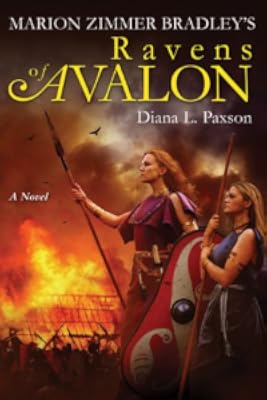
Ravens of Avalon
by Diana L. Paxson, Marion Zimmer Bradley
Avalon, Chronological Order (3), Avalon, Published Order (6)
On This Page
Description
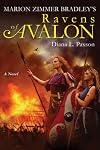
Diana L. Paxson expands Marion Zimmer Bradley's beloved and bestselling Avalon series in a dramatic new installment. Marion Zimmer Bradley's Ravens of Avalon, the prequel to The Forest House, tells the story of the Roman conquest of Britain and the origin of the Forest House that preceded the return to Avalon.Marion Zimmer Bradley's Ravens of Avalon follows the journey of Boudica, a Celtic princess, and Lhiannon, a priestess who is Boudica's mentor on the Druid isle. When the Romans conquer show more Britain, Lhiannon fights them while Boudica marries a king who has surrendered. Theirs is a great love story, but when he dies, the Romans brutalize her and her daughters. Enraged, Boudica raises the British tribes and nearly succeeds in driving the Romans from Britain, claiming a place in history. Lhiannon survives and becomes the guardian of the Druid traditions in the new Roman Britannia as high priestess of the Forest House.Epic in its sweep and peopled by the remarkable women who have always inhabited Avalon, Marion Zimmer Bradley's Ravens of Avalon expands the legendary saga that has enchanted millions of readers over the years and is sure to please Bradley's loyal readership as well as anyone who loves wonderfully told stories of history, myth, and fantasy. show lessTags
Recommendations

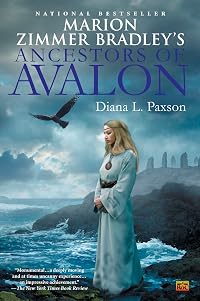

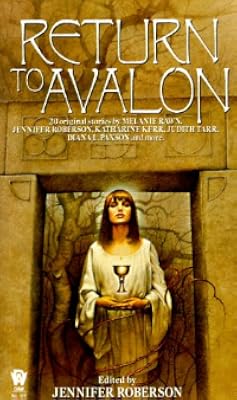
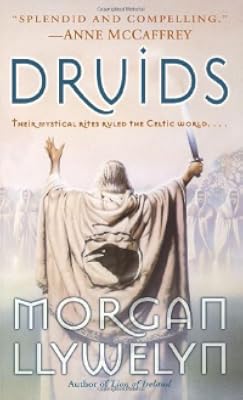
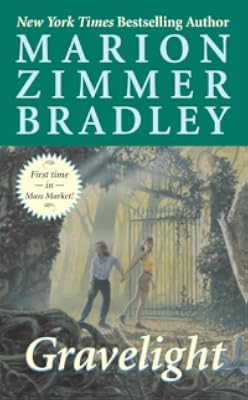
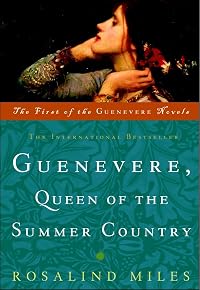










Member Recommendations
kraaivrouw Same story, very different takes.
Member Reviews
Dull. The story of Boudica molded to suit MZB's Avalon mythos alternating with the Druid priestess Lhiannon's life in such a way as to remove all tension and internal reality with tell rather than show storytelling.
After reading this book, I did a little research about the historical Boudica. For the most part, I would say that Paxson holds well to the historical record of Boudica while incorporating the mythology of Marion Zimmer Bradley's Avalon series. From the outset, I expected the battle that Boudica is famous for to occur within the first half of the book, but the whole thing actually leads up to it as the final climax.
The book progresses in typical Bradley fashion, following the lives of Boudica and Lhiannon as they intersect and divide, like two parallel lines on a page. The sub-plots build and taper off, dealing with the typical issues of romance, religion, and cultural differences. Lhiannon stays in her role as priestess, seemingly show more never allowed to realize her full potential, despite prophecy and ambition. Boudica leaves Mona to be wed to the powerful King Prasutagos in the midst of a Roman takeover. Despite the power that these two women are certain resides in Brittania, their people lack the organization and man-power of the Roman Empire. Defeat after defeat only gives them more reason to seek out peace.
Lhiannon's role seems to be that of victim, as she loses first in religious ambition, then in romantic ambition, and finally losing her best friend. Even so, I can't help feeling sorry for her and hoping that something will work out in her favor. The one thing that seems to go her way is when she adopts a girl, Caillean, whom the reader never actually gets to meet.
Boudica's role morphs as the plot progresses from wife, to mother, and finally to Queen. For me, the most moving sub-plot was Boudica's miscarriage - I cried. This also involved the only "loose end" that really bugged me - the Morrigan addressing her lost son without really giving her an answer. Despite that, what drove her to become the great Queen that she is most known for is her love for her children and her anger at their treatment by the Romans. The way that she responded to these kinds of injustices are what humanized her and made her choices relateable. In the end, it was obvious that though she knew she had no room for regret in her choices, she likely wondered if there was truly any way that the peoples of Britannia could have defeated the Romans.
Though this book did take a long time for me to read, I still felt that it stayed true to the writing style of the late Bradley and was an appreciated addition to the Avalon series. show less
The book progresses in typical Bradley fashion, following the lives of Boudica and Lhiannon as they intersect and divide, like two parallel lines on a page. The sub-plots build and taper off, dealing with the typical issues of romance, religion, and cultural differences. Lhiannon stays in her role as priestess, seemingly show more never allowed to realize her full potential, despite prophecy and ambition. Boudica leaves Mona to be wed to the powerful King Prasutagos in the midst of a Roman takeover. Despite the power that these two women are certain resides in Brittania, their people lack the organization and man-power of the Roman Empire. Defeat after defeat only gives them more reason to seek out peace.
Lhiannon's role seems to be that of victim, as she loses first in religious ambition, then in romantic ambition, and finally losing her best friend. Even so, I can't help feeling sorry for her and hoping that something will work out in her favor. The one thing that seems to go her way is when she adopts a girl, Caillean, whom the reader never actually gets to meet.
Boudica's role morphs as the plot progresses from wife, to mother, and finally to Queen. For me, the most moving sub-plot was Boudica's miscarriage - I cried. This also involved the only "loose end" that really bugged me - the Morrigan addressing her lost son without really giving her an answer. Despite that, what drove her to become the great Queen that she is most known for is her love for her children and her anger at their treatment by the Romans. The way that she responded to these kinds of injustices are what humanized her and made her choices relateable. In the end, it was obvious that though she knew she had no room for regret in her choices, she likely wondered if there was truly any way that the peoples of Britannia could have defeated the Romans.
Though this book did take a long time for me to read, I still felt that it stayed true to the writing style of the late Bradley and was an appreciated addition to the Avalon series. show less
The Roman conquest of Britain was a tumultuous time when fear and death reigned. Diana Paxson has chosen this era in which to set the latest prequel to Marion Zimmer Bradley's Mists of Avalon. The story is split between two women, Lhiannon, a senior priestess, and Boudica, who would become the warrior queen who nearly threw the Romans back into the sea. The story told here is the story of the Britons fight to control their own destiny.
I am of two minds on this story, and I admit that parts I took issue with are not going to be issues for most readers. However, I've spent a lot of time studying the religious beliefs of the various Celtic tribes and I feel that Paxson twisted them completely into something that they were not. Throughout show more the book there are many references to the Goddess, to the four elements, etc. What little evidence that remains clearly shows these to not be at all congruous with the spiritual beliefs of the Celtic tribes. I found myself rolling my eyes through much of the spiritual content.
However, Boudica's story, the story of the warriors, and the struggle with the warriors was very well told. It was this that kept me reading the book. I have long been interested in Boudica's place in history and it was a breath of fresh air to see her story told. She seems to have been mostly forgotten, which is a shame, because she should be an example for all strong women.
I found this book to be the weakest of all the Mists prequels and while, once I got past the neo-pagan beliefs superimposed upon the actual beliefs of the Celtic tribes, I enjoyed it, it is unlikely that I will pick up any more books that may be written. Each book since The Forest House has gotten successively weaker and less worthy bearing Marion Zimmer Bradley's name. show less
I am of two minds on this story, and I admit that parts I took issue with are not going to be issues for most readers. However, I've spent a lot of time studying the religious beliefs of the various Celtic tribes and I feel that Paxson twisted them completely into something that they were not. Throughout show more the book there are many references to the Goddess, to the four elements, etc. What little evidence that remains clearly shows these to not be at all congruous with the spiritual beliefs of the Celtic tribes. I found myself rolling my eyes through much of the spiritual content.
However, Boudica's story, the story of the warriors, and the struggle with the warriors was very well told. It was this that kept me reading the book. I have long been interested in Boudica's place in history and it was a breath of fresh air to see her story told. She seems to have been mostly forgotten, which is a shame, because she should be an example for all strong women.
I found this book to be the weakest of all the Mists prequels and while, once I got past the neo-pagan beliefs superimposed upon the actual beliefs of the Celtic tribes, I enjoyed it, it is unlikely that I will pick up any more books that may be written. Each book since The Forest House has gotten successively weaker and less worthy bearing Marion Zimmer Bradley's name. show less
In my endeavors to read new novels, I plucked this book off the shelf. Why wouldn’t I? I just finished The Mists of Avalon and was still in the mood to keep reading about the magical women of Britain. On the other hand, this book was about Boudica. I know enough about Boudica and the revolt against the Romans to know that things weren’t pretty and it didn’t go well for Britain. But, I’ve read a lot of stories knowing what was going to happen…so I started reading.
This book was written by Diana Paxson, longtime friend and collaborator of Marion Zimmer Bradley. Like the other post-Mists of Avalon books, it has MZB’s voice but there’s something lacking. The vastness and dept of Mists just isn’t present in this book (or in show more The Forest House, Priestess of Avalon etc). But, I enjoyed it for what it was. Diana Paxson is an excellent writer and I think she’s done a good job continuing Avalon when when Marion Zimmer Bradley died in 1999.
Boudica is the daughter of one of the chief-kings in Britain. She is sent to the Druid Isle for education, and meets the young priestess Lhiannon. The two become close friends, even though they have very different paths. Boudica, lacking the talents and patience to be a priestess, leaves to marry Praustagos and become Queen of the Iceni in the north. Lhiannon becomes a priestess who fights alongside the Druids against the invading Romans in the south. Boudica’s father had been a Roman collaborator, and she and Praustagos continue to live under Roman rule. This affords them a bit of peace. However, when Praustagos dies, the Romans deny Boudica and her daughters their rule and brutalize them. Pissed as hell, Boudica raises an army and marches through Brittania, destroying not only Roman legions, but those Britons who collaborated with them.
Diana Paxson doesn’t pretend anything like “Oh, even though they were defeated the Britons really won in their own special way” (kind of like in The Mists of Avalon…but I didn’t really mind that). The Britons were slaughtered. I’ve read about how 10,000 Romans killed somewhere around 300,000 Britons. It was kind of depressing to read…but I never got so sucked into the book that I FELT it.
I did enjoy this book. I don’t think that there’s anywhere else for the series to go (unless Diana Paxson wants to start writing about Atlantis). I wonder: if given the chance, would I read the Avalon series in chronological order (leaving The Mists of Avalon) for the end)? Hmm. Well, if she writes more, I’ll read them. I probably won’t re-read them, though. show less
This book was written by Diana Paxson, longtime friend and collaborator of Marion Zimmer Bradley. Like the other post-Mists of Avalon books, it has MZB’s voice but there’s something lacking. The vastness and dept of Mists just isn’t present in this book (or in show more The Forest House, Priestess of Avalon etc). But, I enjoyed it for what it was. Diana Paxson is an excellent writer and I think she’s done a good job continuing Avalon when when Marion Zimmer Bradley died in 1999.
Boudica is the daughter of one of the chief-kings in Britain. She is sent to the Druid Isle for education, and meets the young priestess Lhiannon. The two become close friends, even though they have very different paths. Boudica, lacking the talents and patience to be a priestess, leaves to marry Praustagos and become Queen of the Iceni in the north. Lhiannon becomes a priestess who fights alongside the Druids against the invading Romans in the south. Boudica’s father had been a Roman collaborator, and she and Praustagos continue to live under Roman rule. This affords them a bit of peace. However, when Praustagos dies, the Romans deny Boudica and her daughters their rule and brutalize them. Pissed as hell, Boudica raises an army and marches through Brittania, destroying not only Roman legions, but those Britons who collaborated with them.
Diana Paxson doesn’t pretend anything like “Oh, even though they were defeated the Britons really won in their own special way” (kind of like in The Mists of Avalon…but I didn’t really mind that). The Britons were slaughtered. I’ve read about how 10,000 Romans killed somewhere around 300,000 Britons. It was kind of depressing to read…but I never got so sucked into the book that I FELT it.
I did enjoy this book. I don’t think that there’s anywhere else for the series to go (unless Diana Paxson wants to start writing about Atlantis). I wonder: if given the chance, would I read the Avalon series in chronological order (leaving The Mists of Avalon) for the end)? Hmm. Well, if she writes more, I’ll read them. I probably won’t re-read them, though. show less
I don't think any of the prequels that have come out since Mists of Avalon are as good as the one that started them all, but I read them all just the same, to be able to visit that sacred isle. Ravens is about Boudica (and we all know how that ends) and a priestess, Lhiannon. I loved the stories of priestess training, the liturgy and ritual scattered throughout the books, and the gods that are present in the tale. Reading this reminded me how much my concept of what it means to be a priestess comes from these books, and why in my mind, a priestess should always wear blue.
Set not too long before the events on The Forests of Avalon/The Forest House following alternatively Priestess Lhiannon and Princess Boudica. The two meet when Boudica goes for training on the Druid's Isle. Boudica doesn't have as great a gift as some of the other Priestesses and trainees, but she does have a bond with the Goddess of War Cuthubodva. When the Romans attack England both women leave on seperate journeys but their paths often cross.
Boudica leaves the Island to get married to Prasutagos who becomes King. Together they overcome early insecurites and truely fall in love and have two beautiful daughters. Prasutagos suffers a kick to the stomach from a horse which leads to complications later on in his life and he dies leaving show more Boudica to rule alone. She is soon set upon and beaten by a group of Romans who also rape her children. Boudica lets in Cuthubodva and starts her own war against the Romans inciting her people to join her.
Lhiannon faces her own challenges. The man she loves is a fellow Druid but they are seperated early on at a battle and both beleive the other to be dead. They both survive and eventually meet up only for Lhiannon to find many things have changed. She is destined to be the High Priestess, but can't quite seem to get there as a rival causes problems. She witnesses much death and misses her friend Boudica. When the final battle comes Lhiannon must put aside her demons and stand by her friends side.
I loved this story. It really swept me up and it was a great addition to the series originally begun by Marion Zimmer Bradley. Diana Paxson worked with her and picked up the series after Marion's death in 1999. A blend of Celtic mythology, druid lore and fantasy with a splash of historical truths (although there are many embellishments), if you haven't read this series I strongly advise picking it up if you are interested in any of the above. show less
Boudica leaves the Island to get married to Prasutagos who becomes King. Together they overcome early insecurites and truely fall in love and have two beautiful daughters. Prasutagos suffers a kick to the stomach from a horse which leads to complications later on in his life and he dies leaving show more Boudica to rule alone. She is soon set upon and beaten by a group of Romans who also rape her children. Boudica lets in Cuthubodva and starts her own war against the Romans inciting her people to join her.
Lhiannon faces her own challenges. The man she loves is a fellow Druid but they are seperated early on at a battle and both beleive the other to be dead. They both survive and eventually meet up only for Lhiannon to find many things have changed. She is destined to be the High Priestess, but can't quite seem to get there as a rival causes problems. She witnesses much death and misses her friend Boudica. When the final battle comes Lhiannon must put aside her demons and stand by her friends side.
I loved this story. It really swept me up and it was a great addition to the series originally begun by Marion Zimmer Bradley. Diana Paxson worked with her and picked up the series after Marion's death in 1999. A blend of Celtic mythology, druid lore and fantasy with a splash of historical truths (although there are many embellishments), if you haven't read this series I strongly advise picking it up if you are interested in any of the above. show less
After the disappointing Ancestors of Avalon, Diana L. Paxson bounces back to the rich blend of historical fiction and fantasy that she and Marion Zimmer Bradley produced in Priestess of Avalon. If there are any more stories in this series which she and MZB discussed but the latter did not survive to write, I can only hope that they involve historical figures, as that seems to be where Ms. Paxson shines.
Members
- Recently Added By
Author Information

85+ Works 10,621 Members
Diana L. Paxson, a noted fantasy author who collaborated with Marion Zimmer Bradley on much of her later work, lives in Berkeley, California. She has written twenty books including the Arthurian novel "Hallowed Isle". (Bowker Author Biography)

409+ Works 98,912 Members
Marion Zimmer Bradley is a science-fiction and fantasy writer, novelist, and editor. She was born in Albany, New York on June 3, 1930. Bradley attended the New York State College for Teachers from 1946 to 1948. She earned a B.A. from Hardin Simmons University in 1964. Bradley did graduate work at the University of California at Berkeley from 1965 show more to 1967. Bradley sold her first story to Fantastic Amazing Stories as part of an amateur fiction contest. She sold her first professional story to Vortex Science Fiction in 1952. Her novels include The Sword of Aldones and The Planet Savers. Both novels were set on Darkover, the setting for more than 20 subsequent Bradley novels. Bradley also wrote The Mists of Avalon, a reworking of the King Arthur legend with more emphasis on the female characters. She used the same approach with The Firebrand, which was based on The Iliad. In addition to writing more than 85 books, Bradley was the editor of an annual anthology for DAW Books, as well as the editor of Marion Zimmer Bradley's Fantasy Magazine. Bradley died in 1999. (Bowker Author Biography) Marion Zimmer Bradley was the bestselling author of "The Mists of Avalon", "Lady of Avalon", "The Forest House", & "The Firebrand", as well as the popular Darkover series of science fiction novels. She died in 1999. (Bowker Author Biography) show less
Some Editions
Series


Common Knowledge
- Canonical title
- Ravens of Avalon
- Original title
- Ravens of Avalon
- Original publication date
- 2007
- People/Characters
- Adminios / Adminius; Anaveistl; Antebrogios; Antedios; Argantilla; Aurodil (show all 112); Beric; Bethoe; Bituitos; Bodovoc; Boudica; Bracios; brocagnos; Calgac; Caratacus; Cartimandua; Carvilios; Caw; Cingetor; Cogidubnos; Corio; Crispus; Cunobelin; Drostac of Ash HIll; Dubnocoveros; Dubrac; Eoc Mor; Epilios; Esico; Kitto; Leucu; Maglorios; Mandos; Morigenos; Nessa; Palos; Prassutagos; Rigana; Rosic; Segvax; Shanda; Tabanus; Tancoric; Tascio; TAximagulos; Temella; Tingetorix; Togodumnos; Venutios; Veric/Verica; Albi; Ambios; Ardanos; Belina; Bendeigid; Brangenos; Brenna; Brigomaglos; Caillean; Catuera; Lucius Cloto; Coventa; Cuntior; Elin; Helve; Kea; Lhiannon; Lugovalos; Mandua; Mearan; Nan; Nodona; Rheis; Rianor; Sciovana; Senora; Junius Antonius Calvus / Calvus; Decianus Catus; Claudius I, Emperor of Rome; Crispus; Gaius Julius Caesar; Caligula; Gallus / Aulus Didius Gallus; Narcissus; Nero Claudius Caesar Augustus Germanicus (Nero); Paulinus / Gaius Suetonius Paulinus; Petilius Cerialis; Plautius / Aulus Plautius; Poenius Postumus; Pollio / Lucius Junius Oikkui; Scapuola / Publius Ostorius Scapuola; Seneca / Lucius Annaeus Seneca; Silanus / Lucius Junius Silanus Torquatus; Vespasian; Adraste (Diety); Argantorota / Arianrhod (Deity); Arimanes / Arwn (Deity); Belutacadros (Deity); Cocidios (Deity); Coroticos (Deity); Lenos (Deity); Olloudios (Deity); Teutates (Deity); Brigantia (Deity); Cathubodva (Deity); Dagdevos (Deity); Epona (Goddess); Lugos /Lugh (Deity); Morrigan (Deity); Nantosuelta (Deity); Sucellos (Deity); Taranis (Deity)
- Important events
- Roman Invasion of Britain; Claudius Succeeded by Nero; Burning of Lhy Deru; Defeat of the 9th Legion; Burning of Colonia Victoria; Burning of Londinium (show all 7); Burning of Vernlamium
- Dedication
- To Sarah Rachel, who fought long and hard. . .
- First words
- At Samhain, we open our doors to the spirits of those who are gone.
- Last words
- (Click to show. Warning: May contain spoilers.)And as the waters of the sacred spring bore the queen's blood to the earth of Britannia, the power that flowed from Avalon began its healing.
- Original language
- English
Classifications
- Genres
- Fiction and Literature, Fantasy, General Fiction, Historical Fiction
- DDC/MDS
- 813.54 — Literature & rhetoric American literature in English American fiction in English 1900-1999 1945-1999
- LCC
- PS3566 .A897 .M34 — Language and Literature American literature American literature Individual authors 1961-
- BISAC
Statistics
- Members
- 733
- Popularity
- 38,563
- Reviews
- 15
- Rating
- (3.65)
- Languages
- 6 — Dutch, English, French, German, Italian, Portuguese
- Media
- Paper, Audiobook, Ebook
- ISBNs
- 24
- ASINs
- 6