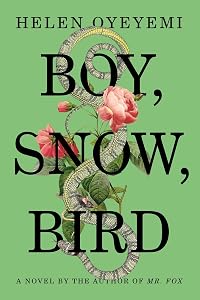
Boy, Snow, Bird
by Helen Oyeyemi
On This Page
Description
From the prizewinning author of Mr. Fox , the Snow White fairy tale brilliantly recast as a story of family secrets, race, beauty, and vanity.In the winter of 1953, Boy Novak arrives by chance in a small town in Massachusetts, looking, she believes, for beauty— the opposite of the life she' s left behind in New York. She marries a local widower and becomes stepmother to his winsome daughter, Snow Whitman.
A wicked stepmother is a creature Boy never imagined she' d become, but elements of show more the familiar tale of aesthetic obsession begin to play themselves out when the birth of Boy' s daughter, Bird, who is dark-skinned, exposes the Whitmans as light-skinned African Americans passing for white. Among them, Boy, Snow, and Bird confront the tyranny of the mirror to ask how much power surfaces really hold.
Dazzlingly inventive and powerfully moving , Boy, Snow, Bird is an astonishing and enchanting novel. With breathtaking feats of imagination, Helen Oyeyemi confirms her place as one of the most original and dynamic literary voices of our time.
. show less
Tags
Recommendations
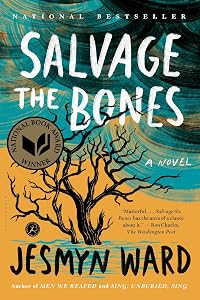
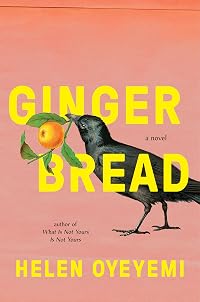
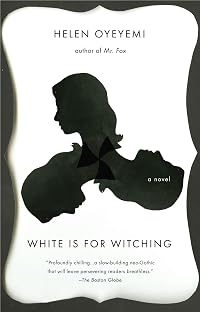
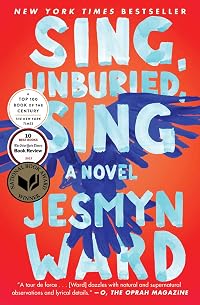

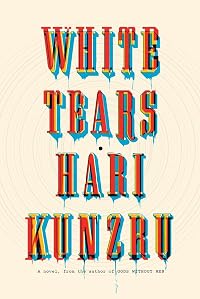
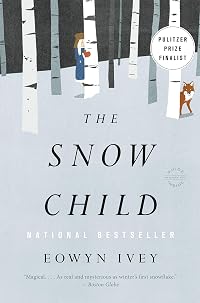
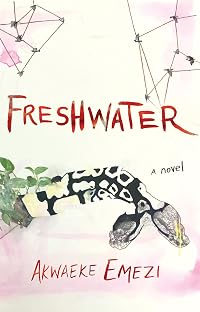
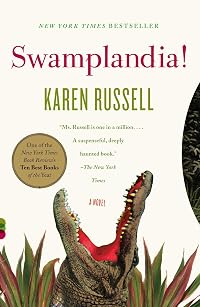

Member Recommendations
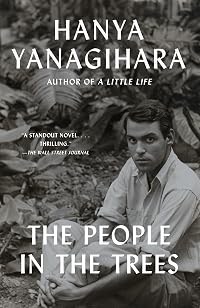
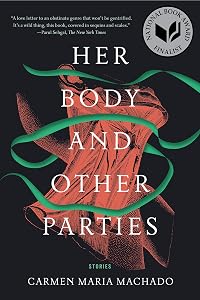
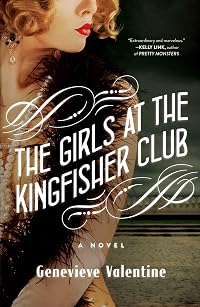
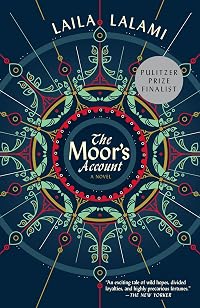
unlucky Like Boy Snow Bird, The Snow Child is a retelling of a fairy tale aimed at adults that incorporates elements of magical realism
Member Reviews
I biked to King's College to get this book from the library, and god, when you've been spending a lot of time between Southern Ontario Gothic university architecture and the awfulness of downtown buildings and construction, getting to a neat little college campus makes you feel like you've biked into a summer camp. Like Green College at UBC, you see money showing in the fact that someone cared about aesthetic. And maybe that doesn't seem relevant to a book review. I'll be getting other books from the King's Library. But this one in particular will be associated with warm summer days and quiet private colleges and a bit of an imagined life.
This book is a great take on fairytale stepmothers and female-centred relationships. I loved the show more primacy it gave to women's relations to other women. It's so refreshing. The individuals are more complicated than in a fairy tale, and the strain of magical realism is wonderfully done. There's so much that's real and serious and believable for the time(s) it portrays, and then there's this side that I think the reader is supposed to be a little unsure about. These tricks with mirrors. These collective-unconscious fable-creations. This talking to spiders. Is it fancy or is it reality?
I felt the conclusion could have been stronger, it felt a bit rushed to me. I liked the book a lot, but not enough to put it on my "books-what-I-liked" shelf, which should really be books-what-I-loved, or books-what-seemed-to-define-who-I-am. Which is the only reason it gets four stars instead of five. Still, I'd happily recommend this to just about anyone and am interested in reading more Oyeyemi. show less
This book is a great take on fairytale stepmothers and female-centred relationships. I loved the show more primacy it gave to women's relations to other women. It's so refreshing. The individuals are more complicated than in a fairy tale, and the strain of magical realism is wonderfully done. There's so much that's real and serious and believable for the time(s) it portrays, and then there's this side that I think the reader is supposed to be a little unsure about. These tricks with mirrors. These collective-unconscious fable-creations. This talking to spiders. Is it fancy or is it reality?
I felt the conclusion could have been stronger, it felt a bit rushed to me. I liked the book a lot, but not enough to put it on my "books-what-I-liked" shelf, which should really be books-what-I-loved, or books-what-seemed-to-define-who-I-am. Which is the only reason it gets four stars instead of five. Still, I'd happily recommend this to just about anyone and am interested in reading more Oyeyemi. show less
I don't know how to rate this.
I adore most of the book. Voice, tone, language, perspective, space, metaphor, restraint - love 'em all. And then...
After writing tremendously well about identity and perception, about the things we put on each other, the author ends the story with a revelation that is very hard to read as anything but transphobic bullshit. It's a strange ending that doesn't seem to fit the narrative, and the more I try to make sense of it in the plotline, the more transphobic it becomes. I'm struggling to understand how someone who writes with thoughtfulness and subtlety and frankness (in turns) about race and identity could then cast trans* identity as a trauma-induced mental illness that needs to be fixed. Honestly, show more I'm struggling. I wrote a few pages of rambling review in the hopes that I'm just misreading, misinterpreting. (Maybe she's holding up a mirror to an ugliness in our society. Maybe we're supposed to see how warped it is that Boy thinks she can 'bring back' her mother and somehow make everything ok. Maybe...)
There's some selfishness here on my part, because I want to love this work, and I want to recommend it. And more than that, I don't want to believe a person can be so clear about identity in one sense and so hurtful and wrong in another.
So here's hoping that I read it wrong. And if not, here's hoping every reader takes all that understanding of damaging expectations of identity and applies it to our conceptions of gender as well. show less
I adore most of the book. Voice, tone, language, perspective, space, metaphor, restraint - love 'em all. And then...
After writing tremendously well about identity and perception, about the things we put on each other, the author ends the story with
There's some selfishness here on my part, because I want to love this work, and I want to recommend it. And more than that, I don't want to believe a person can be so clear about identity in one sense and so hurtful and wrong in another.
So here's hoping that I read it wrong. And if not, here's hoping every reader takes all that understanding of damaging expectations of identity and applies it to our conceptions of gender as well.
Helen Oyeyemi's Boy, Snow, Bird is loosely based on the Snow White fairy tale, though it modernizes the story to one set in 1950s Massachusetts in a sleepy little segregated town. Boy, 20-year-old woman, arrives in town looking for a better life than the miserable one she left behind in New York. She finds... a lot more than she bargained for, including a widower whom she is drawn to but also clashes with.
I think the book description for this book gives a bit too much away, though I can imagine how much they struggled to write it because it's hard to write about this book without giving a lot away. Therefore, this will probably be a short review, but I hope you won't take that to mean that I did not enjoy the book. I did, but in a show more completely different way than I expected. This is a thinking book, the sort that is practically begging for group discussion and analysis to go over in minute detail all of the symbolism that I am pretty sure I did not fully grasp. For example, why the main narrator is named Boy. And the way that Oyeyemi used mirrors to describe how people can feel invisible. And the whole evil stepmother thing. And how it must have been exhausting for Snow White to be so perfect all the time. And, because I mentioned the setting above on purpose, the complex and intricate ways in which race plays into all of this and defines us in ways that we often do not wish to be defined.
There's a great quote in the book that I think sums this up pretty well:
I've met Great-aunt Effie enough times to go beyond first impressions, and there isn't a bad bone in that woman's body. But ... that girl you mentioned, the one who feels cheated, Great-aunt Effie is like that. She thinks there are treasures that were within her reach, but her skin stole them from her. She thinks she could've been somebody. But she is somebody. Somebody who's changed bullies away with broomsticks, somebody who saved for years so Aunt Clara could go to nursing school without having to ask her mother for the money. She's somebody Aunt Clara loves, somebody she couldn't have done without. A woman like Effie Whitman thinking she could've been somebody ... that pushes icicles all the way down my spine.
I wouldn't say that this book is perfect. Or, I guess I would rephrase that. I wouldn't say that this book is easy to digest and understand on the first go-round. Even now, a week after I finished it, I am still mulling over the ending and the character relationships and what exactly everything meant. I wish someone else would read the book and discuss it with me! And that's why I really liked this one. It challenged me in ways that reminded me of why I loved English class so much in school, and reminded me that we don't give modern literature nearly enough credit by focusing so much on reading "classics" because the traditional classics often ignore big issues like gender and race, and those are very important issues that deserve our attention and critical thinking.
So, while I don't know if I fully understood this novel, and I don't know if I liked everything about it, I still wholeheartedly recommend that you read it because it will exercise your brain and remind you of the way we view the world, and how that view is imperfect, and that is important. show less
I think the book description for this book gives a bit too much away, though I can imagine how much they struggled to write it because it's hard to write about this book without giving a lot away. Therefore, this will probably be a short review, but I hope you won't take that to mean that I did not enjoy the book. I did, but in a show more completely different way than I expected. This is a thinking book, the sort that is practically begging for group discussion and analysis to go over in minute detail all of the symbolism that I am pretty sure I did not fully grasp. For example, why the main narrator is named Boy. And the way that Oyeyemi used mirrors to describe how people can feel invisible. And the whole evil stepmother thing. And how it must have been exhausting for Snow White to be so perfect all the time. And, because I mentioned the setting above on purpose, the complex and intricate ways in which race plays into all of this and defines us in ways that we often do not wish to be defined.
There's a great quote in the book that I think sums this up pretty well:
I've met Great-aunt Effie enough times to go beyond first impressions, and there isn't a bad bone in that woman's body. But ... that girl you mentioned, the one who feels cheated, Great-aunt Effie is like that. She thinks there are treasures that were within her reach, but her skin stole them from her. She thinks she could've been somebody. But she is somebody. Somebody who's changed bullies away with broomsticks, somebody who saved for years so Aunt Clara could go to nursing school without having to ask her mother for the money. She's somebody Aunt Clara loves, somebody she couldn't have done without. A woman like Effie Whitman thinking she could've been somebody ... that pushes icicles all the way down my spine.
I wouldn't say that this book is perfect. Or, I guess I would rephrase that. I wouldn't say that this book is easy to digest and understand on the first go-round. Even now, a week after I finished it, I am still mulling over the ending and the character relationships and what exactly everything meant. I wish someone else would read the book and discuss it with me! And that's why I really liked this one. It challenged me in ways that reminded me of why I loved English class so much in school, and reminded me that we don't give modern literature nearly enough credit by focusing so much on reading "classics" because the traditional classics often ignore big issues like gender and race, and those are very important issues that deserve our attention and critical thinking.
So, while I don't know if I fully understood this novel, and I don't know if I liked everything about it, I still wholeheartedly recommend that you read it because it will exercise your brain and remind you of the way we view the world, and how that view is imperfect, and that is important. show less
 This review was written for LibraryThing Early Reviewers.
Oyeyemi's language weaves its own marvelous spell, which I happily expect from her now, and I was struck and moved by the struggles and lives of all three main characters.
However. Though I desperately want to give this book four stars, there was a profound misstep in the final act of the book that knocked the story right off its axis. I'll have to think about this some more, but in a story about layers & multiplicities of self, and the myriad complexities of identity, for the narrative to blatantly villainize a marginalized group in such a staunch -- and abrupt! -- manner not only startled and dismayed me, but soured the preceding narrative to a degree.
However. Though I desperately want to give this book four stars, there was a profound misstep in the final act of the book that knocked the story right off its axis. I'll have to think about this some more, but in a story about layers & multiplicities of self, and the myriad complexities of identity, for the narrative to blatantly villainize a marginalized group in such a staunch -- and abrupt! -- manner not only startled and dismayed me, but soured the preceding narrative to a degree.
Finished Boy, Snow, Bird by Helen Oyeyemi & loved it. Didn't see the end coming either. So glad that serendipity had me recently read Langston Hughes' The Ways of White Folks as some very similar themes popped up between both works & I loved how they worked in tandem & complemented each other. Oyeyemi creates a magical, yet menacing (a la Grimms' fairy tales) landscape with characters both firmly rooted in (harsh) realities while still existing on an almost mystical plane. Lots of fascinating, heart-wrenching, riveting topics on race, identity, reality, humanity, & the ties that both bind us all & also set us free. Not really a fairy tale nor magical realism, more of a unique blend of folktale, grand storytelling, political & social show more commentary told through the lives of strong & interesting women. I am enchanted with Oyeyemi's works -- so much to ponder & appreciate here.... show less
Rating: 2.5 of 5
Boy, Snow, Bird was not a Snow White retelling; instead, it was literary fiction based on Snow White's archetypes, symbolism, and themes.
This was my first novel by Oyeyemi, and her prose was magical and beautiful but, sadly, the story was not. She tackled some pretty heavy subject matter - child abuse, race in the 1950s and 1960s, identity, sexuality - and yet chose to end the story with a plot twist shocking only in its ignorance.
Up until the end, part three of the story, I was all in - I truly wanted to know where Boy, Snow and Bird would end up.
Boy was extremely narcissistic and self-hating yet sympathetic and likable. With Snow, I couldn't figure out who she really was and what was merely a reflected image, everyone show more else's perception of her. In contrast to Snow, Bird seemed like she was born knowing exactly who she was, where she wanted to go, what she wanted to do. I found the mirrors quite clever and the most fascinating aspect of the overall story. But the dynamics between mothers and their children was definitely the heart of the story, for me, and it was why I kept reading.
Then came that blasted ending... show less
Boy, Snow, Bird was not a Snow White retelling; instead, it was literary fiction based on Snow White's archetypes, symbolism, and themes.
This was my first novel by Oyeyemi, and her prose was magical and beautiful but, sadly, the story was not. She tackled some pretty heavy subject matter - child abuse, race in the 1950s and 1960s, identity, sexuality - and yet chose to end the story with a plot twist shocking only in its ignorance.
Up until the end, part three of the story, I was all in - I truly wanted to know where Boy, Snow and Bird would end up.
Boy was extremely narcissistic and self-hating yet sympathetic and likable. With Snow, I couldn't figure out who she really was and what was merely a reflected image, everyone show more else's perception of her. In contrast to Snow, Bird seemed like she was born knowing exactly who she was, where she wanted to go, what she wanted to do. I found the mirrors quite clever and the most fascinating aspect of the overall story. But the dynamics between mothers and their children was definitely the heart of the story, for me, and it was why I kept reading.
Then came that blasted ending... show less
What a brilliant, brilliant novel! Making allegorical use of the Snow White fairytale the author explored a whole range of complex and inter-linked themes (eg race, bigotry, gender, the search for identity, secrets in families, what constitutes beauty, vanity ... to name just a few!) and has created an enchanting, multi-layered story. As with all fairy-stories, beneath the "magic" there's an all-pervasive underlying darkness and she doesn't shrink from exposing this, at times in ways which made me stop and re-read certain sections because they challenged me to look at something from a different perspective, to dig deeper beneath the surface.
There is pain and darkness in this story and certain aspects of it made me feel angry about the show more experiences some of the characters faced, but there were also moments of joy and laughter which, without in any way denying the awfulness of the pain, lightened the story in a delightful way.
This is the first of Helen Oyeyami's books I have read but I'll be catching up on her backlist as soon
I can ... I'm just about to start Gingerbread! show less
There is pain and darkness in this story and certain aspects of it made me feel angry about the show more experiences some of the characters faced, but there were also moments of joy and laughter which, without in any way denying the awfulness of the pain, lightened the story in a delightful way.
This is the first of Helen Oyeyami's books I have read but I'll be catching up on her backlist as soon
I can ... I'm just about to start Gingerbread! show less
Members
- Recently Added By
Published Reviews
ThingScore 75
I have mixed feelings about Boy, Snow, Bird. But I do have to say that my opinion sways heavily toward the positive! I’ve never read anything by Oyeyemi before, though Mr Fox has been on my book depository wishlist for a while now, and I found her writing style to mesh really well with my tastes.
That’s a little bit of a weird thing to say, and I realize that. I’ll say it in a different show more way that might be more relatable: this book definitely had the potential to become one of my favorites. I really thought that’s where it was heading – Oyeyemi really knows how to write.
Boy, Snow, Bird is, among other things, a historical narrative that deeply explores race, discrimination, and passing. These elements also help solidify the book’s connections to the Snow White fairy tale. The beginning of the book is narrated by a blonde white woman named Boy, so these elements of the plot are introduced with a light emphasis through her, but they become a huge focus later on. I thought this was an interesting way to draw in the common reader, who may not have picked up this book if it were marketed differently.
Through Boy, the reader develops empathy and then when her life gets tangled in racial discourse, there’s more outrage than would have been there with a POC narrator. show less
That’s a little bit of a weird thing to say, and I realize that. I’ll say it in a different show more way that might be more relatable: this book definitely had the potential to become one of my favorites. I really thought that’s where it was heading – Oyeyemi really knows how to write.
Boy, Snow, Bird is, among other things, a historical narrative that deeply explores race, discrimination, and passing. These elements also help solidify the book’s connections to the Snow White fairy tale. The beginning of the book is narrated by a blonde white woman named Boy, so these elements of the plot are introduced with a light emphasis through her, but they become a huge focus later on. I thought this was an interesting way to draw in the common reader, who may not have picked up this book if it were marketed differently.
Through Boy, the reader develops empathy and then when her life gets tangled in racial discourse, there’s more outrage than would have been there with a POC narrator. show less
added by ShannonSweeney
Lists

Recommend the 20 best books you've read in the last five years
2,168 works; 606 members

Magic Realism
371 works; 52 members

Best 21st Century Books (So Far)
670 works; 86 members

Black Authors
384 works; 32 members

🍎 Snow White and the Seven Dwarves Based Retellings
34 works; 4 members

Books Read in 2014
2,343 works; 89 members

Mothers and Daughters
114 works; 11 members

Books featuring grandmothers
56 works; 12 members

Books Read in 2015
3,299 works; 129 members

Dublin Literary Award Longlist 2016
148 works; 4 members

Kirkus Reviews Best Fiction of 2014
100 works; 7 members

Folio Prize 2015 Longlist
79 works; 2 members

KayStJ's to-read list
1,616 works; 11 members

Animals in the Title
498 works; 11 members

Books Read in 2018
4,360 works; 110 members

TBR - Older Books
92 works; 1 member
Author Information

14+ Works 9,050 Members
Helen Oyeyemi was born on December 10, 1984 in Nigeria. She attended Corpus Christie College and later graduated form Cambridge University in 2006. She has authored seven books including: Boy, Snow, Bird, What is Not Yours in Not Yours, Mr. Fox and The Icarus Girl. She won the PEN/Open Book Award in 2017 for "What is Not Yours is Not Yours". show more (Bowker Author Biography) show less
Some Editions
Awards and Honors
Awards
Distinctions
Common Knowledge
- Canonical title
- Boy, Snow, Bird
- Original publication date
- 2014-03-06
- People/Characters
- Boy Novak/Whitman; Snow Whitman; Bird Whitman; Frank Novak; Arturo Whitman; Mia Cabrini (show all 8); Olivia Whitman; Louis Chen
- Important places
- New York, New York, USA; Flax Hill, Massachusetts, USA
- Epigraph
- Wake, girl. Your head is becoming the pillow. --Eleanor Ross Taylor
- Dedication
- For Piotr Cieplak
- First words
- Nobody ever warned me about mirrors, so for many years I was fond of them, and believed them to be trustworthy. I'd hide myself away inside them, setting two mirrors up to face each other so that when I stood between them I w... (show all)as infinitely reflected in either direction. Many, many me's. -Chapter 1, One Two Three
- Last words
- (Click to show. Warning: May contain spoilers.)I told her to wait there, and that we'd be back for her, and Olivia stood aside and let Mia drive on.
- Original language
- English
- Canonical DDC/MDS
- 823.92
- Canonical LCC
- PR6115.Y49
Classifications
Statistics
- Members
- 2,047
- Popularity
- 10,207
- Reviews
- 114
- Rating
- (3.46)
- Languages
- 6 — Czech, English, French, Italian, Portuguese, Spanish
- Media
- Paper, Audiobook, Ebook
- ISBNs
- 26
- ASINs
- 8
