
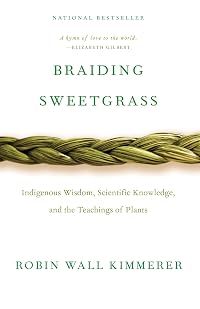
Braiding Sweetgrass: Indigenous Wisdom, Scientific Knowledge, and the Teachings of Plants
by Robin Wall Kimmerer
On This Page
Description
Nature. Sociology. Nonfiction. As a botanist and professor of plant ecology, Robin Wall Kimmerer has spent a career learning how to ask questions of nature using the tools of science. As a Potawatomi woman, she learned from elders, family, and history that the Potawatomi, as well as a majority of other cultures indigenous to this land, consider plants and animals to be our oldest teachers. In Braiding Sweetgrass, Kimmerer brings these two lenses of knowing together to reveal what it means to show more see humans as "the younger brothers of creation." As she explores these themes, she circles toward a central argument: The awakening of a wider ecological consciousness requires the acknowledgement and celebration of our reciprocal relationship with the world. Once we begin to listen for the languages of other beings, we can begin to understand the innumerable life-giving gifts the world provides us and learn to offer our thanks, our care, and our own gifts in return. show lessTags
Recommendations

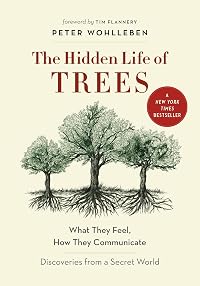
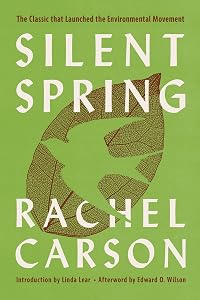
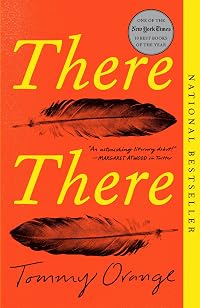
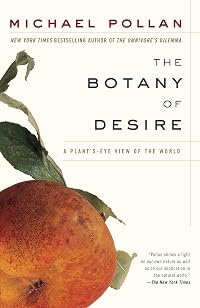










Member Recommendations
SonoranDreamer Both books are about seeing the world in ways we don't usually pay attention to.
wecreatemore Both books explore human connections with nature, include interesting nature facts while telling a story, are easy to dip in and out of
Member Reviews
I love the voice behind this book. From the very beginning where Robin laments the sense of loss and helplessness in her graduate students as they face the human destruction of natural ecosystems, I immediately understood her purpose: to re-establish a nurturing relationship between people and land. Her words are lyrical, her science is solid, and her heart is both broken and pure. I felt so moved by the reverence of the Thanksgiving Address of the Onondaga Nation (which she quotes in full) that we incorporated it into the harvest festival at our elementary school. The intersection of indigenous culture and environmental restoration is a profound lesson of the time in which we live. Thank you, Robin, for the gift of your language to show more restore the Earth. show less
A dazzlingly beautifully written collection of essays, meditations, reflections, stories that serve as a powerful and poetic ode to nature, with a deeply personal and intimate reconciliation of the author's scientific approach and scholarship and her indigenous culture, knowledge, and heritage.
One of the very best books I've read about environmentalism, ecology, climate change, native Americans, botany, and conservation.
The one downside preventing it from being perfect is that it's too much of a good thing - a bit long and repetitive in spots, and elicits such intense emotions that it's best enjoyed a chapter at a time to avoid getting bored or overwhelmed. It's like super rich chocolate mousse, divine in small amounts but you wouldn't show more want to eat a gallon of it (and even if you are tempted, it won't sit well).
TL;DR: reject "sustainability" as the goal, and instead embrace "reciprocity". The first is an attempt to continue to take as much as we can indefinitely, while the latter is a give and take, one that approaches the natural world as a wonderful partnership of mutual contribution based on respect and appreciation, rather than an extractive exploitation based on power and greed. show less
One of the very best books I've read about environmentalism, ecology, climate change, native Americans, botany, and conservation.
The one downside preventing it from being perfect is that it's too much of a good thing - a bit long and repetitive in spots, and elicits such intense emotions that it's best enjoyed a chapter at a time to avoid getting bored or overwhelmed. It's like super rich chocolate mousse, divine in small amounts but you wouldn't show more want to eat a gallon of it (and even if you are tempted, it won't sit well).
TL;DR: reject "sustainability" as the goal, and instead embrace "reciprocity". The first is an attempt to continue to take as much as we can indefinitely, while the latter is a give and take, one that approaches the natural world as a wonderful partnership of mutual contribution based on respect and appreciation, rather than an extractive exploitation based on power and greed. show less
Robin Wall Kimmerer, a member of the Citizen Potawatomi Nation and botanist, reflects on our relationship with the earth, indigenous teaching about our interactions with the environment, what has broken and what might heal. In lovely prose and with astute observations, her essays challenge us to rethink mainstream American culture and imagine another way of treating everyone - human, animal, plant - on earth.
The subtitle "Scientific Knowledge and the Teachings of Plants" made me imagine a science-y book that explained how indigenous folklore meshed with how plants worked. That's not at all what this book is. Don't get me wrong, there is science (the essay on lichens especially taught me a lot), and perhaps because it was the antithesis show more of an academic paper I probably learned more than I realize. What Kimmerer does is gently challenge us to reevaluate our relationship with the natural world. In one essay, she discusses the differences in creation narratives and its effect on how we treat the earth. In another, she talks about how she cleaned out a pond, restoring an ecosystem but also making trade-offs, knowing that she was killing organisms to get there. There's a lot to mull over or discuss with a book club. show less
The subtitle "Scientific Knowledge and the Teachings of Plants" made me imagine a science-y book that explained how indigenous folklore meshed with how plants worked. That's not at all what this book is. Don't get me wrong, there is science (the essay on lichens especially taught me a lot), and perhaps because it was the antithesis show more of an academic paper I probably learned more than I realize. What Kimmerer does is gently challenge us to reevaluate our relationship with the natural world. In one essay, she discusses the differences in creation narratives and its effect on how we treat the earth. In another, she talks about how she cleaned out a pond, restoring an ecosystem but also making trade-offs, knowing that she was killing organisms to get there. There's a lot to mull over or discuss with a book club. show less
Braiding Sweetgrass is by far the best book I've read this year. Maybe ever. I knew, halfway through, that it was going to be one of my favorite books; my copy has a plethora of little post-it notes, noting sentences that struck me with their lyricism and astute scientific knowledge. It is a book written by both the heart and the mind: the author has a Ph.D. in environmental ecology and is a devoted member of the Citizen Potawatomi Nation. The way she balances two world views is striking, and is done with grace and sensitivity.
In the book, Kimmerer stresses the concept of "reciprocity" - the giving and taking of the earth, and the mindfulness it engenders. Indeed, she presents a humanity as a connection between gratitude and the show more capacity for reciprocity, both necessary for the healing and abundance of the land. Here she presents the braid of sweetgrass with three strands that weave together the indigenous ways of knowledge, scientific knowledge, and the story of an Anishinabekwe scientist. I actually wonder if the sweetgrass braid can be interpreted as a metaphor for the author's unique heritage - the scientist, the the Native American culture and the spiritualism which lends itself quietly to the narrative flow of living mindfully.
Whether it's weaving baskets or helping salamanders cross the road or leading an expedition of college students, Kimmerer is a storyteller, a scribe, a leader, a follower but what is most plain is her unshakable love of the land. Braiding Sweetgrass is reminiscent of Annie Dillard's Pilgrim and Tinker Creek, but Wall Kimmerer's voice is distinctly her own.
If you have any interest in biology, nature, Native culture, or plant life, animals and trees and lakes and rivers, pick this book up. It's simply amazing. show less
In the book, Kimmerer stresses the concept of "reciprocity" - the giving and taking of the earth, and the mindfulness it engenders. Indeed, she presents a humanity as a connection between gratitude and the show more capacity for reciprocity, both necessary for the healing and abundance of the land. Here she presents the braid of sweetgrass with three strands that weave together the indigenous ways of knowledge, scientific knowledge, and the story of an Anishinabekwe scientist. I actually wonder if the sweetgrass braid can be interpreted as a metaphor for the author's unique heritage - the scientist, the the Native American culture and the spiritualism which lends itself quietly to the narrative flow of living mindfully.
Whether it's weaving baskets or helping salamanders cross the road or leading an expedition of college students, Kimmerer is a storyteller, a scribe, a leader, a follower but what is most plain is her unshakable love of the land. Braiding Sweetgrass is reminiscent of Annie Dillard's Pilgrim and Tinker Creek, but Wall Kimmerer's voice is distinctly her own.
If you have any interest in biology, nature, Native culture, or plant life, animals and trees and lakes and rivers, pick this book up. It's simply amazing. show less
[Braiding Sweetgrass] by [[Robin Wall Kimmerer]]
Braiding Sweetgrass is a collection of essays exploring Indigenous relationships with plants and the earth. Kimmerer is a member of the Citizen Potawatomi Nation and also a botanist who teaches at traditional American universities. She explores the differences in how her Indigenous culture and the typical American culture teaches interaction with their environments. This book flipped a lot of narrative for me; even from our earliest origin stories, our cultures have a different relationship with the world. The Christian origin story of being shut out of the garden of Eden and of having the earth provided for our comfort and use is a huge contrast with the reciprocity involved in most show more Indigenous origin stories. My writing of that is hugely over-simplified, so please don't take offense. There isn't any culture-bashing here, even when the author takes a hard look at choices we've made as a nation. Kimmerer takes 385 pages to provide context and examples of how we can all treat our earth better - benefitting the plants and animals here and also benefitting ourselves in a reciprocal relationship. She has many essays on specific plants and how, seemingly by design, our responsible use can benefit both the plant and the human. I learned so much about sweetgrass, maples, strawberries, leeks, and many more native plants.
I highlighted hundreds of passages in this book. Some books change your point of view and thinking for the better and this one definitely verbalized a perspective that I was ready to hear. I loved Kimmerer's sentiment that everyone is Indigenous to some land. As a nation of immigrants in the U.S. and Canada (her focus areas) we should strive to create an indigenous mindset to our current land by learning about our national landscape and how we can live in a reciprocal relationship with the mutual environment that we share with plants and animals.
Certainly, there aren't easy answers here. We are a transient population. It's hard to connect with the land when you move through multiple diverse regions. It's hard to connect with the environment when you live removed from green spaces. It's hard to connect with plants when they are endangered from our actions. I think it's best to look at this book as a way to inspire a desire to connect with our environment. By spending time in it, I think most people will naturally want to protect it. I will say that one of the few highlights of this pandemic has been the incredible amount of time I've spent in our local woods behind our house with my two young boys. We've spent countless hours hiking through barely navigable paths, splashing in our creek, scrambling over rocks, looking at mushrooms and weird bugs. And they've spent countless more hours playing - masked :-) - with a small group of friends creating a whole world back in the woods. I feel lucky that we ended up living in an area that is both incredibly suburban and beautifully wooded.
I highly recommend reading this book. It's a slow book, a challenging book, and an uncomfortable book at times, but it really challenged my perspective in a good way and the ideas will definitely now make up a part of my worldview.
Original publication date: 2015
Author’s nationality: Citizen Potawatami Nation
Original language: English
Length: 385 pages
Rating: 4.5 stars
Format/where I acquired the book: library kindle
Why I read this: came up in searching for books on Indigenous culture show less
Braiding Sweetgrass is a collection of essays exploring Indigenous relationships with plants and the earth. Kimmerer is a member of the Citizen Potawatomi Nation and also a botanist who teaches at traditional American universities. She explores the differences in how her Indigenous culture and the typical American culture teaches interaction with their environments. This book flipped a lot of narrative for me; even from our earliest origin stories, our cultures have a different relationship with the world. The Christian origin story of being shut out of the garden of Eden and of having the earth provided for our comfort and use is a huge contrast with the reciprocity involved in most show more Indigenous origin stories. My writing of that is hugely over-simplified, so please don't take offense. There isn't any culture-bashing here, even when the author takes a hard look at choices we've made as a nation. Kimmerer takes 385 pages to provide context and examples of how we can all treat our earth better - benefitting the plants and animals here and also benefitting ourselves in a reciprocal relationship. She has many essays on specific plants and how, seemingly by design, our responsible use can benefit both the plant and the human. I learned so much about sweetgrass, maples, strawberries, leeks, and many more native plants.
I highlighted hundreds of passages in this book. Some books change your point of view and thinking for the better and this one definitely verbalized a perspective that I was ready to hear. I loved Kimmerer's sentiment that everyone is Indigenous to some land. As a nation of immigrants in the U.S. and Canada (her focus areas) we should strive to create an indigenous mindset to our current land by learning about our national landscape and how we can live in a reciprocal relationship with the mutual environment that we share with plants and animals.
Certainly, there aren't easy answers here. We are a transient population. It's hard to connect with the land when you move through multiple diverse regions. It's hard to connect with the environment when you live removed from green spaces. It's hard to connect with plants when they are endangered from our actions. I think it's best to look at this book as a way to inspire a desire to connect with our environment. By spending time in it, I think most people will naturally want to protect it. I will say that one of the few highlights of this pandemic has been the incredible amount of time I've spent in our local woods behind our house with my two young boys. We've spent countless hours hiking through barely navigable paths, splashing in our creek, scrambling over rocks, looking at mushrooms and weird bugs. And they've spent countless more hours playing - masked :-) - with a small group of friends creating a whole world back in the woods. I feel lucky that we ended up living in an area that is both incredibly suburban and beautifully wooded.
I highly recommend reading this book. It's a slow book, a challenging book, and an uncomfortable book at times, but it really challenged my perspective in a good way and the ideas will definitely now make up a part of my worldview.
Original publication date: 2015
Author’s nationality: Citizen Potawatami Nation
Original language: English
Length: 385 pages
Rating: 4.5 stars
Format/where I acquired the book: library kindle
Why I read this: came up in searching for books on Indigenous culture show less
As a botanist, Robin Wall Kimmerer has been trained to ask questions of nature with the tools of science. As a member of the Citizen Potawatomi Nation, she embraces the notion that plants and animals are our oldest teachers. In Braiding Sweetgrass, Kimmerer brings these two lenses of knowledge together to take us on “a journey that is every bit as mythic as it is scientific, as sacred as it is historical, as clever as it is wise” (Elizabeth Gilbert). Drawing on her life as an indigenous scientist, a mother, and a woman, Kimmerer shows how other living beings—asters and goldenrod, strawberries and squash, salamanders, algae, and sweetgrass—offer us gifts and lessons, even if we’ve forgotten how to hear their voices. In a rich show more braid of reflections that range from the creation of Turtle Island to the forces that threaten its flourishing today, she circles toward a central argument: that the awakening of a wider ecological consciousness requires the acknowledgment and celebration of our reciprocal relationship with the rest of the living world. For only when we can hear the languages of other beings will we be capable of understanding the generosity of the earth, and learn to give our own gifts in return. show less
I’m speechless. A critique of capitalism in a completely new, yet natural way—through the voices of all beings on Earth, not just humans.
In Caliban and the Witch, Silvia Federici taught me that capitalism was forced on people as a reaction to protests against feudalism by peasants. Only a few benefited from this new system that was forced upon them, based on the exploitation of people and nature. This book shows another way of economics. One that was sadly crushed by the same capitalists—colonialists who spread their sickness across the world.
But there are alternatives. Capitalism is not natural. It was forced. We lived for many, many years without it. Global players are dangerous, monopolies create scarcity. Let’s return to show more what’s near. To the earth, the plants, that always offered so much. Gifts for everyone.
A beautiful, magical, emotional book. Full of knowledge. It made me want to read more like this. Now I see Mother Earth as part of me. I want to care for her. Next time I walk in the woods, I’ll bring a bag and collect trash. The Earth is our home. Let’s take care of it. show less
In Caliban and the Witch, Silvia Federici taught me that capitalism was forced on people as a reaction to protests against feudalism by peasants. Only a few benefited from this new system that was forced upon them, based on the exploitation of people and nature. This book shows another way of economics. One that was sadly crushed by the same capitalists—colonialists who spread their sickness across the world.
But there are alternatives. Capitalism is not natural. It was forced. We lived for many, many years without it. Global players are dangerous, monopolies create scarcity. Let’s return to show more what’s near. To the earth, the plants, that always offered so much. Gifts for everyone.
A beautiful, magical, emotional book. Full of knowledge. It made me want to read more like this. Now I see Mother Earth as part of me. I want to care for her. Next time I walk in the woods, I’ll bring a bag and collect trash. The Earth is our home. Let’s take care of it. show less
Members
- Recently Added By
Lists

Recommended Nature Writing
346 works; 180 members

Native American / Indigenous Literature
172 works; 100 members

Best Biographies, Autobiographies and Memoirs
465 works; 160 members

Top Five Books of 2021
604 works; 181 members

Top Five Books of 2020
982 works; 350 members

Permaculture
58 works; 7 members

Best Environmental Books
32 works; 2 members

Non-Fiction Worth Reading
1,015 works; 261 members

Top Five Books of 2017
757 works; 231 members

Top Five Books of 2022
736 works; 272 members

Top Five Books of 2016
795 works; 229 members

Top Five Books of 2019
387 works; 111 members

Phi Beta Kappa reading list
260 works; 8 members

Habitat Hero books
37 works; 1 member
Books That Changed Our Perspective
423 works; 168 members

Science: Earth
109 works; 1 member

Books Read in 2025
4,091 works; 97 members

Lending Library
4 works; 1 member
WGST Library Wishlist
1 work; 1 member

Books We Couldn't Put Down
443 works; 197 members

NYT Readers best of 21st C
100 works; 8 members

Books We Discovered On LibraryThing
530 works; 130 members

Books with ribbon marks
3 works; 1 member

Books in the Bibliography of Humans: A Monstrous History by Surekha Davies
346 works; 1 member

Top Five Books of 2025
954 works; 303 members

Indigenous Peoples: Nonfiction & Fiction
50 works; 1 member
Top Five Books of 2024
795 works; 264 members

Books Read in 2023
5,547 works; 145 members
Not the NYT list of top 100 21st century books
100 works; 6 members
Books We Love to Reread
688 works; 296 members

Best Audiobooks
240 works; 114 members
Club Read's Recommended Nonfiction Written by Women
618 works; 30 members

Top Five Books of 2023
767 works; 317 members
Books We'd Want on a Desert Island
203 works; 131 members

Book wishlist
78 works; 1 member

Female Author
1,235 works; 67 members
Favourite Books
1,817 works; 316 members

Five star books
1,755 works; 108 members

Blackwell's Five Foot Bookshelf
72 works; 4 members

Books Read in 2021
5,361 works; 114 members
Ologies with Alie Ward reading list
42 works; 2 members

Native American Heritage
52 works; 2 members

Indigenous America Reader
145 works; 12 members

Books cited in Progress by Samuel McDonald
160 works; 1 member
Author Information

Robin Wall Kimmerer is a mother, scientist, decorated professor, and enrolled member of the Citizen Potawatomi Nation. Her first book, Garhering Moss, was awarded the John Burroughs Medal for outstanding nature writing. Her writings haw appeared in Orion, O Magazine, and numerous scientific journals. She lives in Fablus, New York, where she is show more SUNY Distinguished Teaching Professor of Environmental Biology, and the founder and director of the Center for Native Peoples and the Environment. show less
Some Editions
Awards and Honors
Awards
Distinctions
Work Relationships
Is contained in
Has the adaptation
Has as a supplement
Has as a student's study guide
Common Knowledge
- Canonical title
- Braiding Sweetgrass: Indigenous Wisdom, Scientific Knowledge, and the Teachings of Plants
- Original title
- Braiding Sweetgrass: Indigenous Wisdom, Scientific Knowledge, and the Teachings of Plants
- Original publication date
- 2013
- Important places
- Onandaga Lake, Syracuse, New York
- Dedication
- For all the Keepers of the Fire
my parents
my daughters
and my grandchildren
yet to join us in this beautiful place - First words
- [Preface] Hold out your hands and let me lay upon them a sheaf of freshly picked sweetgrass, loose and flowing, like newly washed hair.
She fell like a maple seed, pirouetting on an autumn breeze. - Quotations
- "The land loves us back. She loves us with beans and tomatoes, with roasting ears and blackberries and birdsongs. By a shower of gifts and a heavy rain of lessons. She provides for us and teaches us to provide for ourselves. ... (show all)That is what good mothers do." ... "This is really why I made my daughters learn to garden—— so they would always have a mother to love them. Even after I am gone."
- Last words
- (Click to show. Warning: May contain spoilers.)In return for the privilege of breath.
- Publisher's editor
- Thomas, Patrick
- Blurbers
- Gilbert, Elizabeth; Goodall, Jane; Lyons, Oren
- Original language
- English
Classifications
- Genres
- Science & Nature, General Nonfiction, Nonfiction, Philosophy, Biography & Memoir
- DDC/MDS
- 305.897 — Society, government, & culture Social sciences, sociology & anthropology Social group - Age, Gender, Ethnicity Ethnic and national groups Other ethnic and national groups North American native peoples
- LCC
- E98 .P5 .K56 — History of the United States America Indians of North America
- BISAC
Statistics
- Members
- 6,895
- Popularity
- 1,726
- Reviews
- 169
- Rating
- (4.46)
- Languages
- 5 — Dutch, English, German, Italian, Spanish
- Media
- Paper, Audiobook, Ebook
- ISBNs
- 27
- ASINs
- 15