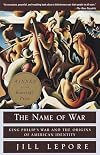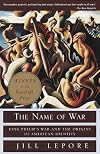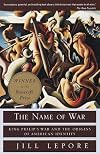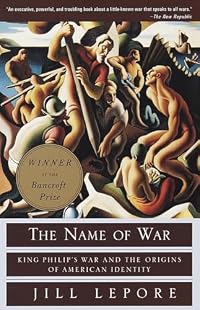
The Name of War: King Philip's War and the Origins of American Identity
by Jill Lepore
On This Page
Description
Winner of the Bancroft Prize King Philip's War, the excruciating racial war--colonists against Indians--that erupted in New England in 1675, was, in proportion to population, the bloodiest in American history. Some even argued that the massacres and outrages on both sides were too horrific to "deserve the name of a war." The war's brutality compelled the colonists to defend themselves against accusations that they had become savages. But Jill Lepore makes clear that it was after the show more war--and because of it--that the boundaries between cultures, hitherto blurred, turned into rigid ones. King Philip's War became one of the most written-about wars in our history, and Lepore argues that the words strengthened and hardened feelings that, in turn, strengthened and hardened the enmity between Indians and Anglos. Telling the story of what may have been the bitterest of American conflicts, and its reverberations over the centuries, Lepore has enabled us to see how the ways in which we remember past events are as important in their effect on our history as were the events themselves. Winner of the the 1998 Ralph Waldo Emerson Award of the Phi Beta Kappa Society show lessTags
Recommendations

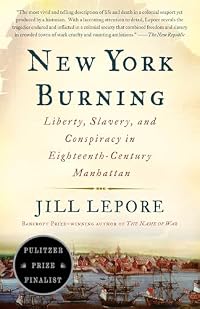
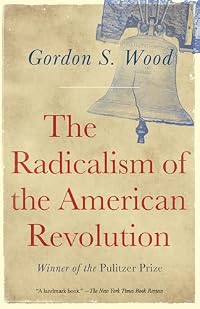
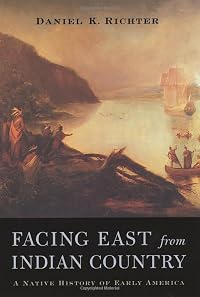
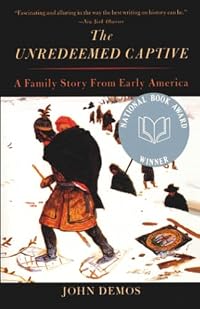




Member Recommendations
God, War, and Providence: The Epic Struggle of Roger Williams and the Narragansett Indians against the Puritans of New England by James A. Warren
Chalkstone A chronological prelude to King Philips's War.
Member Reviews
Jill Lepore explores the history of King Philip's War, fought in New England from 1675 to 1678 between an alliance of several Algonquian-speaking indigenous tribes under the leadership of Wampanoag Chief Metacomet, a.k.a. King Philip, and the English of the New England colonies and their Mohegan, Pequot, and Mohawk allies. The war is poorly defined in American history with even the name controversial. Was Philip a King? Was his name even Philip? Was it really a war or an exchange of atrocities?
Lepore investigates how the war changed the way the English colonists identified themselves. She also examines the historical resources to find the Native perspective on the war that's not often directly recorded in Western literature. A large show more part of the book focuses on the captivity narratives that became one of the major forms of literature that arose from the war. She also details the lasting legacy of the war, particularly how Metacomet became a romanticized figure in American drama in the mid-1800s at the same time that Andrew Jackson is forcibly removing the Cherokee from the Southeastern states.
It is a very interesting historical account of a significant but forgotten war and a historiology of the study of war itself. show less
Lepore investigates how the war changed the way the English colonists identified themselves. She also examines the historical resources to find the Native perspective on the war that's not often directly recorded in Western literature. A large show more part of the book focuses on the captivity narratives that became one of the major forms of literature that arose from the war. She also details the lasting legacy of the war, particularly how Metacomet became a romanticized figure in American drama in the mid-1800s at the same time that Andrew Jackson is forcibly removing the Cherokee from the Southeastern states.
It is a very interesting historical account of a significant but forgotten war and a historiology of the study of war itself. show less
Another fascinating historical study from Jill Lepore, this one about this little-remembered seventeenth-century conflict between New England colonists and Native Americans. (Though who fought whom is, as she clarifies, is not as straightforward as a X vs. Y summation would suggest.) Lepore not only lays out the chronology and the tensions that gave rise to King Philip's War, but explains, in her usual lucid and insightful prose, how the colonists sought to separate themselves from the "savages" (even the Christian Indians, who had converted), vilified the Native American cruelties while justifying their own, and controlled the narratives that came out of the conflict. Thankfully this book is a much-needed corrective to the colonists' show more triumphant stories. show less
A superb study of an all-but-forgotten war that, in the author's view, had a profound effect on Anglo-American perceptions of the Indian. First-time author Lepore (History/Boston Univ.) offers an account of the bloody war in 1675 between English settlers and Algonquian Indians in New England, a ``short, vicious'' conflict that, by proportion of population, ``inflicted greater casualties than any other war in American history.'' Her account is peppered with more than the usual atrocities: Men, women, even children are tortured and murdered, whole cities burned. It is also riddled with mysteries; as Lepore notes, the war began thanks to rumor, an unsolved murder, and pent-up but vague hatreds among peoples who had become more and more show more like one another. The English, far from home, had adopted Native American customs and cuisine, had stopped attending church, had moved farther and farther inland and away from European settlements. The Indians, for their part, had taken to wearing Western clothes, living in houses, and reading the Bible. With identities thus confused, each side waged a war that the other condemned as brutal and savage, and thousands died in the bargain. Lepore's account of the war has the immediacy of journalism, as well as learned asides about anthropological theories of conflict, the effect of literacy on hitherto preliterate populations, the nature of ethnic strife, and, most important, the memory of King Philip's War in New England. That grim memory, she suggests, tempered later policies of war and removal. The war itself continues to resonate today as Native Americans press their claims for land first lost in the conflict's aftermath. ``In the end, this book is just another story about just another war,'' Lepore writes, with wholly undue modesty. Vivid and thoughtful, it is much more than that, and it holds the promise of much good work to come. show less
Some brilliant passages, but unfortunately some really dry stretches. I was born in New England and the subject of the conflict between the colonists and some natives was new history to me. 1675-76 is not too far from just setting up the colonies and this war devastated whole towns and villages. Some big issues too! The colonists worried about going native. The decision to fight versus convert the natives. The big issues of sovereignty and land ownership. I did not know about the awful treatment of the Christian natives and the selling of the natives into slavery!
I haven't read anything by this author that has not been worth it.
I haven't read anything by this author that has not been worth it.
Not at all what I expected, but not half bad. Although The Name of War is subtitled “King Philip’s War and the Origins of American Identity”, it isn’t about King Philip’s War or the origins of American identity. The narrative is not chronological, so there’s little to nothing about the sequence of events in the war; and nobody on either side ever refers to themselves as an “American”. Instead what it’s about is the attitude of New England colonists toward themselves and the natives.
I did something I usually don’t do, which was read through reviews on Amazon before writing my own. There are plenty of negative reviews, which condemn author Jill Lepore as “revisionist” and “politically correct” and “biased show more against whites”. I don’t really see that. I have to say I also don’t agree with the jacket blurb from the Boston Globe that claims “…her drama matches that of a fine novelist…”; nobody would ever mistake this for a novel. It’s a densely written academic work that takes considerable effort to read.
Lepore apologizes right off for not being able to tell things from the Wampanoag side. Very few of the Wampanoag were literate, either in English or “Massachusetts” (which is what the colonists called their language), despite the fact that at least one (“John Printer”) was instrumental in producing a Massachusetts translation of the Bible, which probably had the distinction of being the first book in history that had more copies printed than there were people able to read it. She does speculate slightly on possible native attitudes – noting, for example, that just as the English assumed the natives had “princes” who could make decisions on behalf of their “subjects” so the Wampanoag and their allies were mystified that Connecticut and Rhode Island and Massachusetts all sent troops to fight in what the natives thought was a war between them and Plymouth Colony; just as the Algonquians didn’t see themselves as a unified group but as Wampanoag and Narragansett and Pequot, who might make temporary alliances but were essentially different, so they assumed that the colonists were the same way. (One of the useful things I learned was that in 1675 Massachusetts and Plymouth were two separate colonies).
But there’s enough from the colonist’s point of view to fill a book. A major theme is our forefathers and mothers were a whole lot more religious than even the Westboro Baptist Church. This is something that seldom crops up in historical novels or period movies. It’s a given that the war is an affliction sent by God to punish New England for its sins. It’s similarly a given that any success – from the rescue of Mary Rowlandson from captivity to overall victory in the war – is a direct manifestation of God’s mercy. It came as a telling revelation that I felt myself identifying more with the Wampanoag –despite their habits of systematically cutting the fingers, toes, arms and legs off their captives, one joint at a time, before burning them alive - than the colonists, whose all-pervading religiosity seemed strange and alien. An example almost as chilling as Wampanoag POW practices is the colonial discussion over what to do with King Philip’s captured son – about 9 years old at the time. The debate was conducted entirely with dueling Bible verses – the admonitions in Deuteronomy 24:16 and II Chronicles 25:4 being laid against Psalms 137:8-9. Eventually it was decided that Philip’s son and other captives should not be executed, but rather sold into slavery in the West Indies (to the profit of the colonial governments). Ironically, the savagery of the war and the repeated colonial complaints about the “untrustworthiness” of the natives during it depressed the market, and there were few or no buyers; several cargoes were apparently taken all the way to Tangier for sale, leading to the interesting observation that there are probably people in Morocco with more Native American ancestry than Ward Churchill.
A second theme is the colonist’s indignation on discovering a people who didn’t behave like them. (As already mentioned the natives had similar opinions but didn’t get to write them up). The colonists condemned the Wampanoag for “skulking” – attacking from ambush in small groups rather than meeting the enemy in “manly” fashion in the open. This was carried to the extent that native captives who could prove at their trials that they killed face-to-face in “soldierly” fashion were acquitted from murder charges (which is not to say that things went all that well for them after the acquittal). The charge of “skulking” is especially ironic considering what the descendants of the colonists were doing exactly 100 years later. Other ways in which the Wampanoag proved their savagery was by not owning land; by not keeping domestic animals, and, as mentioned, by not having a legitimate government with “rulers” and “subjects”.
The last part of the book covers an interesting and repeated phenomenon in American history; the gradual change of one generation’s villains to another generations heroes. By the 19th century, King Philip had changed from a bloodthirsty savage to a noble patriot. A stage play based on the war, Metamora, was one of the most popular productions in the country from around 1820 to 1840 or so. In it, Philip gets the chance to declaim at length about the perfidious colonials and their mistreatment of the natives. Metamora was especially popular in New England, where there was no longer any noticeable native presence; it was booed off the stage in Georgia, where the Cherokees were being marched off to Oklahoma. (The name “Metamora” is based on “Metacomet”, which was believed to be Philip’s Wampanoag name; as Lepore points out he used the name “Philip” in all his dealings with English speakers and his mark on documents was a stylized “P”). In a slightly strange coda, Lepore discusses the Mount Hope Rock, a slab of greywacke on the beach in Bristol, Rhode Island. There are various markings on the rock, now illegible from erosion but when discovered believed to be an engraving of a Norse longship and runic writing. An alternative theory was presented by Brown University professor Edmund Delabarre – who, although a psychology professor, was an enthusiast for supposedly ancient rock inscriptions in the Americas. Delabarre proposed that the inscription was not in Norse, but in Cherokee (in the sense that it uses the Cherokee alphabet); but it’s not in the Cherokee language, but in Algonquian, and it reads “Metacomet Great Sachem”. Lapore gives rather more attention than it deserves to the idea that persons unknown would engrave such an inscription on a rock in Rhode Island.
The main flaw in the book is that it doesn’t really discuss King Philip’s War. This was the single bloodiest conflict in North American history in terms of percentage of population lost – even exceeding the Civil War – and was the only time the natives had a serious chance of driving the colonists back into the sea. As it was, all interior population centers in Massachusetts and Plymouth were sacked; if Philip hadn’t been fighting a two front war against the Mohawks and if he could have persuaded a few more Algonquian groups to take part it might have been a different story. Lapore mentions all this, but it’s scattered through the text; a short introductory chapter that gave a chronological history of the war would have been really valuable.
Well referenced, but could use a single bibliography rather than suggestions scattered through the endnotes. Illustrations of some of the participants, including the only known depiction of the war, which is a small drawing of some natives with bows facing some colonists with muskets. Worth reading, even if tedious in spots. show less
I did something I usually don’t do, which was read through reviews on Amazon before writing my own. There are plenty of negative reviews, which condemn author Jill Lepore as “revisionist” and “politically correct” and “biased show more against whites”. I don’t really see that. I have to say I also don’t agree with the jacket blurb from the Boston Globe that claims “…her drama matches that of a fine novelist…”; nobody would ever mistake this for a novel. It’s a densely written academic work that takes considerable effort to read.
Lepore apologizes right off for not being able to tell things from the Wampanoag side. Very few of the Wampanoag were literate, either in English or “Massachusetts” (which is what the colonists called their language), despite the fact that at least one (“John Printer”) was instrumental in producing a Massachusetts translation of the Bible, which probably had the distinction of being the first book in history that had more copies printed than there were people able to read it. She does speculate slightly on possible native attitudes – noting, for example, that just as the English assumed the natives had “princes” who could make decisions on behalf of their “subjects” so the Wampanoag and their allies were mystified that Connecticut and Rhode Island and Massachusetts all sent troops to fight in what the natives thought was a war between them and Plymouth Colony; just as the Algonquians didn’t see themselves as a unified group but as Wampanoag and Narragansett and Pequot, who might make temporary alliances but were essentially different, so they assumed that the colonists were the same way. (One of the useful things I learned was that in 1675 Massachusetts and Plymouth were two separate colonies).
But there’s enough from the colonist’s point of view to fill a book. A major theme is our forefathers and mothers were a whole lot more religious than even the Westboro Baptist Church. This is something that seldom crops up in historical novels or period movies. It’s a given that the war is an affliction sent by God to punish New England for its sins. It’s similarly a given that any success – from the rescue of Mary Rowlandson from captivity to overall victory in the war – is a direct manifestation of God’s mercy. It came as a telling revelation that I felt myself identifying more with the Wampanoag –despite their habits of systematically cutting the fingers, toes, arms and legs off their captives, one joint at a time, before burning them alive - than the colonists, whose all-pervading religiosity seemed strange and alien. An example almost as chilling as Wampanoag POW practices is the colonial discussion over what to do with King Philip’s captured son – about 9 years old at the time. The debate was conducted entirely with dueling Bible verses – the admonitions in Deuteronomy 24:16 and II Chronicles 25:4 being laid against Psalms 137:8-9. Eventually it was decided that Philip’s son and other captives should not be executed, but rather sold into slavery in the West Indies (to the profit of the colonial governments). Ironically, the savagery of the war and the repeated colonial complaints about the “untrustworthiness” of the natives during it depressed the market, and there were few or no buyers; several cargoes were apparently taken all the way to Tangier for sale, leading to the interesting observation that there are probably people in Morocco with more Native American ancestry than Ward Churchill.
A second theme is the colonist’s indignation on discovering a people who didn’t behave like them. (As already mentioned the natives had similar opinions but didn’t get to write them up). The colonists condemned the Wampanoag for “skulking” – attacking from ambush in small groups rather than meeting the enemy in “manly” fashion in the open. This was carried to the extent that native captives who could prove at their trials that they killed face-to-face in “soldierly” fashion were acquitted from murder charges (which is not to say that things went all that well for them after the acquittal). The charge of “skulking” is especially ironic considering what the descendants of the colonists were doing exactly 100 years later. Other ways in which the Wampanoag proved their savagery was by not owning land; by not keeping domestic animals, and, as mentioned, by not having a legitimate government with “rulers” and “subjects”.
The last part of the book covers an interesting and repeated phenomenon in American history; the gradual change of one generation’s villains to another generations heroes. By the 19th century, King Philip had changed from a bloodthirsty savage to a noble patriot. A stage play based on the war, Metamora, was one of the most popular productions in the country from around 1820 to 1840 or so. In it, Philip gets the chance to declaim at length about the perfidious colonials and their mistreatment of the natives. Metamora was especially popular in New England, where there was no longer any noticeable native presence; it was booed off the stage in Georgia, where the Cherokees were being marched off to Oklahoma. (The name “Metamora” is based on “Metacomet”, which was believed to be Philip’s Wampanoag name; as Lepore points out he used the name “Philip” in all his dealings with English speakers and his mark on documents was a stylized “P”). In a slightly strange coda, Lepore discusses the Mount Hope Rock, a slab of greywacke on the beach in Bristol, Rhode Island. There are various markings on the rock, now illegible from erosion but when discovered believed to be an engraving of a Norse longship and runic writing. An alternative theory was presented by Brown University professor Edmund Delabarre – who, although a psychology professor, was an enthusiast for supposedly ancient rock inscriptions in the Americas. Delabarre proposed that the inscription was not in Norse, but in Cherokee (in the sense that it uses the Cherokee alphabet); but it’s not in the Cherokee language, but in Algonquian, and it reads “Metacomet Great Sachem”. Lapore gives rather more attention than it deserves to the idea that persons unknown would engrave such an inscription on a rock in Rhode Island.
The main flaw in the book is that it doesn’t really discuss King Philip’s War. This was the single bloodiest conflict in North American history in terms of percentage of population lost – even exceeding the Civil War – and was the only time the natives had a serious chance of driving the colonists back into the sea. As it was, all interior population centers in Massachusetts and Plymouth were sacked; if Philip hadn’t been fighting a two front war against the Mohawks and if he could have persuaded a few more Algonquian groups to take part it might have been a different story. Lapore mentions all this, but it’s scattered through the text; a short introductory chapter that gave a chronological history of the war would have been really valuable.
Well referenced, but could use a single bibliography rather than suggestions scattered through the endnotes. Illustrations of some of the participants, including the only known depiction of the war, which is a small drawing of some natives with bows facing some colonists with muskets. Worth reading, even if tedious in spots. show less
A remarkable history of a war I had never heard of, including its origins and the aftermath. The war is King Philip's War, a war between Algonquian Indians in New England against the Puritan colonists. The war began in 1675 and ended in 1676, and was the bloodiest war in the history of the country, on both sides.
Lepore takes us from the beginnings of relations between English colonists to approximately the present day. She traces how white Americans felt about their Native neighbors in the early days of living side-by-side - initially there was a feeling of superiority over the Spanish because the English would never be so brutal - to how the English later clung to their Englishness and their fear of losing it - to an outright sense of show more righteousness because to be English was to be better - to how the English colonists during the war justified their behavior while condemning that of the Algonquians, although the two sides both committed atrocities.
King Philip was the name given to a sachem of the Algonquians, an interpretation of the Indian name. He was also known by other names, most notably Metamora. He resisted the efforts of the English to convert him to Christianity and openly mocked the colonists for their religion. The beginning of the war came from a perceived betrayal that may not have occurred. Once begun it was horrendous, and both sides suffered great losses. The English lost their property, their homes, their livestock, along with many lives. The Algonquians similarly lost whole villages, including all inhabitants.
The death of Metamora spelled the end of the war, and this end was immortalized in many writings, from priests condemning the heathens to former captives of the Indians.
Over the years, the tone of histories of the war shifted. One hundred years later there was some sympathy for the Natives, especially notable in a popular melodramatic play of the day - Metamora. In this play Metamora was brave and strong yet doomed. The play, in a way, represented the popular view that the Natives were a noble race that had, in effect, lived past its time. They were rightly relegated to the back of the line, leading to the infamous Trail of Tears, a relocation instigated by President Jackson.
The history is as much about perceptions as about actual events. It might even be considered a history of racism in this country, in some respects. There is incredible detail and hundreds of citations that go into the work. I didn't always find it easy to read, as Lepore was careful to set out the record with many illustrations. show less
Lepore takes us from the beginnings of relations between English colonists to approximately the present day. She traces how white Americans felt about their Native neighbors in the early days of living side-by-side - initially there was a feeling of superiority over the Spanish because the English would never be so brutal - to how the English later clung to their Englishness and their fear of losing it - to an outright sense of show more righteousness because to be English was to be better - to how the English colonists during the war justified their behavior while condemning that of the Algonquians, although the two sides both committed atrocities.
King Philip was the name given to a sachem of the Algonquians, an interpretation of the Indian name. He was also known by other names, most notably Metamora. He resisted the efforts of the English to convert him to Christianity and openly mocked the colonists for their religion. The beginning of the war came from a perceived betrayal that may not have occurred. Once begun it was horrendous, and both sides suffered great losses. The English lost their property, their homes, their livestock, along with many lives. The Algonquians similarly lost whole villages, including all inhabitants.
The death of Metamora spelled the end of the war, and this end was immortalized in many writings, from priests condemning the heathens to former captives of the Indians.
Over the years, the tone of histories of the war shifted. One hundred years later there was some sympathy for the Natives, especially notable in a popular melodramatic play of the day - Metamora. In this play Metamora was brave and strong yet doomed. The play, in a way, represented the popular view that the Natives were a noble race that had, in effect, lived past its time. They were rightly relegated to the back of the line, leading to the infamous Trail of Tears, a relocation instigated by President Jackson.
The history is as much about perceptions as about actual events. It might even be considered a history of racism in this country, in some respects. There is incredible detail and hundreds of citations that go into the work. I didn't always find it easy to read, as Lepore was careful to set out the record with many illustrations. show less
On its' face, The Name of War appears to be a work of military history. It is not. Instead of merely examining battles and leaders, it examines far more. Jill Lepore, a professor of history at Boston University, instead examines the more abstract implications of the war. Beginning with the actual name of the war, she examines how language is used to describe the conflict, the role of religion and slavery, and, lastly, how the collective memory of the struggle was shaped.
King Philip's War was the seminal event in New England during the 1670s. Though it only lasted for about two years, it was the bloodiest war in American history (xi). And, more than any other conflict, it can be argued that it had an impact upon America and Americans' show more view of themselves that outlived even America's memory of the conflict as it served as the template for almost all of the later Indian conflicts (xiii).
According to Lepore, the Algonquian Indians were at a literal disadvantage in their struggle against the New Englanders; they failed to utilize language (26-27). Though many of the Indians were literate, no surviving account of the war from the Indians' perspective exists; one was not even created. Why did they fail to record their grievances, their concerns, and their reasons for war? Lepore argues that literacy had dangerous cultural implications for Indians. Those who became literate did so as part of a process of assimilation into the English-speaking world (27); their loyalties were thus split between the old and the new. It can be argued that becoming literate could be very dangerous for an Indian; in some instances, literacy could be lethal.
Fighting in such a brutal war inflicted great damage upon colonists' view of themselves as civilized, God-fearing people. Lepore argues that the New Englanders used their near monopoly of language and the printed word to explain the conflict in such a way as to reconcile its' events with their cherished image of themselves. This meant that the actions of the Indians was attributed to their uncivilized savagery, while their own actions became the measured and necessary response necessary to defend themselves and their God against their blasphemous enemies (119). The colonists' actions were a just response to the Indians' treachery.
Since only settlers recorded the history of the war, the memory of that conflict necessarily represented only their viewpoint. From there, the memory entered the collective consciousness of America. It became an allegory for the justness of the American cause during the Revolution (186), and later an integral symbol of a singularly American event, with King Philip becoming the archetypal American (194, 197).
Lepore does a fine job examining King Philip's War in a unique fashion, demonstrating how a war is remembered and how brutality may be justified. She uses a wide variety of sources to make her case: newspapers, books, journals, and letters. Even plays and short stories are used to demonstrate how a collective memory is developed and used. Lepore makes effective use of her sources to tell her story. An examination of the endnotes shows that no relevant source was ignored.
Lepore has effectively provided a rich picture of the settlers' view of themselves, and how they used their 'literal advantage' to shape public perception of the war. The only thing missing from this discussion is the Indians' response; however, we believe her—she convinces us—that their response is not just unavailable, but is nonexistent. This is—in and of itself—proof of her thesis. Lepore has provided, in a unique way, a picture of the horrors of war. show less
King Philip's War was the seminal event in New England during the 1670s. Though it only lasted for about two years, it was the bloodiest war in American history (xi). And, more than any other conflict, it can be argued that it had an impact upon America and Americans' show more view of themselves that outlived even America's memory of the conflict as it served as the template for almost all of the later Indian conflicts (xiii).
According to Lepore, the Algonquian Indians were at a literal disadvantage in their struggle against the New Englanders; they failed to utilize language (26-27). Though many of the Indians were literate, no surviving account of the war from the Indians' perspective exists; one was not even created. Why did they fail to record their grievances, their concerns, and their reasons for war? Lepore argues that literacy had dangerous cultural implications for Indians. Those who became literate did so as part of a process of assimilation into the English-speaking world (27); their loyalties were thus split between the old and the new. It can be argued that becoming literate could be very dangerous for an Indian; in some instances, literacy could be lethal.
Fighting in such a brutal war inflicted great damage upon colonists' view of themselves as civilized, God-fearing people. Lepore argues that the New Englanders used their near monopoly of language and the printed word to explain the conflict in such a way as to reconcile its' events with their cherished image of themselves. This meant that the actions of the Indians was attributed to their uncivilized savagery, while their own actions became the measured and necessary response necessary to defend themselves and their God against their blasphemous enemies (119). The colonists' actions were a just response to the Indians' treachery.
Since only settlers recorded the history of the war, the memory of that conflict necessarily represented only their viewpoint. From there, the memory entered the collective consciousness of America. It became an allegory for the justness of the American cause during the Revolution (186), and later an integral symbol of a singularly American event, with King Philip becoming the archetypal American (194, 197).
Lepore does a fine job examining King Philip's War in a unique fashion, demonstrating how a war is remembered and how brutality may be justified. She uses a wide variety of sources to make her case: newspapers, books, journals, and letters. Even plays and short stories are used to demonstrate how a collective memory is developed and used. Lepore makes effective use of her sources to tell her story. An examination of the endnotes shows that no relevant source was ignored.
Lepore has effectively provided a rich picture of the settlers' view of themselves, and how they used their 'literal advantage' to shape public perception of the war. The only thing missing from this discussion is the Indians' response; however, we believe her—she convinces us—that their response is not just unavailable, but is nonexistent. This is—in and of itself—proof of her thesis. Lepore has provided, in a unique way, a picture of the horrors of war. show less
Members
- Recently Added By
Published Reviews
In King Philip's War of 1675, Algonquian Indians decimated more than half of the towns in New England, while the British massacred Indian settlements and shipped thousands of Algonquians out of the colonies as slaves. Though academic in style, this engrossing study by a Boston University history professor sheds new light on what is widely considered the most brutal and vicious war in American show more history... This study is full of valuable material on early English-Native contacts, on the widespread sale of Indians into foreign slavery and on relations between England and the elite of Christian Indians who mistakenly believed they would be spared from slavery. show less
added by Lemeritus
Lists

r/AskHistorians' Recommended Books
1,068 works; 17 members

Books in the Bibliography of Contested Continent by Peter Mancall
495 works; 1 member
Author Information

34+ Works 9,013 Members
Jill Lepore is the David Woods Kemper '41 Professor of American History at Harvard University and a staff writer at The New Yorker. She has written several books including Book of Ages: The Life and Opinions of Jane Franklin, The Whites of Their Eyes: The Tea Party's Revolution and the Battle over American History, The Secret History of Wonder show more Woman, Joe Gould's Teeth, and These Truths: A History of the United States. (Bowker Author Biography) show less
Awards and Honors
Common Knowledge
- Canonical title
- The Name of War: King Philip's War and the Origins of American Identity
- Original publication date
- 1998
- Important places
- New England, USA; British North America; Plymouth Colony; Massachusetts Bay Colony
- Important events
- King Philip's War (1675 | 1676)
- Dedication
- To my parents: Marjorie and Frank Lepore
- First words
- This is a study of war, and how people write about it.
- Last words
- (Click to show. Warning: May contain spoilers.)They want to stand in a circle, they want to mark the rock.
- Canonical DDC/MDS
- 909
- Canonical LCC
- E83.L46
- Disambiguation notice
- 1st ed. (1998): The name of war : King Philip’s War and the origins of American identity / Jill Lepore.
Classifications
Statistics
- Members
- 888
- Popularity
- 30,238
- Reviews
- 13
- Rating
- (4.02)
- Languages
- English
- Media
- Paper, Audiobook, Ebook
- ISBNs
- 5
- ASINs
- 4