On This Page
Description
Chief homicide investigator Arkady Renko's investigation of three mutilated bodies reaches to the highest levels of the Communist hierarchy.Tags
Recommendations



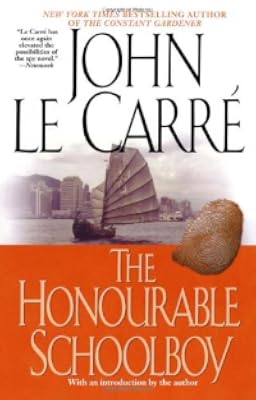

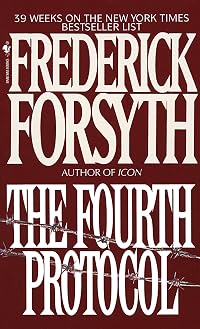
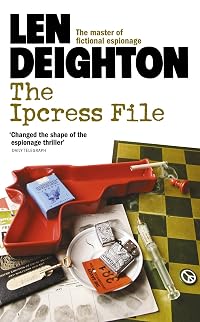
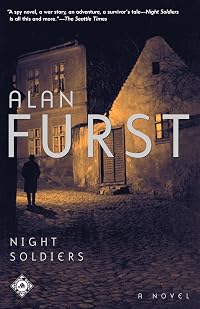

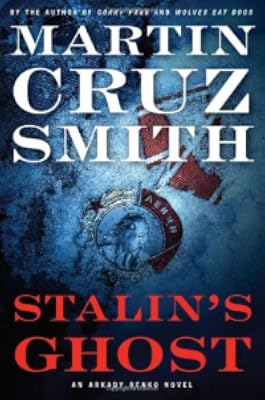
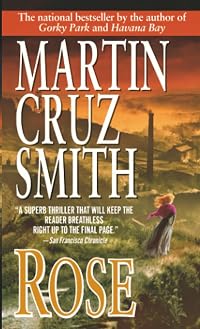

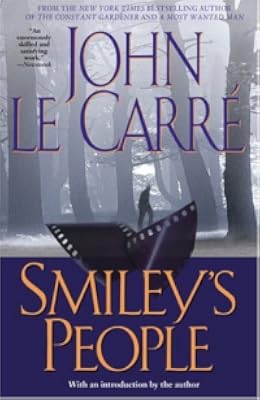
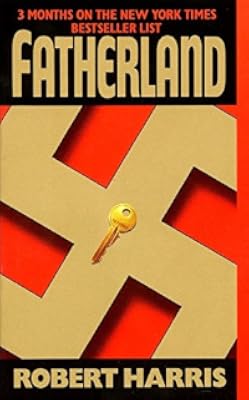







Member Recommendations
Bookmarque A thinking person's police procedural with depth and ambiguity.
11
Member Reviews
You know sometimes, you’re reading a book and you’re thinking, this ought to be good but somehow isn’t? That was my experience all through Gorky Park.
The book is set mostly in Moscow, where police investigator Arkady Renko is trying to work out who the three faceless bodies are, who killed them, why, and whether the KGB’s interest in the case is in his favour or not. As he pursues the case, Renko traipses around Moscow and its surroundings and encounters all manner of Russians, from high-ranking bureaucrats to Siberian runaways to honest factory men. He also copes with the dissolution of his marriage and hopes for the resolution of his love (I would say infatuation) for a young woman tangentially involved in his case.
There show more should be a lot to like here. The portrait of lives in Soviet Russia is rich in detail, dripping in verisimilitude. The murders at the centre of the plot seem to present a proper mystery. The thematic clash of agencies promises to enhance both. We get an authentic grasp of how the Soviet machinery works, and a doubling of the mystery: who did it and why might the KGB care? And all this is written up in well-wrought prose.
And, yet, while feeling like I was enjoying each page as I read it, I found that I couldn’t do more than 30 pages or so in a sitting. It was like trying to each huge portions of rich food. Here’s the thing, I think: Smith worked on the book for the best part of a decade, and based the Russian elements of it on a two-week trip and a whole bunch of interviews and library work. What emerges is over-stuffed and over-researched and over-written. Not any of these in a clanging bad way: the book is overall enjoyable, and you can see why it sold loads of copies. But still, it’s overdone in all those ways.
The usual, bad way in which a book manifests over-research is through the steady thud of facts about a subject being deposited in the reader’s mind. There’s a tiny bit of that here, but the problem is more like this: Smith has learnt so much about the various milieus of Soviet society that he can’t bear to miss his chance to (say) portray a homosexual relationship encouraged by and flourishing in the particular circumstances of the Soviet penal system. And so somehow the book includes all the characters and places and situations about which he’s learned. It’s all well-written and convincingly imagined and at some level impressive, but there’s just a bit too much of it, excessively digressive, there for its own sake rather than for its contribution to plot or structure. This is thrown into relief when Americans are the focal characters and when the action switches to New York; Smith can allow himself to write this without having to show everything he knows about it, because he didn’t have to learn it the same way.
Similarly, a bad over-written book is full of prose that’s been thought about too much, metaphors hammered to death, that kind of thing. Here, well, it’s the same sense of things being pushed too far, but more subtle things. Renko is almost too rich a character; he has psychological depth and nuance of implausible degree (nobody knows himself as well as Renko apparently does). Meanwhile, the murder mystery that Renko is involved with is both too mysterious and too obvious: the details are convoluted but the outline is very clear very early. Too much concentration on getting the trees just so, not enough thought about how the wood looks from afar. Finally, in the end, Smith can’t seem to decide whether to concentrate on the (intricate, clever) murder mystery, or the (intricate, clever) inter-agency conflict and intrigue lying behind it, and so does too much of both, and in the end the reader is suffocated by intricacies.
This is, in sum, a good book, but could perhaps have been really great if Smith just chilled out a little. I wonder whether in fact some of the later, less garlanded Renko novels might turn out to be better, if they were perhaps written at greater pace and and a more relaxed mind. show less
The book is set mostly in Moscow, where police investigator Arkady Renko is trying to work out who the three faceless bodies are, who killed them, why, and whether the KGB’s interest in the case is in his favour or not. As he pursues the case, Renko traipses around Moscow and its surroundings and encounters all manner of Russians, from high-ranking bureaucrats to Siberian runaways to honest factory men. He also copes with the dissolution of his marriage and hopes for the resolution of his love (I would say infatuation) for a young woman tangentially involved in his case.
There show more should be a lot to like here. The portrait of lives in Soviet Russia is rich in detail, dripping in verisimilitude. The murders at the centre of the plot seem to present a proper mystery. The thematic clash of agencies promises to enhance both. We get an authentic grasp of how the Soviet machinery works, and a doubling of the mystery: who did it and why might the KGB care? And all this is written up in well-wrought prose.
And, yet, while feeling like I was enjoying each page as I read it, I found that I couldn’t do more than 30 pages or so in a sitting. It was like trying to each huge portions of rich food. Here’s the thing, I think: Smith worked on the book for the best part of a decade, and based the Russian elements of it on a two-week trip and a whole bunch of interviews and library work. What emerges is over-stuffed and over-researched and over-written. Not any of these in a clanging bad way: the book is overall enjoyable, and you can see why it sold loads of copies. But still, it’s overdone in all those ways.
The usual, bad way in which a book manifests over-research is through the steady thud of facts about a subject being deposited in the reader’s mind. There’s a tiny bit of that here, but the problem is more like this: Smith has learnt so much about the various milieus of Soviet society that he can’t bear to miss his chance to (say) portray a homosexual relationship encouraged by and flourishing in the particular circumstances of the Soviet penal system. And so somehow the book includes all the characters and places and situations about which he’s learned. It’s all well-written and convincingly imagined and at some level impressive, but there’s just a bit too much of it, excessively digressive, there for its own sake rather than for its contribution to plot or structure. This is thrown into relief when Americans are the focal characters and when the action switches to New York; Smith can allow himself to write this without having to show everything he knows about it, because he didn’t have to learn it the same way.
Similarly, a bad over-written book is full of prose that’s been thought about too much, metaphors hammered to death, that kind of thing. Here, well, it’s the same sense of things being pushed too far, but more subtle things. Renko is almost too rich a character; he has psychological depth and nuance of implausible degree (nobody knows himself as well as Renko apparently does). Meanwhile, the murder mystery that Renko is involved with is both too mysterious and too obvious: the details are convoluted but the outline is very clear very early. Too much concentration on getting the trees just so, not enough thought about how the wood looks from afar. Finally, in the end, Smith can’t seem to decide whether to concentrate on the (intricate, clever) murder mystery, or the (intricate, clever) inter-agency conflict and intrigue lying behind it, and so does too much of both, and in the end the reader is suffocated by intricacies.
This is, in sum, a good book, but could perhaps have been really great if Smith just chilled out a little. I wonder whether in fact some of the later, less garlanded Renko novels might turn out to be better, if they were perhaps written at greater pace and and a more relaxed mind. show less
If there ever, ever were a book that should have ended sooner, this is it.
Gorky Park is, for 80% of its span, a first-rate murder mystery set in an exotic, almost other-planet-like setting, i.e. Moscow in the early 1980s. The story kicks off with a brutal slaying of three ice skaters in the eponymous park, with Arkady Renko -- who's one of the most well-drawn police detectives I've ever encountered -- assigned to untangle the case and keep himself out of the clutches of his duplicitous supervisors and colleagues, plus the KGB.
The period and location detail here are remarkable; I visited the USSR in the 1980s myself, and reading this felt like flashbacks. The greyness, the ridiculous yet menacing bureaucracy, the desperation.
Smith show more would have had five stars for sure if he'd just ended the book when the time was right. Instead, he takes our hero on a totally implausible junket to New York city, of all places. This silly ending is downright painful to read after the sustained excellence of the bulk of the book.
Recommended nevertheless! show less
Gorky Park is, for 80% of its span, a first-rate murder mystery set in an exotic, almost other-planet-like setting, i.e. Moscow in the early 1980s. The story kicks off with a brutal slaying of three ice skaters in the eponymous park, with Arkady Renko -- who's one of the most well-drawn police detectives I've ever encountered -- assigned to untangle the case and keep himself out of the clutches of his duplicitous supervisors and colleagues, plus the KGB.
The period and location detail here are remarkable; I visited the USSR in the 1980s myself, and reading this felt like flashbacks. The greyness, the ridiculous yet menacing bureaucracy, the desperation.
Smith show more would have had five stars for sure if he'd just ended the book when the time was right. Instead, he takes our hero on a totally implausible junket to New York city, of all places. This silly ending is downright painful to read after the sustained excellence of the bulk of the book.
Recommended nevertheless! show less
The novel starts as if it is police murder mystery set in the late days of the Soviet Union then becomes much more by the time it ends. The ending, a shoot em up, is disappointing because it is so banal after giving us a thoroughly interesting story. Mixed in with KGB, the Moscow city police, New York City Police, the FBI are the details of the Russian fur trade and issues over legal and illegal and power and money. Who and what you trust plays its part. Although the story line's setting is a bit dated, it retains a freshness.
Quotes: (page 67) “'These German girls,' Pasha said as he listened to a tape through his headset. 'Secretaries for the German Export Bank. Live at the Rossiya Hotel and pick up men right on the hotel dance floor. show more A Russian prostitute, one of our own, would be thrown out of the Rissiya on her ass.'
Arkady's own tapes had peccadilloes. He ease dropped on the tirades of a French-speaking liberation fighter from Chad who roomed at the Peking Hotel. The would-be national leader had a sexual appetite matched only by his difficulty in procuring partners. Girls were afraid that after fornicating once with a black man, years hence they might give birth to 'a monkey.' Up with Soviet education!”
(page 148) “'Like those bodies we found in Gorky Park you asked me about. Three people shot down with brilliant efficiency and with a Western automatic? It doesn't translate into Russian at all, does it?'
Sometimes the wind catches a parade banner and the face painted on the banner, with no change of expression,shivers. In Osborne's eyes Arkady saw such a tremor, an excitement.”
(page 178) “He had a sense that something was happening, but he didn't know what or where.. In the halls his footsteps sounded ahead of him like another man's. Most of the officers on night duty were out on the annual push to clear the central city of drunks before May Day; conversely, on May Day it would be patriotic to be drunk. Timing was everything. Kirwill's radicals, ghosts from an obscure chronology of dead passions that Arkady doubted even Americans knew or cared about---how could they have anything to do with murder in Moscow?”
(page 336) “'Our Soviet murders are secret,' he said. 'We're backward in terms of publicity. Even our accidents are secret, officially and unofficially. Our killers generally only boast when they're caught. Our witnesses lie. Sometimes, I think our witnesses are more afraid of the investigator than the killers are.' From the New Jersey side of the river he looked back at Manhattan. At the end of a million lights, two white towers reached into the night. He wouldn't have been surprised to see two moons above them. 'For a time,I thought I wanted to be a astronomer, but then I decided astronomy was a bore. The stars only interest us because they're so far away. Do you know what would really interest us? A murder on another planet.'” show less
Quotes: (page 67) “'These German girls,' Pasha said as he listened to a tape through his headset. 'Secretaries for the German Export Bank. Live at the Rossiya Hotel and pick up men right on the hotel dance floor. show more A Russian prostitute, one of our own, would be thrown out of the Rissiya on her ass.'
Arkady's own tapes had peccadilloes. He ease dropped on the tirades of a French-speaking liberation fighter from Chad who roomed at the Peking Hotel. The would-be national leader had a sexual appetite matched only by his difficulty in procuring partners. Girls were afraid that after fornicating once with a black man, years hence they might give birth to 'a monkey.' Up with Soviet education!”
(page 148) “'Like those bodies we found in Gorky Park you asked me about. Three people shot down with brilliant efficiency and with a Western automatic? It doesn't translate into Russian at all, does it?'
Sometimes the wind catches a parade banner and the face painted on the banner, with no change of expression,shivers. In Osborne's eyes Arkady saw such a tremor, an excitement.”
(page 178) “He had a sense that something was happening, but he didn't know what or where.. In the halls his footsteps sounded ahead of him like another man's. Most of the officers on night duty were out on the annual push to clear the central city of drunks before May Day; conversely, on May Day it would be patriotic to be drunk. Timing was everything. Kirwill's radicals, ghosts from an obscure chronology of dead passions that Arkady doubted even Americans knew or cared about---how could they have anything to do with murder in Moscow?”
(page 336) “'Our Soviet murders are secret,' he said. 'We're backward in terms of publicity. Even our accidents are secret, officially and unofficially. Our killers generally only boast when they're caught. Our witnesses lie. Sometimes, I think our witnesses are more afraid of the investigator than the killers are.' From the New Jersey side of the river he looked back at Manhattan. At the end of a million lights, two white towers reached into the night. He wouldn't have been surprised to see two moons above them. 'For a time,I thought I wanted to be a astronomer, but then I decided astronomy was a bore. The stars only interest us because they're so far away. Do you know what would really interest us? A murder on another planet.'” show less
I've probably read this 1/2 dozen times and it never gets old. Arkady is the most true to life character I've ever read. His implausibility and reluctant drive to set things right makes him very sympathetic and believable. Supporting players are unique and there are no throw away characters. The murder and conspiracy is perfectly done and Arkady is faced with many dangers. Atmosphere in both time and place comes through clearly and totally - I really feel likeI know what it's like to be in communist Russia. Top notch.
I saw the film adaptation of Gorky Park back in the 1980s, and finally got around to reading the novel. Martin Cruz Smith weaves a compelling mystery story with scenes of life inside the Soviet Union at the height of the Cold War. Moscow chief investigator Arkady Renko must solve an unusual triple murder while outmaneuvering the many enemies who want to see him fail. The novel has enough plot differences from the movie version to keep you interested. Definitely a worthwhile read.
40th Anniversary Re-Read
Review of the Simon & Schuster UK paperback edition (October 2021) of the original Random House hardcover "Gorky Park" (February 1981)
[4.5]
Gorky Park is one of the first novels that I remember actually buying in hardcover when it was first released in 1981, a relative luxury purchase at the time. Another such purchase was Smiley's People (1979) by John le Carré (1931-2020). Both had a strong Soviet Union component and both made a nod to my heritage country of Estonia: more significantly in Smiley's People with General Vladimir's Estonian spy network, less so in Gorky Park with only a brief reference to "traitorous Estonians".
Seeing that a 40th Anniversary edition was now available with an Introduction by Lee show more Child (author of the Jack Reacher series) and a Q&A Afterword interview with author Martin Cruz Smith (1942-) made me eager to read it again to see how it held up over time. It mostly did so very well.
The paranoid and cynical view of a detective operating under a totalitarian state was especially well handled. The atmosphere of the Soviet Union was well constructed. From the Afterword we learn that this came through Smith's own location spotting from an initial tourist trip to Moscow in 1972 and his contacts with émigrés from the Soviet Union in the U.S. Smith was thus writing the book for almost a decade while still making a career in writing by publishing many books under various pseudonyms such as Nick Carter, or as the more anonymous "Martin Smith." He added the middle came of Cruz from a grandparent in order to create a more individual author name.
The weakest part of the book is probably its ending, which feels artificial and forced in retrospect. Without discussing spoiler-like details, it just seems unlikely that such a situation would occur, and with the FBI and KGB acting in cooperation. One wonders whether editors at the time insisted that the final locale placement was required in order to create a mixed "happy ending." Smith's Afterword doesn't reveal anything about him being manipulated like that though.
Still it was a strong suspense thriller overall and a worthy re-read. It certainly ignited Cruz Smith's own career with the now 9 Arkady Renko novels to date. It spawned various other "lone competent detective working within an authoritarian state" sub-genre series such as Philip Kerr's Bernie Gunther (1989-2019) in Nazi Germany, and Tom Rob Smith's Leo Demidov (2008-2011), also in the Soviet Union. Lee Child's Foreword praise was justifiably earned.
Movie poster for the 1983 film adaptation of "Gorky Park" directed by Michael Apted
Trivia and Link
Gorky Park was adapted by screenwriter Dennis Potter for its film version Gorky Park (1983) directed by Michael Apted, starring William Hurt as Arkady Renko and Lee Marvin as John Osborne. Filming locations in Helsinki and Stockholm stood in for those of Moscow. A trailer for the film can be viewed on YouTube here. show less
Review of the Simon & Schuster UK paperback edition (October 2021) of the original Random House hardcover "Gorky Park" (February 1981)
[4.5]
Gorky Park is one of the first novels that I remember actually buying in hardcover when it was first released in 1981, a relative luxury purchase at the time. Another such purchase was Smiley's People (1979) by John le Carré (1931-2020). Both had a strong Soviet Union component and both made a nod to my heritage country of Estonia: more significantly in Smiley's People with General Vladimir's Estonian spy network, less so in Gorky Park with only a brief reference to "traitorous Estonians".
Seeing that a 40th Anniversary edition was now available with an Introduction by Lee show more Child (author of the Jack Reacher series) and a Q&A Afterword interview with author Martin Cruz Smith (1942-) made me eager to read it again to see how it held up over time. It mostly did so very well.
The paranoid and cynical view of a detective operating under a totalitarian state was especially well handled. The atmosphere of the Soviet Union was well constructed. From the Afterword we learn that this came through Smith's own location spotting from an initial tourist trip to Moscow in 1972 and his contacts with émigrés from the Soviet Union in the U.S. Smith was thus writing the book for almost a decade while still making a career in writing by publishing many books under various pseudonyms such as Nick Carter, or as the more anonymous "Martin Smith." He added the middle came of Cruz from a grandparent in order to create a more individual author name.
The weakest part of the book is probably its ending, which feels artificial and forced in retrospect. Without discussing spoiler-like details, it just seems unlikely that such a situation would occur, and with the FBI and KGB acting in cooperation. One wonders whether editors at the time insisted that the final locale placement was required in order to create a mixed "happy ending." Smith's Afterword doesn't reveal anything about him being manipulated like that though.
Still it was a strong suspense thriller overall and a worthy re-read. It certainly ignited Cruz Smith's own career with the now 9 Arkady Renko novels to date. It spawned various other "lone competent detective working within an authoritarian state" sub-genre series such as Philip Kerr's Bernie Gunther (1989-2019) in Nazi Germany, and Tom Rob Smith's Leo Demidov (2008-2011), also in the Soviet Union. Lee Child's Foreword praise was justifiably earned.
Movie poster for the 1983 film adaptation of "Gorky Park" directed by Michael Apted
Trivia and Link
Gorky Park was adapted by screenwriter Dennis Potter for its film version Gorky Park (1983) directed by Michael Apted, starring William Hurt as Arkady Renko and Lee Marvin as John Osborne. Filming locations in Helsinki and Stockholm stood in for those of Moscow. A trailer for the film can be viewed on YouTube here. show less
Three bodies, buried in the snow of Moscow's Gorky Park, and at first taken to be casualties of common violence or the weather, turn out to have every trace of their identities obliterated -- papers, fingertips, faces. For Arkady Renko, a common police homicide investigator in Moscow, this unusual case begins all too familiarly as a jurisdictional squabble with the KGB.
Renko is a bit of a misfit, and definitely ideologically unsound. Son of a famous WWII general, he would have an easier time of it if he were better at the Party line. Instead, he noodles along in his low-status job, asks too many impertinent questions, and is generally viewed as a failure, especially by his wife. His early conduct of the Gorky Park case is designed to show more provoke the KGB into taking the matter off his hands -- instead he has a persistent feeling of being watched, and even managed. show less
Renko is a bit of a misfit, and definitely ideologically unsound. Son of a famous WWII general, he would have an easier time of it if he were better at the Party line. Instead, he noodles along in his low-status job, asks too many impertinent questions, and is generally viewed as a failure, especially by his wife. His early conduct of the Gorky Park case is designed to show more provoke the KGB into taking the matter off his hands -- instead he has a persistent feeling of being watched, and even managed. show less
Members
- Recently Added By
Lists

The Guardian's 1000 Novels Everyone Must Read
1,005 works; 552 members

Books That Will Keep You on the Edge of Your Seat
73 works; 20 members

Read the book and saw the movie
1,170 works; 192 members

100 Mysteries and Thrillers to Read in a Lifetime
99 works; 22 members

The Top 100 Crime Novels of All Time
100 works; 15 members

Crime and Mysteries to Read
746 works; 31 members

NPRs your picks: top 100 Killer Thrillers
100 works; 17 members

Noirvember: The Best Noir
113 works; 56 members

Top 100 Mystery Novels of All Time
98 works; 9 members

Survey of Classic Crime
39 works; 7 members

100 Best Thrillers of All Time
100 works; 6 members

Crime Writers' Association Daggers
76 works; 4 members
Murder Mysteries
57 works; 11 members

Winter Books
127 works; 16 members
Page Turners
185 works; 11 members

Books About Murder
313 works; 7 members

Detective Stories
343 works; 5 members

Books We Want To Read Again For The First Time
384 works; 160 members

BBC World Book Club
267 works; 5 members

Books With Place Names in the Title
315 works; 12 members
The "A" List
67 works; 8 members

Best Dystopias
280 works; 277 members

Books set in Moscow
16 works; 1 member

Books Read in 2020
4,379 works; 124 members

Facebook list
55 works; 3 members

Books Read in 2018
4,360 works; 110 members

Books Read in 2016
4,666 works; 197 members
20th Century Literature
1,161 works; 55 members

1980s
356 works; 23 members

World Book Club (BBC World Service)
212 works; 1 member
Talk Discussions
Past Discussions
JULY READ - SPOILERS - Gorky Park in The Green Dragon (July 2013)
JULY READ - NO SPOILERS - Gorky Park in Book talk (July 2013)
Author Information

37+ Works 18,997 Members
Martin Cruz Smith is a writer of suspense novels. He was born in Reading, Pennsylvania, on November 3, 1942 but grew up in New Mexico and the Philadelphia area. Smith earned a B.A. from the University of Pennsylvania. Smith worked for local television stations, newspapers, and the Associated Press. His early work was published under the names show more Simon Quinn, Jake Logan, and Martin Smith. Smith is best known for a series of suspense/thrillers featuring Investigator Arkady Renko. The first of these books, Gorky Park, was published in 1981 and adapted as a film starring William Hurt and Lee Marvin two years later. An earlier film of his work, Nightwing, directed by Arthur Hiller, was released in 1979. Smith is a member of the Authors League of America and the Authors Guild. In 2013 his title Tatiana made The New York Times Best Seller List. The Girl from Venice also became a bestseller. (Bowker Author Biography) show less
Some Editions
Awards and Honors
Awards
Distinctions
Notable Lists
Series

Belongs to Publisher Series
Work Relationships
Is contained in
Has the adaptation
Common Knowledge
- Canonical title*
- Gorky Park
- Original title
- Gorky Park
- Original publication date
- 1981
- People/Characters
- Arkady Renko; Major Pribluda; Irina Asanova; Fet; Levin; Zoya (show all 8); Lyudin; Iamskoy
- Important places
- Moscow, Russia; New York, New York, USA
- Related movies
- Gorky Park (1983 | IMDb)
- Dedication
- For Em
- First words
- All nights should be so dark, all winters so warm, all headlights so dazzling.
- Last words
- (Click to show. Warning: May contain spoilers.)He thrilled as each cage door opened and the wild sables made their leap and broke for the snow - black on white, black on white, black on white, an then gone.
*Some information comes from Common Knowledge in other languages. Click "Edit" for more information.
Classifications
Statistics
- Members
- 4,222
- Popularity
- 3,625
- Reviews
- 86
- Rating
- (3.85)
- Languages
- 14 — Danish, Dutch, English, Estonian, Finnish, French, German, Italian, Norwegian (Bokmål), Polish, Portuguese, Russian, Spanish, Swedish
- Media
- Paper, Audiobook, Ebook
- ISBNs
- 100
- ASINs
- 50