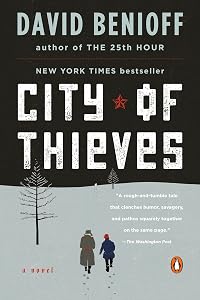
City of Thieves
by David Benioff
On This Page
Description
When a dead German paratrooper lands in his street, Lev is caught looting the body and dragged to jail, fearing for his life. He shares his cell with the charismatic and grandiose Kolya, a handsome young soldier arrested on desertion charges. Instead of the standard bullet in the back of the head, Lev and Kolya are given a chance at saving their own lives by complying with an outrageous directive: secure a dozen eggs for a powerful colonel to use in his daughter's wedding cake. In a city cut show more off from all supplies and suffering unbelievable deprivation, Lev and Kolya embark on a hunt to find the impossible.. show less
Tags
Recommendations

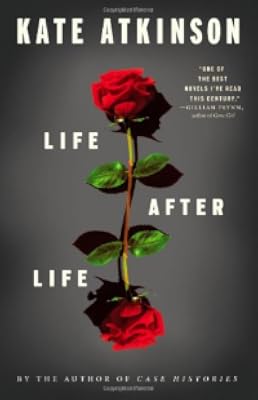
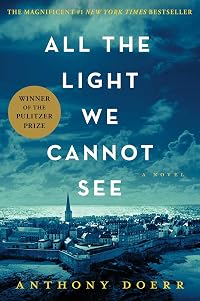
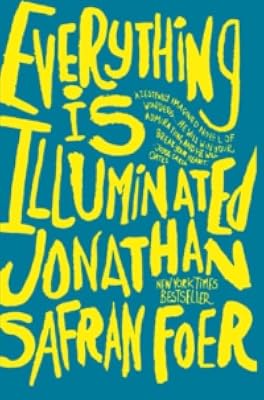
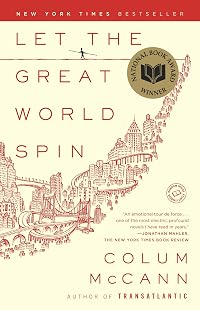
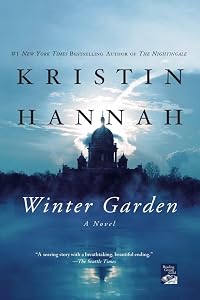
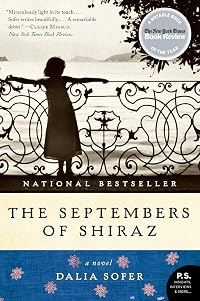
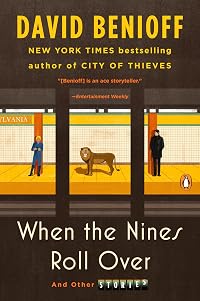
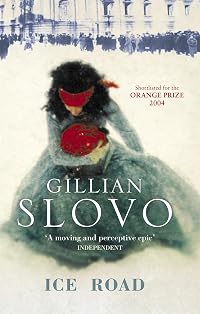
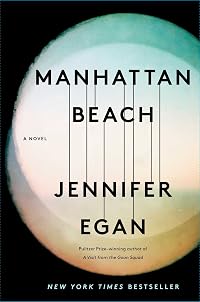

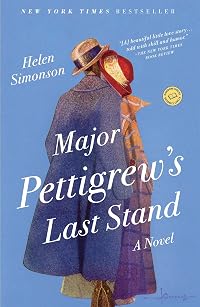
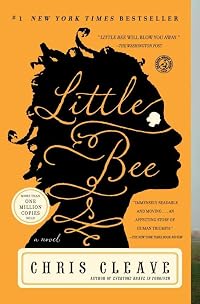
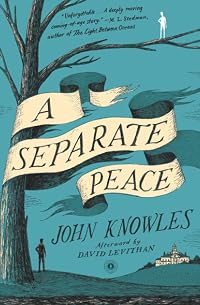

Member Recommendations
avalon_today Kolya reminds me of Rudy, a bit older but none wiser, with his self-assurance and confidence, ok maybe he has lost some of his sweetness, but I still see the humor and zest for life.
31

MartinRohrbach Vom Autor selbst als Referenz in dem Buch erwähnt.

Member Reviews
Excellent novel about the profound stupidity of war; and the accompanying randomness of life and death.
During WWII, young Lev, and soldier Kolya, both Russians, are coerced into a ludicrous quest. They need to travel and search in the city and the countryside during the dead of winter with no food, few weapons and nazis hiding out. Surrounded by miles of so much destruction and death caused by nazi guns, tanks and bombs. Survival is not guaranteed.
They meet good and very bad people; have one scary escape after another. Lev believes Kolya may be a violent Cossack, and is initially irritated by Kolya's optimism, his effusive extroversion, and his references to literature. But that soon changes when Lev realizes that Kolya is the one show more keeping him safe and moving forward.
A beautiful novel about friendship, loyalty, intelligence, sacrifice, pain and love.
The writing, dialog, and pacing are perfect. And I found Kolya to be one of the smartest and funniest characters ever, adding depth and humor to the story.
I definitely recommend this book! show less
During WWII, young Lev, and soldier Kolya, both Russians, are coerced into a ludicrous quest. They need to travel and search in the city and the countryside during the dead of winter with no food, few weapons and nazis hiding out. Surrounded by miles of so much destruction and death caused by nazi guns, tanks and bombs. Survival is not guaranteed.
They meet good and very bad people; have one scary escape after another. Lev believes Kolya may be a violent Cossack, and is initially irritated by Kolya's optimism, his effusive extroversion, and his references to literature. But that soon changes when Lev realizes that Kolya is the one show more keeping him safe and moving forward.
A beautiful novel about friendship, loyalty, intelligence, sacrifice, pain and love.
The writing, dialog, and pacing are perfect. And I found Kolya to be one of the smartest and funniest characters ever, adding depth and humor to the story.
I definitely recommend this book! show less
Harrowing but hopeful historical fiction set in winter, 1942, during the Siege of Leningrad in WWII. Lev, a half-Jewish seventeen-year-old firefighter, is accused of looting. Kolya, an early twenty-something Russian soldier, is accused of desertion. They meet in a Leningrad prison and expect to be executed for their crimes. “If you broke the law and you were caught, you were dead. There wasn’t time for any legal niceties.” They are offered an opportunity to be pardoned by bringing a Soviet colonel a dozen eggs within the week, though the city is under blockade, people are starving, and bodies lie in the streets. This book is a story of a friendship and a journey in which both Lev and Kolya will be tested and changed through their show more shared experiences. The narrative is framed as a “story within a story.” It is told by Lev in first person but is set up as if it has been related to Lev’s grandson, David, a writer, and though it may appear it is the author’s grandfather, the story is purely fictional.
Benioff displays a knack for storytelling. He has created memorable characters, especially the charming rogue, Kolya. Bright spots include Lev’s proficiency with chess and Kolya’s literary inclinations. Humor is used to offset the intense subject matter, though it often strays into the “crass” category. The horror of war is vividly described, graphic violence is plentiful, and atrocities abound. Definitely not for the faint-hearted. It shows how the bonds of an improbable friendship can inspire ordinary people to act heroically even in the face of self-doubt. There are a few far-fetched plot points but overall it is an entertaining coming-of-age adventure combined with realistic descriptions of the horrors of the Siege. show less
Benioff displays a knack for storytelling. He has created memorable characters, especially the charming rogue, Kolya. Bright spots include Lev’s proficiency with chess and Kolya’s literary inclinations. Humor is used to offset the intense subject matter, though it often strays into the “crass” category. The horror of war is vividly described, graphic violence is plentiful, and atrocities abound. Definitely not for the faint-hearted. It shows how the bonds of an improbable friendship can inspire ordinary people to act heroically even in the face of self-doubt. There are a few far-fetched plot points but overall it is an entertaining coming-of-age adventure combined with realistic descriptions of the horrors of the Siege. show less
During the Siege of Leningrad, Lev Beniov is arrested for looting and awaiting execution when he and a deserter named Kolya are given a chance for redemption; the Colonel's daughter is getting married and the pair are charged with finding a dozen eggs for her wedding cake in war-torn Soviet Union in exchange for their freedom. At first, this story didn't look interesting at all, but as I kept hearing good things about it, I ended up with a copy and am very happy I did. The story is very much about the war with all its cruelty and gruesomeness, but it is also, and most importantly, about friendship and survival and sports a great cast of characters, all of whom could easily be real, and some wonderfully dark humor. Very engaging story show more with high stakes and a satisfactory (I never said "happy") ending. Highly recommended. Ron Perlman (yes, Hellboy) did a great job with the audio book. show less
During the Siege of Leningrad, two young men – strangers at the outset – are sent on a mission to procure the impossible. Lev is only 17, an orphan who is the proud leader of his neighborhood fire watch team. When they spot a German paratrooper slowly descending on their street, the group runs to check the body. In their excitement they don’t hear the state police vehicle until it’s almost too late. The penalty for looting and being out after curfew is execution, but Lev is put in a holding cell. Shortly another man is put there with him. Kolya is a Russian soldier, in his twenties, he is handsome (with the “perfect” Aryan features – blonde and blue-eyed) and charming. He’s been caught without any leave papers and is show more presumed to be a deserter. In the morning, instead of going to their death they are taken to the colonel’s office. He has a proposition for them. His daughter’s wedding is in five days and she wants a wedding cake, for which he needs a dozen eggs. There hasn’t been an egg in Leningrad for months. But if the two can return with the eggs by Thursday, he will spare their lives.
This is a novel about the horrors of war, definitely. But more, it is a novel about friendship and loyalty; about learning to trust when nothing and no one is trustworthy; about finding hope and joy in the most awful of circumstances; about finding depths of courage you never knew you had; and about facing death with dignity. None of WW II was pleasant, but the residents of Leningrad suffered more than most during the siege. The conditions depicted are nothing short of horrific, but the author manages to not dwell there for long. He uses Kolya to keep the partisans, the Germans, and the readers charmed and looking forward. I was completely drawn into the story and found myself rooting for these two unlikely companions on their impossible quest. I loved the ending, too.
Benioff is a screenwriter, and it shows; most scenes are very visual. I have no idea if a movie is planned, but if it is, I can guess who will write the screen play.
UPDATE - Nov 26, 2011
I listened to the audio book, performed by Ron Perlman, to refresh my memory for my F2F book club discussion.
Perlman does a reasonably good job of performing the audio, but I found his voice for Kolya irritating. I suppose that shouldn’t surprise me, as Kolya’s smirking and joking ways irritated Lev, too. Also, Perlman uses a higher pitch voice for Kolya, while Lev is voiced with a deeper tone. This was confusing for a while (until I got used to it), because I would have expected the teen-aged Lev to have the higher, younger-sounding voice. I think if I had listened first, I would have given the book a lower rating. But since I read it in the traditional format first and gave it 5 stars, I won’t lower my rating at this time. show less
This is a novel about the horrors of war, definitely. But more, it is a novel about friendship and loyalty; about learning to trust when nothing and no one is trustworthy; about finding hope and joy in the most awful of circumstances; about finding depths of courage you never knew you had; and about facing death with dignity. None of WW II was pleasant, but the residents of Leningrad suffered more than most during the siege. The conditions depicted are nothing short of horrific, but the author manages to not dwell there for long. He uses Kolya to keep the partisans, the Germans, and the readers charmed and looking forward. I was completely drawn into the story and found myself rooting for these two unlikely companions on their impossible quest. I loved the ending, too.
Benioff is a screenwriter, and it shows; most scenes are very visual. I have no idea if a movie is planned, but if it is, I can guess who will write the screen play.
UPDATE - Nov 26, 2011
I listened to the audio book, performed by Ron Perlman, to refresh my memory for my F2F book club discussion.
Perlman does a reasonably good job of performing the audio, but I found his voice for Kolya irritating. I suppose that shouldn’t surprise me, as Kolya’s smirking and joking ways irritated Lev, too. Also, Perlman uses a higher pitch voice for Kolya, while Lev is voiced with a deeper tone. This was confusing for a while (until I got used to it), because I would have expected the teen-aged Lev to have the higher, younger-sounding voice. I think if I had listened first, I would have given the book a lower rating. But since I read it in the traditional format first and gave it 5 stars, I won’t lower my rating at this time. show less
Leningrad, 1942. Lev Beniof is arrested for being out after curfew and caught in the act of robbing the dead body of a German paratrooper. The penalty for such crimes is death. Awaiting his fate Lev meets fellow prisoner and alleged Red Army deserter, Kolya Vlasov. Lev and Kolya couldn't be more mismatched. Lev is a quiet and unassuming insomniac Russian Jew, only 17 and still an insecure, awkward virgin. Kolya a 20 year old smooth (never shits up) talker, exceedingly well read and charming. Instead of being executed as expected together they are tasked with finding a dozen eggs for Colonel Grechko's daughter's wedding cake. Finding these eggs in starved Leningrad is absurd but it is also a matter of life and death.
The horrors or war show more and the harsh realities of deprivation are an interesting juxtaposition against the sometimes comical relationship of Lev and Kolya. Their growing friendship reminds me of Gene and Phineas from John Knowles's A Separate Peace. While the two endure the bitter cold, starvation and the threat of the German enemy their journey is tempered with Kolya's humorous blatherings about jokes, literature and sex. show less
The horrors or war show more and the harsh realities of deprivation are an interesting juxtaposition against the sometimes comical relationship of Lev and Kolya. Their growing friendship reminds me of Gene and Phineas from John Knowles's A Separate Peace. While the two endure the bitter cold, starvation and the threat of the German enemy their journey is tempered with Kolya's humorous blatherings about jokes, literature and sex. show less
A really good coming of age story, set in the stark brutality of the Eastern Front. Six months into the Siege of Lenigrad, 17-year old Lev Beniov is regretting the surge of heroism that lead him to stay behind to defend the city. When he's caught by the NKVD looting the body of a Nazi pilot, he's given a task in lieu of execution: Retrieve a dozen eggs for the wedding of an NKVD colonel's daughter, or be executed. Teamed up with Lev is Kolya, an alleged deserter from the Red Army, a student of literature, and a kind of Communist Casanova, a counter-point to the shy and retiring Lev, son of an executed poet and young man of little talents, romantic or otherwise.
Lev and Kolya face off with Leningrad cannibals, and venture across enemy show more lines in search of a chicken that hasn't yet been eaten. They meet up with prostitutes and partisans, wind up captured by Nazis, and it's up to Lev to save them all in a tense show down with an Einsatzgruppen for their lives (and one dozen eggs). Beautiful written and richly textured with historical details, City of Thieves is a fantastic meditation on growing up, life, and the things that make life worth living, even in the midst of the greatest series of atrocities in human history. show less
Lev and Kolya face off with Leningrad cannibals, and venture across enemy show more lines in search of a chicken that hasn't yet been eaten. They meet up with prostitutes and partisans, wind up captured by Nazis, and it's up to Lev to save them all in a tense show down with an Einsatzgruppen for their lives (and one dozen eggs). Beautiful written and richly textured with historical details, City of Thieves is a fantastic meditation on growing up, life, and the things that make life worth living, even in the midst of the greatest series of atrocities in human history. show less
I love this book. I cannot recommend it to everyone, and I'm not sure who else will like it, but I found City of Thieves beautiful, if tragic, sad, and raw.
It would be hard not to place City of Thieves among the top novels I have read over the last year, if not the last five. At the same time, there are things about it that make it difficult to recommend to many of the readers I know. Benioff's characters are as raw and desperate as the dirty and starving city they live in, facing nearly impossible odds in their search for eggs.
As crude and earthy as Kolya and Lev are, it was hard not to sympathize with their desperate quest to find meaning in spite of the war and even beyond it. Death stalks them, and if they fell from the frying pan show more into the fire with their temporary reprieve from justice, each step seems to take them deeper into the fire. Almost no scene passes where the threat doesn't rear its head, whether it is cannibles, Nazis, snipers, or starvation. It is a world that Thomas Hobbes would easily recognize and describe as "solitary, poor, nasty, brutish, and short."
Yet, in spite of the horror of this "war of all against all," Kolya and Lev represent the beauty that human nature can find and create at the darkest of times. Kolya is the lettered intellectual--or so he wants to be--while Lev is the son of a poet, dead and denounced to the state by small minded rivals, jealous of his art. Together, they trek across starving Leningrad and into the frozen countryside where Nazi death squads await. Their language fluctuates between extremities of vulgarity and poetry, the wondering words of two boys at once confident and adrift in a dangerous world.
I hesitate to share much more, because I don't want to spoil the story. Benioff's City of Thieves is often funny, frequently clever, and occasionally vulgar, but it is cast with characters that feel real and sympathetic, even in their worst moments, and their story is beautiful as it is tragic. show less
It would be hard not to place City of Thieves among the top novels I have read over the last year, if not the last five. At the same time, there are things about it that make it difficult to recommend to many of the readers I know. Benioff's characters are as raw and desperate as the dirty and starving city they live in, facing nearly impossible odds in their search for eggs.
As crude and earthy as Kolya and Lev are, it was hard not to sympathize with their desperate quest to find meaning in spite of the war and even beyond it. Death stalks them, and if they fell from the frying pan show more into the fire with their temporary reprieve from justice, each step seems to take them deeper into the fire. Almost no scene passes where the threat doesn't rear its head, whether it is cannibles, Nazis, snipers, or starvation. It is a world that Thomas Hobbes would easily recognize and describe as "solitary, poor, nasty, brutish, and short."
Yet, in spite of the horror of this "war of all against all," Kolya and Lev represent the beauty that human nature can find and create at the darkest of times. Kolya is the lettered intellectual--or so he wants to be--while Lev is the son of a poet, dead and denounced to the state by small minded rivals, jealous of his art. Together, they trek across starving Leningrad and into the frozen countryside where Nazi death squads await. Their language fluctuates between extremities of vulgarity and poetry, the wondering words of two boys at once confident and adrift in a dangerous world.
I hesitate to share much more, because I don't want to spoil the story. Benioff's City of Thieves is often funny, frequently clever, and occasionally vulgar, but it is cast with characters that feel real and sympathetic, even in their worst moments, and their story is beautiful as it is tragic. show less
Members
- Recently Added By
Lists

Recommend the 20 best books you've read in the last five years
2,168 works; 602 members

Top Five Books of 2013
1,562 works; 721 members
Thieves
18 works; 7 members

Books About World War II
102 works; 29 members

Top Five Books of 2016
795 works; 229 members

Top Five Books of 2018
802 works; 265 members

Banned or Challenged Books
400 works; 41 members

A High School Trip to Russia
25 works; 3 members

2008-2012 Notable Books for Adults
127 works; 10 members

Books about World War II
241 works; 22 members

Books Read in 2016
4,666 works; 199 members

Challenged & Banned Books 2015-2016
11 works; 3 members

KayStJ's to-read list
1,616 works; 11 members

Books Read in 2019
4,052 works; 108 members

Florida's Book Bans and Challenges
311 works; 4 members

Recommended Literary Books
111 works; 1 member

Books We Want To Read Again For The First Time
384 works; 160 members
Five star books
1,767 works; 110 members
Author Information

47+ Works 10,322 Members
Some Editions
Awards and Honors
Awards
Distinctions
Series
Belongs to Publisher Series
Heyne Allgemeine Reihe (40715)
Common Knowledge
- Canonical title
- City of Thieves
- Original title
- City of Thieves
- Original publication date
- 2008
- People/Characters
- Kolya Vlasov; Lev Beniov; Vika
- Important places
- Leningrad, USSR
- Important events
- World War II (1939 | 1945); World War II, Eastern Front (1941-06-22 | 1945-05-05); Siege of Leningrad (1941-09-08 | 1944-01-27)
- Epigraph
- and if the City falls but a single man escapes
he will carry the City within himself on the roads of exile
he will be the City
Zbigniew Herbert
At last Schenk thought he understood and began laughing louder. Then suddenly he asked in a serious tone, "Do you think that the Russians are homosexuals?"
"You'll find out at the end of the war," I replied.
Curzio... (show all) Malaparte - Dedication
- For Amanda & Frankie
- First words
- My grandfather, the knife fighter, killed two Germans before he was eighteen.
- Quotations
- The Nazis had printed thousands of invitation cards to a grand victory party Hitler intended to throw at the Astoria Hotel after conquering, what he had called, in a speech to his torch-bearing strom troopers, "the birthplace... (show all) of Bolshevism, that city of thieves and maggots." Our soldiers had found a few of the invitations on the bodies of fallen Wehrmacht officers. They had been reprinted in the newspapers, copied by the thousands, and nailed to walls all over the city. The Politburo hacks could not have devised better propaganda. We hated the Nazis for their stupidity as much as anything else--if the city fell, we wouldn't leave any hotels where the Germans could sip schnapps in the piano bar and bed down in the deluxe suites. If the city fell, we'd bring her down with us.
'There isn't any good news. Just because there's bad news doesn't mean there's good news, too.'
'Those words you want to say right now? Don't say them.' He smiled and cuffed my cheek with something close to real affection. 'And that, my friend, is the secret to living a long life'.
'That's our plan? We're going to walk fifty kilometers, right past the Germans, to a poultry collective that maybe didn't get burned down, grab a dozen eggs, and come home?'
'Well, anything would sound ridiculous if said i... (show all)t in that tone of voice.' - Last words
- (Click to show. Warning: May contain spoilers.)"One thing you should know about me, Lyova. I don't cook."
- Blurbers
- Stockett, Kathryn
- Original language*
- Inglese
*Some information comes from Common Knowledge in other languages. Click "Edit" for more information.
Classifications
Statistics
- Members
- 6,016
- Popularity
- 2,124
- Reviews
- 332
- Rating
- (4.19)
- Languages
- 19 — Catalan, Chinese, Czech, Danish, Dutch, English, Estonian, Finnish, French, German, Icelandic, Italian, Japanese, Norwegian (Bokmål), Serbian, Croatian, Spanish, Swedish, Portuguese (Portugal)
- Media
- Paper, Audiobook, Ebook
- ISBNs
- 76
- UPCs
- 1
- ASINs
- 19