On This Page
Description
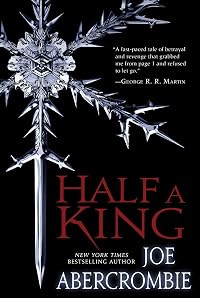
Yarvi, second son of the feared King Uthrik and the ruthless Queen Laithlin of Gettland, was born with a useless hand, and cannot hold a shield, or make fast a knot, or pull an oar, or do any of the things expected from a man. Left an outcast, he' s surrendered his birthright and been given a woman' s place as apprentice to Mother Gundring, Gettland' s Minister, training to be an adviser, diplomat, healer and translator. But when his father and brother are murdered by Grom-gil-Gorm, King of show more neighboring Vansterland, Yarvi is forced to take the Black Chair and become king himself - or half a king, at least - swear an oath of vengeance against the killers of his father, and lead a raid against the Vanstermen. Betrayed, left for dead, and enslaved on a rotting trading galley, Yarvi will need all his Minister' s wit and cunning to escape, and all his diplomacy and knowledge to keep a rag-tag band of other slaves together on a month long trek across the frozen wastes of the utmost north. Among them are Sumael, the ship' s single-minded navigator, Rulf, an ex-raider, Jaud, an ex-baker, and Nothing, a mad old man with a mysterious past and an almost magical skill with a sword. And their owner, the brutal Captain Shadikshirram, will be dogging their heels at every step. Father Peace may be the patron god of Ministers, but to reclaim the Black Chair, Yarvi will have to strike a deal with Mother War, and once you' ve invited the mother of crows to be your guest, there can be no telling whose blood will be spilled. show lessTags
Recommendations

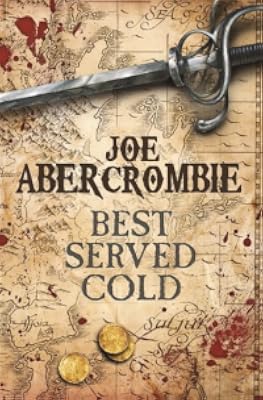
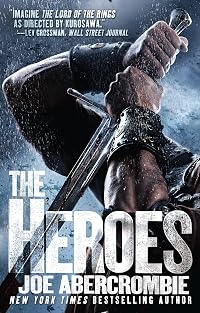

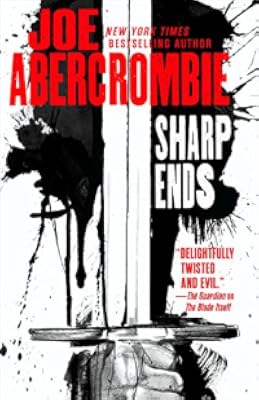
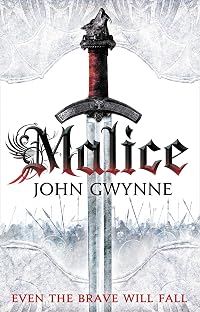
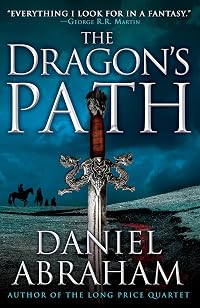
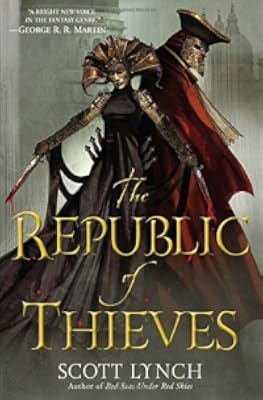


Member Reviews
I just finished this today and I'm sitting here slightly stunned. It's been a long, long time since I read something so packed with betrayal, violence, and dramatic plot twists which is also written by someone who draws vivid characters, creates a whole new mythology and has an ear for language and rhythm that lifts his prose almost into a song at times.
The plot of "Half A King", at least as it was described by the publishers, sounded like "Game of Thrones" without the dragons and the nudity. I didn't find that encouraging. I never got past the third chapter of the first "Game of Thrones" book, I listened to a sample of "Half A King" found it well-written and narrated and decided to give it try.
I was gripped from the first page, not so show more much by the plot as by the tone and pace of the thing: unhurried but focused, like a performer at the beginning of a contemporary ballet, full of controlled energy and potential passion.
Fortunately for me, I had a long commute this week, a round trip drive of nearly 700 miles, during which I could listen to "Half A King". I drank it in: a strange future world, fallen back into feudalism, murder and intrigue at court, a crippled prince unexpectedly becoming a king.
I thought to myself, "Ah, I know where this goes but I'll listen because I'm enjoying the ride". I did enjoy the ride but it turned out that I had no idea where the book was going. After the first plot twist, the ground my complacency was standing on fell away and I tumbled into the unexpected. Then it happened again. And again. And each time without me feeling cheater or tricked. It was more like opening one of those Matryoshka dolls from Russia and finding another doll within and then another within that.
"Half A King" is filled with violence, cruelty, death, betrayal, slavery and, above all, revenge. Yet it does not glory in these things but rather wades through them with the grim determination of someone who's only safe path is through the midden. What it rejoices at is freedom and courage and loyalty, if only because they are so rare.
This was my first Joe Abercrombie book. It won't be my last. Read it, preferably when you can give yourself up to it and let real life fade. show less
The plot of "Half A King", at least as it was described by the publishers, sounded like "Game of Thrones" without the dragons and the nudity. I didn't find that encouraging. I never got past the third chapter of the first "Game of Thrones" book, I listened to a sample of "Half A King" found it well-written and narrated and decided to give it try.
I was gripped from the first page, not so show more much by the plot as by the tone and pace of the thing: unhurried but focused, like a performer at the beginning of a contemporary ballet, full of controlled energy and potential passion.
Fortunately for me, I had a long commute this week, a round trip drive of nearly 700 miles, during which I could listen to "Half A King". I drank it in: a strange future world, fallen back into feudalism, murder and intrigue at court, a crippled prince unexpectedly becoming a king.
I thought to myself, "Ah, I know where this goes but I'll listen because I'm enjoying the ride". I did enjoy the ride but it turned out that I had no idea where the book was going. After the first plot twist, the ground my complacency was standing on fell away and I tumbled into the unexpected. Then it happened again. And again. And each time without me feeling cheater or tricked. It was more like opening one of those Matryoshka dolls from Russia and finding another doll within and then another within that.
"Half A King" is filled with violence, cruelty, death, betrayal, slavery and, above all, revenge. Yet it does not glory in these things but rather wades through them with the grim determination of someone who's only safe path is through the midden. What it rejoices at is freedom and courage and loyalty, if only because they are so rare.
This was my first Joe Abercrombie book. It won't be my last. Read it, preferably when you can give yourself up to it and let real life fade. show less
Something I noticed when I read Clive Barker's Abarat was that when an author of extreme material turns to YA and operates withing the restrictions of YA - cutting down on the bad language, the gore, the plumbing of the murkier depths of human nature - you often end up with some of the author's strongest works. Excess can be indulgent and gratuitious. Joe Abercrombie has excelled in flaying the fantasy genre, not only with violence and grim realism, but also in attacking the foundations of epic fantasy with a profound, almost nihilistic cynicism. The First Law Trilogy was an exercise in turning the very idea of quest-battle-siege-heroic journey into one long cunning trap of futility and waste in order to maintain rather than upset a show more balance of power. It would be a crushing read if not for a certain amount of wit and charm in the blood and mud.
Half A King is a YA fantasy about a young prince thrust into kingship and then thrust out of it, and his quest for revenge. Yarvi is a crippled younger son of the king of a warlike northern tribe, destined to escape the shame and humiliation by becoming a Minister - half adviser and half priest. The murder of his father and brother results in his sudden unwilling ascent to the throne. Betrayal follows, but Yarvi survives and ends up chained to an oar on a merchant ship. He must put his mind and his training to work in gaining his freedom and his revenge and his throne, and every step of the way sees him make hard choices with heavy costs and terrible compromises.
So in some ways a typical epic fantasy tale of an outcast rising and regaining their birthright, but tightly plotted and fast-paced with twists of the story and twists of the knife as nothing comes easy or clean. Relative to his other work, Half A King has a light touch, but that doesn't mean Abercrombie pulls his punches, and when they land they land all the harder. On the other hand, there is a cast of likable, well-drawn characters surrounding our driven, self-loathing hero, and not all of them die horribly or end up completely alienated from Yarvi, so it's not quite as soul-crushing as the First Law Trilogy. With a complete story told in volume one, I'm dying to see where this trilogy goes next. show less
Half A King is a YA fantasy about a young prince thrust into kingship and then thrust out of it, and his quest for revenge. Yarvi is a crippled younger son of the king of a warlike northern tribe, destined to escape the shame and humiliation by becoming a Minister - half adviser and half priest. The murder of his father and brother results in his sudden unwilling ascent to the throne. Betrayal follows, but Yarvi survives and ends up chained to an oar on a merchant ship. He must put his mind and his training to work in gaining his freedom and his revenge and his throne, and every step of the way sees him make hard choices with heavy costs and terrible compromises.
So in some ways a typical epic fantasy tale of an outcast rising and regaining their birthright, but tightly plotted and fast-paced with twists of the story and twists of the knife as nothing comes easy or clean. Relative to his other work, Half A King has a light touch, but that doesn't mean Abercrombie pulls his punches, and when they land they land all the harder. On the other hand, there is a cast of likable, well-drawn characters surrounding our driven, self-loathing hero, and not all of them die horribly or end up completely alienated from Yarvi, so it's not quite as soul-crushing as the First Law Trilogy. With a complete story told in volume one, I'm dying to see where this trilogy goes next. show less
It left a bad taste in my mouth, like toothpaste and orange juice, when I learned that Joe Abercrombie was writing a series for young adults. Lord Grimdark is pandering to the kiddies? Gross. I needn't have worried. From the moment I got my clammy, fanboy hands on Abercrombie's latest book, I was hooked. Abercrombie and YA is like peanut butter and chocolate. Come, fantasy fans and Abercrombie aficionados, and gorge upon the bounty that is Half a King.
The story opens when Prince Yarvi of Gettland, intended for the ministry (in this case, a brotherhood of advisers and diplomats who work toward peace) learns that his father, King Uthrik, is dead, killed by the Gettlanders' neighbors and foes, the Vanstermen. Yarvi was not meant to be a show more king: His left hand is deformed, rendering him unsuitable for the throne. But with his older brother dead, too, Yarvi is the only heir, and he swears an oath to avenge his father. Yarvi leads a raid against Vansterland, only to be betrayed. Armed with only one good hand, years of resentment, and the cunning he learned as an initiate of the ministry, Yarvi sets out to fulfill his oath.
The world of Half a King is separate of that from Abercrombie's previous fiction. Although still within the vaguely medieval consensus that defines traditional fantasy settings, there is a definite Norse, particularly Icelandic, flavor here. Gettland, Vansterland, among other kingdoms unified under the "High King" border the Shattered Sea, a roiling, storm battered mass traversed by longboat. Much of the middle of the book is set in northern ice fields and, subsequently, land rent by hot springs. And then there are the elves. Not to worry: Abercrombie's focus is decidedly human, and his elves are long extinct. Only their ruins and artifacts remain, hinting at a curious back story. For instance, the woman who wears around her neck "an elf-tablet, the green card studded with black jewels, scrawled with incomprehensible markings, riddled with intricate golden lines." The millennium-old ruins, untouched by time, are reminiscent of the Eldren constructions of Scott Lynch's Gentleman Bastard series, haunting the scenery with an implicit threat.
If the setting is different, the tone is the same. This is a broken world: Yarvi has a "crippled" hand; the characters sail on the Shattered Sea; and even the gods are broken, the elves having waged war on the One God, shattering her into many. Perhaps writing for young adults has mellowed Abercrombie. Half a King may not be upbeat, but neither is it the cynical Ouroboros that characterizes Abercrombie's previous novels: Here the backstabbing has an end. The camaraderie of Yarvi and his fellows is refreshingly authentic, free of the edges apparent in The First Law trilogy and its successors.
That's not to say that violence is absent from Half a King. I lost count of noses broken with a "crunch" after a half a dozen. Abercrombie continues his fascination with the grotesque; he knows that, however much violence sickens us, it draws us in, too. We cannot look away. Abercrombie has always been sophisticated in his attitude toward violence: He portrays it with gusto, knowing that we're attracted to it despite our denials (and thus making us complicit). But he has always portrayed its consequences, too, perhaps to greater effect in Yarvi, who is no warrior: "And Yarvi realized then that Death does not bow to each person who passes her, does not sweep out her arm respectfully to show the way, speaks no profound words, unlocks no bolts. The key upon her chest is never needed, for the Last Door stands always open. She herds the dead through impatiently, heedless of rank or fame or quality. She has an ever-lengthening queue to get through. A blind procession, inexhaustible."
If Half a King has a weakness, it is the plot, which is predictable. Perhaps that's because I'm older than the intended audience, or maybe, having read Abercrombie's other novels, I am able to intuit when he's preparing to spring a trap on his readers. That the twists and turns of the story are unsurprising in no way diminish the reader's pleasure, a testament to Abercrombie's storytelling skills. Indeed, I found myself turning the pages as quickly as I could, impatient to see what travails would next befall Yarvi.
Abercrombie, if not the anti-Tolkien, is a contrarian, turning on its head the tropes of high fantasy. He lays aside that ideological jihad in Half a King, instead telling the story of one character's quest, and a very grounded one at that, motivated by revenge and gold. The only magic here is the depth of the world and the propulsive story, all of which Abercrombie manages in less than 300 pages. The only disappointing thing about Half a King is how soon it ends, and how long we have to wait for the sequel. Highly recommended. show less
The story opens when Prince Yarvi of Gettland, intended for the ministry (in this case, a brotherhood of advisers and diplomats who work toward peace) learns that his father, King Uthrik, is dead, killed by the Gettlanders' neighbors and foes, the Vanstermen. Yarvi was not meant to be a show more king: His left hand is deformed, rendering him unsuitable for the throne. But with his older brother dead, too, Yarvi is the only heir, and he swears an oath to avenge his father. Yarvi leads a raid against Vansterland, only to be betrayed. Armed with only one good hand, years of resentment, and the cunning he learned as an initiate of the ministry, Yarvi sets out to fulfill his oath.
The world of Half a King is separate of that from Abercrombie's previous fiction. Although still within the vaguely medieval consensus that defines traditional fantasy settings, there is a definite Norse, particularly Icelandic, flavor here. Gettland, Vansterland, among other kingdoms unified under the "High King" border the Shattered Sea, a roiling, storm battered mass traversed by longboat. Much of the middle of the book is set in northern ice fields and, subsequently, land rent by hot springs. And then there are the elves. Not to worry: Abercrombie's focus is decidedly human, and his elves are long extinct. Only their ruins and artifacts remain, hinting at a curious back story. For instance, the woman who wears around her neck "an elf-tablet, the green card studded with black jewels, scrawled with incomprehensible markings, riddled with intricate golden lines." The millennium-old ruins, untouched by time, are reminiscent of the Eldren constructions of Scott Lynch's Gentleman Bastard series, haunting the scenery with an implicit threat.
If the setting is different, the tone is the same. This is a broken world: Yarvi has a "crippled" hand; the characters sail on the Shattered Sea; and even the gods are broken, the elves having waged war on the One God, shattering her into many. Perhaps writing for young adults has mellowed Abercrombie. Half a King may not be upbeat, but neither is it the cynical Ouroboros that characterizes Abercrombie's previous novels: Here the backstabbing has an end. The camaraderie of Yarvi and his fellows is refreshingly authentic, free of the edges apparent in The First Law trilogy and its successors.
That's not to say that violence is absent from Half a King. I lost count of noses broken with a "crunch" after a half a dozen. Abercrombie continues his fascination with the grotesque; he knows that, however much violence sickens us, it draws us in, too. We cannot look away. Abercrombie has always been sophisticated in his attitude toward violence: He portrays it with gusto, knowing that we're attracted to it despite our denials (and thus making us complicit). But he has always portrayed its consequences, too, perhaps to greater effect in Yarvi, who is no warrior: "And Yarvi realized then that Death does not bow to each person who passes her, does not sweep out her arm respectfully to show the way, speaks no profound words, unlocks no bolts. The key upon her chest is never needed, for the Last Door stands always open. She herds the dead through impatiently, heedless of rank or fame or quality. She has an ever-lengthening queue to get through. A blind procession, inexhaustible."
If Half a King has a weakness, it is the plot, which is predictable. Perhaps that's because I'm older than the intended audience, or maybe, having read Abercrombie's other novels, I am able to intuit when he's preparing to spring a trap on his readers. That the twists and turns of the story are unsurprising in no way diminish the reader's pleasure, a testament to Abercrombie's storytelling skills. Indeed, I found myself turning the pages as quickly as I could, impatient to see what travails would next befall Yarvi.
Abercrombie, if not the anti-Tolkien, is a contrarian, turning on its head the tropes of high fantasy. He lays aside that ideological jihad in Half a King, instead telling the story of one character's quest, and a very grounded one at that, motivated by revenge and gold. The only magic here is the depth of the world and the propulsive story, all of which Abercrombie manages in less than 300 pages. The only disappointing thing about Half a King is how soon it ends, and how long we have to wait for the sequel. Highly recommended. show less
There are some stories that seem to have been around forever - a prince is getting betrayed by the people he believes the most in, he goes through hell and at the end triumphs. Everyone had read at least a few stories like that. And you would think that there is no way to tell this story again without it sounding derivative and repetitive. And you will be wrong.
Meet Yarvi, the second son of the king of Gettland - who had the misfortune to be born with an incomplete hand. Because of it everyone had always make fun of him (okey, stop rolling your eyes, the story need to be set and I did mention that it is an old story after all) and he had been trying to hide his deformity. He is preparing to take a Minister exam - which allow him to be show more a counselor to kings when the unthinkable happens - his father and his brother are killed and he becomes the king of the land. Which does not sit very well with anyone besides his mother and while our poor boy is swearing an oath to kill his father's killers, others are planning his death. Betrayal comes fast and Yarvi is on his way to become a man - the hard way - slavery, harsh terrain, new companions, lost companions and a triumphal return are all in his future (and this does not even count as a spoiler - if you are reading the book, you know he will be back). Of course he had been just days away from his Ministry so he has all the knowledge and he can use it.
And somewhere along that adventure, Abercrombie introduces the world - kingdoms in a circle around the Shattered Sea, with a High King that rules them all (but allows the local kings to rule their own lands as long as they listen to him). The people of each of the lands is different - from educated to savages; so are the lands - snow and forests and even geysers (after all Yarvi need to grow up so let throw all that Mother Nature can offer -- except in that novel it is Mother Sea and Father Earth; Mother War and Father Peace - so I guess I should have said Father Nature).
And during his adventures, the young prince learns the price of friendship and what honor means; he has to kill and make deals he wish he had not; he has to make hard choices and leave friends behind.
This should have been a pretty formulaic novel - you know where it is going, you know who cannot die and why and that should have made it predictable. And yet, it is not - it works because the author manages to make the world compelling and to make the characters fleshed out enough so you can care about them. The fact that evil and good change places all the time helps - noone is always good or always evil, everyone is a real person with internal daemons and struggles. The secondary characters are so well developed - better than I expect in a fantasy novel, let alone a YA one. And then some of those well developed characters die - the author is building a story about all those people and that world - not just about our wandering prince.
And then on top of everything, Abercrombie manages to sneak in a surprise almost at the end - which I will admit I did not see coming - it is one of those logical things that may have been guessed, especially with this being a YA novel, and that allows the novel to end in a way that is best for everyone involved (and still alive) - it s a nice bow at the end of a long road. The fact that Yarvi manages to untangle the real reason for his father's death at the end is not even surprising - the clues had been cleverly handled through the story - so it was not dropped as a surprise.
If anything annoyed me here that was Yarvi's constant whining (mostly in his head). Thankfully when his biggest problem was not his hand anymore, he kinda started complaining about other things but way too often he will get in a "poor me, what can I do when I am born this way" mode that was infuriating - especially when you knew that he will find a way to get out of that new danger...
It is a very enjoyable start of a new series - and a pleasant surprise as a YA book - not that YA cannot be deep and thoughtful but it rarely is that much. I am definitely staying with this series. show less
Meet Yarvi, the second son of the king of Gettland - who had the misfortune to be born with an incomplete hand. Because of it everyone had always make fun of him (okey, stop rolling your eyes, the story need to be set and I did mention that it is an old story after all) and he had been trying to hide his deformity. He is preparing to take a Minister exam - which allow him to be show more a counselor to kings when the unthinkable happens - his father and his brother are killed and he becomes the king of the land. Which does not sit very well with anyone besides his mother and while our poor boy is swearing an oath to kill his father's killers, others are planning his death. Betrayal comes fast and Yarvi is on his way to become a man - the hard way - slavery, harsh terrain, new companions, lost companions and a triumphal return are all in his future (and this does not even count as a spoiler - if you are reading the book, you know he will be back). Of course he had been just days away from his Ministry so he has all the knowledge and he can use it.
And somewhere along that adventure, Abercrombie introduces the world - kingdoms in a circle around the Shattered Sea, with a High King that rules them all (but allows the local kings to rule their own lands as long as they listen to him). The people of each of the lands is different - from educated to savages; so are the lands - snow and forests and even geysers (after all Yarvi need to grow up so let throw all that Mother Nature can offer -- except in that novel it is Mother Sea and Father Earth; Mother War and Father Peace - so I guess I should have said Father Nature).
And during his adventures, the young prince learns the price of friendship and what honor means; he has to kill and make deals he wish he had not; he has to make hard choices and leave friends behind.
This should have been a pretty formulaic novel - you know where it is going, you know who cannot die and why and that should have made it predictable. And yet, it is not - it works because the author manages to make the world compelling and to make the characters fleshed out enough so you can care about them. The fact that evil and good change places all the time helps - noone is always good or always evil, everyone is a real person with internal daemons and struggles. The secondary characters are so well developed - better than I expect in a fantasy novel, let alone a YA one. And then some of those well developed characters die - the author is building a story about all those people and that world - not just about our wandering prince.
And then on top of everything, Abercrombie manages to sneak in a surprise almost at the end - which I will admit I did not see coming - it is one of those logical things that may have been guessed, especially with this being a YA novel, and that allows the novel to end in a way that is best for everyone involved (and still alive) - it s a nice bow at the end of a long road. The fact that Yarvi manages to untangle the real reason for his father's death at the end is not even surprising - the clues had been cleverly handled through the story - so it was not dropped as a surprise.
If anything annoyed me here that was Yarvi's constant whining (mostly in his head). Thankfully when his biggest problem was not his hand anymore, he kinda started complaining about other things but way too often he will get in a "poor me, what can I do when I am born this way" mode that was infuriating - especially when you knew that he will find a way to get out of that new danger...
It is a very enjoyable start of a new series - and a pleasant surprise as a YA book - not that YA cannot be deep and thoughtful but it rarely is that much. I am definitely staying with this series. show less
I think the subtitle for this book should have been "Death Waits for Us All" or "Through Death's Door", mostly because those are the most repeated phrases in the book. It got old, really, really fast.
On the whole, this isn't a bad book, really. It featured a less than interesting protagonist, Yarvi, who was born with a deformed left hand and is studying to become part of the Ministry (this world's religious order), his crew of former oar and ship slaves, deception, deposed kings, double dealing, coming of age, references to elves, and other problems one finds in quest fantasies. It was eight disks of pleasant boredom.
On the eve of his test to join the Ministry, Yarvi's father and brother are killed in the process of raiding a show more neighboring kingdom. Being the only surviving son of the king, Yarvi reluctantly accepts his place upon the throne, and makes an oath to avenge his father and brother's deaths. It is an oath he's bound and determined to keep, even as he is betrayed by his uncle Odom and finds himself enslaved to a sea bound ship as an oar slave.
We follow young Yarvi as he works to free himself, his oar mates, a beaten down man named Nothing, and the ship's navigator from Shareek Shareem [phonetic] and her ship, then as the group fight their way back from the sea through a winter storm, past a land of hot water, through the lands of the king who killed his father and back home. Along the way, Yarvi discovers deep resources of ideas and ways of working through his problems, even to making a bargain with the enemy king in order to defeat his uncle.
I wanted to like this book, I did. Yet, I just did not like Yarvi, his teacher Mother Gudrun [phonetic], or any of the other characters either. I am not saying I need a likeable character to enjoy a book, mind you, but I do need writing that's a little less obvious on the clues. 1]Nothing's character and his real identity was quite easy to spot not long after he first appears on the ship. All the discussion about an older brother to both Odom and Yarvi's father who was killed at sea and never found is a real give away. Especially after Yarvi's experiences with Odom ... 2] Elf stone sounds suspiciously like concrete (at one point the group runs across a building which is crumbling and revealing what sounds like rebar sticking out on top). Then again this is the first book in a trilogy, so there might actually be more to come on the subject of "elf stone" and "elf made" things. Instead of enjoying the world building, I found I wanted to roll my eyes with exasperation.
And let's not forget those fateful words, "Through Death's Door" and/or "Death Waits for Us All". How original and, no duh, dude. Tell us something we don't know. show less
On the whole, this isn't a bad book, really. It featured a less than interesting protagonist, Yarvi, who was born with a deformed left hand and is studying to become part of the Ministry (this world's religious order), his crew of former oar and ship slaves, deception, deposed kings, double dealing, coming of age, references to elves, and other problems one finds in quest fantasies. It was eight disks of pleasant boredom.
On the eve of his test to join the Ministry, Yarvi's father and brother are killed in the process of raiding a show more neighboring kingdom. Being the only surviving son of the king, Yarvi reluctantly accepts his place upon the throne, and makes an oath to avenge his father and brother's deaths. It is an oath he's bound and determined to keep, even as he is betrayed by his uncle Odom and finds himself enslaved to a sea bound ship as an oar slave.
We follow young Yarvi as he works to free himself, his oar mates, a beaten down man named Nothing, and the ship's navigator from Shareek Shareem [phonetic] and her ship, then as the group fight their way back from the sea through a winter storm, past a land of hot water, through the lands of the king who killed his father and back home. Along the way, Yarvi discovers deep resources of ideas and ways of working through his problems, even to making a bargain with the enemy king in order to defeat his uncle.
I wanted to like this book, I did. Yet, I just did not like Yarvi, his teacher Mother Gudrun [phonetic], or any of the other characters either. I am not saying I need a likeable character to enjoy a book, mind you, but I do need writing that's a little less obvious on the clues. 1]
And let's not forget those fateful words, "Through Death's Door" and/or "Death Waits for Us All". How original and, no duh, dude. Tell us something we don't know. show less
I know I read Abercrombie ages ago, and can't remember much aside from "that was grim and dark". I'm with the consensus that Half a King does Abercrombie's usual thing very well.
Yarvi is a prince in a Viking-inspired fantasy setting. Unfortunately for him, he was born with a deformed hand that means he'll never be a warrior. He was all set to enter the Ministry, a sworn order of wise advisers, when his father and uncle are killed and he inherits the throne. Things go from bad to worse, as Yarvi himself becomes the next victims of intrigues, is set up by his uncle to be killed, and survives only to be sold into slavery.
What follows is a thrilling rise from the bottom, as Yarvi goes from galley slave back to his throne, using his wits and show more an unlikely band of friends he makes along the way. The nominally "YA" audience tempers some of Abercrombie's tendencies, but this is still a brutal story, with vengeance, violence, and sudden death.
The setting has some nice touches. Women handle most economic matters, which is apparently a Viking historical fact. The gender of the usual fantasy gods are flipped (Mother Sun, Father Moon, Mother War, Father Peace, etc). There are some hints that the setting is actually post-apocalyptic, with vanished elves building in reinforced concrete, and their ruins haunted by an invisible curse that sounds a lot like radiation system. Characters are well-drawn, and the pacing is swift.
This isn't fine literature, but it's a solid book and enough for me to read the rest of the series when I have the time. show less
Yarvi is a prince in a Viking-inspired fantasy setting. Unfortunately for him, he was born with a deformed hand that means he'll never be a warrior. He was all set to enter the Ministry, a sworn order of wise advisers, when his father and uncle are killed and he inherits the throne. Things go from bad to worse, as Yarvi himself becomes the next victims of intrigues, is set up by his uncle to be killed, and survives only to be sold into slavery.
What follows is a thrilling rise from the bottom, as Yarvi goes from galley slave back to his throne, using his wits and show more an unlikely band of friends he makes along the way. The nominally "YA" audience tempers some of Abercrombie's tendencies, but this is still a brutal story, with vengeance, violence, and sudden death.
The setting has some nice touches. Women handle most economic matters, which is apparently a Viking historical fact. The gender of the usual fantasy gods are flipped (Mother Sun, Father Moon, Mother War, Father Peace, etc). There are some hints that the setting is actually post-apocalyptic, with vanished elves building in reinforced concrete, and their ruins haunted by an invisible curse that sounds a lot like radiation system. Characters are well-drawn, and the pacing is swift.
This isn't fine literature, but it's a solid book and enough for me to read the rest of the series when I have the time. show less
I loved this coming-of-age fantasy about the young prince of Gettland named Yarvi, who was training to become a minister (a celibate advisor and healer in service to the King) but unexpectedly became King himself when his father and older brother were ambushed and killed. Yarvi is not only still a teen, but worse, has a crippled left hand, which meant that he did not have the respect of the kingdom's men, for whom the ability to fight is what makes you a "man."
Yarvi may be smart, compassionate, and blessed with a good singing voice, but he still feels tormented. This passage nicely encapsulates his situation:
“How he loathed swords and shields, and detested the training square, and despised the warriors who made it their home. And show more most of all how he hated his own bad joke of a hand, which meant he could never be one of them.”
And this:
“He had always been weak, but he never felt truly powerless until they made him a king.”
Yarvi vows to do his best and to avenge the death of his father and brother, but soon, he is betrayed from the most unexpected quarters, and is forced to grow up to be a man in ways he never would have anticipated.
Evaluation: This book has all you could want of a heroic epic saga. It is impossible, in my opinion, not to fall in love with Yarvi, and not to be drawn in by the exceptional nature of the trials that form his life’s journey. While it does have an ending, two sequels are scheduled, and I, for one, can’t wait. If you have not yet read anything by the very talented Joe Abercrombie, this book will serve as a great introduction. show less
Yarvi may be smart, compassionate, and blessed with a good singing voice, but he still feels tormented. This passage nicely encapsulates his situation:
“How he loathed swords and shields, and detested the training square, and despised the warriors who made it their home. And show more most of all how he hated his own bad joke of a hand, which meant he could never be one of them.”
And this:
“He had always been weak, but he never felt truly powerless until they made him a king.”
Yarvi vows to do his best and to avenge the death of his father and brother, but soon, he is betrayed from the most unexpected quarters, and is forced to grow up to be a man in ways he never would have anticipated.
Evaluation: This book has all you could want of a heroic epic saga. It is impossible, in my opinion, not to fall in love with Yarvi, and not to be drawn in by the exceptional nature of the trials that form his life’s journey. While it does have an ending, two sequels are scheduled, and I, for one, can’t wait. If you have not yet read anything by the very talented Joe Abercrombie, this book will serve as a great introduction. show less
Members
- Recently Added By
Lists

ALA The Reading List
490 works; 28 members

Books Read in 2014
2,344 works; 89 members

Books Read in 2015
3,299 works; 126 members

Books Read in 2017
4,249 works; 129 members

Books Read in 2018
4,360 works; 110 members

Books read in 2014
66 works; 1 member
Author Information

89+ Works 41,012 Members
Joe Abercrombie is a freelance film editor, working mostly on documentaries and live music events. He lives and works in London. The First Law is his debut series. He won a Locus Award 2015 for science-fiction in the Young Adult Book Category with his title Half a King. (Bowker Author Biography)
Some Editions
Awards and Honors
Awards
Series

Work Relationships
Is abridged in
Common Knowledge
- Canonical title
- Half a King
- Original title
- Half a King
- Original publication date
- 2014-07-03
- People/Characters
- Yarvi; Laithlin; Rulf; Jaud; Sumael
- Epigraph
- No hay mejor carga
para el viajero
que la sabiduría
"Háwamál"
("El discurso del Altísimo") - Dedication
- Para Grace
- First words
- There was a harsh gale blowing on the night Yarvi learned he was a king. Or half a king, at least.
Se desató un fiero vendaval la noche que Yarvi supo que era rey - Last words
- (Click to show. Warning: May contain spoilers.)He stood. "Tell the king I am on my way."
(Click to show. Warning: May contain spoilers.)Ya sabéis quienes sois - Original language
- English
Classifications
Statistics
- Members
- 2,670
- Popularity
- 7,024
- Reviews
- 160
- Rating
- (3.84)
- Languages
- 14 — Catalan, Chinese, Danish, English, Estonian, Finnish, French, German, Hungarian, Italian, Polish, Serbian, Spanish, Portuguese (Portugal)
- Media
- Paper, Audiobook, Ebook
- ISBNs
- 43
- ASINs
- 15
