On This Page
Description
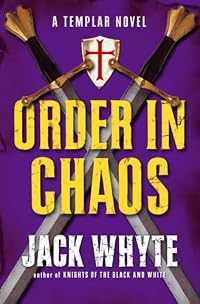
Fiction. Mystery. Thriller. Historical Fiction. A brother of the Order-a medieval secret society uniting noble families in a sacred bond-Sir Hugh de Payens has emerged from the First Crusade a broken man seeking to dedicate his life to God. But the Order has other plans for him: to uncover a deadly secret that could shatter the very might of the Church itself.Tags
Recommendations

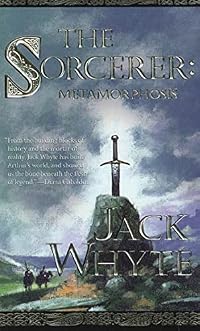




Member Reviews
Oh deary me. It had such promise. A trilogy (this being the first) telling the story of the founding, flourishing & sudden decimation of the Templar knights sounded like a rip-roaring tale. How very wrong. At 548 pages, this is easily twice as long as it needed to be. He gets badly sidetracked into long conversations and descriptions that don't advance the story any. The characters are a bit one dimensional and I'm fairly sure he gets confused as to who is where and related to whom at various points along the way.
And then he felt the need to invent some ridiculous secret order that are from Christian families, but claim a direct line of descent from a bunch of Jewish priests exiled from Jerusalem in the first century. Really? And then, show more towards the end, there's an Egyptian temple connection - all highly improbable. The pages and pages and pages of hocus pocus that got spouted about reforming the church and how the secret order would change the world were really not worth the effort. I haven't read such tosh since Dan Brown. Put it this way, no way am I seeking out volumes 2 & 3. show less
And then he felt the need to invent some ridiculous secret order that are from Christian families, but claim a direct line of descent from a bunch of Jewish priests exiled from Jerusalem in the first century. Really? And then, show more towards the end, there's an Egyptian temple connection - all highly improbable. The pages and pages and pages of hocus pocus that got spouted about reforming the church and how the secret order would change the world were really not worth the effort. I haven't read such tosh since Dan Brown. Put it this way, no way am I seeking out volumes 2 & 3. show less
It was interesting at times, but bad history.
When I started reading this book, I was hoping for an actual historical novel that would do justice to the true history of the Knights Templar. Instead I got a book fostering the same sensationalism that has plagued too many stories of this popularly miscontrued order. I understand there has to be a story here, but why must they be a clandestine order with a secret that would rock the foundations of Christianity? I mean, seriously, does anyone else find this oddly familiar? And I haven't even mentioned the first century history, which is worse, even, by far. I wrote a paper on the Knights Templar for an undergraduate history class, so I knew something about them, but I have studied the first show more century time period quite extensively. Particularly the area he is dealing with.
So why is the history so bad? Isn't there room for interpretation? Of course, but Whyte goes far beyond interpretation. He takes the license to create available to the novelist and uses it to create a brand new history with no basis in historic documentation.
The Essenes? Sure, they were the common people's hero. This is despite the fact we know very little about the Essenes because, from what little we do know, they lived in isolated communities in the wilderness of Judea. In fact, the Pharisees better fit the mold he makes for the Essenes, and the Sadducees the mold he makes for the Pharisees. In truth, doctrinally Jesus was closest to the Pharisees. And yet (in spite of Whyte's claims of conspiracy), they are the group he comes into conflict with most often in the gospels. Why is this? Because they didn't practice what they preached. They were hypocrites, and the common man was most likely to follow their guidance (not the Essenes, who they rarely saw). The Sadducees, on the other hand, were not well-liked by the common man. They were the rich and more political sect that Whyte mistakenly names as the Pharisees. The Pharisees were actually a grassroots movement that came about when Jews were searching for a way to worship and follow the Torah without access to a temple. The Pharisees are, in fact, the sect in which modern Judaism finds its roots.
And I'm not even going into Paul, who is pegged as a Roman saboteur. Why the Romans would bother trying to sabatage a religion practiced in a small and almost unknown corner of the world, he doesn't go into. How he justifies this, considering that Judaism was more acceptable, if no more understood, than Christianity. Judaism, as the religion of a conquered state, was allowed to be practiced by the citizens of that state. Christianity, once it was established as a seperate religion and not a sect of Judaism, was not protected under this statute. This is why the religion they "created" to make this other almost unknown religion more palpable to the Romans they then went on to persecute for well over two centuries until Constantine's conversion in AD 313. Sounds like quite the convoluted, long-term plan for those unnamed Roman masterminds.
So, where does this leave the main thrust of the story. Well, with such terrible historical roots, quite forlorn, I have to say.
The Templars were a first. Sure, the Hospitalers were considered both knight and monk, but the Templars were the first to truly attempt to live as such. How, then, taking vows of poverty, did they become rich, if not from some secret treasure we have no evidence of? Perhaps because of the rich pilgrims who appreciated and wished to foster good will with those who protected them in the Holy Land. While they could not have property of their own, they could accept it on behalf of the Order. Later on in their history, after amassing much wealth, they basically became bankers, able to provide a transfer of wealth without having to physically move the wealth from one location to another. It's nothing mysterious, yet Jack Whyte, like everyone before him, sensationalises their story.
Why not find a place where he could invent stories that aren't in direct oppposition to things we do know. Sure, make things up. It's a novel, not a textbook. But don't present things you made up as historical truth, in direct contradiction to documentation on the subject. And maybe, if you're going to remake so much history, write it as a novel in another world with a similar history, as other authors such as Guy Gavriel Kay and Tad Williams have done. That way, you won't confuse people who think they are getting some measure of historical truth.
All in all, I was fairly disappointed with this book. It had some interesting parts, but the distracting historical inaccuracies and lack of a truly compelling and original story left me feeling cheated by a book I had been excited to read. show less
When I started reading this book, I was hoping for an actual historical novel that would do justice to the true history of the Knights Templar. Instead I got a book fostering the same sensationalism that has plagued too many stories of this popularly miscontrued order. I understand there has to be a story here, but why must they be a clandestine order with a secret that would rock the foundations of Christianity? I mean, seriously, does anyone else find this oddly familiar? And I haven't even mentioned the first century history, which is worse, even, by far. I wrote a paper on the Knights Templar for an undergraduate history class, so I knew something about them, but I have studied the first show more century time period quite extensively. Particularly the area he is dealing with.
So why is the history so bad? Isn't there room for interpretation? Of course, but Whyte goes far beyond interpretation. He takes the license to create available to the novelist and uses it to create a brand new history with no basis in historic documentation.
The Essenes? Sure, they were the common people's hero. This is despite the fact we know very little about the Essenes because, from what little we do know, they lived in isolated communities in the wilderness of Judea. In fact, the Pharisees better fit the mold he makes for the Essenes, and the Sadducees the mold he makes for the Pharisees. In truth, doctrinally Jesus was closest to the Pharisees. And yet (in spite of Whyte's claims of conspiracy), they are the group he comes into conflict with most often in the gospels. Why is this? Because they didn't practice what they preached. They were hypocrites, and the common man was most likely to follow their guidance (not the Essenes, who they rarely saw). The Sadducees, on the other hand, were not well-liked by the common man. They were the rich and more political sect that Whyte mistakenly names as the Pharisees. The Pharisees were actually a grassroots movement that came about when Jews were searching for a way to worship and follow the Torah without access to a temple. The Pharisees are, in fact, the sect in which modern Judaism finds its roots.
And I'm not even going into Paul, who is pegged as a Roman saboteur. Why the Romans would bother trying to sabatage a religion practiced in a small and almost unknown corner of the world, he doesn't go into. How he justifies this, considering that Judaism was more acceptable, if no more understood, than Christianity. Judaism, as the religion of a conquered state, was allowed to be practiced by the citizens of that state. Christianity, once it was established as a seperate religion and not a sect of Judaism, was not protected under this statute. This is why the religion they "created" to make this other almost unknown religion more palpable to the Romans they then went on to persecute for well over two centuries until Constantine's conversion in AD 313. Sounds like quite the convoluted, long-term plan for those unnamed Roman masterminds.
So, where does this leave the main thrust of the story. Well, with such terrible historical roots, quite forlorn, I have to say.
The Templars were a first. Sure, the Hospitalers were considered both knight and monk, but the Templars were the first to truly attempt to live as such. How, then, taking vows of poverty, did they become rich, if not from some secret treasure we have no evidence of? Perhaps because of the rich pilgrims who appreciated and wished to foster good will with those who protected them in the Holy Land. While they could not have property of their own, they could accept it on behalf of the Order. Later on in their history, after amassing much wealth, they basically became bankers, able to provide a transfer of wealth without having to physically move the wealth from one location to another. It's nothing mysterious, yet Jack Whyte, like everyone before him, sensationalises their story.
Why not find a place where he could invent stories that aren't in direct oppposition to things we do know. Sure, make things up. It's a novel, not a textbook. But don't present things you made up as historical truth, in direct contradiction to documentation on the subject. And maybe, if you're going to remake so much history, write it as a novel in another world with a similar history, as other authors such as Guy Gavriel Kay and Tad Williams have done. That way, you won't confuse people who think they are getting some measure of historical truth.
All in all, I was fairly disappointed with this book. It had some interesting parts, but the distracting historical inaccuracies and lack of a truly compelling and original story left me feeling cheated by a book I had been excited to read. show less
The Knights Templar are just about a genre in themselves, with hundreds of books, historical, fictional, pseudo-historical conspiracies, you name it. This book is fiction, first of a trilogy, that recounts the founding of the Order, and its early years.
It is a matter of history that, in 1118 A.D., nine knights led by one Hugues de Payens took vows of poverty, obedience, and chastity before the Patriarch of Jerusalem and dedicated themselves to protecting pilgrims on the roads of the newly-established Frankish Kingdom of Jerusalem. Baldwin II, king of Jerusalem, gave them quarters on the Temple Mount, hence their full name - The Poor Fellow-soldiers of Jesus Christ and the Temple of Solomon (known then and now as the Knights Templar, or show more the Templars). It is further known that the nine knights spent years in excavations beneath the Temple Mount in addition to their military duties. What they were digging for, and why, has furnished fuel for speculation ranging from the merely bizarre to the outlandishly absurd. Mr. Whyte gives us a down-to-earth novel of what those years *might* have actually been like.
The characters are largely historical, the mission driving the early organization is realistic, though still, perforce, speculative, and the pace is satisfying. This volume takes the reader from the late of Hugues de Payens, when he is initiated into a secret order involving his family, to the end of the Templars' first phase, closing as de Payens is about to return to Europe in 1128. The next volumes are to pick up the story from there.
If you enjoy reading about the Templars, this book will be an interesting look at a period that is little known in their formation. I'd recommend it. show less
It is a matter of history that, in 1118 A.D., nine knights led by one Hugues de Payens took vows of poverty, obedience, and chastity before the Patriarch of Jerusalem and dedicated themselves to protecting pilgrims on the roads of the newly-established Frankish Kingdom of Jerusalem. Baldwin II, king of Jerusalem, gave them quarters on the Temple Mount, hence their full name - The Poor Fellow-soldiers of Jesus Christ and the Temple of Solomon (known then and now as the Knights Templar, or show more the Templars). It is further known that the nine knights spent years in excavations beneath the Temple Mount in addition to their military duties. What they were digging for, and why, has furnished fuel for speculation ranging from the merely bizarre to the outlandishly absurd. Mr. Whyte gives us a down-to-earth novel of what those years *might* have actually been like.
The characters are largely historical, the mission driving the early organization is realistic, though still, perforce, speculative, and the pace is satisfying. This volume takes the reader from the late of Hugues de Payens, when he is initiated into a secret order involving his family, to the end of the Templars' first phase, closing as de Payens is about to return to Europe in 1128. The next volumes are to pick up the story from there.
If you enjoy reading about the Templars, this book will be an interesting look at a period that is little known in their formation. I'd recommend it. show less
The Holy Blood and the Holy Grail told us that the Knights Templar had secrets, probably to do with the family of Christ, and definitely to do with the Temple of Jerusalem. This book takes that idea and runs with it. Speculating that the Knights Templar are an offshoot of an order that has descended from the Essenes and are gnostic inheritors of all of that. A secret order that has a number of families and a restricted membership. Because all the members are knights, many of them go to Jerusalem on Crusade and through various paths end up creating the Knights to achieve their goal of finding the treasure under the Temple.
Princess Alice is one of their main opponents and she's displayed as mad, bad and dangerous to know. A woman with show more smarts who doesn't have enough to do and lots of time to do it.
It's not a great book, it's full of historical flaws and it could have been edited down severly and not lost the plot, as it is it clunks a bit and there were times I nearly lost my interest, however, it kept me reading and I'm thinnking about reading the next in the series. I can wait though, curiousity to see how things go rather than wanting more of the story is driving me for this one. show less
Princess Alice is one of their main opponents and she's displayed as mad, bad and dangerous to know. A woman with show more smarts who doesn't have enough to do and lots of time to do it.
It's not a great book, it's full of historical flaws and it could have been edited down severly and not lost the plot, as it is it clunks a bit and there were times I nearly lost my interest, however, it kept me reading and I'm thinnking about reading the next in the series. I can wait though, curiousity to see how things go rather than wanting more of the story is driving me for this one. show less
Whyte does an excellent job of melding known facts with inspired guesses to build a believable story. As he has done in his "Camulod" series about King arthur, he has taken what we know to be true, added some generally accepted thoughts concerning the Knights Templar and expanding upon this base writes a ripping yarn, as they used to say. I am looking forward to volume two of this series.
I am updating my review, and will have to agree with some of the 1 star reviews. This was my first Jack Whyte book and I am going to have a hard time trying another. Yes, there are two more books in this series but this one went on and on and on and on and on with nothing really to keep my interest. I kept hoping for it to pick up, the action scenes, although few, were excellent but the breadth of the story just didn't go anywhere. I really tried to complete this book but just couldn't in the end the story never went anywhere there was not big secret or mystery and after 450 of the 750+ page book I gave it away.
I loved the Camulod Chronicles series, and thus picked up this book. I enjoyed the story, but did not find it as entertaining as the Camulod books.
Members
- Recently Added By
Lists

Top Five Books of 2014
1,064 works; 398 members

al.vick-series
381 works; 2 members

A Rainbow of Books: Colors in the Title
570 works; 24 members
Author Information

36 Works 11,707 Members
Writer Jack Whyte was born in Scotland in 1940. He was raised in Scotland, but educated in England and France before migrating to Canada in 1967. He spent one year teaching English in high school, before focusing on a career as a professional singer, musician, and actor. He wrote, directed and appeared in a one man show about Scotland's national show more poet Robert Burns in the early 1970's. Due to the show's success, he started writing for CBC national television and eventually went into advertising. He is the author of The Camulod Chronicles or A Dream of Eagles series which sets the tales of King Arthur in Roman Britain and Templar Trilogy which deals with the rise and fall of the Order of the Knights of the Temple of Solomon. (Bowker Author Biography) show less
Awards and Honors
Distinctions
Series

Work Relationships
Is contained in
Common Knowledge
- Canonical title
- Knights of the Black and White
- Original publication date
- 2006
- People/Characters
- Hugh de Payens; Godfrey de Saint-Omer; Payen de Montdidier; King Baldwin II of Jerusalem
- Important places
- Israel; Jerusalem
- Important events
- Crusades; Sack of Jerusalem
- First words
- "Sir Hugh!" As the guards on either side of the doors ahead came to attention and saluted him, not even the rattling clatter of their armor penetrated the awareness of the frowning, mop-headed young man who walked towards th... (show all)em.
- Last words
- (Click to show. Warning: May contain spoilers.)"So we will drink a second cup to ourselves. and to our friends and bretheren, the knight monks of the temple, Poor Fellows that they are."
Classifications
- Genres
- Fiction and Literature, General Fiction, Historical Fiction, Fantasy
- DDC/MDS
- 813.54 — Literature & rhetoric American literature in English American fiction in English 1900-1999 1945-1999
- LCC
- PR9199.3 .W4589 — Language and Literature English English Literature English literature: Provincial, local, etc.
- BISAC
Statistics
- Members
- 988
- Popularity
- 26,430
- Reviews
- 17
- Rating
- (3.37)
- Languages
- 7 — English, French, German, Hungarian, Italian, Portuguese, Spanish
- Media
- Paper, Ebook
- ISBNs
- 20
- ASINs
- 10