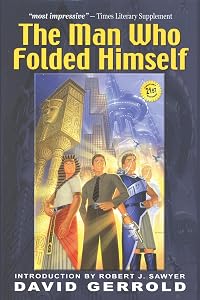
The Man Who Folded Himself
by David Gerrold
On This Page
Description
This classic work of science fiction is widely considered to be the ultimate time-travel novel. When Daniel Eakins inherits a time machine, he soon realizes that he has enormous power to shape the course of history. He can foil terrorists, prevent assassinations, or just make some fast money at the racetrack. And if he doesn't like the results of the change, he can simply go back in time and talk himself out of making it! But Dan soon finds that there are limits to his powers and forces show more beyond his control. show lessTags
Recommendations































Member Recommendations

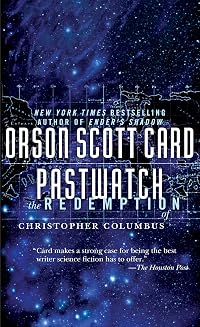
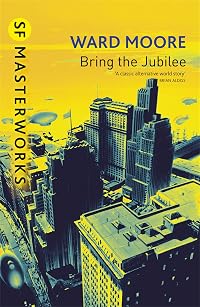
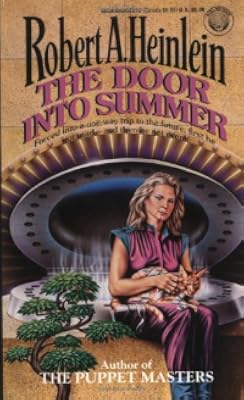
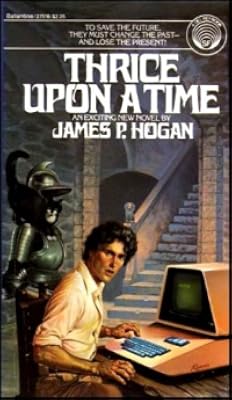
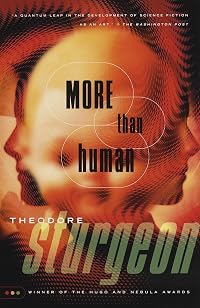
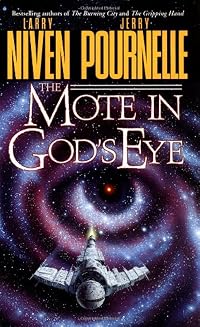
beyondthefourthwall Gerrold's book is the classic; Ambrose's does different things with some of the same ideas. Both are wildly imaginative and pack a ton of ideas into concise sci-fi novels.
jscape2000 Gerrold and Ferrell that a similar premise. Gerrold writes a meditation on love and loneliness, while Ferrell delivers a surprising who-done-it.
Member Reviews
So many great books out there, and then I come across this one that manages to mobilize, outwardly, all the things that go through our own minds about ourselves, our dreams, our sexuality, and our agency in our own lives.
And all it does is take the form of a short Time-Travel novel. Amazing.
I mean, seriously, let's just throw out all paradox and assume, just for a moment, that all time travel iterations are possible. This is the many, many, many-worlds interpretation. Go back and talk to yourself times infinity. No paradox, just added dimensions. That means you never need to be alone. That loving yourself and your lot in life takes on truly physical dimensions. That neither money, events, or anything can stand in your way.... except... show more your PoV grows older, naturally, and so if you're trying to revisit your own youth, you can, but your youth may not really appreciate YOU. :)
So is this a fantastic Time-Travel novel exploring all the far reaches of time and place, or is it an introspective novel exploring himself and everything that it means to be and to grow older and sometimes wiser?
Well, both.
Plus I really love how it handles masturbation. I mean, if you're with yourself... lol... anyway... of course there's a couple of really great spoiler moments, too, but even those become a dialogue of what it means to be a man or a woman and the ultimate absurdity of it all, and I loved that, too. The whole novel is very Plato, only it's also extremely entertaining even as it hammers home some really delicious philosophy without ever naming it as such.
This is really good mind-candy. :) Daydream stuff taken to wonderful extremes.
It was also nominated for many awards, but that's not nearly as important as how interesting and available this book is, even to us jaded modern readers. Well, 1973 isn't *that* old.
This is some really good stuff! I'm loving my time-travel kick! show less
And all it does is take the form of a short Time-Travel novel. Amazing.
I mean, seriously, let's just throw out all paradox and assume, just for a moment, that all time travel iterations are possible. This is the many, many, many-worlds interpretation. Go back and talk to yourself times infinity. No paradox, just added dimensions. That means you never need to be alone. That loving yourself and your lot in life takes on truly physical dimensions. That neither money, events, or anything can stand in your way.... except... show more your PoV grows older, naturally, and so if you're trying to revisit your own youth, you can, but your youth may not really appreciate YOU. :)
So is this a fantastic Time-Travel novel exploring all the far reaches of time and place, or is it an introspective novel exploring himself and everything that it means to be and to grow older and sometimes wiser?
Well, both.
Plus I really love how it handles masturbation. I mean, if you're with yourself... lol... anyway... of course there's a couple of really great spoiler moments, too, but even those become a dialogue of what it means to be a man or a woman and the ultimate absurdity of it all, and I loved that, too. The whole novel is very Plato, only it's also extremely entertaining even as it hammers home some really delicious philosophy without ever naming it as such.
This is really good mind-candy. :) Daydream stuff taken to wonderful extremes.
It was also nominated for many awards, but that's not nearly as important as how interesting and available this book is, even to us jaded modern readers. Well, 1973 isn't *that* old.
This is some really good stuff! I'm loving my time-travel kick! show less
Time-travel is a popular storytelling device; fascinating, flexible and a natural crowd-pleaser. It's quite a feat, then, that in The Man Who Folded Himself author David Gerrold makes it so tedious and joyless. The story itself is a strange one, veering in its prose between trite juvenilia and dry discussion of paradox, but it's also not much of a story at all. The protagonist Daniel inherits a 'time belt' from his uncle, but where this device came from or why is never addressed (the twist towards the end is also predictable). Daniel immediately jumps into the back-and-forth of time-travel shenanigans with nary a second thought, and the reader doesn't have time to get on board. When the story ends, having paradoxically felt both hasty show more and interminable, we have motion-sickness despite not having once been moved.
The haste in the set-up of the premise might be forgivable if something interesting was then done, but the protagonist's time-travel amounts to a few soulless summaries of visiting various historical events (witnessing the Crucifixion, he notes only that Jesus "looked so sad" (pg. 52) – and that is one of the more flavourful examples). Mirroring his protagonist's unwillingness to let alone, the author released an updated version of the book in 2003 (the original was published in 1973). This version mentions things like 9/11 and Apple Computers, but they are only mere mentions – a bit of slapdash colour. When not in these time-travel adventures (which are apparently plentiful, though Gerrold does not grant the reader any taste of them), the protagonist is hyper-analysing the various 'copies' of himself that have been created each time he loops back in time, or travels forward. By the end, there are hundreds of versions of Daniel running around. This, unfortunately, is what Gerrold does submit the reader to.
Those who credit Gerrold's book describe this as a thoughtful and meticulous exploration of the effects of time-travel on our protagonist's sense of identity. My reaction, which appears to be shared by many reviewers, was rather different. It's confusing from the start, with our perhaps-autistic protagonist relentlessly going back to remedy insignificant events of the previous day – "Danny had to go back in time and become Don to his Dan" (pg. 44) is one example of this nonsense. Even the young boy in Bernard's Watch found more interesting things to do with time-travel, such as saving a goal in a football match, and I had hoped Gerrold would soon move on to more interesting time-travel terrain. Unfortunately, he commits to it fully for the rest of the book, stifling at birth anything that would make The Man Who Folded Himself compelling.
Our protagonist could better be described as 'The Man Who Loved Himself', for he immediately has sex with the first copy of himself that he meets in a time loop, and later has gay orgies with multiples of them. This is not done out of boredom or curiosity, but because he is the only person he feels can understand him. Daniel alters time so much he encounters a female version of himself, who he also has sex with. When he gets this copy pregnant, he doesn't feel joy at the child (or even any sort of conflict over its conception), but is instead "bothered that someone else is inside of her, someone other than me" (pg. 90).
The protagonist, dull from the start, reveals more and more his autism and narcissism, retreating deeper and deeper into his own world of copies of himself. The world outside his own mind might as well not exist – but Gerrold does not even appear to register the pathetic tragedy of this. Instead, he presents it as a sort of path to self-actualization, only the result is a rather depraved facsimile of character growth rather than anything genuinely rewarding. Lamenting the end of his relationship with his female copy, Daniel says it was because he could never experience the feelings from her side (pg. 93) because he has not been her in the past, in the way that he has with his male copies. This will be perplexing to any reader of even a basic level of emotional maturity, who don't need a 'time belt' and multiple physical copies of themselves to practice simple empathy in a relationship.
In The Man Who Folded Himself, there's no sense of joy or wonder at life, and the book as a whole feels like a bank accountant minuting his ayahuasca experience. To gift a 'time belt' to the protagonist of this novel feels like a sick joke on the reader, who craves adventure and experience but instead finds themselves locked in a room with a man who has been given the whole world to see – past, present and future – but instead chooses only to gaze in the mirror. show less
The haste in the set-up of the premise might be forgivable if something interesting was then done, but the protagonist's time-travel amounts to a few soulless summaries of visiting various historical events (witnessing the Crucifixion, he notes only that Jesus "looked so sad" (pg. 52) – and that is one of the more flavourful examples). Mirroring his protagonist's unwillingness to let alone, the author released an updated version of the book in 2003 (the original was published in 1973). This version mentions things like 9/11 and Apple Computers, but they are only mere mentions – a bit of slapdash colour. When not in these time-travel adventures (which are apparently plentiful, though Gerrold does not grant the reader any taste of them), the protagonist is hyper-analysing the various 'copies' of himself that have been created each time he loops back in time, or travels forward. By the end, there are hundreds of versions of Daniel running around. This, unfortunately, is what Gerrold does submit the reader to.
Those who credit Gerrold's book describe this as a thoughtful and meticulous exploration of the effects of time-travel on our protagonist's sense of identity. My reaction, which appears to be shared by many reviewers, was rather different. It's confusing from the start, with our perhaps-autistic protagonist relentlessly going back to remedy insignificant events of the previous day – "Danny had to go back in time and become Don to his Dan" (pg. 44) is one example of this nonsense. Even the young boy in Bernard's Watch found more interesting things to do with time-travel, such as saving a goal in a football match, and I had hoped Gerrold would soon move on to more interesting time-travel terrain. Unfortunately, he commits to it fully for the rest of the book, stifling at birth anything that would make The Man Who Folded Himself compelling.
Our protagonist could better be described as 'The Man Who Loved Himself', for he immediately has sex with the first copy of himself that he meets in a time loop, and later has gay orgies with multiples of them. This is not done out of boredom or curiosity, but because he is the only person he feels can understand him. Daniel alters time so much he encounters a female version of himself, who he also has sex with. When he gets this copy pregnant, he doesn't feel joy at the child (or even any sort of conflict over its conception), but is instead "bothered that someone else is inside of her, someone other than me" (pg. 90).
The protagonist, dull from the start, reveals more and more his autism and narcissism, retreating deeper and deeper into his own world of copies of himself. The world outside his own mind might as well not exist – but Gerrold does not even appear to register the pathetic tragedy of this. Instead, he presents it as a sort of path to self-actualization, only the result is a rather depraved facsimile of character growth rather than anything genuinely rewarding. Lamenting the end of his relationship with his female copy, Daniel says it was because he could never experience the feelings from her side (pg. 93) because he has not been her in the past, in the way that he has with his male copies. This will be perplexing to any reader of even a basic level of emotional maturity, who don't need a 'time belt' and multiple physical copies of themselves to practice simple empathy in a relationship.
In The Man Who Folded Himself, there's no sense of joy or wonder at life, and the book as a whole feels like a bank accountant minuting his ayahuasca experience. To gift a 'time belt' to the protagonist of this novel feels like a sick joke on the reader, who craves adventure and experience but instead finds themselves locked in a room with a man who has been given the whole world to see – past, present and future – but instead chooses only to gaze in the mirror. show less
Rating: 4.875* of five
The Book Report: Danny's been livin' the high life, thanks to a bequest from his mysterious old uncle. One day, the gravy train ends, and Danny has to make his own way. With a belt. A very special time-travel-enabling belt.
An exploration of adolescent exceptionalism, a meditation on the establishment, building, and defense of identity, and an astonishingly rare representation of gay maleness in science fiction. The author, who penned "The Trouble with Tribbles" for the original "Star Trek" series, tackles all this heaviness in less than 200pp, and never makes it feel like any tackling is being done.
My Review: Deft and timely even now. Gerrold's unapologetically gay Danny is mildly surprising even in the modern show more SFnal world. The ewww-ick-they-do-WHAT? homophobes need fear nothing, there's no raunch in Danny's journey of self-discovery (of a sort I've never seen again!).
For my teenaged self, this book blew into my life at a time when I was under emotional siege from the forces of Jesus. It was a lifeline thrown from a grown person to my too-young-to-run self. If he could write this book, there was a world that didn't loathe me, because here was something written, published, and sold with me in it! I endured many a screaming, hectoring, sermonizing hour thinking that thought.
If you suspect some youth of your acquaintance might be struggling to think positively of himself because he's probably gay, think about giving him this book. It can't hurt, and it might do him a world of good. show less
The Book Report: Danny's been livin' the high life, thanks to a bequest from his mysterious old uncle. One day, the gravy train ends, and Danny has to make his own way. With a belt. A very special time-travel-enabling belt.
An exploration of adolescent exceptionalism, a meditation on the establishment, building, and defense of identity, and an astonishingly rare representation of gay maleness in science fiction. The author, who penned "The Trouble with Tribbles" for the original "Star Trek" series, tackles all this heaviness in less than 200pp, and never makes it feel like any tackling is being done.
My Review: Deft and timely even now. Gerrold's unapologetically gay Danny is mildly surprising even in the modern show more SFnal world. The ewww-ick-they-do-WHAT? homophobes need fear nothing, there's no raunch in Danny's journey of self-discovery (of a sort I've never seen again!).
For my teenaged self, this book blew into my life at a time when I was under emotional siege from the forces of Jesus. It was a lifeline thrown from a grown person to my too-young-to-run self. If he could write this book, there was a world that didn't loathe me, because here was something written, published, and sold with me in it! I endured many a screaming, hectoring, sermonizing hour thinking that thought.
If you suspect some youth of your acquaintance might be struggling to think positively of himself because he's probably gay, think about giving him this book. It can't hurt, and it might do him a world of good. show less
I'm a huge fan of time travel literature. I usually don't have much interest in vintage science fiction by men (yes, totally judgmental of me, but I've read enough Heinlein, Asimov, Vonnegut, and Dick that I rarely find anything interesting in old sci-fi, and I find the casual sexism distracting). However, because time travel is one of my favorite themes, I thought I'd go ahead and read this one because it's considered one of the foundational works of the genre.
I'm glad I read it, and parts of it were pleasantly surprising, but I also feel like I just emerged from a really bad drug trip.
The main character, Daniel, inherits a belt that gives him the ability to time travel. His first impulse is to use it to go forward a day, read the show more newspaper, and go bet at the racetrack so he can get rich quick. When he goes forward a day, he meets himself and they go to the racetrack together.
From there, the book isn't so much a story as it is a giant thought experiment. There are long passages where Daniel contemplates the nature of time and paradoxes and the English language doesn't have enough tenses to make those passages intelligible. Daniel also commits every single sin of time travel just to see what will happen, which sometimes causes the collapse of civilization but he can go back and undo that so it's okay.
Aside from the long treatises on how time travel works, this book is a lot of navel gazing.
Daniel's world only includes himself. In fact, after the first few pages, the only person Daniel interacts with is himself: he is the only person who understands himself and what he is experiencing, he is the only person who knows about time travel, and he generally really likes himself (there are a few versions of himself that he doesn't like, but he goes back and excises those from the timeline). He has years-long poker games with different versions of himself coming and going from the game. He has big parties where all the guests are different versions of himself.
And he also has sex with other versions of himself. This actually turned out to be really surprising, especially considering when the book was written. The first time Daniel has sex with himself, he's really conflicted about it, and the conversation he has with past and present versions of himself about it is actually a very sensitively-written coming out scene. In the books afterward, Gerrold talks about how hard this was for him to write, but also how important it was for him as a gay man. This was the most redeeming part of the book.
The fact that Daniel is completely fulfilled and satisfied by only interacting with himself makes the book not only narcissistic but also closed-minded and claustrophobic: Daniel travels through all of time and space, and yet he gets the most satisfaction about staying in basically the time he was born, editing his timeline to keep it as familiar as possible, and hanging out with only himself. It seems like someone who has seen all of the pain and glory of the world would find something more interesting to do than have sex with himself, or would be interested in creating a better world, or would at least have some moral doubts about the fact that his changes to the timeline can cause or assuage the suffering and deaths of huge swaths of humanity, but he never thinks about any of that. On the other hand, the fact that Daniel is the only character means that this is an incredibly intimate view of Daniel and his coming to terms with his own self in a world where self is all he has.
The narrative is in the form of Daniel's journal entries. It slowly dawns on the reader that we're seeing journal entries from different versions of Daniel, which helps the reader slowly discover what is actually going on in ways that Daniel himself isn't always aware of. It's an interesting and well-executed narrative device, but it helps contribute to the weird drug trip feeling.
Anyway, at this point my review is almost as long as the book itself. It's weird, and definitely not for everyone, and it has a lot of problems, but it's also pretty brilliant in some ways, and definitely deserves its place as a cornerstone of time travel literature. show less
I'm glad I read it, and parts of it were pleasantly surprising, but I also feel like I just emerged from a really bad drug trip.
The main character, Daniel, inherits a belt that gives him the ability to time travel. His first impulse is to use it to go forward a day, read the show more newspaper, and go bet at the racetrack so he can get rich quick. When he goes forward a day, he meets himself and they go to the racetrack together.
From there, the book isn't so much a story as it is a giant thought experiment. There are long passages where Daniel contemplates the nature of time and paradoxes and the English language doesn't have enough tenses to make those passages intelligible. Daniel also commits every single sin of time travel just to see what will happen, which sometimes causes the collapse of civilization but he can go back and undo that so it's okay.
Aside from the long treatises on how time travel works, this book is a lot of navel gazing.
Daniel's world only includes himself. In fact, after the first few pages, the only person Daniel interacts with is himself: he is the only person who understands himself and what he is experiencing, he is the only person who knows about time travel, and he generally really likes himself (there are a few versions of himself that he doesn't like, but he goes back and excises those from the timeline). He has years-long poker games with different versions of himself coming and going from the game. He has big parties where all the guests are different versions of himself.
And he also has sex with other versions of himself. This actually turned out to be really surprising, especially considering when the book was written. The first time Daniel has sex with himself, he's really conflicted about it, and the conversation he has with past and present versions of himself about it is actually a very sensitively-written coming out scene. In the books afterward, Gerrold talks about how hard this was for him to write, but also how important it was for him as a gay man. This was the most redeeming part of the book.
The fact that Daniel is completely fulfilled and satisfied by only interacting with himself makes the book not only narcissistic but also closed-minded and claustrophobic: Daniel travels through all of time and space, and yet he gets the most satisfaction about staying in basically the time he was born, editing his timeline to keep it as familiar as possible, and hanging out with only himself. It seems like someone who has seen all of the pain and glory of the world would find something more interesting to do than have sex with himself, or would be interested in creating a better world, or would at least have some moral doubts about the fact that his changes to the timeline can cause or assuage the suffering and deaths of huge swaths of humanity, but he never thinks about any of that. On the other hand, the fact that Daniel is the only character means that this is an incredibly intimate view of Daniel and his coming to terms with his own self in a world where self is all he has.
The narrative is in the form of Daniel's journal entries. It slowly dawns on the reader that we're seeing journal entries from different versions of Daniel, which helps the reader slowly discover what is actually going on in ways that Daniel himself isn't always aware of. It's an interesting and well-executed narrative device, but it helps contribute to the weird drug trip feeling.
Anyway, at this point my review is almost as long as the book itself. It's weird, and definitely not for everyone, and it has a lot of problems, but it's also pretty brilliant in some ways, and definitely deserves its place as a cornerstone of time travel literature. show less
Daniel Eakins, a detached college student, inherits a time belt from his Uncle Jim. The device allows him to travel through time and he quickly masters it's use to make himself a fortune through gambling and investment. But beyond traveling through time, he continues to be visited by variants of himself from different time periods. The situation soon becomes confused as different variants of himself live together (and even have sexual relationships) and continually overwrite Danny's past. The book takes a philosophical approach to time travel paradox that is both clever and bizarre. Gerrold, most famous for screenwriting "The Trouble With Tribbles," was in the vanguard of science fiction/speculative fiction with this work, although it show more seems a little dated now.
Favorite Passages:
Favorite Passages:
Look, you can change the future, right? The future is exactly the same as the past, only it hasn’t happened yet. You haven’t perceived it. The real difference between the two—the only difference—is your point of view. If the future can be altered, so can the past. Every change you make is cumulative; it goes on top of every other change you’ve already made, and every change you add later will go on top of that. You can go back in time and talk yourself out of winning a million and a half dollars, but the resultant world is not one where you didn’t win a million and a half dollars; it’s a world where you talked yourself out of it. See the difference? - p. 46
The past is the future. The future is the past. There’s no difference between the two and either can be changed. I’m flashing across a series of alternate worlds, creating and destroying a new one every time I bounce. The universe is infinite. And so are the possibilities of my life. - p. 49
Presumably there are worlds that are better than this one, but if I create them, it must be carefully, because I have to live in them too. I will be a part of whatever world I create, so I cannot be haphazard with them. - p. 73show less
Gerrold, David. The Man Who Folded Himself. 1973. Afterword, by Geoffrey Klempner. BenBella, 2003.
David Gerrold’s The Man Who Folded Himself was beaten in the Hugo Award competition of 1974 by Arthur C. Clarke’s Rendezvous with Rama. If the competition were held today, I wonder if the results might be different. One can certainly argue that Gerrold’s novel was groundbreaking in its treatment of gender identity and that it deepens and extends the time-manipulation themes established in Robert Heinlein’s “All You Zombies” (1959) and John D. McDonald’s The Girl, the Gold Watch, and Everything (1962). One can’t really say that about Rendezvous’ treatment of the large space habitat story, in that Larry Niven had published show more the more audacious Ringworld in 1970. Maybe in another timeline, Man Who would get the prize. I guess I will have to check my uncle’s belt buckle to find out. show less
David Gerrold’s The Man Who Folded Himself was beaten in the Hugo Award competition of 1974 by Arthur C. Clarke’s Rendezvous with Rama. If the competition were held today, I wonder if the results might be different. One can certainly argue that Gerrold’s novel was groundbreaking in its treatment of gender identity and that it deepens and extends the time-manipulation themes established in Robert Heinlein’s “All You Zombies” (1959) and John D. McDonald’s The Girl, the Gold Watch, and Everything (1962). One can’t really say that about Rendezvous’ treatment of the large space habitat story, in that Larry Niven had published show more the more audacious Ringworld in 1970. Maybe in another timeline, Man Who would get the prize. I guess I will have to check my uncle’s belt buckle to find out. show less
One of the most introspective and inventive pieces of sci-fi I've read in a long time. If you're reading this go find a copy.
Members
- Recently Added By
Lists

Best Time Travel Novels
165 works; 125 members

KayStJ's to-read list
1,616 works; 11 members

Books Read in 2021
5,361 works; 114 members

Time Travel Stories
64 works; 6 members

Recommended Science-Fiction Books
40 works; 3 members

Books Read in 2015
3,299 works; 129 members
Author Information

139+ Works 12,287 Members
David Gerrold is one of the most popular science fiction writers working today. His first professional sale, the Star Trek episode "Trouble With Tribbles," won a Hugo Award. He has written for television, published more than forty books, and had columns in six different magazines. In 1995, his novelette "The Martian Child" won both the Hugo and show more Nebula Awards. Gerrold lives in San Fernando, California, and teaches writing at Pepperdine University show less
Some Editions
Awards and Honors
Awards
Series
Belongs to Publisher Series
Work Relationships
Common Knowledge
- Canonical title*
- Zeitmaschinen gehen anders
- Original title
- The Man Who Folded Himself
- Original publication date
- 1973
- People/Characters
- Daniel Eakins
- Epigraph
- Oh wad some power the giftie gie us
To see oursels as others see us !
It wad frae monie a blunder free us,
An' foolish notion.
- Robert Burns
"To a Louse," stanza 8 - First words
- In the box was a belt. And a manuscript.
- Quotations
- I went back and talked myself out of eliminating Jesus Christ.
- Last words
- (Click to show. Warning: May contain spoilers.)Should I ?
The decisions are mine.
A whole world awaits me.
The future beckons.
All right, I accept.
I am going to put on the belt. - Original language
- English
*Some information comes from Common Knowledge in other languages. Click "Edit" for more information.
Classifications
Statistics
- Members
- 1,168
- Popularity
- 21,506
- Reviews
- 47
- Rating
- (3.57)
- Languages
- Dutch, English, German
- Media
- Paper, Ebook
- ISBNs
- 14
- ASINs
- 11