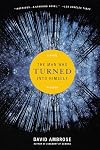
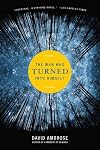
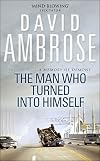
The Man Who Turned Into Himself
by David Ambrose
On This Page
Description
"In the middle of an important meeting, businessman Rick Hamilton experiences a terrible premonition: His wife is about to die. Racing to save her, he finds her dying in the road, her car crushed by a truck. The light dwindles from his eyes-- and then she is alive again, begging for help, and Rick Hamilton no longer is himself, but another man with another life, and a different history"--P. [4] of cover.Tags
Recommendations




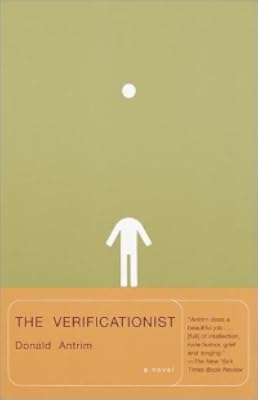
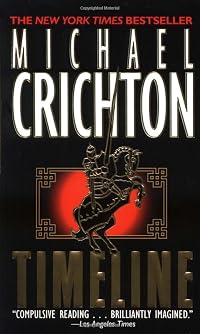

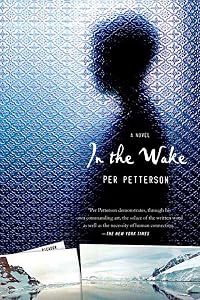
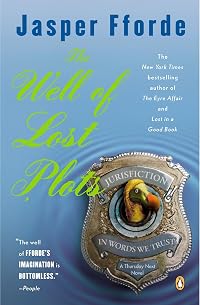







Member Recommendations
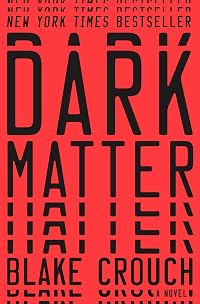
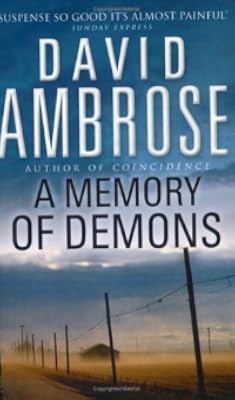
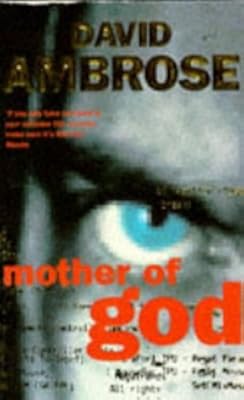
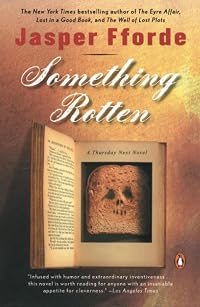
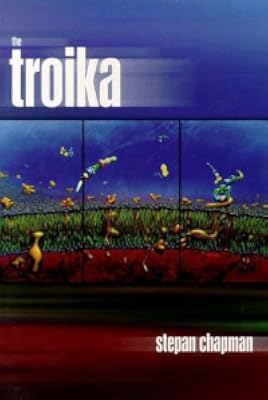
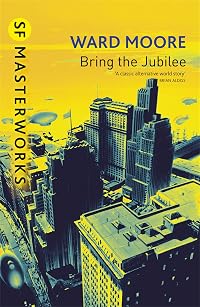
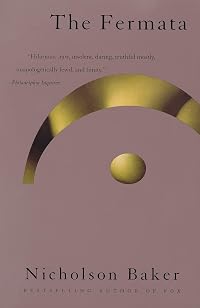
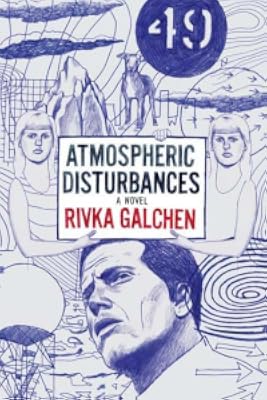
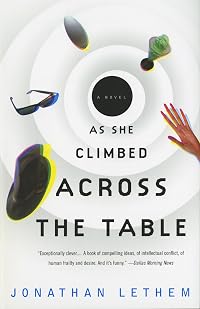
beyondthefourthwall Very different books, but both involve doppelgängers and the protagonist waking up with everything suddenly subtly different. Why? The answers get twisty.
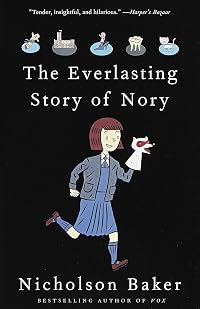
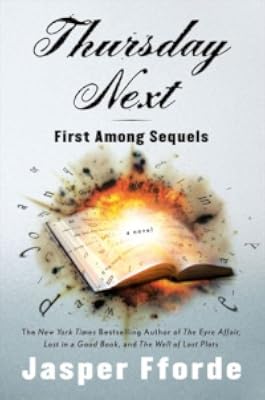
beyondthefourthwall Gerrold's book is the classic; Ambrose's does different things with some of the same ideas. Both are wildly imaginative and pack a ton of ideas into concise sci-fi novels.
Member Reviews
Niels Bohr said: If quantum mechanics hasn't profoundly shocked you, you haven't understood it yet.
Look at the sky and Imagine you have a genetically identical clone in another universe. Is he happier than you? More successful or more miserable than you? How many universe exist? What if one of your clone comes to your world. is it possible or you are just a schizophrenic man!?
This is a charming, psychological and philosophical science fiction story based on parallel worlds theory and It challenged my imagination.
Look at the sky and Imagine you have a genetically identical clone in another universe. Is he happier than you? More successful or more miserable than you? How many universe exist? What if one of your clone comes to your world. is it possible or you are just a schizophrenic man!?
This is a charming, psychological and philosophical science fiction story based on parallel worlds theory and It challenged my imagination.
Early thoughts: the writing style is awkward. Rather than being drawn into the story immediately, I found myself tripping over the language and writing style; it isn't a fluid read. My early impression is that it was written by someone who had a story to tell driven purely by idea rather than by a desire to write. Perhaps I will be drawn in more as the book progresses, and the writing and language itself will fall into the background like they should; perhaps the idea that drives the plot will outweigh the writing. Time will tell!
Edited to add: So far, my initial thoughts have proven accurate. The writing wants to be pretentious but it isn't good enough to pull it off. The many worlds hypothesis has always been a bit fringe in physics show more and philosophy, but it was taken seriously enough that it could've made for some really exciting science fiction. I'm just not convinced this book is what I would've had in mind. It isn't bad, exactly, but philosophically speaking, there is a lot more that's really strange and exciting about the many worlds hypothesis than this book even begins to touch upon. That said, if you aren't a philosopher (and/or physicist), then perhaps the simple premise of this book is just what you're looking for. I was hoping for a bit more oomph. show less
Edited to add: So far, my initial thoughts have proven accurate. The writing wants to be pretentious but it isn't good enough to pull it off. The many worlds hypothesis has always been a bit fringe in physics show more and philosophy, but it was taken seriously enough that it could've made for some really exciting science fiction. I'm just not convinced this book is what I would've had in mind. It isn't bad, exactly, but philosophically speaking, there is a lot more that's really strange and exciting about the many worlds hypothesis than this book even begins to touch upon. That said, if you aren't a philosopher (and/or physicist), then perhaps the simple premise of this book is just what you're looking for. I was hoping for a bit more oomph. show less
 This review was written for LibraryThing Early Reviewers.
One of my favorite subjects is quantum physics; the theories that wrap themselves around conspiracies like time travel, fate, the body versus the soul, and parallel universes. I never thought that others might have the same ideas or questions on the topic as think in their head as I do. I tend to rant about my ideas a little too excessively to anyone who will give me the time of day to listen- Chloe Riblet being one of them. She mentioned a book she had read which was all about the subjects of paradoxal universes and the Many Worlds theory, something I’m very interested in. She lent me her copy of The Man Who Turned into Himself by David Ambrose, and it changed my world. Now, I have referred to books before as “the best book I have show more ever read”, but there’s been a change of events. This book is the best book I have ever read. To give you a taste of how its immediate effect of me, let me say this: this is the only book I have ever read from cover to cover in one sitting, and I didn’t even pay attention to the time flying by as I did so.
The story, I admit, is not only the best book of its time, but also the most confusing and complex novel that demands all of a reader’s open-minded focus if they want to keep up with the storyline. I say “open-minded” because if someone were to read this book without a full readiness to accept any scientific realm of possibility as fact, then they would not only be quickly irritated and confused, but maybe also dismayed by the bizarre events that take place. To try and sum up the book as nicely (but not as simply) as possible, it could be said that a man, Rick feels signs of death in his future, and before he knows it, his psychological body leaves his world to fall into another universe where his parallel self, Richard can hear Rick’s voice in his head, and Richard is suspected of being mentally insane. Both Richard and Rick have to work together to get Rick back to his own world with the help of no one but themselves and a blind psychiatrist, Emma.
“One of the extraordinary things about delusion is the patient’s utter certainty that he is right and the rest of the world is wrong. (55)” Let me make clear, that the synopsis I just gave is the largest understatement I’ve made to date. There is vastly more to each character, not to mention there are technically multiples of the same characters (with different personalities) since Rick is in more than one universe. Each character has their own stories in each world, and as difficult as this all may seem to follow, in the end everything ties together and makes complete sense (again, only if your open-minded to the leniency of the term “sense”).
After reading The Man Who Turned into Himself, it may have been three in the morning, but despite my exhaustion, sleep was the last thing on my mind, for so many questions and theories came flooding into my thought process. David Ambrose is obviously a man of literary genius. His book is jam-packed with intellect and scientific exploration that only so many can handle. This is not a story for the close-minded, the immature or the impatient. Only those prepared for a mind-blowing trip into the world of infinite scientific possibilities should be allowed to own this novel. From page 1, the book is a brainteaser, but the real trouble began when he first unknowingly jumped into a universe, and realized he was in car accident, when he had originally been witnessing one.
“Then I saw the accident… but the car was no longer Anne’s car. In the grotesque tangle of metal, glass, and leather I recognized the color and distorted outline of my own car, It was my dark blue Mustang that had collided with the truck. Something warm and liquid ran down my face, catching the corner of my eye. I reached up and my hand reappeared in front of me soaked in blood. I looked down at my clothes. They were not the same clothes I had been wearing. (22)”
I wish I could bring more quotes into this paper. There are so many incredibly insightful quotes in this book. However, I fear that quotes would do nothing other than confuse you before you’ve even read the damned thing, and my intention is to convince everyone I can to give this book a chance. The Man Who Turned into Himself is by far, the most in-depth story with a captivating power to keep a reader wanting to know what happens next even after the book has ended. All thoughts I have about other universes or suggestions of fate and time travel are linked together in this one small paperback. Please, if you have a few hours to yourself and a few suppositions about the scientific world, give this book a try. David Ambrose did not let me down, but better yet he blew my expectations out of the water. He gave me even more to think about, which I thought was impossible and I’m positive he can do the same for you. show less
The story, I admit, is not only the best book of its time, but also the most confusing and complex novel that demands all of a reader’s open-minded focus if they want to keep up with the storyline. I say “open-minded” because if someone were to read this book without a full readiness to accept any scientific realm of possibility as fact, then they would not only be quickly irritated and confused, but maybe also dismayed by the bizarre events that take place. To try and sum up the book as nicely (but not as simply) as possible, it could be said that a man, Rick feels signs of death in his future, and before he knows it, his psychological body leaves his world to fall into another universe where his parallel self, Richard can hear Rick’s voice in his head, and Richard is suspected of being mentally insane. Both Richard and Rick have to work together to get Rick back to his own world with the help of no one but themselves and a blind psychiatrist, Emma.
“One of the extraordinary things about delusion is the patient’s utter certainty that he is right and the rest of the world is wrong. (55)” Let me make clear, that the synopsis I just gave is the largest understatement I’ve made to date. There is vastly more to each character, not to mention there are technically multiples of the same characters (with different personalities) since Rick is in more than one universe. Each character has their own stories in each world, and as difficult as this all may seem to follow, in the end everything ties together and makes complete sense (again, only if your open-minded to the leniency of the term “sense”).
After reading The Man Who Turned into Himself, it may have been three in the morning, but despite my exhaustion, sleep was the last thing on my mind, for so many questions and theories came flooding into my thought process. David Ambrose is obviously a man of literary genius. His book is jam-packed with intellect and scientific exploration that only so many can handle. This is not a story for the close-minded, the immature or the impatient. Only those prepared for a mind-blowing trip into the world of infinite scientific possibilities should be allowed to own this novel. From page 1, the book is a brainteaser, but the real trouble began when he first unknowingly jumped into a universe, and realized he was in car accident, when he had originally been witnessing one.
“Then I saw the accident… but the car was no longer Anne’s car. In the grotesque tangle of metal, glass, and leather I recognized the color and distorted outline of my own car, It was my dark blue Mustang that had collided with the truck. Something warm and liquid ran down my face, catching the corner of my eye. I reached up and my hand reappeared in front of me soaked in blood. I looked down at my clothes. They were not the same clothes I had been wearing. (22)”
I wish I could bring more quotes into this paper. There are so many incredibly insightful quotes in this book. However, I fear that quotes would do nothing other than confuse you before you’ve even read the damned thing, and my intention is to convince everyone I can to give this book a chance. The Man Who Turned into Himself is by far, the most in-depth story with a captivating power to keep a reader wanting to know what happens next even after the book has ended. All thoughts I have about other universes or suggestions of fate and time travel are linked together in this one small paperback. Please, if you have a few hours to yourself and a few suppositions about the scientific world, give this book a try. David Ambrose did not let me down, but better yet he blew my expectations out of the water. He gave me even more to think about, which I thought was impossible and I’m positive he can do the same for you. show less
I'll start by saying that I liked this book a lot. It is my first encounter with David Ambrose but I am sure I'll pick up more books of his.
I love books that have a Science Fiction background to them but this is not all they are: Science Fiction. The Many Worlds theory and the bit of time travel ideas in this book are only a backdrop to explore ideas about mind, about unconscious versus conscious which can become (and behave) like independent entities. For me, this book is a discourse about human mind (and mostly about what we don't know about mind) and the universes it can create, that could be as real for someone as any palpable reality around.
In the end, one can't be sure if the Richard A. Hamilton is indeed time- and parallel show more universe-traveling or he is just getting crazy; or maybe he is just more perceptive than the rest of us, starting to see his alter-ego(s) (or maybe the little voices in his head) as real persons.
I definitely recommend this book not all to Science Fiction fans but to anyone. show less
I love books that have a Science Fiction background to them but this is not all they are: Science Fiction. The Many Worlds theory and the bit of time travel ideas in this book are only a backdrop to explore ideas about mind, about unconscious versus conscious which can become (and behave) like independent entities. For me, this book is a discourse about human mind (and mostly about what we don't know about mind) and the universes it can create, that could be as real for someone as any palpable reality around.
In the end, one can't be sure if the Richard A. Hamilton is indeed time- and parallel show more universe-traveling or he is just getting crazy; or maybe he is just more perceptive than the rest of us, starting to see his alter-ego(s) (or maybe the little voices in his head) as real persons.
I definitely recommend this book not all to Science Fiction fans but to anyone. show less
This review was written for LibraryThing Early Reviewers.The cover quotes for my edition of this book are from mainstream reviewers amazed, as is the blurb writer, that any novelist could be so fiendishly ingenious as to co-opt the many-worlds aspect of quantum theory to his theme. Nuff said about the abysmal mental horizons of those reviewers. Ambrose himself must, I guess, have squirmed.
Rick Hamilton is in a business meeting when he suddenly realizes his wife Anne is about to die in a horrific car accident. Fleeing to the spot, he is just not quite in time to save her, although their young son Charlie survives; Rick's grief is sufficient that he casts himself into an alternate timeline, where he piggybacks onto (and into) the mind of his counterpart Richard, who is married to a very similar show more but importantly different Anne. He could love her, but . . . And he has to cope with his grief over the fact that, in this world, son Charlie was never born. Out of this straightforwardly sciencefictional situation Ambrose conjures a fast-paced and gripping tale, even if the only truly three-dimensional character is Rick himself.
An additional recommendation is that Ambrose succeeds in telling us his completely satisfying story, which has its depths, in under 200 pages. show less
Rick Hamilton is in a business meeting when he suddenly realizes his wife Anne is about to die in a horrific car accident. Fleeing to the spot, he is just not quite in time to save her, although their young son Charlie survives; Rick's grief is sufficient that he casts himself into an alternate timeline, where he piggybacks onto (and into) the mind of his counterpart Richard, who is married to a very similar show more but importantly different Anne. He could love her, but . . . And he has to cope with his grief over the fact that, in this world, son Charlie was never born. Out of this straightforwardly sciencefictional situation Ambrose conjures a fast-paced and gripping tale, even if the only truly three-dimensional character is Rick himself.
An additional recommendation is that Ambrose succeeds in telling us his completely satisfying story, which has its depths, in under 200 pages. show less
What a depressing book. I actually spent several months struggling to read it; I would start, get a couple of chapters in, and stop, without any particular desire to go on. Eventually, I took it with me as something to try and concentrate on while waiting for an outpatient operation, and it was then I discovered the book wasn't just off-putting, it actively left me feeling utterly apathetic. I finally finished it, though, out of a desire just to get it off my plate. The science presented in the book is interesting, but at the time same time, that might be the real problem with the story. The need for Ambrose to express the scientific possibility (probability?) of his ideas makes a cold plot even colder, and effectively robs it of any show more "thriller" tendencies it might express in the opening chapters. The idea of one of Rick's parallel selves speaking inside the other's head was intriguing, but that's it - Ambrose didn't make me care enough about Rick, after the initial opening scenario, to feel for the guy or take much personal interest in his ultimate success. I got a real sense of detachment from "The Man Who Turned into Himself"; maybe another author could've taken the same (interesting) idea and really made it sizzle. show less
This review was written for LibraryThing Early Reviewers.One should never look a gift horse in the mouth, apparently. Of course, that didn't work out so well for the Trojans when the gift horse was, well, a horse. If they'd had a peek in its mouth before bedtime they might have noticed it was full of Greek soldiers and not, as they assumed, sweets.
In my case the gift horse was a free e-book from a popular chain of coffee shops. The consequences of me not investigating a little before reading it weren't quite as fatal as in the Trojan's case, but they weren't especially enjoyable either.
The e-book in question was David Ambrose's 1993 novel The Man Who Turned Into Himself. It's essentially a Harlan Coben thriller, except the peculiar events surrounding the protagonist aren't down to some show more shadowy conspiracy, but instead down to quantum mechanics. This quantum mechanical aspect of the story, although handled clumsily at times, was the only saving grace of the story for me. That and the shortness of the novel allowed me to overlook the total unlikeability of the protagonist and the occasionally choppy writing. It's an interesting take on the established genre, but interesting takes only get you so far. show less
In my case the gift horse was a free e-book from a popular chain of coffee shops. The consequences of me not investigating a little before reading it weren't quite as fatal as in the Trojan's case, but they weren't especially enjoyable either.
The e-book in question was David Ambrose's 1993 novel The Man Who Turned Into Himself. It's essentially a Harlan Coben thriller, except the peculiar events surrounding the protagonist aren't down to some show more shadowy conspiracy, but instead down to quantum mechanics. This quantum mechanical aspect of the story, although handled clumsily at times, was the only saving grace of the story for me. That and the shortness of the novel allowed me to overlook the total unlikeability of the protagonist and the occasionally choppy writing. It's an interesting take on the established genre, but interesting takes only get you so far. show less
Members
- Recently Added By
Lists

Read-alike - Dark Matter by Blake Crouch
9 works; 1 member

Favorite Science Fiction
456 works; 218 members
Author Information

Common Knowledge
- Canonical title
- The Man Who Turned Into Himself
- Original publication date
- 1993
- People/Characters
- Rick Hamilton
- Dedication
- for Laurence
- First words
- I lay in bed, listening to the silence of the house and trying to recall the dream that had woken me with such a start of fear.
- Last words
- (Click to show. Warning: May contain spoilers.)For the first time in my life, I am truly in the dark.
Emma - Blurbers
- Adams, Douglas
Classifications
Statistics
- Members
- 373
- Popularity
- 84,259
- Reviews
- 20
- Rating
- (3.41)
- Languages
- Czech, English, German, Italian
- Media
- Paper, Ebook
- ISBNs
- 14
- ASINs
- 3