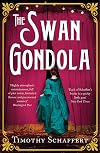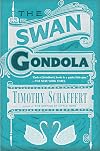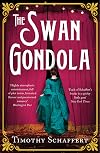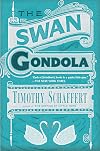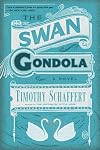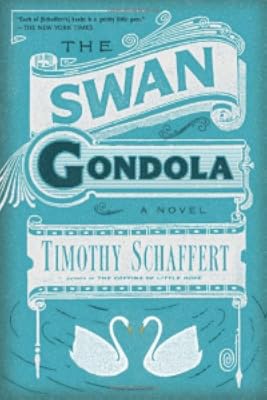
The Swan Gondola
by Timothy Schaffert
On This Page
Description
"From the critically acclaimed author of The Coffins of Little Hope, a new novel depicting a tragic love story set amid the fanciful inventions, gothic amusements, spiritualists, flimflam men, and other crooked characters who populated the 1898 Omaha World's Fair"--Tags
Recommendations

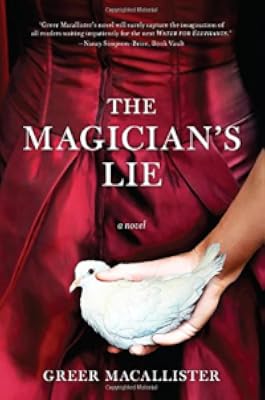
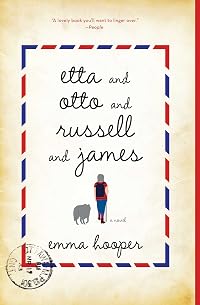
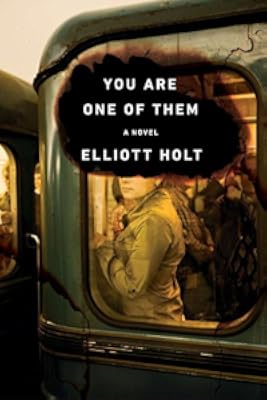
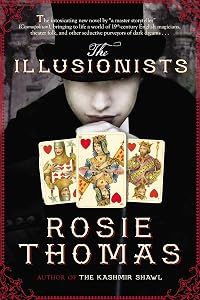
Member Reviews
The language within The Swan Gondola is intoxicating. It draws in an unsuspecting reader and wholly captures their imagination and attention. The imagery of the World Fair alone is breathtaking with its unmasking of the false fronts and facades of decadence and prosperity. Nothing is remotely sacred in this novel, as Ferret shares every answer behind various sleight-of-hand tricks, magical tricks, and other flim-flammery so common at fairs and circuses. The story is an absolutely fascinating look at the reality of such events.
Then there are the characters. Cecily and Wakefield may be the most one-dimensional of all the characters; the rest are a true delight. Ferret’s evolution from thievery to legitimacy is enthralling, especially as show more he hides nothing about himself in the process. Ferret’s friends, particularly August and Rosie, are larger-than-life in their devil-may-care attitudes and absolute zest for life, while the Old Sisters Egan provide a maternal appeal to the story. The honesty with which Ferret approaches his story and that of his friends is refreshing.
The love story is the center of the novel, but one knows that there is a tragedy hidden within its folds from the very first. This tinges one’s appreciation for their story, as a reader anticipates the unveiling of this tragedy. When it happens within the narrative, it is not so much a surprise as a relief that it is finally out in the open and now everyone can move forward with the story. That its unveiling occurs relatively soon in the narrative is something of a surprise, however, and leaves readers wondering just what could possibly happen next. In that aspect, the love story angle is its own diversion from the rest of the story.
I know I am in the minority here, but I hate The Wizard of Oz. I detest the movie, the story, and everything about it. I cannot explain why I am so fiercely against Dorothy and her band of merry fellows; it is an irrational hatred that can be neither understood nor overcome. Therefore, it was with a sinking heart that I started recognizing various elements of Oz within The Swan Gondola. It made me automatically become hyper-critical of a book that does not deserve it. That I recognize the full brilliance of The Swan Gondola in spite of its obvious connections to that horrible story says a lot about Mr. Schaffert’s writing and the story itself. Still, it will forever be the novel that had too many Oz-like aspects for me to really enjoy it.
The Swan Gondola is a beautiful story. Mr. Schaffert’s descriptions are deliciously vital, and his narrative cuts right to the emotional heart of any situation. Unfortunately, I cannot overcome its similarities to The Wizard of Oz to be able to unequivocally like it as much as I should. I detest Oz that much that it taints any story remotely connected to it. However, for those who are not hampered by my irrational bias, The Swan Gondola is a gorgeous, intimate look at the seedier side of life in Omaha at the turn of the century. show less
Then there are the characters. Cecily and Wakefield may be the most one-dimensional of all the characters; the rest are a true delight. Ferret’s evolution from thievery to legitimacy is enthralling, especially as show more he hides nothing about himself in the process. Ferret’s friends, particularly August and Rosie, are larger-than-life in their devil-may-care attitudes and absolute zest for life, while the Old Sisters Egan provide a maternal appeal to the story. The honesty with which Ferret approaches his story and that of his friends is refreshing.
The love story is the center of the novel, but one knows that there is a tragedy hidden within its folds from the very first. This tinges one’s appreciation for their story, as a reader anticipates the unveiling of this tragedy. When it happens within the narrative, it is not so much a surprise as a relief that it is finally out in the open and now everyone can move forward with the story. That its unveiling occurs relatively soon in the narrative is something of a surprise, however, and leaves readers wondering just what could possibly happen next. In that aspect, the love story angle is its own diversion from the rest of the story.
I know I am in the minority here, but I hate The Wizard of Oz. I detest the movie, the story, and everything about it. I cannot explain why I am so fiercely against Dorothy and her band of merry fellows; it is an irrational hatred that can be neither understood nor overcome. Therefore, it was with a sinking heart that I started recognizing various elements of Oz within The Swan Gondola. It made me automatically become hyper-critical of a book that does not deserve it. That I recognize the full brilliance of The Swan Gondola in spite of its obvious connections to that horrible story says a lot about Mr. Schaffert’s writing and the story itself. Still, it will forever be the novel that had too many Oz-like aspects for me to really enjoy it.
The Swan Gondola is a beautiful story. Mr. Schaffert’s descriptions are deliciously vital, and his narrative cuts right to the emotional heart of any situation. Unfortunately, I cannot overcome its similarities to The Wizard of Oz to be able to unequivocally like it as much as I should. I detest Oz that much that it taints any story remotely connected to it. However, for those who are not hampered by my irrational bias, The Swan Gondola is a gorgeous, intimate look at the seedier side of life in Omaha at the turn of the century. show less
Ferret & Cecily seem spun of the hinted magical illusions, and thin slick of grease under the cover, of the most elaborate World's Fair flier. Just a trick of light, a quick wobble on heels, a sequin in the corner of your eye, and a scent of sweet pea or was that a bit of ether? Whatever breeze has wafted you along, smitten reader, will keep you in this cavalcade of enticing and worrisome characters, so will you hope that love or something that might be close enough for the sorrow embracing world of Ferret and Cecily, might prevail. Schaffert manages to create these worlds inhabited by those we are not quite sure of, yet cannot turn away from, in the tender hearts of both this and his The Coffins of Little Hope.
 This review was written for LibraryThing Early Reviewers.
Orphaned ventriloquist Ferret Skerritt is set to make a few bucks and have a fine summer plying his trade at the 1898 World’s Fair. As entertainers pour into the midway on opening day, Ferret spots a woman whose underthings he once helped secure backstage at his regular theater gig and his plans for romance are set. Ferret’s pursuit of Cecily unfolds amid the illusory grandeur and outlandish spectacle of The World’s Fair, as he relates the memory of that bygone summer to a pair of elderly twin sisters upon whose home he has crash landed. Big personalities, elaborate descriptions, mystery, magic, and illusion fill every page of The Swan Gondola.
I was beyond excited to read this novel, not only did I receive it as a free ARC from show more the publisher (my first), it is packed with things I adore. Going to a World’s Fair is on my bucket list, and I am a sucker for fairs and carnivals in general. Historical fiction, the American West, and unreliable narrators are a few of my favorite literary things. The Swan Gondola really delivers on all of these fronts. However, it falls short at perhaps the most crucial point for a story like this: the romance.
The story is driven by the Christian-and-Satine-esque courtship of Ferret and Cecily. He is young, naive, and romantic (though he thinks himself quite the worldly playboy, a fact both amusing and heartbreaking as he uncovers his own nature.) She is one of those scandalous theater women who throws social mores like underwear conventions to the wind and does what she wants whenever she wants. By underwear conventions I mean that most women of the time wore corsets and other garments as a matter of course, not that large groups of people were gathering to discuss underpinnings. His pursuit of her is dogged, and she allows him to lavish her with attention. A wealthy man, Billy Wakefield, who can provide her with opportunities on the stage strategically insinuates himself into their lives and the reader is witness to the slow destruction of the guileless Ferret.
Writing about this, I still think it all sounds pretty great. A lot of it was, but the problem was really Cecily. She’s almost unlikable, and Ferret’s interest in her never seems to progress beyond pure lust. Magic and illusion are major themes of the novel, and love often dances around the line between the two, so perhaps this was intentional. Ferret’s mistaking the illusion that is lust for the magic of love. However, he is so terribly lovable as an almost artless paramour that it’s hard to invest in any love story where you wish the object of his affections would fall off a cliff. Even if she did, you’d still feel awful because he would.
It might seem like I’m giving away the whole novel but really this takes us to about halfway through the high page count, and the back half is just brutal. Still a good read, but it’s going to beat up your feelings.
Where The Swan Gondola really sings are the secondary characters, like the Native American medicine man of fluid gender August Sweetbriar or Cecily’s elderly half-blind witch of a bodyguard, and descriptions of the setting. The Fair, Billy Wakefield’s home and amusements, and the underworld Ferret occupies are each spectacular in their own way and make for some very fun reading. The scaffolding of the novel is beautifully crafted, all of the subplots and scenery. It’s a shame that the main plot lets the rest of it down. Ferret and Cecily’s romance seems over before it began, the titular gondola barely plays a role, and the reader is put through a house of horrors playing on their feelings about a barely-developed romance that spanned less than half the page-count. Ferret’s heartsickness carries it, but just barely.
What does it all mean? Should you read this book? If any of this sounded at all interesting to you, then I’d say yes. It’s really a very good story, and will give you a lot to mull over. It’s a book club book if there ever was one, because it can be interpreted so many ways. Just don’t go in expecting a romance for the ages unless you want your heart pulped and/or to feel ragey. show less
I was beyond excited to read this novel, not only did I receive it as a free ARC from show more the publisher (my first), it is packed with things I adore. Going to a World’s Fair is on my bucket list, and I am a sucker for fairs and carnivals in general. Historical fiction, the American West, and unreliable narrators are a few of my favorite literary things. The Swan Gondola really delivers on all of these fronts. However, it falls short at perhaps the most crucial point for a story like this: the romance.
The story is driven by the Christian-and-Satine-esque courtship of Ferret and Cecily. He is young, naive, and romantic (though he thinks himself quite the worldly playboy, a fact both amusing and heartbreaking as he uncovers his own nature.) She is one of those scandalous theater women who throws social mores like underwear conventions to the wind and does what she wants whenever she wants. By underwear conventions I mean that most women of the time wore corsets and other garments as a matter of course, not that large groups of people were gathering to discuss underpinnings. His pursuit of her is dogged, and she allows him to lavish her with attention. A wealthy man, Billy Wakefield, who can provide her with opportunities on the stage strategically insinuates himself into their lives and the reader is witness to the slow destruction of the guileless Ferret.
Writing about this, I still think it all sounds pretty great. A lot of it was, but the problem was really Cecily. She’s almost unlikable, and Ferret’s interest in her never seems to progress beyond pure lust. Magic and illusion are major themes of the novel, and love often dances around the line between the two, so perhaps this was intentional. Ferret’s mistaking the illusion that is lust for the magic of love. However, he is so terribly lovable as an almost artless paramour that it’s hard to invest in any love story where you wish the object of his affections would fall off a cliff. Even if she did, you’d still feel awful because he would.
It might seem like I’m giving away the whole novel but really this takes us to about halfway through the high page count, and the back half is just brutal. Still a good read, but it’s going to beat up your feelings.
Where The Swan Gondola really sings are the secondary characters, like the Native American medicine man of fluid gender August Sweetbriar or Cecily’s elderly half-blind witch of a bodyguard, and descriptions of the setting. The Fair, Billy Wakefield’s home and amusements, and the underworld Ferret occupies are each spectacular in their own way and make for some very fun reading. The scaffolding of the novel is beautifully crafted, all of the subplots and scenery. It’s a shame that the main plot lets the rest of it down. Ferret and Cecily’s romance seems over before it began, the titular gondola barely plays a role, and the reader is put through a house of horrors playing on their feelings about a barely-developed romance that spanned less than half the page-count. Ferret’s heartsickness carries it, but just barely.
What does it all mean? Should you read this book? If any of this sounded at all interesting to you, then I’d say yes. It’s really a very good story, and will give you a lot to mull over. It’s a book club book if there ever was one, because it can be interpreted so many ways. Just don’t go in expecting a romance for the ages unless you want your heart pulped and/or to feel ragey. show less
This review was written for LibraryThing Early Reviewers.LOVED this book. A great sweeping story filled with a wonderful, quirky mix of characters. It is set mainly at the Omaha World's Fair, which of course, is fictional, but by reading this you will think it was real and wish you could have been a spectator. I thought the descriptions were stunning from the Midway to the Wild West town, to the Chamber of Horrors to the living quarters for the carnies. Truly wonderful writing. This is storytelling at its finest.
This review was written for LibraryThing Early Reviewers.This tale is part magical adventure and part ghost story. Set at the Omaha World’s Fair in 1898, it’s an exciting tale of romance as well. Ferret Skerritt is an extraordinary character, a ventriloquist by trade but a con man at heart. He falls for Cecily, an unusual woman in her own right. The book is rather lengthy, but its size works well for it and allows Schaffert to take his time setting the tone. The writing style is richly evocative, and the mood of the novel seems at first to be as important as the storyline. As the story progresses, the plot grows stronger and more complex, the characters more and more intriguing. This is a well-crafted and skillfully-written book, atmospheric and breathtaking.
This review was written for LibraryThing Early Reviewers.I have a feeling many people are going to be talking about this novel in 2014, though it might be bigger in another year or two, when some studio picks it up and adapts it for film. I could be wrong, but there’s a certain mix here that I believe many will eat up. The novel has a wonderful atmosphere about it, and the love story and tension—it’s all very attention-grabbing. The Swan Gondola is unique in many ways, yet it is extremely reminiscent of other novel’s I’ve read.
The most obvious initial comparison is to Water for Elephants, a comparison made by the publisher itself. Yes, it certainly captures some of the tone and romanticism of Sara Gruen’s most beloved novel, but I would argue The Swan Gondola is far more realized show more and mature than Water for Elephants. The fair is more engrossing than the circus was. More is at stake in this love story. And the tension kept me riveted. The publisher and other reviewers have also compared The Swan Gondola to Night Circus, but this one I have not read, so I cannot confirm this observation.
As far as tone, The Swan Gondola reminded me most of Dexter Palmer’s The Dream of Perpetual Motion at times. There is a dark mysticism to the novel that felt genuine. Being at the fair, I felt surrounded by the cogs of this great beast that was somehow both beautiful and terrifying. It’s this tone, along with the engaging love story of “Ferret” and Cecily, that propels this story and makes it so wonderful.
Finally, in its entirety, this novel reminded me greatly of Wuthering Heights. The structure and the plot certainly bear some familiarity to Emily Bronte’s only novel, but I wouldn’t go so far as to say The Swan Gondola emulates or parallels Wuthering Heights; it is its own creation, but the two novels share a strong bond to one another.
The Swan Gondola is a great read and will likely attract the attention of many. I do feel the romance was rushed initially and that the final hundred pages or so are disappointing in light of the rest of the novel, but these small things should not detract readers from giving this story a go.
For those curious about the “Omaha World Fair” at the novel’s center, it is based on the Trans-Mississippi Exposition that took place in 1898. Schaffert did an amazing job giving life to the fair in this novel. show less
The most obvious initial comparison is to Water for Elephants, a comparison made by the publisher itself. Yes, it certainly captures some of the tone and romanticism of Sara Gruen’s most beloved novel, but I would argue The Swan Gondola is far more realized show more and mature than Water for Elephants. The fair is more engrossing than the circus was. More is at stake in this love story. And the tension kept me riveted. The publisher and other reviewers have also compared The Swan Gondola to Night Circus, but this one I have not read, so I cannot confirm this observation.
As far as tone, The Swan Gondola reminded me most of Dexter Palmer’s The Dream of Perpetual Motion at times. There is a dark mysticism to the novel that felt genuine. Being at the fair, I felt surrounded by the cogs of this great beast that was somehow both beautiful and terrifying. It’s this tone, along with the engaging love story of “Ferret” and Cecily, that propels this story and makes it so wonderful.
Finally, in its entirety, this novel reminded me greatly of Wuthering Heights. The structure and the plot certainly bear some familiarity to Emily Bronte’s only novel, but I wouldn’t go so far as to say The Swan Gondola emulates or parallels Wuthering Heights; it is its own creation, but the two novels share a strong bond to one another.
The Swan Gondola is a great read and will likely attract the attention of many. I do feel the romance was rushed initially and that the final hundred pages or so are disappointing in light of the rest of the novel, but these small things should not detract readers from giving this story a go.
For those curious about the “Omaha World Fair” at the novel’s center, it is based on the Trans-Mississippi Exposition that took place in 1898. Schaffert did an amazing job giving life to the fair in this novel. show less
It's not often that I pick up a book that ends up completely surprising me by the time the end comes around. The Swan Gondola did exactly that. It surprised me in a few ways. First, it referenced one of my favorite childhood stories in a subtle, tasteful, and...really, quite perfect way. Second, it brought to mind one of my favorite (and the newest work) books of Neil Gaiman. Schaffert beautifully mixes history, intrigue, romance, love, and a bit of magic in a way that took me back to my childhood in Omaha, Nebraska through the referencing of streets, of history, and of a time long past when Omaha was living a dream of becoming a real "white city." I loved reading the history of the place I spent my youth, and I loved even more reading show more the story of a man who just fell in love and desperately wanted to make a life with the woman he fell head over heels for.
Read the rest of this review at The Lost Entwife on Feb. 21, 2014. show less
Read the rest of this review at The Lost Entwife on Feb. 21, 2014. show less
Members
- Recently Added By
Lists

Animals in the Title
498 works; 11 members
Author Information

12+ Works 1,044 Members
Awards and Honors
Distinctions
Common Knowledge
- Canonical title
- The Swan Gondola
- Original publication date
- 2014
Classifications
Statistics
- Members
- 238
- Popularity
- 136,563
- Reviews
- 14
- Rating
- (3.68)
- Languages
- English
- Media
- Paper, Ebook
- ISBNs
- 7
- ASINs
- 4