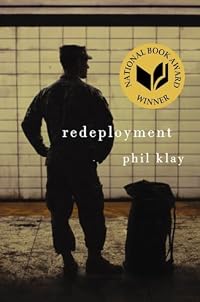
Redeployment
by Phil Klay
On This Page
Description
"Phil Klay's Redeployment takes readers to the frontlines of the wars in Iraq and Afghanistan, asking us to understand what happened there, and what happened to the soldiers who returned. Interwoven with themes of brutality and faith, guilt and fear, helplessness and survival, the characters in these stories struggle to make meaning out of chaos. In "Redeployment", a soldier who has had to shoot dogs because they were eating human corpses must learn what it is like to return to domestic life show more in suburbia, surrounded by people "who have no idea where Fallujah is, where three members of your platoon died." In "After Action Report", a Lance Corporal seeks expiation for a killing he didn't commit, in order that his best friend will be unburdened. A Morturary Affairs Marine tells about his experiences collecting remains-of U.S. and Iraqi soldiers both. A chaplain sees his understanding of Christianity, and his ability to provide solace through religion, tested by the actions of a ferocious Colonel. And in the darkly comic "Money as a Weapons System", a young Foreign Service Officer is given the absurd task of helping Iraqis improve their lives by teaching them to play baseball. These stories reveal the intricate combination of monotony, bureaucracy, comradeship and violence that make up a soldier's daily life at war, and the isolation, remorse, and despair that can accompany a soldier's homecoming. Redeployment is poised to become a classic in the tradition of war writing. Across nations and continents, Klay sets in devastating relief the two worlds a soldier inhabits: one of extremes and one of loss. Written with a hard-eyed realism and stunning emotional depth, this work marks Phil Klay as one of the most talented new voices of his generation"-- show lessTags
Recommendations


















Member Recommendations

Member Reviews
When Fujita's squad approached the battle cross, they knelt close together, their arms over one another's shoulders, leaning into each other until it was one silent, weeping block. Geared up, Marines are terrifying warriors. In grief, they look like children. Then one by one they stood up, touched the helmet, and walked to where Captain Bolden stood in the back, grim, stupid determination on his thick, square face.
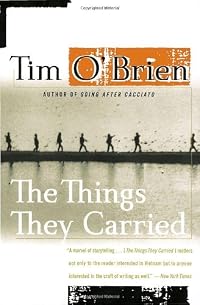
Fans of The Things They Carried and Sebastian Junger's War are going to want to read Redeployment by Phil Klay as soon as possible, as will fans of lucid, varied and skillful writing about soldiers' experiences during and after a war, as will fans of exceptionally skillful writing, period.
In this short story collection, Klay's show more range may be what impresses most, as he convincingly takes on a dozen or more widely varying main character perspectives. This includes, for example, the veteran in the title story who shamefully looks back at shooting dogs for sport in Iraq, who now is faced with the need, for entirely different reasons, to the do the same to his dog back home, the earnest chaplain in "Prayer in the Furnace" who has all the right intentions but is frustratingly ineffective at helping the cynical, reality-beaten soldiers, and the newly converted Muslim woman in "Psychological Operations" who has to listen an Iraqi vet college classmate explain his disgust with himself for his role in luring Iraqi opponents to their death. (The last is the one story in this tightly written collection that runs a bit long). The author is an Iraqi war veteran, a Marine, and he knows whereof he speaks. The convincing expletive-filled dialogue, the troubling descriptions, the black humor, the authentic characterizations, all add up to one of the most impressive debuts I've ever read.
"Money as a Weapons System" is a cynical, funny triumph. An expensive, American-made and poorly designed water treatment plant is inoperable, but there may be momentum to fix it among some officers, because its excessive water pressure through the pipes would cause Iraqi houses to "explode". Not exactly the original goal. Meanwhile, the protagonist is being pressured, because of an influential civilian contributor, to distribute baseball uniforms and teach Iraqi children baseball, as a way to get them on track to a more organized, civilized, Western style of life.
The endings of his stories are often killers, arrowing into the heart while simultaneously changing your understanding of what came before. I can't repeat them here, of course, but one involving a vet with severe burns who a journalist targets for an article, and one comparing wounded bees to a haunted vet who drinks himself to oblivion, just plain knocked me on my keister. And kept me thinking long beyond the story's end.
More than once I wondered whether a woman could read this collection without being offended. It often features men behaving badly, sexually objectifying women, and saying offensive things. That it all rings true is a sad story in its own right. He does feature some memorable and believable women characters, including the Muslim woman in "Psychological Operations" who first appears to be annoying, and then turns out to be wiser than the vet who wants to argue with her. In the end, because of the honesty, sophistication and depth of the stories, I concluded that many women will want to read the book, even with its offensiveness and often brutal circumstances. Four and a half stars. show less
Fans of The Things They Carried and Sebastian Junger's War are going to want to read Redeployment by Phil Klay as soon as possible, as will fans of lucid, varied and skillful writing about soldiers' experiences during and after a war, as will fans of exceptionally skillful writing, period.
In this short story collection, Klay's show more range may be what impresses most, as he convincingly takes on a dozen or more widely varying main character perspectives. This includes, for example, the veteran in the title story who shamefully looks back at shooting dogs for sport in Iraq, who now is faced with the need, for entirely different reasons, to the do the same to his dog back home, the earnest chaplain in "Prayer in the Furnace" who has all the right intentions but is frustratingly ineffective at helping the cynical, reality-beaten soldiers, and the newly converted Muslim woman in "Psychological Operations" who has to listen an Iraqi vet college classmate explain his disgust with himself for his role in luring Iraqi opponents to their death. (The last is the one story in this tightly written collection that runs a bit long). The author is an Iraqi war veteran, a Marine, and he knows whereof he speaks. The convincing expletive-filled dialogue, the troubling descriptions, the black humor, the authentic characterizations, all add up to one of the most impressive debuts I've ever read.
"Money as a Weapons System" is a cynical, funny triumph. An expensive, American-made and poorly designed water treatment plant is inoperable, but there may be momentum to fix it among some officers, because its excessive water pressure through the pipes would cause Iraqi houses to "explode". Not exactly the original goal. Meanwhile, the protagonist is being pressured, because of an influential civilian contributor, to distribute baseball uniforms and teach Iraqi children baseball, as a way to get them on track to a more organized, civilized, Western style of life.
The endings of his stories are often killers, arrowing into the heart while simultaneously changing your understanding of what came before. I can't repeat them here, of course, but one involving a vet with severe burns who a journalist targets for an article, and one comparing wounded bees to a haunted vet who drinks himself to oblivion, just plain knocked me on my keister. And kept me thinking long beyond the story's end.
More than once I wondered whether a woman could read this collection without being offended. It often features men behaving badly, sexually objectifying women, and saying offensive things. That it all rings true is a sad story in its own right. He does feature some memorable and believable women characters, including the Muslim woman in "Psychological Operations" who first appears to be annoying, and then turns out to be wiser than the vet who wants to argue with her. In the end, because of the honesty, sophistication and depth of the stories, I concluded that many women will want to read the book, even with its offensiveness and often brutal circumstances. Four and a half stars. show less
With these stories set in Iraq Phil Klay captures both the inhumanity and humanity in war, often in the same story. In Ten Kliks South a marine artilleryman can’t help wondering, and even trying to find out what happened to the bodies of the ISIS insurgents he supposedly killed as part of a gun team. It’s his first time shooting at live targets and his sergeant has a different perspective: “We provide the bodies. We don’t clean ‘em up. You hear me?” This is the last story in the collection, which roughly progresses from front line action to the rear, and aftermath.
Several stories involve veterans attempting to re-integrate into the civilian world. Some are disfigured, all are wounded, either physically or unseen to the eye. show more This is some of the best war writing around, reminiscent of Tim O’Brien’s work. show less
Several stories involve veterans attempting to re-integrate into the civilian world. Some are disfigured, all are wounded, either physically or unseen to the eye. show more This is some of the best war writing around, reminiscent of Tim O’Brien’s work. show less
Having traveled through the hellish nightmare that is Klay's Redeployment it becomes immediately clear why it was a National Book Award winner in 2014. It highlights the dark side of the conflicts in Iraq and Afghanistan and leaves one with a sense of despair and hopelessness, but more importantly, a new and grim understanding of everything those who fought on the frontlines and their families have gone through and continue to go through. Whether it's a disfigured veteran's friend considering whether women only sleep with him out of pity, the sad brothel that greets returning and departing troops or the guy who can't remember exactly how it was he didn't die in a blast when everyone else did and whether his remembering would make a show more difference anyway. There is a futility of memory and commemoration, a lost rage of impotence both in war and sex and one cannot help but come out from reading Klay's tales without feeling singed by the blasts of raw emotion. But this is a good thing in an America where veterans of our recent unpopular wars are all too easily forgotten. Klay exposes us to the grief and desperation that we are all responsible for and which sadly continues in the minds and family homes of the returned veterans. show less
I am on a roll with the great books lately, and not only was this not a comedown, it was one of the very best short story collections I have ever read. It is also one of the best chronicles of the effects of war and its aftermath, ever. I have a bad habit of comparing books about modern war to The Things They Carried and Going After Cacciato and most everything comes up wanting. Not this. Spare, graphic, ugly, unsparing, and so honest it hurts. This is as unsentimental as writing can be without losing its entire heart. Don't think for a minute that this won the National Book Award because Klay is a veteran. It won because Klay can write, and because he sees things with spectacular clarity. All of his protagonists are veterans changed by show more war, but they are each completely different than the others. They are human, so they don't end up the same just because of the shared experience, and they don't see the shared experience itself the same way. Klay gets inside people. The good is not at all limited to war and its aftermath. His writing about wending your way through law school in New York and finding a path where you can live with yourself is perfect. (I have not been to war, but this I know from experience.) The story is about a veteran, and that experience informs the story, but doesn't define it. I am afraid to read more work from Klay because I cannot imagine it could be any better and I am afraid it cannot be as good. I sure hope it is though. I will be preordering. show less
You won't find any sappy sentimentality or off-putting macho muscle flexing in Phil Klay's REDEPLOYMENT, a collection of twelve stories that all deal with combatants and veterans of the Iraq war. Nope. These stories are about as real and honest as anything you'll find being written these days about how the crucible of this war has affected the young men and women who were part of it, and, who have been irrevocably changed by it.
While there is not a false note to be found in any of these tales, the one that I found perhaps most affecting was "Prayer in the Furnace," told by a Catholic priest, a Marine Corps chaplain whose own faith is severely tested as he struggles to give aid to Marines severely traumatized physically, emotionally and show more spiritually by repeated combat tours. Men whose brains have been buffeted by blasts from IEDs and whose consciences are deadened and wracked by unspeakable atrocities witnessed - and committed - on a near-daily basis. The chaplain's role in a combat unit seems sadly marginalized, however, and although he turns for guidance to the writings of St John of the Cross and Augustine, in the end he feels frustrated, powerless and ashamed. (This story in particular I felt could be the basis for an equally powerful novel.)
There are also stories here of veterans trying to adjust, to assimilate back into civilian life; and struggling, feeling set apart, different. A former JAG officer who never saw combat, but did the paperwork, now a law student ready to enter a high-paying career, still feeling "more like a Marine out of the Corps than I'd felt while in it ... to everyone I met, I was 'the Marine.'" ("Unless It's a Sucking Chest Wound")
There is the very dark humor of combat vets, as displayed in "War Stories" in which the narrator jokes about hitting on girls in bars, and using his friend Jenks's awful disfigurement from burns sustained in an IED explosion, saying, "Who's gonna call bulls**t when you're sitting there in the corner looking all Nightmare on Elm Street?"
"Bodies" tells of a young Marine who works in Mortuary Affairs, a job which, of course, requires him to handle the mutilated bodies of both U.S. dead and enemy dead. But the title takes on an even more poignant meaning when he goes home on leave and seeks out his ex-girlfriend from high school. After dealing so much in death and dead bodies he needed desperately to feel the opposite. Convincing her of this, they lie quietly, their bodies spooned together.
"There was a warmth to her that flowed into me, and though she was tense at first, like she'd been earlier, she relaxed after a bit and it stopped feeling like I was grabbing her and more like we were fitting into each other. I relaxed too, all the sharp edges of my body lost in the feel of her. Her hips, her legs, her hair, the nape of her neck. Her hair smelled like citrus, and her neck smelled softly of sweat. I wanted to kiss her there because I knew I'd taste salt."
There is little or no eroticism in this scene. It is more a depiction of a simple yet urgent need for human warmth and contact - of an ineffable longing, of loneliness.
I could cite other examples of how each of these stories grabbed me, made me pay attention. Oddly, I am suddenly reminded of that desperate closing scene from DEATH OF A SALESMAN, in which Willy Loman's distraught widow cries out, "Attention must be paid!" Because these stories without question deserve our attention. In a country where the burden of military service is shouldered by a mere one percent of the population, these Marines and soldiers deserve not just our attention, but our utmost respect and gratitude.
REDEPLOYMENT is a damn good book. It will deservedly join the ranks of other fine fictional works coming out of the recent wars in Iraq and Afghanistan, books like THE YELLOW BIRDS, YOU KNOW WHEN THE MEN ARE GONE, and THE WATCH. Well done, Mr. Klay. Highly recommended. show less
While there is not a false note to be found in any of these tales, the one that I found perhaps most affecting was "Prayer in the Furnace," told by a Catholic priest, a Marine Corps chaplain whose own faith is severely tested as he struggles to give aid to Marines severely traumatized physically, emotionally and show more spiritually by repeated combat tours. Men whose brains have been buffeted by blasts from IEDs and whose consciences are deadened and wracked by unspeakable atrocities witnessed - and committed - on a near-daily basis. The chaplain's role in a combat unit seems sadly marginalized, however, and although he turns for guidance to the writings of St John of the Cross and Augustine, in the end he feels frustrated, powerless and ashamed. (This story in particular I felt could be the basis for an equally powerful novel.)
There are also stories here of veterans trying to adjust, to assimilate back into civilian life; and struggling, feeling set apart, different. A former JAG officer who never saw combat, but did the paperwork, now a law student ready to enter a high-paying career, still feeling "more like a Marine out of the Corps than I'd felt while in it ... to everyone I met, I was 'the Marine.'" ("Unless It's a Sucking Chest Wound")
There is the very dark humor of combat vets, as displayed in "War Stories" in which the narrator jokes about hitting on girls in bars, and using his friend Jenks's awful disfigurement from burns sustained in an IED explosion, saying, "Who's gonna call bulls**t when you're sitting there in the corner looking all Nightmare on Elm Street?"
"Bodies" tells of a young Marine who works in Mortuary Affairs, a job which, of course, requires him to handle the mutilated bodies of both U.S. dead and enemy dead. But the title takes on an even more poignant meaning when he goes home on leave and seeks out his ex-girlfriend from high school. After dealing so much in death and dead bodies he needed desperately to feel the opposite. Convincing her of this, they lie quietly, their bodies spooned together.
"There was a warmth to her that flowed into me, and though she was tense at first, like she'd been earlier, she relaxed after a bit and it stopped feeling like I was grabbing her and more like we were fitting into each other. I relaxed too, all the sharp edges of my body lost in the feel of her. Her hips, her legs, her hair, the nape of her neck. Her hair smelled like citrus, and her neck smelled softly of sweat. I wanted to kiss her there because I knew I'd taste salt."
There is little or no eroticism in this scene. It is more a depiction of a simple yet urgent need for human warmth and contact - of an ineffable longing, of loneliness.
I could cite other examples of how each of these stories grabbed me, made me pay attention. Oddly, I am suddenly reminded of that desperate closing scene from DEATH OF A SALESMAN, in which Willy Loman's distraught widow cries out, "Attention must be paid!" Because these stories without question deserve our attention. In a country where the burden of military service is shouldered by a mere one percent of the population, these Marines and soldiers deserve not just our attention, but our utmost respect and gratitude.
REDEPLOYMENT is a damn good book. It will deservedly join the ranks of other fine fictional works coming out of the recent wars in Iraq and Afghanistan, books like THE YELLOW BIRDS, YOU KNOW WHEN THE MEN ARE GONE, and THE WATCH. Well done, Mr. Klay. Highly recommended. show less
Would it be crazy if I said this was the best short story collection I've read since "Jesus's Son"? UH OH I think I feel that way! It reminded me of that book in that it got into the heads of a group of people you don't normally see in literary short fiction -- this time, Marines. Each story is so elegantly constructed, with pitch-perfect dialogue and a careful balance of introspection and bravado, often. I liked that the stories also encompassed a range of experience within that world, as well as a variety of civilians who brush against that world, from sex workers to artsy theater students who want to steal pain for their own uses.
In Redeployment, Phil Klay offers us an insider’s perspective on what the Operation Iraqi Freedom experience was like for the men and women serving in or supporting the United States armed forces before, during, and after their deployments. In fact, the book actually gives us twelve different perspectives on the war—one for each short story in the collection—which range from that of a combat soldier struggling to adjust to his “normal” life upon coming home to a military chaplain trying to reconcile his faith with the carnage he witnesses on a daily basis to a private procurement contractor hoping to make a difference by rebuilding some of the Iraqi infrastructure destroyed in the conflict to a former Marine attempting to make show more sense of his service time while attending law school after the war. The author tells each of these stories in a matter-of-fact, acronym-laden manner that underscores how little the war accomplished and how each individual participant was seldom more than a small piece of a larger, often incomprehensible puzzle.
As the National Book Award it won readily attests, Redeployment is very well written and offers a considerable amount of insight for readers like me whose only real exposure to the war came from reading website headlines or watching the nightly news. Klay has a great ear for language and dialogue, particularly with regard to the interactions of the soldiers facing the worst situations on the front lines, and he flashes occasional touches of humor to lighten some of the more harrowing descriptions (as in, for example, the story “Ten Kliks South”). Still, throughout the book, I kept having the nagging feeling that I had already read much of this material before. Indeed, the notion of viewing the war from different perspectives in a series of related vignettes was done to great effect by Tim O’Brien in The Things They Carried, while the specific impacts of the Iraqi war was covered well in Kevin Powers’ full-length novel The Yellow Birds.
So, while it undoubtedly contains many observations and passages unique to the time and place it chronicles, this is a work that places the author firmly in a long line of talented writers—including, of course, Ernest Hemingway, Thomas Pynchon, Kurt Vonnegut, Joseph Heller, and Graham Greene—that have turned to fiction to make sense of all the horror, depravity, humanity, and sheer courage that takes place during any armed conflict. I imagine that the act of producing stories such as these following each new war must itself be a necessary form of catharsis and no author can really be faulted for capturing the essence of an experience that sadly seems to reoccur once or twice with each new generation. Wouldn’t it be great if writing books like this one became unnecessary in the future? show less
As the National Book Award it won readily attests, Redeployment is very well written and offers a considerable amount of insight for readers like me whose only real exposure to the war came from reading website headlines or watching the nightly news. Klay has a great ear for language and dialogue, particularly with regard to the interactions of the soldiers facing the worst situations on the front lines, and he flashes occasional touches of humor to lighten some of the more harrowing descriptions (as in, for example, the story “Ten Kliks South”). Still, throughout the book, I kept having the nagging feeling that I had already read much of this material before. Indeed, the notion of viewing the war from different perspectives in a series of related vignettes was done to great effect by Tim O’Brien in The Things They Carried, while the specific impacts of the Iraqi war was covered well in Kevin Powers’ full-length novel The Yellow Birds.
So, while it undoubtedly contains many observations and passages unique to the time and place it chronicles, this is a work that places the author firmly in a long line of talented writers—including, of course, Ernest Hemingway, Thomas Pynchon, Kurt Vonnegut, Joseph Heller, and Graham Greene—that have turned to fiction to make sense of all the horror, depravity, humanity, and sheer courage that takes place during any armed conflict. I imagine that the act of producing stories such as these following each new war must itself be a necessary form of catharsis and no author can really be faulted for capturing the essence of an experience that sadly seems to reoccur once or twice with each new generation. Wouldn’t it be great if writing books like this one became unnecessary in the future? show less
Members
- Recently Added By
Lists

2015 Tournament of Books
16 works; 19 members

National Book Award Finalists 2014
20 works; 16 members

National Book Award - Fiction
78 works; 10 members
Top Five Books of 2014
1,064 works; 398 members

Books recommended by Barack Obama
295 works; 28 members

Stories of War and Revolution
143 works; 54 members

Phi Beta Kappa reading list
260 works; 8 members

Must read
30 works; 2 members

Obama Reads
181 works; 3 members
NYTimes 10 Best of 2014
10 works; 3 members
World Books
51 works; 4 members

Biggest Disappointments
606 works; 168 members

Kirkus Reviews Best Fiction of 2014
100 works; 7 members

Nov. 2015 new books
38 works; 1 member

National Book Award winners
65 works; 11 members

Books recommended by Calgary Public Library staff
1,588 works; 4 members

Best of GWOT
7 works; 1 member
Author Information

7+ Works 2,032 Members
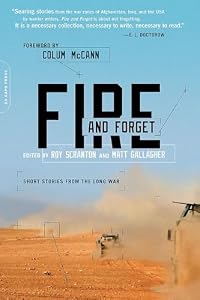
Phil Klay is a graduate of Dartmouth College and a veteran of the U.S. Marine Corps. He served in Iraq's Anbar Province as a Public Affairs Officer. After being discharged he went to Hunter College and received an MFA. His story "Redeployment" was originally published in Granta and is included in Fire and Forget: Short Stories from the Long War. show more His writing has also appeared in the New York Times, Newsweek, The Daily Beast, the New York Daily News, Tin House, and The Best American Nonrequired Reading 2012. (Bowker Author Biography) show less
Awards and Honors
Awards
Distinctions
Common Knowledge
- Canonical title*
- Fin de mission
- Original title
- Redeployment
- Original publication date
- 2014
- Important places
- Afghanistan; Iraq
- Important events
- Iraq War
- Dedication
- For my mother and father,
who had three sons join the military
in a time of war - First words
- We shot dogs.
- Blurbers
- Swofford, Anthony; Russell, Karen; Ben Fountain; Lea Carpenter; Colum McCann
*Some information comes from Common Knowledge in other languages. Click "Edit" for more information.
Classifications
Statistics
- Members
- 1,663
- Popularity
- 13,358
- Reviews
- 73
- Rating
- (4.01)
- Languages
- 8 — Dutch, English, French, German, Italian, Norwegian (Bokmål), Portuguese, Spanish
- Media
- Paper, Audiobook, Ebook
- ISBNs
- 23
- ASINs
- 10