On This Page
Description
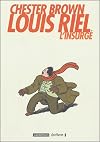
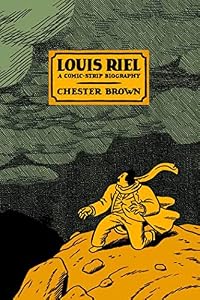
"This award-winning Canadian bestseller tells the story of the charismatic, and perhaps mad, nineteenth century Métis leader, whose struggle to win rights for his people led to violent rebellion on the nation's western frontier"--P. [4] of cover.Tags
Recommendations









Member Recommendations

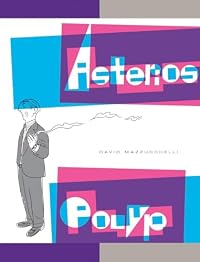
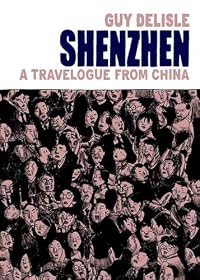
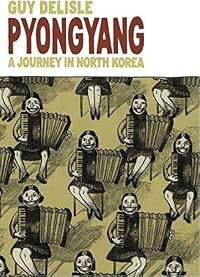
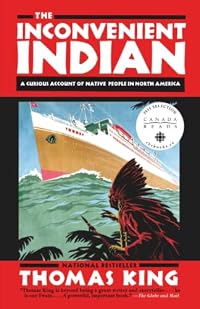
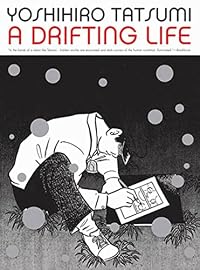
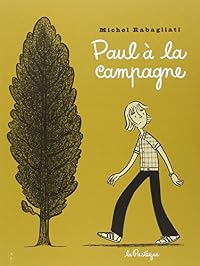
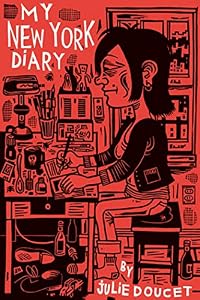
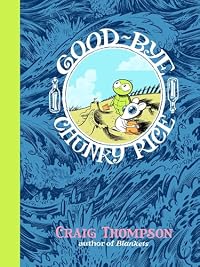
anonymous user Similar style.
Member Reviews
Witty and Informative
Both revered and despised, Louis Riel brings back all the emotions of ethnic nationalism in Canada. For one of the most complex and intriguing historical figures in Canadian history, Chester Brown does an admirable job in not only recounting the story of Louis Riel but also the major events of that period.
To be clear, Brown's version of events is biased by his own admission and certainly some elements were invented to fit the comic-strip. An example of this is the conversation between Lord Granville and Sir John A. Macdonald about sending troops to apprehend Riel. Brown admits that such a conversation never actually took place but certainly Macdonald did have to obtain permission from mother Britain.
Another show more interesting event to me was the meeting between Riel and then US President Ulysses S. Grant in 1875 to discuss plans to invade Manitoba. There were certainly some sympathies from some Americans such as in Minnesota who were pro-annexation but as Brown correctly points out Grant was in no position at the time to risk war, especially since the country was still amidst the reconstruction following the costly civil war.
Perhaps most controversial is Brown's characterization of Macdonald. The father of confederation, Brown portrays Macdonald as a ruthless conniving egomaniac hell-bent on expanding the railway (with kickbacks), ethnic cleansing of the Metis, and making an example out of Riel. Based on the sources that we have now, I would have to agree with Brown. Macdonald was a brilliant politician, he out-witted all his opponents including the British, the Americans and the natives. Macdonald was a master manipulator of which there has been no match since.
I've read a few comic-strip novels and I think that in certain situations they work extremely well. In this case, I would have to agree, the illustrations along with Brown's wit and choice of dialogue make this both an accurate historical representation and enjoyable reading. show less
Both revered and despised, Louis Riel brings back all the emotions of ethnic nationalism in Canada. For one of the most complex and intriguing historical figures in Canadian history, Chester Brown does an admirable job in not only recounting the story of Louis Riel but also the major events of that period.
To be clear, Brown's version of events is biased by his own admission and certainly some elements were invented to fit the comic-strip. An example of this is the conversation between Lord Granville and Sir John A. Macdonald about sending troops to apprehend Riel. Brown admits that such a conversation never actually took place but certainly Macdonald did have to obtain permission from mother Britain.
Another show more interesting event to me was the meeting between Riel and then US President Ulysses S. Grant in 1875 to discuss plans to invade Manitoba. There were certainly some sympathies from some Americans such as in Minnesota who were pro-annexation but as Brown correctly points out Grant was in no position at the time to risk war, especially since the country was still amidst the reconstruction following the costly civil war.
Perhaps most controversial is Brown's characterization of Macdonald. The father of confederation, Brown portrays Macdonald as a ruthless conniving egomaniac hell-bent on expanding the railway (with kickbacks), ethnic cleansing of the Metis, and making an example out of Riel. Based on the sources that we have now, I would have to agree with Brown. Macdonald was a brilliant politician, he out-witted all his opponents including the British, the Americans and the natives. Macdonald was a master manipulator of which there has been no match since.
I've read a few comic-strip novels and I think that in certain situations they work extremely well. In this case, I would have to agree, the illustrations along with Brown's wit and choice of dialogue make this both an accurate historical representation and enjoyable reading. show less
Chester Brown’s “Louis Riel: a comic strip biography” is a creative way to depict an important figure in Canadian history. Although seemingly rather biased toward Riel as a positive figure, the comic book gives detailed coverage of many of the events that are prominent in the life of Riel. Because of the format, it was less a “learning experience” and more of a fun read.
I originally had to read this book as a part of a Canadian literature course and enjoyed it then. Now, re-reading it, I again enjoyed it very much. The reader almost gets lost in the format and doesn’t realize that they are actually learning! It is important for people to get to know Canadian history and the comic strip biography makes it a more accessible show more format for a much wider range of readers. I would, however, use discretion for younger readers as there is a lot of violence depicted and because of the author’s bias that has been written into the text and illustrations. I still believe that it is well worth a read and is an educational and valuable work. show less
I originally had to read this book as a part of a Canadian literature course and enjoyed it then. Now, re-reading it, I again enjoyed it very much. The reader almost gets lost in the format and doesn’t realize that they are actually learning! It is important for people to get to know Canadian history and the comic strip biography makes it a more accessible show more format for a much wider range of readers. I would, however, use discretion for younger readers as there is a lot of violence depicted and because of the author’s bias that has been written into the text and illustrations. I still believe that it is well worth a read and is an educational and valuable work. show less
A fascinating read. I had mostly known only of Riel in name, and a few details of his life, but not really knew much beyond that. I was pleasently surprised and intrigued by how dramatic the events were. It really opened up many details of the life of this well known Canadian and those Canadians around him. It portrayed well the tension that existed at that time between the French and the English, the Natives and those coming into the new country, the Catholics and the Protestants, and how Riel represented so many of those characteristics which were not what those in power in Ottawa were. Also fascinating was the way that war is portrayed as really anticlimactic and executed by those who really don't know what they are doing. A good show more read that makes me want to research more into Riel's life. show less
This comic-strip biography makes the story of Louis Riel accessible to a broader range of readers than a more academic text ever could. Mr. Brown has done an excellent job of telling the basic story, supplemented with footnotes to expand on some historical points.
(Those footnotes are also a source of minor irritation as they are not marked in the text. Also, some of the notes explain things the author has portrayed unnecessarily -- e.g. to say a ship should have been pointed in the other direction -- why not just draw it that way in the first place? Or that it probably wasn't snowing...so why draw snow?)
The drawings are well done and add depth to the words. This, I think, is an important feature that makes graphic novels/histories more show more than adult comic books. Mr. Brown has given us a portrait of Riel as a man committed to his people and his beliefs -- a Father of Confederation. Flawed, but who isn't? show less
(Those footnotes are also a source of minor irritation as they are not marked in the text. Also, some of the notes explain things the author has portrayed unnecessarily -- e.g. to say a ship should have been pointed in the other direction -- why not just draw it that way in the first place? Or that it probably wasn't snowing...so why draw snow?)
The drawings are well done and add depth to the words. This, I think, is an important feature that makes graphic novels/histories more show more than adult comic books. Mr. Brown has given us a portrait of Riel as a man committed to his people and his beliefs -- a Father of Confederation. Flawed, but who isn't? show less
Fun Hergesque drawings and a fairly thorough (thorough enough that I didn't have to read all the endless caveats in the far-too-thorough appendix) retelling of the Riel story, presenting him as a hero of resistance to the State in a way that's compelling and convincing when the politics suggested are more of the anarchist variety and les so when it tips over into libertarian. Why are so many comic dudes fuckin' freaky libertarians? Anyway, I'm gonna use this in class.
3.5 stars
Louis Riel was a charismatic Metis leader in the late 19th century who led a couple of rebellions as the government of Canada wanted to set up Manitoba and West differently from how the First Nations, Metis, and others already settled there wanted it done. Riel was later hanged. This is a graphic novel that depicts his battle with the government.
It was good. I think the graphic novel format does make it more interesting than I remember it from high school (what little I do remember, and I’ve even been to Batoche, one of the sites in Saskatchewan where he fought). The illustrations were simple, black and white images, but I think they portrayed things well. There is a large notes section at the end that expands what was show more included in the story. I think the notes took as long or longer to read through than the graphic novel portion itself, but it does add quite a bit of extra info. show less
Louis Riel was a charismatic Metis leader in the late 19th century who led a couple of rebellions as the government of Canada wanted to set up Manitoba and West differently from how the First Nations, Metis, and others already settled there wanted it done. Riel was later hanged. This is a graphic novel that depicts his battle with the government.
It was good. I think the graphic novel format does make it more interesting than I remember it from high school (what little I do remember, and I’ve even been to Batoche, one of the sites in Saskatchewan where he fought). The illustrations were simple, black and white images, but I think they portrayed things well. There is a large notes section at the end that expands what was show more included in the story. I think the notes took as long or longer to read through than the graphic novel portion itself, but it does add quite a bit of extra info. show less
This is only the third graphic novel for me. My book club decided to read it for December 2011 to see how we felt about this format. I'd say it was a mixed success.
I thought it was really well researched. Brown is upfront about the fact that he took some liberties with the truth but he has copious notes at the back that show where he changed things and why he did so. Reading those notes were almost as interesting as the book itself. I would certainly recommend that people read them but you'll have to choose whether to read them as you go through the book or, as I did, after finishing the book.
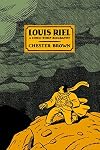
I liked the graphic style which reminded me of TinTin comics, which Brown acknowledges as one of his sources of inspiration. He also said he was show more inspired by Little Orphan Annie which I couldn't really see.
Louis Riel was either adored or reviled while he lived. And long after his death by hanging there were probably as many people in one camp as in the other. Around the 1950's or 1960's a transformation in how he was perceived occurred. Now he is acknowledged as the father of Manitoba and a hero for Metis rights. Manitoba even has a holiday named for him. Personally, I think he suffered from schizophrenia but he was brilliant and charismatic and he was the right person at the right time.
Read this book if your memory of history is a little dim. It really brings that time to life. show less
I thought it was really well researched. Brown is upfront about the fact that he took some liberties with the truth but he has copious notes at the back that show where he changed things and why he did so. Reading those notes were almost as interesting as the book itself. I would certainly recommend that people read them but you'll have to choose whether to read them as you go through the book or, as I did, after finishing the book.
I liked the graphic style which reminded me of TinTin comics, which Brown acknowledges as one of his sources of inspiration. He also said he was show more inspired by Little Orphan Annie which I couldn't really see.
Louis Riel was either adored or reviled while he lived. And long after his death by hanging there were probably as many people in one camp as in the other. Around the 1950's or 1960's a transformation in how he was perceived occurred. Now he is acknowledged as the father of Manitoba and a hero for Metis rights. Manitoba even has a holiday named for him. Personally, I think he suffered from schizophrenia but he was brilliant and charismatic and he was the right person at the right time.
Read this book if your memory of history is a little dim. It really brings that time to life. show less
Members
- Recently Added By
Published Reviews
ThingScore 100
In a remarkable move that lets Brown tell the best story and tell the truth, every deviance from recorded history is meticulously footnoted at the end. Deeply researched yet carefully manipulated, the final result goes past history and into literature....Louis Riel," as told by Chester Brown becomes a deeply personal, utterly compelling page-turner in the guise of a 19th-century history book.
added by vancouverdeb
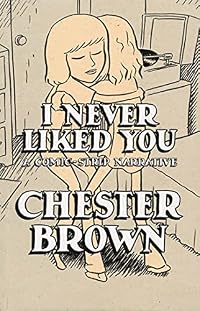
Louis Riel: A Comic-Strip Biography is yet another landmark work by Chester Brown, an artist considered to be one of the greatest cartoonists living today. This is not hyperbole: each of his major works – Ed the Happy Clown, I Never Liked You, and The Playboy – have broken new artistic ground in their different ways. His work has not only upped the high-water mark for fellow comics show more artists, but has served as a portal for the medium into mainstream culture....Brown’s black and white art is vibrant and striking – you feel the artist’s hand on the page. Not overly intellectualized yet dense with detail, the book is a wonderful combination of factual resources and powerful art and storytelling. show less
added by vancouverdeb
Lists

CBC's 100 True Stories
100 works; 6 members

Best Books set in Manitoba
85 works; 2 members

Best Graphic Novel Nonfiction
199 works; 101 members

Yet another list
67 works; 1 member
Talk Discussions
Past Discussions
Louis Riel paperback - caveat emptor in Comics (August 2006)
Author Information

76+ Works 2,992 Members
Awards and Honors
Series

Louis Riel (Collected edition)
Common Knowledge
- Canonical title
- Louis Riel: A Comic-Strip Biography
- Original publication date
- 2003-09 (Hardcover) (Hardcover)
- People/Characters
- Louis Riel; John A. Macdonald
- Important places
- Manitoba, Canada; Saskatchewan, Canada
- Dedication
- For Gord
- First words
- Because it's unusual for a comic-book to have one, I want to point out that this book does have an index, even if it is a bit limited in scope.
in 1670 the king of England grante dRupert's Land to a fur-trading enterprise called the Hudson's Bay Company. - Last words
- (Click to show. Warning: May contain spoilers.)He was 92 when he died in 1921.
Classifications
Statistics
- Members
- 849
- Popularity
- 32,008
- Reviews
- 19
- Rating
- (3.82)
- Languages
- 6 — Catalan, English, French, German, Italian, Spanish
- Media
- Paper, Ebook
- ISBNs
- 11
- ASINs
- 4