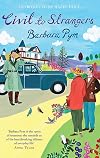
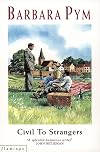
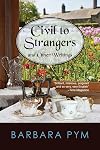
Civil to Strangers and Other Writings
by Barbara Pym 
On This Page
Description
Thanks to his wife's money, Adam Marsh-Gibbon leads a charmed life writing poetry and novels celebrated mostly by his fellow residents in the town of Up Callow in Shropshire, England. His lovely wife Cassandra caters to his every whim, although perhaps not as enthusiastically as five years earlier, when she first married her handsome yet difficult and unappreciative husband. Into their lives steps Mr. Stefan Tilos, the new tenant of Holmwood, a dashing Hungarian who puts the whole town in a show more flutter. How alarming then, that he should become so visibly enamoured of Cassandra. Mrs. Marsh-Gibbon is certainly above reproach. Or is she? Barbara Pym wrote Civil to Strangers in 1936. It was published posthumously in 1987, thanks to her friend and biographer Hazel Holt. show lessTags
Recommendations












Member Reviews
We owe the publication of Civil to Strangers to the loving family and friends of Barbara Pym. As literary executor Pym's sister made sure Pym's words lived on. It is a good thing because Pym was a master at showcasing the true sense of small community. The silent dislikes and quiet jealousies; a society full of disappointed and disappointing people. No one wants to be taken for granted and yet they are, repeatedly. These are the stories of a microcosm of flawed people. In the main story, Civil to Strangers, Cassandra March-Gibbon wants her husband of five years to pay more attention to her. As a writer, Adam is terribly preoccupied. Cassandra thinks by pretending to have feelings a new stranger from Budapest she will force Adam to be show more more demonstrative of his love for her. The plan backfires when Adam encourages the relationship with Stefan Tilos. The situation goes from bad to worse when Tilos develops feelings for Cassandra (as one is apt to do when someone is lavishing unprovoked attention on them). Tilos in turn needs to make Cassandra jealous when she does not show any sign of wanting to commit to a relationship. Cassandra is not making Adam jealous. Tilos is not winning over the girl. Nobody is getting exactly what they want. By taking separate holidays, Adam and Cassandra allow themselves to take stock of their marital situation. show less
Although not published until after her death, Civil To Strangers was actually the second novel Barbara Pym wrote – in 1936 when she was twenty-three, after the first version of Some Tame Gazelle was rejected by several publishers. And as Hazel Holt says in her introduction, it has "all the confidence of youth."
The novel is the story of Cassandra Marsh-Gibbon and her novelist husband Adam who live in the Shropshire village of Up Callow; and as the dust jacket says, "both the village and Cassandra's marriage are thrown into upheaval when a mysterious Hungarian moves into town." And I'm not going to give away much more than that. But the story of Cassandra and Stefan Tilos, and whether they will or won't (or have or haven't) run off to show more Budapest together, is just the central narrative around which a number of other tales are woven. And all the familiar Pym character types are represented – the Rector and his family; Mr. Paladin the very eligible young curate; the aging bachelor Mr. Gay and his spinster niece Angela, who are "still hoping that there was a rich woman or an eligible husband in the town whom they had somehow missed in their search."
Barbara Pym has often been compared to Jane Austen (unfair, I think, to both authors), and this is probably the most Austen-like of all her books. In fact, I was a little surprised, at first, at how little it seemed to resemble the later novels. But after a few chapters, the familiar Pym voice started to emerge and I realized that it's actually one of her most comic works. I especially loved Chapter 14, where all the characters come together for a bridge party and get to know their newly arrived foreign neighbor for the first time; it's absolutely perfect Pym – hardly anything happens, but it's quietly hilarious just the same. show less
The novel is the story of Cassandra Marsh-Gibbon and her novelist husband Adam who live in the Shropshire village of Up Callow; and as the dust jacket says, "both the village and Cassandra's marriage are thrown into upheaval when a mysterious Hungarian moves into town." And I'm not going to give away much more than that. But the story of Cassandra and Stefan Tilos, and whether they will or won't (or have or haven't) run off to show more Budapest together, is just the central narrative around which a number of other tales are woven. And all the familiar Pym character types are represented – the Rector and his family; Mr. Paladin the very eligible young curate; the aging bachelor Mr. Gay and his spinster niece Angela, who are "still hoping that there was a rich woman or an eligible husband in the town whom they had somehow missed in their search."
Barbara Pym has often been compared to Jane Austen (unfair, I think, to both authors), and this is probably the most Austen-like of all her books. In fact, I was a little surprised, at first, at how little it seemed to resemble the later novels. But after a few chapters, the familiar Pym voice started to emerge and I realized that it's actually one of her most comic works. I especially loved Chapter 14, where all the characters come together for a bridge party and get to know their newly arrived foreign neighbor for the first time; it's absolutely perfect Pym – hardly anything happens, but it's quietly hilarious just the same. show less
I guess you could call this a lightweight novel - no dramatic plot twists, no family problems. Oh, but what Pym can do with making characters multidimensional and a perfectly pitched paragraph or pithy remark.
A couple of my favorite passages:
I think we are going to regret this man's presence among us, reflected Mrs. Gower. He is far too handsome to be let loose in a small town.
And: "You know I admire you!: declared Mr. Tilos suddenly.
"Hush! People will hear you," said Cassandra in agitation, for his voice was embarrassingly loud.
"I would want all the world to know," he declared.
"Don't be silly," said Cassandra firmly, thinking that it wouldn't matter the whole world knowing as long as the people of Up Callow and thereabouts did not.
A couple of my favorite passages:
I think we are going to regret this man's presence among us, reflected Mrs. Gower. He is far too handsome to be let loose in a small town.
And: "You know I admire you!: declared Mr. Tilos suddenly.
"Hush! People will hear you," said Cassandra in agitation, for his voice was embarrassingly loud.
"I would want all the world to know," he declared.
"Don't be silly," said Cassandra firmly, thinking that it wouldn't matter the whole world knowing as long as the people of Up Callow and thereabouts did not.
A volume I recommend only for hardcore enthusiasts, but useful for those interested in the development of a notable author.
Barbara Pym's oeuvre consists of twelve novels and a posthumous "autobiography" compiled from her diaries and letters. These are all satisfying, even if a couple of the works which were initially rejected by publishers in the 1960s, only merited release because of her "comeback" in the late 1970s. Alongside this body of work, however, Pym's archives included half a dozen unpublished novels (some unfinished) and a few dozen short stories and miscellaneous pieces. The critical consensus is that many of the short stories are not worth public interest, written as they were during her youth or specifically for show more publication in "women's magazines" of the era - and rejected even by them! Here, Pym's literary executors cobble together a selection of the best material, which has become the final piece in the Pym puzzle.
Civil to Strangers and other Writings contains one complete novel, three novellas, four short stories, and an autobiographical radio talk. The eponymous novel was written when Pym was 23, and is a fairly perfunctory village romance about the wife of an arrogant, vague novelist, who attempts to return the spark to their marriage when a handsome Hungarian man moves into town. The novel feels very much like a draft, with moments of Pymian insight and observational humour, and the undertone of repressed sorrow that lurks around the corner of all of her works. Still, it is clear that the young, still very naive, Barbara was unable to properly imagine a marriage, and she is reduced more heavily here to stereotype. Additionally, most of the chapters have a surface-level quality; the artist has not yet added the detail and shading to the primary colours. Pym had such a distinctive narrative voice, but here we are seeing her influences rather than she herself.
The three additional novellas - all from the late 1930s - are excerpts of complete or near-complete works in the archive, polished by literary executor Hazel Holt. Pym was living in her childhood home in Shropshire, preparing the house for the imminent war, and wondering what she would do with her life. Each of these novels feels like an attempt to traverse a different path, before she found her ultimate style. Gervase and Flora is a harmless story about a young woman who follows her true love to Finland, where he has found a job and a beautiful Finnish lass; Home Front is a realist slice-of-life novel about an English village at the commencement of the War; and So Very Secret is a kind of spy novel, centered around an unexpected lead, a vicar's daughter, who discovers that a missing friend was involved in espionage, and sets out to find her.
All of these works are of great interest to the Pym scholar, as are the previously- unpublished short story So, Some Tempestuous Morn and a piece commissioned very late in Pym's life for the Church Times, called The Christmas Visit, both of which resurrect characters from the author's previous novels. However it is fair to say that all of them are examples of a writer-in-training, rather than a novel that would interest a newcomer or even an average fan. I will never complain about additional words by this author, but I think this volume's attractiveness was related to a kind of "Pymania" that took place during the 1980s, after the author's death.
More worthy, perhaps, are the other two short stories. Goodbye, Balkan Capital!, written during the War but never previously published, is another of the author's many reflections on unrequited love, and the way we turn past memories into fantasy, and it is really quite touching. Across a Crowded Room was one of the author's last pieces, commissioned by The New Yorker in the final year of her life, and is a neat example of her late style. Finally the short radio talk, Finding a Voice (1978), sees Barbara reflecting on her particular narrative style, and the problems this caused during the 1960s and early 1970s when no publisher would accept her novels.
A collection of historical interest, but perhaps not much more. show less
Barbara Pym's oeuvre consists of twelve novels and a posthumous "autobiography" compiled from her diaries and letters. These are all satisfying, even if a couple of the works which were initially rejected by publishers in the 1960s, only merited release because of her "comeback" in the late 1970s. Alongside this body of work, however, Pym's archives included half a dozen unpublished novels (some unfinished) and a few dozen short stories and miscellaneous pieces. The critical consensus is that many of the short stories are not worth public interest, written as they were during her youth or specifically for show more publication in "women's magazines" of the era - and rejected even by them! Here, Pym's literary executors cobble together a selection of the best material, which has become the final piece in the Pym puzzle.
Civil to Strangers and other Writings contains one complete novel, three novellas, four short stories, and an autobiographical radio talk. The eponymous novel was written when Pym was 23, and is a fairly perfunctory village romance about the wife of an arrogant, vague novelist, who attempts to return the spark to their marriage when a handsome Hungarian man moves into town. The novel feels very much like a draft, with moments of Pymian insight and observational humour, and the undertone of repressed sorrow that lurks around the corner of all of her works. Still, it is clear that the young, still very naive, Barbara was unable to properly imagine a marriage, and she is reduced more heavily here to stereotype. Additionally, most of the chapters have a surface-level quality; the artist has not yet added the detail and shading to the primary colours. Pym had such a distinctive narrative voice, but here we are seeing her influences rather than she herself.
The three additional novellas - all from the late 1930s - are excerpts of complete or near-complete works in the archive, polished by literary executor Hazel Holt. Pym was living in her childhood home in Shropshire, preparing the house for the imminent war, and wondering what she would do with her life. Each of these novels feels like an attempt to traverse a different path, before she found her ultimate style. Gervase and Flora is a harmless story about a young woman who follows her true love to Finland, where he has found a job and a beautiful Finnish lass; Home Front is a realist slice-of-life novel about an English village at the commencement of the War; and So Very Secret is a kind of spy novel, centered around an unexpected lead, a vicar's daughter, who discovers that a missing friend was involved in espionage, and sets out to find her.
All of these works are of great interest to the Pym scholar, as are the previously- unpublished short story So, Some Tempestuous Morn and a piece commissioned very late in Pym's life for the Church Times, called The Christmas Visit, both of which resurrect characters from the author's previous novels. However it is fair to say that all of them are examples of a writer-in-training, rather than a novel that would interest a newcomer or even an average fan. I will never complain about additional words by this author, but I think this volume's attractiveness was related to a kind of "Pymania" that took place during the 1980s, after the author's death.
More worthy, perhaps, are the other two short stories. Goodbye, Balkan Capital!, written during the War but never previously published, is another of the author's many reflections on unrequited love, and the way we turn past memories into fantasy, and it is really quite touching. Across a Crowded Room was one of the author's last pieces, commissioned by The New Yorker in the final year of her life, and is a neat example of her late style. Finally the short radio talk, Finding a Voice (1978), sees Barbara reflecting on her particular narrative style, and the problems this caused during the 1960s and early 1970s when no publisher would accept her novels.
A collection of historical interest, but perhaps not much more. show less
I stopped before the 'Other Writings'. It seems to me that Pym's novels fall into two categories; they are either light-hearted and full of wry humour, or they are more cynical and almost snide. 'Civil to Strangers' falls firmly into the second category. Cassandra had no real personality and her husband Adam was a pathetic man-child, whom she had decided to bestow all her money and devotion on for no discernible reason. Cassandra's Hungarian admirer was a totally unbelievable character. I did enjoy Mr Gay and Mrs Gower, but Miss Gay seemed to have been created solely to be mocked.
I have now read all of Pym's novels, and have enjoyed her writing, although in general more than I did in this case.
I have now read all of Pym's novels, and have enjoyed her writing, although in general more than I did in this case.
Barbara Pym wrote the short novel Civil to Strangers in 1936 when she was twenty-three years old, although it wasn’t published until after her death in 1980. Her wry, astute observations of a married couple’s problems reveals her early adroitness at analyzing the psychology of the female character which she later became so adept at. The novel fairly overflows with typical Pym characters but she also created something unseen in her other novels: the pompous, arrogant, impossible-to-please husband. Young marrieds Cassandra and Adam Marsh-Gibbon join the rest of their small community in being quite excited about the arrival of a new resident, a foreigner from Budapest, Hungary. Handsome, dashing Stefan Tilos is awestruck by the show more beautiful Cassandra and decides to ignore the fact that she is a married woman and tries to lure her into a romantic relationship. Adam, completely self-absorbed as he is, doesn’t mind or even notice the neighbor’s ministrations. Along the way, we are completely, safe within Pym territory with the expected Rector, a couple of spinsters, the wise older matron and more than one excellent women to keep things moving smoothly along. Things get problematical when Cassandra decides to take a vacation to Budapest on her own and an unexpected complication occurs.
The second half of the book contains bits and pieces of other novels, short stories and an interview that Barbara Pym did for the BBC which contains the only recorded information about how she felt about her work. I found this to be very interesting and a perfect end to my year of reading Pym. She spoke wistfully about the sixteen year period (beginning in the early 60s) when she couldn’t get any of her work published after successfully publishing six novels before this. She found herself in a literary wilderness but she continued writing until 1977 when Phillip Larkin wrote in The Times Literary Supplement that Pym was “an underrated writer” and shortly after that Quartet in Autumn was published and went on to be shortlisted for the Man Booker Prize. show less
The second half of the book contains bits and pieces of other novels, short stories and an interview that Barbara Pym did for the BBC which contains the only recorded information about how she felt about her work. I found this to be very interesting and a perfect end to my year of reading Pym. She spoke wistfully about the sixteen year period (beginning in the early 60s) when she couldn’t get any of her work published after successfully publishing six novels before this. She found herself in a literary wilderness but she continued writing until 1977 when Phillip Larkin wrote in The Times Literary Supplement that Pym was “an underrated writer” and shortly after that Quartet in Autumn was published and went on to be shortlisted for the Man Booker Prize. show less
A marvellous collection of unpublished writings:
Civil to Strangers:
When Stephan Tilos moves into the village and falls for Catherine Marsh-Gibbons, the vaguely dissatisfied wife of a famous novelist, she takes advantage of the situation to re-kindle her husband's interest in her.
Vintage Pym. Some very funny moments and the wry observations which are Pym's trademark. Perhaps the best of the unpublished Pyms I've read this year.
Quote: He noticed that Mr. Tilos was attracted by Catherine, but he treated the whole thing as a joke, and was always teasing her about it, at the same time priding himself on being the one love of her life. This annoyed Catherine because she knew it was true.
Gervase and Flora:
Gervase Harringay goes to Finland to show more teach English and Flora Palfrey follows him, ostensibly to visit Miss Moberley, a friend of her father's, and pillar of the English community in Helsingfors.
The usual Pym situation of woman involved with unsatisfactory man, accompanied by wry observation of the minutiae of everyday life for a certain class is not affected by the surprising change of location.
Quote: The first two years were the worst, she reflected calmly. She could tell any young woman that. But it was really no use entering upon an unrequited passion unless you were prepared to keep it up for at least five years. Seven years was best. There was something very noble about loving a person for seven years and getting nothing in return.
Home Front Novel:
Excellent women in wartime.
So Very Secret
An attempt at a spy novel as Cassandra Swan tries to deliver secret papers left by her friend Harriet who has unaccountably disappeared from the hairdresser's.
Both very enjoyable.
Short stories:
A series of vignettes one could easily imagine being expanded into complete Pym novels. show less
Civil to Strangers:
When Stephan Tilos moves into the village and falls for Catherine Marsh-Gibbons, the vaguely dissatisfied wife of a famous novelist, she takes advantage of the situation to re-kindle her husband's interest in her.
Vintage Pym. Some very funny moments and the wry observations which are Pym's trademark. Perhaps the best of the unpublished Pyms I've read this year.
Quote: He noticed that Mr. Tilos was attracted by Catherine, but he treated the whole thing as a joke, and was always teasing her about it, at the same time priding himself on being the one love of her life. This annoyed Catherine because she knew it was true.
Gervase and Flora:
Gervase Harringay goes to Finland to show more teach English and Flora Palfrey follows him, ostensibly to visit Miss Moberley, a friend of her father's, and pillar of the English community in Helsingfors.
The usual Pym situation of woman involved with unsatisfactory man, accompanied by wry observation of the minutiae of everyday life for a certain class is not affected by the surprising change of location.
Quote: The first two years were the worst, she reflected calmly. She could tell any young woman that. But it was really no use entering upon an unrequited passion unless you were prepared to keep it up for at least five years. Seven years was best. There was something very noble about loving a person for seven years and getting nothing in return.
Home Front Novel:
Excellent women in wartime.
So Very Secret
An attempt at a spy novel as Cassandra Swan tries to deliver secret papers left by her friend Harriet who has unaccountably disappeared from the hairdresser's.
Both very enjoyable.
Short stories:
A series of vignettes one could easily imagine being expanded into complete Pym novels. show less
Members
- Recently Added By
Lists

Novels Published in 1987
81 works; 19 members
Talk Discussions
Past Discussions
Barbara Pym centenary: Civil to Strangers in Virago Modern Classics (December 2013)
Author Information

27+ Works 14,782 Members
Novelist Barbara Pym was born in Shropshire and educated at Oxford University. An editor of Africa, an anthropological review, for many years, she published her first novel, Some Tame Gazelle, in 1950. Since then, a number of popular works have been published. Often compared with the works of Jane Austen in both manner and subject, Pym's novels show more are apparently guileless evocations of the foibles of aging and isolated characters. She has a sure, if understated, sense of her characters' psychology and of their unintentionally comic revelations about themselves and their futile lives. After the publication of No Fond Return of Love (1961), all her books were out of print until she was cited, coincidentally by both David Cecil and Philip Larkin, as among the most underestimated novelists of the 20th century. She subsequently completed two successful novels, The Sweet Dove Died (1978) and Quartet in Autumn (1978), the latter a comic-pathetic study of two men and two women in their sixties who work in the same office but lead separate, lonely lives outside. Many of her earlier books have since been reprinted, including Excellent Women (1952) and A Glass of Blessings (1958), both perceptive psychological studies of aging women taken advantage of by others. A posthumous novel, A Few Green Leaves (1980), is a superb comedy of provincial village life. (Bowker Author Biography) show less
Barbara Pym has a Legacy Library. Legacy libraries are the personal libraries of famous readers, entered by LibraryThing members from the Legacy Libraries group.
Some Editions
Series
Belongs to Publisher Series
Virago Modern Classics (556)
Common Knowledge
- Original title
- Civil to Strangers
- Original publication date
- 1987
- People/Characters
- Cassandra March-Gibbon; Adam Marsh-Gibbon; Gervase Harringay; Flora Palfrey
- Important places
- Shropshire, England, UK; Oxford, Oxfordshire, England, UK; Budapest, Hungary; Helsinki, Finland
- Important events
- World War II (1939 | 1945)
- First words
- "Dear Cassandra", smiled Mrs Gower, "you are always so punctual".
- Quotations
- I think that's the kind of immortality most authors would want -- to feel that their work would be immediately recognisable as having been written by them and by nobody else. But, of course, it's a lot to ask for.
- Disambiguation notice*
- Réunit : "Secret, très secret" ; "Roman du front intérieur" ; "Adieu, Balkans", nouvelles extraites du recueil "Dans un salon d'Oxford"
Pas du tout : le livre publié par Salvy en 1990 contient seulement la traducti... (show all)on du roman Civil to strangers dont les personnages sont Adam et Cassandra.
*Some information comes from Common Knowledge in other languages. Click "Edit" for more information.
Classifications
Statistics
- Members
- 464
- Popularity
- 65,955
- Reviews
- 16
- Rating
- (3.83)
- Languages
- 5 — Dutch, English, French, Italian, Spanish
- Media
- Paper, Audiobook, Ebook
- ISBNs
- 24
- ASINs
- 4