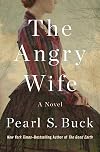
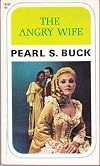
The Angry Wife
by Pearl S. Buck
On This Page
Description
The stormy tale of a wife trapped in the antiquated ways of the past, and of two brothers who have fought on opposing sides of the Civil War Lucinda Delaney is a southern belle ruled by a vision of life that no longer exists. The Civil War has come and gone and her side has lost, yet she is determined to proceed as if nothing has changed-a denial that stokes the flames of her irrational angers. Despite her returned husband's devotion, Lucinda is sure he is having an affair with one of their show more slaves. After all, his Union-sympathizing brother, Tom, did just that, scandalously running away with the woman and settling into contented family life in Philadelphia. Over the years, her racist feelings and fears only intensify, and when it's time for her own daughter to marry, her chief concern is the color of the children. The Angry Wife is a memorable and impassioned dissection of prejudice, as well as a riveting portrait of post-Civil War America. This ebook features an illustrated biography of Pearl S. Buck including rare images from the author's estate. show lessTags
Recommendations























Member Reviews
Although prolific, Nobel-Prize-winning-author Pearl S. Buck is best known for her novels about China, this one is focused on the U.S. in the years following the American Civil War. It’s an interesting take on the South, racism, and 19th century industrial development — but felt disjointed, as though it couldn’t quite figure what it was about.
Southern brothers Pierce and Tom wind up fighting on opposite sides of the Civil War –Tom for the North, Pierce for the South. When they return to their West Virginia plantation after the war, they begin to discover all the ways life has changed.
Pierce’s wife Lucinda, who has been in charge during the war years, now finds she must again make room for a husband. But more significantly, she show more is desperate to hang onto the privilege of her accustomed way of life and deeply resentful about the loss of her “slaves”. Then there’s Tom, who, having suffered brutal imprisonment, promptly falls in love with the mulatto servant who nurses him back to health. And so begins a deep family rift.
I won’t disclose more plot details (no spoilers), but as the novel follows these characters through the next couple of generations, readers watch the impact of the jarring changes happening in America during the last decades of the 19th century:
• Paid workers, replacing slaves, make farming large plantations more expensive and more difficult.
• Rapid industrialization, especially the expansion of railroads, changes where BIG money was made.
• A long economic depression in the 1870s, with resulting labor unrest and strikes (some of which are blamed on the new theories of Karl Marx) forever alters relations between workers and management.
• And, most interesting to me, just how did the Civil War change racial attitudes among both white and black citizens?
Through the stories of Tom and Pierce, we watch the unfolding of their different paths. Ultimately, one’s decisions lead him to be more anchored in the agrarian past; the other’s guide him toward a life more in keeping with an increasingly industrialized and more equitable society.
I have no idea why this book is titled THE ANGRY WIFE, which refers to Lucinda, Pierce’s wife. Yes, she's angry. But the story is much more about Pierce himself — part of the generation that lost the Civil War, people who were then forced to reexamine, reevaluate, and, in some cases, redefine big life concepts like success, family, friendship, love, and fulfillment.
As mentioned earlier, my biggest criticism of the book is how disjointed it felt. At the start it felt like it WAS going to center on Lucinda. But then it shifted to more of a Tom and Pierce narrative. And then toward the end, much more about Pierce alone. Nevertheless, I would recommend this book to anyone who wants to learn more this turbulent period in American history. show less
Southern brothers Pierce and Tom wind up fighting on opposite sides of the Civil War –Tom for the North, Pierce for the South. When they return to their West Virginia plantation after the war, they begin to discover all the ways life has changed.
Pierce’s wife Lucinda, who has been in charge during the war years, now finds she must again make room for a husband. But more significantly, she show more is desperate to hang onto the privilege of her accustomed way of life and deeply resentful about the loss of her “slaves”. Then there’s Tom, who, having suffered brutal imprisonment, promptly falls in love with the mulatto servant who nurses him back to health. And so begins a deep family rift.
I won’t disclose more plot details (no spoilers), but as the novel follows these characters through the next couple of generations, readers watch the impact of the jarring changes happening in America during the last decades of the 19th century:
• Paid workers, replacing slaves, make farming large plantations more expensive and more difficult.
• Rapid industrialization, especially the expansion of railroads, changes where BIG money was made.
• A long economic depression in the 1870s, with resulting labor unrest and strikes (some of which are blamed on the new theories of Karl Marx) forever alters relations between workers and management.
• And, most interesting to me, just how did the Civil War change racial attitudes among both white and black citizens?
Through the stories of Tom and Pierce, we watch the unfolding of their different paths. Ultimately, one’s decisions lead him to be more anchored in the agrarian past; the other’s guide him toward a life more in keeping with an increasingly industrialized and more equitable society.
I have no idea why this book is titled THE ANGRY WIFE, which refers to Lucinda, Pierce’s wife. Yes, she's angry. But the story is much more about Pierce himself — part of the generation that lost the Civil War, people who were then forced to reexamine, reevaluate, and, in some cases, redefine big life concepts like success, family, friendship, love, and fulfillment.
As mentioned earlier, my biggest criticism of the book is how disjointed it felt. At the start it felt like it WAS going to center on Lucinda. But then it shifted to more of a Tom and Pierce narrative. And then toward the end, much more about Pierce alone. Nevertheless, I would recommend this book to anyone who wants to learn more this turbulent period in American history. show less
Although prolific, Nobel-Prize-winning-author Pearl S. Buck is best known for her novels about China, this one is focused on the U.S. in the years following the American Civil War. It’s an interesting take on the South, racism, and 19th century industrial development — but felt disjointed, as though it couldn’t quite figure what it was about.
Southern brothers Pierce and Tom wind up fighting on opposite sides of the Civil War –Tom for the North, Pierce for the South. When they return to their West Virginia plantation after the war, they begin to discover all the ways life has changed.
Pierce’s wife Lucinda, who has been in charge during the war years, now finds she must again make room for a husband. But more significantly, she show more is desperate to hang onto the privilege of her accustomed way of life and deeply resentful about the loss of her “slaves”. Then there’s Tom, who, having suffered brutal imprisonment, promptly falls in love with the mulatto servant who nurses him back to health. And so begins a deep family rift.
I won’t disclose more plot details (no spoilers), but as the novel follows these characters through the next couple of generations, readers watch the impact of the jarring changes happening in America during the last decades of the 19th century:
• Paid workers, replacing slaves, make farming large plantations more expensive and more difficult.
• Rapid industrialization, especially the expansion of railroads, changes where BIG money was made.
• A long economic depression in the 1870s, with resulting labor unrest and strikes (some of which are blamed on the new theories of Karl Marx) forever alters relations between workers and management.
• And, most interesting to me, just how did the Civil War change racial attitudes among both white and black citizens?
Through the stories of Tom and Pierce, we watch the unfolding of their different paths. Ultimately, one’s decisions lead him to be more anchored in the agrarian past; the other’s guide him toward a life more in keeping with an increasingly industrialized and more equitable society.
I have no idea why this book is titled THE ANGRY WIFE, which refers to Lucinda, Pierce’s wife. Yes, she's angry. But the story is much more about Pierce himself — part of the generation that lost the Civil War, people who were then forced to reexamine, reevaluate, and, in some cases, redefine big life concepts like success, family, friendship, love, and fulfillment.
As mentioned earlier, my biggest criticism of the book is how disjointed it felt. At the start it felt like it WAS going to center on Lucinda. But then it shifted to more of a Tom and Pierce narrative. And then toward the end, much more about Pierce alone. Nevertheless, I would recommend this book to anyone who wants to learn more this turbulent period in American history. show less
Southern brothers Pierce and Tom wind up fighting on opposite sides of the Civil War –Tom for the North, Pierce for the South. When they return to their West Virginia plantation after the war, they begin to discover all the ways life has changed.
Pierce’s wife Lucinda, who has been in charge during the war years, now finds she must again make room for a husband. But more significantly, she show more is desperate to hang onto the privilege of her accustomed way of life and deeply resentful about the loss of her “slaves”. Then there’s Tom, who, having suffered brutal imprisonment, promptly falls in love with the mulatto servant who nurses him back to health. And so begins a deep family rift.
I won’t disclose more plot details (no spoilers), but as the novel follows these characters through the next couple of generations, readers watch the impact of the jarring changes happening in America during the last decades of the 19th century:
• Paid workers, replacing slaves, make farming large plantations more expensive and more difficult.
• Rapid industrialization, especially the expansion of railroads, changes where BIG money was made.
• A long economic depression in the 1870s, with resulting labor unrest and strikes (some of which are blamed on the new theories of Karl Marx) forever alters relations between workers and management.
• And, most interesting to me, just how did the Civil War change racial attitudes among both white and black citizens?
Through the stories of Tom and Pierce, we watch the unfolding of their different paths. Ultimately, one’s decisions lead him to be more anchored in the agrarian past; the other’s guide him toward a life more in keeping with an increasingly industrialized and more equitable society.
I have no idea why this book is titled THE ANGRY WIFE, which refers to Lucinda, Pierce’s wife. Yes, she's angry. But the story is much more about Pierce himself — part of the generation that lost the Civil War, people who were then forced to reexamine, reevaluate, and, in some cases, redefine big life concepts like success, family, friendship, love, and fulfillment.
As mentioned earlier, my biggest criticism of the book is how disjointed it felt. At the start it felt like it WAS going to center on Lucinda. But then it shifted to more of a Tom and Pierce narrative. And then toward the end, much more about Pierce alone. Nevertheless, I would recommend this book to anyone who wants to learn more this turbulent period in American history. show less
Buck wrote beautifully but I hate these people and can't tolerate their company any longer.
Aus heutiger Sicht wirkt dieser Roman von Pearl S. Buck recht angestaubt. Trotzdem ruft er bei der Lektüre auch heute noch ein gewisses Interesse hervor, da die Diskriminierung von Afroamerikanern in den USA nach wie vor Realität ist, trotz des amtierenden dunkelhäutigen Präsidenten. Pearl S. Buck erzählt die Geschichte einer wohlhabenden Farmer-Familie in West Virginia nach dem Sezessionskrieg. Sie zeigt, wie unterschiedlich die Weißen mit der Befreiung der schwarzen Sklaven umgehen: Dem wohlhabenden Landbesitzer Pierce Delaney fällt es schwer, die früheren Sklaven als gleichwertige Menschen anzuerkennen, aber im Lauf der Jahrzehnte macht er langsame Fortschritte, vor allem durch die nähere Bekanntschaft mit den Mulattinnen show more Georgia und Bettina. Die beiden Frauen, ehemalige Sklavinnen, sind nun Dienerinnen in seinem Haus. Seiner konservativen Frau Lucinda dagegen gelingt das Eingeständnis der Gleichwertigkeit nie, da sie nicht dazu bereit ist, die Veränderung anzunehmen. Sie will, dass alles so bleibt, wie es früher war. Mit ihrer rückwärtsgewandten Art und ihrem enormen Egoismus macht sie ihrem Mann das Leben schwer, der sie aber trotzdem über all die Jahre liebt und treu zu ihr hält.
Sein Bruder Tom dagegen, der im Sezessionskrieg auf der Seite des Nordens gekämpft hat, schafft es, sich auf die neuen Verhältnisse einzustellen. Er verliebt sich in die Mulattin Bettina, heiratet sie und gründet eine Familie mit ihr. Seine Schwägerin Lucinda hat dafür keinerlei Verständnis und veranlasst ihren Mann Pierce, Tom zu vertreiben. Trotzdem finden die beiden Brüder später wieder zueinander. Toms dunkelhäutige Kinder wachsen zu ebenso erfolgreichen Menschen heran wie Pierces weiße Kinder.
Was die Auseinandersetzung mit der Befreiung sowohl für die schwarzen als auch weißen Menschen bedeutet hat, wird hier anschaulich dargestellt. Ein Prozess, der mit Sicherheit bis zum heutigen Tage fortdauert. Pearl S. Buck hat eine Reihe von interessanten Charakteren entwickelt. Ihr Roman wird aus der Perspektive des Großgrundbesitzers und Aktionärs Pierce Delaney erzählt. Obwohl sie ihn als angeblich gütigen Menschen beschreibt, wird der Leser nicht so richtig warm mit diesem materialistisch eingestellten Mann, in dessen Denken es hauptsächlich um wirtschaftlichen Fortschritt geht. Zu diesem Zweck schreckt er auch vor Ausbeutung nicht zurück. Mit Abstand am unsympathischsten ist aber seine Frau Lucinda, die von nahezu unerträglichem Egoismus ist. Es ist schwer nachvollziehbar, mit welcher Hingabe ihr Ehemann über Jahrzehnte an ihr festhält. Nur zwei ihrer fünf Kinder werden zu fortschrittlich orientierten Erwachsenen, die anderen bleiben dem alten Denken verhaftet.
Wie schwierig es für Menschen ist, gewohnte Denkstrukturen und Verhaltensmuster hinter sich zu lassen, wird hier deutlich. Dies gilt vielleicht für Pearl S. Buck selbst. Zwar gibt sie sich alle Mühe, zu zeigen, wie edel und charakterlich hochstehend afroamerikanische Menschen sind. Aber auch sie lässt ihre beiden Vorzeige-Schwarzen, Georgia und Bettina, sehr hellhäutig sein. Überzeugender wäre gewesen, wenn sie zwei Protagonistinnen von dunkelster Hautfarbe erdacht hätte. Dafür sind Georgia und Bettina physisch und psychisch geradezu unwahrscheinlich perfekt dargestellt, was einfach übertrieben wirkt. Ansonsten wirkt Pearl S. Bucks Stil auf heutige Leser etwas antiquiert. Sie wartet mit ein paar logischen Fehlern auf, was unfreiwillig komisch ist. Vielleicht liegt dies aber auch an der Übersetzung. Insgesamt ist „Frau im Zorn“ ein recht interessantes Buch, das man schnell einmal überfliegen kann, wenn es sowieso schon im Bücherschrank steht. show less
Sein Bruder Tom dagegen, der im Sezessionskrieg auf der Seite des Nordens gekämpft hat, schafft es, sich auf die neuen Verhältnisse einzustellen. Er verliebt sich in die Mulattin Bettina, heiratet sie und gründet eine Familie mit ihr. Seine Schwägerin Lucinda hat dafür keinerlei Verständnis und veranlasst ihren Mann Pierce, Tom zu vertreiben. Trotzdem finden die beiden Brüder später wieder zueinander. Toms dunkelhäutige Kinder wachsen zu ebenso erfolgreichen Menschen heran wie Pierces weiße Kinder.
Was die Auseinandersetzung mit der Befreiung sowohl für die schwarzen als auch weißen Menschen bedeutet hat, wird hier anschaulich dargestellt. Ein Prozess, der mit Sicherheit bis zum heutigen Tage fortdauert. Pearl S. Buck hat eine Reihe von interessanten Charakteren entwickelt. Ihr Roman wird aus der Perspektive des Großgrundbesitzers und Aktionärs Pierce Delaney erzählt. Obwohl sie ihn als angeblich gütigen Menschen beschreibt, wird der Leser nicht so richtig warm mit diesem materialistisch eingestellten Mann, in dessen Denken es hauptsächlich um wirtschaftlichen Fortschritt geht. Zu diesem Zweck schreckt er auch vor Ausbeutung nicht zurück. Mit Abstand am unsympathischsten ist aber seine Frau Lucinda, die von nahezu unerträglichem Egoismus ist. Es ist schwer nachvollziehbar, mit welcher Hingabe ihr Ehemann über Jahrzehnte an ihr festhält. Nur zwei ihrer fünf Kinder werden zu fortschrittlich orientierten Erwachsenen, die anderen bleiben dem alten Denken verhaftet.
Wie schwierig es für Menschen ist, gewohnte Denkstrukturen und Verhaltensmuster hinter sich zu lassen, wird hier deutlich. Dies gilt vielleicht für Pearl S. Buck selbst. Zwar gibt sie sich alle Mühe, zu zeigen, wie edel und charakterlich hochstehend afroamerikanische Menschen sind. Aber auch sie lässt ihre beiden Vorzeige-Schwarzen, Georgia und Bettina, sehr hellhäutig sein. Überzeugender wäre gewesen, wenn sie zwei Protagonistinnen von dunkelster Hautfarbe erdacht hätte. Dafür sind Georgia und Bettina physisch und psychisch geradezu unwahrscheinlich perfekt dargestellt, was einfach übertrieben wirkt. Ansonsten wirkt Pearl S. Bucks Stil auf heutige Leser etwas antiquiert. Sie wartet mit ein paar logischen Fehlern auf, was unfreiwillig komisch ist. Vielleicht liegt dies aber auch an der Übersetzung. Insgesamt ist „Frau im Zorn“ ein recht interessantes Buch, das man schnell einmal überfliegen kann, wenn es sowieso schon im Bücherschrank steht. show less
Jul 3, 2012German
1
Ratings
Members
- Recently Added By
Lists

KayStJ's to-read list
1,616 works; 11 members
Author Information

440+ Works 37,170 Members
Pearl S. Buck, June 26, 1892 - March 6, 1973 Pearl Sydenstricker Buck was an American author, best know for her novels about China. Buck was born on June 26, 1892, in Hillsboro, West Virginia, but as the daughter of Presbyterian missionaries she was taken to China in infancy. She received her early education in Shanghai, but returned to the United show more States to attend college, and graduated from Randolph-Macon Woman's College in Virginia in 1914. Buck became a university teacher there and married John Lossing Buck, an agricultural economist, in 1917. Buck and her husband both taught in China, and she published magazine articles about life there. Her first novel East Wind, West Wind was published in 1930. Buck achieved international success with The Good Earth, which won the Pulitzer Prize in 1932. This story of a Chinese peasant family's struggle for survival was later made into a MGM film. Buck resigned from the Presbyterian Board of Foreign Missions after publishing an article that was critical of missionaries. She returned to the United States because of political unrest in China. Buck's novels during this period include Sons, A House Divided, and The Mother. She also wrote biographies of her father (Fighting Angel) and her mother (The Exile). She won the Nobel Prize for Literature in 1938. During her career, Buck published over 70 books: novels, nonfiction, story collections, children's books, and translations from the Chinese. She also wrote under the pseudonym John Sedges. In the United States, Buck was active in the civil rights and women's rights movements. In 1942 she founded the East and West Association to promote understanding between Asia and the West. In 1949, Buck established Welcome House, the first international interracial adoption agency. In 1964, she established the Pearl S. Buck foundation to sponsor support for Amerasian children who were not considered adoptable. Pearl Buck died in Danbury, Vermont, on March 6, 1973. (Bowker Author Biography) show less
Some Editions
Series
Belongs to Publisher Series
Ullstein Buch (2852)
Work Relationships
Is contained in
Common Knowledge
- Canonical title*
- Varustukset murtuvat
- Original title
- The Angry Wife
- Original publication date
- 1946
*Some information comes from Common Knowledge in other languages. Click "Edit" for more information.
Classifications
Statistics
- Members
- 154
- Popularity
- 214,608
- Reviews
- 4
- Rating
- (3.87)
- Languages
- 7 — English, Finnish, French, German, Norwegian (Bokmål), Spanish, Swedish
- Media
- Paper, Ebook
- ISBNs
- 14
- ASINs
- 15