Disease and History
by Frederick F. Cartwright
On This Page
Description
Arising from collaboration between a doctor and a historian, Disease and History offers the general listener a wide-ranging and accessible account of the ways in which disease has left its dramatic mark on the past. It discusses the impact made by bubonic plague and other infections upon the ancient and medieval worlds; the likely role of syphilis in the careers of Henry VIII and Ivan the Terrible; the significance of smallpox for the conquest of Mexico; and the contribution of typhus to show more Napoleon's downfall and of hemophilia to the collapse of Tsarist rule in Russia. Other topics surveyed include the influence of tropical diseases in the history of the colonization of Africa, and the global death toll taken by the so-called 'Spanish' influenza of 1918-9. Michael Biddiss and Frederick F. Cartwright show how successive eras have made progress against pestilence, even while confronting new and often unforeseen threats. The final section of the book highlights many of the current problems now facing a world where disease—especially when combined with war, famine, and ecological recklessness—presents an ongoing challenge to human survival, as is the case currently with the ongoing coronavirus pandemic. show lessTags
Recommendations






















Member Reviews
This book is a partly chronological, partly thematic study of the history of disease and how it has influenced, or may have influenced, the course of human history. Some of this is through grand historical events and developments, such as the ancient Greek struggle between Athens and Sparta, the fall of the Roman Empire, the Black Death, or the Spanish conquest of Mexico. Other chapters cover illnesses affecting the lives of pivotal historical figures, such as: the certain syphilis that led to the extreme cruelty of Tsar Ivan the Terrible; the probable syphilis that affected Henry VIII and may have led to the sharp change in his personality in the late 1520s from the perfect Renaissance prince of his earlier years to the cruel tyrant of show more his last couple of decades; and, most famously, the haemophilia that afflicted Queen Victoria's descendants and in particular the final Romanov heir, the boy Alexei, whose parents Nicholas and Alexandra allowed themselves to fall under the sway of Rasputin and others, contributing in part to the downfall of the dynasty.
There are also thematic chapters on specific diseases such as syphilis, smallpox, influenza, typhus and various types of malaria, how these diseases may have originated (often disputed or unknown), how they spread and how they have been partly or wholly combatted (though it's not always a straight line of progress).
Generally speaking the content I have described above was very good and interesting, but I thought the book lost focus and conviction as it went on. Much of the later material on historical personalities such as Napoleon and Hitler was not really how disease the influenced their actions and subsequent history, but more of a recounting of their rise and fall. Some of the later thematic material was also weaker, I thought, for example that on mob hysteria, the influence of Joan of Arc's voices, and the rise of environmentalism. There was some portentous language such as: "The solution will then surely lie in the hands of one or all of humanity’s age-old enemies, Famine, Pestilence, and War – those Horsemen of the Apocalypse who also bring with them Death upon his Pale Steed". The slightly polemical epilogue on COVID 19 (written in November 2020) concluded that it "had already served to demonstrate that the four Horsemen of the Apocalypse who haunt our histories were continuing to circle us, but now on swifter steeds".
Overall, though, this was a good read and a worthwhile reminder than historical events and developments are not just caused and directed by political and military forces. show less
There are also thematic chapters on specific diseases such as syphilis, smallpox, influenza, typhus and various types of malaria, how these diseases may have originated (often disputed or unknown), how they spread and how they have been partly or wholly combatted (though it's not always a straight line of progress).
Generally speaking the content I have described above was very good and interesting, but I thought the book lost focus and conviction as it went on. Much of the later material on historical personalities such as Napoleon and Hitler was not really how disease the influenced their actions and subsequent history, but more of a recounting of their rise and fall. Some of the later thematic material was also weaker, I thought, for example that on mob hysteria, the influence of Joan of Arc's voices, and the rise of environmentalism. There was some portentous language such as: "The solution will then surely lie in the hands of one or all of humanity’s age-old enemies, Famine, Pestilence, and War – those Horsemen of the Apocalypse who also bring with them Death upon his Pale Steed". The slightly polemical epilogue on COVID 19 (written in November 2020) concluded that it "had already served to demonstrate that the four Horsemen of the Apocalypse who haunt our histories were continuing to circle us, but now on swifter steeds".
Overall, though, this was a good read and a worthwhile reminder than historical events and developments are not just caused and directed by political and military forces. show less
The subtitle of this book is "From Ancient Times to Covid-19". I thought the author's choices were a bit idiosyncratic, especially after the first few chapters. He discusses the plague of Athens that killed at least 1/3 of the population sequestered behind its walls during the Peloponnesian Wars, The Black Plague, the importation of syphilis from the Americas, smallpox, typhus and its effect on armies, cholera, flu, tuberculosis, and the devastating illnesses of Africa that worked a sort of vengeance on the colonizing forces. Then he moves on to a different kind of analysis, of inherited illnesses, during which he gives a relatively elementary discourse on genes, complete with Mendel's pea pods, in preparation for discussing how Alexis show more Romanov's haemophilia was the cause of the Russian Revolution. I think there may have been other forces at work. He then veers to a discussion of mass hysteria, from witch trials to Joan of Arc, who in addition may have had Meniere's disease. Then he jumps to current experiences: Ebola, malaria, AIDS, H1N1, SARS, CoVid-19, etc.
The later parts of the book are more unfocussed, possibly because there is less distance from which to observe them. The writing is also dryer, less inviting, and I had to push myself to finish, hoping for some new insights that never came.
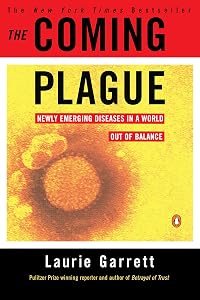
All in all, a lesser book on the subject. I recall my fascination with [The Coming Plague] and [The Ghost Map], and recommend them for a more compelling read. show less
The later parts of the book are more unfocussed, possibly because there is less distance from which to observe them. The writing is also dryer, less inviting, and I had to push myself to finish, hoping for some new insights that never came.
All in all, a lesser book on the subject. I recall my fascination with [The Coming Plague] and [The Ghost Map], and recommend them for a more compelling read. show less
Cartwright’s Disease and History is not an overview of the history of medicine, it is a demonstration of the ways that disease, ill-health, has historical agency, how it affects the course of human events. The book does have a few minor shortcomings but Cartwright skillfully shows how disease can drive history. Because the book was written in 1972 we have to expect to find issues with it. Forty years of progress will have some bearing on the medical “facts” discussed although someone would need a better understanding of the science than I have to find medical anachronisms in the book. There were, however, several times I wished to learn what the latest DNA research said about the topic under discussion. Social progress is also show more evident when reading the book. Although the book is Eurocentric to a degree it is obvious, later in the book, that Cartwright does make an effort to look beyond Europe.
The first few chapters are Eurocentric, most noticeably the first chapter which looks at disease in the ancient world and relies almost exclusively on Western sources. This is somewhat excusable, at the time the book was written the longest written historical record, China’s, was locked behind Mao’s Bamboo Curtain. The next three chapters, covering the Black Death, syphilis, and typhus, goes some distance to amend any shortcomings in the first. Cartwright honestly looks at the disease trio, syphilis, smallpox, and yaws and honestly evaluates the evidence rather than simply assuming that syphilis sprang from the New World simply because it sprang into the historical record shortly after Columbus’s voyage. This is also where I wished for modern DNA evidence. In the next two chapters he looks at how disease affects “virgin” populations and populations that have become acclimatized to them by looking at the devastation of the New World’s indigenous people and how the diseases of West Coast Africa kept the Europeans at bay for hundreds of years. Cartwright also looks at genetic problems, examining Queen Victoria, hemophilia, and the fall of Russia’s Tsars, as well as mass hysteria as represented by Hitler’s anti-Semitism, and man-made health issues represented by thalidomide and air pollution.
Although Disease and History was written forty years ago it is still a worthwhile read. Cartwright has, or it seems to me he has, found the correct balance between history and science. He manages to explain both the science and the history in plain language. He managed to find interesting and provocative examples for the issues he wished to discuss. I found the Thalidomide story particularly interesting in that it has largely been ignored. Why doesn’t this story get told every time someone suggests “streamlining” the approval of new drugs? After all, isn’t the study of history about not repeating mistakes? show less
The first few chapters are Eurocentric, most noticeably the first chapter which looks at disease in the ancient world and relies almost exclusively on Western sources. This is somewhat excusable, at the time the book was written the longest written historical record, China’s, was locked behind Mao’s Bamboo Curtain. The next three chapters, covering the Black Death, syphilis, and typhus, goes some distance to amend any shortcomings in the first. Cartwright honestly looks at the disease trio, syphilis, smallpox, and yaws and honestly evaluates the evidence rather than simply assuming that syphilis sprang from the New World simply because it sprang into the historical record shortly after Columbus’s voyage. This is also where I wished for modern DNA evidence. In the next two chapters he looks at how disease affects “virgin” populations and populations that have become acclimatized to them by looking at the devastation of the New World’s indigenous people and how the diseases of West Coast Africa kept the Europeans at bay for hundreds of years. Cartwright also looks at genetic problems, examining Queen Victoria, hemophilia, and the fall of Russia’s Tsars, as well as mass hysteria as represented by Hitler’s anti-Semitism, and man-made health issues represented by thalidomide and air pollution.
Although Disease and History was written forty years ago it is still a worthwhile read. Cartwright has, or it seems to me he has, found the correct balance between history and science. He manages to explain both the science and the history in plain language. He managed to find interesting and provocative examples for the issues he wished to discuss. I found the Thalidomide story particularly interesting in that it has largely been ignored. Why doesn’t this story get told every time someone suggests “streamlining” the approval of new drugs? After all, isn’t the study of history about not repeating mistakes? show less
Dr. Cartwright wrote a very readable survey of the most obvious examples of epidemics and cultural events. His short medical descriptions of the prominent diseases are very useful to the non-medically educated. The scale varies from real biggies such as "the Black Death" through the midsized ailments like syphilis, to the intimacy of the hemophilia of the Russian Royal family. This book sets the framework for understanding the effects that disease seems to have had which can be discussed in historical debate.
Ah, the power of PM. Somewhere in this book, and I wish I'd put a sticky note in so I could post the exact quote, it states that in wartime, disease is more deadly to soldiers than battle. Which was the entire reason for my specialty when I was in the army (preventive medicine specialist), and for my husband's job now. Which, in turn, is why I bought this book years and years ago. I'd just never actually sat down and read the whole thing until now.
Disease and History is a little more wide-ranging than just the history of disease in a military setting--it shows how disease has changed the course of history, from epidemics that killed thousands to how disease affecting an individual ruler or ruling family caused changes in how, or show more sometimes whether, they ruled.
However, it's a real chore to slog through reading.
The first couple of chapters are the most interesting, the ones about the Black Death and other epidemics, and I found the chapter on Napoleon just fascinating.
But the writing itself is painful to read--it's written like a freshman research paper. Lots of telling the reader what you're going to tell them. Then there are the tangents. A section will be about a particular disease, but it'll meander off into a long-winded discussion of something else and never end up tying the two together, or making a conclusion about it.
That's particularly evident in the later chapters--a discussion of hemophilia and the fall of the Russian monarchy gets completely derailed, and the chapter on mass suggestion is just a mess of unrelated stuff that if I were cynical, I'd suspect was added to cash in on the Princess Di fever.
The final chapter, about modern life, is a bit dated--understandably so, since the book was first written in 1972, so it's a historical look at the subject in itself. It's a combination of interesting facts and the author's political and generational biases.
Even though Disease and History has a lot of flaws, I very much enjoyed parts of it, and found the subject matter intriguing enough to plan on seeking out other books on the subject. I think I've mentioned here before that my history education was pathetic. All about which wars happened when, with a great deal of emphasis on the memorization of names and dates. It's been a great revelation to me as an adult that it's possible to study history as something other than a fill-in-the-blanks spreadsheet.
Heh. And now I've gone off on a tangent of my own. show less
Disease and History is a little more wide-ranging than just the history of disease in a military setting--it shows how disease has changed the course of history, from epidemics that killed thousands to how disease affecting an individual ruler or ruling family caused changes in how, or show more sometimes whether, they ruled.
However, it's a real chore to slog through reading.
The first couple of chapters are the most interesting, the ones about the Black Death and other epidemics, and I found the chapter on Napoleon just fascinating.
But the writing itself is painful to read--it's written like a freshman research paper. Lots of telling the reader what you're going to tell them. Then there are the tangents. A section will be about a particular disease, but it'll meander off into a long-winded discussion of something else and never end up tying the two together, or making a conclusion about it.
That's particularly evident in the later chapters--a discussion of hemophilia and the fall of the Russian monarchy gets completely derailed, and the chapter on mass suggestion is just a mess of unrelated stuff that if I were cynical, I'd suspect was added to cash in on the Princess Di fever.
The final chapter, about modern life, is a bit dated--understandably so, since the book was first written in 1972, so it's a historical look at the subject in itself. It's a combination of interesting facts and the author's political and generational biases.
Even though Disease and History has a lot of flaws, I very much enjoyed parts of it, and found the subject matter intriguing enough to plan on seeking out other books on the subject. I think I've mentioned here before that my history education was pathetic. All about which wars happened when, with a great deal of emphasis on the memorization of names and dates. It's been a great revelation to me as an adult that it's possible to study history as something other than a fill-in-the-blanks spreadsheet.
Heh. And now I've gone off on a tangent of my own. show less
Reviews the effect of disease on history
History Disease
Members
- Recently Added By
Lists

Best Books About Plagues and Epidemics
99 works; 17 members
Author Information

7 Works 476 Members
Frederick F. Cartwright was a former Head of the Department of History of Medicine at Kings College Medical School, London Michael D. Biddiss is Professor of History at the University of Reading
All Editions
Series
Belongs to Publisher Series
Common Knowledge
- Original publication date
- 1972
Classifications
- Genres
- History, Nonfiction, General Nonfiction, Science & Nature
- DDC/MDS
- 614.49 — Applied science & technology Medicine & health Epidemics and poisons Incidence of and public measures to prevent disease History of epidemics
- LCC
- R702 .C37 — Medicine Medicine (General) Medicine and the humanities. Medicine and disease
- BISAC
Statistics
- Members
- 454
- Popularity
- 67,715
- Reviews
- 7
- Rating
- (3.60)
- Languages
- Chinese, English, Polish, Spanish
- Media
- Paper, Audiobook, Ebook
- ISBNs
- 13
- ASINs
- 10