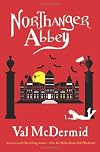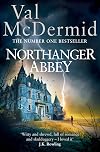
On This Page
Description
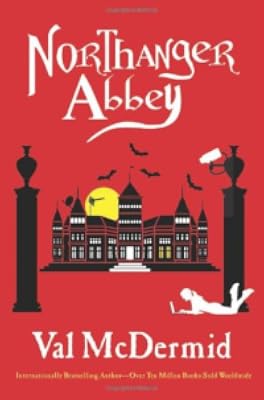
In this modern retelling of Austen's classic, bookish minister's daughter Cat Morland joins her well-to-do friends in Edinburgh and falls for an up-and-coming lawyer who may harbor unsettling secrets.Tags
Recommendations












Member Recommendations
dizzyweasel Another book in The Austen Project, wherein popular contemporary authors take on Jane Austen's novels and "update" them for the modern world. Not as wonderful or as complex as the originals, but fun re-imaginings.
Member Reviews
McDermid follows Austen's plot faithfully, transposing it from Bath to the Fringe Festival in Edinborough, where teenage Cat Morland has been brought for a month by her neighbors, the Allens. In Edinborough she meets the Thorpes: the oldest sister, Bella, professes to be head-over-heels for Cat's older brother James, and Cat and Bella become fast (but superficial) friends. Cat is interested in Henry Tilney, with whom she is partnered to learn Scottish dancing, but Bella's brother John - an arrogant misogynist - keeps butting in. Nevertheless, Cat makes friends with Henry's sister Ellie and gets an invitation to join them at Northanger Abbey, where her imagination runs away with her, creating deep dark family secrets where there are show more none. That is Cat's gift, or curse: she sees what isn't there, and - sometimes - doesn't see what is.
This is a satisfying read. The dialogue is sometimes oddly formal, especially juxtaposed with modern teen slang in text messages and social media posts, but that echoes Austen. It's a little curious, as well, that grown men are so seriously interested in teenage girls. All in all, though, McDermid pulls off the adaptation beautifully, and wraps up all the loose ends with a very quick epilogue.
Quotes
"Harry Potter? Even little kids don't believe Harry Potter's for real. You can't long for something you know is totally fantasy. It's got to feel real before you can believe it could happen to you." (Cat to her father, 11)
Cat had serious doubts about poets. She firmly believed that while some could thrill and excite, too many failed the fundamental test of communicating with their readers. The more obscure their verses, the more praise they seemed to garner. (49)
"It must be lovely inside your head, always attributing your good-hearted motives to everybody else." (Henry to Cat, 174)
She recalled the feelings she'd harboured before she even arrived. She'd been infatuated with the idea of Northanger, regardless of what the reality might be....
It was time to let it go. Cat had to start seeing the world as it was, not as she dreamed it. (284) show less
This is a satisfying read. The dialogue is sometimes oddly formal, especially juxtaposed with modern teen slang in text messages and social media posts, but that echoes Austen. It's a little curious, as well, that grown men are so seriously interested in teenage girls. All in all, though, McDermid pulls off the adaptation beautifully, and wraps up all the loose ends with a very quick epilogue.
Quotes
"Harry Potter? Even little kids don't believe Harry Potter's for real. You can't long for something you know is totally fantasy. It's got to feel real before you can believe it could happen to you." (Cat to her father, 11)
Cat had serious doubts about poets. She firmly believed that while some could thrill and excite, too many failed the fundamental test of communicating with their readers. The more obscure their verses, the more praise they seemed to garner. (49)
"It must be lovely inside your head, always attributing your good-hearted motives to everybody else." (Henry to Cat, 174)
She recalled the feelings she'd harboured before she even arrived. She'd been infatuated with the idea of Northanger, regardless of what the reality might be....
It was time to let it go. Cat had to start seeing the world as it was, not as she dreamed it. (284) show less
(Originally reviewed at thelibraryladies.com.)
I found this book while wandering around my library one afternoon. I have a usual reading test that I apply to re-tellings of Jane Austen stories which simply involves reading the first chapter. Mostly this is due to the fact that Austen’s signature writing style is so tricky to duplicate and it is often what sinks many re-imaginings. I’ve wasted too many hours where what might have been a good book on its own is ruined for me by the simple fact that I am too distracted by the writing style itself to focus on the story. Well, this one passed this initial test and so I gave it a go!
First off, since style of writing is usually a major factor for me with these types of books, I will give show more credit to McDermid for what she does with it in this story. The book is helped by the fact that it is set in the modern day so there is no need to replicate the style of speaking and writing that came with the original. Beyond this, McDermid does a good job converting several of the scenes and dialogue from the original directly into the story with very minimal changes that are both believable and, in some cases, quite creative. Perhaps at times some of the slang that is used for the teenagers who are speaking is a bit much, but for the most part, McDermid avoided overdoing it in this area.
I also appreciated the parallels that were drawn between the original and this book with regards to the parody angle. Austen’s “Northanger Abbey” was largely written in response to the over-done, and often poorly written, gothic horror/romances that were popular in the time. Her heroine loves these stories, but throughout the book learns an important lesson with regards to these books’ failures to depict real people and real life. In this, gothic romance is substituted for the “Twilight” series, which is not only funny, but very accurate when it comes to being a wildly popular book/now genre that is much loved by teenage girls. It has also been highly criticized for portraying unrealistic people and unhealthy world views for these same adoring fans. So to use that series/genre in a re-telling like this is very true to the message and structure of the original.
That said, there are some big problems using this set up as well. In the original, Catherine fears the Tilneys are hiding dark secrets having to do with the suspicious death of the mother, perhaps at the father’s hand. In this, Catherine suspects the Tilneys…are vampires. Look, this is just not the same. Murder, especially at the hands of an emotionally abusive spouse, while rare, is an actual thing. So Catherine’s suspicions can be offensive to the family, but ultimately can be forgiven as fanciful foolishness. In this story, Cat’s suspicions of actual vampires are ridiculous. Every time it came up, I immediately lost respect for Cat. And in the end, when she actually puts voice to her suspicions, it made me judge Henry as well for not dumping her on the spot. If a love interest suddenly made it known to me that not only do they actually believe vampires exist, but they suspect me and my family are these monsters (very specific sort of vampires ala “Twilight” nonetheless who can go out and about in the day and eat rare meat to survive), I’d be out of there immediately.
Cat is supposed to be on the verge of adulthood, and these imaginings are worrisome with regards to her actual sanity, not just teenage silliness like the original character.
Further, Henry was downgraded even more as a romantic hero when it came to the reason that Cat is evicted from the family home and his belief in that reason himself, not just the General’s belief. I don’t want to spoil things, but the changed reason was ridiculous, and almost offensive, in many ways. I honestly don’t quite know why this had to be changed at all. The original reason, Catherine’s not having a fortune at her disposal, is still a legitimate stumbling block for the type of snobby, pretentious father that the General is made out to be in both books.
To end on a good note, I very much enjoyed the portrayal of the villains in this story. Bella, Johnny, and the eldest Tilney, Freddie, were all spot on as modern adaptations of the original characters. They were all three highly entertaining and the types of characters you loved to have around just to hate them.
All in all, I was very disappointed with this book. The language was so strong (my usual criticism for this type of story) and many of the characters were perfect. But for some reason the author felt it necessary to adapt portions of the book in ways that severely detracted from the story as a whole. For a book that was so on-the-nose as an adaptation (there were many scenes and conversations that were almost directly lifted from the original), it was shame to have it fail due to unnecessary and weak plot changes. show less
I found this book while wandering around my library one afternoon. I have a usual reading test that I apply to re-tellings of Jane Austen stories which simply involves reading the first chapter. Mostly this is due to the fact that Austen’s signature writing style is so tricky to duplicate and it is often what sinks many re-imaginings. I’ve wasted too many hours where what might have been a good book on its own is ruined for me by the simple fact that I am too distracted by the writing style itself to focus on the story. Well, this one passed this initial test and so I gave it a go!
First off, since style of writing is usually a major factor for me with these types of books, I will give show more credit to McDermid for what she does with it in this story. The book is helped by the fact that it is set in the modern day so there is no need to replicate the style of speaking and writing that came with the original. Beyond this, McDermid does a good job converting several of the scenes and dialogue from the original directly into the story with very minimal changes that are both believable and, in some cases, quite creative. Perhaps at times some of the slang that is used for the teenagers who are speaking is a bit much, but for the most part, McDermid avoided overdoing it in this area.
I also appreciated the parallels that were drawn between the original and this book with regards to the parody angle. Austen’s “Northanger Abbey” was largely written in response to the over-done, and often poorly written, gothic horror/romances that were popular in the time. Her heroine loves these stories, but throughout the book learns an important lesson with regards to these books’ failures to depict real people and real life. In this, gothic romance is substituted for the “Twilight” series, which is not only funny, but very accurate when it comes to being a wildly popular book/now genre that is much loved by teenage girls. It has also been highly criticized for portraying unrealistic people and unhealthy world views for these same adoring fans. So to use that series/genre in a re-telling like this is very true to the message and structure of the original.
That said, there are some big problems using this set up as well. In the original, Catherine fears the Tilneys are hiding dark secrets having to do with the suspicious death of the mother, perhaps at the father’s hand. In this, Catherine suspects the Tilneys…are vampires. Look, this is just not the same. Murder, especially at the hands of an emotionally abusive spouse, while rare, is an actual thing. So Catherine’s suspicions can be offensive to the family, but ultimately can be forgiven as fanciful foolishness. In this story, Cat’s suspicions of actual vampires are ridiculous. Every time it came up, I immediately lost respect for Cat. And in the end, when she actually puts voice to her suspicions, it made me judge Henry as well for not dumping her on the spot. If a love interest suddenly made it known to me that not only do they actually believe vampires exist, but they suspect me and my family are these monsters (very specific sort of vampires ala “Twilight” nonetheless who can go out and about in the day and eat rare meat to survive), I’d be out of there immediately.
Cat is supposed to be on the verge of adulthood, and these imaginings are worrisome with regards to her actual sanity, not just teenage silliness like the original character.
Further, Henry was downgraded even more as a romantic hero when it came to the reason that Cat is evicted from the family home and his belief in that reason himself, not just the General’s belief. I don’t want to spoil things, but the changed reason was ridiculous, and almost offensive, in many ways. I honestly don’t quite know why this had to be changed at all. The original reason, Catherine’s not having a fortune at her disposal, is still a legitimate stumbling block for the type of snobby, pretentious father that the General is made out to be in both books.
To end on a good note, I very much enjoyed the portrayal of the villains in this story. Bella, Johnny, and the eldest Tilney, Freddie, were all spot on as modern adaptations of the original characters. They were all three highly entertaining and the types of characters you loved to have around just to hate them.
All in all, I was very disappointed with this book. The language was so strong (my usual criticism for this type of story) and many of the characters were perfect. But for some reason the author felt it necessary to adapt portions of the book in ways that severely detracted from the story as a whole. For a book that was so on-the-nose as an adaptation (there were many scenes and conversations that were almost directly lifted from the original), it was shame to have it fail due to unnecessary and weak plot changes. show less
'Northanger Abbey' reimagined: could this stately family pile really be home to Twilight-style vampires? *
Perhaps the least popular of Austen's six completed novels, 'Northanger Abbey' is, nonetheless, a clever and entertaining parody of contemporary Gothic and Romantic novels. This makes seasoned crime writer Val McDermid an interesting choice to 'update' the novel, since she is more used to writing about blood and death than genteel families enjoying 'the season' in Bath (translation: husband hunting for nice middle-class girls).
I love McDermid's crime books so I was quite excited about this addition to the Austen Project, though also slightly anxious - no one wants a favourite author to disappoint. ** I wondered whether the parody show more might be dispatched with and someone killed after all, but it wasn't to be.
What's it about?
"It was a source of constant disappointment to Catherine Morland that her life did not more closely resemble her books."
Our wannabe heroine, 17 year old Catherine Morland, becomes simply 'Cat' and is made a home-schooled vicar's daughter to explain her astonishing naivety. Whisked off to Edinburgh festival by neighbours and family friends, Cat is initially dazzled by the horribly transparent, small-minded, fortune hunter 'Bella' Thorpe (and horrified by her obnoxious brother 'Jonno', who is keen to fling Cat around in his soft-top motor) but gradually forms a close friendship with the Tilney family. She impresses the patriarch, General Tilney, sufficiently to get herself invited back to the family's Abbey, where she begins to imagine that they might just be vampires. 'Cos 'Twilight' was a guide to modern vampire life, right? Right?
So, if you're a fan of the original, the fundamentals are the same but there are a few tweaks. This is a Val McDermid novel so of course, of course, it's primarily set in Scotland (with lovely Scots bloke Henry easily having masses more reader appeal than cocky English lad Jonno) and has gained one or two lesbian characters.
What hasn't changed?
The wit. The humour. The criticism levelled at people who dismiss all fiction as rubbish and at people who unthinkingly devour rubbish. Within three pages I felt certain that Austen herself would approve of the spirit of McDermid's endeavor (while still not exactly revelling in the notion that her careful work was being reworked). Cat still grows up. General Tilney still isn't a murderer (trust me: this is not a spoiler. I defy you to read this and genuinely think at any point that Cat's "imaginative" interpretations of the Tilney family are in any way feasible). I enjoyed the story, the characterisations and the often detailed references to Edinburgh. I was amused by the references to the fictional Hebridean Harpies series the girls are all fascinated by and confident that Cat, despite being a bit of a plonker at times, would sail safely to the end of the book, snagging the right guy along the way.
Of course I was confident; this is classic Austen with a very thin dressing of tartan and social media. (Cat is stunned that the General refuses to allow his children to use the Wifi connection at the Abbey.)
Final thoughts
It's an entertaining read and good fun for Austen fans spotting parallels and deviations. But. But. Sticking so closely to Austen's original plot means that, even given her multiple justifications (only 17; home-schooled; vicar's daughter; grew up in sheltered Dorset; etc.) it is simply impossible to be convinced by Cat's vague attributions of the supernatural to the Tilney family. Even Cat isn't convinced. And who would be?
Moments such as Cat seeing Henry drinking a long red drink and 'really hoping it was a Bloody Mary' jolted me out of the storyline. Well of course it's a Bloody Mary. Does she really think it's blood? No. It's just too ridiculous. And if the reader really thought that Cat genuinely believed these things then we'd have to write her off as too stupid to deserve a sensible aspiring lawyer like Henry. I mean, Cat's clearly been on Facebook and Twitter for donkey's years. Regardless of growing up in Dorset, no-one's that naive.
Still, caveats aside, I really enjoyed reading this and suspect it will be my favourite from the Austen Project. I expect 'Emma' and 'Pride and Prejudice' are too close to my heart to be done well, and (whispers) I'm not that keen on Mansfield Park anyway. (Fanny is a bit dull, isn't she?)
* Um, no. Did you read the original? No? Ah. Well, (spoiler alert,) no one dies.
** My initial thoughts on the whole project can be found here and here or simply summarised as ambivalent. My review of Joanna Trollope's 'Sense and Sensibility' is here. show less
Perhaps the least popular of Austen's six completed novels, 'Northanger Abbey' is, nonetheless, a clever and entertaining parody of contemporary Gothic and Romantic novels. This makes seasoned crime writer Val McDermid an interesting choice to 'update' the novel, since she is more used to writing about blood and death than genteel families enjoying 'the season' in Bath (translation: husband hunting for nice middle-class girls).
I love McDermid's crime books so I was quite excited about this addition to the Austen Project, though also slightly anxious - no one wants a favourite author to disappoint. ** I wondered whether the parody show more might be dispatched with and someone killed after all, but it wasn't to be.
What's it about?
"It was a source of constant disappointment to Catherine Morland that her life did not more closely resemble her books."
Our wannabe heroine, 17 year old Catherine Morland, becomes simply 'Cat' and is made a home-schooled vicar's daughter to explain her astonishing naivety. Whisked off to Edinburgh festival by neighbours and family friends, Cat is initially dazzled by the horribly transparent, small-minded, fortune hunter 'Bella' Thorpe (and horrified by her obnoxious brother 'Jonno', who is keen to fling Cat around in his soft-top motor) but gradually forms a close friendship with the Tilney family. She impresses the patriarch, General Tilney, sufficiently to get herself invited back to the family's Abbey, where she begins to imagine that they might just be vampires. 'Cos 'Twilight' was a guide to modern vampire life, right? Right?
So, if you're a fan of the original, the fundamentals are the same but there are a few tweaks. This is a Val McDermid novel so of course, of course, it's primarily set in Scotland (with lovely Scots bloke Henry easily having masses more reader appeal than cocky English lad Jonno) and has gained one or two lesbian characters.
What hasn't changed?
The wit. The humour. The criticism levelled at people who dismiss all fiction as rubbish and at people who unthinkingly devour rubbish. Within three pages I felt certain that Austen herself would approve of the spirit of McDermid's endeavor (while still not exactly revelling in the notion that her careful work was being reworked). Cat still grows up. General Tilney still isn't a murderer (trust me: this is not a spoiler. I defy you to read this and genuinely think at any point that Cat's "imaginative" interpretations of the Tilney family are in any way feasible). I enjoyed the story, the characterisations and the often detailed references to Edinburgh. I was amused by the references to the fictional Hebridean Harpies series the girls are all fascinated by and confident that Cat, despite being a bit of a plonker at times, would sail safely to the end of the book, snagging the right guy along the way.
Of course I was confident; this is classic Austen with a very thin dressing of tartan and social media. (Cat is stunned that the General refuses to allow his children to use the Wifi connection at the Abbey.)
Final thoughts
It's an entertaining read and good fun for Austen fans spotting parallels and deviations. But. But. Sticking so closely to Austen's original plot means that, even given her multiple justifications (only 17; home-schooled; vicar's daughter; grew up in sheltered Dorset; etc.) it is simply impossible to be convinced by Cat's vague attributions of the supernatural to the Tilney family. Even Cat isn't convinced. And who would be?
Moments such as Cat seeing Henry drinking a long red drink and 'really hoping it was a Bloody Mary' jolted me out of the storyline. Well of course it's a Bloody Mary. Does she really think it's blood? No. It's just too ridiculous. And if the reader really thought that Cat genuinely believed these things then we'd have to write her off as too stupid to deserve a sensible aspiring lawyer like Henry. I mean, Cat's clearly been on Facebook and Twitter for donkey's years. Regardless of growing up in Dorset, no-one's that naive.
Still, caveats aside, I really enjoyed reading this and suspect it will be my favourite from the Austen Project. I expect 'Emma' and 'Pride and Prejudice' are too close to my heart to be done well, and (whispers) I'm not that keen on Mansfield Park anyway. (Fanny is a bit dull, isn't she?)
* Um, no. Did you read the original? No? Ah. Well, (spoiler alert,) no one dies.
** My initial thoughts on the whole project can be found here and here or simply summarised as ambivalent. My review of Joanna Trollope's 'Sense and Sensibility' is here. show less
‘General Tilney?’
She spoke with some diffidence as Mrs Calman cleared away the soup dishes and placed a selection of curries and side dishes in the middle of the table.
‘I wonder whether it might be possible for me to use your wifi?’ She caught the look of alarm shared by Henry and Ellie.
‘The wifi?’ The General frowned. ‘Is that entirely necessary?’
‘I wanted to check my email.’
‘My dear girl, why? Your parents and the Allens know precisely where you are and have the telephone number, so if there were any urgent need to contact you, there would be no difficulty.’ He spooned rice on to his plate and added some lamb methi. ‘You don’t have any kind of job yet, so there can be no urgent business communication show more awaiting you. In short, Catherine, there’s no conceivable reason other than the purely frivolous for you to “check your email”. Isn’t that so?’
I am not an Austen purist. I am not all that attached to the original Northanger Abbey. The idea of McDermid re-telling the story for a modern audience was just too good to pass up. And does it work?
Amazingly, I found myself giggling along - especially whenever McDermid did lift the story out of its time and applied a hefty dose of 21st century cynicism to it. But it was not just the idea of modernising the settings and gadgets. She also transformed the dialogue to appropriate it to a YA story set in the present day UK - and choosing the Edinburgh Festival as the modern day equivalent of Bath was just inspired.
Of course, McDermid being McDermid, she clearly had fun exploring the mystery part of the story from the point of view of someone assessing a potential crime scene:
The stain was on the bottom of the last drawer, about the size and shape of a blade. The sort of stain you’d expect if someone had laid a bloody knife there. She made a small mewing sound in the back of her throat and recoiled from the chest. And yet, the streak of curiosity that ran through Cat as strongly as her blood itself could not keep from examining the piece of furniture. As her eye calibrated the dimension, she realised there was a gap beneath the bottom drawer of perhaps five or six centimetres. Could the answer to the bloodstain – for so she had already classified it without a waver of doubt – lie in the space beneath? show less
She spoke with some diffidence as Mrs Calman cleared away the soup dishes and placed a selection of curries and side dishes in the middle of the table.
‘I wonder whether it might be possible for me to use your wifi?’ She caught the look of alarm shared by Henry and Ellie.
‘The wifi?’ The General frowned. ‘Is that entirely necessary?’
‘I wanted to check my email.’
‘My dear girl, why? Your parents and the Allens know precisely where you are and have the telephone number, so if there were any urgent need to contact you, there would be no difficulty.’ He spooned rice on to his plate and added some lamb methi. ‘You don’t have any kind of job yet, so there can be no urgent business communication show more awaiting you. In short, Catherine, there’s no conceivable reason other than the purely frivolous for you to “check your email”. Isn’t that so?’
I am not an Austen purist. I am not all that attached to the original Northanger Abbey. The idea of McDermid re-telling the story for a modern audience was just too good to pass up. And does it work?
Amazingly, I found myself giggling along - especially whenever McDermid did lift the story out of its time and applied a hefty dose of 21st century cynicism to it. But it was not just the idea of modernising the settings and gadgets. She also transformed the dialogue to appropriate it to a YA story set in the present day UK - and choosing the Edinburgh Festival as the modern day equivalent of Bath was just inspired.
Of course, McDermid being McDermid, she clearly had fun exploring the mystery part of the story from the point of view of someone assessing a potential crime scene:
The stain was on the bottom of the last drawer, about the size and shape of a blade. The sort of stain you’d expect if someone had laid a bloody knife there. She made a small mewing sound in the back of her throat and recoiled from the chest. And yet, the streak of curiosity that ran through Cat as strongly as her blood itself could not keep from examining the piece of furniture. As her eye calibrated the dimension, she realised there was a gap beneath the bottom drawer of perhaps five or six centimetres. Could the answer to the bloodstain – for so she had already classified it without a waver of doubt – lie in the space beneath? show less
Cat Morland lives in a dull little town where nothing ever happens. She craves the adventure she finds between the pages of her books. But an opportunity to attend the Edinburgh Festival with family friends gives Cat the opportunity to spice up her life, and when she meets the boisterous Thorpe family and the mysterious Tilneys. When she’s invited to stay at historic Northanger Abbey, she finds herself immersed in a fantasy, but is it all in her head?
This book was my first completed read for Austen Month and it was so much fun. I’ve read the original (and would like to read it again, now that I have a better understanding of where Austen was going with it) and I think McDermid adapted this tale to the 20th (21st?) century perfectly. show more The modern Cat Morland is just as fanciful and daydreamy as the original, ready to see ghosts and murder and adventure around every corner. The Thorpes are just as overbearing and obnoxious (including Bella Thorpe’s internet speak like “totes amazeballs” and “OMG.”) The Tilneys are just as charming and mysterious – perhaps maybe even more charming in a modern setting.
Cat is a loveable doofus – she means well, but lets her overactive imagination get her into a bit of crap. But with her honesty and open heartedness she is able to repair the damage she creates. She’s flawed, but charming and it was the right mix to carry me through the story.
I didn’t have high expectations for this novel, since I’ve never read a modern retelling of Austen’s work, but I was sucked into the story right away and hated to put the book down. This book captured the playful, satirical tone of the original (which I seem to understand more every time I read something else related to it) and adapted well to the new century. The ending took a rather unexpected turn, and while I figured McDermid would switch things up a bit, I think it lacked a little bit of weight? Maybe that’s not the right word, but I wasn’t buying her explanation 100%. That said, this was an excellent modernization of Northanger Abbey and I think, even if you’re not already an Austen fan, you might find something to love about this book. show less
This book was my first completed read for Austen Month and it was so much fun. I’ve read the original (and would like to read it again, now that I have a better understanding of where Austen was going with it) and I think McDermid adapted this tale to the 20th (21st?) century perfectly. show more The modern Cat Morland is just as fanciful and daydreamy as the original, ready to see ghosts and murder and adventure around every corner. The Thorpes are just as overbearing and obnoxious (including Bella Thorpe’s internet speak like “totes amazeballs” and “OMG.”) The Tilneys are just as charming and mysterious – perhaps maybe even more charming in a modern setting.
Cat is a loveable doofus – she means well, but lets her overactive imagination get her into a bit of crap. But with her honesty and open heartedness she is able to repair the damage she creates. She’s flawed, but charming and it was the right mix to carry me through the story.
I didn’t have high expectations for this novel, since I’ve never read a modern retelling of Austen’s work, but I was sucked into the story right away and hated to put the book down. This book captured the playful, satirical tone of the original (which I seem to understand more every time I read something else related to it) and adapted well to the new century. The ending took a rather unexpected turn, and while I figured McDermid would switch things up a bit, I think it lacked a little bit of weight? Maybe that’s not the right word, but I wasn’t buying her explanation 100%. That said, this was an excellent modernization of Northanger Abbey and I think, even if you’re not already an Austen fan, you might find something to love about this book. show less
17-year-old Cat Morland, the oldest daughter of a Dorset vicar, is having the time of her life while accompanying her childless friends and neighbors, the Allens, to the Edinburgh Fringe Festival. Her hosts send her to dancing lessons to learn the dances for the Highland Ball. She is intrigued by her partner, the handsome Henry Tilney. However, she is soon distracted by her new friend, Bella Thorpe, who she soon learns is seeing her older brother, James. Bella's brother, Johnny, a friend of James's from Cambridge, soon latches on to Cat, not recognizing that his attentions are both unwelcome and hindering any further development in her relationship with Henry Tilney. Fortunately, Henry and his sister, Ellie, persevere in their attempts show more at cultivating her friendship. The three find that they have a lot in common, including a love for the Hebridean Harpies horror novels. Cat is thrilled when the Tilneys invite her to stay at their home, Northanger Abbey, where the environment and the odd behavior of the Tilney's father, General Tilney, resemble the vampire stories Cat loves so much.
The Edinburgh Fringe Festival is a good substitute for the social milieu of Jane Austen's Northanger Abbey. It's hard to imagine this retelling working well in a different setting. At 17, Cat seems a bit young for a lawyer in training. However, it's not nearly as challenging as the difficulty Joanna Trollope faced with a plausible relationship storyline for Marianne and Brandon in her updating of Sense & Sensibility. The texting and Facebooking seem natural in this setting, although I wouldn't notice if McDermid didn't strike the right tone here. This is the most enjoyable of the three Austen Project novels I've read so far, and I think it will satisfy many of Austen's fans. McDermid successfully blends her own voice with Austen's original story. She's set a high bar for the remaining three novels in the project. show less
The Edinburgh Fringe Festival is a good substitute for the social milieu of Jane Austen's Northanger Abbey. It's hard to imagine this retelling working well in a different setting. At 17, Cat seems a bit young for a lawyer in training. However, it's not nearly as challenging as the difficulty Joanna Trollope faced with a plausible relationship storyline for Marianne and Brandon in her updating of Sense & Sensibility. The texting and Facebooking seem natural in this setting, although I wouldn't notice if McDermid didn't strike the right tone here. This is the most enjoyable of the three Austen Project novels I've read so far, and I think it will satisfy many of Austen's fans. McDermid successfully blends her own voice with Austen's original story. She's set a high bar for the remaining three novels in the project. show less
Northanger Abbey by Val McDermid is a tribute to the original book written by Jane Austen. Although I am a fan of Val McDermid this book just don’t work for me. Given the nature of this author’s work, I was expecting a much darker version and one filled with mystery and crime but instead this was more of a teen romance with many of the original novel’s plot lines in place but in a contemporary setting.
While there is nothing wrong with this author, known for her dark and intense work, to deliver a lighter, happier romance, I found the effort put into bringing this story to modern times was both obvious and difficult to believe. In order for the book to work, the reader must believe in Cat’s naivety and in today’s world of show more internet, electronic devices, and media communications, this was difficult to pull off.
Personally, I find Jane Austen highly readable so this modernized version just wasn’t needed. Austen’s stories are charming and delightful, the characters are perfectly suited to the 19th century that they inhabit whereas this updated version has a teenage heroine who does not stand the test of time. She seemed entirely too unsophisticated and gullible to be a young person of the 21st century. My advice is to read the original and pass of this updated version. show less
While there is nothing wrong with this author, known for her dark and intense work, to deliver a lighter, happier romance, I found the effort put into bringing this story to modern times was both obvious and difficult to believe. In order for the book to work, the reader must believe in Cat’s naivety and in today’s world of show more internet, electronic devices, and media communications, this was difficult to pull off.
Personally, I find Jane Austen highly readable so this modernized version just wasn’t needed. Austen’s stories are charming and delightful, the characters are perfectly suited to the 19th century that they inhabit whereas this updated version has a teenage heroine who does not stand the test of time. She seemed entirely too unsophisticated and gullible to be a young person of the 21st century. My advice is to read the original and pass of this updated version. show less
Members
- Recently Added By
Lists

Stories Inspired by Other Fiction
127 works; 24 members

Books Set in Scotland
19 works; 5 members

KayStJ's to-read list
1,616 works; 11 members
Author Information

102+ Works 30,196 Members
Val McDermid was born in Scotland on June 4, 1955. She was the first student from a state school in Scotland accepted to read English at St Hilda's College, Oxford. She graduated in 1975 and became a journalist. She wrote her first novel at the age of 21. It didn't get published, but she turned it into a play entitled Like a Happy Ending. It was show more performed by the Plymouth Theatre Company and was later adapted for BBC radio. Her first book, Report for Murder, was published in 1987. She is the author of the Lindsay Gordon Mystery series, the Kate Brannigan Mystery series, and the Dr. Tony Hill and Carol Jordan Mysteries series as well as several stand alone books including The Distant Echo, A Darker Domain, Trick of the Dark and Out of Bounds. The Mermaids Singing won the Crime Writers' Association Gold Dagger for Best Crime Novel of the Year. (Bowker Author Biography) show less
Some Editions
Series

Work Relationships
Is a retelling of
Common Knowledge
- Canonical title
- Northanger Abbey
- Original publication date
- 2014
- People/Characters
- Catherine "Cat" Moreland; Henry Tilney; John "Johnny" Thorpe; Bella Thorpe; Eleanor "Ellie" Tilney; Susie Allen (show all 9); James "Jamie" Moreland; General Tilney; Frederick "Freddie" Tilney
- Important places
- Edinburgh, Scotland, UK; Piddle Valley, Dorset, England, UK
- Important events
- Edinburgh's Fringe Festival; The Highland Ball
- Dedication
- To Joanna Steven, constant reader, constant friend,
who is indirectly responsible for introducing me to the
delights of the Piddle Valley. - First words
- It was a source of constant disappointment to Catherine Morland that her life did not more closely resemble her books.
- Quotations
- Cat, as she preferred to be known—on the basis that nobody should emerge from their teens with the name their parents had chosen—had been disappointed by her life for as long as she could remember.
Henry gave her a wolfish grin, revealing small, sharp teeth. His eyes looked almost tawny in the afternoon light, like a lion stalking prey.
'Pleased to meet you,' he said, head cocked as if assessing her for the pot.
Satisfied that he wasn't a gay man in disguise, Susie tucked a hand under Cat's arm.
If Cat had not had her own lively interest in her surroundings to preserve her, she might have lost the will to live entirely.
Luckily, Bella required little input from her companion when it came to conversation. She knew enough of the world to entertain both and Cat was sufficiently well brought up to provide the appropriate prompts. (show all 14)
No man would notice her outfit except when it revealed too much; no woman would be happy unless they could find something to criticise.
Anticipation is often the enemy of pleasure; our sights are set so high that disappointment is inevitable.
'It must be lovely inside your head, always attributing your good-hearted motives to everybody else.'
'You're like a terrier,' Henry said. 'You don't let go of a subject till you've shaken every last drop of significance from it.'
Henry's smile had the uncertainty of a man who is not sure whether he's tweaking the tail of a cat or a tiger.
Deciding this was quite the maddest conversation she'd ever had, Cat thought it wisest to humour him.
And what would a vampire do to a wife he no longer loved? Would a disease of the blood be the perfect cover?
For a moment, she thought her heart would explode in an incendiary mix of shock and delight. - Last words
- (Click to show. Warning: May contain spoilers.)The moral or message of this story is hard to discern. And that is as it should be, for as Catherine Morland found out to her cost, it is not the function of fiction to offer lessons in life.
- Blurbers*
- J.K. Rowling
- Original language*
- English
*Some information comes from Common Knowledge in other languages. Click "Edit" for more information.
Classifications
Statistics
- Members
- 674
- Popularity
- 42,565
- Reviews
- 38
- Rating
- (3.15)
- Languages
- English, French, German, Hungarian
- Media
- Paper, Audiobook, Ebook
- ISBNs
- 31
- ASINs
- 9