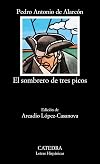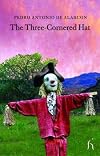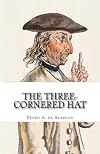
The Three-Cornered Hat
by Pedro Antonio de Alarcón
On This Page
Description
Based on a famous Spanish folk tale and set in rural Andalusia, The Three-Cornered Hat recounts the tribulations of a lecherous local magistrate as he attempts to have his way with the miller's beautiful but devoted wife, with unforeseen and hilarious consequences.Alarcon's astute blend of slapstick and comedy of manners provides both timeless entertainment and a sharp satire on the corruption of rural officials and the politics of lust and seduction.Tags
Recommendations





















Member Reviews
This is a new translation of Pedro Antonio de Alarcón's novella, by Inés Bou. I had not heard of this work before, which framed the subject for a 1919 ballet by Manuel de Falla with sets and costumes designed by Pablo Picasso.
The Three-Cornered Hat (El sombrero de tres picos) is a concise novella packed with political themes and comedic moments that are very helpfully supported by Bou's footnotes, which, as a non-expert in this area, helped me get much more out of this work than I would have otherwise. Bou keeps many details of the original by translating them specifically where possible, or keeping the Spanish where needed and explaining through footnotes. This helps transport the reader into the time and space of the story to better show more understand the meaning provided through subtle details.
This is a story, as noted in the introduction, focused on authority and corruption, wonderfully tied to the seemingly simple device of the hat and garments worn by the Corregidor (the local, royal-appointed authority). Through a series of comedic errors and misunderstandings, these clothes change hands, and what might seem to be largely a story of possible marital infidelity becomes one of social commentary. The Corredigor attempts to seduce the miller's wife, who rebukes him; the miller, misunderstanding the situation, takes the Corregidor's clothes to attempt to seduce the latter's wife, who rebukes him and guides the situation to a satisfying conclusion that sees the men outwitted by the women and the Corregidor both publicly humiliated and thrown by his wife out of her bedchamber.
The whole story is told by a narrator who claims to have heard it from a shepherd named Repeal over 35 years before the narrator relays it. The framing narrative is that the shepherd was telling this verse-tale at a wedding, a fitting locale for the story, and the narrator is relaying it forward in the written story. It does feel to me like an oral retelling in written form.
I enjoyed this brief story with many layers made clearer by the introduction, translation, and notes! show less
The Three-Cornered Hat (El sombrero de tres picos) is a concise novella packed with political themes and comedic moments that are very helpfully supported by Bou's footnotes, which, as a non-expert in this area, helped me get much more out of this work than I would have otherwise. Bou keeps many details of the original by translating them specifically where possible, or keeping the Spanish where needed and explaining through footnotes. This helps transport the reader into the time and space of the story to better show more understand the meaning provided through subtle details.
This is a story, as noted in the introduction, focused on authority and corruption, wonderfully tied to the seemingly simple device of the hat and garments worn by the Corregidor (the local, royal-appointed authority). Through a series of comedic errors and misunderstandings, these clothes change hands, and what might seem to be largely a story of possible marital infidelity becomes one of social commentary. The Corredigor attempts to seduce the miller's wife, who rebukes him; the miller, misunderstanding the situation, takes the Corregidor's clothes to attempt to seduce the latter's wife, who rebukes him and guides the situation to a satisfying conclusion that sees the men outwitted by the women and the Corregidor both publicly humiliated and thrown by his wife out of her bedchamber.
The whole story is told by a narrator who claims to have heard it from a shepherd named Repeal over 35 years before the narrator relays it. The framing narrative is that the shepherd was telling this verse-tale at a wedding, a fitting locale for the story, and the narrator is relaying it forward in the written story. It does feel to me like an oral retelling in written form.
I enjoyed this brief story with many layers made clearer by the introduction, translation, and notes! show less
 This review was written for LibraryThing Early Reviewers.
Spanish Literature, The Limited Editions Club, Fiction
Libros de Matias y Carmen. Ed. Orbis - Historia de la Literatura española. Vol. 95
8479692227
Spanish/Reader
¡Qué bien escribe esta gente del XIX! No importa que veamos la tendenciosidad o las excesivas licencias o que los temas se nos antojen anticuados. Esta gente dominaba el idioma como hoy ya no se hace. Aquí, Alarcón toma un tema popular, que todavía hoy sigue corriendo en forma de romances y canciones, y, pretendiendo ceñirse a la realidad de los hechos, en realidad lo que hace es adaptarlo a un auditorio gazmoño pero que paga por leer estas cosas. El resultado es una novelita deliciosa, muy divertida y que hay que leer como lo que es, como un objeto de entretenimiento. El autor solo tiene que esforzarse en salvaguardar a toda costa la honra de las damas, haciéndolas de paso las auténticas juezas y gobernadoras de todo el show more asunto. Pues eso, que ustedes pasen tan buen rato como lo pasé yo leyendo esto. show less
Nov 1, 2021 (Edited)Spanish
Members
- Recently Added By
Lists

Books Read in 2018
4,360 works; 110 members
Author Information

Some Editions
Series
Belongs to Publisher Series
Work Relationships
Common Knowledge
- Canonical title
- The Three-Cornered Hat
- Original title
- El sombrero de tres picos
- Original publication date
- 1874
- People/Characters*
- Lucas; Frasquita
- Important places*
- Andalucía, España
- First words
- It was at the beginning of this long century now past its maturity.
- Last words*
- (Click to show. Warning: May contain spoilers.)sin que los sombreros de copa que ya usaba todo el mundo pudiesen hacerles olvidar aquellos tiempos simbolizados por el sombrero de tres picos...
- Original language
- Spanish
*Some information comes from Common Knowledge in other languages. Click "Edit" for more information.
Classifications
Statistics
- Members
- 551
- Popularity
- 54,091
- Reviews
- 16
- Rating
- (3.62)
- Languages
- 11 — Chinese, Danish, Dutch, English, Estonian, French, German, Hungarian, Italian, Portuguese (Portugal), Spanish
- Media
- Paper, Audiobook, Ebook
- ISBNs
- 113
- ASINs
- 32